Official game
Play Hellcrown
This game is hosted by Steam. Continue to the official page to play or download it.
Wishlist on SteamOverview
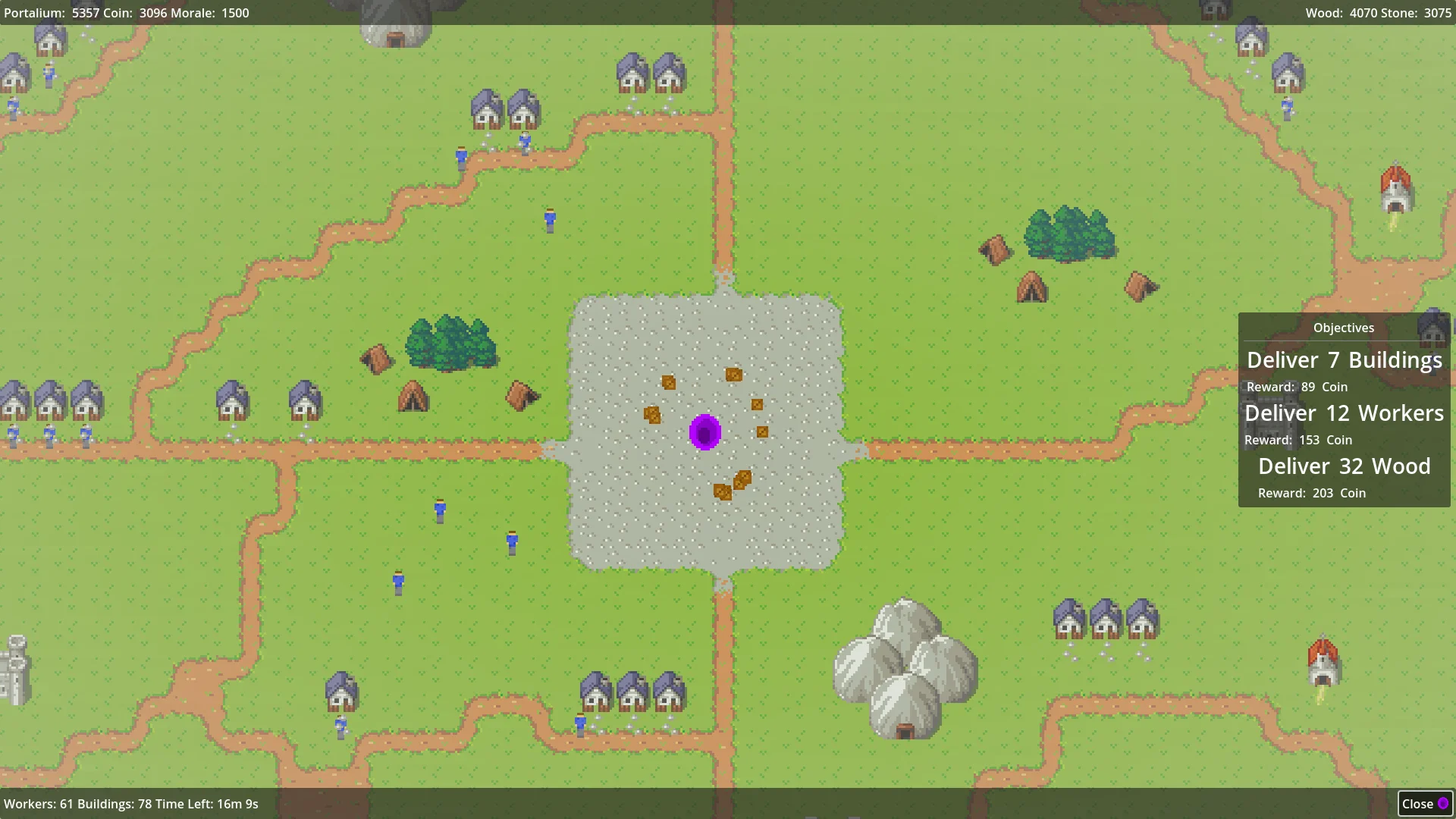
Hellcrown is a side-view roguelite strategy game from Astral Hearts where you play a dead monarch. Your crypt is your grave, your fortress, and your kingdom all at once. You are dead, but your ghostly hand still commands, and that hand is the only direct control you have.
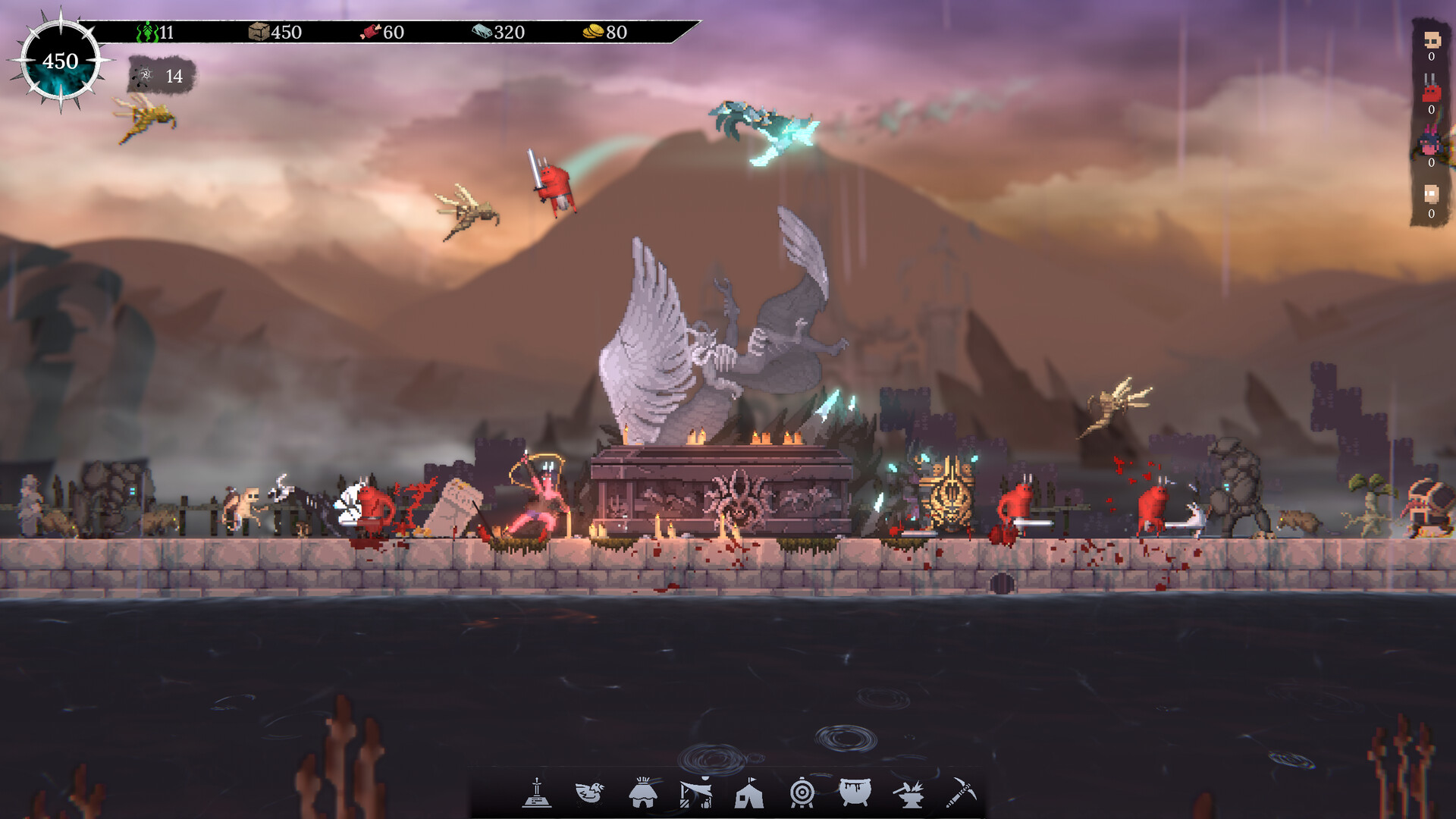
The core fantasy: demons act on their own volition. They build, fight, and perish without explicit commands. You do not micro-manage every unit. Instead you shape the situation, raise walls, forge traps, summon legions, and when the tide turns, your hand snatches a servant from their position and hurls them somewhere their death serves a tactical purpose.
Every run unfolds into a chain of random stories, sieges, and consequences. The dead ruler's decisions echo into the future, and the game's copy leans hard into that: "not every wave begins with the clash of steel and dying cries." Strange visitors arrive, make requests, threaten, and bargain, and those agreements rarely have obvious outcomes.
| Field | Detail |
|---|---|
| Genre | Roguelite strategy, simulation |
| Developer | Astral Hearts |
| Publisher | Astral Hearts |
| Platform | Windows, Linux |
| Price | TBA (paid title) |
| Players | Single-player |
| Release | January 2027 (Steam, not yet released) |
| View | Side-view |
| Saving | Save Anytime |
| Controls | Full controller, mouse-only option, Steam Input, DualShock/DualSense |
| Languages | English, French, Italian, German, Spanish, Russian, Simplified Chinese, Japanese, Traditional Chinese, Turkish |
Target Audience
This is for strategy players who like their systems weird and their narratives reactive. If you enjoyed the "uncontrollable minions" fantasy of games like Overlord or Majotatsu, or the fortress-defense loop of They Are Billions, but want it wrapped in roguelite randomness, this is aimed at you.
It also suits players who care about decision fiction, games where choices create stories rather than just stat changes. Hellcrown explicitly promises random events, irreversible mistakes, and consequences. The audience is the tabletop-adjacent crowd who love emergent narrative.
It is not for players who want precise unit control, deep tactical micro, or a pure tower defense click-fest. Your demons walk their own path. If the idea of units acting without commands frustrates you, this design will fight you.
Getting Started: First 30 Minutes
-
Accept that your demons are autonomous. The first minutes will feel like watching rather than playing. That is the point. Learn to read what your demons do before you try to command anything.
-
Find the hand's rhythm. Your hand is your only direct tool. It can snatch a servant and hurl them somewhere their demise serves a purpose. Practice the snatch-and-hurl in the opening siege so the timing is muscle memory by the second run.
-
Build the crypt's core early. Mines, workshops, and outposts go up fast in the early game. The description says your crypt is defenseless at the start, so the first priority is covering the naked grave, not building fancy traps.
-
Read each visitor before you answer. Strange visitors rarely ask for obvious things. In the first run, treat every bargain as a gamble and note what each outcome actually did.
-
Watch for blessing drops. Blessings and random discoveries form synergies. Early runs teach you which blessings combine, so do not judge a blessing in isolation.
-
Try a few throwaway runs. Roguelite structure means the first runs are learning tools. Spend a run on "what happens if I hoard resources," then another on "what happens if I spend everything on walls."
-
Save when you hit a decision gate. The game lists Save Anytime. If your hand is about to make an irreversible choice, save first so you can test the branch.
Beginner Mistakes to Avoid
| Mistake | Why It Hurts | Fix |
|---|---|---|
| Trying to micro-manage units | Demons act on their own; fighting it wastes attention | Read and steer, do not command |
| Hoarding the hand | The hand is strongest when used decisively | Use snatch-and-hurl when the tide turns |
| Ignoring early construction | The crypt is defenseless at start | Build mines, workshops, outposts first |
| Answering visitors without thought | Agreements have consequences | Treat bargains as strategic gambles |
| Judging blessings alone | Real power is in synergies | Collect and combine before deciding a build |
| Giving up after one bad run | Roguelite structure expects failure | Use runs as experiments |
| Forgetting Linux/Windows differences | Platform differences may affect bugs or settings | Check community notes for your platform |
Core Mechanics Deep Dive
The Dead Ruler's Hand
Your hand is the only direct control. Demons act on their own, but when the tide of battle turns against you, the dead ruler's hand can snatch a servant from their position and hurl them to a location where their demise will serve a tactical purpose.
This is a "sacrifice as strategy" system. You are not commanding troops, you are relocating them at the decisive moment, often into harm's way. The skill is knowing when a servant's death is worth more than their life. A demon holding a chokepoint may be more valuable as a distraction thrown into the enemy's flank.
The Fortress Around the Grave
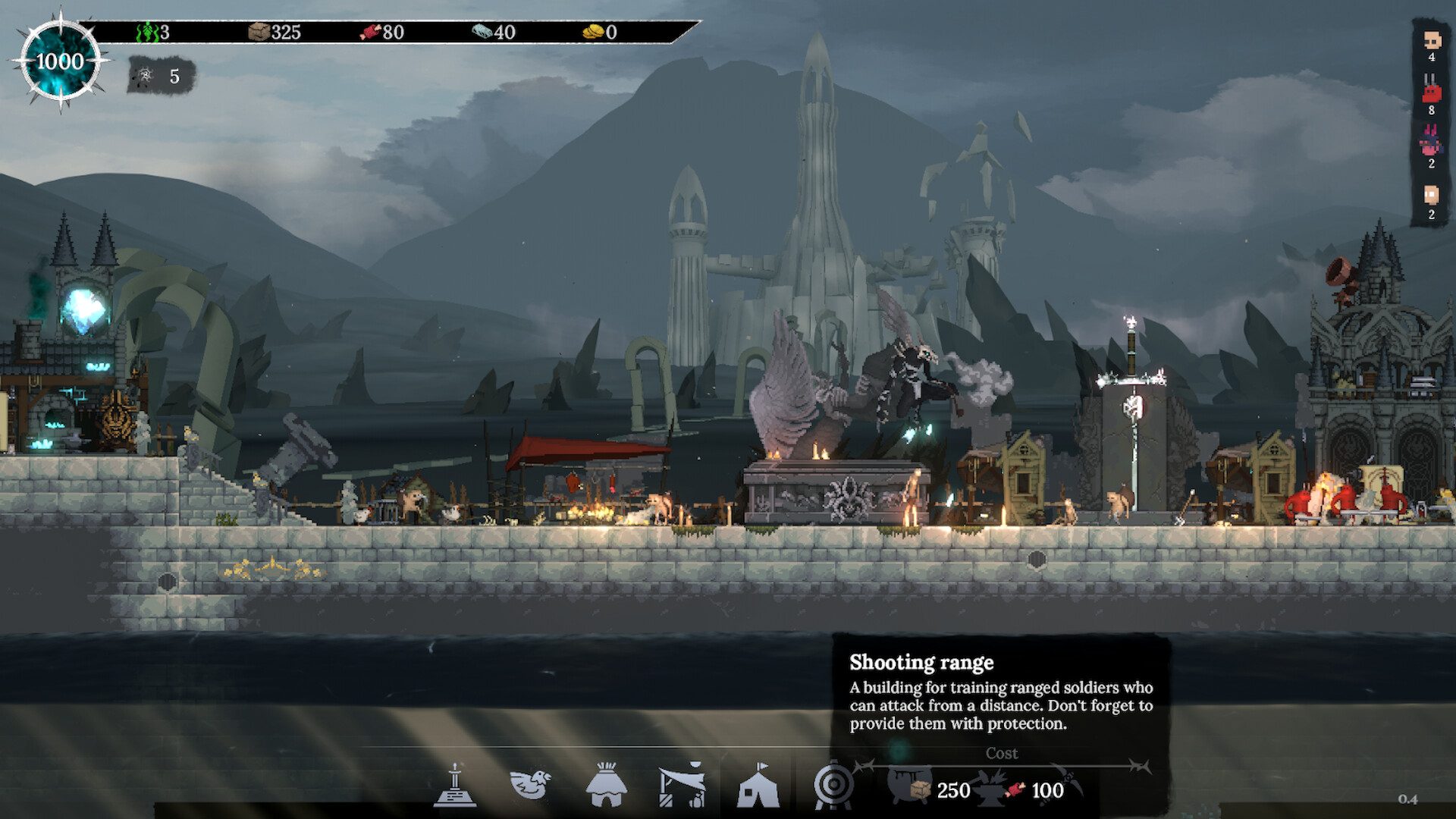
Your crypt is defenseless, so an impregnable bastion must rise around it. Construction is core: mines, workshops, and outposts. You decide where to erect impenetrable walls and where to position those who will fall first.
The spatial layer matters. Side-view means the fortress has height and depth, and placement of walls, traps, and units is a geometry problem. A wall that covers one siege may give the enemy a shorter path in another.
Construction and Forging
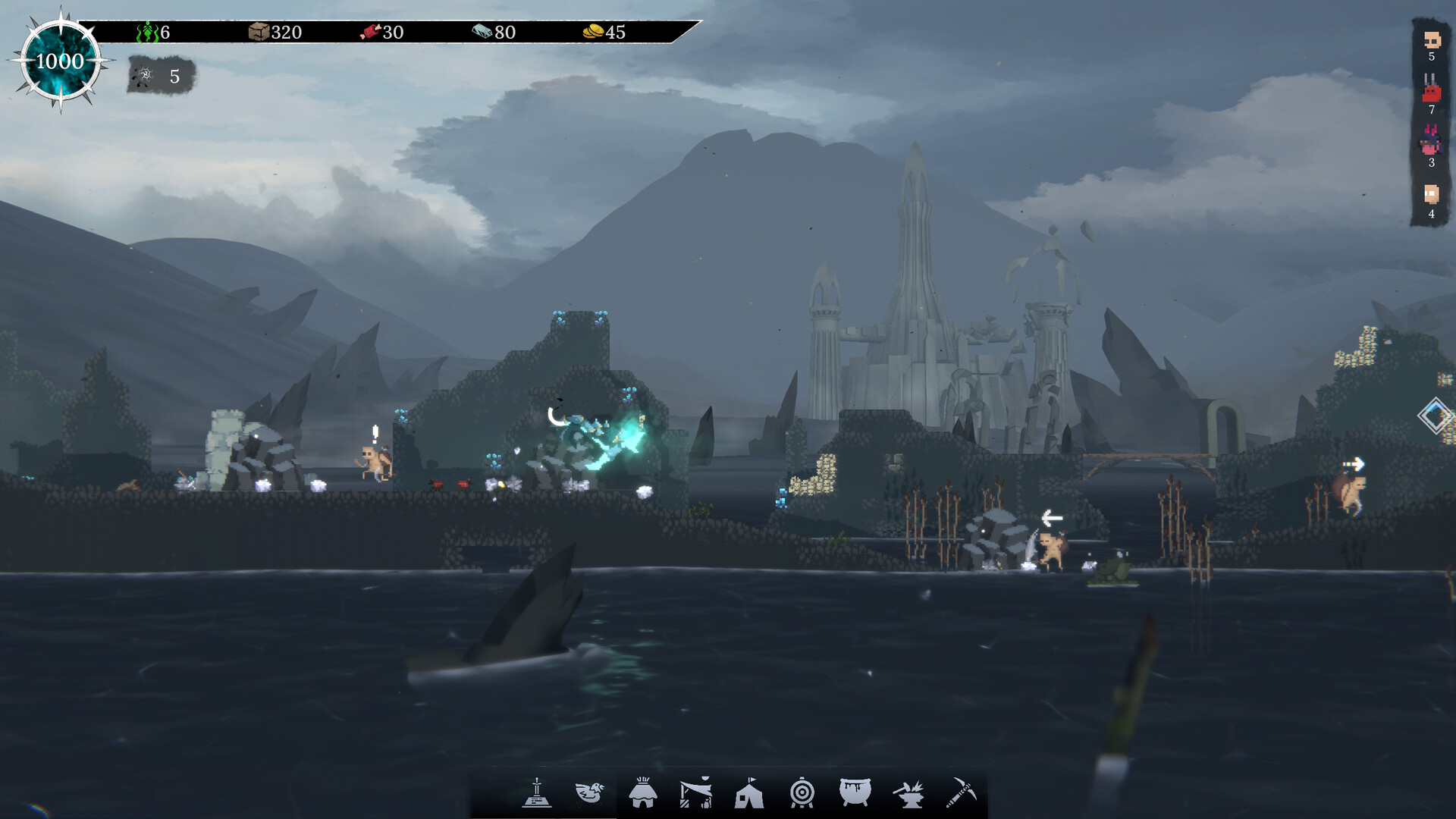
Mines, workshops, outposts: the economic spine. You forge deadly traps and summon legions. The mix of economy (mines), production (workshops), and expansion (outposts) sets the resource engine for each run.
Random Events and Visitors
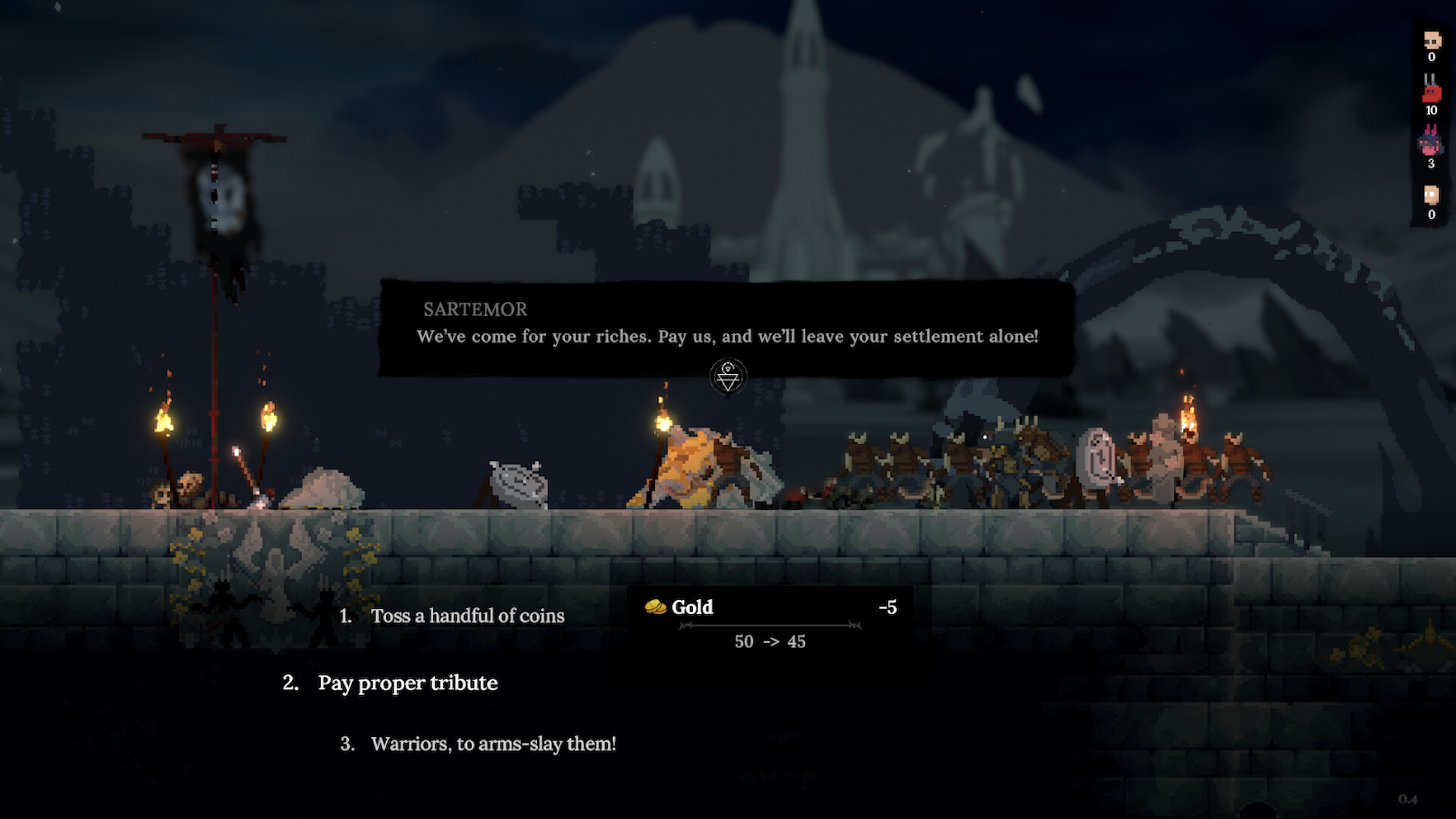
Not every wave begins with steel. Strange visitors arrive at your crypt, believing a dead ruler can still be reasoned with. Requests, threats, and bargains rarely yield obvious outcomes. One agreement may grant a powerful boon. Another may draw an enemy to your walls. A third wave might commence as peaceful dialogue and conclude in bloodshed.
This is the narrative engine. Each visitor is a branching decision that reshapes the run. The game's promise is that every run is a unique story shaped by these choices and their consequences.
Blessings and Synergies
Your strategy is forged during every run. Gather blessings and observe as random discoveries form powerful synergies. The run-to-run variety comes from combining what you find: transform your crypt into an impregnable fortress, a living weapon, or a hive that spawns legions.
The description explicitly frames three fantasy builds: fortress (defense), living weapon (offense), hive (swarm). Blessings and discoveries push you toward one of these, and the synergy layer means a mixed build can work if the pieces combine well.
The Fate of Astarta
The lore runs through the Kingdom of Satanel. After the Great Rebellion, the kingdom was left without a true heir, and dukes tear at each other's throats. The dead monarch's story is set inside this fractured political world, giving the sieges a reason beyond survival.
Progression Strategy
The fastest path through Hellcrown's systems:
| Priority | Investment | Payoff |
|---|---|---|
| 1 | Early economy (mines, workshops) | Resource engine for everything else |
| 2 | Hand timing | Decisive interventions in every siege |
| 3 | Wall and trap placement | Survival through the early waves |
| 4 | Visitor bargains | Boons that reshape the run |
| 5 | Blessing synergy | The transformative late-run power |
Start with economy. No fortress survives without mines and workshops, and the description is explicit that the crypt is defenseless first. Economy funds walls, traps, and legions. Hand timing is the second priority because it is the only way to turn a losing siege around.
Step-by-Step Strategy
1. The Defenseless-Grave Opening
First 10 minutes of each run: build mines first, then workshops. The crypt starts naked, so the first three minutes are about getting any resource economy running. Do not build walls before you have income, you will have nothing to defend.
2. The Hand-as-Pivot Tactic
Do not use the hand to relocate units for minor gains. Save it for the tide-turning moment. When a siege starts going wrong, snatch the servant whose death or repositioning flips the enemy's path. One well-hurled demon is worth ten micro-commands.
3. The Wall-Geometry Rule
Read the approaching wave before placing walls. A wall that backs the enemy into a trap chokepoint is worth far more than a wall that just delays. In side-view, think about which lanes the enemy will push and place your first walls to force them into your kill zones.
4. The Visitor-Stakes Assessment
Before answering a visitor, ask what you can afford to lose. A boon that draws an enemy later may be a bad trade if your walls are weak now. Treat each bargain as a risk line and only take the ones that match your current build.
5. The Synergy-Priority Loop
When blessings drop, do not evaluate them alone. Hold them against what you already have and ask which build they push you toward: fortress, weapon, or hive. Commit to a direction by the mid-run and let later discoveries reinforce it.
6. The Save-Gate Discipline
Save before every irreversible decision. The game promises irreversible mistakes with consequences, so a save before each visitor conversation and before each major construction is the difference between exploring a branch and losing a run.
Advanced Tips
The "Sacrifice Math" Mindset. The hand is strongest when you can compute a servant's death value. A demon thrown into a clump of enemies may clear a path worth more than its lifetime. Practice the math on cheap servants early so you trust it on expensive ones.
The "Two-Fortress" Setup. In most runs, one fortress direction fails. Keep a secondary plan: if your hive build stalls, pivot to fortress hardening with the walls you already placed. Flexibility between the three fantasy builds wins more runs than committing blindly.
The "Visitor Tells" Library. Keep a mental log of what each visitor type tends to offer and what they cost. The game's randomness is patternable. The more visitors you log, the better your early assessments get.
The "Trap-as-Multiplayer" Trick. Forge traps that synergize with your unit placement, a trap that catches enemies your demons have already engaged turns a 1-for-1 trade into a 1-for-3.
The "Endgame Spike" Planning. The last waves usually demand one of the three build spikes. Check your blessing synergy before the endgame and build the missing piece early enough to matter.
FAQ
When does Hellcrown release? January 2027, per the Steam page. It is not yet purchasable.
What platforms is it on? Windows and Linux, with full controller support including DualShock and DualSense via Steam Input.
Is it a tower defense game? It is a roguelite strategy game with siege defense elements. Your demons act autonomously, and your hand is the primary intervention tool. It is closer to a reactive fortress sim than a click-based tower defense.
Does anything require precise timing? No. The game lists "Playable without Timed Input" and "Save Anytime" as features.
What languages are supported? English, French, Italian, German, Spanish, Russian, Simplified Chinese, Japanese, Traditional Chinese, and Turkish.
Can I control my units directly? Not in the usual sense. Demons act on their own volition. Your direct control is the hand, which relocates servants for tactical purposes.
Is it multiplayer? No, it is single-player only.
Screenshots