Daily Pick
One deeply researched guide worth reading today.
A practical route through the systems that matter most, written to help new players make confident decisions quickly.
Overview
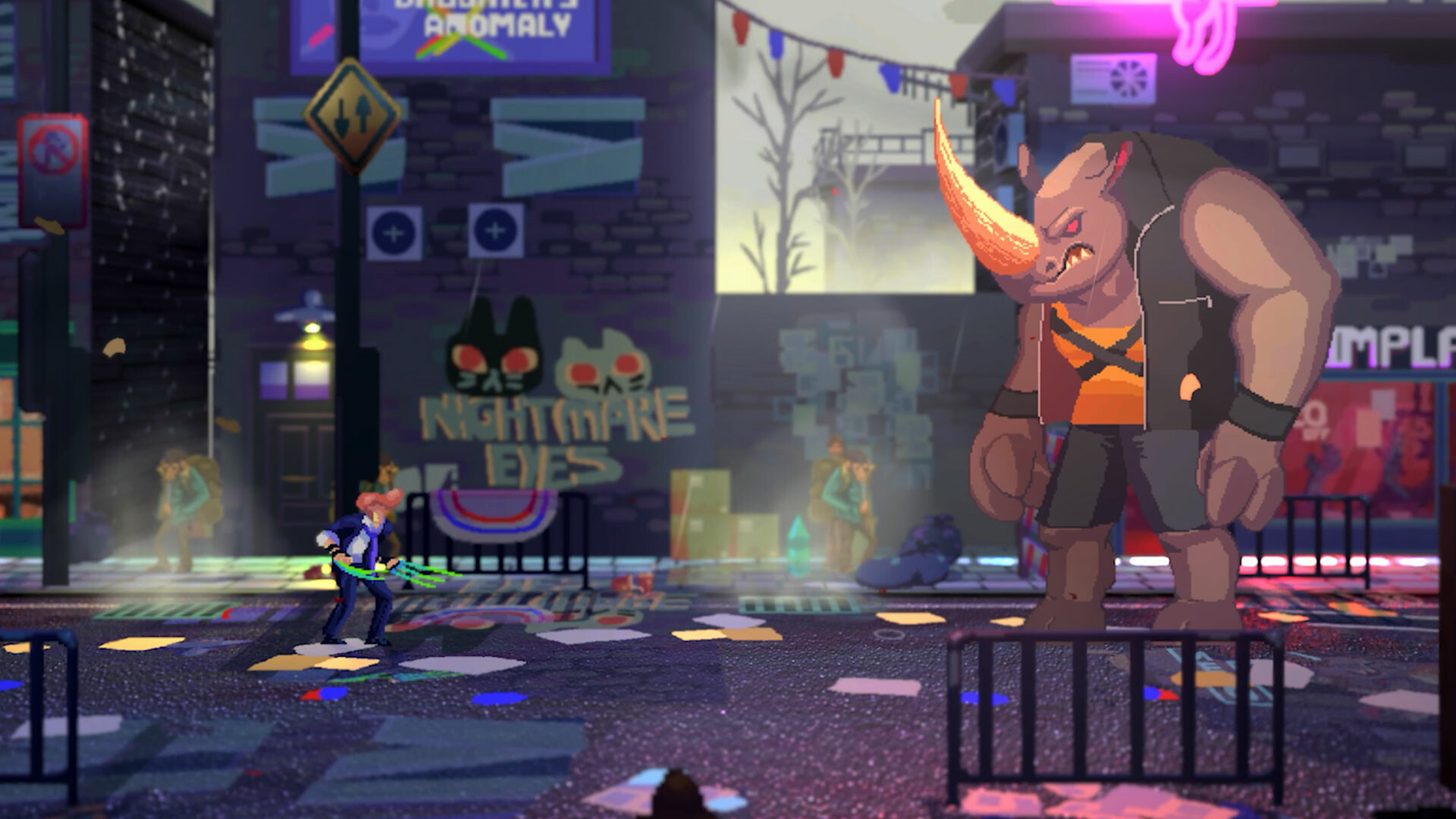
Anomaly President is a presidential rogue-like action game from Phew Phew Games, the studio behind Anomaly Agent. It entered Early Access on August 3, 2026 at $11.99 (20% off the $14.99 base price). The hook is a double life: by day you are a presidential candidate winning hearts and votes, by night you are a vigilante warrior tearing through the crime syndicates that prop up the Evil President.
The structure is political satire welded onto a Hades-style action loop. You lead an anomaly-fueled revolution. The president is steering the world toward disaster, and you cannot save it by fighting alone. You have to actually win the election. That means running a campaign, recruiting a team of Fluffies, building a mobile campaign bus room by room, and only then, at night, taking bloody revenge on the people who keep the corrupt system running.
Steam reviews sit at Very Positive with 1,432 total reviews and 91% positive as of late October, up from 774 at launch; the recent 30-day window is smaller (44 reviews) and slightly softer at 84% positive, which is normal for an Early Access title between hype cycles. Players praise the combat flow, the finishers and parries, the soundtrack, and a pacing that mixes combat, minigames, and base building without dead spots. The complaints that matter: the first boss is a wall, run-to-run level and boss variety is thin for players past 20 hours, and achievements are still missing. The developers patch fast. September delivered the roadmap's big promises: two new weapons, two new enemy types, the Merchant Fluffy, and the Exchange Room. October kept the cadence with the Big Bribe update (v0.5.3.12): a doubled Media Building, the new Bribe System, and the Double Dodge permanent upgrade, plus a dedicated optimization pass that made the game run markedly better on low-end hardware.
Game Details
| Field | Detail |
|---|---|
| Genre | Action rogue-like with campaign/politics management |
| Developer | Phew Phew Games |
| Publisher | Phew Phew Games, Gamedev.ist, Gamersky Games |
| Platform | Windows (Steam Cloud, Family Sharing; runs great on Steam Deck per ProtonDB) |
| Price | $14.99 base; 20% launch-window discount to $11.99 (S$16.49 / S$13.19 in SGD regions) |
| Players | Single-player |
| Release | August 3, 2026 (Early Access, current build v0.5.3.12) |
| Steam reviews | Very Positive (1,432 total; 91% positive, 84% recent) |
| Core loop | Campaign by day, combat by night |
| Weapons | 10: fists, sword, nunchucks, claws, kusarigama, staff, hammer, Octo-Arms, Great Axe, Chakram |
| Anomaly powers | Unlockable abilities stolen from defeated bosses |
| Team system | Recruit Fluffies, assign them to departments; the Merchant Fluffy runs a mid-run shop |
| Base | Customizable campaign bus with an Exchange Room for resource trading |
| Campaign layer | Mini-games: dancing, throwing presents, giving speeches |
| Controller | Full support (DualShock, DualSense); Steam Input disabled in early builds |
| Bundles | 45 on the store page, including Eggo, Windblown, Mexican Ninja, Ravenswatch, and the Anomaly Agent IP bundle |
| Steam | store.steampowered.com/app/3156330 |
System Requirements
| Component | Minimum |
|---|---|
| OS | Windows 10 |
| Processor | Intel Core i5-3470 / AMD FX-6300 |
| Memory | 4 GB RAM |
| Graphics | GeForce GTX 660 / Radeon HD 7870 |
| Storage | 1 GB available space |
The bar is low, which is why the game runs on modest hardware. Steam Deck owners report Platinum-level experience on ProtonDB, though a few players still see frame dips, so expect to tune settings on older handhelds.
Target Audience
Anomaly President is for players who like action rogue-likes with a management layer bolted on. If you enjoyed Hades' die-upgrade-repeat cycle, or Dead Cells' build variety, the structure will feel familiar. One reviewer described it as Dead Cells mechanics with the feeling of playing Streets of Rage as a kid, which is about as accurate a one-line pitch as you will find. The presidential campaign adds what those games do not: a political simulation running alongside combat, where you manage a team, a base, and public opinion through minigames.
It is also for fans of Anomaly Agent. Player reviews from that community say this is bigger and more feature-rich, with a major visual upgrade. Skip it if you want pure action with no management, or if the political theme turns you off. It is Early Access, so expect rough edges, occasional glitches, and balance changes.
Getting Started: First 30 Minutes
1. Learn the day/night loop immediately. The game has two halves that feed each other. By day you campaign: you gather votes through minigames, make promises, win hearts. By night you fight: you transform into a warrior and clear the gangs the president controls. Ignoring the campaign half means you lose the election even if you win every fight.
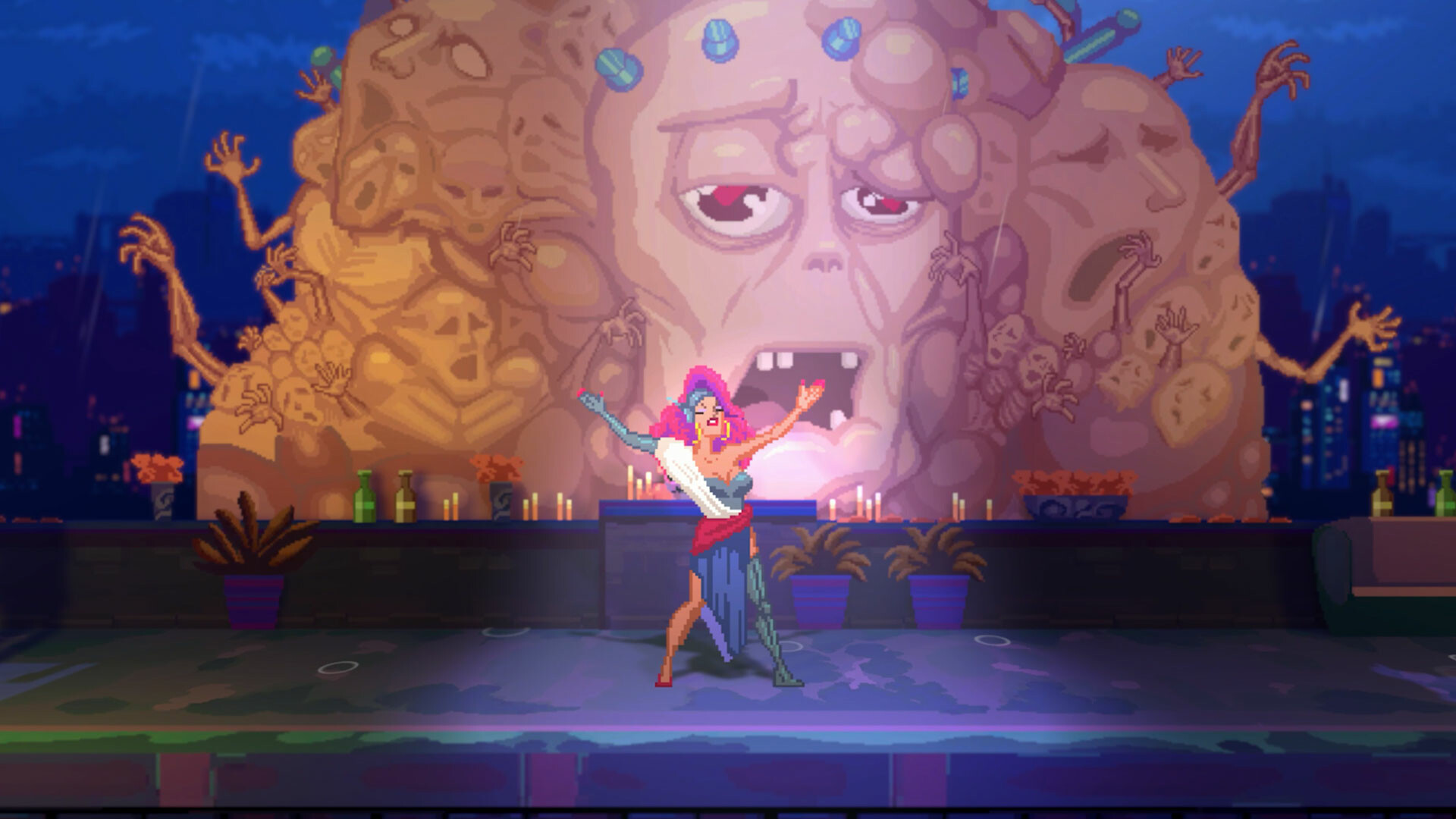
2. Expect the first boss to be a wall. The Minister of Public Relations sits at the end of the opening region, backed by her "cute" friend. Her anomaly power is HEART, a charm offensive that makes people fall in love with her. Early players reported needing 20 or more attempts on this fight. Later patches nerfed several enemy types and made finishers cancel boss ranged attacks, so the fight is more forgiving now, but it is still the skill check of the opening hours.
3. Test every weapon in the first region. Ten weapons exist as of v0.5.2.02. Your first build identity will crystallize around weapon plus anomaly power, so use the weak opening enemies to trial everything you find. The Great Axe and Chakram are locked behind the Permanent Upgrades menu, so they arrive in later runs, not your first one.
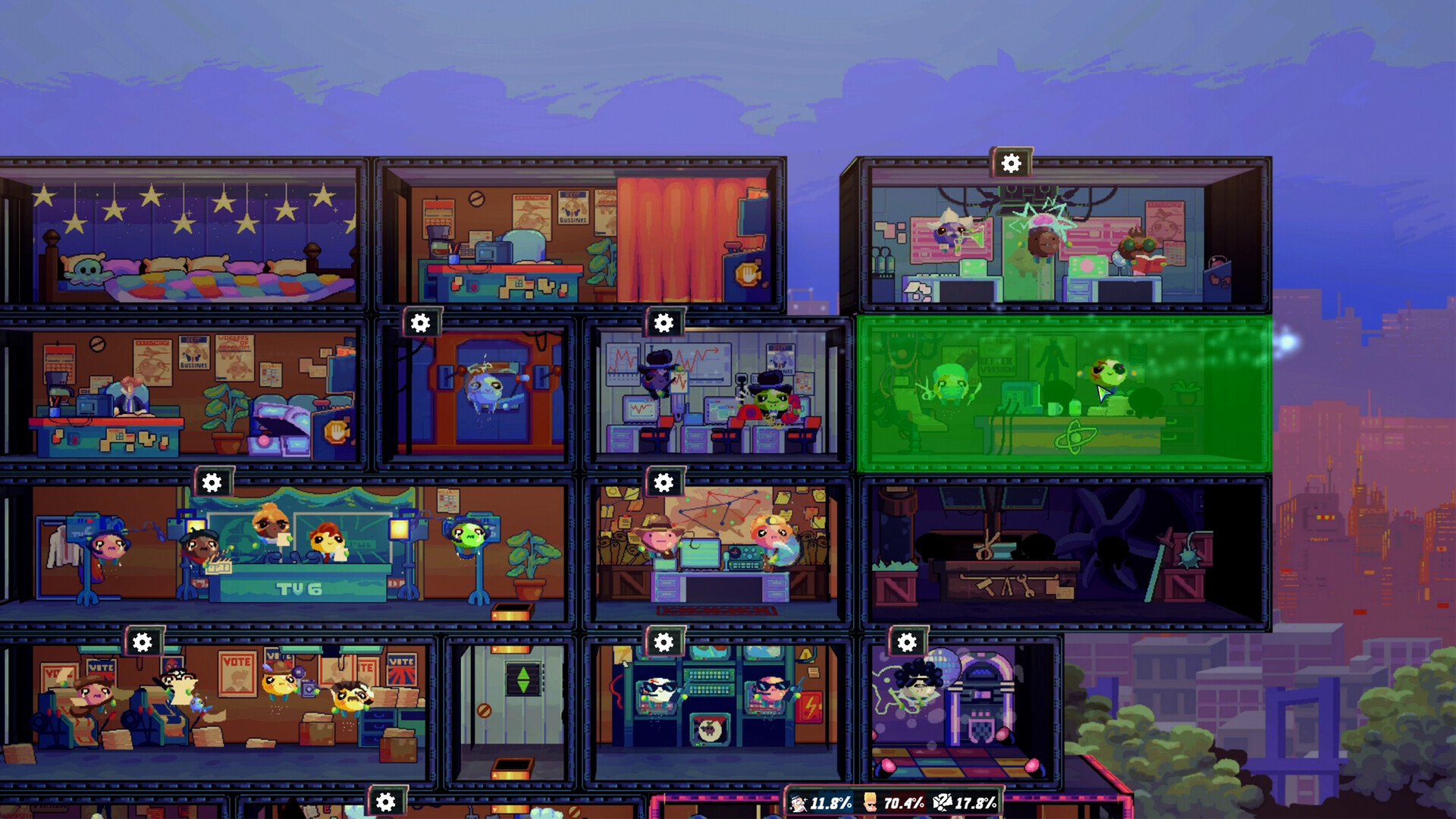
4. Talk to every Fluffy you meet. Fluffies are the oppressed citizens who join your campaign. You assign them to departments: campaign, equipment, or battle. A recruited but unassigned Fluffy contributes nothing, and a Fluffy in the wrong department wastes their potential.
5. Start building the bus on day one. The campaign bus is your mobile headquarters. Every room you add changes your abilities and playstyle for the run. A bare bus means no upgrade capacity. Treat the first bus rooms as your highest-priority purchases. Since v0.5.1.21, any room with a permanent upgrade available shows its "Upgrade" text in yellow, so check for yellow text whenever you board.
6. Check your controller bindings. Early builds shipped with a controller issue that the developers hotfixed by disabling Steam Input. Use native bindings. Sprint is hold-B on a gamepad, which some players find awkward for long sessions; a controller vibration toggle was added in September if you want haptic feedback on hits.
7. Plan around coins from your second run onward. Coins are the run currency added with the Merchant Fluffy update. You collect them during runs and spend them at the Merchant for heals and upgrades. Permanent Upgrades can raise your starting coin count, which is one of the strongest early meta buys.
Beginner Mistakes to Avoid
| Mistake | Why It Hurts | Fix |
|---|---|---|
| Focusing only on combat | Fights alone cannot win the presidency; the campaign decides the election | Balance day and night activities every cycle |
| Ignoring Fluffy assignment | Unassigned Fluffies contribute nothing; wrong assignments waste potential | Match each Fluffy to a department that helps your current run |
| Neglecting Fluffy needs | They abandon you or die if mistreated, permanently removing department bonuses | Check on your team before every night segment |
| Skipping bus upgrades | The bus is your base; a bare bus means no upgrade capacity | Invest in bus rooms early and consistently |
| Using Steam Input with a gamepad | Early hotfix disabled Steam Input after double-input issues | Use native controller bindings |
| Rushing bosses without anomaly powers | Boss powers are a major power source; skipping them slows your build | Farm the bosses you can beat and steal their powers |
| Spending rerolls fishing outside your element | Upgrade offers are element-typed; rerolls burn fast when the pool is locked | Commit to one element early, save rerolls for that pool |
| Spreading upgrades across all 10 weapons | The game rewards specialization; jack-of-all-trades builds feel weak by act two | Commit to one or two weapons by the second boss |
| Raging at the first boss | The PR Minister is the known difficulty spike of the early game | Grind the region, upgrade the bus, then return |
| Hoarding coins to the grave | Unspent coins are lost coins; the Merchant sells run-saving heals | Spend coins before risky rooms, especially on health |
Core Mechanics Deep Dive
The Day/Night Double Life
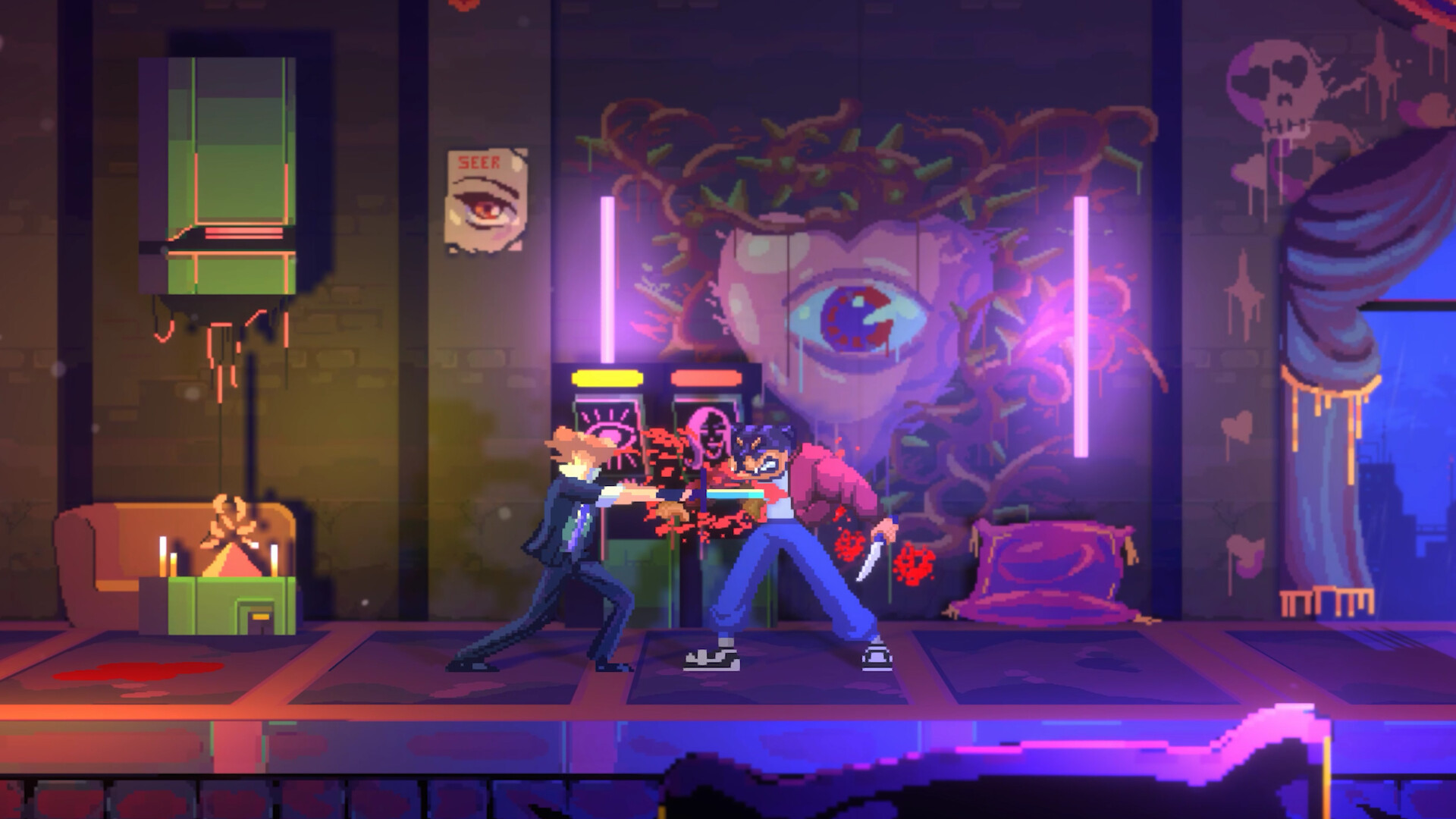
The loop is the game's signature. By day, you are a presidential candidate. You campaign, gather votes, and win hearts and minds through minigames. By night, you become a vigilante warrior who takes down the criminal gangs the president controls. The two halves feed each other: winning fights gives you resources and reputation, winning votes gives you political power. You need both to overthrow the president.
Campaign Mini-Games
The "real campaigning" happens in minigames, and they are weirder than the store page suggests. You dance with your supporters, throw presents at crowds, and give speeches to win hearts and minds. Each minigame type tests a different skill, and the rewards feed the political half of your run. Treat these as equal in importance to boss fights: a lost speech is a lost election district.
The dancing minigame has a tight perfect-move window, and players report it as the fiddliest of the three. The gift-throwing minigame rewards watching the crowd reaction and adjusting your aim. The speech is best saved for the largest crowd you can find. Speech prompts use Xbox button labels, so PlayStation-native players should learn the Xbox face-button layout. Note that not all minigames are open at the start; they unlock with progression, so the early map deliberately limits your campaign options.
Anomaly Powers
The world runs on anomalies, and every major enemy and boss carries one. The developers' example is the president's Minister of Public Relations, whose power of HEART makes people fall in love with her. When you defeat these bosses, you acquire their anomaly powers for yourself. This creates a boss-rush progression: every major fight is a potential new ability.
Anomaly powers shape your warrior identity. The extremes are a swordmaster who parries enemies at the right moment and a cyber mage who deals mass damage with anomaly abilities. The rogue-like structure lets you experiment across runs and keep the build that fits your style.
One mechanical note that separates good runs from dead ones: upgrade offers are element-typed. Fire upgrades only stack meaningfully if your powers and bus rooms support fire. Players who commit to an element early and reroll only within it report far smoother builds than players who grab whatever appears. Since you cannot skip a level-up choice, an off-element pick permanently occupies a slot.
The Fluffy Team System
You cannot win alone. Fluffies are the oppressed citizens who join your campaign. Recruitment is step one; assignment is where strategy lives. You place each Fluffy in a department:
- Campaign department: Fluffies who campaign for you during elections
- Equipment department: Fluffies who upgrade your equipment
- Battle department: Fluffies who assist you in combat
The management layer is real. Fluffies have needs, and neglecting them has consequences: they may abandon you, or worse, lose their lives. A Fluffy lost to neglect is a permanent loss of that department's bonus for the run. The roster is varied and personality-driven, and it grew in v0.5.1.00 with the Merchant Fluffy, who sells heals and upgrades mid-run.
Battle Fluffies deserve special mention after the August 31 patch. Their damage per upgrade went up and their cooldowns dropped hard, which turns them from a novelty into a genuine damage source. If you tried battle builds in the launch window and dropped them, they are worth a second look.
The Campaign Bus Base
The campaign bus is your mobile headquarters and the backbone of your journey to the presidency. You build it room by room, and every room you unlock directly affects your abilities and playstyle each run. It moves with you as you travel the country, so your upgrades, your team management, and your preparation are never left behind. The bus is where the political and combat halves of the game connect.
Two rooms changed the economy in September. The Exchange Room (v0.5.1.10) lets you convert one resource into another, which rescues runs where the map starved you of a specific material. The Food Truck on the World Map (v0.5.0.18) lets you send Fluffies to collect food, which feeds the team-care loop without buying supplies. The building-mode soundtrack is famously silly, which the community loves.
Coins, the Merchant, and Run Economy
Version v0.5.1.00 added coins as a dedicated run currency. You pick them up during levels and spend them with the Merchant Fluffy, who appears as a mid-run shop encounter. Her stock includes health restoration and combat upgrades, which makes her the difference between limping into a boss and walking in at full strength.
Three economic habits pay for themselves:
- Raise starting coins in the Permanent Upgrades menu before almost anything else offensive. A bigger wallet on run start means an earlier first purchase.
- Treat the Merchant's heal as an insurance policy, not a convenience. Buy it before boss doors, not after you are already bleeding.
- Use the Exchange Room to smooth bad luck. If a run flooded you with resources you cannot spend, convert them into something you can.
Meta-Progression
Outside individual runs sits a permanent upgrade tree, the same structural idea as the Mirror of Night in Hades. Currency earned across runs buys permanent upgrades that make future runs easier: health, starting coins, and weapon unlocks. Both post-launch weapons, the Great Axe and Chakram, are locked behind this menu, and v0.5.1.21 added video previews for certain abilities so you can see what you are buying. October added two more must-look entries: Double Dodge, the new defensive baseline, and Boss Shortcut, the risk-reward fast track. Prioritize this tree early: the first few permanent upgrades do more for your win rate than any single-run luck.
Bosses and Progression
The vice president bosses are the game's major checkpoints. Each has a unique anomaly power, and each sits at the top of one of the president's criminal operations. Confirmed and teased fights include the Minister of Public Relations, the Dean, and the Security Minister, one of the most powerful pawns of the Evil President. Defeating a boss does double duty: it liberates a region and gives you their power. The progression loop is fight boss, steal power, get stronger, fight the next boss, repeat, all while the campaign meter ticks toward election day.
One tip added in the August hotfixes: when you trigger a finisher animation on a boss, their ranged attacks cancel. Finishing is not just damage, it is a defensive button. If a boss is winding up a projectile volley from across the arena and they are in finisher range, take the finisher and delete their turn.
September's New Enemies: Pufferfish and Flombie
The v0.5.1.21 update introduced two enemies that punish old habits.
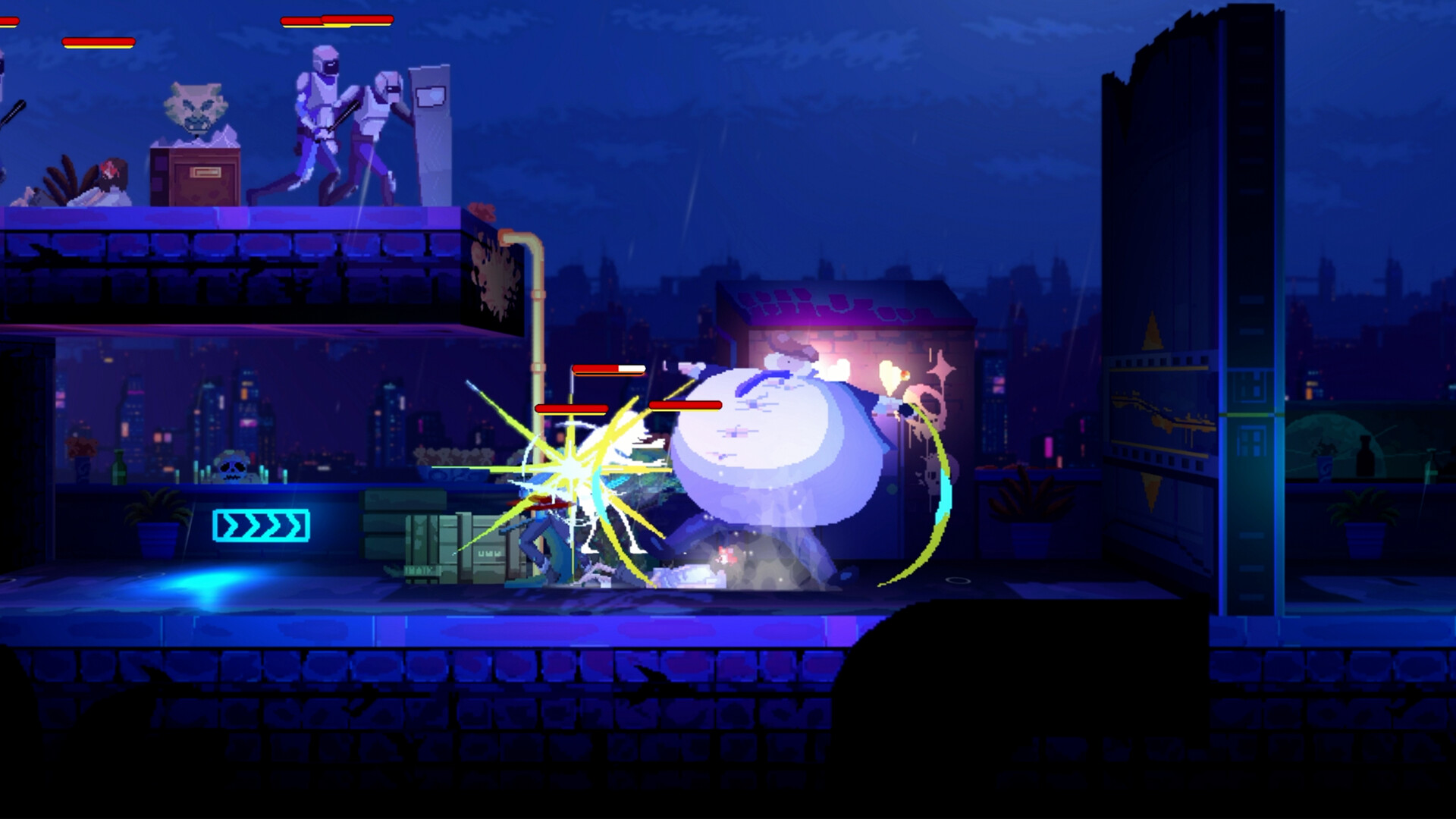
Pufferfish fires slow, heavy ranged shots. The trick is its Posture meter: reduce Posture to zero and the Pufferfish self-destructs, taking the pressure off without you having to chew through its whole health bar. Posture damage comes from heavy hits and finishers, so the Great Axe and hammer shred it. Do not trade shots with it at range; that is the fight it wants.
Flombie looks harmless and walks slowly, which is the trap. It is persistent, it slows you down on contact, and it surprises you with burst attacks when you are mid-combo on something else. Treat Flombies as area denial: clear them first or split groups so you never fight one while your back is to a wall. Its burst punishes players who animation-lock into long weapon combos.
The same patch removed Shielded Security enemies from Media Building levels, so Media Building runs lost their most annoying damage sponge. That level is also the community's speedrun benchmark, which tells you where the optimized routes live.
October's Big Bribe Update: Bribes, Double Dodge, and a Bigger Media Building
v0.5.3.12 (October 12) is the biggest single content drop since the Merchant. Three headline changes, and all three reward different playstyles.
The Bribe System. Before entering a biome, you can now pay cash to bribe its enemies. A bribed enemy dramatically throws itself to the ground the moment it sees you, and your money buys one of four effects:
| Bribe | Effect | Best For |
|---|---|---|
| Living Bomb | Bribed enemy instantly explodes, dealing massive damage to everyone nearby | Dense packs; bribing an enemy in the middle of a group and walking away |
| Aura Farm | Enemies that spot you are knocked back instantly, left vulnerable to a finisher | Finisher builds; the Axe Executioner and Chakram dervish both cash this in |
| Health Loss | Cuts the bribed enemy's maximum health in half before the fight starts | Bosses and tanky elites; halving a Pufferfish changes the math of the whole room |
| Resource Chance | Guarantees a 100% resource drop rate from defeated enemies | Farming runs where you need specific materials for the bus |
Treat bribes as a currency sink with a decision attached, not a gimmick. Coins were already the Merchant's heal-or-upgrade budget; now every biome entry asks whether your money does more work as a bribe or as shop stock. The rule of thumb: bribe bosses and elite rooms (Health Loss), save coins for heals everywhere else. Living Bomb is the fun pick but the explosion rarely beats what a Merchant heal buys.
Double Dodge. A new permanent upgrade, and the dodge system was reworked around it: animations and timings changed, and once unlocked you can dodge twice in a row. This is the biggest defensive buff since finishers started canceling boss volleys. It directly answers the top skill complaint, the strict i-frame window on the single dodge. Buy it as soon as your meta tree allows; it makes the Minister of Public Relations' charm charge and the Security Minister's projectile walls both survivable in a way single-dodge never was.
Boss Shortcut. The second new permanent upgrade, and it is a deliberate risk-reward dial. It gives you a VIP fast track to the Anomaly Abomination boss in the Media Building: you reach the boss much earlier, but you earn fewer upgrades along the way. Use it when your build is already strong and you want fast boss power unlocks; skip it on fresh-weapon runs where the skipped upgrades are the difference.
A bigger Media Building. Brand new levels nearly doubled the Media Building's total size. That matters beyond variety: this is the speedrun community's benchmark level, the level that lost its Shielded Security enemies in September, and now the home of the Anomaly Abomination shortcut. Media Building runs went from the most repetitive stretch of the game to the longest.
Patch History (v0.5.x Early Access)
| Version | Date | Key Changes |
|---|---|---|
| v0.5.3.12 | Oct 12 | The Big Bribe: Bribe System (Living Bomb / Aura Farm / Health Loss / Resource Chance); Double Dodge permanent upgrade with reworked dodge animations; Boss Shortcut to the Media Building's Anomaly Abomination; Media Building nearly doubled with new levels |
| v0.5.2.53 | Oct 8 | Restored missing sounds from the prior update; bug fixes |
| v0.5.2.52 | Oct 7 | World Map optimization; visual fixes |
| v0.5.2.51 | Oct 6 | Significant performance improvements; runs much better on low-end systems |
| v0.5.2.40 | Sep 30 | New double jump animation and VFX; 4 new Fluffy cinematics for Panic and Fluffy Death states; Bus Room alarms when a dead Fluffy is inside; reward-Fluffy spawns now always on the ground; Merchant item improvements; optimization pass |
| v0.5.2.02 | Sep 16 | Chakram weapon (Permanent Upgrades unlock); bus exterior show/hide input; credits menu; new SFX |
| v0.5.1.21 | Sep 9 | Pufferfish and Flombie enemies; Shielded Security removed from Media Building; ability video previews; yellow "Upgrade" text on bus rooms; controller vibration option |
| v0.5.1.10 | Sep 4 | Exchange Room bus room (trade resources); Anomaly Power Pack fix |
| v0.5.1.03 | Sep 3 | Enemy detection and patrol AI improvements; enemies resume patrolling when you break line of sight |
| v0.5.1.02 | Sep 2 | Merchant scene overlap fix; Corrupted School corridor slowdown fix |
| v0.5.1.01 | Sep 1 | World map and reroll SFX; controller cursor fix in Permanent Upgrades |
| v0.5.1.00 | Aug 31 | Great Axe weapon; Merchant Fluffy mid-run shop; coins as a new resource; starting-coin permanent upgrades; Support Fluffy damage up, cooldowns down; Base Build tutorials |
| v0.5.0.18 | Aug 21 | Food Truck on the World Map (send Fluffies for food); Ground Flame damage up; resource chests on Bridge levels |
| v0.5.0.17 | Aug 17 | Boss ranged attacks cancel during finisher animations; special-at-combo-end input fix; Base Build mode fixes |
| v0.5.0.10 | Aug 7 | Snake/Shielded/Speedy enemy damage reduced; finisher improvements; cheaper first Permanent Health upgrades |
The developers are patching fast, roughly a build a week with hotfixes between. The September wave delivered the month-one roadmap in full.
Progression Strategy
First priority: the meta-progression tree. Every run feeds it. Buy the cheapest permanent upgrades first, then the ones that match your preferred weapon. A single permanent damage upgrade outperforms hours of hoping for good RNG. After that, the two new weapons are the expensive unlocks; start saving for the Chakram if you like fast play, the Great Axe if you like heavy hits.
Second priority: bus rooms. Rooms are per-run multipliers. Prioritize, in order: an equipment room (better upgrades), a team room (more Fluffy slots), then anything that boosts campaign minigame rewards. Add the Exchange Room once you feel the pinch of mismatched resources. Watch for yellow "Upgrade" text on rooms; that is free value waiting.
Third priority: anomaly powers from bosses. Every boss you can beat is a new ability. Farm the bosses you can handle, even the optional ones. Earlier powers mean more of the game opens up.
Fourth priority: Fluffy care. Check needs before every night segment, and route Fluffies to the Food Truck when food runs low. A Fluffy lost in act three was probably unhappy since act one.
Builds and Tier Lists
Weapon Tier List (v0.5.2.02)
| Tier | Weapons | Notes |
|---|---|---|
| S | Sword, Chakram | Sword is the parry king and the safest all-rounder; Chakram's spinning-disc speed makes it the best new addition for aggressive players |
| A | Octo-Arms, Great Axe, Nunchucks | Octo-Arms stay the flashy high-damage pick; Great Axe clears groups with massive slow hits; nunchucks have excellent crowd control and combo speed |
| B | Claws, Kusarigama, Staff | Claws melt single targets; kusarigama rewards spacing; staff is a solid defensive option |
| C | Hammer | Big damage but slow wind-up; strong once upgraded, frustrating before that. The Great Axe fills the same fantasy with better group clear |
| Base | Fists | Always available; good for learning enemy patterns, outclassed once you own any weapon |
Placement notes: the Great Axe lands in A rather than S because its wind-up demands posture-heavy play and upgrades before it feels good. The Chakram earns S on speed alone; faster combat means more posture breaks, more finishers, and less time eating projectiles. One caveat carried over from launch: the per-run "recommended weapon" bonus XP tends to land on the kusarigama often. Take the XP if you want it, but do not feel married to the weapon.
Build Archetypes
The Swordmaster (parry specialist). Sword plus any power that rewards timing. Parry enemies at the right moment, build around counter-attacks and i-frames. Best for players who like reactive, precise play. Pair with Fluffies in the battle department to survive mistakes. Expect a learning curve on the reflect timing; it takes a few hours to click.
The Chakram Dervish (speed attacker). Chakram plus element upgrades that trigger on hit. The weapon's attack rate procs on-hit effects constantly, so fire or electric builds come online early. Best for players who like constant motion. Watch your stamina; the speed invites overextension.
The Cyber Mage (mass damage). Anomaly powers are your primary damage. Use a reach weapon like the staff or kusarigama to keep distance while your powers nuke groups. Commit to one element and reroll only inside it. Pair with equipment-department Fluffies to keep your powers upgraded.
The Axe Executioner (posture breaker). Great Axe with finisher and posture-damage upgrades. Every Pufferfish pops itself, every boss loses its ranged attacks to finisher cancels. Slow, deliberate, and enormous. Pair with battle Fluffies to cover your recovery frames.
The All-Rounder (beginner). Fists plus the first weapon you find, with upgrades split between damage and survivability. Not optimal, but forgiving. Use this build while you learn boss patterns.
Step-by-Step Strategy
Sequence 1: The Opening Region Clear.
- Enter the first region at night with fists only. Learn the enemy tells: which attacks telegraph, which enemies rush, which hang back.
- Beat every optional encounter before the boss. Each one drops currency and materials for the bus.
- Collect your first real weapon from the region's loot. Do not spend currency on weapon upgrades yet.
- Fight the Minister of Public Relations. Expect to lose. Each attempt teaches the charm-offense pattern.
- After the first death, spend all currency on the meta-progression tree and bus rooms, not on single-run gambles.
- Return and clear. Steal the HEART power. Your run identity now has a foundation.
Sequence 2: The Fluffy Department Reset.
- After every boss kill, open the team menu and re-read every Fluffy's current assignment.
- Ask which department is failing: dying too much (battle), losing elections (campaign), weak gear (equipment).
- Reassign at least one Fluffy to the failing department before the next night segment.
- Check needs. Feed, rest, or otherwise care for any Fluffy flagged as unhappy. Send Fluffies to the Food Truck when food is short.
- Repeat after every boss. Ten seconds per boss saves you from act-three abandonment.
Sequence 3: The Bus Build Order.
- Save the first chunk of resources for a bus room, not for single-run upgrades.
- Add the equipment room first. Better upgrades mean better weapons mean easier regions.
- Add a team room second. More Fluffy slots means more department coverage.
- Add a campaign room third. Minigame rewards scale with it.
- Add the Exchange Room once resource mismatch starts hurting more than weak upgrades.
- Revisit the bus between every cycle. A room a cycle compounds faster than any gamble.
Sequence 4: The Coin and Merchant Loop.
- Buy the starting-coin permanent upgrade before your next run.
- During the run, pick up every coin; early kills and chests are the main sources.
- Visit the Merchant the first time you see her just to learn her stock and prices.
- From then on, budget coins: heal before boss doors, buy damage upgrades when the offer matches your element.
- If you reach the Merchant at full health with nothing worth buying, bank the coins for the next shop visit instead of impulse-buying.
Sequence 5: The Element Commit.
- Identify your first element upgrade (fire and electric are the common starters).
- Check your bus rooms and anomaly powers; if two of three support the same element, that is your element.
- From the next level-up onward, reroll only when the offer is off-element. Accept duplicates within your element happily.
- Never spend your last reroll fishing; a locked offer you cannot use still beats an empty reroll pool at level 12.
- If the run forces an off-element pick, treat it as a dead slot and route your next picks around it.
Sequence 6: Boss Power Farming.
- Identify which bosses you can currently beat without losing more than one attempt.
- Fight them in order of easiest to hardest, ignoring story order.
- Steal each power. Log what it does before you equip it.
- Match the power to your weapon identity. A parry power goes on the sword build; a nuke goes on the cyber mage.
- Re-fight beaten bosses only if they drop currency you need. Otherwise push forward.
Sequence 7: The Election Push.
- When the campaign meter is near the finish, shift priority to minigames for a full cycle.
- Dance minigames first: they are the most forgiving once you learn the rhythm window and build crowd momentum.
- Throw presents to swing undecided districts. Watch the crowd reaction and adjust aim.
- Save the speech for the largest crowd. A good speech swings the most votes. Learn the Xbox-button prompt order regardless of your controller.
- Do not neglect Fluffy care during the push. An abandoned team loses you the election as surely as a lost fight.
Sequence 8: The Bribe Budget.
- Check your coin count at the start of every biome. Decide before you enter: bribe, save for the Merchant, or both.
- Default spend: Health Loss on rooms with elites or a boss. Halving their health is the most reliable value per coin.
- Use Living Bomb only when the bribed enemy sits in a dense pack; a solo explosion is wasted money.
- Take Resource Chance on farming runs, when the bus needs specific materials more than you need combat help.
- Save Aura Farm for finisher builds; if your build does not cash in finishers, the knockback alone rarely justifies the price.
- Never bribe a room you were going to clear anyway at full health; that is money the Merchant heal wanted.
Advanced Tips
The Department Match Rule. Every time you recruit a Fluffy, ask which department is currently failing before you assign them. A Fluffy in the wrong department is a Fluffy doing nothing for you. Reassign as your needs shift.
The Boss Power Rush. In the first few hours, prioritize the bosses you can actually beat, even if they are not the story-critical ones. Treat the boss list as a shopping list, not a gauntlet.
Build toward one identity. Specialization wins. A swordmaster who parries and a cyber mage who nukes play completely differently, and spreading your anomaly powers thin makes you mediocre at both. Pick an identity by the second or third boss and invest in that direction. The rogue-like structure means you can try the other identity next run.
Learn the dodge before the parry. The defensive timing is the steepest part of the game. The dodge has i-frames but the window is strict; the reflect/parry is harder still. Practice both on the weak opening enemies before you need them on a boss.
Finishers are defensive tools. Since v0.5.0.17, a boss's ranged attacks cancel when its finisher animation starts. Against projectile-spamming bosses, the answer to a incoming volley is often to delete the boss's turn with a finisher, not to dodge through six projectiles.
Break Posture, not just health. Pufferfish self-destructs at zero Posture. Posture damage scales with heavy hits, so the Great Axe and hammer turn "tanky" enemies into self-cleanup. When a fight drags, you are probably attacking health when you should be attacking Posture.
Break line of sight to reset patrols. The v0.5.1.03 AI pass made enemies react reliably to spotting you and resume patrol when you vanish. Stealth-adjacent players can use this: duck around a corner, let the room reset, and pick off enemies one at a time instead of fighting the whole floor.
Care for Fluffies before you need them. The abandonment mechanic punishes neglect retroactively. A Fluffy who leaves you in act three was probably unhappy since act one. Make team care a routine, not a reaction.
The bus is a force multiplier. Every room you add is a permanent upgrade to capacity: more team slots, better upgrades, more preparation options. It is the one investment that pays off every single cycle.
Watch the patch feed before you blame yourself. The team ships fixes constantly. The upgrade-offer pool, enemy damage, and shop behavior have all shifted since launch. If a mechanic feels broken, check the news page; v0.5.1.02 alone fixed a Merchant scene bug and a level slowdown that players were mistreating their settings over.
Dodge twice, die less. After unlocking Double Dodge, unlearn the single-dodge rationing. Two chained dodges cross gaps the old timing could not, and the reworked animations come out faster. Against projectile-wall bosses, the answer changed from "read the pattern and thread it" to "roll through the first wave and roll again."
Bribe the math, not the room. The Bribe System is a coin-to-damage converter. Before spending, compare: does this coin do more as half an elite's health bar, or as a Merchant heal in two rooms? Elites and bosses favor bribes; everything else favors the shop.
The Airborne Rule: Why Your Hits Whiff
The single most misunderstood combat interaction in the game, straight from player reports: enemies knocked into the air or falling mid-attack take ZERO damage from your hits until they land. Every attack on a falling enemy whiffs completely.
This changes three habits:
- Do not chase launchers with combos. If your attack chain launches an enemy, the rest of the combo text is visual only. Either wait for the landing frame to resume damage, or turn to a second enemy while the first falls.
- Time posture damage for the landing. Against Pufferfish, knocking it up does nothing by itself. Plan the heavy hit for the exact frame it touches the ground, so the posture damage lands instead of whiffing.
- Knockback is crowd control, not damage. A launched pack is a paused pack. Use the airtime to reposition, pick up coins, or line up finishers for the moment everyone lands.
New players read this as "the game ate my hits." Veterans read it as free breathing room. The difference is knowing the rule.
The Chakram Playbook
The newest weapon deserves its own section because it plays unlike everything else. Chakram is a spinning-disc weapon with a much faster attack rhythm than sword or axe, and its identity is uptime: more attacks per second means more on-hit procs, more posture accumulation, and more finisher windows.
The build logic:
- Element commitment pays double. Chakram's attack rate multiplies the value of every on-hit element upgrade. A fire build that procs once per combo on sword procs three times per combo on Chakram.
- Pair with Support Fluffies, not battle ones. Your damage plan is already volume-based; Support Fluffy buffs patch the gap that slow weapons feel and Chakram does not. Put your team slots into campaign or equipment instead.
- Watch the pattern-lock. Chakram's speed invites overextension. The Flombie burst punish exists specifically to catch players mid-spam. Build the habit: three dashes of distance between every combo, always.
- Unlock order. Buy it after starting coins and one weapon-tier permanent upgrade. It replaces the sword as the default carry for aggressive players, but it needs a couple of element upgrades online before it outperforms a well-upgraded sword.
Boss Pattern Primer
The three confirmed bosses reward specific preparations. This primer is the cheat sheet:
Minister of Public Relations (first boss, HEART power). The wall of the early game. Her charm offensive punishes greedy players who stay in melee range during her buff windows. The fight is a rhythm exercise: burst during her vulnerability, retreat during the charm charge, repeat. If you lose five times in a row, stop and grind the region for a permanent upgrade before returning; the math of one more damage tier breaks her charge rhythm.
The Dean (mid-game, Corrupted School). His phase transition was specifically fixed in v0.5.0.16, and finishers now interrupt his animations more reliably. The fight rewards finisher usage over raw damage: every finisher cancels a ranged volley and resets his phase pressure.
Security Minister (late Early Access). One of the most powerful pawns of the Evil President. Expect the densest projectile patterns in the current build. This is the fight where the Chakram's speed and the Great Axe's posture break both have published fan strategies; pick based on whether your build survives chip damage (axe) or dodges it (chakram).
The speedrun community uses the Media Building as its benchmark level, so if you want to see optimized routing in action, that level is where the routes live.
Known Issues & Troubleshooting
| Issue | Status / Workaround |
|---|---|
| First boss difficulty spike | Softened by patches but still real; grind region, upgrade bus + meta tree, return |
| Airborne enemies take zero damage | Working as designed, not a bug; hits whiff until the enemy lands. Time heavy hits and posture damage for the landing frame |
| Repetition past 10-20 hours | The top community complaint; roadmap points to more content before full release. Mitigate with weapon swaps and element reruns |
| Runs feel faster without upgrading | Reported by several players; if your build stalls, try a lean run with fewer but stronger picks |
| Run-to-run level/boss variety | Top community complaint past 20 hours; roadmap says more content is coming, expect this to improve toward full release |
| Screen stuck after unlocking an Anomaly Power | Reported Sep 2 (v0.5.1.00 era); if it hits, restart the level; check hotfixes first |
| Upgrade offers repeat despite owning many | Reported by multiple players; commit to one element to shrink the mismatch |
| FPS drops | Reported in forums; lower graphics, check the latest hotfix. Dev confirmed more optimization is coming in future updates |
| Dead Fluffy in a bus room | Since v0.5.2.40, the room's alarm sounds so you notice; remove and reassign the Fluffy promptly |
| No achievements | Confirmed missing; arriving at full release per developer statements |
| No D-pad movement option | Requested since August; use stick movement |
| Sprint is hold-B only | No toggle yet; request logged by the community |
| Steam Deck performance | ProtonDB Platinum reports; mostly smooth, occasional frame dips on older units |
| No in-game difficulty setting | Not present in the current build |
FAQ / Common Mistakes
When did Anomaly President release? It launched into Steam Early Access on August 3, 2026, at v0.5.x. The current build is v0.5.3.12.
How much does it cost? $14.99 base, currently 20% off at $11.99 (S$13.19 in SGD regions). The developers plan to raise the price as content ships, so Early Access pricing is the cheap entry. Bundle buyers can knock more off through any of the 45 store bundles, including ones with Windblown, Ravenswatch, Eggo, Mexican Ninja, or Anomaly Agent.
Is it a sequel? It is the follow-up to Anomaly Agent by Phew Phew Games. Reviews note it has significantly more features, content, and a big visual upgrade over the first game.
Why is the first boss so hard? The Minister of Public Relations is the skill check of the early game. Launch-window players reported 20+ attempts. Later patches reduced enemy damage and made finishers cancel boss ranged attacks, so the fight is fairer now. Grind the region, upgrade the bus and meta-progression tree, then return.
Is the save system punishing? It launched rough, but v0.5.0.09 fixed the base-data deletion bug and subsequent patches smoothed checkpoints. Steam Cloud and Family Sharing are supported. Keep the game updated and the worst of the original save pain is gone.
Are there achievements? Not yet. Developer statements point to achievements at full release.
Is it single-player only? Yes.
Does it have controller support? Yes, full support with DualShock and DualSense profiles. Early builds disabled Steam Input to fix double-input issues, so use native bindings. A controller vibration toggle was added in September.
Does it run on Steam Deck? ProtonDB reports are Platinum. The store page does not list an official Verified badge in the data we checked, but player reports are positive with occasional frame dips.
How many weapons are there? Ten: fists, sword, nunchucks, claws, kusarigama, staff, hammer, Octo-Arms, plus the Great Axe and Chakram from the Permanent Upgrades menu.
Why do my attacks miss flying enemies? Enemies knocked airborne or falling take no damage until they land. It is the game's most misunderstood rule. Pause your combo when an enemy launches, reposition, and hit them on the landing frame.
Is the repetition a dealbreaker? Depends on your tolerance. The positive reviews average 10-25 hours played; the negative reviews cluster around the 10-20 hour variety wall. If you play one rogue-like to completion and move on, the content is enough. If you grind one game for 100 hours, wait for full release.
Can Fluffies die? Yes. If you neglect them, Fluffies may abandon you or lose their lives, permanently removing their department bonus for the run. The Food Truck makes feeding them easier since v0.5.0.18, and v0.5.2.40 added bus room alarms that sound when a dead Fluffy is inside a room.
What does the Merchant Fluffy do? She is a mid-run shop. She sells health restoration and upgrades for coins, the run currency added August 31. Permanent upgrades can raise the coins you start with.
What is the Exchange Room? A campaign bus room from v0.5.1.10 that converts one resource type into another. It fixes runs where the map starved you of a specific material.
What are the new enemies? The September update added Pufferfish, a slow ranged attacker that self-destructs when its Posture hits zero, and Flombie, a persistent slow-walker that slows you on contact and bursts when you are mid-combo. Shielded Security enemies were removed from Media Building levels in the same patch.
What is the Bribe System? A mechanic from the October Big Bribe update (v0.5.3.12). Before entering a biome, you pay coins to bribe its enemies, choosing one of four effects: Living Bomb (the bribed enemy explodes for massive area damage), Aura Farm (enemies that spot you are knocked back and left finisher-vulnerable), Health Loss (their max health is cut in half), or Resource Chance (guaranteed 100% resource drops).
What is Double Dodge? A permanent upgrade from the Big Bribe update. The dodge system's animations and timings were reworked, and once you unlock it you can dodge twice in a row. It is the best defensive investment in the meta tree.
What is Boss Shortcut? The second Big Bribe permanent upgrade. It fast-tracks you to the Anomaly Abomination boss in the Media Building much earlier in the run, at the cost of earning fewer upgrades along the way. Strong builds take it for quick boss power unlocks; fresh builds skip it.
What is coming in the next patches? The month-one roadmap items all shipped by early September. The full-release plan still stands: at least one year of Early Access, the rest of the map opens, achievements ship, and the price rises as content lands. Expect more weapons, enemies, and map regions based on the roadmap image and the September cadence.
Is it worth buying in Early Access? If you like watching a game grow and can tolerate spikes and glitches, yes, especially at the discount. If you want a finished experience, wishlist it and wait. The one caution from the community: dedicated players report around 20 hours of content in the current build, so judge the price against that.
Update History / Roadmap
The developers ran a "Road to Early Access" series before launch and have out-delivered it since. The demo attracted more than 27,000 downloads, launch day brought over 10,000 players into the revolution, and the community has kept a speedrun contest series alive using the Media Building as its benchmark level.
The August 7 roadmap promised, in order: launch-week balance fixes, month-one Fluffy buffs and the Exchange Room and Merchant, September enemies and weapons, and eventually a full release after at least a year. Every month-one and September promise shipped on schedule, and October went off-script with the Big Bribe update: a mechanic (bribing) that was never on the roadmap, plus the Double Dodge and Boss Shortcut upgrades and a doubled Media Building. The v0.5.2.51 optimization patch earlier that month delivered a measurable frame-rate improvement, the most direct response yet to the FPS-drop complaints.
Expect the next patches to target the top community asks: more level and boss variety between runs (the doubled Media Building is a start), a run toggle and D-pad support, and an upgrade-offer pool that respects your committed element.
Final Tip / Verdict
The habit that will save your run is the Element Commit. Early, look at your first element upgrade, your bus rooms, and your anomaly powers together, then refuse every offer outside that element for the rest of the run. Rerolls exist for exactly this. Players who swim in one pool build cohesive machines; players who grab everything build a drawer of mismatched parts.
The habit that will save your buy is the Hours Test. Positive reviews cluster between 10 and 25 hours of play; negative ones concentrate on the variety wall past 20. If that profile matches how you play rogue-likes, buy it now at the discount and enjoy the ride as the updates land. If you need 100 hours from every purchase, wishlist it and revisit at full release.
Anomaly President is a confident Early Access release that keeps getting better on a weekly cadence. The day/night loop, the boss-powered anomaly system, the Fluffy management, the coin-and-Merchant economy, and the bus building give it a structure that goes beyond a standard action rogue-like, and a review score that climbed from 774 to 1,432 Very Positive reviews while staying positive says the updates are landing. The variety ceiling and the missing achievements are real warts, but both are exactly the kind of thing Early Access exists to fix. For fans of Anomaly Agent and anyone who likes their action games with a strategy layer, this is an easy recommend at the discount price. 4/5 for its target audience.
Last reviewed by Game How To Editorial. We play each game, verify controls against official sources, and update guides when game mechanics change.