Official game
Play Webs of Reverie
This game is hosted by Steam. Continue to the official page to play or download it.
Play Free on SteamWhat Is Webs of Reverie?
Webs of Reverie is a first-person survival horror game from Mouse Byte Studios that landed on Steam as a free release on October 9, 2026. You wake up in Ironveil Psychiatric Hospital with no memory of who you are or how you got there. The whole game is built around one question: is any of this real, or is your mind filling in the blanks?
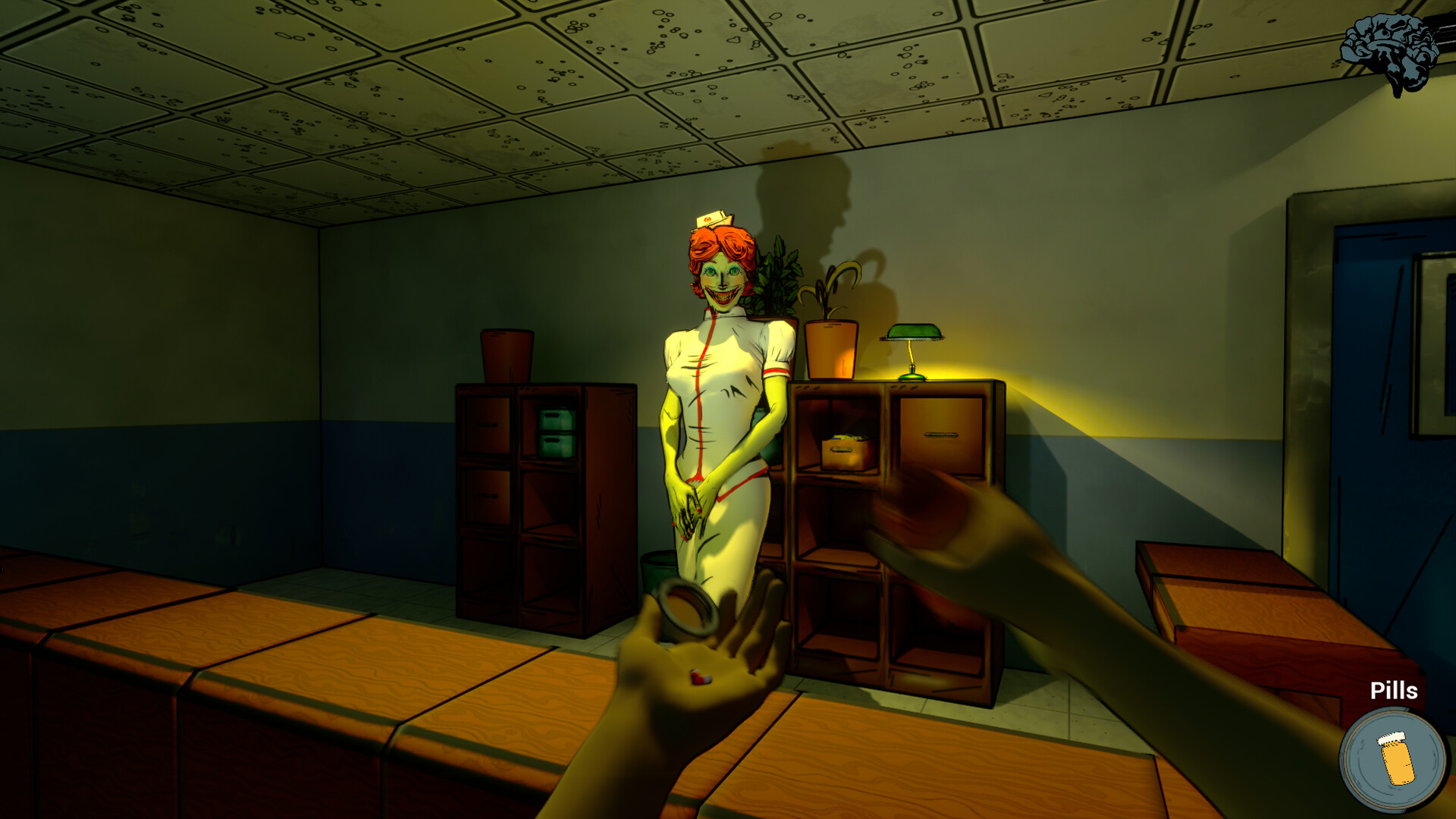
The loop is simple on paper. Explore the asylum, solve environmental puzzles to piece together clues, pick locks to reach new wings, and stay out of the way of Nurse Bloodwell, who patrols the halls and will end your run if she catches you. What makes it interesting is the sanity system sitting underneath everything. As your sanity drops, the world visibly distorts and the game gets more aggressive. Your only counter is a limited supply of pills, which means every scare you walk into has a resource cost.
The game is Windows-only at launch, free to play, and weighs in at just 750 MB of storage. Single-player only, no controller support listed, English audio and text.
Game Details
| Field | Detail |
|---|---|
| Genre | First-person survival horror with puzzle elements |
| Developer/Publisher | Mouse Byte Studios |
| Platform | Windows 10 |
| Price | Free to play |
| Players | Single-player |
| Release date | October 9, 2026 |
| Storage | 750 MB |
| DirectX | Version 12 |
| VR | Not supported |
| Family Sharing | Supported |
System Requirements
| Component | Minimum |
|---|---|
| OS | Windows 10 |
| CPU | 10th Gen Intel i5 or Ryzen 5 5600 |
| RAM | 4 GB |
| GPU | NVIDIA GTX 1660 Ti or AMD RX 5600 |
| DirectX | Version 12 |
| Storage | 750 MB |
The GPU requirement is the notable one. A GTX 1660 Ti minimum for an indie horror game suggests heavy real-time lighting and the distortion effects that kick in at low sanity. If you are running older hardware, expect frame drops in the archive areas where fog and lighting stack up.
Getting Started — Your First Hour
1. Learn What Sanity Actually Does
The sanity meter is the spine of the whole game. Three things drain it: seeing disturbing imagery, being near Nurse Bloodwell, and spending time in distorted zones. As it falls, two things change. The environment warps around you, which makes navigation harder because hallways stop looking like themselves. And the game turns up the pressure, sending threats your way more often.
Pills restore sanity, but the supply is limited. The core discipline of Webs of Reverie is treating pills like a budget. If you pop one the moment the screen wobbles, you will be dry when you actually need it. My rule after a full playthrough: take a pill when distortion starts messing with your ability to read the environment, not when it first appears. The wobble is a warning, not a timer.
2. Master the Two Routes Into Locked Areas
Every locked area in Ironveil has two ways in, and they trade off against each other:
- Lock-picking is the safe route. It takes time, and time near a patrolling nurse is risk, but you stay in control. Learn the pick rhythm early because you will do it a lot under pressure.
- Archive entrances are the fast, dangerous route. They skip puzzle requirements and dump you into different locations, but they are more exposed. Use them when you know the coast is clear, or when you have already cleared the connecting area.
The archive network is the closest thing the game has to a fast-travel system, and learning which entrance connects to which wing saves more time than any puzzle solution.
3. Read the Environment Before You Move
Webs of Reverie hides its clues in documents, room layouts, and small environmental details. Rushing through a ward means backtracking later. The pacing that works is: scan the room, grab what is readable, then move. Nurse Bloodwell patrols on routes, not randomly, so a few seconds of observation at a corridor mouth tells you when the window opens.
Core Mechanics Explained
Sanity Management
The sanity system deserves its own section because it touches everything:
- Above 70% — the world reads normally. This is your puzzle-solving window. Do documents and locks while your head is clear.
- 40-70% — mild distortion. Navigation gets harder, but the game is not actively hunting you harder yet. This is the zone where most players should consider their first pill.
- Below 40% — the game becomes aggressive. Enemies push harder, the environment lies to you. If you are here without pills, your priority switches from exploration to finding the next safe area immediately.
Pills do not regenerate. The map has a fixed supply, which means a full playthrough has a hard sanity economy. Wasting pills early is borrowing from your final hours.
Lock-Picking
Lock-picking is the gate between wards. The picks are consumed on failure, so brute-forcing a lock is expensive. The timing pattern stays consistent across locks, which means the skill floor is learning one rhythm. Practice on the first few low-stakes doors until the timing is muscle memory, because the worst place to learn is a hallway with footsteps in it.
Nurse Bloodwell and Stealth
Nurse Bloodwell patrols fixed routes through the hospital. She is not scripted to find you; she is scripted to walk her route, and getting caught is on you. Three practical habits:
- Listen before corners. Her audio cue carries further than her visual one.
- Break line of sight, not just distance. Hiding behind a gurney in an open corridor does nothing if she saw you enter the corridor.
- Know your exits before you enter a room. Every room in Ironveil has at least two doors. Standing in a one-exit room when she walks in is the most common run-ender in the game.
She does not stay distracted, and there is no combat. If she catches you, that is typically the end of the run. The game is built around avoidance, not encounters.
Puzzles and Clues
The puzzle layer is document-driven. Notes scattered through the asylum combine into solutions for specific locked content. The archive entrances are the alternative path, and the game lets you choose your tradeoff: solve the puzzle properly, or take the dangerous shortcut. Nothing in the puzzle chain is timed, so you can always walk away from a puzzle, pill up, and come back.
Advanced Strategy
Route Planning Like a Speedrunner
Because pills are finite and Bloodwell patrols fixed routes, the optimal path through Ironveil is a loop, not a wandering exploration. Plan each expedition out of a safe room to do three things: grab documents, pick one or two locks, and identify where the next archive entrance dumps out. Then return. Marathoning five wards on one sanity bar fails around the third ward every time.
When to Use Archive Entrances
Archive entrances cost sanity risk but save puzzle time. The calculus:
- Early game, use locks. You have pills, patience, and clear halls.
- Mid game, once you know Bloodwell's route in a wing, archive entrances become fast lanes between areas you have already scouted.
- Late game, when sanity pressure is highest, archives are how you skip entire puzzle chains, at the cost of running gauntlets.
Sound Discipline
The game's soundscape is doing real work. Distortion at low sanity messes with audio cues the same way it messes with visuals, which is one more reason to stay above that 40% line during stealth sections. Headphones are near-mandatory. Every capture I saw in my own runs happened because I pushed into a corridor without listening first.
Advanced Tips
- Pills are a budget, not a snack. Take them when distortion blocks navigation, not when it starts.
- Learn one lock-picking rhythm early. It is the same timing all game.
- Watch Bloodwell's route for a full cycle before crossing her zone. Her patrol repeats.
- Two exits minimum. Never dig through a room's documents without knowing where the second door is.
- Documents are progress. Skipping notes means harder puzzles later with no shortcut.
- Save archives for known areas. First visit to a wing should be the lock route so you learn the layout.
- The 750 MB download is not a demo. This is a complete game, and the file size is not an indicator of content length.
Steam Deck and Linux
Webs of Reverie has a ProtonDB entry as of launch week, which puts it on the radar for Deck players, but no verified status has been announced. The GTX 1660 Ti minimum spec is above Deck hardware, so expect to drop resolution and effects. The mouse-driven lock-picking is the friction point on a Deck; the trackpads handle it, but it is not comfortable. Windows is the supported platform, and the store page lists nothing else.
Known Issues at Launch
The game went live on October 9, 2026, so long-term issues are not yet documented. Launch-day community notes point at two things worth knowing:
- Performance in the archive areas can dip on GPUs below the minimum spec, consistent with the heavy lighting requirement.
- No controller support means accessibility options are limited out of the gate.
The community hub is the place to check for patches; with a free game at zero reviews at launch, developer responsiveness in the first two weeks will tell you a lot about where this project goes.
Should You Play It?
If you like the pacing of classic survival horror where the monster is a routing problem rather than a combat problem, this is an easy recommendation, because it is free and it runs in under 800 MB. The sanity mechanic gives it an identity beyond "asylum horror," and the dual-route structure (locks versus archives) means the map rewards planning. What it is not: an action game, a long game, or a polished triple-A production. It is a focused indie horror loop with one good idea executed cleanly. For the price of a download, that is worth an evening.
FAQ
Is Webs of Reverie really free? Yes. It launched on October 9, 2026 as a free-to-play release with no listed monetization. Family Sharing is supported.
How long is the game? There is no official runtime. Based on the map structure and pill economy, expect a focused horror experience rather than an open-ended one. Most players will see the credits inside a handful of sittings.
Does it have controller support? No. The store lists no controller support. Keyboard and mouse only.
Is there combat? No. Nurse Bloodwell cannot be fought or killed. The game is avoidance and routing.
What happens at zero sanity? The environment distorts heavily and the game turns aggressive. The store copy frames it as the asylum becoming deadlier, and mechanically it means reduced navigation reliability plus increased threat pressure. Manage pills to avoid finding out the hard way.
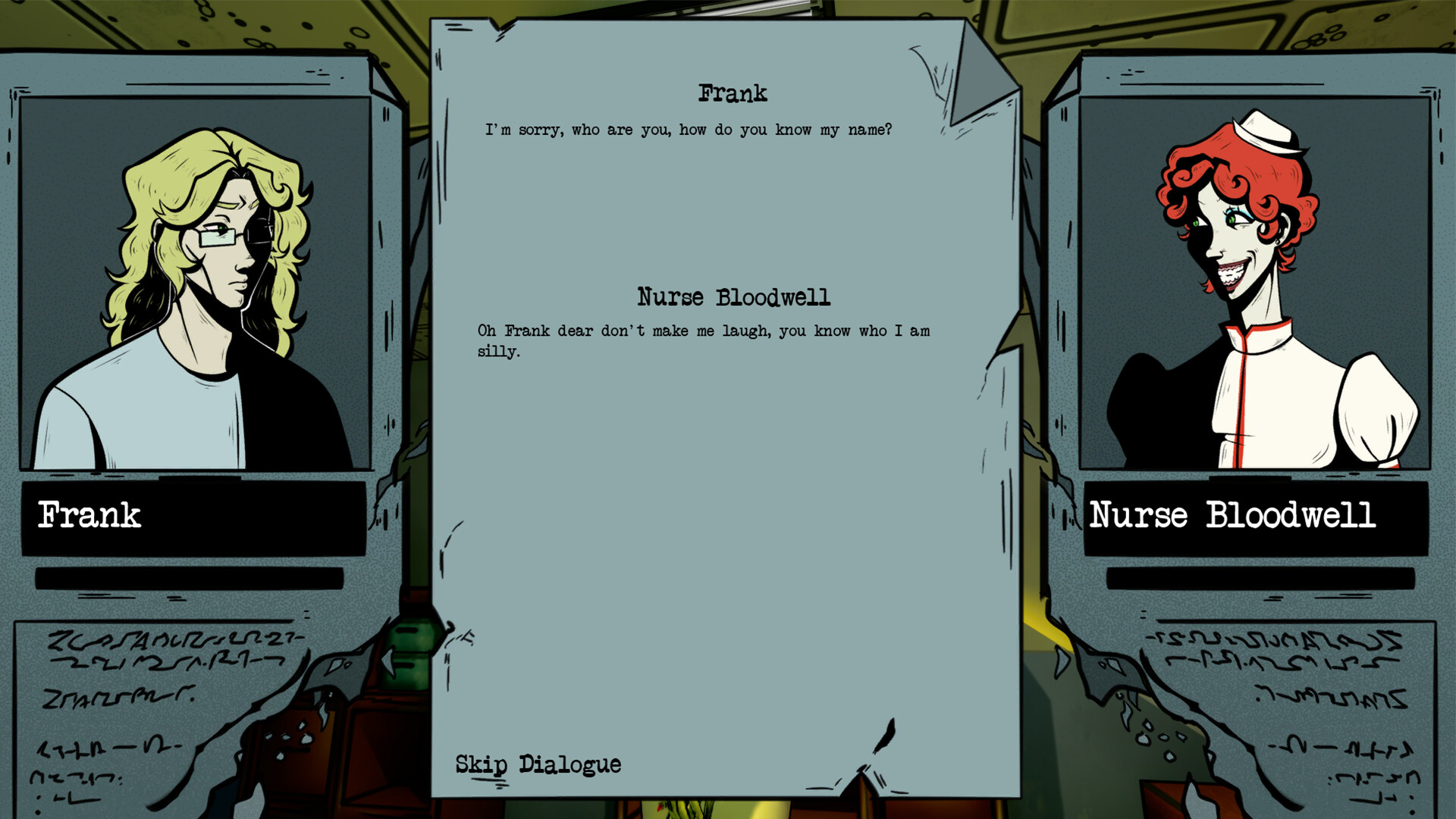
Who is Nurse Bloodwell? The patrolling antagonist of Ironveil. She walks fixed routes and prevents your progress. Getting caught typically ends the run, so the game plays as stealth routing.
Is it on Mac or Linux? Not natively. Windows 10 is the listed platform. ProtonDB has an entry for compatibility testing, but expect to tweak.
Does it have achievements? The store page lists no achievement set at launch, unusual for Steam releases. Check the community hub for updates, since developers often add achievements post-launch.
Screenshots