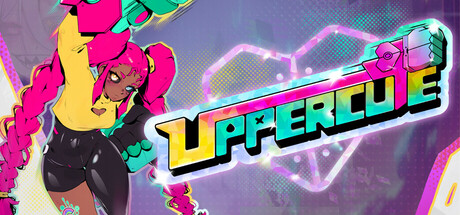
Official game
Play Uppercute
This game is hosted by Steam. Continue to the official page to play or download it.
Buy on SteamWhat Is Uppercute?
Uppercute is a fast-paced 3D action platformer from PrettyScar that hit Steam on October 9, 2026 for $9.60. You play as one of the Uppercute sisters, diving into people's minds to retrieve information in a dystopian city run by corporations, hunting for the truth behind your brother's disappearance. Each mind is a platforming course with combat mixed in, and the whole game is tuned around one feeling: going fast until the run is clean.
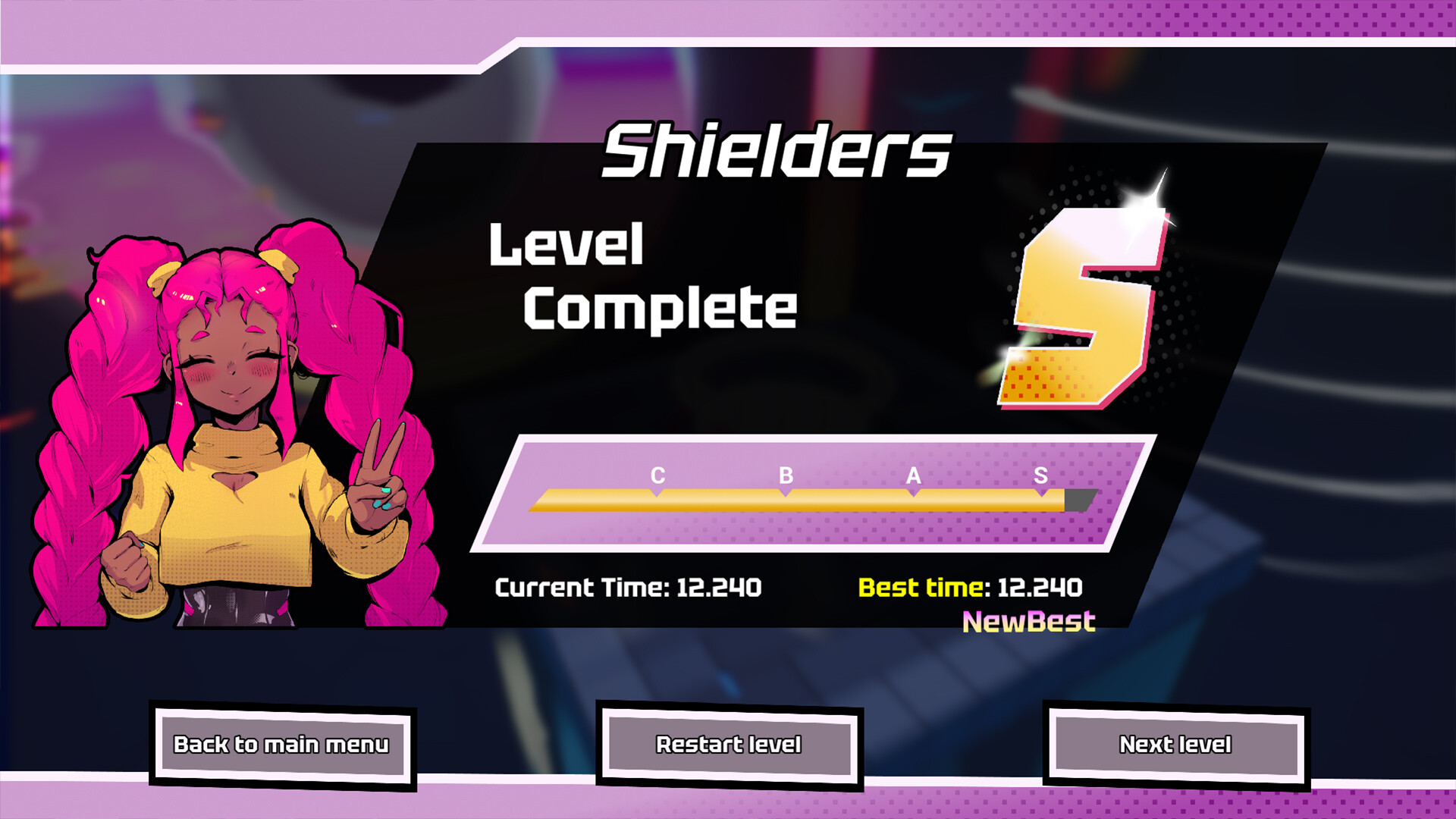
The road here was long. Uppercute ran a Kickstarter, showed up at Steam Next Fest Summer 2025 with a demo, circulated through indie showcases like GCMX, and finally shipped on October 9 alongside a wave of other indies. Launch reviews are unanimously positive across the first wave of players, and the one-liner everyone reaches for is the same: it's Neon White, but with characters and a story. Steam leaderboards are built in, the game tracks 40 achievements, and the difficulty curve is designed so finishing a level is forgiving while topping the leaderboard is brutal.
A single playthrough runs a few hours. The real content is replay: score attacks, friend-leaderboard chasing, and mastering the movement tech this guide covers.
Game Details
| Field | Detail |
|---|---|
| Genre | 3D action platformer / speedrun-focused |
| Developer/Publisher | PrettyScar |
| Platform | Windows 10/11 |
| Price | $9.60 |
| Players | Single-player |
| Release date | October 9, 2026 |
| Controller | Full support |
| Achievements | 40 |
| Leaderboards | Steam Leaderboards integrated |
| Steam Cloud | Yes |
| Languages | English, Japanese, Portuguese-Brazil, Simplified Chinese |
System Requirements
| Component | Minimum | Recommended |
|---|---|---|
| OS | Windows 10 | Windows 11 |
| CPU | Intel i5-3470 or Ryzen 3 1200 | Intel i7-4770K or Ryzen 5 1400 |
| RAM | 4 GB | 8 GB |
| GPU | GTX 750 Ti or Radeon HD 7850 | GTX 770, R9 270X, or Intel Arc A380 |
| DirectX | Version 11 | Version 11 |
Modest requirements by 2026 standards. One launch reviewer specifically called out that it is well optimized on handheld PCs, which is rare praise for an indie platformer in its first week.
Getting Started — Core Movement
The Movement Kit
Uppercute's platforming is built on a stack of movement verbs that chain into each other. The exact kit per your run: run, jump, dash, and the signature uppercut launcher that doubles as a vertical recovery and a combat opener. The design goal, per the store copy, is gameplay focused on speed where the challenge is improving your line through each obstacle course.
Three habits separate a 40th-percentile time from a podium run:
- Never touch the ground longer than a jump requires. The movement system rewards airtime chaining. Every landing is a speed reset unless you convert it into a dash or a jump cancel.
- Uppercut is recovery first, combat second. New players burn the launcher on enemies. The score meta uses it to extend air chains and skip geometry.
- Restart is a feature, not a failure. One launch reviewer pinned the game's addictiveness on instant restarts: the ability to reset a level at any moment turns casual runs into tryhard loops. Use it constantly.
Combat Basics
Enemies in the minds are obstacles with hitboxes. The launcher (uppercut) sends them flying, which matters because airborne enemies become platforming steps. The combat loop in a scored run is: launch an enemy, bounce off it, extend your air chain, land past the fight entirely. Treating combat as a detour costs you points and seconds; treating enemies as movable platforms is the intended tech.
The review that called it "easy to play, hard to master" is the accurate one-liner. Your first pass through a level will use a fraction of the kit. The game never forces the advanced tech; leaderboards do.
Scoring and Leaderboards
Every level tracks a time-and-style score feeding Steam Leaderboards. The scoring meta, pieced together from launch reviews and the demo community:
- Speed is the base. Clear time is the backbone of the score.
- Chains multiply. Unbroken movement chains (jump-dash-launcher sequences without touching a reset state) multiply your base.
- Combat bonus. Defeating enemies adds score, but only worth it when the kill sits on your natural line. Detouring for kills loses more time than the bonus pays.
- No-damage runs score clean. Getting hit breaks your chain multiplier in addition to the time cost.
The practical loop for climbing: run the level three times. First run, learn the layout and die anywhere. Second run, find the line. Third run, execute the line cleanly and only then hunt optimizations. Reviewers consistently compare it to Neon White's one-more-run pull, and the structure supports it: levels are short, restarts are instant, and the leaderboard is right there.
Level Structure — Diving Minds
The campaign is a series of mind-dives. Each dive is a self-contained course themed around the person whose mind you're inside, which gives levels distinct visual identities even inside the shared neon aesthetic. Between dives, a story layer unfolds: the sisters' investigation into corporate corruption and their brother's disappearance.
Two structural notes for planners:
- Story pacing is on your side. Narrative beats land between levels, not inside them. Nothing interrupts a run mid-course.
- Levels end when you reach the exit, not when you clear enemies. Any enemy you leave behind is only a score question, never a gate. Route around everything on a first pass; fight on optimizes only.
Advanced Movement Tech
The community tech list is still forming in launch week, but the demo community (active since Summer 2025) established the fundamentals:
- Dash-jump chaining preserves more speed than dash-ground-dash. The timing window is generous by speedrun standards but the muscle memory takes a few hours.
- Launcher cancels. Uppercutting at the edge of a platform converts horizontal speed into vertical without the jump animation's startup. This is the single biggest time-saver on leaderboard runs.
- Enemy bounce routing. Launched enemies stay bouncy for a short window. Plan lines through enemy clusters as bounce paths rather than fight paths.
- Corner-cutting with the camera. The camera follows your velocity. Sharp inputs let you clip visual corners on curves; worth practicing on the highway-themed levels where the geometry allows it.
Watch the top-10 leaderboard ghosts before grinding optimizations. The replay culture around time-attack platformers means the fastest routes get documented by ghost alone, no guides required.
Achievements Overview
Uppercute ships with 40 achievements. The visible launch set includes:
- Progression achievements — Getting Ready, Runner, Novice runner: story and tutorial milestones you'll unlock naturally.
- Combat achievements — Regicide, Know your place, No poison left to suck: enemy-specific kills that need particular finishers.
- Score achievements — LET IT RIDE!, Pay day: score thresholds that align with leaderboard grinding.
- Hidden and oddball achievements — Muted (silence your sister mid-tutorial, a classic), Need something to believe in?
The structure suggests a completion run of 10-15 hours: campaign first, then score grinding for the LET IT RIDE tier, then cleanups. None of the launch achievements require multiplayer or external tools.
Advanced Tips
- Instant restart is your best friend. The moment a run goes sideways, reset. Sunk time is not recovered time.
- Play with a controller. The game supports keyboard, but analog stick precision for micro-adjustments is what the levels are tuned around. Full controller support includes the accessibility options.
- Enemies are platforms. Fight only what sits on your line.
- Learn one level's leaderboard ghost before moving on. The tech transfers.
- Turn on the custom volume controls early. The soundtrack slaps, but voice lines repeat; the game lets you mix them separately.
- Playable without timed input exists. If the dexterity demands get rough, the accessibility mode adjusts input windows rather than trivializing courses.
- Jorgito is the pet and the best boy. Community consensus. No mechanical effect documented, moral support confirmed.
Steam Deck and Performance
Uppercute is one of the rare launch-week indies with handheld-PC optimization called out in reviews by name. The minimum spec (GTX 750 Ti) is well below Deck hardware, and the game runs well on handheld PCs per launch players. Expect battery drain consistent with a 3D platformer, roughly mid-pack. Full controller support means zero remapping work on Deck.
How It Compares
Neon White is the obvious and mostly fair comparison: card-based movement gifts versus Uppercute's dedicated kit, heaven's hub versus a story about sisters. The distinction launch reviewers keep making: Neon White's gameplay is discard-driven card play, Uppercute's is a fixed moveset you internalize once. If Neon White lost you on card management, Uppercute is the purer movement expression.
Spark the Electric Jester 3 and Sonic-likes share the momentum-platforming DNA but with open levels; Uppercute's courses are linear score attacks.
Katana ZERO matches the "one more run plus story between levels" structure, though Uppercute's story is lighter and warmer than Katana ZERO's bleakness.
The game's own framing is the cleanest: gameplay focused on speed, where the challenge is improving. Every design choice serves that sentence.
Is Uppercute Worth It?
At $9.60 with unanimous positive first reviews, 40 achievements, built-in leaderboards, and handheld optimization, Uppercute is an easy recommendation for anyone who likes movement games. The caveats: it is short if you don't engage with score chasing, the story is serviceable rather than gripping, and the difficulty ceiling on leaderboards will eat speedrun tourists alive. Buy it for the movement loop, stay for the ghost-chasing.
FAQ
When did Uppercute release? October 9, 2026 on Steam for Windows, self-published by PrettyScar.
How much does Uppercute cost? $9.60 at launch, with regional pricing on other storefronts.
Is Uppercute like Neon White? Closest comparison on the market. Both are fast first-person/third-person movement games with score attack structure. Uppercute uses a fixed moveset instead of Neon White's card system, and adds a persistent story layer about the Uppercute sisters.
Does Uppercute have leaderboards? Yes, Steam Leaderboards are integrated per level, a core part of the replay loop.
How many achievements does Uppercute have? 40 at launch, mixing story progression, combat challenges, and score thresholds.
Is there a demo? A demo circulated during Steam Next Fest Summer 2025 and earlier showcases, but the store page now points at the full game only.
Is Uppercute on console or Mac? Windows only at launch. No console or Mac versions are announced.
Does it have accessibility options? The store lists Playable without Timed Input and Custom Volume Controls, both uncommon tags for indie platformers.
Who are the Uppercute sisters? The protagonists: two sisters with runner skills who dive into people's minds to extract information in a corporate dystopia, searching for their missing brother. Your sister accompanies you, with dialogue through the campaign.
Screenshots