Official game
Play The Gate Must Stand
This game is hosted by Steam. Continue to the official page to play or download it.
Play on SteamOverview
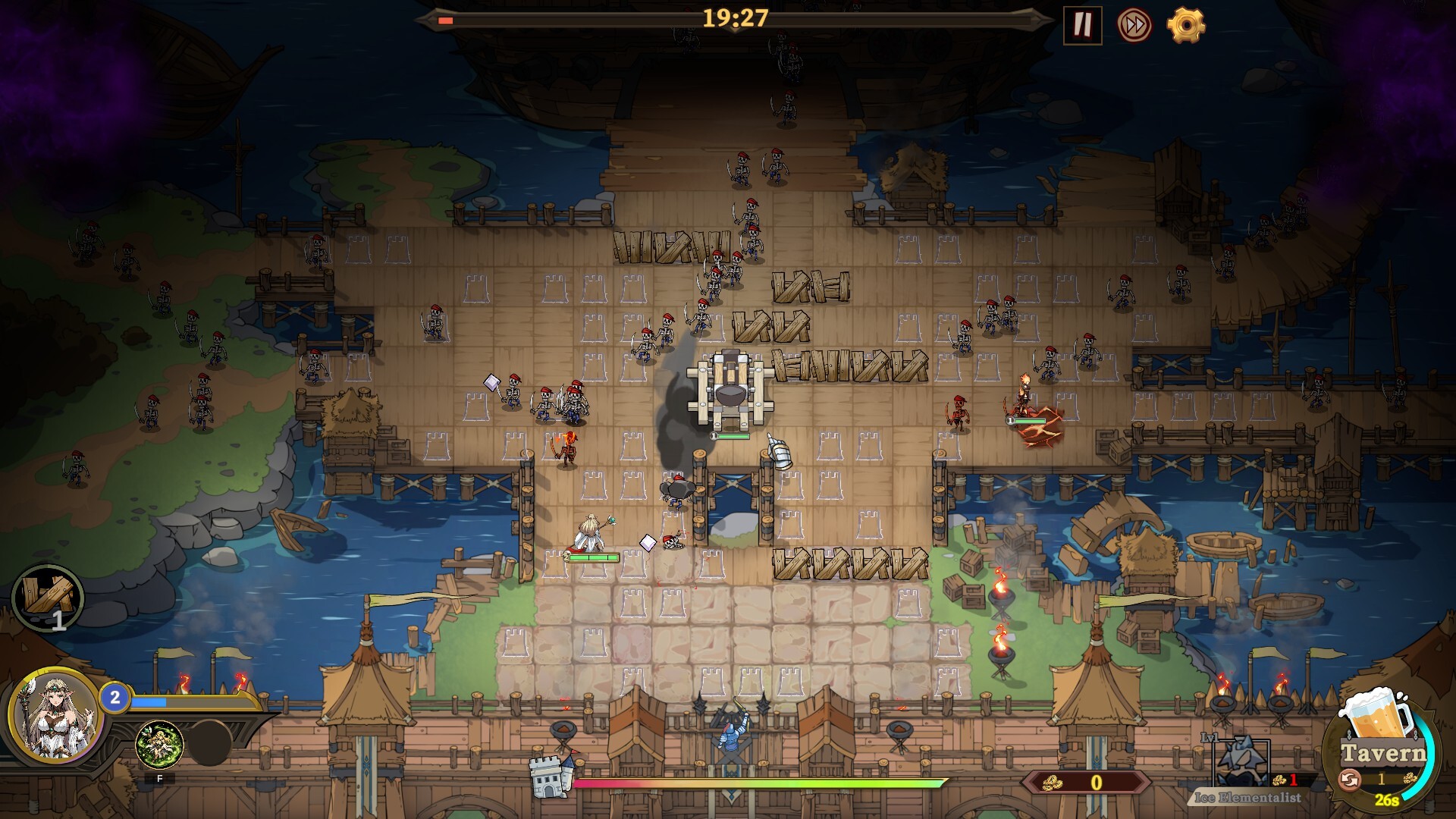
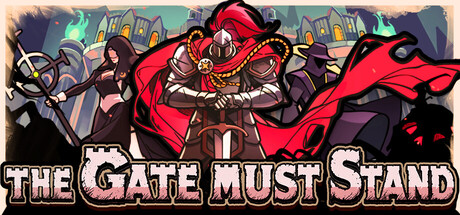
The Gate Must Stand is a medieval fantasy roguelike tower defense survivors hybrid set in the fallen continent of Belrak — the last city's final stand against demonic hordes. Developed by Senmu Studio and published by Gamersky Games / Yogscast Games, it launched on Steam June 18, 2026, blending real-time hack-and-slash combat with top-down tower defense strategy. You control a hero who can fight up close in third-person action mode or zoom out to command followers, manage chokepoints, and orchestrate the battlefield.
What sets it apart is the dual-layer loop: pure survivors games have your character do everything; pure tower defense has you place and watch. Here you do both simultaneously. Recruit followers — mobile towers with upgrade paths — position them around the city gate, then fight beside them, combining abilities to trigger synergies that turn desperate defenses into slaughters. The gate is your win condition — allies revive between waves, but a collapsed gate ends the run.
Each run escalates through waves with a boss encounter every five minutes. Defeating bosses rewards relics — artifacts that evolve followers into ultimate forms or supercharge your build. Between runs, spend resources on meta progression (capped at level 7) to unlock heroes, followers, skills, stages, and difficulty levels. With 4 heroes, 149 hero skills, 19 base followers (38 ultimate forms), 53 relics, and 84 achievements, there is genuine depth across multiple runs.
| Detail | Info |
|---|---|
| Genre | Action / Indie / Strategy / Tower Defense / Roguelike Survivors |
| Developer | Senmu Studio |
| Publisher | Gamersky Games, Yogscast Games |
| Platform | Windows (Steam) |
| Price | $6.99 USD |
| Players | Single-player |
| Release Date | June 18, 2026 |
| Steam Achievements | 84 |
| Languages | English, Simplified Chinese, Traditional Chinese, Japanese, Korean |
| Features | Steam Cloud, Steam Achievements, Family Sharing |
Target audience: Players who enjoy action roguelikes (Hades, Dead Cells) transplanted into a defensive setting, and tower defense veterans who wish they could jump into the fight. If you like building builds (synergies, relic combos, skill trees) and executing under pressure, this clicks. Casual players enjoy lower difficulties; hardcore players push all five tiers with every hero and follower combination.
Getting Started — Your First 30 Minutes
1. Pick Your First Hero
You start with a limited hero pool. Steam mentions four archetypes: berserk attackers (melee DPS), relentless assassins (single-target), devastating spellcasters (AoE control), and stalwart defenders (tanky, gate-focused). Pick the balanced melee hero for your first run — forgiving skill floor, lets you learn enemy patterns before squishier builds.
2. Understand the Two Views Immediately
- Action View (zoomed in): Third-person hack and slash. Left-click for basic attacks, use abilities 1–4, spacebar to dodge. This is for clearing mobs that get past your followers and for boss DPS phases.
- Strategy View (zoomed out): Top-down tactical view. Place and reposition followers, check gate health, see incoming wave composition. Use mouse wheel to toggle.
Crucial tip: Stay in Action View for clearing waves of basic enemies. Zoom out to Strategy View between waves and during boss fight setup. Do not try to micromanage follower placement while surrounded by demons — you will take free damage.
3. Place Your First Followers
Your starting resources let you place 2–3 followers. Put them in a semicircle or funnel pattern in front of the gate, leaving a narrow corridor that enemies must path through. Spread them out slightly to avoid one AoE attack wiping your whole frontline. Ranged followers go behind melee ones.
4. Survive Wave 1
Wave 1 is easy — a handful of basic demons. Use this wave to practice:
- Attacking while moving (kiting)
- Using your dodge (spacebar) reactively, not preemptively
- Watching which direction enemies come from
5. Collect Resources and Upgrade
Fallen enemies drop resources (gold/mana crystals). Between waves, spend them on hero skill upgrades and follower upgrades. Prioritize one follower to tier 2 before spreading points around. A single strong follower is more valuable than several weak ones in the early game.
6. Face Your First Boss (~5 Minutes)
The first boss is a tutorial check. It will have a telegraphed attack pattern. DO NOT stand in front of it — circle around and let your followers tank aggro. Use your dodge to avoid its big hit. If you can kill it, you will get your first relic, which can dramatically shift your strategy for the rest of the run.
7. Accept That You Will Lose
Your first run will probably end around wave 8–12. This is normal. Each defeat earns meta progression currency that permanently unlocks new content and power. The game's roguelike loop is designed to make you stronger run-over-run.
Advanced Tips
| Mistake | Why It Hurts You | What to Do Instead |
|---|---|---|
| Ignoring Strategy View | You miss enemy flanking routes, follower deaths, and gate damage. | Zoom out every 30–60 seconds for a quick battlefield scan. |
| Spending resources evenly | You end up with 4 mediocre followers instead of 1 or 2 powerful ones. | Focus upgrade resources on your best follower until it evolves. |
| Hoarding dodge for "emergencies" | You take chip damage constantly, draining potions and health. | Use dodge for every telegraphed swing; it regenerates quickly. |
| Standing still while attacking | You get surrounded and stunlocked. | Always move. Circle strafe enemies. Keep them in front of you. |
| Ignoring gate health | You focus on clearing enemies far away while a single demon chips the gate down. | Prioritize enemies that are already at the gate, even if they're weak. |
| Not adapting to bosses | You fight the boss the same way as a wave, eating its AoE. | Every boss has a pattern. Watch, dodge, punish. Relics matter most here. |
| Skipping meta upgrades | You keep hitting the same wall because your base power hasn't increased. | Spend meta currency on permanent unlocks before attempting higher difficulties. |
| Building followers in a line | A single AoE attack wipes your entire defense. | Spread followers in an arc or staggered grid with gaps. |
Core Mechanics Deep Dive
1. Heroes and Skill Trees
Each hero has 149 skills across upgrade paths in three categories:
- Active abilities (keys 1–4): Offensive spells, defensive cooldowns, mobility, tactical buffs — unlocked as you level during a run.
- Passive upgrades: Stat boosts, attack modifiers, aura effects for nearby followers.
- Ultimate skills: High-impact abilities unlocked at later levels or through relic synergies.
Your hero levels by killing enemies; each level offers 2–3 skill choices. Specialize by level 3 — decide if you are the primary damage dealer or a support that buffs followers. Spreading picks across roles makes you mediocre at everything. Play all 4 heroes once on difficulty 1 to understand their base kits before committing to a main.
2. Followers — Your Mobile Towers
There are 19 base follower types, each with a unique attack style (melee, ranged, AoE, debuff, healing), a position you control, 2 ultimate evolution forms (38 total), and 150 follower skills through upgrades.
Placement roles:
- Frontline melee — absorb damage, hold chokepoints. Place close to the gate.
- Ranged DPS — damage from safety. Place behind melee line.
- Debuffers / controllers — slow, DoTs, armor shred. Place at chokepoint entrances.
- Healers / supporters — keep hero and followers alive. Place centrally.
Synergy system: Certain follower combos unlock bonuses. Frost + fire followers trigger elemental interactions — discovering these is key to dominating higher difficulties.
Evolution: When a follower reaches max upgrade level, evolve it into one of two ultimate forms using a relic (from boss kills). Each form radically changes abilities and appearance. Choosing the right evolution for your build is a major strategic decision.
3. Relics and Boss Fights
A boss spawns every 5 minutes. There are 13 unique bosses and 10 elite enemy types. Defeating a boss drops a relic — there are 53 in total.
Relics serve two purposes:
- Global run buffs — e.g., "ranged followers fire 20% faster" or "hero gains lifesteal on crits."
- Evolution catalysts — required to evolve followers into ultimate forms.
Boss approach: Every boss has telegraphed patterns with 2–3 phases. Learn tells in Phase 1 (first 30% HP), dodge new attacks in Phase 2 (30–60%), and use ultimates + relic abilities in Phase 3 (60%+ enrage). If your gate is low on HP, it is sometimes correct to ignore the boss and defend — losing the relic is better than losing the run.
4. Meta Progression System
Between runs, spend currency on permanent unlocks (capped at level 7 per category):
- New heroes (unlock from the pool of 4)
- New follower types (start with a base set, unlock more)
- Advanced skill options (46 available)
- Difficulty levels (5 total — higher = better rewards, harder enemies)
- Stages and maps (3 stages × 2 maps = 6 total)
- Starting bonuses (extra gold, follower slots, potions)
Optimal order: Unlock 2–3 heroes first → one additional follower type → advanced skill options → only then attempt difficulty 2.
5. Wave Composition and Enemy Types
Waves escalate via a threat budget system — later waves have more points to spend on more enemies, tougher enemies, or a mix.
Enemy categories:
- Basic demons: Low HP, swarm tactics. Easy to cleave.
- Armored demons: Resist physical damage. Needs magic or armor-shredding.
- Fast flankers / assassins: Bypass frontline and head for the gate. Priority #1.
- Buffers / summoners: Buff allies or summon more demons. Kill first.
- Elite enemies: Mini-bosses from wave 3 onward. 10 elite types with unique mechanics.
- Bosses: Every 5 minutes. 13 unique designs with 2–3 phases.
Reading wave warnings: The UI shows an icon indicating the primary threat type before each wave. Adjust positioning accordingly. Flanker icons = pull melee followers closer to the gate.
Advanced Strategies
The "Double Funnel" Formation
Place two rows of melee followers in a V-shape funnel toward the gate. Ranged followers sit inside the V. Enemies path into the V and get hit from three sides — the most resource-efficient formation for mid-game waves on difficulty 1–3.
Relic Stacking for Ultimate Evolutions
Evolve a second follower before taking random global buffs. Two ultimate-evolved followers beat one evolved follower plus a mediocre buff, unless the relic directly synergizes with your hero build.
Kite-Trading for Gate Health
If the gate is under 25% HP, do not chase enemies. Aggro groups and kite them toward your followers so the fight stays in your kill zone. Every enemy step toward the gate is damage you cannot afford.
Difficulty Scaling Strategy
- Difficulty 1 (Normal): Unlock heroes and followers. Experiment freely.
- Difficulty 2 (Hard): Enemy HP and damage increase ~30%. Optimize your starting hero and first 3 skill picks.
- Difficulty 3+ (Very Hard+): Requires specific relic-follower synergies and near-perfect boss fight execution. Watch for builds online from the community.
At difficulty 3 and above, you must specialize your entire build around one strategy — e.g., a frost build that slows all enemies while your ranged followers DPS them down. Hybrid builds fail at high difficulty.
Meta Progression Pacing
Do not attempt to rush difficulty 5. The meta cap of level 7 means you get diminishing returns on each point invested. A balanced profile (level 4–5 in several categories) is stronger than level 7 in one category and level 1 in everything else. Well-rounded power applies to more situations.
Gate as a Resource, Not a Win Condition
This is counterintuitive, but in the early waves (1–5), you can afford to let the gate take some damage. Do not panic-spend resources on gate repairs when you could instead upgrade followers that will prevent future damage. Early chip damage is recoverable. Late-game damage is not.
FAQ
Q: How long is a typical run? A: A full run lasts 30–45 minutes. Failed runs end around 10–20 minutes.
Q: Can I pause mid-wave? A: The game does not pause during waves. Strategy View has a slight time-slow (not a full pause) when zoomed out during combat.
Q: Is there a free demo? A: Yes, a demo (Steam app 4013710) was available during Steam Next Fest. Check the Steam page for current availability.
Q: Is the game controller-compatible? A: Keyboard + mouse is the primary input at launch. Controller support is not officially confirmed.
Q: Are higher difficulties just stat increases? A: No — difficulty 2+ adds new enemy types and more aggressive boss patterns, not just stat bumps.
Q: What happens when I unlock all 4 heroes? A: Meta progression continues through follower unlocks, skill options, and stage unlocks. Full content: 19 followers, 46 skill options, 6 maps, 53 relics.
Q: Is this like Vampire Survivors with towers? A: Broadly, but with more depth. Followers are not auto-attacking pickups — you position, upgrade, and evolve them. Hero combat includes dodges, ability combos, and boss mechanics closer to an action RPG.
Q: Does the game have Steam Workshop or mod support? A: Not at launch. The game supports Steam Cloud for save syncing.
Q: Will there be future content updates? A: The Steam page includes a roadmap suggesting planned post-launch content.
Final Tip / Verdict
The Gate Must Stand makes both halves of its hybrid identity feel essential. The survivors-style combat keeps you engaged, while the tower defense layer rewards planning and adaptation. You will lose runs to poor follower placement or mismatched relic choices — and that is where the satisfaction lives.
Final tip: Treat your first 10 runs as tutorials. Focus on one mechanic each run (follower positioning, relic combos, boss patterns). By run 10, muscle memory across all systems will click, and the game reveals its true depth.
At $6.99 with 84 achievements, 13 bosses, 53 relics, and meaningful meta progression, this is a strong value in the tower defense survivors space.
Guide last reviewed by Game How To Editorial.
Screenshots