Official game
Play Pitfalls 64
This game is hosted by Steam. Continue to the official page to play or download it.
Wishlist on SteamOverview
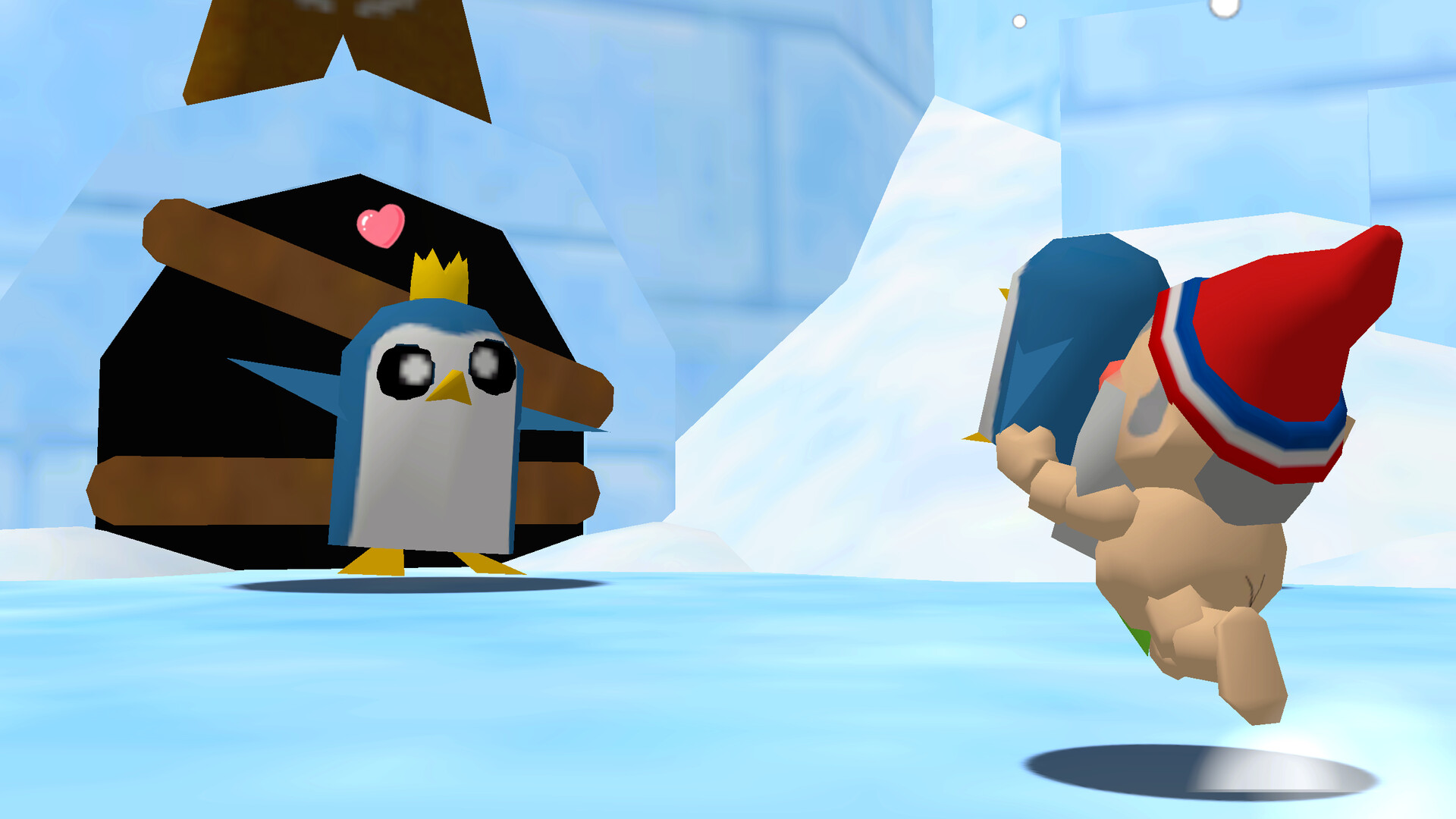
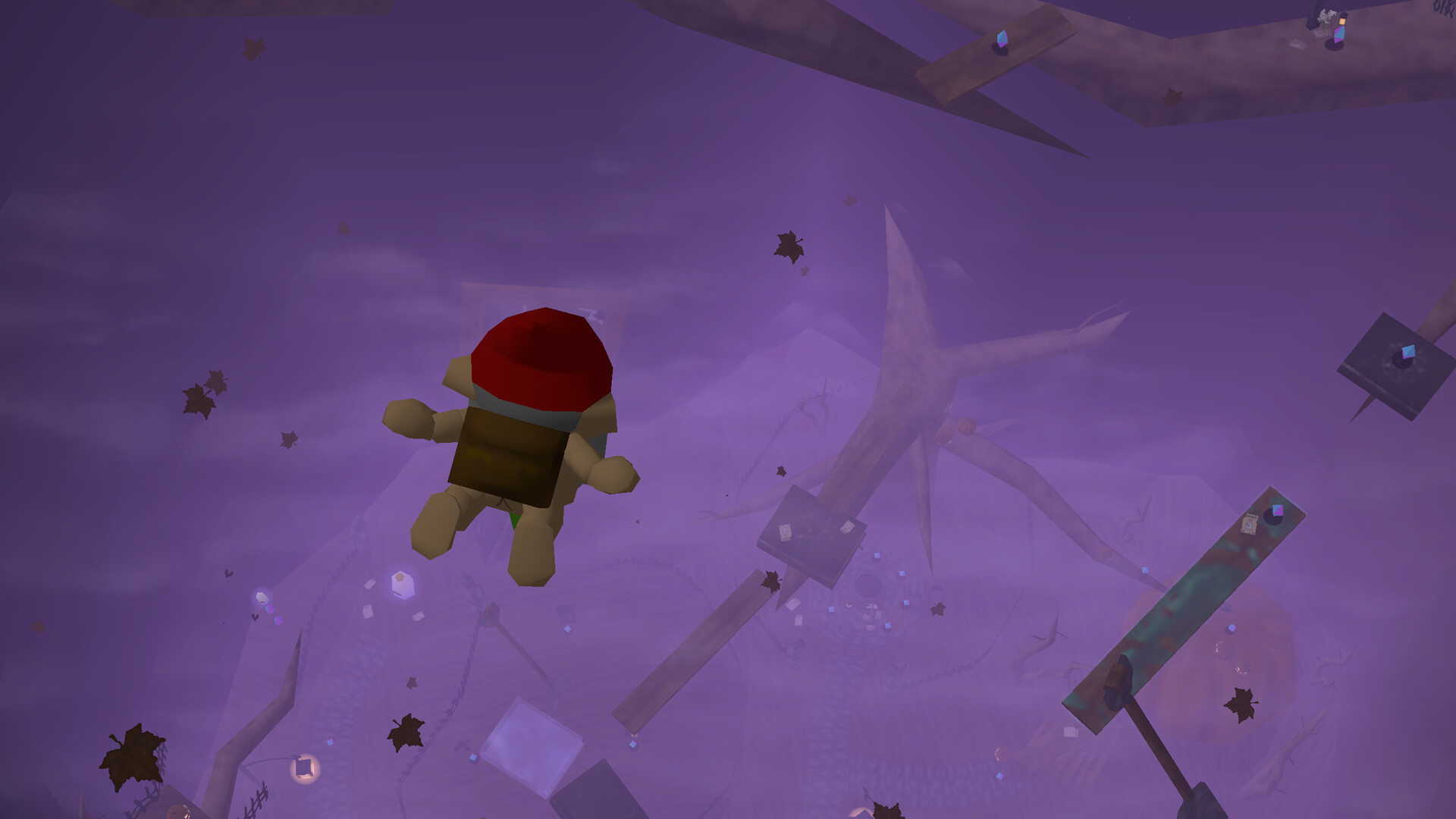
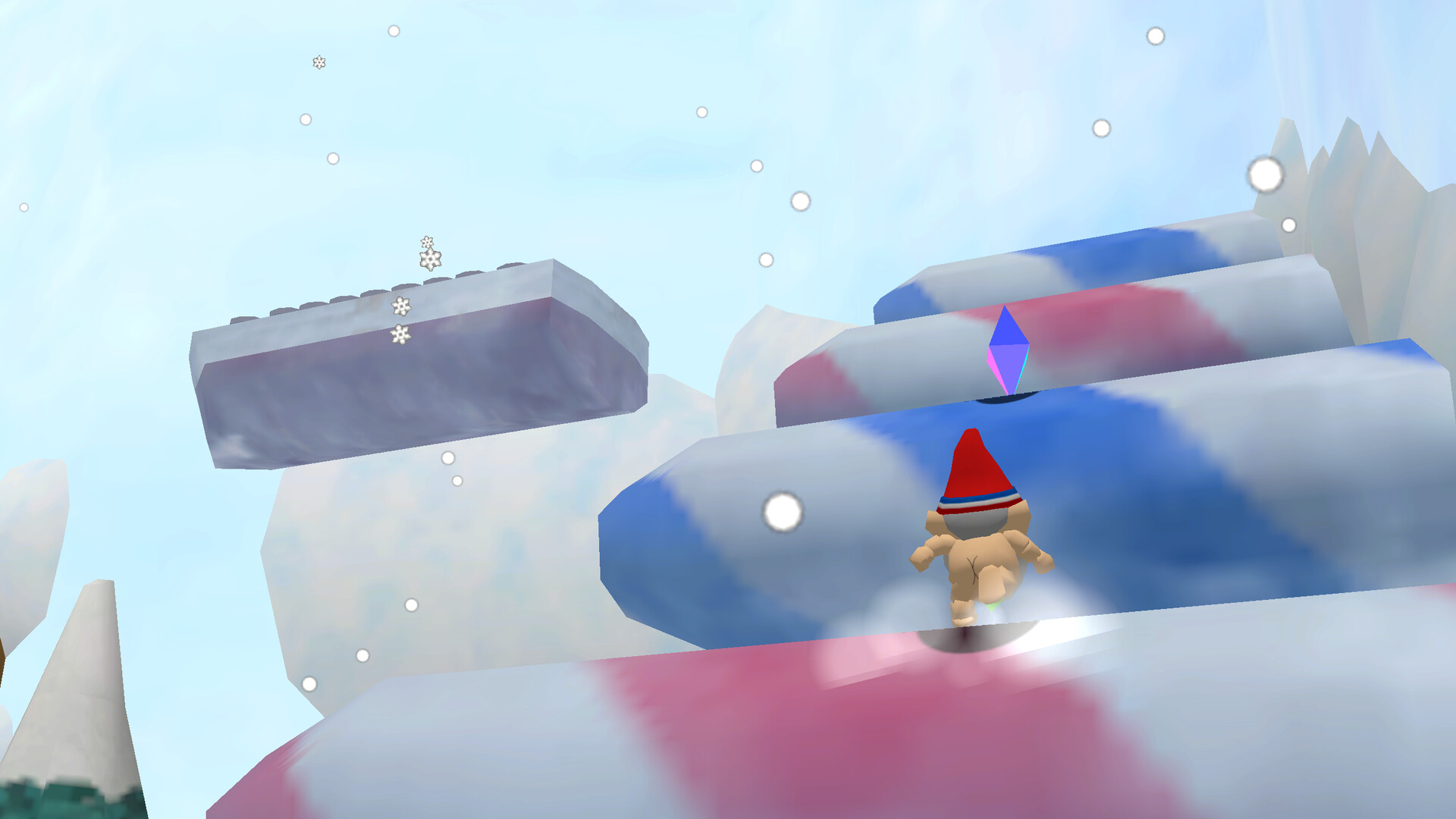
Pitfalls 64 is a brutally challenging collectathon from amokware, the one-person studio of developer Pupkin, built in Unreal Engine. You play a homesick gnome climbing a bizarre vertical world back to his front door, and the game wears its N64 inspiration on its sleeve: blocky characters, fluid animations, diverse environments, and an aesthetic pulled straight from the late-90s 3D platformer era. Shaun Cheetham's soundtrack carries the mood of every climb.
The pitch is simple and cruel. You are not fighting monsters. You are fighting the climb itself. Every jump raises the stakes, a single slip sends you tumbling back down, and the game's own copy calls it "butt-clenching platforming" where "falling is half the fun." The itch.io page adds two genre tags that raise eyebrows and expectations: Souls-like and Psychological Horror. That first-encounter difficulty is real; one demo player pleaded for a difficulty option, and the developer's answer defines the whole design: "While the full game won't feature difficulty selection, you'll find checkpoints placed between every new zone."
| Field | Detail |
|---|---|
| Genre | 3D platformer, collectathon, precision platformer |
| Developer / Publisher | amokware (solo: Pupkin) |
| Engine | Unreal |
| Platform | Windows |
| Price | TBA (paid title) |
| Players | Single-player |
| Release | Q2 2027 (Steam), demo live since September 23, 2026 |
| Graphics | Classic N64 style, blocky characters, fluid animation |
| Music | OST by Shaun Cheetham |
| Saving | Manual checkpoints between zones |
| Controls | Full controller support (Xbox), keyboard |
| Where | Steam demo + itch.io demo |
| Community note | 1,000+ wishlists in the first months; rated 5.0 on itch |
Momentum is worth knowing about. The demo dropped on September 23, 2026 after the game passed 1,000 wishlists in late August, a milestone the solo dev called "a climb in itself." End-game content is the last piece in development. A press quote making the rounds sums up the vibe: "Pitfalls 64 takes us back to the platformers of the N64, but here every jump can end in disaster."
Who This Game Is For
This is for players who grew up on Banjo-Kazooie and Super Mario 64 but now want the difficulty turned up. The "brutal" and "punishing" language in the official description is not marketing inflation. If you like Celeste-style precision but miss 3D collectathon structure, this is your lane. The Souls-like tag is less about combat (there is none) and more about the loop: die to the fall, learn, redo, master.
It also suits the current "N64 revival" audience and players who enjoy Getting Over It-style punishment games, where the fall is the content and composure is the skill being tested. The whimsically tragic cast and choices-that-matter add a narrative layer most rage platformers skip.
It is not for players who want relaxation, combat, or forgiving checkpoints mid-zone. Early demo players found the very first biome hard. If a 20-minute climb erased by one slip sends you into keyboard-throwing territory, wait for launch reviews of the checkpoint density.
Getting Started: First 30 Minutes
The demo covers the first biome, and the opening minutes set habits that carry the whole climb.
-
Expect to fall, and budget for it. The game teaches through failure. The itch page's install instructions end with "Climb the first biome and don't you dare go hollow!" Treat every tumble as tuition, not punishment. One demo player's journey from "I can't finish it" to "this game is addictive once you get used to the mechanics" is the expected arc.
-
Learn the jump's arc before the collectibles. The gnome's full jump covers a specific distance and height. Master it on flat ground before chasing anything. Half of all falls come from misjudged distance, not hard jumps.
-
Save at every checkpoint you pass. Progress is manual, and checkpoints sit between zones. The developer confirmed checkpoint placement is deliberate: every new zone gets one. Save the moment you touch it; an unsaved checkpoint is a checkpoint you do not have.
-
Adjust the camera before hard jumps, not during. N64-style 3D platformers live and die on camera. Line up the landing before committing. Fighting the camera mid-leap is how falls happen.
-
Talk to the characters you meet. The climb is populated with "whimsically tragic characters," and choices matter across multiple endings. Dialogue is cheap; missing a choice is not.
-
Grip check. Full controller support with Xbox pads means the game expects a gamepad. Set yours up before the first long climb. Comfort matters for hours of precision jumping.
-
Watch a first-biome fall as data. When you bonk back down, note what misjudged: the distance, the platform behavior, the camera angle. The second attempt up the same stretch should be visibly better.
Beginner Mistakes to Avoid
| Mistake | Why It Hurts | Fix |
|---|---|---|
| Rushing jumps | The vertical world punishes careless landings | Read each gap's distance before committing |
| Passing checkpoints without saving | One fall erases the whole stretch | Touch and save at every checkpoint |
| Collecting while learning a zone | Split attention causes falls | First pass: climb. Second pass: collect. |
| Assuming all platforms behave the same | Diverse environments have different rules | Watch how surfaces react before trusting them |
| Ignoring the characters | Choices shape the endings | Talk to every character you meet |
| Tilt-climbing after a big fall | Frustration compounds into carelessness | Reset, breathe, re-read the jump |
| Playing marathon sessions | Precision decays with fatigue | Short sessions; the climb rewards fresh hands |
Core Mechanics Deep Dive
The Vertical Gauntlet
The entire game is a climb. There is no horizontal level design to fall back on; the challenge is always up, and up safely. The structure is a gauntlet of acrobatic jumps where the punish is the fall itself, not a death screen. You tumble back down to your last checkpoint, which turns distance into stakes. The higher you are, the more expensive the slip.
The design philosophy is fall-as-teacher. Every tumble shows you exactly what you misjudged: distance, surface behavior, camera alignment. Speedrun-minded players in the demo comments already spotted the potential here; a game where mastery is measurable in retries-not-taken is a speedrun factory.
Checkpoints and Manual Saving
Saving is manual, and checkpoints are placed between every new zone. The developer is explicit that there will be no difficulty selection, so the checkpoint rhythm is the game's mercy valve. The system exists to give you control over retry cost: a checkpoint touched at the zone boundary turns a brutal gauntlet into a series of one-zone problems.
The skill layer most players miss: checkpoint discipline is part of the game. Save the instant you arrive. Never assume you will "save after this next jump." Every experienced player has a story about the jump they did not need to attempt before saving.
The Collectathon Loop
Collectibles are scattered through the climb, and the genre's core tension applies: how much do you grab versus how fast do you climb? Collection and survival fight for attention, and split attention is what causes falls. The workable pattern is two passes per zone: a survival pass to the checkpoint, then a collection pass on the way back down or along the edges, when a fall costs you less.
The demo's first biome sets the template for placement. Expect collectibles behind risky jumps, on the edges of the climb, and in spots that demand camera contortion to even see. Completionists should plan separate collection sessions from survival sessions.
Characters, Choices, and Endings
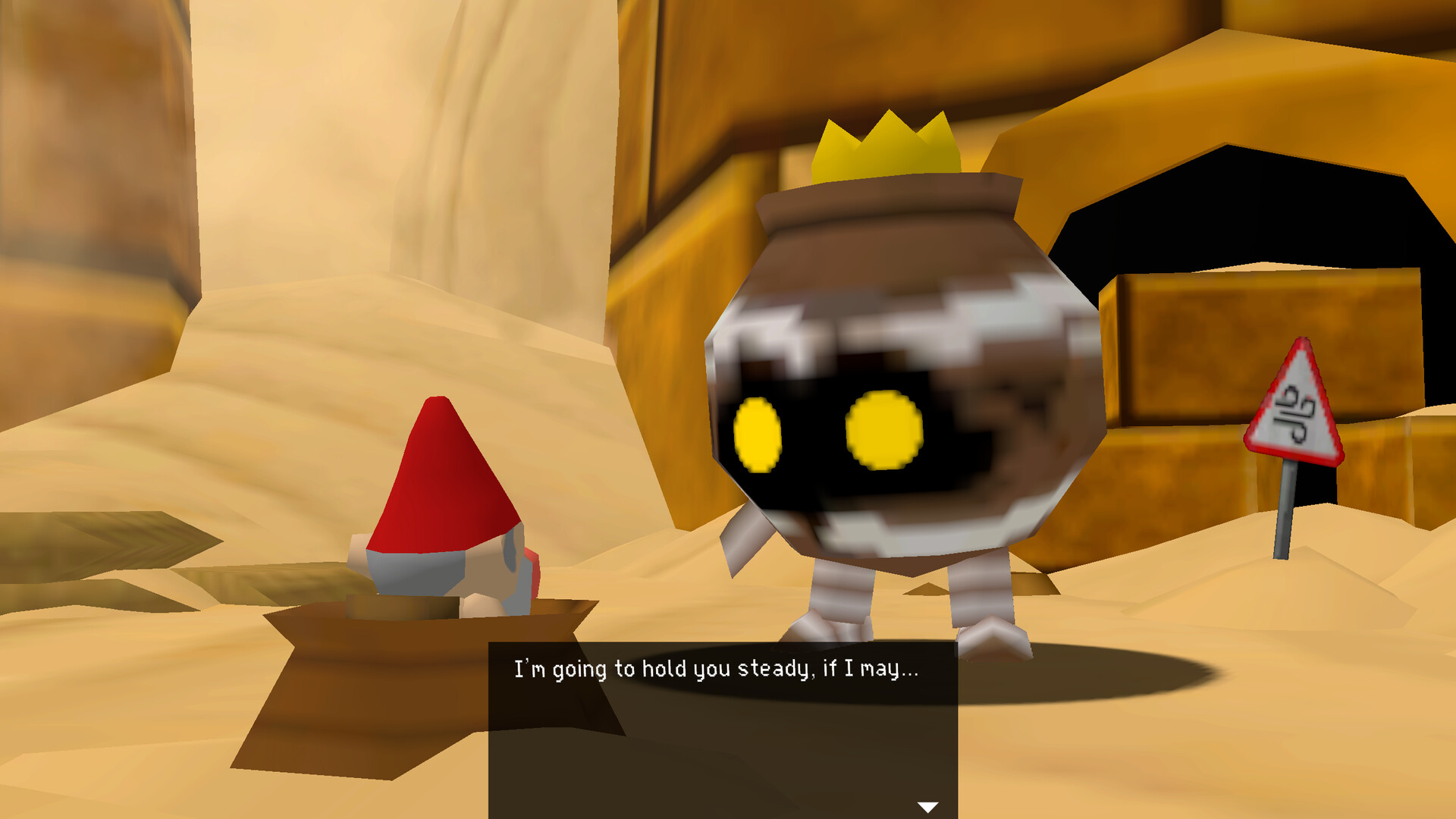
The journey home is populated. You meet a cast of whimsically tragic characters, and the game's copy is explicit that your choices matter, with multiple endings shaped by those decisions. This is the layer that separates Pitfalls 64 from a pure skill test. The characters give the climb emotional stakes, the endings give it replay value, and the psychological horror tag suggests the story gets stranger the higher you go.
The practical implication: your first run should be exploratory. Talk to everyone, make the choices that feel right, and let the climb teach you. Optimized collect-and-choose runs belong to playthrough two and three.
N64 Presentation as a Design Choice
The graphics are explicitly N64-style: blocky characters, fluid animations, diverse environments. In Unreal Engine, this is a deliberate aesthetic, not a budget constraint. The retro presentation does real mechanical work: low-detail geometry makes platform edges readable, and readable edges are everything in a precision platformer. The OST by Shaun Cheetham is listed as a feature, and demo players repeatedly called out the art style in positive terms.
Progression Strategy
| Priority | Invest In | Payoff |
|---|---|---|
| 1 | Jump arc mastery on flat ground | Fewer falls everywhere, forever |
| 2 | Checkpoint discipline | Every zone becomes a contained problem |
| 3 | Camera control before commits | Half of tilt-falls eliminated |
| 4 | Two-pass zone routing | Collectibles without survival cost |
| 5 | Choice tracking across the cast | Cleaner ending paths on later runs |
Start with jump mastery. The checkpoints, collectibles, and choices all assume you can navigate the climb reliably. Movement skill is the foundation; everything else builds on it.
Step-by-Step Strategy
1. The Read-the-Leap Method
Before every jump, read the arc: landing platform, gap width, camera angle. Commit only when the landing is lined up. Half the falls in a 3D precision platformer come from rushing the read, not from executing the jump. When a jump looks unreadable, rotate the camera before your feet move.
2. The Zone-Pacing Tactic
Treat every zone as one contained problem with a save at both ends. Climb the zone in one committed push; do not idle on ledges. If a specific jump kills you twice, stop, breathe, and re-read it. The goal is keeping every retry under one zone's length. If you are repeating more than that, you skipped a save.
3. The Two-Pass Route
First pass up any zone: survival only. Touch the checkpoint. Second pass: drop back down or route the edges, collecting everything you skipped. Greedy first passes are how 15-minute climbs become zero. The discipline is boring and the math is overwhelming: two clean passes beat one greedy tumble every time.
4. The Fall-As-Data Discipline
Every fall answers a question if you let it: was it distance, platform behavior, or camera? Name the cause before the second attempt. A fall you cannot name is a fall you will repeat. This is the entire skill difference between players who finish these games and players who quit.
5. The Choice-Aware Exploration
When you meet characters, listen before choosing. The multiple endings are shaped by these decisions, and there is no obvious right answer. Pick the choice that fits the story you want to tell, and track your choices across runs. The psychological horror layer suggests the game is keeping score even when it is not obvious.
6. The First-Biome Mastery Play
The demo's first biome is the training ground for the whole game. Clear it, then clear it again without falling. The muscle memory you build on the opening gauntlet is the same muscle memory the later biomes demand. Players who master the demo biome will start the full game two zones ahead of players who scraped through.
Advanced Tips
The Bonk Budget. Give yourself three falls per zone before you slow down and re-read every jump. Frustration compounds into carelessness; the budget catches it before the spiral.
The Checkpoint Triage. At every checkpoint, decide instantly: save now or push ahead. If the next jump is readable, push. If it is not, save. Hesitation at checkpoints is where unsaved progress dies.
The Edge-Collector Route. The best-hidden collectibles live on the edges of the climb: risky jumps and near-miss landings. Route your collection pass through scary edges last, when your hands are warm and your routes are known.
The Three-Run Plan. Run one: exploratory climb, all characters, instinct choices. Run two: completionist, all collectibles, two-pass routing everywhere. Run three: ending-specific, choices steered toward the route you have not seen. The multiple-endings structure rewards planned runs over perfect ones.
The N64 Camera Discipline. Before every hard jump, nudge the camera to line up the landing, then take your hands off the right stick until the jump is done. Mid-air camera adjustments are the most common self-inflicted fall in 3D platformers.
The Fresh-Hands Rule. Precision decays with fatigue, and this genre punishes decay. If you are dying more as a session goes on, stop. The climb will still be there tomorrow, and tomorrow's hands are better.
The Sound Cue Habit. A "Legendary OST" is not just mood. Distinct zone themes mark checkpoint boundaries; when the music shifts, you have crossed into new save territory. Let your ears do part of the navigation.
FAQ
When does Pitfalls 64 release? Q2 2027 on Steam. The demo has been live since September 23, 2026, and the developer is finishing end-game content.
Is there a demo? Yes, on both Steam and itch.io. The demo covers the first biome and sits at roughly 452 MB. The itch version has been updated since launch with fixes.
Is the demo free? Yes. The full game is a paid title with pricing still unannounced.
What platforms is it on? Windows. The developer builds in Unreal, so console ports are possible but unannounced, and a Mac build is not planned for now; a web version was ruled out.
Is there combat? No. There are no monsters to fight. The climb is the opponent, and the difficulty comes entirely from jumping precision.
Does it have difficulty settings? No. The developer confirmed the full game will not have difficulty selection, with checkpoints between every zone as the balancing mechanism.
How does saving work? Manual saves at checkpoints. Checkpoints are placed between zones. Save the moment you touch one.
Does it have controller support? Yes, full controller support with Xbox controllers listed on Steam. Keyboard also works.
Are there multiple endings? Yes. Multiple endings are listed among the game's genre tags, and the store page says your choices matter with the cast you meet on the climb.
Who makes the music? Shaun Cheetham. The OST is called out as a feature in the game's own description.
Is it really Souls-like? Only in structure: no combat, but the die-learn-redo loop, the composure test, and the run-back stakes are all here. The psychological horror tag fits the surreal, tragic cast and the vibe of the vertical world.
Why does my PC flag the demo? The itch build ships as a zip you extract and run directly, so Windows SmartScreen may warn on first launch. The developer states it is safe; Steam users avoid this entirely.
How long is the game? "Hours of butt-clenching platforming" per the official description. Exact length is unknown while end-game content is still in development.
Is it worth playing the demo before wishlisting? Strongly yes. The difficulty is the product. The demo tells you in twenty minutes whether the fall loop is your kind of fun or your kind of rage.
Final Verdict
Pitfalls 64 is the rare rage platformer with a genre structure around its cruelty: zones, checkpoints, collectibles, characters, and endings give the punishment a shape and a reason. The N64 aesthetic does real mechanical work, the demo proves the core loop works, and the solo developer's checkpoint philosophy (no difficulty options, but a save between every zone) is a fair deal for both purists and mortals.
Wishlist it if Getting Over It-style punishment with Banjo-Kazooie dressing sounds like your weekend. Play the demo first if you are unsure; it is free, short, and completely honest about what the game is. For precision platformer fans, this is one of 2027's most promising climbs.
Last reviewed by Game How To Editorial. We track official sources and update guides when game mechanics change.
Screenshots