Official game
Play The Zibbo Show
This game is hosted by Steam. Continue to the official page to play or download it.
Wishlist on SteamOverview
The Zibbo Show is a 1v1 dice-placement roguelite from Tessera Studios, the Madrid-based studio behind Intruders: Hide and Seek. You are a contestant on a deadly 1970s game show. Each round you and an opponent take turns placing dice on mirrored 3x3 boards. Matching values in a column multiply your score, and placing the right die opposite an enemy die destroys it. Twelve rounds of increasingly dangerous opponents stand between you and Zibbo himself in the grand finale.
The show framing hides a sharp push-your-luck strategy game. Before every match you bet chips on yourself. Win and the bet doubles. Lose and it's gone. Between rounds you spend chips in the shop on passive cards and dice upgrades that stack into absurd scoring engines. The demo is free on Steam, the full release targets 2026 on Windows, Mac, and Linux, and Tessera has confirmed ports for consoles and mobile down the line.
Two things set this apart from other deckbuilders. First, the dice are shared fate: you roll them, but you choose where they land, so a bad roll is a puzzle instead of a death sentence. Second, low numbers are not trash. The September 2026 balance rework built entire strategies around 2s and 1s, and the strongest late-round plays in the current demo involve loading a die with low values and detonating it on the final turn.
| Fact | Detail |
|---|---|
| Developer | Tessera Studios (Madrid, Spain) |
| Genre | Dice placement roguelite, deckbuilder, game show |
| Platforms | Windows, Mac, Linux (Steam, coming to Epic, consoles, mobile) |
| Release | Full game 2026, free demo available now |
| Board | 3x3, nine dice per player, alternating placement |
| Run length | 12 rounds: enemies, minibosses, bosses, then Zibbo |
| Cards | 48 collectible passives across runs |
| Engine | Unreal Engine |
| Accessibility | Captions, color alternatives, no-timed-input mode, full controller support |
| Languages | 22, including Simplified/Traditional Chinese, Japanese, Korean |
The tone is part Sid Caesar, part Buckshot Roulette. The studio's own pitch says ratings spike when there's blood, and the retro-futuristic set leans into psychological horror the longer you survive. If you want cozy, this isn't it. If you want a 30-minute strategy run with teeth, read on.
Getting Started
Your first demo run will probably end around round four. That's normal. The game opens by throwing an RNG wall at you before your card engine comes online, and the turn from "dice victim" to "dice murderer" happens somewhere in rounds two through four once the shop starts selling real synergies.
Your first 30 minutes
- Play the tutorial, then lose a run on purpose. Watch what the opponent does. The fastest way to learn the destruction rule is to get destroyed.
- Second run, ignore betting entirely. The latest demo build pays you a small stipend for declining a bet, so a no-bet run is a free economy lesson.
- Buy one dice upgrade in your first shop visit, then save the rest. Dice upgrades are permanent for the run and compound every turn.
- Try the Roll Again chip once it appears. Since the patch it never repeats the previous number, so it's a clean second chance on a bad roll.
- When you hit your first loss wall, use a Spin of Luck ticket. You get the same opponent again plus a shop visit. That's the strongest tempo play in the game and new players hoard their tickets like they appreciate in value. They don't.
Beginner mistakes to avoid
| Mistake | Why it hurts | Fix |
|---|---|---|
| Spreading dice across all columns | No column reaches multiplier range | Pick one or two columns per match |
| Betting big from round one | One loss deletes your economy | Bet small until your engine is online |
| Ignoring the enemy board | Their doubled columns beat your single tiles | Destroy the column that's already doubled |
| Buying cards that don't share a theme | Passive cards only explode when they stack | Commit to one build identity by round three |
| Hoarding Spin of Luck tickets | A dead ticket ends zero runs and saves zero runs | Spend it the moment a matchup counters you |
| Treating 1s and 2s as garbage | Post-rework, low dice are a win condition | Keep the low-value strategies section open |
| Selling cards impulsively | The sell option is a rework tool, not a refund button | Only sell when the replacement completes your build |
Core Mechanics Explained
The 3x3 board economy
Each side gets nine dice on nine tiles. Placement alternates, one die per turn, so tempo matters: the player who commits to a column first usually decides whether that column scores or becomes a demolition site. Matching values in a column multiply the column's score, and the multiplier grows as matches stack, which is why a finished three-die matched column routinely outscores a board of scattered pairs.
Destruction is the counterplay. Place a die with matching pips opposite an enemy die and the enemy die is removed. The removal matters more than the placement: a destroyed die is a turn the opponent wasted, and late in a match every tile is contested. The tension is that every die you spend attacking is a die not scoring for you. Good players destroy with dice that would have scored anyway.
Betting and the chip loop
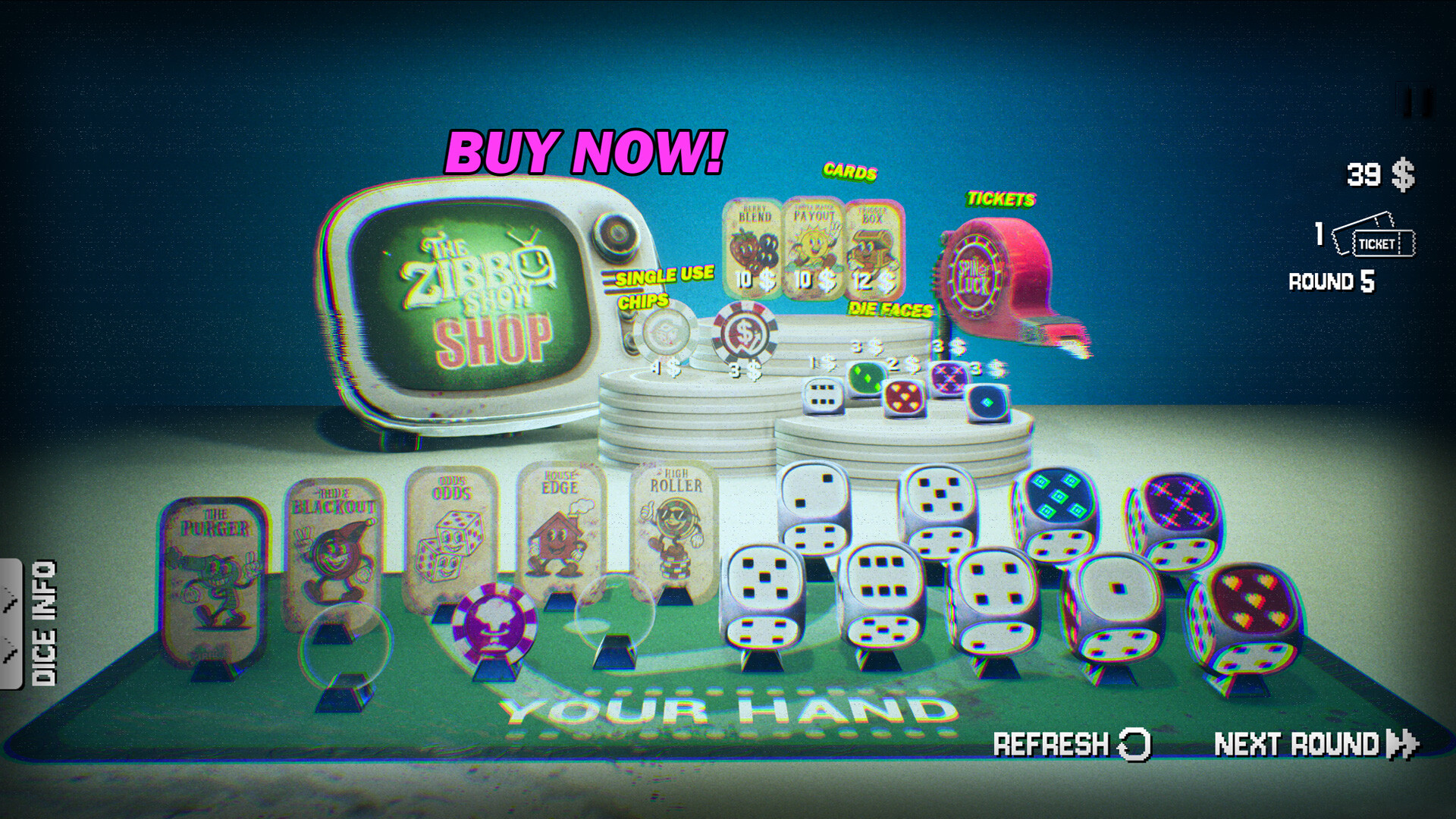
Betting happens before each match. Win, your stake doubles. Lose, it's gone. Chips buy cards, dice upgrades, more chips, and consumables. The loop rewards a boring truth: a modest bet you win twice is worth more than a huge bet you win once, because the doubled payout funds the shop snowball that actually ends runs.
The stipend for not betting is new, and it quietly changed the math. Early rounds, when your build is a coin flip, the no-bet stipend is guaranteed income. Late rounds, when your engine is a favorite, betting big is correct. The skill is knowing which phase you're in, and the honest answer is that round three is where most players should still be declining bets.
Cards as passive engines
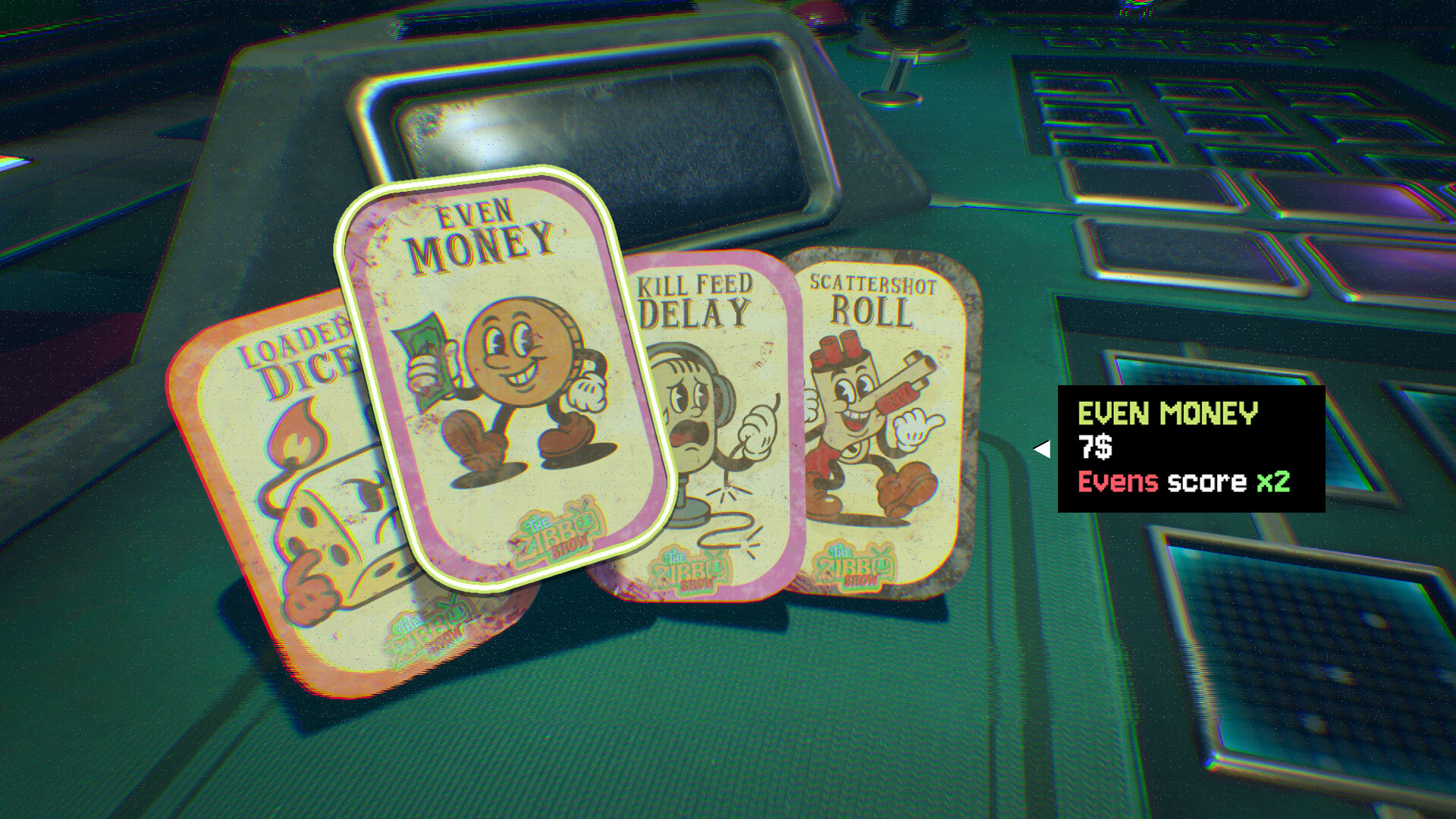
Cards never sit in a hand. They trigger automatically, which turns shopping into engine-building. The announced card pool is 48, split roughly between score amplifiers, destruction extenders, extra-turn effects, and value manipulation. Stacks matter more than individual power: "fives also remove sixes" plus a dice upgrade weighted toward fives gives you a board that attacks by scoring. The official balance update named two examples worth studying:
- Double Deuce Cherry rewards building around 2s. Strip the 2s out of your other dice, load one die with as many 2s as it holds, then place it last in the round for a multiplier blowout.
- Stacked Crate makes every 1 you place in a column add multipliers to your remaining dice, which inverts the usual logic that low pips are wasted pips.
The shop also lets you sell cards now. That's a rebalance tool. Sell the card that duplicates an effect you've outgrown, then buy the piece your engine is actually missing.
The 12-round arc and who goes first
Enemies scale from forgettable to frightening across twelve rounds, with minibosses and bosses spaced through the middle. One recent patch made the round boss go first, which sounds minor and isn't: first placement claims the strongest tile on the board, so against bosses your opening is reactive instead of proactive. Plan your columns knowing your first choice may already be gone.
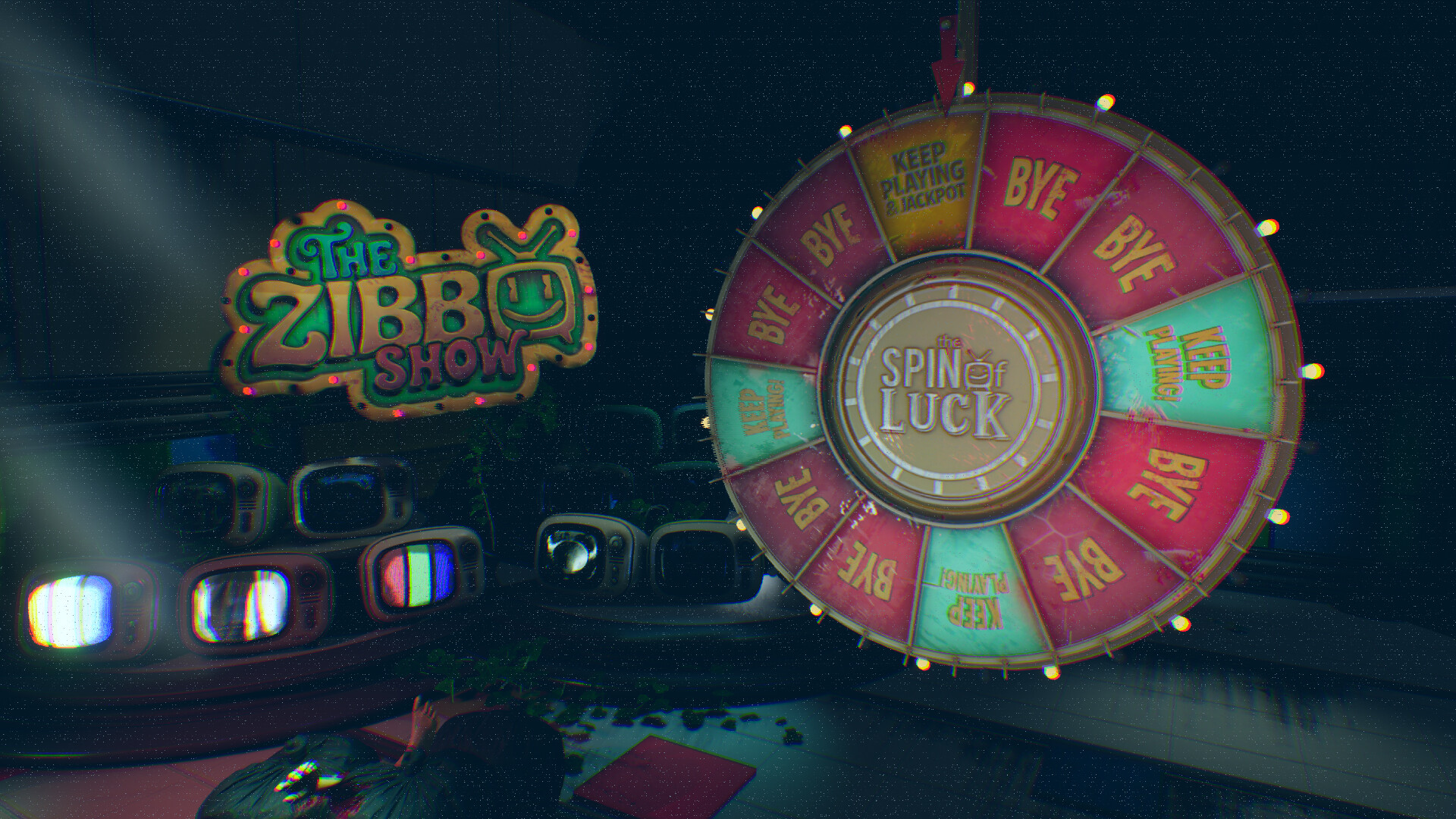
The Spin of Luck ticket is your retry. It does not refund chips or reroll your luck; it buys a second attempt at the same opponent plus a shop visit. That makes it a targeted answer to counter matchups, not a generic undo button.
Progression Strategy
Rounds one through three: the foundation phase
Score is irrelevant early. What matters is identifying which two columns you can reliably feed and buying the first dice upgrade that makes your favorite value more common. Decline bets, take the stipend, keep your chip stack flat. If a cheap card appears that references a specific pip value, buy it and let it choose your build for you. The cards you're offered are information about what the run wants to be.
Rounds four through seven: the engine phase
This is where the demo's reviewers reported their first 112-point rows. Your card stack should now trigger every placement. Spend this phase attacking the enemy board, because your engine converts even aggressive placements into points. Raise bets to medium once you've won two consecutive matches comfortably. Buy your first extra-turn effect here if one appears: additional turns are the strongest anti-boss tool in the current build, since they let you finish a column after the boss has committed its dice.
Rounds eight through eleven: the demolition phase
Bosses now open with a doubled column threat. Your response is mirror-breaking: place your own matching dice opposite their stack before the multiplier locks in. Your bet should be large in any match your engine is favored to win, because the doubled payout at this stage funds the final shop visit, and the final shop visit is where remaining build holes get patched. Keep exactly one Spin of Luck ticket for the boss gauntlet unless you've already spent it on a genuine counter.
Round twelve: Zibbo
The host plays by the same rules with a better deck. The demo's final opponent was replaced in the latest patch, so treat any specific strategy you've read as pre-patch intel. What stays true: he punishes scattered boards, he destroys doubled columns first, and matches that go long favor the player with extra-turn effects. Build your endgame around finishing your primary column early, then disrupting his.
Builds and Synergy Archetypes
Three archetypes cover most winning runs. None of these are card names you can search for; they're build identities you commit to by round three.
The Multiplier Engine
| Priority | Buy |
|---|---|
| 1 | Dice upgrade weighted to one value (5s are the classic pick) |
| 2 | Any card that multiplies matched columns |
| 3 | Card: matched dice also destroy enemy dice |
| 4 | Extra-turn effect |
Play pattern: feed one column, ignore the rest of your board, win on the back of one absurd row. Reviewers have posted 112-point rows with this line. The weakness is a boss that targets your engine column early, which is why the destruction-converter card at priority three matters. It makes your engine defend itself.
The Demolition Crew
| Priority | Buy |
|---|---|
| 1 | Card: "fives also remove sixes" style value overlap |
| 2 | Dice upgrades that widen pip variety |
| 3 | Card: destroying dice scores points |
| 4 | Chips for repeated shop visits |
Play pattern: every placement attacks. You score less per turn but the opponent scores nothing at all, and matches end 60-20 instead of 160-140. This is the safest archetype against the new boss-goes-first rule, because it doesn't care which tiles are already claimed.
The Low-Value Bomb
| Priority | Buy |
|---|---|
| 1 | Double Deuce Cherry or Stacked Crate, whichever is offered |
| 2 | Card: remove low pips from dice (the 2s enabler) |
| 3 | Dice upgrade that adds low pips |
| 4 | Roll Again chips |
Play pattern: hoard low dice all match, keep your board looking pathetic, then detonate one loaded die on the final turn for a multiplier spike the opponent can't answer because the match is over. This is the officially blessed post-rework strategy, and it wins specifically because it plays the last turn.
Step-by-Step: Winning the Mid-Game
- Open by claiming the center column's middle tile. The center tile touches everything and is the hardest placement to punish. If the boss took it first, claim the left column instead and treat the center as contested ground.
- Resolve your first shop with one rule: everything buys toward the same value. If you own a 5s multiplier card, the dice upgrade for 5s and the extra-turn card are the build. The generically strong card is a trap.
- Watch the opponent's first three placements and count their pips. Doubled values tell you which column they intend to feed. That column is your destruction target for the rest of the match.
- Destroy only doubled columns. Breaking a single die costs you a turn for zero tempo. Breaking a die that was about to triple costs them the match. If there's no doubled column worth breaking, score instead. Restraint is a skill here.
- Time extra turns for the final placement. Playing an extra turn effect before your loaded die is placed wastes it. The correct sequence is: opponent commits, you place your bomb, then extra turns repair or extend the damage.
- Bet in stair-steps, never all-in. Small bet, small win, medium bet, medium win, and only then a big bet. One lost big bet costs more than four lost small ones, and the shop visit you skip is the run you lose.
- Sell one card per shop once you pass round six. Engines accrete dead weight. The sell option exists so your deck can stay on-theme; use it every visit.
Advanced Tips
- The stipend beats greedy early betting. Free money for declining a bet is the game telling you round one has no edge. Take it.
- Roll Again chips never repeat the previous number. If you rolled a 3 and hated it, the chip guarantees you something different. That makes it a certainty tool on your last die, not a gamble.
- Bosses open with their strongest placement. Pre-plan a reactive opening: your first two turns should be answers, not plans.
- Indestructible dice flip the matchup math. If your dice can't be destroyed, the mirror-breaking response stops working, and you can build columns in the open. Similarly, if the enemy has it, destruction cards are dead weight; sell them.
- Match length favors extra turns. Any deck with turn manipulation wants the game slow and low-scoring. Any deck without it wants a blowout.
- The 2s strategy is a clock strategy. Loading a die with 2s does nothing until the final placement. Spend the whole match looking harmless.
- Shop refreshes are worth more late than early. Early shop pools are small; late pools are deep. Save browsing money for the shop that can actually complete your build.
- Steam Deck runs the demo well. Touch controls are supported, and the no-timed-input accessibility mode means the whole game is playable turn-by-turn at any pace.
FAQ
Is the demo still available?
Yes. The demo stayed up after the Steam Deckbuilders Fest and got a major content patch in June 2026, with the newest build pushed for the Prismatic Indie Showcase in September. The full game is listed for 2026.
How long is a full run?
Twelve rounds plus the finale. Roughly 30 to 60 minutes depending on shop time. The reviewer pace of about 30 minutes per run is typical once you stop reading every card.
What happens when you lose a match?
You lose your bet and the run's stakes escalate: the show's fiction treats losses as genuinely bad news, which the marketing leans on hard. Mechanically, a lost match with a Spin of Luck ticket means a retry; without one, the run ends.
Are the cards random every run?
The pool is 48 cards and shop offerings are randomized, so each run exposes you to a different slice. Meta-progression means repeats show you new cards, and failed runs still unlock things.
Does the boss really go first now?
Yes. A patch made the round boss take the first placement, so reactive openings are now standard play in the mid-game.
Is there any way to reduce the RNG?
Three, specifically: the Roll Again chip now never repeats a number, dice upgrades bias your rolls toward your build's values, and the low-value strategies convert whatever you roll into endgame ammunition. The first fifteen minutes will still feel dice-ruled. Push through to the shop phase.
Controller support?
Full support including DualSense, plus Steam Cloud, Family Sharing, and captions. The accessibility list is long: color alternatives, camera comfort, custom volume, and playable without timed input.
What's the save file location for the demo?
%localappdata%\TheZibboShow\Saved\SaveGames on Windows. The developers recommend deleting that folder entirely when a new demo build ships, since old saves aren't migrated.
Final Verdict
The Zibbo Show is the rare demo that teaches you its depth by beating you with it. The dice look like luck until the third shop visit, when your board starts triggering four cards a turn and the 2s you've been hoarding detonate for forty points. Twelve rounds is the right length, the destruction rule keeps both players honest, and the game show skin means every lost bet comes with an audience laughing at you.
Wishlist it if dice games, deckbuilders, or push-your-luck economics are your genre. Download the demo tonight if you want to find out whether you'd survive the show. The house always wins on television. Your job is to be expensive to beat.
Last reviewed by Game How To Editorial. We play each game, verify mechanics against official sources and patch notes, and update guides when the game changes.
Screenshots