Official game
Play Lunar Drifter
This game is hosted by Steam. Continue to the official page to play or download it.
Wishlist on SteamOverview
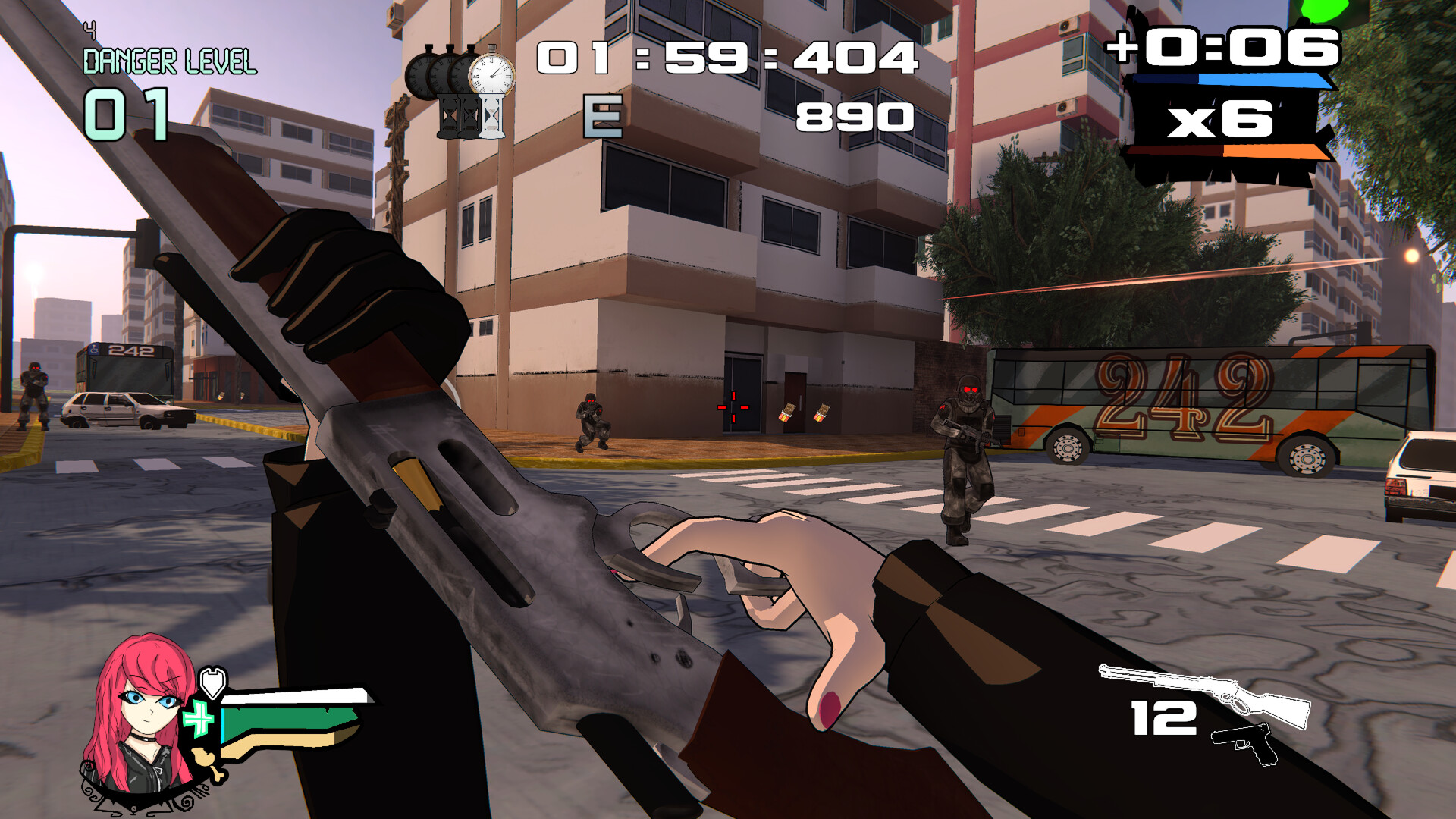
Lunar Drifter is an arcade first-person shooter from RoseHoodGames that takes the best mode out of Resident Evil and builds an entire game around it. The developer names The Mercenaries minigame as the direct inspiration: kill a legion of enemies as fast as you can before the timer hits zero, grab clocks and hourglasses to buy extra seconds, keep the combo alive while the chaos climbs, and let the score screen decide who you are.
The core loop is simple to state and brutal to master. You pick one of four characters, each with a distinct arsenal and a personal gimmick. You drop into a hand-crafted map. You shoot, you move, you collect time pickups, and you survive until the counter stops. Then the leaderboard tells you how far you are from the top. There is no campaign dragging you along, no inventory Tetris, no downtime. This is a score attack game with an escalating danger system and online modes layered on top.
The full release lands September 25, 2026 on Windows and Linux. A free demo has been live on Steam since 2025 and has gone through several major revisions, which means the movement, the weapon balance, and the leaderboard meta have already been stress-tested by the public. The release build adds the full Arcade Mode route selection, New Game+ escalation, Free Play, Endless Mode, and 8-player co-op and deathmatch.
| Fact | Detail |
|---|---|
| Developer / Publisher | RoseHoodGames |
| Genre | Arcade FPS, score attack, time attack |
| Platforms | Windows, Linux |
| Release date | September 25, 2026 |
| Price | To be announced (free demo available now) |
| Players | 1 player, online co-op up to 8, online deathmatch up to 8, LAN for both |
| Characters | 4, each with unique gimmicks and loadouts |
| Maps | 15+ hand-crafted levels |
| Modes | Arcade, Free Play, Endless, New Game+, Co-op, Deathmatch |
| Time pickups | Clocks, hourglasses |
| Main inspiration | The Mercenaries minigame from Resident Evil |
Who is this for? Anyone who ever asked why Resident Evil's bonus mode was more fun than the campaign. Fans of time-attack shooters, score chasers, and horde survival. The skill floor is low, the skill ceiling is absurd, and a single bad route decision ends runs faster than a bad shot ever will.
Getting Started
The first twenty minutes decide how far you get. The demo is the best classroom because the movement and timer pressure carry over to the full game unchanged.
First Session Plan
- Play the City map twice. The first run teaches the layout. The second run teaches the timer rhythm. City has the clearest sightlines and the most forgiving spawn patterns, which makes it the right place to learn both.
- Learn where clocks and hourglasses sit. Time is the only resource that matters. Pickups cluster in predictable spots, and your route should never leave a cluster behind if you can help it.
- Pick one character and stay with them. Each of the four has a different effective range and a different flow. Hopping between them while learning means you never build muscle memory for any single weapon set.
- Kill for time, not for score. Combo kills drop time pickups, and collecting them keeps the run alive. Chasing a fancy kill while the timer drains is how runs die.
- Watch your Danger Level. Every kill raises it. More chaos means tougher spawns. Do not push the danger level up until your health and your time are both comfortable.
Controls Reference
| Action | Input |
|---|---|
| Move | WASD / left stick |
| Aim | Mouse / right stick |
| Shoot | Left mouse / right trigger |
| Sprint | Shift / left stick click |
| Interact / pickup | E / face button |
| Reload | R / left bumper |
| Aim down sights | Right mouse / left trigger |
| Kick | Dedicated melee / push input |
| Third-person toggle | Gameplay settings option |
Full controller support ships with aim assist, complete input rebinding, look and controller inversion options, a quick restart binding, and the ability to clear any binding. The settings also cover crosshair customization and viewmodel positioning, so you can dial in the exact screen feel before you start grinding leaderboards.
Beginner Mistakes to Avoid
| Mistake | Why It Hurts | Fix |
|---|---|---|
| Standing still to aim | Enemies swarm from all sides; you trade health for a few extra hits | Keep moving while shooting, even with the sniper |
| Hoarding time pickups | Pickups do not pile into safety; leaving them uncollected wastes their value | Collect every clock and hourglass on your path |
| Ignoring the combo | The combo is the score multiplier; breaking it tanks your rank | Chain kills without long gaps, even on weak enemies |
| Overextending for kills | Chasing an enemy into a corner gets you surrounded | Let enemies come to your chosen sightline |
| Raising danger early | Chaos escalates with kills; early escalation means tanks before you are ready | Pace your kills until your loadout is strong |
| Forgetting reload discipline | Reloading mid-fight is the most common death | Reload behind cover or during a sprint break |
Core Mechanics Explained
The Timer System
Every run runs on a clock. Enemy kills drop time, and the levels are littered with clocks and hourglasses that add precious seconds. The strategic texture comes from a simple fact: time is gathered by movement as much as by combat. Maps are designed so that aggressive, route-aware play is rewarded, while passive camping drains the timer and ends the run.
The most important mechanical detail: time pickups appear where enemies die and at fixed spawn locations. A player who knows both patterns can keep the timer functionally infinite. A player who only fights what they see will run out.
Danger Level
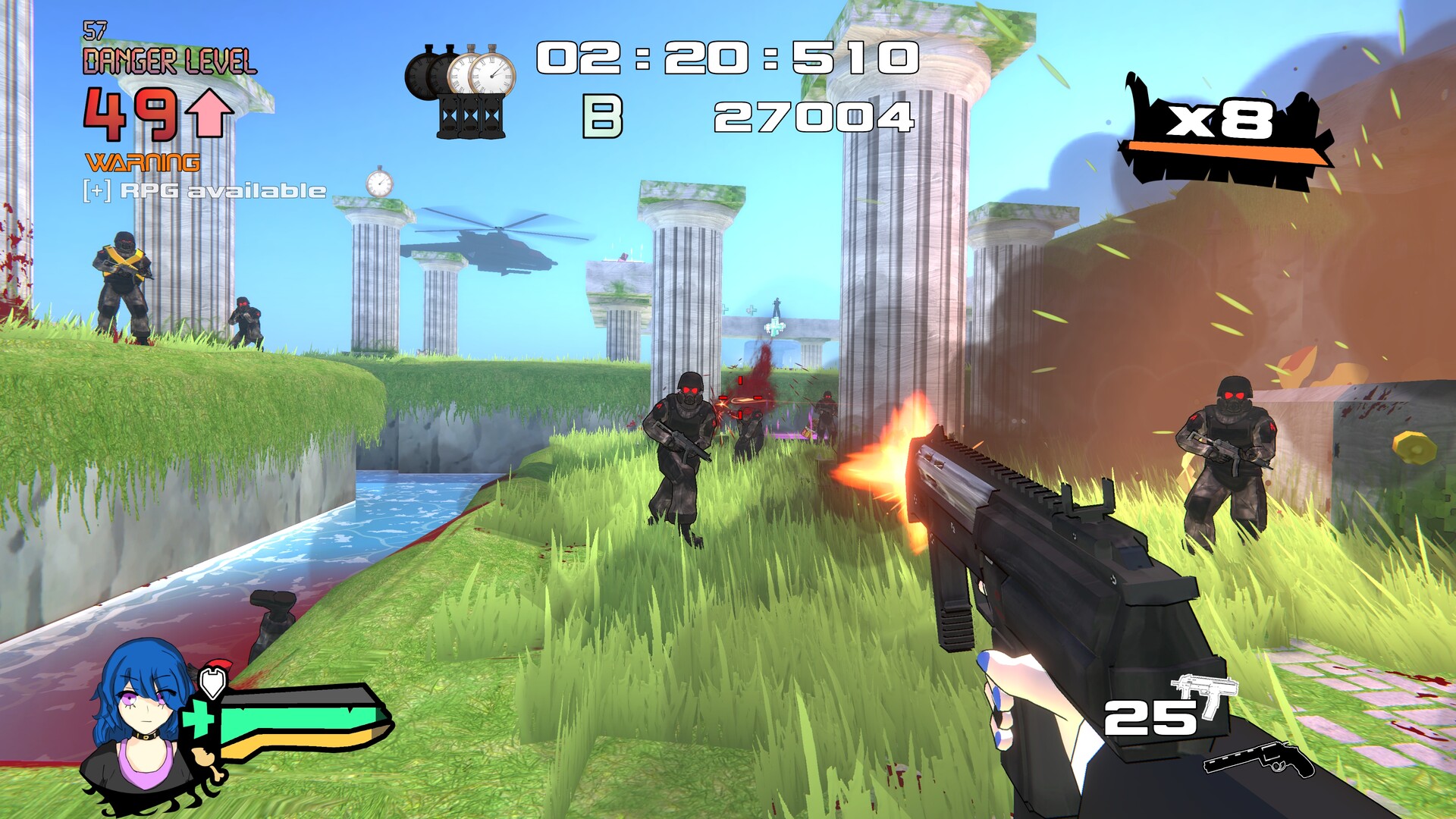
Danger Level is the escalation engine. Kill enemies and it rises; the higher it goes, the more aggressive the spawns get. The dev's own description is blunt: the more enemies you kill, the more chaos unleashes during the game. Enemy variety tiers in as the chaos climbs, from basic infantry up through shield and grenadier units, snipers, choppers, armored tanks, and undead. Power-ups spawn more frequently at higher danger, and mini-bosses emerge once the level is high enough.
The system carries over between scenarios in a single journey and even between runs, which gives the game a light roguelite flavor: your previous attempt shapes how hard the next scenario opens. A full Arcade Mode run is not nine isolated maps; it is one long pressure curve. Spend too aggressively early and every later scenario starts compromised.
Combat and Loadouts
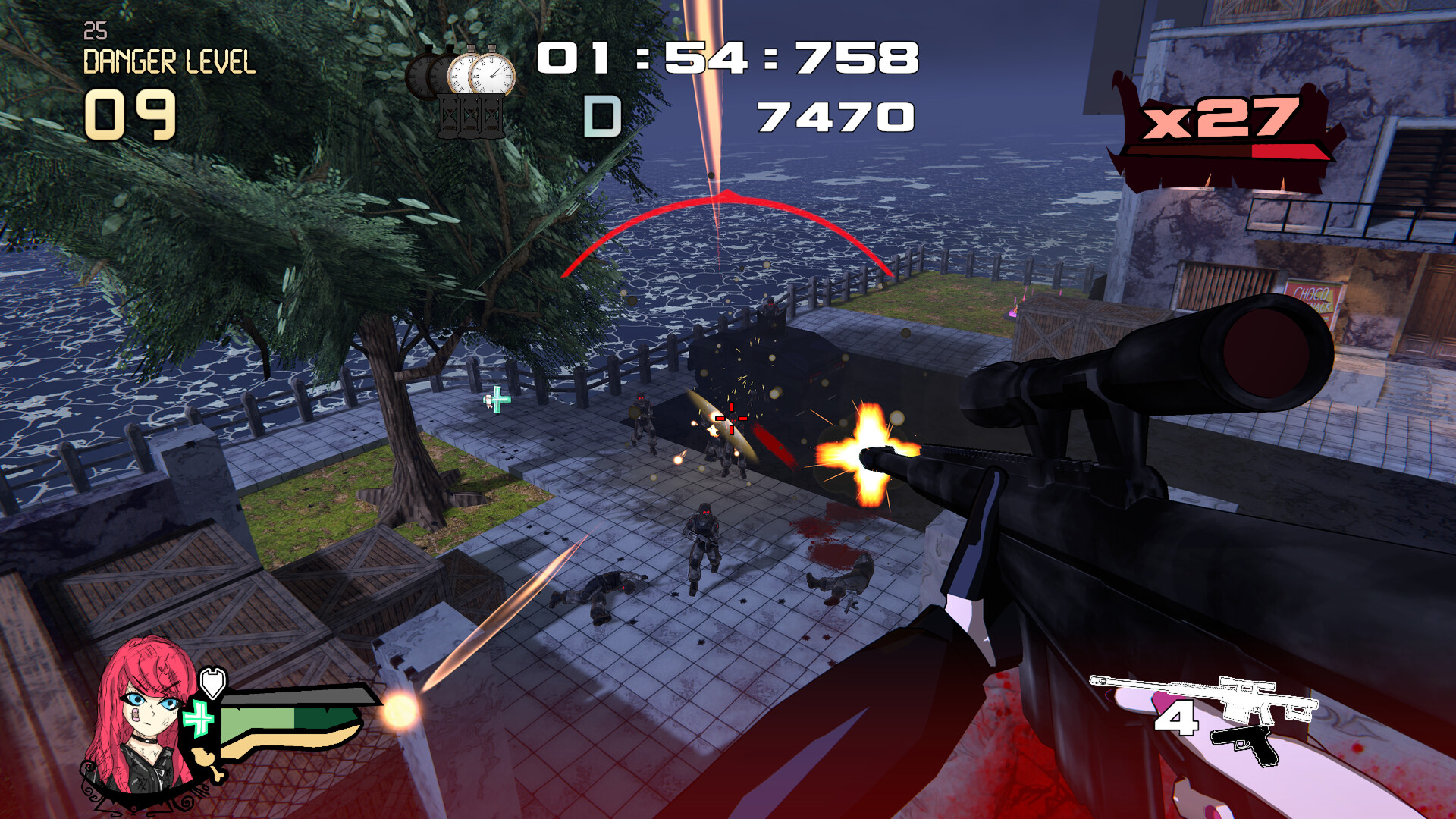
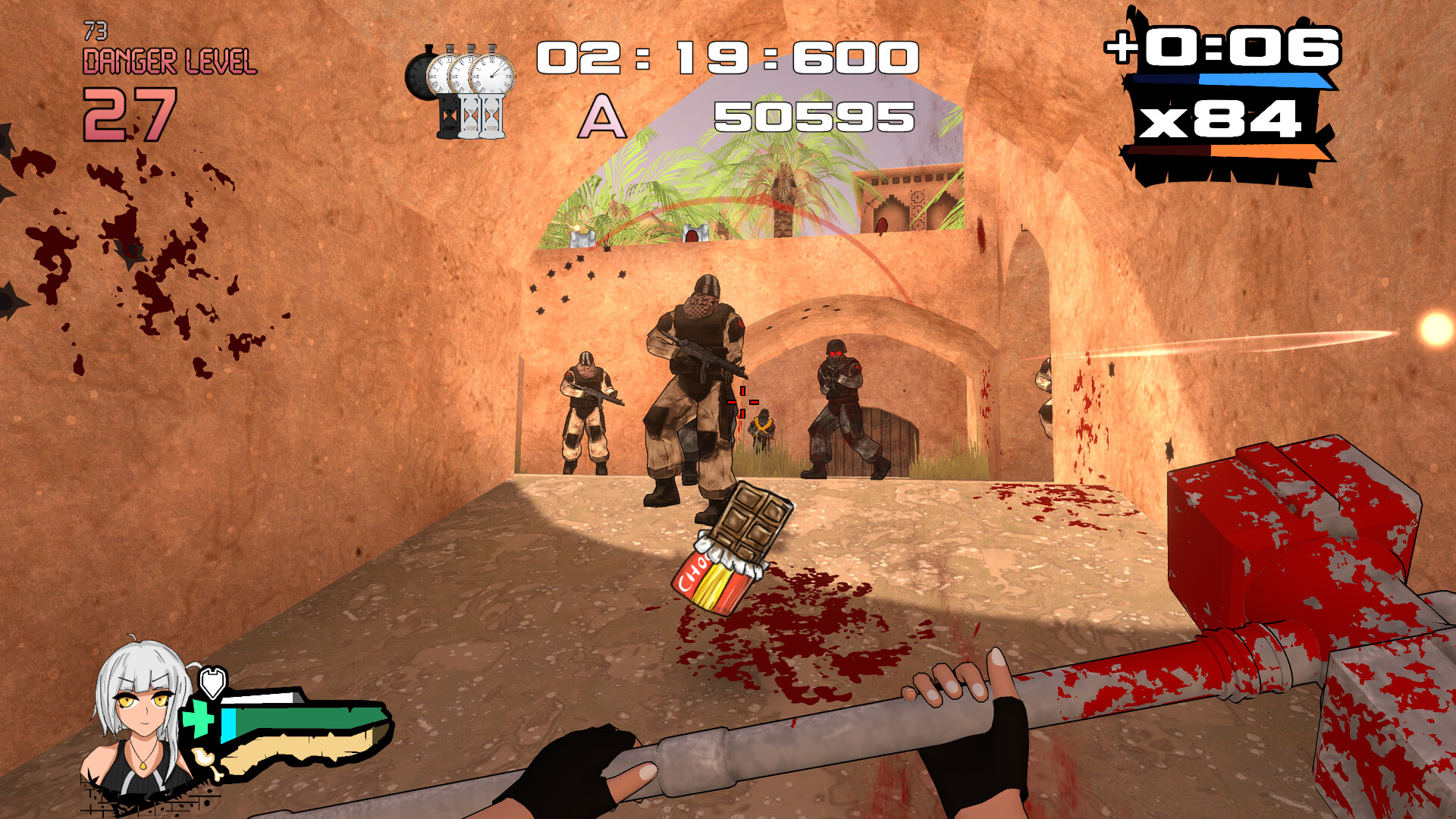
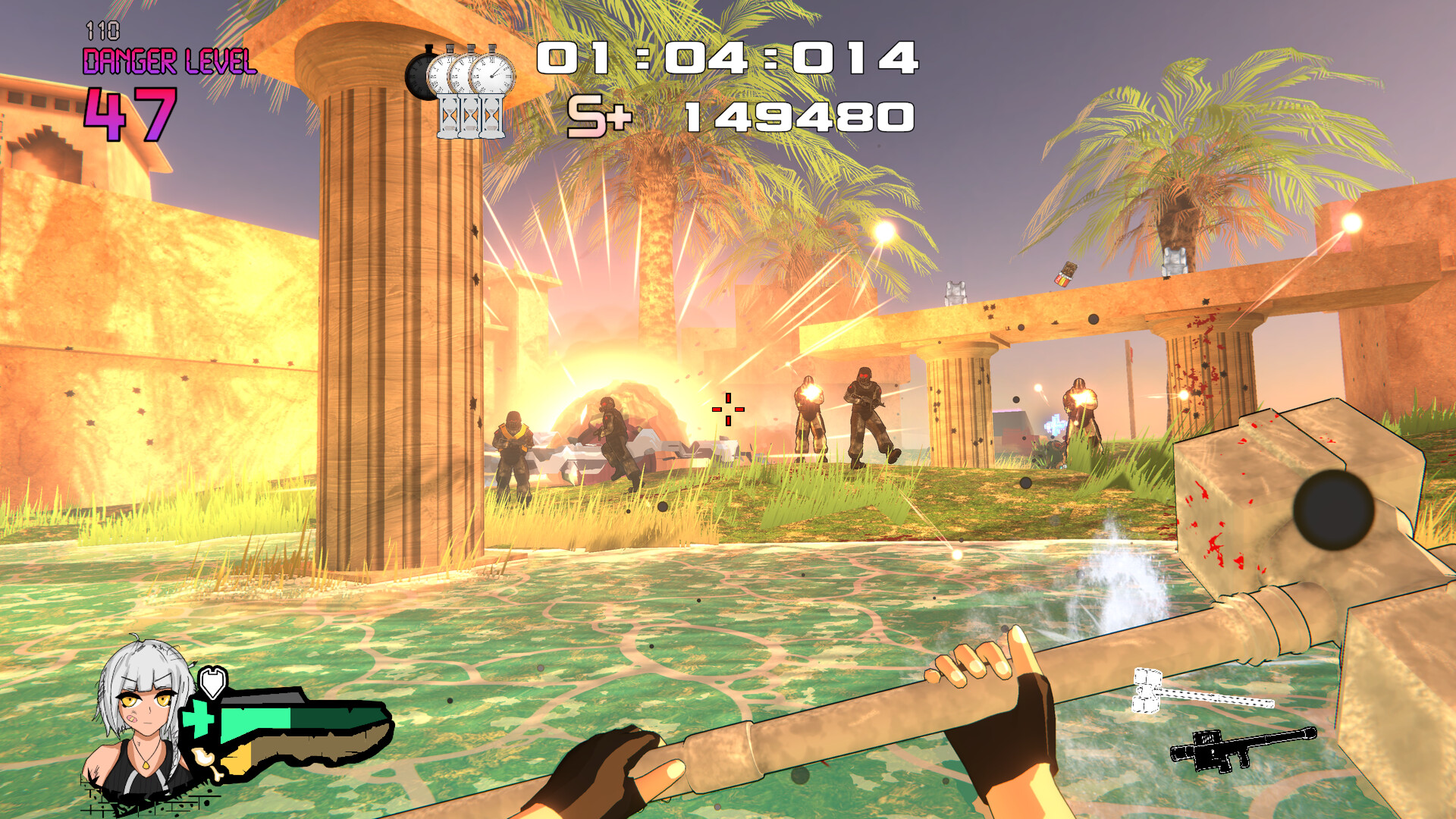
The four playable characters define the combat identities. The spread, per the official page, is long-range snipers, run-and-gun pistol and SMG fighters, and close-quarters sledgehammer and shotgun brawlers. Each character has a gimmick on top of their arsenal, which changes how the same map plays.
Loadout customization adds weapon variants on top of the character kits. You are not locked to a role's default weapon. You can tune the loadout to the map and the mode, which is where most of the pre-run thinking happens.
Enemy Types
| Enemy | Danger Tier | Threat | Counter |
|---|---|---|---|
| Infantry | Base | Low, combo fuel | Any weapon; they die fast and drop time |
| Shield units | Mid | Block frontal fire | Flank or kick; the shield has a facing |
| Grenadiers | Mid | Area denial | Do not camp; keep moving between shots |
| Snipers | Mid | Punish stationary play | Sprint + dodge; they commit to a lane |
| Choppers | High | Airborne pressure | Move to cover when rotor noise starts |
| Armored tanks | High | Front armor | Rocket launcher or sustained rear fire |
| Undead | High | Rush in swarms | Movement over standoff; they close fast |
| Mini-boss | Spawn-based | Gates pickup clusters | Plan a burst window, do not hold fire |
Time and Score Economy
Score is the leaderboard currency. It comes from kills, and the combo multiplier is the amplifier. The game balances the two currencies by forcing a choice: spend time on risky high-value kills, or play safe for survival. The leaderboard rewards the players who can do both.
Progression Strategy
Lunar Drifter is a score attack game, so "progression" means three things: unlocking maps and modes, building your Danger Level tolerance, and growing as a route planner.
Unlock Order
- Clear every map on Free Play at your own pace first. Unlock the full scenario list before you touch Arcade Mode. Knowing the layouts removes the single biggest run-killer: getting lost while the timer drains.
- Beat City on Arcade once. This qualifies you for the next tier of maps and teaches the journey structure the whole game is built on.
- Unlock New Game+ only after a clean Arcade clear. New Game+ escalates the starting pressure. Jump in early and you learn nothing except that the game can hurt you.
- Treat Endless Mode as a loadout laboratory. It is the best place to test weapon variants because the danger climbs without scenario breaks. What survives Endless will survive anything.
Resource Priority
Time pickups are the only resource that matters mid-run. Prioritize route efficiency over kill efficiency for the first half of any learning session. Once you can hold your timer flat through a map, start worrying about score per second.
Danger Level Management
Since danger persists between scenarios, treat the early maps as a bank. Keep the danger level one notch below where choppers start spawning until you have confirmed your health pool can handle the pressure. Then push deliberately during the maps with the best time pickup density. You trade early score for a safer mid-run. In Endless, the opposite rule applies: the danger climbs no matter what, so you want the highest-score enemies dying as early as possible.
Builds, Tier Lists, and Best-In-Slot Loadouts
Character Tier List
| Tier | Character Type | Why |
|---|---|---|
| S | Run-and-gun SMG fighter | Mobile, forgiving ammo economy, works on every map type |
| A | Shotgun / sledgehammer brawler | Devastating at close range, punished on open maps |
| A | Sniper | God-tier on Greek Temple and moon maps, fragile in tight corners |
| B | Pistol specialist | Best raw accuracy, worst crowd control, niche |
The tier list shifts with the map. Count the open versus closed spaces before you commit to a character for a full Arcade journey.
Map Archetypes
| Map Archetype | Example | Best Character | Worst Character |
|---|---|---|---|
| Open sightlines | Greek Temple courtyard | Sniper | Brawler |
| Tight corners | Moroccan castle | Brawler | Sniper |
| Mixed mid-range | City | SMG fighter | Any extreme |
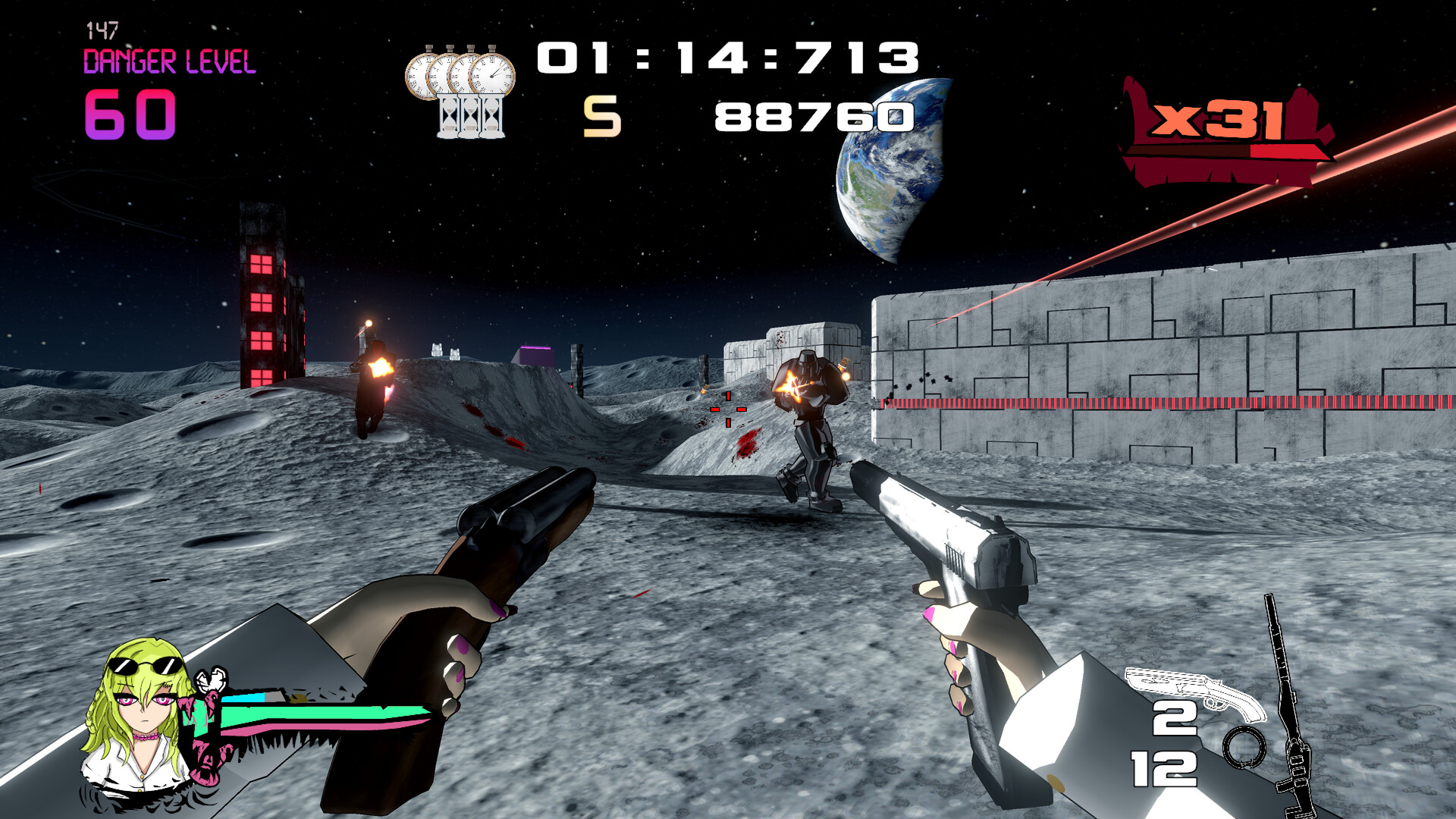
| Low gravity | Moon level | Sniper (floaty aim) | Brawler |
| Horde corridors | Ruined city street | Shotgun | Pistol |
Best-In-Slot Loadout Choices
- Late Arcade / New Game+: Take the SMG with a long-range variant secondary. It covers every threat tier and keeps you moving.
- Endless Mode: Mid-range flexible loadout. The close-range brawler gets punished in late Endless when tanks and undead stack; the flexible mid-range loadout holds up better.
- Co-op: One dedicated pickup runner with a high-mobility kit, everyone else on kill pressure. The pickup runner keeps the run alive; the killers feed the leaderboard.
- Deathmatch: Speed over damage. The timer pressure matters more than raw DPS when eight players share one map.
Step-by-Step Strategy
Sequence 1: The Hourglass Route (Any Map)
- Before your first real run on a map, do a no-combat survey lap in Free Play with a high time limit. Mark every clock and hourglass position mentally.
- Draw the loop that touches every pickup cluster without dead-ending.
- Note which enemies hang near each node. Those are your combo fuel while passing through.
- Run the loop twice at walking pace. The route should feel automatic.
- Only now worry about kills. Route first, score second, every time.
Sequence 2: First Arcade Mode Clear
- Pick the SMG fighter for map flexibility.
- Enter City with the plan to bank danger: kill only what drops time pickups on your route for the first scenario.
- Hold Danger Level one notch below chopper spawns until your health pool is confirmed.
- In the second scenario, push the danger up deliberately during the highest pickup-density section.
- Keep the combo alive through scenario transitions by ending each map on a kill, not a chase.
- When the timer dips under 15 seconds, stop fighting and sprint for the nearest pickup cluster. Survival beats score.
Sequence 3: Surviving the Mini-Boss
- Mini-bosses gate pickup clusters in some layouts. Do not walk into a mini-boss with an empty mag.
- Pre-reload, then trigger the encounter.
- Burst the boss while strafing in one direction. Most of its attacks track your position at trigger time.
- When it telegraphs a heavy attack, kick first to stagger, then sidestep. The kick buys a free reticle-length of space.
- After the kill, collect the cluster immediately. The mini-boss is the map's timeout tax: the longer you take, the less time is left.
Sequence 4: Combo Maintenance in Co-op
- Assign roles before the run: one or two pickup runners, the rest killers.
- Runners call out pickup cluster locations on voice; killers never break line of sight to collect.
- Killers chain kills in a rotating order so no single player carries the combo window.
- If the combo breaks, the runner with the shortest path to a cluster becomes the combo rebuilder. Three quick kills on infantry restores the multiplier.
- Watch the danger level as a team. Eight players stack it fast, so call a pace-down when tanks and undead start double-spawning.
Sequence 5: Endless Mode Marathon Plan
- Start with the mid-range flexible loadout.
- First ten minutes: build a sustainable kill loop near the densest spawn cluster. Do not chase score per second.
- When the danger level passes the tank threshold, switch to burst tactics: rocket launcher for armored groups, SMG for infantry.
- Use the kick to reset spacing when the undead rush closes the gap.
- Plan your power-up usage: save the rocket launcher for the exact moment the screen turns into tanks and undead, not for a single armored straggler.
- When a mini-boss spawns, clear the adds first. The adds drop time; the boss does not.
Sequence 6: New Game+ Escalation
- Rebuild your route knowledge on the first three maps before attempting NG+.
- Run the first scenario at your max safe pace to bank danger early, because NG+ front-loads pressure.
- Accept lower scores in the early scenarios. NG+ is a survival gauntlet, not a score run.
- Swap to the brawler only if you know the map is all close quarters. Otherwise SMG.
- Finish each scenario with full health if possible; NG+ punishes carry-over damage.
Advanced Tips
- Kick the props. The demo added a kicking mechanic, and environmental interaction is part of the kit. Use the kick to push back rushes and buy a step of distance without reloading.
- Sprint between pickups, not during fights. Sprinting during combat drops your accuracy window. Use sprint to move between time nodes when the horde is sparse, not mid-swarm.
- The rocket launcher is a panic button. When the screen turns into tanks and undead, the launcher clears the pressure and restores breathing room.
- Power-ups are danger-gated. The x10 damage pickup and similar power-ups spawn more often as danger rises. If you want power-up uptime, you have to accept the chaos that summons them.
- Audio is a map too. Choppers announce themselves before you see them. If you hear rotor noise, you have one or two seconds to reach cover before the fire comes down. Snipers and shield enemies also have audible tells.
- Reload behind geometry. Reloading mid-fight is the most common death in the game. Every corner is a reload station if you use it that way.
- Rebind before the leaderboard grind. Custom crosshairs and viewmodel do not just feel better; they change readability. A high-contrast crosshair that stays visible against the bright moon level is an actual performance upgrade.
- The moon level floats. Low gravity and drifting debris change aim and movement math. Lead your shots slightly more and keep your feet under you; the floaty aim punishes snipers most.
- Watch the mini-boss timings. Mini-bosses gate pickup clusters in some layouts. Plan a burst window around them instead of holding fire and hoping.
FAQ / Common Mistakes
| Question | Answer |
|---|---|
| When does Lunar Drifter come out? | September 25, 2026 on Steam for Windows and Linux. The demo is playable now. |
| How much will it cost? | Price is not announced. The demo is free. |
| Is it single player only? | No. Online co-op for up to 8, online deathmatch for up to 8, plus LAN support for both. |
| Does it have controller support? | Yes. Full support with aim assist and input rebinding, including DualShock and DualSense. |
| Is it a roguelite? | Partially. The core is classic arcade score attack, but Danger Level carries over between scenarios and runs. |
| How long is a run? | Arcade scenarios are minutes. A full journey with New Game+ stretches much longer, and Endless runs as long as you survive. |
| Are there leaderboards? | Yes. Free Play scenarios and scores go to Steam Leaderboards. |
| Does it have Steam Cloud and achievements? | Steam Cloud, Steam Achievements, and Steam Leaderboards are all listed. |
Common mistakes recap:
- Going loud early. Every kill raises danger, and danger is persistent. Over-farming the first scenario starts every later scenario compromised.
- Chasing kills away from pickups. The kill that drags you off your pickup route is a net loss; the time you spend reaching it cost more than the kill pays.
- Reloading in the open. Reload discipline is half the survival game. Reload behind cover or during a sprint break.
- Ignoring the kick. The kick is a free reset button for spacing, and spacing is the entire game at high danger levels.
- Playing one map archetype forever. A sniper player who only runs Greek Temple will get flattened in the Moroccan castle. Learn at least two characters.
Final Tip
Treat the timer as the boss. Every death in Lunar Drifter is a time management failure dressed up as a shooting failure: you overextended, you hit an empty reload, you chased a kill away from a pickup cluster. The players at the top of the leaderboards are not the best shots; they are the ones who never stop moving toward the next clock. Move like the timer is already empty and the leaderboard will follow.
The game releases September 25, 2026. Get the demo, learn the hourglass routes on the City map, and have a loadout answer ready for the tanks and undead before they show up in force.
Last reviewed by Game How To Editorial. We play each game, verify controls against official sources, and update guides when game mechanics change.
Screenshots