Official game
Play MatchMaker95
This game is hosted by Steam. Continue to the official page to play or download it.
Buy on SteamOverview
MatchMaker95 is a coding tycoon from solo developer willielife that launched on Steam October 22, 2026 at $5.29, currently running a 10% launch discount ($4.76). The premise is a joke and the mechanics are not: you're the founder of a '90s dating app startup, working inside a simulated Windows 98 desktop, and the only way the business survives is you typing real C++ line by line. Brutal coding quotas, extortable subscribers, mini games, and a confetti button the store page advertises in caps fill the space between commits.
The early reception is strong: 15 user reviews, 93% positive at launch week. It's a Windows-only, single-player, keyboard-and-mouse game with Steam achievements, adjustable difficulty, and Family Sharing.
| Detail | Info |
|---|---|
| Developer / Publisher | willielife (self-published) |
| Release | October 22, 2026 |
| Price | $5.29 (10% launch discount active: $4.76) |
| Platform | Windows PC |
| Reception | Positive, 93% of 15 reviews |
| Genre | Casual, Simulation, coding tycoon |
| Accessibility | No timed input required, playable at your own pace, adjustable difficulty |
Who this is for: learners who want C++ syntax reps wrapped in a game, tycoon players who like office-sim-with-a-twist, and retro fans for whom the Win98 desktop and lo-fi audio are the product. All three audiences are served by the same loop, which is the trick of the design.
Getting Started: Your First Session
- Pick your difficulty honestly before the first quota hits. Adjustable difficulty is the game's most important setting. If you've written any code, start higher; if C++ is new, the relaxed setting is not a consolation prize, it's the intended on-ramp. Quotas plus unfamiliar syntax is the specific combination that kills new players' momentum.
- Finish the tutorial. The demo era made this literal. The game's own marketing ran its demo as a "programming interview," and the tutorial exists to keep you from "looking like an amateur and being passed over by the hiring team," in the developer's words. Mechanically it teaches the typing interface and the code-checking flow.
- Type every line yourself in the first hours. The learning value lives in your fingers. Muscle memory on basic syntax is what makes quota deadlines feel routine instead of terrifying later.
- Read the unhinged messages. They're the best writing in the game and they double as flavor for the subscriber systems you're about to exploit.
- Open the achievements list once. Achievements in a fresh indie tycoon double as a systems tour: they name the mechanics the store page hides and give your first sessions direction.
Mistakes to avoid on day one:
- Treating it like a typing test. Speed matters at the margins, but wrong code doesn't ship, so accuracy first.
- Grinding quotas on high difficulty while learning new syntax. Flip the difficulty down for learning sessions and back up for delivery sessions. The game explicitly supports both.
- Ignoring the mini games. They break the typing loop and pay out into the tycoon layer.
- Saving the confetti button for a special occasion. There is no special occasion. Press it.
Core Mechanics Explained
The Code Is Real
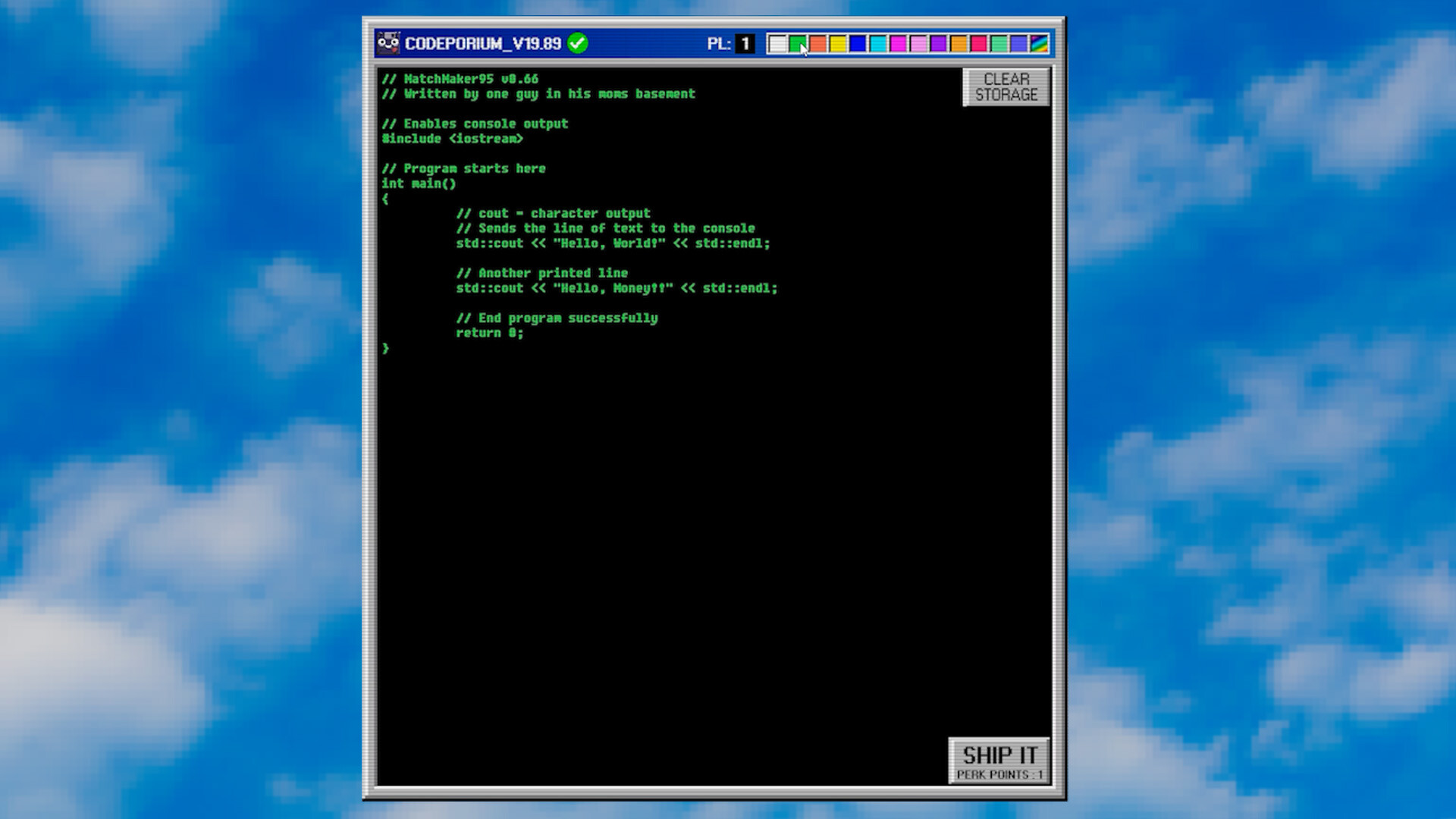
You type actual C++: variable declarations, loops, functions. The game teaches syntax line by line, which means each new concept arrives attached to something your startup needs. This sequencing is the design's smartest move. Traditional tutorials front-load theory; MatchMaker95 introduces a construct at the moment the business has a use for it, which is the retention pattern every coding course wishes it had.
Set expectations correctly: this is practice, not a replacement for a course. Five dollars of tycoon gives you repetition and context. What it doesn't give you is project structure, debugging discipline, or modern toolchains. You'll leave knowing what a for loop feels like in your hands, which is exactly the barrier that stops most beginners.
Quotas Are the Run Structure
Every period, the business demands shipped code. Your ceiling is set by two variables: how fast you type and how well you know the syntax in front of you. The gap between the quota and your ceiling is the entire difficulty curve, and adjustable difficulty exists to move that gap.
The pressure pattern is classic tycoon: early quotas teach, middle quotas test, late quotas demand optimization. Because there's no timed input requirement, the clock is the deadline, not your fingers. A quota failure costs you momentum, not reflexes.
The Economy Is Satire (and It Still Works)
Subscribers join your dating platform and can be extorted, which is the kind of business model that would end a real company and here is a headline feature. Underneath the joke sits a real monetization layer: subscriber income feeds the startup, perks and upgrades compound it, and the goal state is the "money-printing machine" the store page promises. The '90s dating app setting is doing real mechanical work: it justifies rapid subscriber growth, absurd user messages, and monetization schemes that would be radioactive in a modern setting.
Perks Compound Your Output
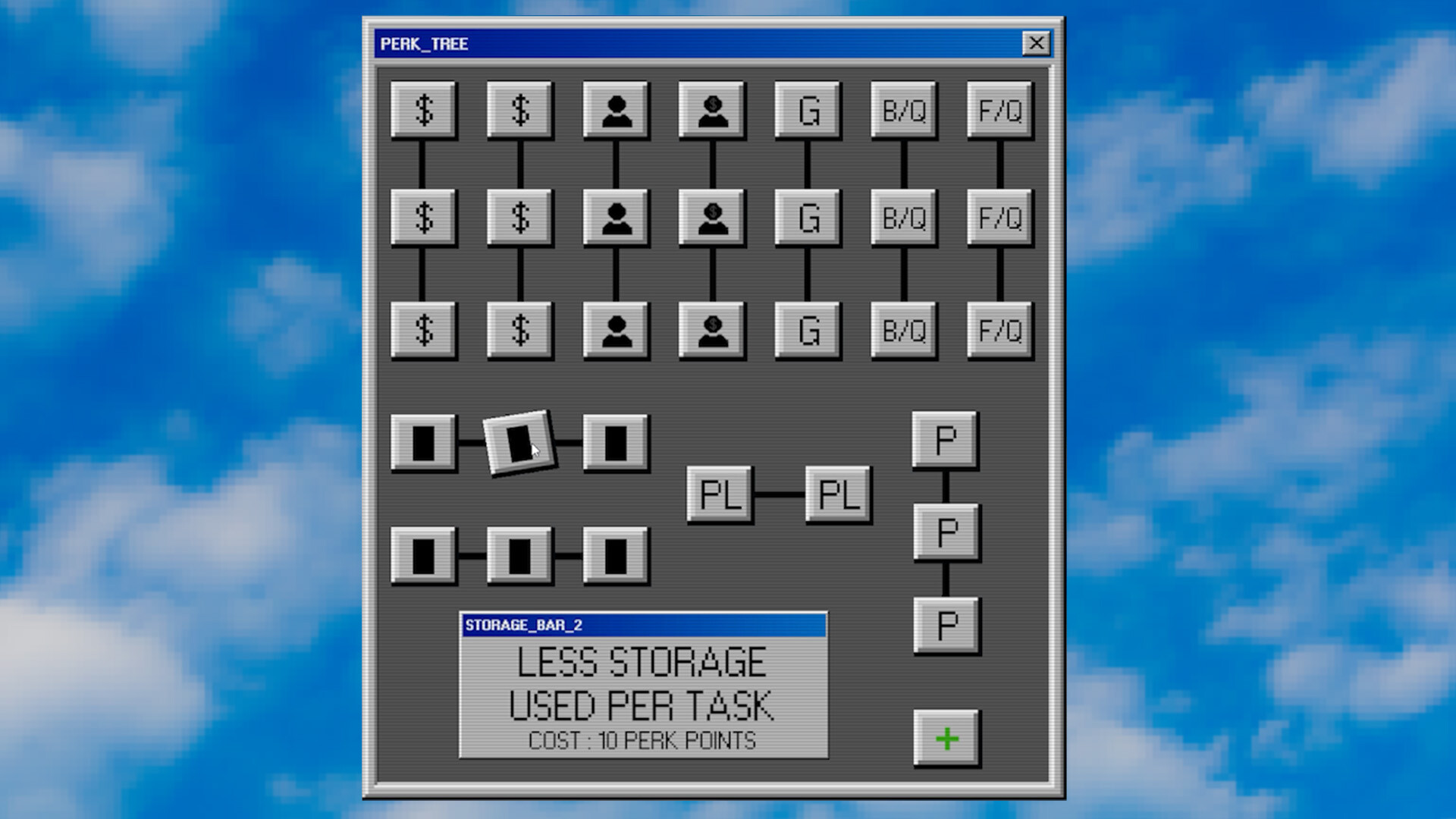
"Unlock game-changing perks" is the progression spine. Perks in a coding tycoon follow the standard trinity: automate a task, accelerate your output, or unlock new capability. Because your code output drives the business, every perk that speeds or simplifies the writing loop multiplies everything downstream. When a choice appears, prefer the perk that removes friction from typing over the perk that adds a new number somewhere.
Mini Games and the Comedy Layer
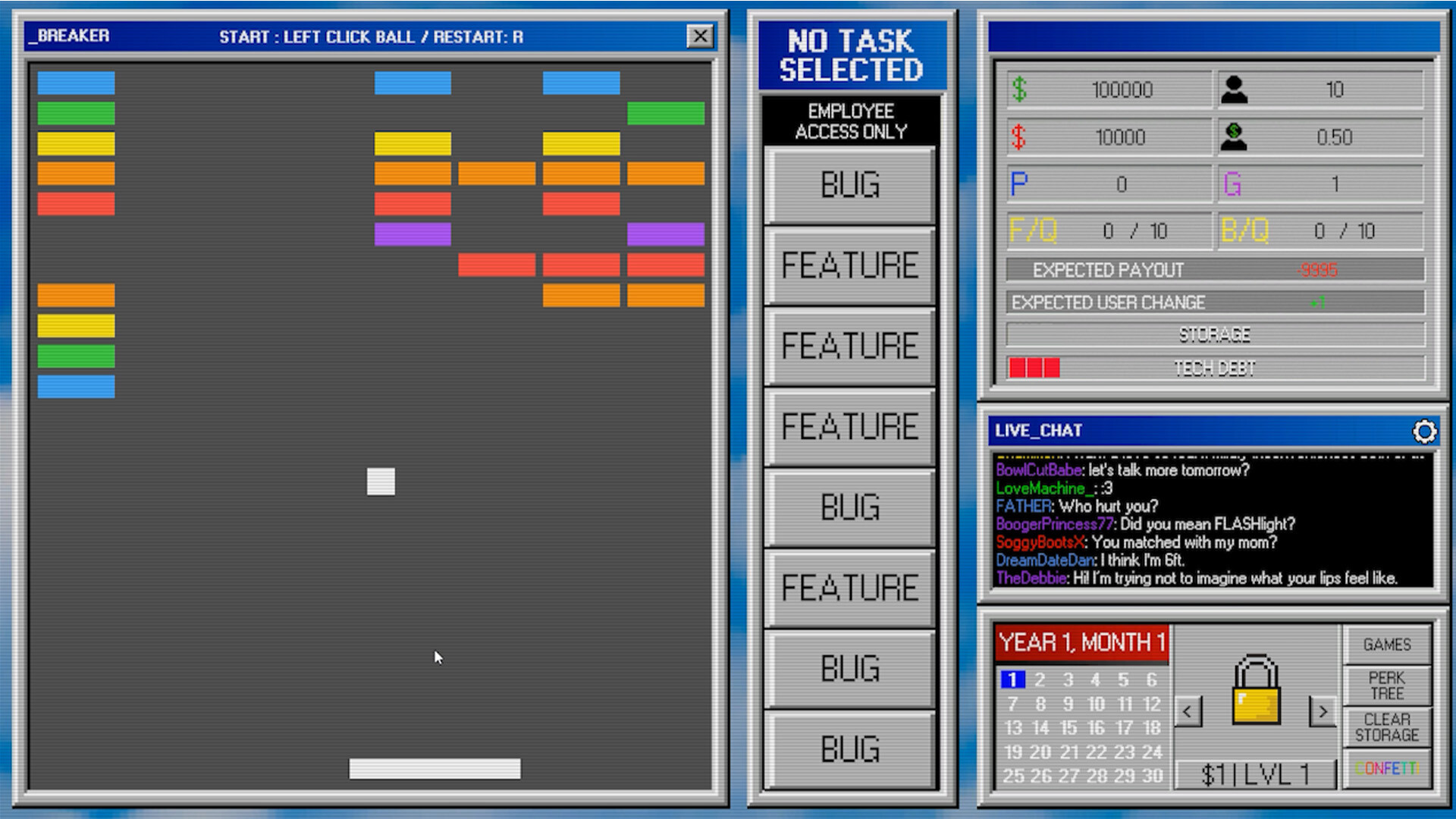
Mini games break the coding loop and are listed as a headline feature, not a token. The messages from your userbase are the narrative engine. And the confetti button, advertised twice in caps on the store page, is load-bearing comedy: games confident enough to market one joke button this hard are usually confident about everything around it.
Progression Strategy
- Front-load accuracy, then speed. Your first sessions should end with zero failed compiles and slow times. Speed follows familiarity automatically; accuracy never does.
- Ride the difficulty dial. Drop difficulty while absorbing new syntax, raise it when the current material is comfortable. This is the intended use of the setting, not cheating.
- Prioritize output-multiplier perks. Anything that accelerates or simplifies the writing loop compounds for the rest of the run. Score-keeping perks can wait.
- Bank quota headroom. Ship small and early each period rather than building one ambitious thing that misses the deadline. A finished small feature beats an unfinished big one every time.
- Learn the subscriber economy before abusing it. Extortion is tempting on day one; understand what each subscriber interaction pays before you burn the goodwill.
- Use achievements as a roadmap. They point at systems and interactions you'd otherwise never touch.
Step-by-Step Strategy
- The onboarding run. Tutorial, relaxed difficulty, type every line, zero skips. Target: complete the tutorial with no failed checks. This builds the typing accuracy every later quota depends on.
- The syntax sprint. When new syntax appears, immediately drop the difficulty one notch and grind repetitions until the construct feels automatic. Raise difficulty back before the next quota period. You learn on the easy setting and perform on the hard one.
- The deadline protocol. Quota due soon? Stop learning. Complete the smallest shippable unit of code, submit, then return to study. Never enter a deadline mid-lesson.
- The perk cascade. When perks unlock, take the typing-loop multiplier first, the automation second, the cosmetic third. Each output multiplier compounds through every future quota.
- The extortion schedule. Once subscriber extortion is available, fold it into the end-of-period routine: quota shipped, subscribers squeezed, income banked, then next period. Regular extraction beats maximum extraction.
- The mini game breather. Between quota periods, run one mini game. It resets the typing fatigue that produces late-session typos, and typos are the real quota killer.
Advanced Tips
- Your keyboard is your build. This is the rare game where hardware is a legitimate upgrade path. Anything that improves your typing accuracy improves every system in the game.
- The no-timed-input tag means deadlines are strategic, not reflexive. You can pause, think, and plan mid-quota. Use it. Plan the line before you type it.
- Reread messages before dismissing them. The unhinged mail is comedy first, but the writing consistently nods at the systems it describes.
- The 90s frame is a difficulty setting in disguise. The era's C++ predates modern complexity, so fundamentals carry you far. Don't overthink constructs with modern patterns the game never asks for.
- 93% positive at launch week with this small a review pool means the audience is niche but served. If the store page made you smile, the game will hold; if the joke didn't land in 10 seconds, skip it.
- Family Sharing exists. One copy covers a household of would-be C++ learners, which at $4.76 makes it the cheapest coding curriculum with a confetti button on the market.
FAQ
Does MatchMaker95 actually teach C++? You write real C++ line by line as the core mechanic. It teaches syntax fundamentals through repetition and context. It's a $5 game, so treat it as practice and a gateway, not a bootcamp.
How hard is it if I've never coded? The adjustable difficulty and no-timed-input design exist precisely for you. Start relaxed, learn the syntax at your pace, and raise the pressure only when the current material feels automatic.
How much is it and is the discount still live? $5.29 base, with a 10% launch discount to $4.76 active at launch week. Launch discounts on solo-dev titles typically end within two weeks, so don't wishlist-and-wait too long.
Is it on Mac or Linux? Windows only per the current listing.
Is there a demo? The demo ran earlier in 2026, styled as a programming interview. Check the store page for whether it's still up.
Can I play without fast typing? Yes. The game is categorized as playable at your own pace and playable without timed input. Quotas are business pressure, not a reflex test.
Does it have achievements? Yes, plus Family Sharing and custom volume controls. The achievements double as a tour of systems the store page doesn't explain.
Screenshots