Official game
Play Ludus Magnatus: Gladiator Manager Simulator
This game is hosted by Steam. Continue to the official page to play or download it.
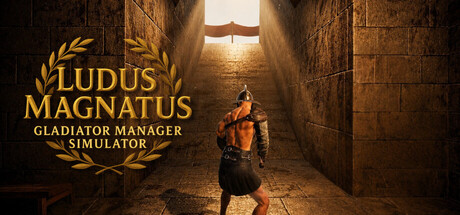
Wishlist on SteamLudus Magnatus: Gladiator Manager Simulator is a sports-management sim transplanted into an alternate Ancient Rome. Developed by Contec Games and released July 21, 2026 on Steam Early Access, it puts you in charge of one of sixteen gladiator stables (ludi) in Division VII with one goal: claw your way to the Championship through fully simulated seasons. Think Football Manager with gladius and net, where every recruit is an investment and every match can end a career.
This guide covers everything from club selection and roster construction to advanced tactics, facility management, and the long climb through seven divisions.
Overview
Ludus Magnatus: Gladiator Manager Simulator is a sports-management sim transplanted into an alternate Ancient Rome. Developed by Contec Games and released July 21, 2026 on Steam Early Access, it puts you in charge of one of sixteen gladiator stables (ludi) in Division VII with one goal: claw your way to the Championship through fully simulated seasons. Think Football Manager with gladius and net, where every recruit is an investment and every match can end a career.
Each season plays out through training management, match day simulation, and roster economics — buy slaves, train their five core stats, equip them for different archetypes, and send them into the arena. Your long-term goal is promotion through seven divisions, but the daily rhythm is all about keeping your stable solvent and your gladiators alive.
Getting Started: Club Selection
Your first decision determines your difficulty curve for the next 10-20 hours. Sixteen clubs are spread across three tiers:
| Tier | Clubs | Starting Budget | Facility Quality | Recommended For |
|---|---|---|---|---|
| Top | Roma Ludus, Capua Legion, Imperial Fists | 15,000-20,000 denarii | Excellent (3-star med, 3-star training) | First-timers who want to learn mechanics |
| Mid | Ravenna School, Neapolis Team, Pompeii Strikers, Taranto Titans | 8,000-12,000 denarii | Good (2-star med, 2-star training) | Balanced experience |
| Bottom | Provincial clubs (4 clubs) | 3,000-5,000 denarii | Poor (1-star med, 1-star training) | Veteran management sim players |
Pick Roma Ludus or Capua Legion for your first save. The higher starting budget lets you buy decent equipment immediately, and the better medical facility means your gladiators recover faster from injuries. The game is punishing enough at Division VII level — you don't need budget constraints compounding the learning curve.
Only start with a provincial club if you've already played 50+ hours of Football Manager or Out of the Park Baseball. You'll need every edge just to stay out of the relegation zone.
Core Mechanics Explained
Gladiator Stats
Each gladiator has five core stats that determine their performance:
| Stat | Effect | Scale | Priority |
|---|---|---|---|
| Strength | Attack power, damage per hit, chance to break blocks | 1-99 | Medium |
| Speed | Movement speed, attack frequency, dodge chance | 1-99 | Medium |
| Endurance | Stamina pool, fatigue rate, recovery between matches | 1-99 | High (Early) |
| Technique | Hit accuracy, block success rate, special move effectiveness | 1-99 | High (Always) |
| Morale | Combat effectiveness modifier (affects all stats), chance to rout | 1-100 | Critical |
Endurance is the king stat in the first season. A gladiator with 50+ Endurance can fight through an entire match without significant stat penalties. Below 30 Endurance, they gas out halfway through and become a punching bag. Prioritize Endurance in your first 2-3 recruits even if it means accepting lower Strength or Speed.
Archetype System
Five gladiator archetypes form a rock-paper-scissors-lizard-Spock loop:
| Archetype | Weapon | Strong Against | Weak Against | Playstyle |
|---|---|---|---|---|
| Murmillo | Short sword + tall shield | Retiarius | Thraex | Balanced frontliner, highest survivability |
| Thraex | Curved sword + small shield | Murmillo | Secutor | Aggressive DPS, high damage output |
| Retiarius | Net + trident | Secutor | Murmillo | Control specialist, ranged attacks, disables |
| Secutor | Long sword + tower shield | Thraex | Retiarius | Defensive counter-fighter, punishes mistakes |
| Provocator | Gladius + rectangular shield | (Balanced) | (Balanced) | Jack of all trades, no extreme weaknesses |
The Provocator archetype has no severe disadvantage against any archetype but also no advantage. Use them as flexible backups.
Counter-picking wins matches. Always scout your opponent's roster before setting your lineup. If they lead with a Murmillo, answer with a Thraex. If they stack Retiarii, Murmillos chew through them.
Traits System
Every gladiator can have up to two traits — positive and/or negative:
Positive traits:
- Brave — Morale drops slower when losing. Priceless for comeback victories.
- Showman — Each victory generates bonus crowd income and accelerates your reputation growth.
- Loyal — Lower salary demands and less likely to demand transfers.
- Clutch — Stat boost in the final 30 seconds of close matches.
- Iron Body — Reduced injury chance and faster recovery.
Negative traits (avoid these):
- Arrogant — Morale plummets after any loss. Can start a losing streak death spiral.
- Injury-Prone — +50% injury chance. They will spend more time in the medic tent than the arena.
- Lazy — Slower stat growth from training. Wastes your investment.
- Unstable — Random morale swings. One bad match ruins their form for weeks.
- Greedy — Constantly demands salary renegotiation. Budget killer.
Never sign an Injury-Prone gladiator until you have 3-star medical facilities. The injury frequency is punishing at low-tier med facilities, and you'll burn your budget on replacements.
Progression Strategy: Division by Division
Division VII (First Season)
Goal: Survive and learn. Do not try to win the league.
The AI in Division VII uses basic tactics and has low-tier equipment. But the game's tutorial is minimal and the UI takes getting used to.
What to do in the first 10 hours:
- Sign 8 gladiators minimum — 2 per archetype type (Murmillo, Thraex, Retiarius, Secutor). Don't worry about Provocators yet.
- Prioritize Endurance > 40 on every recruit. Even if they have 20 Strength, high Endurance keeps them fighting.
- Buy basic weapons and shields first. Armor is important but weapons determine whether you actually kill the opponent before gassing out.
- Upgrade medical facility to 2-star first. Before training, before living quarters, before anything. Nothing ends a season faster than your two best gladiators both out with torn hamstrings.
- Set tactics to Defensive for the first 5-10 matches. You need to see how the match engine works before you start taking risks.
- Rest gladiators after any match where they took significant damage. The game gives you a tooltip warning — heed it.
Budget allocation for Season 1:
- 50% — Gladiator recruitment and salaries
- 25% — Equipment (basic weapons for your core 4)
- 15% — Medical facility upgrade (rush this)
- 10% — Emergency reserve
Avoid: Sponsorship deals that ask for performance bonuses early on. You will not meet them, and the penalty fees will destroy your finances.
Division VI-V (Second and Third Seasons)
Goal: Build a specialized roster and establish income streams.
By now you understand the match engine. Time to specialize:
- Phase out Provocators and Retiarii unless you have an exceptional one. Focus on a core of 6 gladiators (2 Murmillo, 2 Thraex, 2 Secutor).
- Invest in training facilities (2-star). Stat growth from training becomes your primary improvement path.
- Sign sponsorship deals but only flat-rate ones. Avoid percentage-based bonuses tied to win streaks.
- Develop a "star gladiator". Pick your highest-potential recruit and feed them match time against favorable archetype matchups. A star with 70+ Technique and a good weapon can carry entire matches.
- Start scouting for young gladiators (18-22 years old). They have higher stat growth ceilings and lower salary demands.
Division IV-III (Mid-Game)
Goal: Optimize. Build a well-oiled machine.
The AI here starts using actual tactics — counter-picking your lineup, using special moves, rotating injured gladiators out.
- 3-star medical facility is mandatory. Injuries are frequent and severe at this level.
- Have 12 gladiators in your stable. Rotate between matches. Never field a tired gladiator.
- Master the special moves system. Each archetype has unlockable special moves. A Thraex with "Whirlwind" can wipe three enemies in a row. A Secutor with "Perfect Block" neuters aggressive opponents.
- Target specific equipment upgrades. Don't buy general +2 weapons — look for weapons with matching archetype bonuses. A "Murmillo's Gladius +2" is better than a generic "Short Sword +3".
- Watch the second-hand market religiously. AI clubs sell equipment when their gladiators upgrade or die. You can get 80% off retail for gear that's 1 patch cycle behind.
Division II-I and Championship (Late Game)
Goal: Perfection. Every decision is min-maxed.
The Championship tier is brutal. AI opponents have full rosters of 70+ stat gladiators with optimal equipment and perfect counter-picks.
- Your roster needs 16 gladiators minimum. 4 of each main archetype. Injuries and fatigue will destroy a thin roster.
- Every gladiator needs multiple equipment sets. One for aggressive matches, one for defensive, one for specific archetype counters.
- Training at 4-star facilities is non-negotiable. The stat growth difference between 3-star and 4-star is 40%.
- Morale management is the endgame. A gladiator with 100 Morale fights at ~115% effective stats. One with 20 Morale fights at ~75%. Keep your stars happy with bonuses, rest, and favorable match assignments.
- Specialize facilities. Don't build a generalist ludus. If you focus on Speed + Technique builds, build your training facility for those specific stats. Jack-of-all-trade facilities produce mediocre gladiators.
Builds: Archetype-Specific Guides
Murmillo (The Frontliner)
Stat priority: Endurance > Technique > Strength > Speed > Morale Equipment priority: Shield > Weapon > Armor > Accessory Best traits: Brave, Iron Body, Loyal Special moves to unlock: Shield Bash (unlocks at Technique 50), Provoke (draws aggro), Iron Wall (reduced damage for 15s) Role: Your anchor. They absorb damage, control the engagement, and let your Thraex or Secutor clean up. Build: Heavy armor, the largest shield available, and a weapon that doesn't slow them down (short sword over long sword). A slow Murmillo is a dead Murmillo — they need to intercept attacks.
Thraex (The Aggressor)
Stat priority: Strength > Speed > Technique > Endurance > Morale Equipment priority: Weapon > Accessory > Armor > Shield Best traits: Clutch, Showman, Brave Special moves to unlock: Whirlwind (AoE attack, Speed 55 required), Berserker Rage (stat boost, Health < 30%), Execute (finishing move) Role: Your kill squad. High risk, high reward. They end matches quickly or die quickly. Build: Light armor, high-damage curved sword. Sacrifice shield for a second accessory if possible. You want them hitting hard and fast before they take return damage.
Retiarius (The Controller)
Stat priority: Technique > Speed > Endurance > Strength > Morale Equipment priority: Net (quality determines disable duration) > Trident > Armor > Accessory Best traits: Showman, Clutch, Loyal Special moves to unlock: Net Toss (disables enemy for 3s), Disarm (removes weapon temporarily), Escape Artist (breaks pins) Role: Disabler. They don't deal the most damage but they set up kills for your Thraex. Excellent against Secutors who rely on blocking. Build: Focus on net quality above all else. A poor net misses. A great net lands every time. Armor is secondary — they should never be taking direct hits if played correctly.
Secutor (The Counter-Fighter)
Stat priority: Technique > Endurance > Strength > Speed > Morale Equipment priority: Tower Shield > Weapon > Armor > Accessory Best traits: Brave, Iron Body, Loyal Special moves to unlock: Perfect Block (blocks ALL damage for 2s), Counter-Thrust (automatic riposte after block), Shield Wall (team defense buff) Role: Anti-aggressor. Built to neutralize Thraex and other high-damage archetypes. A good Secutor makes the opponent's star gladiator irrelevant. Build: Tower shield is mandatory. The biggest one you can afford. Long sword for reach. Wear them down through blocks and counter-attacks.
Step-by-Step Match Strategy
Pre-Match (5 minutes)
Step 1: Scout the opponent's roster. Open the opponent overview. Note their archetype distribution. If they have 3 Thraex, you need 3 Secutors.
Step 2: Check your gladiators' stamina and health. Any gladiator below 70% stamina gets a -15% to all stats. Rest them. Field a fresh benchwarmer over a tired star.
Step 3: Set your lineup with counter-picks. Use the archetype matchup table above. Prioritize counter-picking their #1 and #2 fighters (the ones with the highest stats).
Step 4: Set aggression levels.
- Conservative: Your gladiators block +20% but attack -15%. Use when you have the counter-pick advantage and want to minimize risk.
- Balanced: Default. No modifiers.
- Aggressive: Attack +20%, defense -15%. Use when you're the underdog and need a lucky early kill.
- Desperate: Attack +35%, defense -30%. Only in the final round when you're losing and need a hail mary.
Step 5: Assign special move usage. For each gladiator, set the condition for using their special move (e.g., "Use Whirlwind when facing 3+ enemies" or "Save Perfect Block for opponent's special move"). Default is "Use when available" — this wastes your best moves on trash fights.
During the Match
Step 6: Watch the first 30 seconds. The opening engagement tells you everything about the AI's strategy. If they open aggressive, your Defensive-tactic gladiators will counter-punish them.
Step 7: Adjust tactics between rounds. You can change aggression levels and special move assignments between each round. If your Thraex is getting blocked repeatedly, switch them to Conservative (which lowers their attack but prevents them from feeding counter-attacks).
Step 8: Know when to throw the towel. If a star gladiator is taking heavy damage and below 30% health, throw the towel. A loss hurts less than a career-ending injury. The AI will NOT pull their injured gladiators — you must do it yourself.
Post-Match (5 minutes)
Step 9: Treat injuries immediately. Every ignored injury has a chance to worsen between matches. A "minor cut" ignored can become "infected wound" (-15 to all stats) by the next match.
Step 10: Review the match replay. The game records every match. Watch the moments where your gladiators lost engagements. Was it endurance (they tired)? Technique (they missed)? Counter-pick (wrong archetype match-up)? The answer tells you what to fix.
Advanced Tips
The morale snowball is real. Winning 3 matches in a row gives each gladiator a hidden "win streak" morale bonus. The bonus stacks up to +10 Morale per win (capped at +30). Losing resets it. Protect your streak by resting tired gladiators and taking favourable match-ups.
Don't train everything. Specialization beats generalization in every case. A Murmillo with 80 Endurance and 70 Technique beats a Murmillo with 60 across all stats. The match engine weights high peaks more than broad averages.
The transfer market has patterns. AI clubs sell gladiators after they lose 2+ matches in a row. Watch the news feed for losing streaks and poach their best gladiators for below-market rates.
Online multiplayer PvP is different. In synced PvP matches, the AI doesn't control the opponent — a real person does. Human opponents counter-pick aggressively and use special moves at optimal moments. Build a balanced roster (2 of each archetype minimum) because you can't predict their lineup. Defensive tactics are stronger in PvP because humans get frustrated by prolonged fights and make mistakes.
Facility synergy matters. Some facility upgrades boost each other:
- Medical (3-star) + Training (3-star) = 20% faster recovery after training injuries
- Living Quarters (2-star) + Medical (2-star) = 15% better morale
- Scouting (2-star) + Market (2-star) = Unlocks 30% more recruit options per transfer window
Plan your facility upgrades in pairs, not individually.
The special move system is the skill ceiling. A gladiator with 0 special moves fights at 70% of their potential. A gladiator with all 3 special moves unlocked and assigned to smart conditions fights at 130%. Prioritize special move training over raw stat gains once your gladiators reach 50+ in their primary stats.
FAQ / Common Mistakes
1. "Why am I losing every match in Division VII?" You're likely running out of stamina. Check your gladiators' Endurance — anything below 35 means they're gassing out before the match ends. Rest them between matches. Also, check your aggression settings — "Balanced" or "Defensive" is better while learning.
2. "My star gladiator got injured for 8 weeks. What now?" This happens. Keep 2-3 backup gladiators in your stable at all times. If you don't have backups, sign free agents immediately — even low-stat gladiators are better than fielding a exhausted one. Upgrade your medical facility as soon as you can afford it to reduce recovery time.
3. "I have no money and my best gladiator wants a raise." Let them leave. Seriously. A salary dispute that drags on kills the morale of the entire stable. Sell them in the transfer window and use the funds to buy 2-3 younger gladiators. Don't fall for the sunk cost fallacy on a single gladiator.
4. "The UI is clunky and I can't find things." The interface is rough — this is a one-developer Early Access game. Key shortcuts: Space advances the simulation day, Tab opens the roster, M opens the market, F opens facilities. The settings menu ESC issue from launch was patched on day one — make sure you're on version 0.92.1A or newer.
5. "Should I save scum?" The game saves automatically after each match. But losing is part of the experience — some of the most memorable careers come from overcoming adversity. A championship won after a mid-season crisis is worth more than a perfect record.
Roadmap and Content Updates
As an Early Access title, Ludus Magnatus is actively being developed. Based on the developer's communications:
- Balance patches — Expected weekly for the first month
- Multiplayer stability — Top priority after launch issues
- Content additions — More archetypes, special moves, and facility types planned
- UI improvements — The developer has acknowledged the interface needs work
The game has the skeleton of a great management sim. If the developer delivers on the roadmap, this could become the definitive gladiator manager in the next 12 months.