Official game
Play Golel
This game is hosted by Steam. Continue to the official page to play or download it.
Wishlist on SteamOverview
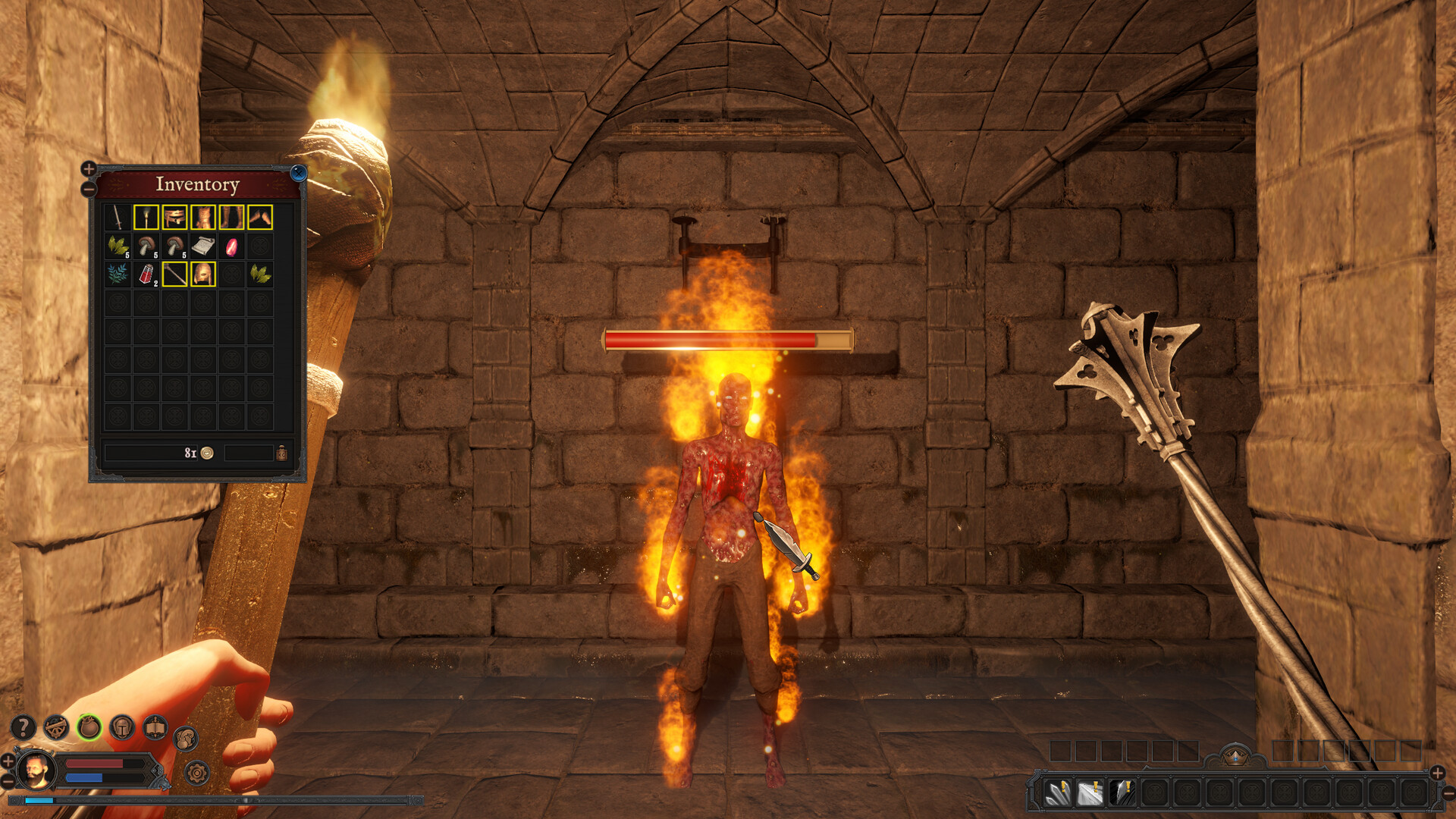
Golel is a first-person dungeon crawler RPG where every step is a turn. The core loop is built on ticks: you move one tile and the dungeon moves with you. Each action you take, the enemy takes one too, and some monsters squeeze two actions into your single step. That asymmetry is the whole combat system, and it turns every corridor into a positioning puzzle instead of a stat check.
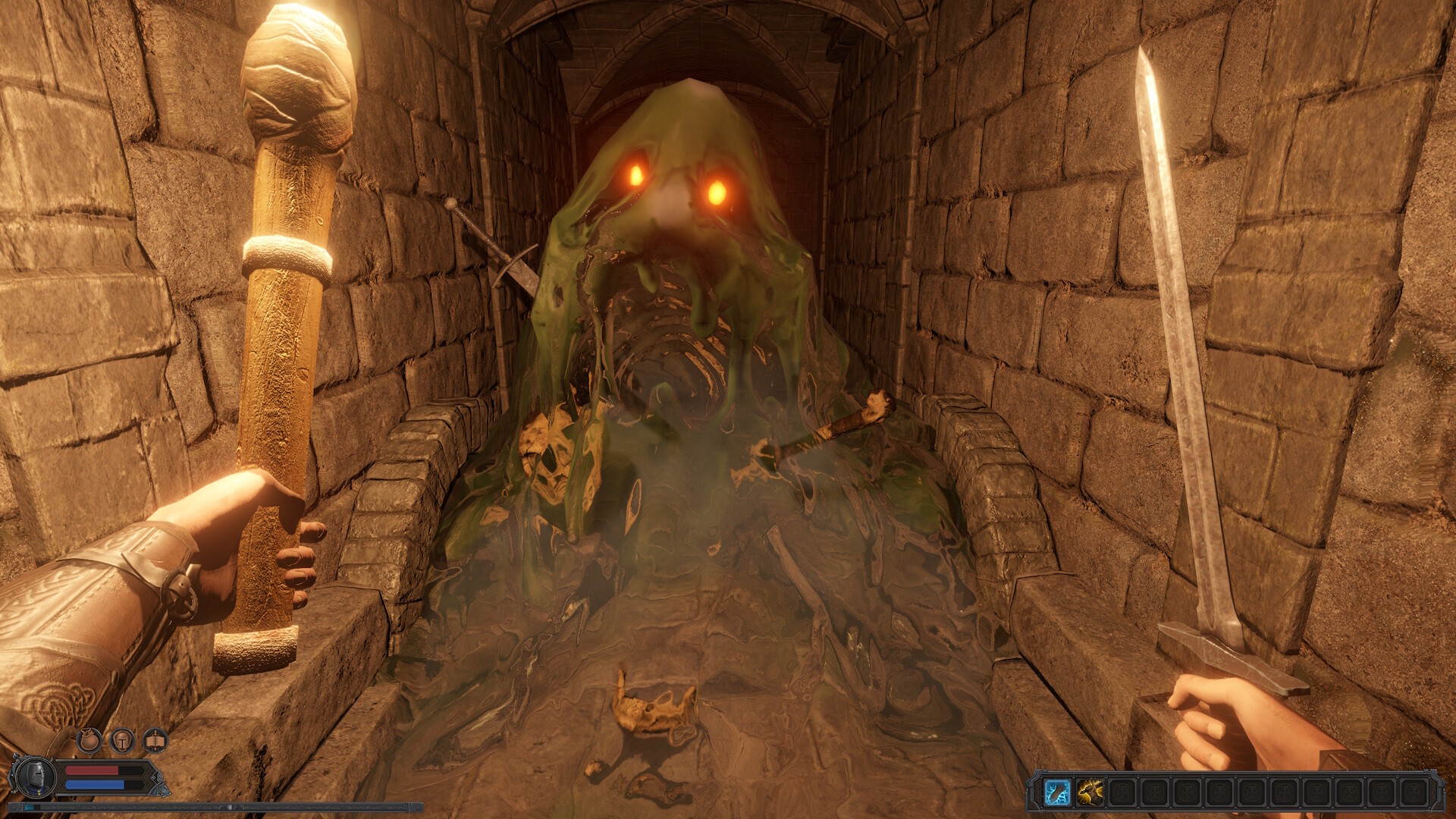
The setting is dark fantasy with a genuinely unsettling tone. You play a fierce warrior haunted by your own visions, having willingly chosen to venture where no other mortals would dare. The dungeons hold hostile monsters and a few non-hostile entities that may or may not help you. Developer Ofer Rubinstein builds everything solo, and the game shows it in the best way: systems are dense, nothing is market-tested into blandness, and the difficulty curve assumes you will learn to read the environment.
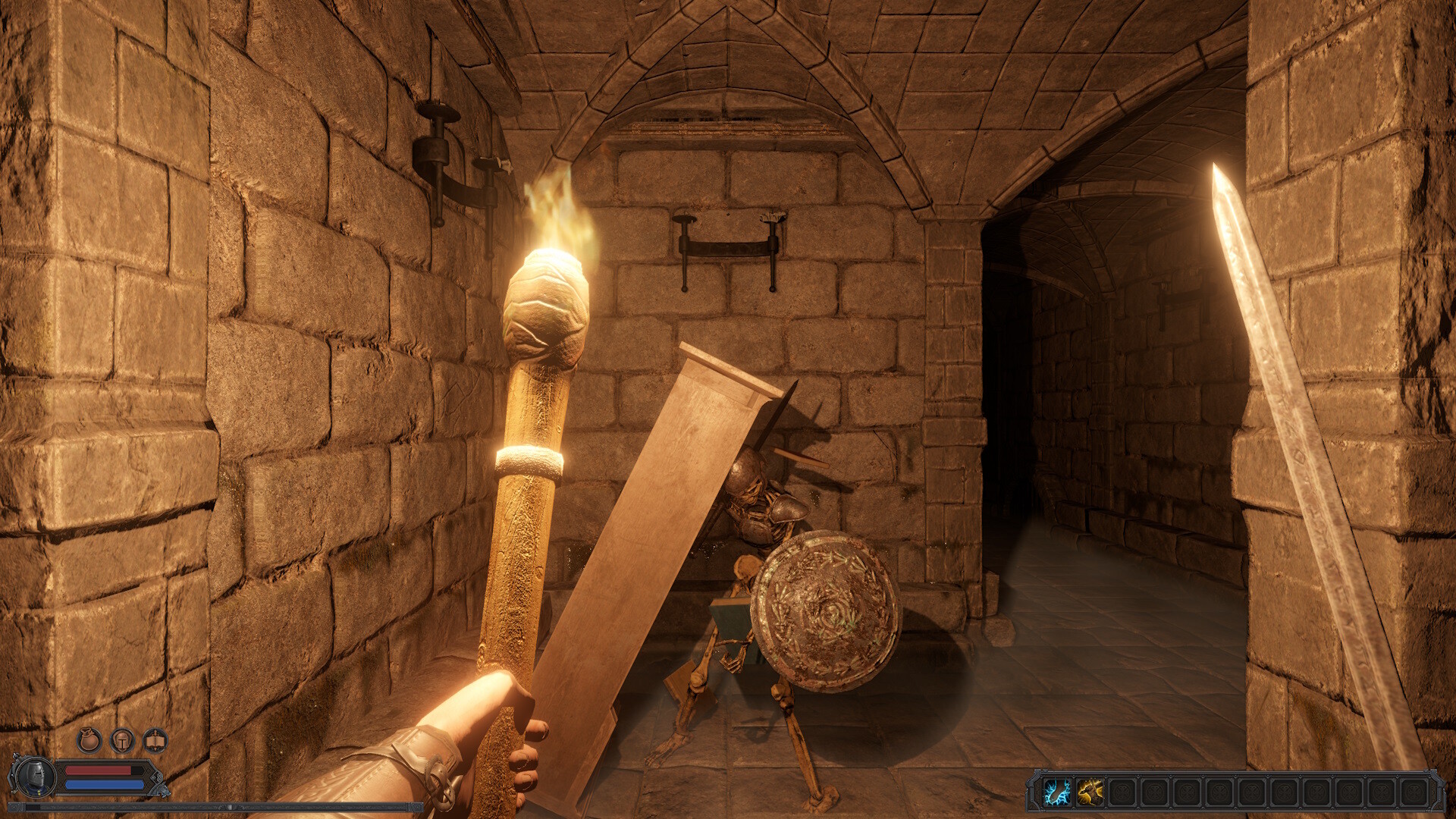
What separates Golel from other blobbers and tile-based crawlers is the environment as a weapon. Bookshelves fall on skeletons. Zombies get kicked into spike pits. Narrow passages become escape routes when something too fast is chasing you. Base stats will not save you; mobility and terrain awareness will. The Steam description is blunt about it: "Your base stats alone will not save you."
The full game promises a 30-hour main campaign, hundreds of skills and stats across different build paths, hand-tailored levels mixed with procedural elements, and an endless challenge mode. The release window is now listed as 2027 on Steam, with chapters one and two through QA and chapter three under active development. The free demo has been updated steadily for over two years and is the best way to judge whether the tick-based rhythm clicks for you. One disclosure worth knowing: the developer uses AI for NPC and narrator voices, some NPC portraits, and a few 2D elements, while the core art, design, and systems are hand-built in Unity.
Target audience: players who liked classic Wizardry-style dungeon crawlers, Legend of Grimrock, and turn-based roguelikes, but want combat that rewards reading the room rather than grinding levels. The horror-tinged atmosphere and simultaneous-turn pressure will also appeal to fans of Darkest Dungeon's tension. Players who want fast action combat, twitch reflexes, or a cinematic story should look elsewhere; Golel is methodical and its tone stays grim.
Difficulty: punishing until the tick system clicks, then fair. Some monsters acting twice per tick forces aggressive plays. The early demo floors teach the core loop gently, but the challenge mode strips all mercy.
| Fact | Detail |
|---|---|
| Developer | Ofer Rubinstein (solo) |
| Publisher | Ofer Rubinstein |
| Genre | First-person dungeon crawler RPG, turn-based |
| Platform | Windows (Steam), Linux |
| Release | 2027 window, exact date to be announced |
| Price | To be announced, free demo on Steam |
| Campaign | About 30 hours |
| Movement | Tile-based, simultaneous ticks |
| Combat | Turn-based actions, environmental kills |
| Builds | Hundreds of skills, stats, and weapon talents |
| Challenge mode | Procedurally generated, endless |
| VR | Supported, Meta Quest and Valve Index (Windows only) |
| AI disclosure | AI used for NPC/narrator voices, some portraits and 2D elements |
| Engine | Unity |
| Steam features | Achievements, Cloud saves, partial controller support |
| Languages | English, Ukrainian, Portuguese (Portugal), Czech, Thai, Turkish, German, Japanese, Korean, Polish, Russian and more |
| Demo version | 2.3.13+, updated for over two years |
Getting Started: Your First Demo Run
The free demo is the fastest way to learn the game, and it has been polished through years of updates. Treat the first run as a tutorial for the tick rhythm, not a test of skill.
- Play the first floor slowly. The demo teaches that every step costs a tick and every enemy moves on the same clock. Walk one tile at a time and watch what the monster does after each of your moves. That observation is the whole game.
- Look for furniture and pits before you fight. Bookshelves, spikes, and pits are scattered through rooms on purpose. A fight you cannot win head-on becomes winnable the moment you stand next to a bookshelf and the enemy stands in front of it.
- Learn the two-action monsters early. Some enemies act twice for every one of your actions. Against them, trading blows is suicide. The correct opener is to create distance, funnel them into a corridor, and use the environment while they close.
- Read the skill screen before spending points. Weapon talents change how a weapon plays, not just how hard it hits. The demo shows the full skill breadth, so the first build you make shapes your entire run.
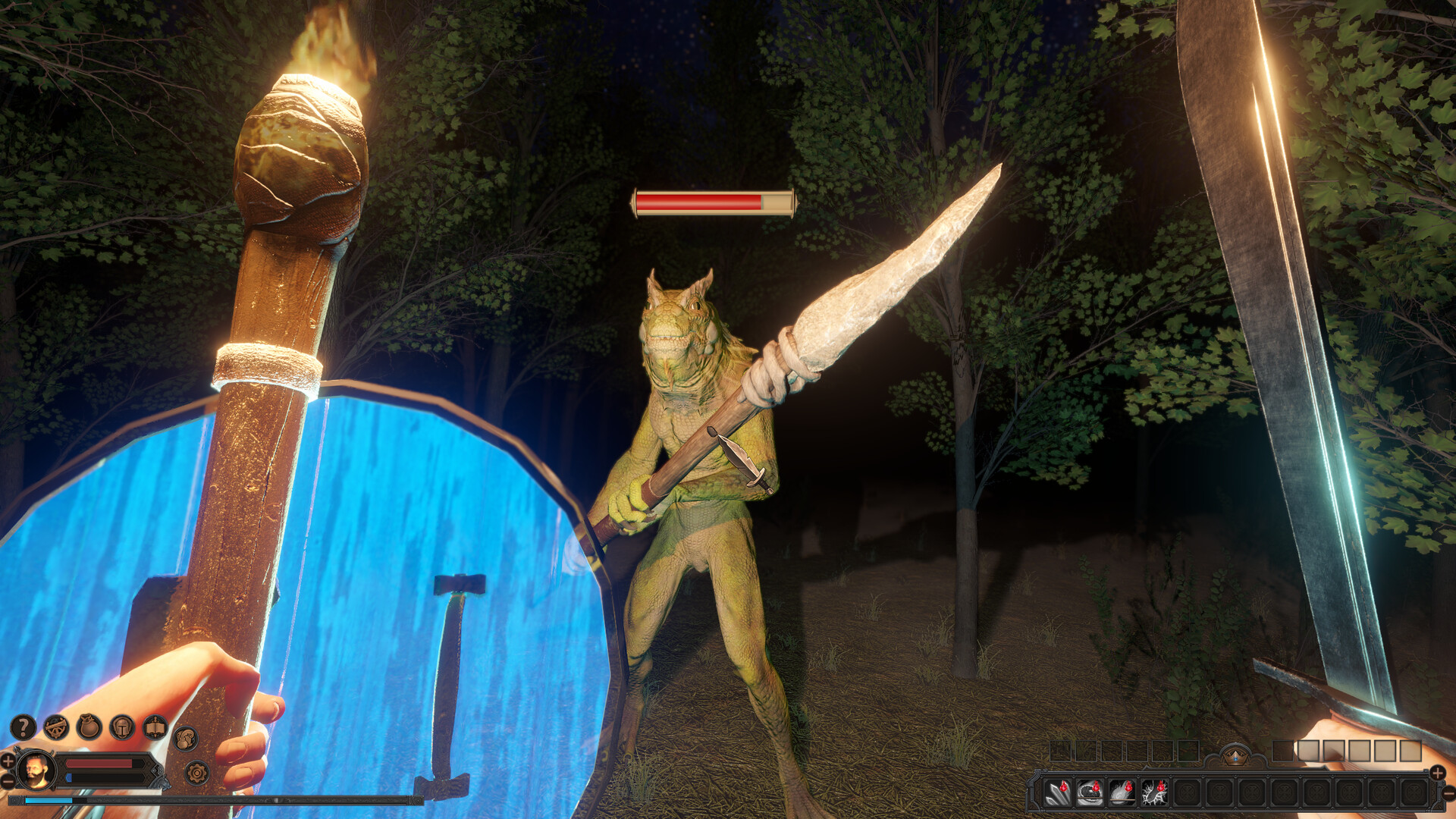
- Check enemy health bars by pointing at them. A quality-of-life patch made the health bar show exact HP numbers on hover. Free information; use it to decide when a fight is worth the ticks.
- Try the VR mode once if you have a headset. The tile-based movement translates cleanly to VR, and the atmosphere lands harder with the scale of the dungeons around you. Meta Quest and Valve Index are listed as supported, though VR is Windows-only.
- Die with purpose. The demo's challenge mode is designed to be replayed. Each death teaches which environmental tricks a given enemy type ignores, and that knowledge carries straight into the full campaign.
- Change the language from inside the game. Recent builds added an in-game language selector, so there is no separate launcher config to fight with.
Core Loop at a Glance
- Enter a dungeon floor, reading the tile layout before engaging.
- Move by ticks, matching the enemy's action economy.
- Use bookshelves, pits, and spikes to kill without trading damage.
- Collect skills and weapons, building toward a spellcaster or hybrid style.
- Push deeper into the non-linear realm, choosing your own route.
- Die, rebuild, and take a different path or challenge run.
Core Mechanics Explained
Tick-Based Movement
Golel runs on simultaneous turns. You move one tile, the enemy moves or attacks once, and the round ends together. Every action in combat is a tick: stepping, swinging, drinking, or triggering a trap all consume the same clock. The twist is that action economy is asymmetric. Some creatures act twice per tick while you act once. The game never slows down to let you catch up, so the only counter is positioning.
Practically, this means you should never stand in a doorway trading hits. If a monster has two actions to your one, it will hit you twice for every single hit you land. Movement is your real defense: step sideways, break line of sight, force the enemy to spend its actions catching up. A monster that must spend ticks walking toward you is a monster that is not attacking.
The UI supports this style of play. Pointing at an enemy health bar shows exact HP, weapon tooltips show attack and damage values calculated for your specific stats, and condition icons now display their remaining duration graphically, so you can see when a poison or debuff will expire without opening a tooltip. Plan one full tick of actions, then confirm.
The Environment Is the Weapon
The signature systems of Golel are the environmental kills. Bookshelves can be dropped on enemies. Zombies can be kicked into spikes. Pits end fights instantly, and narrow passages block creatures too large or too fast to follow. The Steam description lists these examples directly, and the demo is built to teach all of them.
This changes how you evaluate every room. A skeleton on an open floor is a modest threat. The same skeleton standing under a bookshelf is a one-tick problem. The same zombie walking past a spike pit is a solved fight. The game rewards players who scan the room before the first swing, and punishes players who charge in and try to out-stat the dungeon.
One practical detail from the patch notes: enemies that die inside pits used to be hard to click for looting, so collision objects were reworked. When you drop something into a pit, loot it the same way you would a ground corpse; the "Loot all" button also exists in the inventory.
Skills, Weapons, and Build Paths
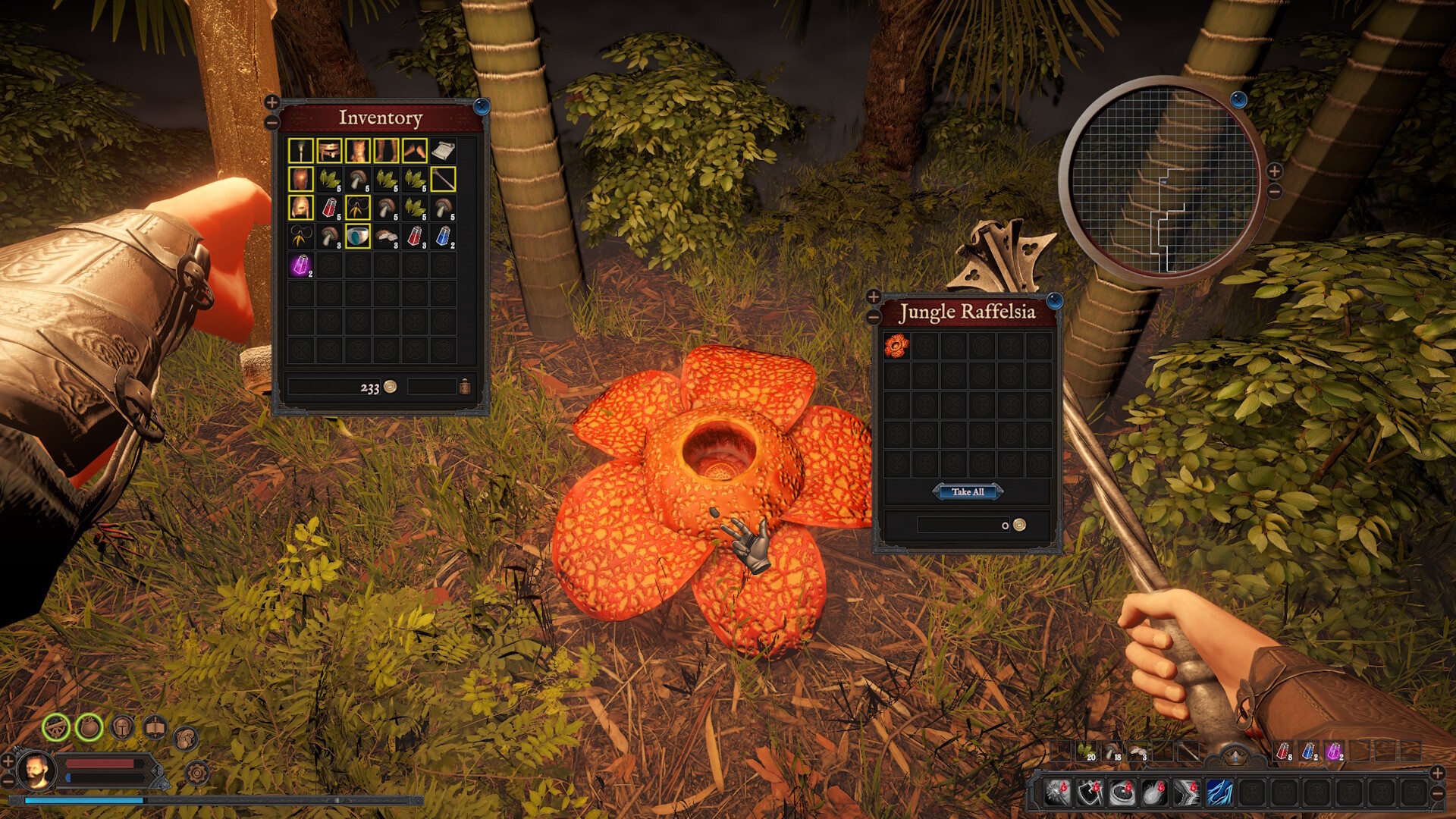
Character development is deep rather than wide. Hundreds of skills, stats, and build paths exist, and every weapon carries its own combat talents and tactics. You can play a pure spellcaster, a pure fighter, or a hybrid, and each weapon family changes the rhythm of the tick combat. The talent system received an update pass for the later chapters, including talent upgrades that improve existing abilities rather than just adding new ones.
The builds matter for more than numbers. A spellcaster deals with the two-action monsters differently than a fighter, using range to avoid the tick disadvantage. A hybrid trades some raw output for flexibility when the environment does not offer a bookshelf or a pit. The non-linear world lets you switch focus between runs, and the 30-hour campaign gives plenty of room to test multiple styles.
Procedural Challenge Mode and Replayability
Beyond the hand-tailored campaign, Golel includes a completely procedural challenge mode designed to be played endlessly. The main campaign mixes random elements with carefully placed level design, so every run feels different without losing the authored pacing. Weapon and skill combinations multiply the replay value: finishing the campaign as a fighter and finishing it as a spellcaster are two different games.
VR Support
Golel lists VR support with Meta Quest and Valve Index headsets. The tile-based movement is a natural fit, since there is no free locomotion to make you nauseous. The dungeon scale and the disturbing atmosphere read stronger in VR, and the game remains playable without timed input, so VR sessions can go at your own pace. The desktop version remains fully playable, and both modes share the same systems. Note that VR is Windows-only; the Linux build does not support VR.
Beginner Mistakes to Avoid
| Mistake | Why It Hurts | The Fix |
|---|---|---|
| Trading blows in doorways | Two-action monsters hit twice per tick; standing still turns you into a damage sponge | Move every tick, break line of sight, and force enemies to spend actions chasing |
| Ignoring bookshelves and pits | Environmental kills are instant and free; skipping them makes every fight a stat check | Scan each room for drop targets and pits before engaging |
| Treating it like real-time combat | Button speed does nothing; the game only counts ticks, and it is playable without timed input | Plan one full tick of actions, then confirm, rather than mashing |
| Hoarding skill points | The demo and campaign both reward committing to a build; a jack of all trades lacks the talents to use weapons well | Spend points with a weapon family in mind from the start |
| Assuming base stats carry you | The game explicitly warns that stats alone will not save you | Use terrain, positioning, and weapon talents as your primary tools |
| Skipping the challenge mode | The procedural mode is where the environmental tricks become second nature | Run it between campaign sessions to sharpen tick reads |
| Ignoring condition timers | Poison and debuffs expire on a visible timer now; wasting a cure tick on an about-to-expire condition wastes tempo | Read the condition icons before spending the cure |
Advanced Strategies
The Bookshelf Parry
Position yourself so an enemy pursues you past a bookshelf, then break line of sight for one tick. The monster commits to closing distance, and the moment its back is to the shelf, drop it. This works best on skeletons and small humanoids; larger creatures sometimes ignore the furniture. Test each enemy type once, and remember which ones respect the trick.
Corridor Funneling
Wide open rooms are the worst place to fight two-action monsters. Pull them into a one-tile corridor, where their extra actions cannot translate into extra attacks because there is no room to flank. The chase forces them to spend ticks on movement, and you control the timing of every exchange. This is the core technique for the harder floors of the demo.
The Hybrid Economy
A pure spellcaster solves the tick disadvantage at range, but runs out of options in tight dungeon pockets. A pure fighter has no answer for enemies that out-damage you in close quarters. The hybrid keeps a melee weapon for the cheap environmental setups and a spell for the moments the room offers nothing to drop or kick. The trade-off is real: you will not hit the same peaks as a focused build, but you will have an answer for every room type.
Reset-Fast Challenge Loops
The procedural challenge mode rewards fast resets. A bad seed is a bad seed, and grinding a terrible layout wastes time. Learn to recognize unwinnable room combinations early, reset, and let the procedural rolls give you a better battlefield. The campaign, by contrast, is hand-tailored enough that every room is beatable, so treat the two modes differently.
Poison Management
Poison attacks now have their own visual decal, and items that cure poison are highlighted in the inventory. Build the habit: when you take a poison condition, check the timer first. If it expires in a tick or two, save the cure item and spend that tick on distance instead. Condition management is tempo management in a tick game.
Language and Localization Angles
The game ships in English plus a growing set: Ukrainian, Portuguese (Portugal), Czech, Thai, Turkish, German, Japanese, Korean, Polish, and Russian, with localization handled by AI plus manual passes. The full translation sweep is promised before release. If you play in a language other than English, expect occasional rough edges in translations until the final pass.
Developer Patch Timeline: What Changed and Why It Matters
Solo development means the changelog is a strategy document. The highlights that affect how you play:
| Update | Key Changes | Player Impact |
|---|---|---|
| Demo 2.3.13 | Bug fixes, performance, gamepad improvements | Current baseline; earlier builds had breaking bugs |
| Build 2.3.6 | Ukrainian, Portuguese, Czech support; chapter 2 boss reworked for interest | Localization readable; the chapter 2 finale is no longer tedious |
| Build 2.3.3 | New UI tooltips; QA fixes for chapters 1-2 | Long-standing bugs cleared |
| Build 2.1.7 | More loot at demo end; language config reworked; Thai support | Quick start merged into character creation |
| Build 2.1.1 | HP numbers on hover, map names on minimap, per-stat weapon damage display, inventory sort | Information availability jumped; use all of it |
| Build 2.0.7 | Damage shown as ranges (1d6+2 became 3-8), condition timers visible, ability cooldown display, FPS limiter | Damage math is now readable at a glance |
| Linux/Steam Deck build | Tested on real Steam Deck hardware | Linux and Deck players have a supported path |
| Build 1.9.7 | Flank Hack fix, poison decals, turn manager improvements | Poison is now trackable visually |
| Build 1.9.6 | Quick items persist at zero, "Loot all" button, windowed fullscreen, mushroom opens both sides | Inventory workflow smoother |
The pattern is a developer who fixes what players report and keeps the demo current with the full game's systems. Chapter 3 is being built to differ from chapters 1 and 2 rather than reusing their layouts, and the chapter 2 boss battle was specifically reworked after feedback called the first version tedious.
Step-by-Step: Surviving Your First Two-Action Monster
The two-action enemy is the demo's first real wall. Here is the sequence that beats it.
- Identify the double-actor. Engage and retreat once. If it closes two tiles to your one, it has two actions. Everything below applies.
- Refuse the fair fight. Turn and move. Every tick you spend running is a tick it spends chasing instead of hitting. Its two actions become a liability in open ground.
- Break line of sight. Step around a corner or pillar. The monster loses its attack target and must spend actions re-acquiring you.
- Funnel it into a corridor. Position yourself so its path to you runs through a one-tile-wide passage. In the corridor, its second action has no room to produce a second attack.
- Scan for terrain as you retreat. Spike pits, bookshelves, and narrow squeezes are your actual weapons. Lead the monster toward them while it chases.
- Trigger the environment. Kick it into the pit, drop the shelf, or slip through the squeeze it cannot follow. A clean environmental kill costs zero HP.
- If terrain fails, trade from range. Spellcasters should already be casting while retreating. Fighters should reset and find a room with furniture. Never trade melee ticks with a double-actor on open ground.
- Loot and reset. After the kill, check the corpse (or the pit, post-patch) and heal before the next engagement. Tempo is a resource; rebuild it.
System Requirements and Platform Notes
| Spec | Windows | Linux |
|---|---|---|
| OS | Windows 10 / 11 | Ubuntu |
| CPU | 64-bit processor | 64-bit processor |
| GPU | DirectX 11 | OpenGL equivalent |
| VR | Meta Quest, Valve Index | Not available |
| Controller | Partial support | Partial support |
The demo has been tested on real Steam Deck hardware by the developer, and the Linux build runs without visual artifacts. Frame rate limiting exists in the graphics options, so 144 Hz monitors can cap at 60 to ease rendering. Performance patches preloaded audio files to remove hiccups, which matters most in VR.
FAQ
When does Golel release? The Steam page now lists a 2027 release window. Chapters one and two have passed QA, chapter two's boss battle was reworked after feedback, and chapter three is in active development with surprises planned so it does not feel like a filler chapter.
Is there a demo? Yes. The Golel Demo is free on Steam (version 2.3.13 or newer) and has been updated regularly for over two years. It includes a significant slice of the campaign and the challenge mode.
Does Golel support VR? Yes. VR is supported with Meta Quest and Valve Index headsets on Windows, and the game is playable at your own pace without timed input. Linux does not support VR.
What platforms are supported? Windows and Linux. The developer tested the demo on a real Steam Deck. Mac is not currently listed.
Is Golel single-player only? Yes, single-player only, with Steam Cloud saves and Steam Achievements.
How long is the campaign? About 30 hours for the main campaign, with a procedurally generated challenge mode that does not end.
Does progress carry between runs? Character builds and learned tricks carry through the campaign. The challenge mode is a separate loop designed for endless replay.
Are there difficulty settings or accessibility options? The game supports adjustable text size, custom volume controls including separate UI audio, and the tick-based design is explicitly playable without timed input. Partial controller support is included.
Does Golel run on Steam Deck? The developer has tested the demo on real Steam Deck hardware and reports it works well. It is not a store-page verified title yet, so expect to tweak the controller mapping.
How many languages are supported? English plus Ukrainian, Portuguese (Portugal), Czech, Thai, Turkish, German, Japanese, Korean, Polish, and Russian, with more requested from the community. Localization is AI-assisted with manual passes, and a full sweep is promised before release.
Does the game use AI-generated content? Yes, partially. The Steam disclosure states AI is used for NPC and narrator voices, some NPC portraits, and a few 2D elements including store assets. Systems, levels, and design are hand-built.
Will my save carry from the demo to the full game? The developer has not confirmed demo-to-full save transfer. The demo and full game are separate Steam apps, so treat demo progress as practice, not head start.
Quick Reference Card
| Topic | Answer |
|---|---|
| The one rule | Never trade melee ticks with a two-action monster on open ground |
| Kill priorities | Bookshelf > spike pit > narrow squeeze > weapon |
| Health check | Point at the health bar for exact numbers |
| Poison | Check the condition timer before spending a cure item |
| Damage reading | Weapon tooltips show ranges computed for your stats |
| Best platform | Windows for VR; Steam Deck works via the Linux build |
| Demo version to install | 2.3.13 or newer |
| Release window | 2027 |
| First build advice | Commit to one weapon family early; upgrade existing talents later |
Final Tips
Master the two-action enemy before anything else. Once you can survive a monster that moves twice per your single tick, every other system in Golel becomes a tool rather than a threat.
The game rewards methodical players who treat each room as a puzzle. If the tick-based rhythm clicks, the 30-hour campaign offers real build depth and a challenge mode that will keep you coming back. Worth the wishlist for fans of classic dungeon crawlers. 4.5/5 for what the demo shows.
Last reviewed by Game How To Editorial. We play each game, verify controls against official sources, and update guides when game mechanics change.
Screenshots