Official game
Play Dungeon Nox Exotica
This game is hosted by Steam. Continue to the official page to play or download it.
Wishlist on SteamOverview
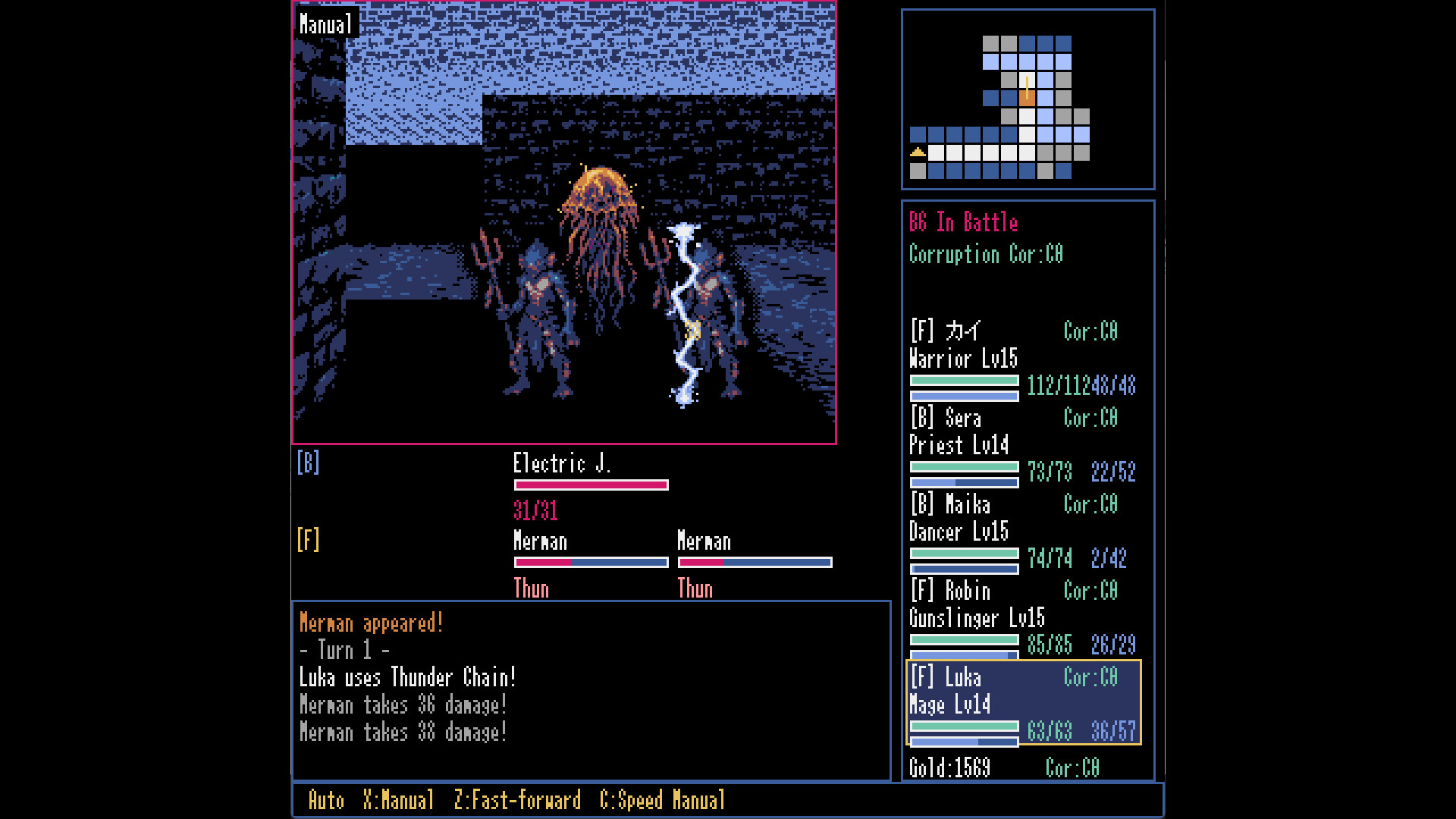
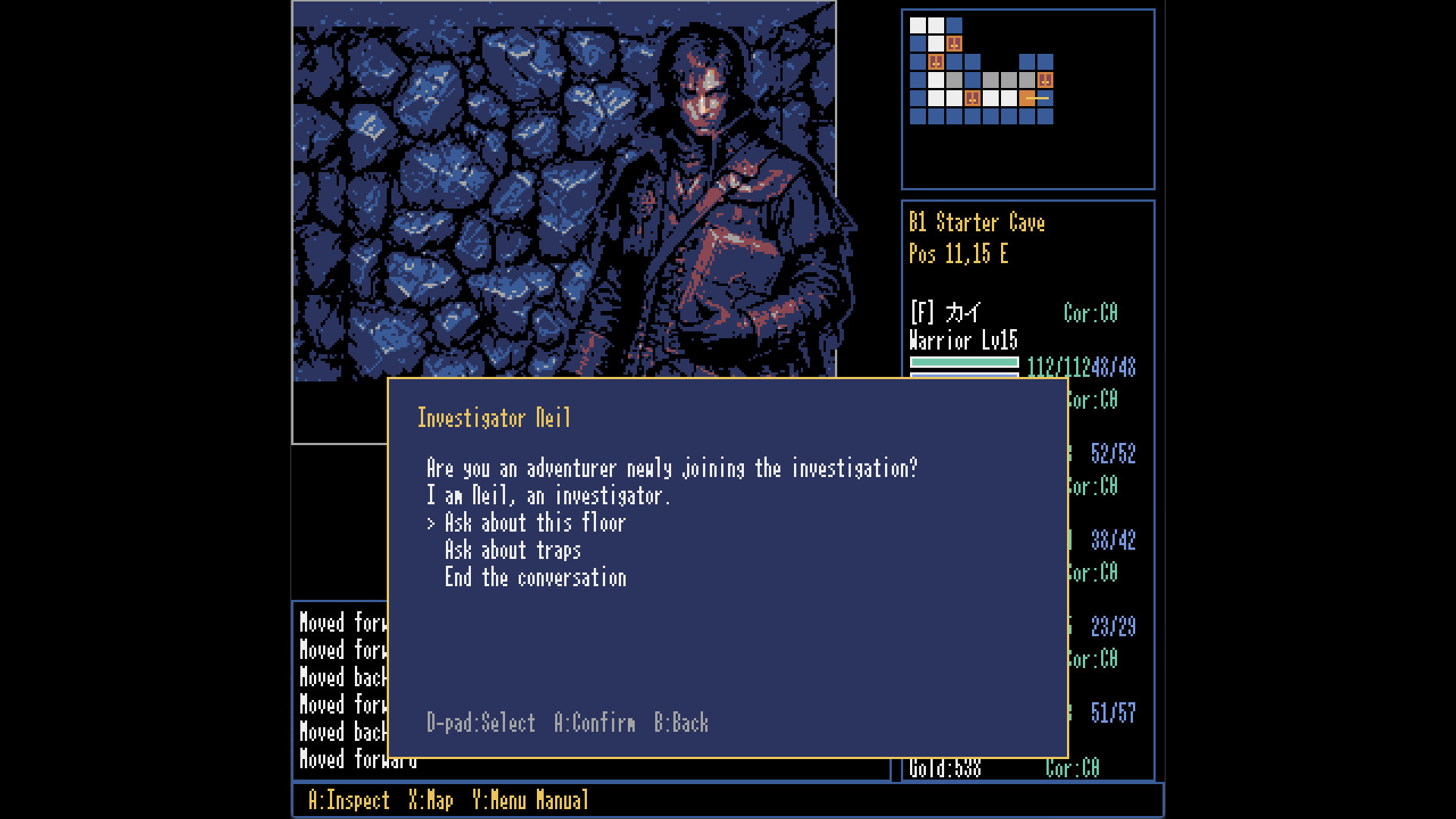
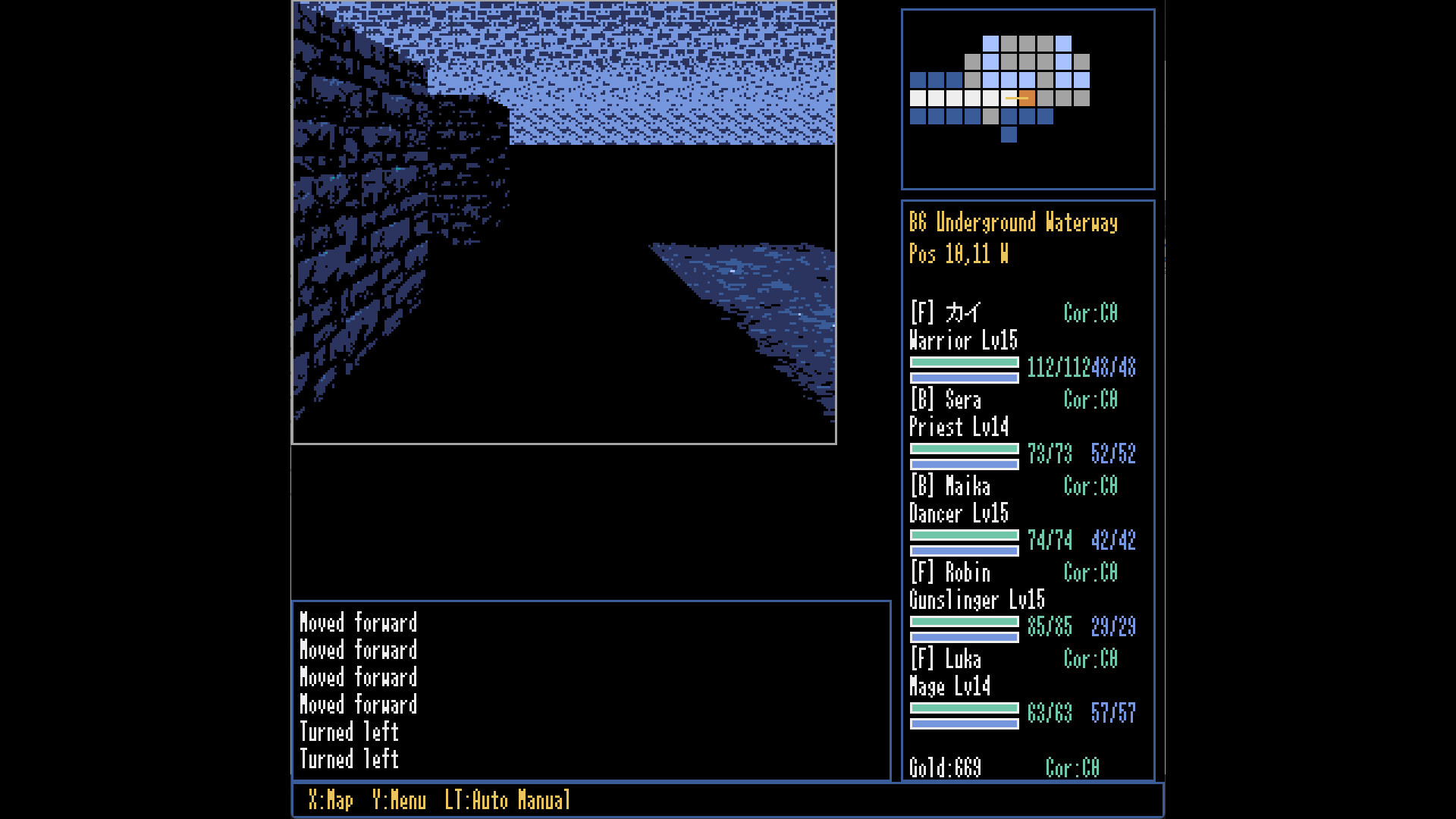
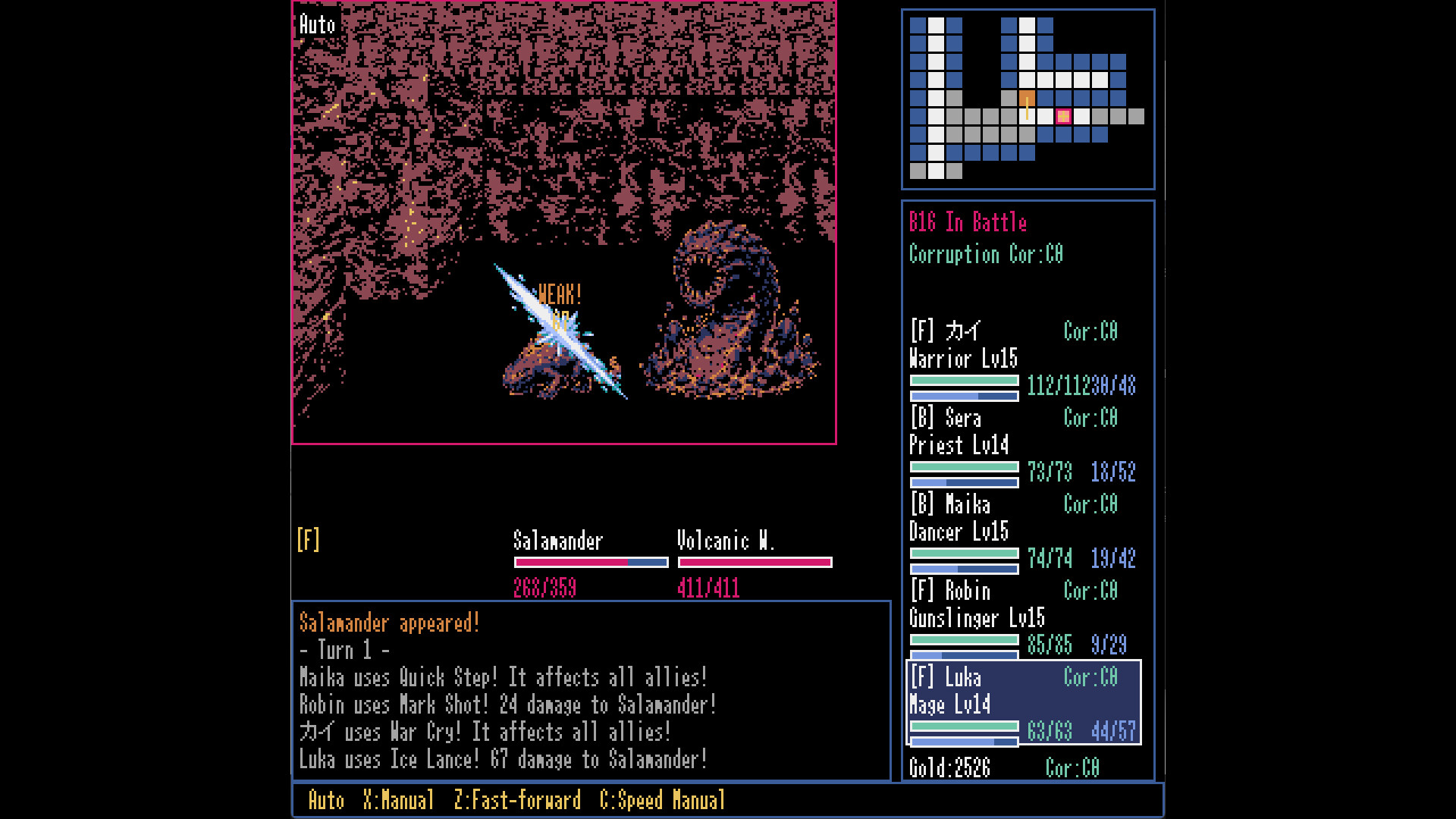
Dungeon Nox Exotica is a retro first-person dungeon RPG from Japanese solo developer KTN Games, headed to Steam. It is built around fast, low-resolution first-person exploration: you move through unexplored corridors step by step, find enemies, collect loot, return to town, and descend one floor deeper. Think old-school Wizardry-style dungeon crawling with modern quality-of-life: auto-exploration, automated combat, and expedition logs that actually help you plan.
The twist is a sanity system. The dungeon gradually erodes the minds of those who venture inside. As your party loses sanity, familiar enemies mutate into grotesque aberrations with more ferocious attacks, but those mutated enemies drop rare items more often. You can deliberately let sanity slip to farm rare loot, or keep the party stable and explore in relative safety. That risk-reward dial is the core decision of the game.
The developer describes the design philosophy in one line: "I love old-school dungeon crawlers, but not old-school friction, so I'm making my own." Manual exploration, auto/manual combat, automatic return routes, and familiar foes that twist as sanity fades. A playable demo is planned for the Steam Next Fest in October 2026.
| Detail | Info |
|---|---|
| Genre | Indie / RPG (Dungeon Crawler) |
| Developer / Publisher | KTN Games |
| Platform | Windows (Steam) |
| Price | TBA |
| Players | Single-player |
| Release Date | Upcoming (demo at Steam Next Fest, October 2026) |
| Languages | English, Japanese |
| Controller Support | Partial |
| Party Size | Up to 5 adventurers |
| Classes | 8 (each with 2 specialization branches) |
| Steam Features | Family Sharing |
Who it's for: fans of classic grid-based dungeon crawlers (Wizardry, Etrian Odyssey, Legend of Grimrock) who want the genre's tension without the spreadsheet grind. The auto-exploration and auto-battle options make it accessible to newcomers, while the sanity system and class branching give veterans real decisions.
Getting Started: First 30 Minutes
-
Let the game carry the early grind. Regular encounters run automatically by default. On floor one, keep auto-battle on and learn to read the flow: how much damage you take per fight, how fast healing drains, and when your party starts to feel the pressure.
-
Walk one floor manually before you automate. The auto-exploration options are good, but you need a mental model of the floor layout first. Manual exploration teaches you where traps cluster and where the escape point sits relative to the stairs down.
-
Build a balanced party from the start. Five slots, eight classes. Cover tank, healer, physical damage, magical damage, and utility from the first expedition. A balanced formation survives longer and gives you data about which roles you enjoy.
-
Read the expedition log after every run. The log records battles, traps, loot, and critical moments. It answers three questions: why did you win, where did you take too much damage, and what did you bring back. This habit pays off immediately.
-
Respect the sanity meter before you understand it. Early on, treat sanity like a second health bar. Don't let it bottom out on a deep floor before you know how aberrations fight. Test the mechanic near the retreat point first.
-
Sell or discard junk loot after each expedition. Inventory pressure makes you leave good finds behind. Review everything, equip upgrades, and clear the rest. The loop is loot, rebuild, descend again.
Beginner Mistakes to Avoid
| Mistake | Why It Hurts | What to Do Instead |
|---|---|---|
| Keeping sanity maxed always | You miss the rare-item drops that only aberrations give. | Farm aberrations deliberately when you need gear. Sanity is a resource, spend it. |
| Letting sanity bottom out by accident | Uncontrolled mutation means harder fights when you are not ready. | Plan sanity dips around your healing and retreat capacity, not in the middle of a deep floor. |
| Ignoring elemental weaknesses | You fight longer, take more damage, and burn healing. | Build your party so each element is covered. Exploiting weaknesses is the fastest way to end fights. |
| Never taking direct control | Auto-battle is fine for trash but wastes burst potential on bosses. | Switch to manual for bosses. Skills and timing decide those fights. |
| Holding onto junk loot | Inventory pressure makes you leave good finds behind or forces risky returns. | Review loot after each expedition. Sell or discard what does not fit your build. |
| Sticking to one class line | Each character can branch into one of two styles. A fixed build ignores half your options. | Read both branches when a character levels. The second style often fixes a party weakness. |
| Skipping the expedition log | You repeat the same mistakes floor after floor. | Read the log after each run: where you took damage, what you brought back, why you won or lost. |
| Pushing deep with low resources | A wiped party loses everything you gathered. | Return to base when healing runs low. The auto-return option exists for exactly this. |
Core Mechanics Explained
1. First-Person Grid Exploration
The game is a classic first-person dungeon crawler. You move corridor by corridor, with low-resolution retro visuals that prioritize speed and atmosphere. Exploration is fast: you are not waiting through slow animations to take a step. Manual movement is always available, but the game respects your time with automation.
2. Five-Hero Party
You build a party of up to five adventurers. The size matters: you need enough bodies to cover roles and elements, but every character also brings a class identity you must develop through the two-style branching system.
3. The Eight Classes
The game ships with eight distinct classes, each with unique skills. Combat is built around two offensive philosophies: exploit elemental weaknesses or boost critical-hit rate and overpower. The skills you learn hold the key to victory. Expect the classic spread (frontline fighters, spellcasters, healers, and hybrid support) with room for specialized niches.
4. Turn-Based Combat With Auto Mode
Regular encounters resolve automatically. You can take direct control at any time, which matters most for bosses and crisis moments. The hybrid design means grinding is painless but real fights still demand thought. The switch is instant and context-driven: let the game handle trash, grab the wheel when it matters.
5. Sanity and Aberrations
The dungeon erodes party sanity over time. When sanity drops, familiar enemies mutate into grotesque forms:
- Mutated enemies attack more ferociously.
- Mutated enemies drop rare items more often.
- You control the dial: farm aberrations for loot or stay stable for safety.
6. Loot Variance
Equipment is not fixed. The same weapon type can roll different power and properties, so every drop is worth checking. "Even the same type of weapon can become a valuable find." Loot, rebuild, and descend again is the loop; good finds define your run as much as your class choices.
7. Custom Portraits
You can import character portraits from external image files. Bring your own art and create a party you grow attached to. Small feature, but it makes the party feel like yours.
8. Expedition Log
Your expedition log records battles, traps, loot, and critical moments. It answers three questions after every run: why did you win, where did you take too much damage, and what did you bring back. Use it to plan the next descent.
9. Auto-Exploration Options
You are never forced to hand-walk the whole dungeon:
- Explore Entire Floor (searches areas you have not yet cleared.
- Return to Previous Retreat Point) takes you back to where you last withdrew.
- Return to Base, automatically walks the party back to the escape point when healing resources run low.
Progression Strategy
The deep dive is a ladder of preparation, not a race. Each floor is harder, and the abyss is not just a dungeon: the deeper you go, the more it changes. Forbidden power and a wavering mind grow together.
| Phase | Goal | Priority |
|---|---|---|
| Floors 1–3 | Learn the loop, stabilize the party | Balance, loot review, log reading |
| Floors 4–6 | Build elemental coverage | Element weaknesses, branch specializations |
| Floors 7+ | Farm aberrations for rare gear | Sanity dips near retreat points |
| Boss floors | Manual control, full prep | Formation, consumables, stable sanity |
What to unlock first: Read both branch options for each class as soon as they appear. The second style often fixes a party weakness, a mage branch that adds healing, a tank branch that adds damage. Specialize to cover the elements you expect on the current floor.
Resource priority: healing supplies > mapping tools > damage consumables. You can always farm more damage, but a party that runs dry on healing mid-floor loses everything.
Builds / Party Composition
The Balanced Standard
| Slot | Role | Notes |
|---|---|---|
| Front 1 | Tank | Soaks hits, holds the line |
| Front 2 | Physical DPS | Crit-focused damage |
| Middle | Utility | Buffs, debuffs, control |
| Back 1 | Magical DPS | Element coverage |
| Back 2 | Healer | Keeps the party alive |
The Aberration Farmer
Swap the utility slot for a second DPS and let sanity slip to the danger line. Bring extra healing. This composition trades safety for rare drops, use it only near the retreat point.
The Crit Engine
Stack critical-hit rate across physical and magical damage. The game explicitly supports this path: "boost your critical-hit rate and overpower them." Pair crit with elemental weaknesses for the fastest fight endings.
The Element Wheel
Cover fire, ice, lightning, and at least one more element across your five characters. When you know what the next floor resists, adjust. Elemental weakness exploitation is the game's fastest fight-ender.
Step-by-Step Strategy
1. The First Expedition (Floor 1)
- Build a balanced five-hero party.
- Walk the first floor manually; map the layout in your head.
- Let auto-battle handle regular fights.
- Loot everything, review drops after each room.
- Return to base when healing drops below half.
- Read the expedition log. Adjust formation for floor 2.
2. The Sanity Dip (Farming Run)
- Confirm your retreat point is close.
- Let sanity slip deliberately to the aberration threshold.
- Farm aberrations for rare drops, manual control for the tough ones.
- Return to base the moment healing runs low.
- Review the haul. Repeat until your gear catches up to the floor.
3. The Deep Push (Floors 4+)
- Check the expedition log from the last run for damage patterns.
- Rebuild formation around expected elemental weaknesses.
- Keep sanity stable while mapping the floor.
- Take manual control for any elite or boss encounter.
- Push to the stairs down only when healing and sanity are both healthy.
- Extract early if either resource drops below half.
4. The Boss Protocol
- Enter the boss fight with stable sanity. Aberration mutations mid-boss are a death sentence.
- Switch to manual control before the fight starts.
- Exploit the boss's elemental weakness with your coverage characters.
- Burn your best skills in the opening turns; boss fights reward burst.
- Keep the healer's big heal in reserve for the boss's enrage or second phase.
5. The Loot Reset
- Return to town after every expedition.
- Review all equipment, same-type weapons can differ meaningfully.
- Equip upgrades immediately; they change breakpoints.
- Sell or discard junk; inventory pressure kills future runs.
- Adjust formation and branches before the next descent.
Advanced Tips
The Sanity Economy. The optimal play is rarely all-in on either side. Gear-starved? Let sanity slip near your retreat point, farm aberrations, then pull back. Pushing deep? Keep sanity stable until you have mapped the floor. Boss ahead? Enter with stable sanity, always.
Branch Both Ways. When a character levels, read both style options before you commit. The "obvious" branch for your role is not always the one that fixes your current weakness. A hybrid party beats a stereotype party.
Manual for Burst. Auto-battle handles trash efficiently, but it wastes burst potential. The moment a fight matters (elite, boss, crisis) switch to manual and spend your best skills deliberately. Turn-based means you have time to think; use it.
Log-Driven Planning. The expedition log is your free strategy tool. Before every deep push, read where you took too much damage last time and adjust formation and gear around it. Players who skip the log repeat the same mistakes; players who read it descend faster.
Elemental Coverage First. When in doubt about a build choice, pick the option that adds an element you lack. The game's combat is built around elemental weaknesses and crit. Cover the wheel, then optimize.
Don't Fear the Aberrations. Mutated enemies are the best loot source in the game. Treat them as a farming mechanic with a timer: stay near the retreat point, farm until healing runs low, extract, repeat. This is the intended rhythm of the mid-game.
System Requirements
| Component | Minimum |
|---|---|
| OS | Windows 10 or later |
| Processor | Intel Core i3 or equivalent |
| Memory | 4 GB RAM |
| Storage | 100 MB available space |
The requirements are light, fitting the low-resolution retro style. Any office PC from the last decade should run it.
FAQ / Common Mistakes
When does Dungeon Nox Exotica release?
The Steam page lists the game as upcoming. A playable demo is planned for the Steam Next Fest in October 2026.
Is Dungeon Nox Exotica turn-based?
Yes. Combat is turn-based, with an auto-battle option for regular encounters and manual control for bosses and crises.
How many classes are there?
Eight classes, each with a two-style branching system as characters grow. That gives you sixteen specialization paths across a five-hero party.
How big is the party?
Up to five adventurers.
What is the sanity system?
The dungeon erodes your party's sanity. Low sanity mutates familiar enemies into grotesque aberrations that hit harder but drop rare items more often. You control whether to farm aberrations or stay stable.
Can I explore automatically?
Yes. Options include Explore Entire Floor, Return to Previous Retreat Point, and Return to Base.
Does it have controller support?
Partial controller support. The game is playable with a gamepad but designed primarily for keyboard and mouse.
Is there character customization?
Yes. You can import custom character portraits from external image files.
What languages are supported?
English and Japanese.
I keep wiping on deep floors. What am I doing wrong?
Almost always one of three things: pushing deep with low healing, letting sanity bottom out away from the retreat point, or ignoring elemental weaknesses. Fix those three and deep floors open up.
Quick Reference Card
| Thing | Detail |
|---|---|
| Genre | Retro first-person dungeon RPG |
| Party | Up to 5 heroes |
| Classes | 8, each with 2 branches |
| Combat | Turn-based, auto or manual |
| Key mechanic | Sanity system mutates enemies |
| Aberrations | Harder, rare loot |
| Auto options | Explore floor, retreat, return to base |
| Loot | Varying power and properties |
| Extras | Custom portraits, expedition log |
| Languages | English, Japanese |
| Demo | Steam Next Fest, October 2026 |
Guide verified against the official Steam store page and developer announcements as of August 17, 2026. Class details and exact mechanics may evolve before release.
Screenshots