Official game
Play DERELIKT
This game is hosted by Steam. Continue to the official page to play or download it.
Wishlist on SteamOverview
DERELIKT is a narrative retro FPS from solo developer Visuwyg, published by Hyperstrange, launching November 13, 2026 on PC and PlayStation 5 (Xbox status: to be announced). You dock at Von Neumann Outpost, a research facility grafted onto an anomalous asteroid in Saturn's orbit, and walk into a station with failing power, sealed decks, a lead researcher who locked himself in his study days ago, and a surface crew that never came back. Your contract said routine. The station disagrees.
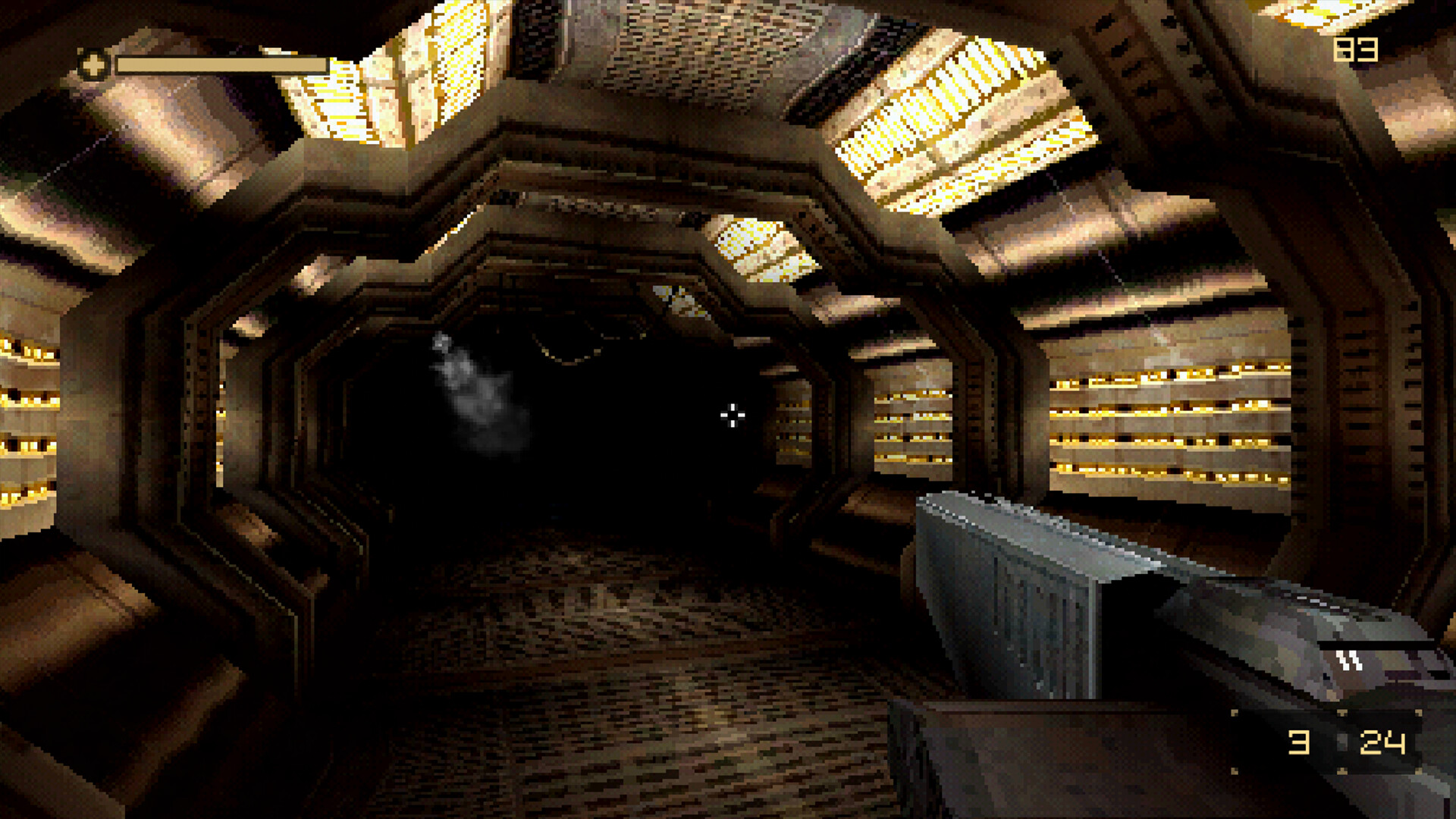
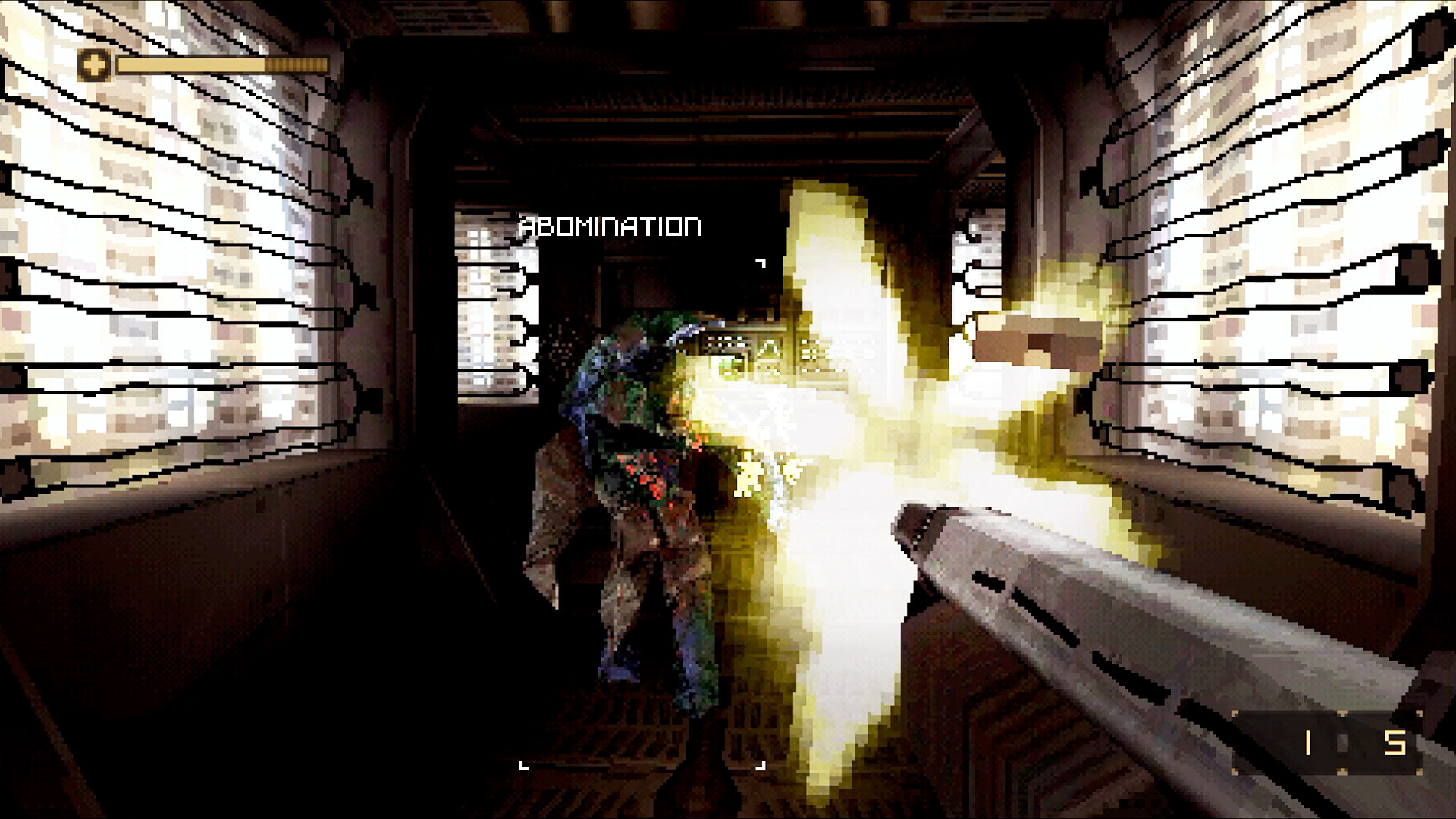
The look is committed: distorted geometry, texture warping, hand-painted vertex colors, and CGI cutscenes built in the late-1990s spirit. PS1-style splash screens when you boot. The influences are named in official material: Alien Resurrection, Doom 3, and System Shock 2, with a dash of Lovecraftian cosmic horror. Unlike pure retro throwbacks, though, the controls are modern. Nobody makes you wrestle 1999 input lag; the horror comes from the station, not the movement code.
DERELIKT has a survival story worth knowing: the project was caught in Embracer's restructuring and shelved, Visuwyg finished it solo, and Hyperstrange signed it. A free demo released October 8, 2026, covers three story chapters in non-sequential order, sits at 94% positive from around 200 reviews, and ran in Steam Next Fest. Over 5,000 playtesters touched the full build before that.
| Fact | Detail |
|---|---|
| Developer / Publisher | Visuwyg / Hyperstrange |
| Genre | Narrative retro FPS, sci-fi survival horror |
| Release | November 13, 2026 |
| Platform | PC (Steam, GOG), PS5. Xbox TBA |
| Players | Single-player |
| Demo | Free, 3 non-sequential chapters, ~1 hour |
| Demo reception | 94% positive, ~200 reviews |
| Named boss | The Squidbull ("Matador" achievement) |
| NPCs aboard | 12+, each with their own motives |
| Voice acting | None; all text and data slates |
Who it is for: System Shock 2 veterans who miss reading a station to death, Doom 3 players who liked the flashlight, and anyone who thinks a crowbar is a valid answer to cosmic horror.
Who should wait: players who need sprint movement and constant combat. There is no run button in current builds, ammunition is deliberately scarce, and a corridor you never clear is often the correct play.
Getting Started
Contractor onboarding: the first hour
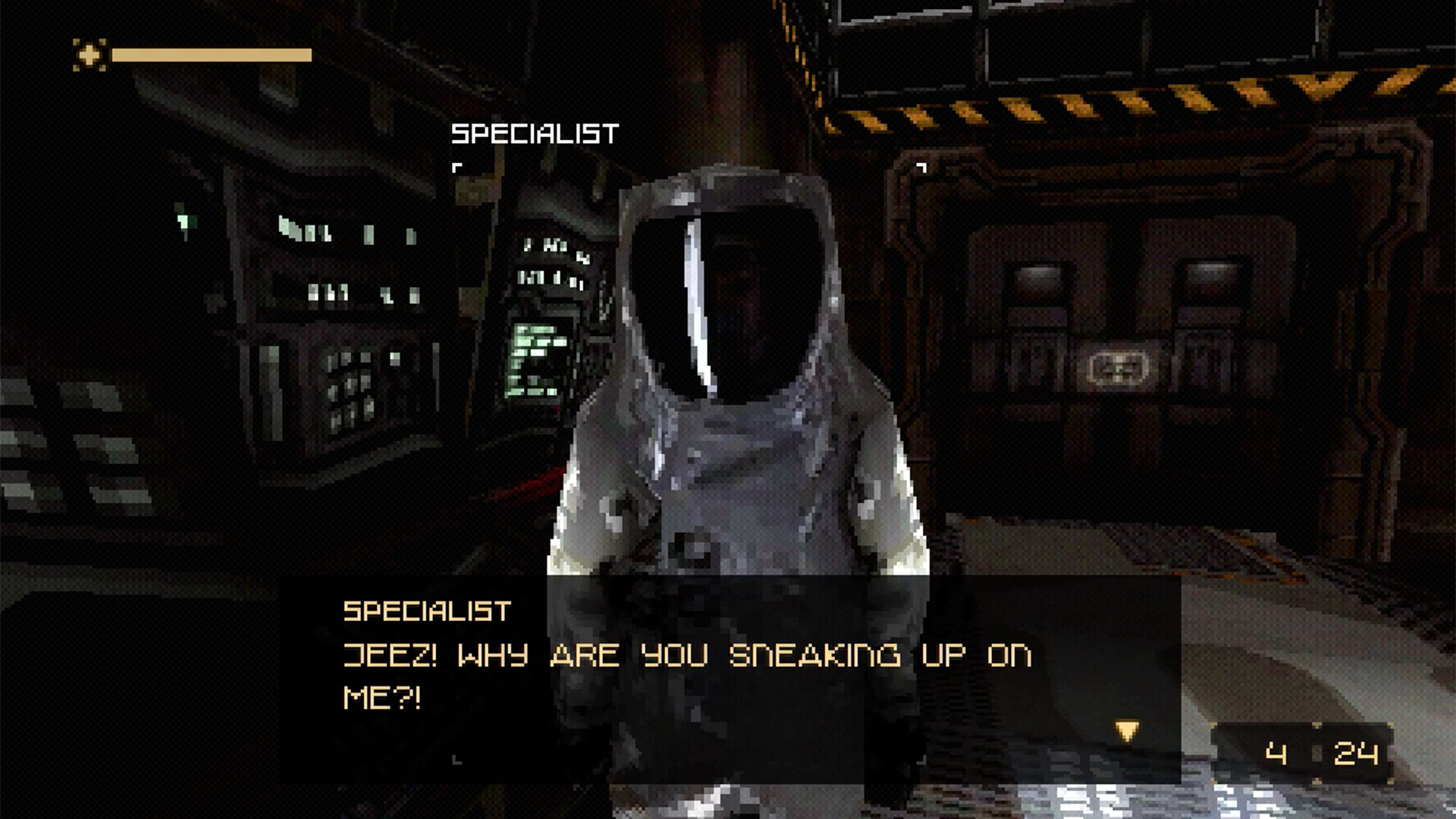
- Talk to every crew member before the incident. A dozen-plus NPCs remain aboard, and they do not agree on what happened. Their dialogue doubles as tutorial text and as the ledger the story cashes in later. Some help you. Some make things worse. You will not know which until you have listened.
- Read every note, terminal, and data slate. Access codes, puzzle hints, and the actual plot live in documents. The game does not repeat them. A door asking for a code you do not know means the answer is on a screen you walked past.
- Loot rooms corner to corner. Ammo and medpacks are scarce by design. Your goal for every fight: end with more resources than you started. If a fight cost net resources, you fought it wrong or should not have fought it at all.
- Learn the map screen. DERELIKT gives you a station map that nudges you back on route. Use it before wandering; backtracking without a sprint button punishes aimless exploration.
- Give Dr. Goffart his carbs. The community's favorite errand. It is exactly what it sounds like, and the playtest feedback would not stop mentioning it.
The 0451 problem
The most-searched demo question is door codes. The honest answer: 0451 is an early keycode, not a universal one. It is the long-running immersive-sim homage to System Shock and Fahrenheit 451, and Visuwyg joins the tradition. Some players try 0451 everywhere and then assume the game ate their progress when a door refuses it. Other doors want codes found elsewhere in the station, or want nothing at all and are simply broken until a later tool reopens them. Collect every code you read, try them on every locked door you remember, and expect most codes to have exactly one correct door.
Beginner mistakes
- Spraying the R4-21. Burst fire conserves ammo; full auto turns your magazine into noise. The R4-21 is your workhorse: center mass, bursts, reload after every engagement rather than during the next one.
- Carrying three guns. Grid inventory, limited slots, per-weapon ammo pools. A third weapon is dead weight the moment its ammo type dries up. Two weapons plus a melee fallback beats three guns and an empty pocket.
- Hording read documents. Documents can be read on pickup. Read them, remember the code, free the slot.
- Fighting every encounter. Several fights can be sprinted past entirely. Ammo is the currency of curiosity; spend it on exploration value, not on a crawler that will respawn in the next wing.
- Treating the demo as the story's prologue. The demo stitches Level 01, Level 04, and part of Level 05, with cutscenes from Levels 2-3. It is a slice, not a chronological opening. Demo progress does not carry over.
Core Mechanics Explained
Inventory discipline
The grid inventory is the game's true difficulty system. Weapons, ammo boxes, medical supplies, tools, and one Space Pop can all compete for the same slots. Priority order for a full inventory: medpacks, current weapon ammo, puzzle items, then lore. The "Space Pop" test applies: if a slot holds a soda can's worth of story, it had better be good story.
Every return trip to a stash is a round trip without sprint, so the real skill is loadout planning per deck. Before pushing into a new section: full medpacks, two weapons, tools you have seen a use for, one free slot for quest items. A full inventory walking into a puzzle room means a wasted round trip.
Backtracking as a design pillar
The developers framed it in an official transmission titled "You Need to Go Back. Now!" Damaged heavy doors, force fields, radiation zones, and tool-gated passages block the first pass. New equipment reopens old space. The loop to internalize:
- New tool acquired, revisit every locked thing you remember. Hidden supply rooms, alternate routes, and lore fragments wait behind them.
- The Satchel Charge is both weapon and key. It deletes abominations and security drones, but the smartest spend is blasting open a damaged door. Behind those doors: ammunition, medpacks, notes, and Glyph fragments.
- Track doors that resisted explosives. Not every obstacle breaks. The ones that do are hand-placed reward routing; remember which and check back after every upgrade.
The Glyph upgrade system
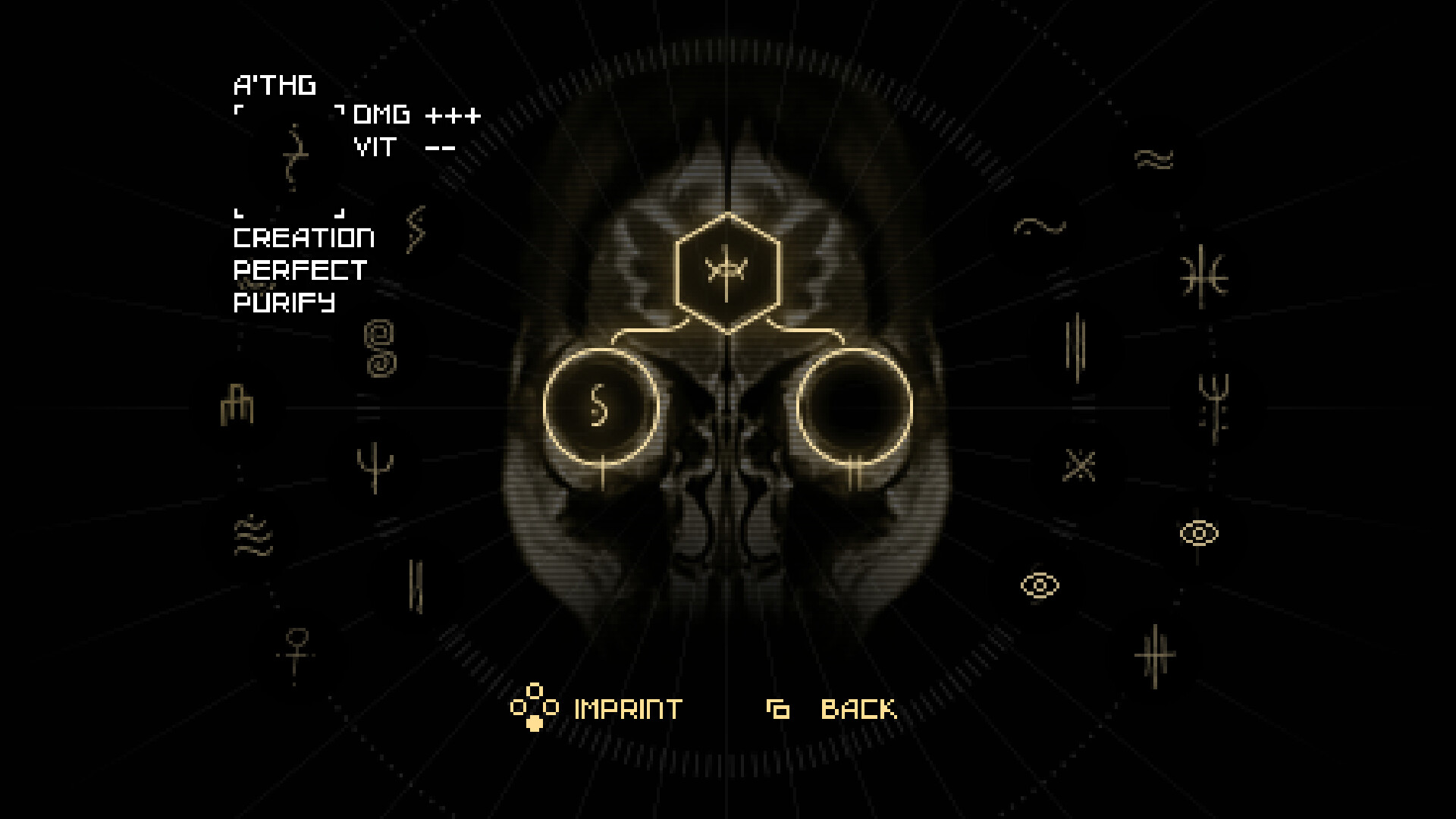
DERELIKT's progression is not XP. It is Glyphs: alien fragments you find hidden through the station and slot into upgrade paths. The interface confirms three paths:
| Glyph path | What it improves | Playstyle it feeds |
|---|---|---|
| Damage | Weapon output | Players confident in their aim and ammo economy |
| Vitality | Health and survivability | Players who take hits while learning enemy patterns |
| Dexterity | Movement and handling | Players who value dodging sentries and escaping grabs |
One preview-documented cost matters: inspecting a Glyph can cost health. The system deliberately trades power for fragility, which fits a game where medpacks are finite. Practical rule: on a first playthrough, weight Vitality early while you are still learning ambush points, then pivot into Damage once enemy placement is familiar. Dexterity is the niche pick for players who plan to route around fights instead of winning them.
Vent-crawling
Vents connect decks, skip fights, and hide supplies. Two habits: loot-check a vent before entering, and listen while inside. Something else uses the vent network too, and the audio mix telegraphs it. The cramped metal crawlspaces are where the station feels smallest and where headphones earn their price.
The threat ledger
Official material calls the hostile life "eldritch abominations" and stops there. Previews and the achievement list fill in the shape:
| Threat | What it does | Counterplay |
|---|---|---|
| Crawlers | Small, fast, spider-like; swarm in cargo and industrial spaces | Backpedal while firing; never let them share your tile. Crowbar works when ammo is dry |
| Trimorph | Larger predator; preview notes say you need room to react | Fight it in open spaces, not corridors. Pre-position before engaging |
| Floating eye abomination | Tanky fleshy mass with tentacles | Heavy weapons or avoidance; Satchel Charge if it blocks a required path |
| Rogue sentries | Machines with heavy damage output | Cover and repositioning. They punish standing trades |
| Indestructible turrets | Cannot be destroyed | Route around them. Fighting is impossible; planning is not |
| The Squidbull | The one named boss ("Matador", 50 GS) | Unknown mechanics pre-release. Clear every side path first so you enter stocked |
Two machine threats deserve respect. Sentries hit harder than most creatures and demand quick repositioning. Indestructible turrets turn sections into routing puzzles: find the angle of safety, move between cover, and accept that some corridors belong to the station, not to you.
Combat tempo: a slower retro shooter
DERELIKT is not a power-fantasy corridor shooter. The official pitch says you have enough firepower to survive but not enough to feel safe. Weapon swapping is normal play, not failure: previews describe running a rifle dry, swapping to a prototype, then finishing a crawler with a crowbar. Fight you avoid now is preparation for the worse one later. That trade is the whole game.
Builds and Loadouts
No class system exists, so a "build" in DERELIKT means Glyph allocation plus inventory doctrine. Three doctrines that fit the systems:
The Surveyor (first run, recommended). Vitality-weighted Glyphs, R4-21 plus a conventional sidearm, crowbar always slotted, one free inventory slot. You will die to ambushes on a first run; health padding converts deaths into learning instead of reloads. Spend Satchel Charges on doors, not monsters.
The Reclaimer (ammo-poor run). Damage Glyphs, maximum loot discipline, every fight pre-aimed from doorways. You clear as little as possible, vent-skip the rest, and bank Satchel Charges until the mid-game elite enemies demand them. Hardest early game, strongest late game once prototype weapons arrive.
The Exorcist (lore completion run). Any combat Glyphs, but the doctrine is total: every document read, every code tried on every door, every Glyph fragment collected, every vent swept. The story pays its best material to players who read the station, and the Glyph fragments are the running mystery's collectible layer.
Confirmed arsenal
| Item | Status | Role |
|---|---|---|
| R4-21 Assault Rifle | Confirmed by name in official playtest post | Workhorse; burst fire, mid-range |
| Crowbar | Preview confirmed | Melee fallback, silent, ammo-free |
| Grenade Launcher | Achievement "This is my Boomstick" confirms obtainable | Crowd clear, tight spaces |
| Sentinel Arm | Achievement "The Special Order" confirms constructible | Constructed equipment; combat role unconfirmed pre-release |
| Satchel Charge | Confirmed by official transmission | Boss killer and door key |
| Prototype weapons | Confirmed as progression finds | Situational; untested behavior can be a liability in small rooms |
| Alien weapons | Confirmed in feature list | Non-human tech; ammo type and behavior unknown |
Step-by-Step Strategy
1. Run the demo before launch even if you are buying. Ninety minutes in the demo teaches the whole grammar: inventory, code hunting, vent discipline, the Glyph interface. The full game starts from the airlock; familiarity is the only carryover, and it is worth more than any guide.
2. Clear a deck before leaving it. The station's decks reward completion over speed. Before taking a lift down: all documents read, all codes tried, all vents swept, all Glyph fragments grabbed, inventory re-staged. Walking past an unopened door is the only real loss condition in a game where death reloads a save.
3. Burst fire, pre-aim, backpedal. Pre-aim corners before rounding them, fire in bursts, and backpedal while firing when anything closes distance. Melee-range horrors in vents kill players who let them share a tile.
4. Spend Satchel Charges on doors first, monsters second. A charge that opens a door returns its value in ammo, medpacks, and Glyph fragments for the rest of the game. A charge spent on one abomination is gone. When a boss blocks a required path, that is the exception.
5. Route around the indestructible. When a turret owns a corridor, find its blind angle and move cover to cover. Some fights are geography problems, not shooting problems.
6. Give Vitality your first Glyphs. Health-cost mechanics and finite medpacks make early survivability the safest investment. Pivot to Damage once ambush placement is in your head.
7. Talk before you shoot, always. NPCs hold codes, warnings, and the only full picture of what happened. Conversation costs nothing and the story branches on how you treat colleagues.
Advanced Tips
- The hi-res toggle is a real setting. The default crunchy low-pixel look can be switched to a crisper render in settings. Switch between them; both look good and the choice is pure taste.
- No sprint in current builds. Plan routes as loops, not out-and-back trips. The map screen exists to save your legs; use it before moving.
- Headphones on. The audio design is the horror engine: weapons sound loud, doors groan like they need WD-40, and vent ambushes are announced by sound before sight.
- Data slates are uneven. Some hold codes and hints; others hold flavor. Read them all anyway, codes hide in the flavor ones too.
- Prototype weapons are not automatic upgrades. Unusual behavior can be a liability in a small room. Test new weapons on crawlers before trusting one against a Trimorph.
- Sentries outrank creatures as threats. A sentry's damage dwarfs crawler bites. When both share a room, the machine dies first.
- Play with the sound on the station's side. Ambush audio cues come from vents and around corners; the mix is built for headphones and punishes speaker audio.
- Spoiler discipline. The story is the product. Coverage has already leaked the broad arc; go in clean.
- Toaster Spec is real. PS1-style rendering means the PC version runs on old hardware with near-zero load times. The horror runs anywhere.
- PS5 exists. The console version launches alongside PC on November 13; Xbox remains unannounced. No PS5 demo was confirmed.
FAQ: Common Mistakes and Quick Answers
The door won't open with 0451. Is my game broken? No. 0451 opens one specific early door. Every other locked door wants a code from a document or terminal somewhere in the station. Collect codes as you read them and re-try old doors after each new one.
Do I need to play the demo first? No. The demo is three chapters out of order, not a prologue. Nothing carries over except your own familiarity, which is worth the ninety minutes anyway.
Is there a run button? Not in current builds. Backtracking is designed around the map screen and loop routing rather than speed.
Is DERELIKT related to other games named Derelict? No. Capital spelling, Saturn setting, and the Visuwyg name distinguish it.
How scary is it versus how shooty? Sequenced. Quiet decks build dread, Exo Labs delivers combat, deeper sections blend both and get stranger. The station grows more dangerous the deeper you go.
How long is the game? Unconfirmed officially. Demo pacing and the deck structure suggest 6-10 hours, standard for narrative FPS games in this lineage.
Does it run on Steam Deck? No native Linux build or Deck verification listed, but the minimum specs are a joke by modern standards ("Toaster Spec" per the store page) and Proton compatibility is likely. Unverified until the community tests it.
Is there voice acting? No. Dialogue is text, delivered through conversations and data slates, in a style faithful to genre mainstays.
What is the price? Unannounced pre-launch. Expect an indie-standard figure with a launch-window discount inside the Hyperstrange sale.
What should I spend Satchel Charges on? Doors first. A blasted door pays dividends forever; a dead abomination pays once.
Screenshots