Official game
Play Scramble Knights Online
This game is hosted by Steam. Continue to the official page to play or download it.
Buy on SteamOverview
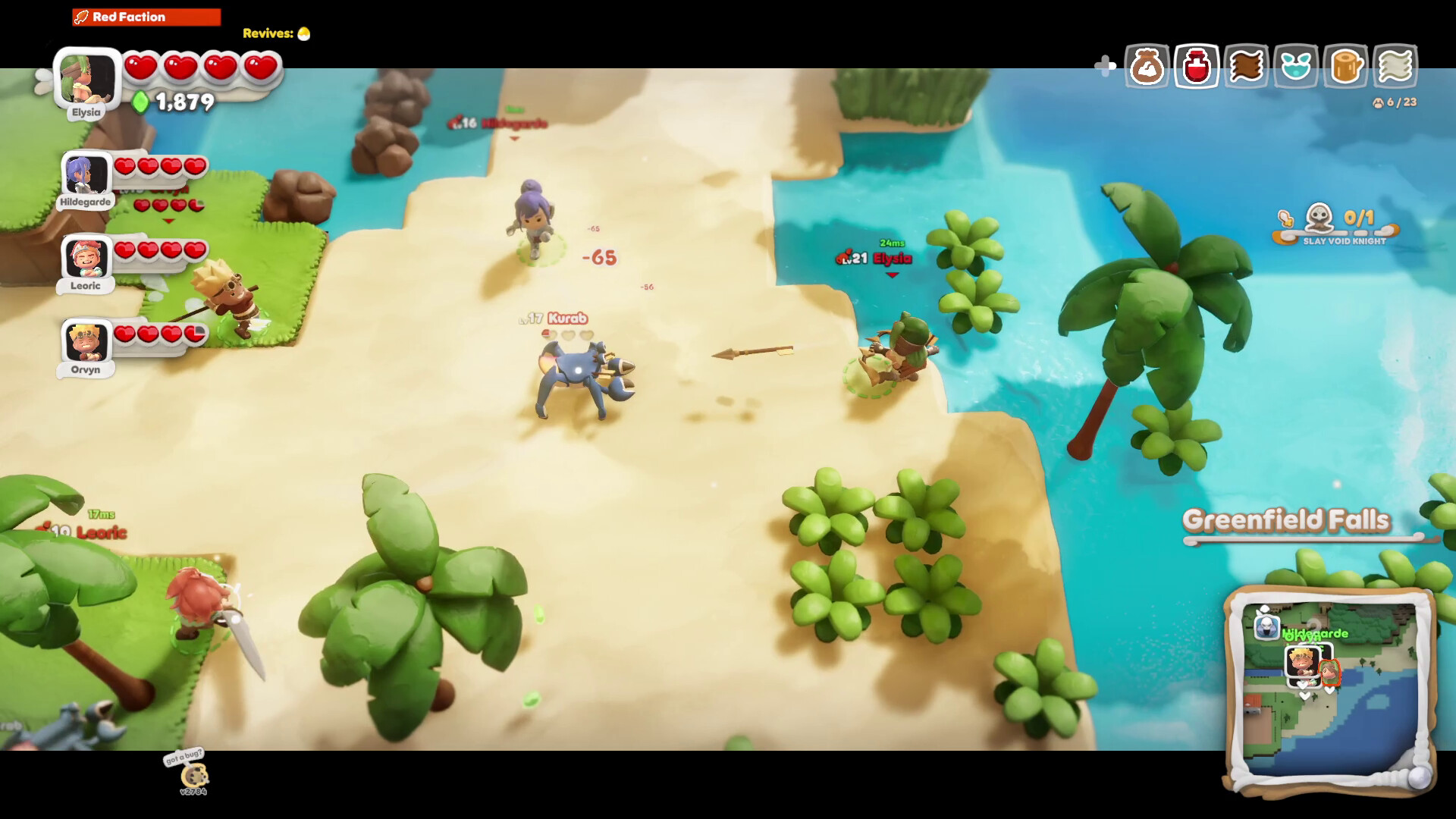
Scramble Knights Online is an MMO-lite action RPG from Funktronic Labs that launched into Early Access on October 26, 2026 at $12.99. The pitch: compress the MMO into a game you can actually finish a session of. You play a knight-in-training in Terracott, a shared online archipelago where up to four knights run Zelda-style quests, dive puzzle dungeons, fish in the town square, and optionally beat each other up over faction colors.
Nearly 40,000 players went through the beta playtest and demo before launch, and the launch build reflects it. The leveling system, poise combat, tutorial, and every major menu got reworked during that window. If you read guides written before October 2026, they describe a different game. This one doesn't.
Who this game is for:
| You want | Verdict |
|---|---|
| Co-op dungeon crawling in 20-40 minute sessions | This is the core loop, and it delivers |
| A full-theme-park MMO with raids and mounts | Wrong game. ~5 hours of 1-star quest content exists at launch |
| Something to play with one friend casually | Ideal. Free revives, instanced loot, no griefing possible |
| PvP focus | Exists but thin. Faction warfare and a town arena, opt-in only |
| Steam Deck / Linux play | Native Linux build ships day one, which almost nobody does anymore |
The Early Access roadmap matters for your decision to buy now or wait. December brings Island Odyssey: 2-star quests, new bosses, and new equipment. 3-star quests follow in Q1 2027. Launch content is the complete 1-star quest set plus opt-in faction PvP. Fun for what it is, but this is a foundation, not a castle.
Getting Started: Your First 30 Minutes
Demo progress carried into Early Access with no wipes, so returning testers skip ahead. Everyone else, follow this exact order.
- Do the tutorial. All of it. It was rebuilt from scratch after the playtest and teaches the right-click interact system that every other menu hangs off. Skipping it costs you more time than it saves.
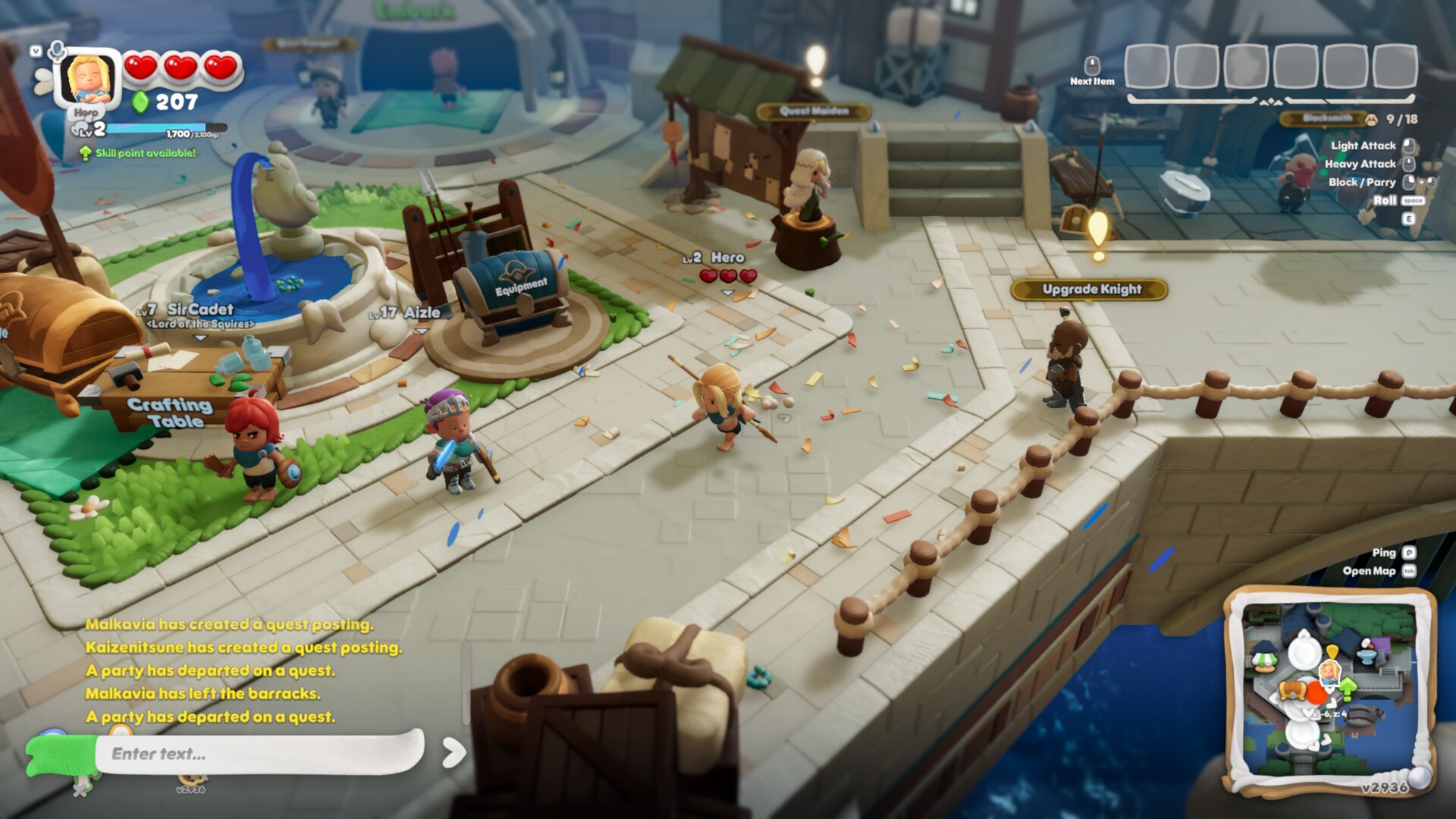
- Take three quests from the quest board, not one. Stack two combat quests and one gathering quest per trip. The board in town is the only quest source; the map never issues anything.
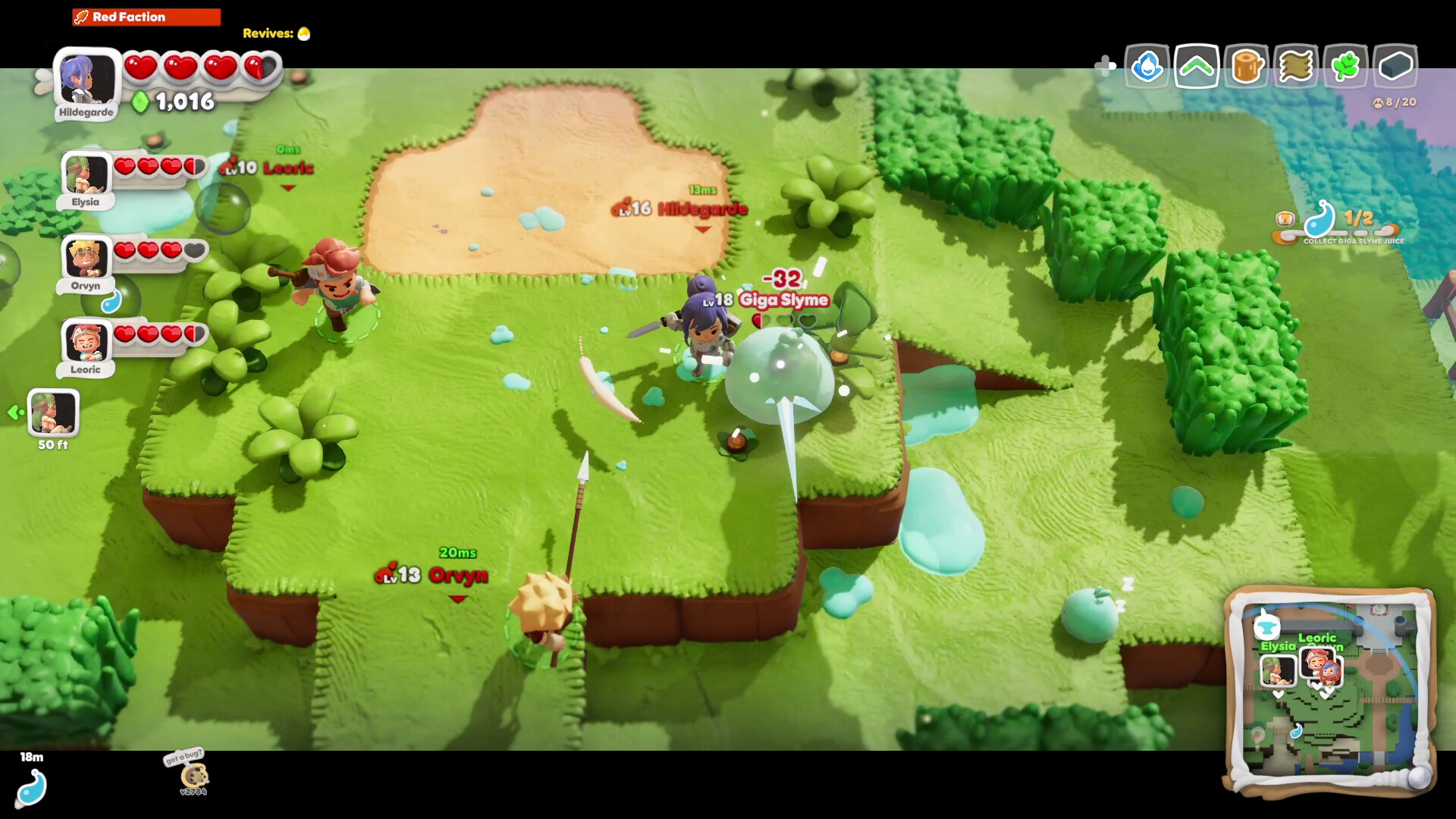
- Kill everything that moves on the route. Every mob grants EXP since the leveling rework. Route-clearing players hit the level cap roughly twice as fast as straight-line runners.
- Spend your first skill point at the Knight Trainer immediately. Unspent points do nothing. There is no respec anxiety at this stage; depth beats breadth for your first ten levels.
- Forge one weapon upgrade before your first dungeon. Dungeon enemies out-level field mobs, and raw damage is the only stat that shortens fights and therefore reduces the damage you take.
- Fish for ten minutes before logging off. Fish feed cooking, cooking feeds dungeon buffs. This is the highest-leverage ten minutes of your day.
Beginner mistakes that cost real progress:
- Hoarding skill points "for later." Later is level 15 with a 15% weaker knight.
- Selling crafting materials. Early Access economies rebalance constantly and materials appreciate. Sell junk loot, keep mats.
- Walking into a dungeon with an empty hotbar. Food, thrown items, and potions all live on the hotbar. Fill all six slots.
- Joining a faction at level 5 because the faction NPC has a cool banner. Faction choice locks your PvP targets. Do it at 10+, with friends, deliberately.
- Ignoring the weather. Rain changes which mobs spawn and which fish bite. Fishing in the wrong weather wastes the timer.
Core Mechanics Explained
The Poise System (the whole combat game)
Poise is the mechanic that separates knights who win dungeons from knights who get juggled. It was reworked completely in the final playtest patch and it applies to you and every enemy identically.
- Armor adds poise stat. Every armor piece contributes.
- Above 100 total poise you gain a visible poise bar. Every point past 100 widens the bar.
- Incoming damage hits health AND poise simultaneously. There is no free tanking; every hit you absorb also drains stagger resistance.
- At zero poise you take knockback and hitstun again. This is how deaths happen. Not the health bar, the poise bar.
- The bar refills automatically after 10 seconds. Disengage, count to ten, re-engage.
The practical read: light armor builds must never get touched twice in a row, heavy armor builds can eat one combo before staggering. Enemies follow the same rules, which is why poise-breaking weapons shred elites. Watch an enemy's bar, not just its health.
One damage-stacking quirk from the patch notes: status effects no longer stack on a target, with poison as the sole exception. You cannot double-freeze an already frozen knight, but poison keeps ticking and stacking. Poison builds are therefore the only true damage-over-time builds in the current build.
The Synced World Clock
Two global timers run the world, synced across all regions so every player on Earth sees the same Terracott sky:
| Cycle | Length | Affects |
|---|---|---|
| Day/night | 2 hours | Which mobs spawn, their counts and types, which fish bite |
| Weather | 1.5 hours | Mob appearance, fish availability, general spawning |
Farming strategy follows directly: learn the cycle, pre-position at the spawn zone for the mob you need. Night-only or weather-gated mobs cannot be forced; you wait for the world clock. Lanterns in the town square only light at night, which doubles as your clock when you're in town.
Extraction and Loot Rules
- Quest extraction runs on a 60-second timer (raised from 15s after playtest complaints), with an extraction chicken you can use to leave instantly.
- Chest loot is instanced per squad member. Everyone rolls their own drops. There is no loot competition and no reason to rush a chest.
- Boss drops roll per player too. Four knights, four independent rolls.
Controls Worth Rebinding Your Brain For
- Right-click interacts with everything: NPCs, ground items, chests. If left-click does nothing, right-click.
- Shift + left-click pulls full stacks from storage. Never drag items one at a time.
- Hotbar is keys 1-6 and fully clickable with the mouse.
- Pause menu crafting tab combines items on quests; in town it includes storage contents and a full crafting list.
- Controller is the recommended input. Top-down combat with recovery frames feels meaningfully better on a stick, and the game ships full DualShock/DualSense support.
Progression Strategy
The current progression surface: level cap 20, one skill point per level, gear forging at the blacksmith, armor recipes hidden in overworld dungeons.
Resource priority, in order:
- Weapon upgrades at the blacksmith. Damage shortens every fight in the game.
- Armor pieces that push you over the 100 poise threshold. The bar is worth more than raw defense numbers below it.
- Skill points into one damage node, then survivability, then utility. Never spread across all three early.
- Cooking ingredients. Buffs are free stats and they persist into every dungeon.
- Gems banked for the Island Odyssey equipment drop in December. New bosses mean new gear checks; arriving with savings beats arriving broke.
Leveling path 1-20:
Lv 1-5:   Tutorial → first six quests (reworked, meatier than beta) → route-clear everything
Lv 5-10:  Overworld dungeons for armor recipes → elite bandits for EXP density
Lv 10:    Faction decision point (with friends, or not at all)
Lv 10-15: Quest board backlog + dungeon diving, food buff always active
Lv 15-20: Grind whatever the weather spawns; fishing fills dead time between cycles
Elite bandit variants in the overworld are the best EXP-per-minute target in the current build. They hit hard, which means they also teach the poise system faster than anything else. Kill them on sight.
Builds and Loadouts
Formal class data doesn't exist, so builds are gear-plus-skill-point archetypes. Three work in the current content.
The Bulwark (heavy armor, solo-friendly)
Armor stacked past 100 poise, a heavy weapon with a wide swing, damage nodes first. You eat one enemy combo, stay standing, and punish the recovery. This is the solo dungeon build because you cannot rely on revives you don't have. Buy the swing-recovery skill nodes as soon as they appear; heavy weapons live and die by recovery frames.
The Tempest (light armor, dungeon meta)
Minimal armor, max attack speed and stamina nodes, ranged or fast weapon. The poise system punishes this build if you facetank, so the playstyle is hit-and-rotate: two hits, reposition, repeat. Every serious dungeon group wants at least one Tempest because staggered bosses take full damage windows from the whole squad.
The Quartermaster (co-op support slot)
Not a formal role, but the fourth squad member who runs cooking buffs, thrown items, and revive priority. In fixed groups of four, one player running utility raises clear rates more than a fourth damage dealer. If your group rotates this role weekly, everyone learns the game's co-op systems faster.
Skill point rule
One tree deep beats three trees shallow until at least level 15. The cap is 20. You cannot afford to be mediocre at everything.
Step-by-Step Strategy
- The first-dungeon run. Take one combat quest, buff food, enter with a full hotbar. Clear every room before touching any puzzle; ambushes during puzzle-solving are the leading cause of demo-era deaths. Learn the boss's first attack cycle without attacking. Second cycle, commit.
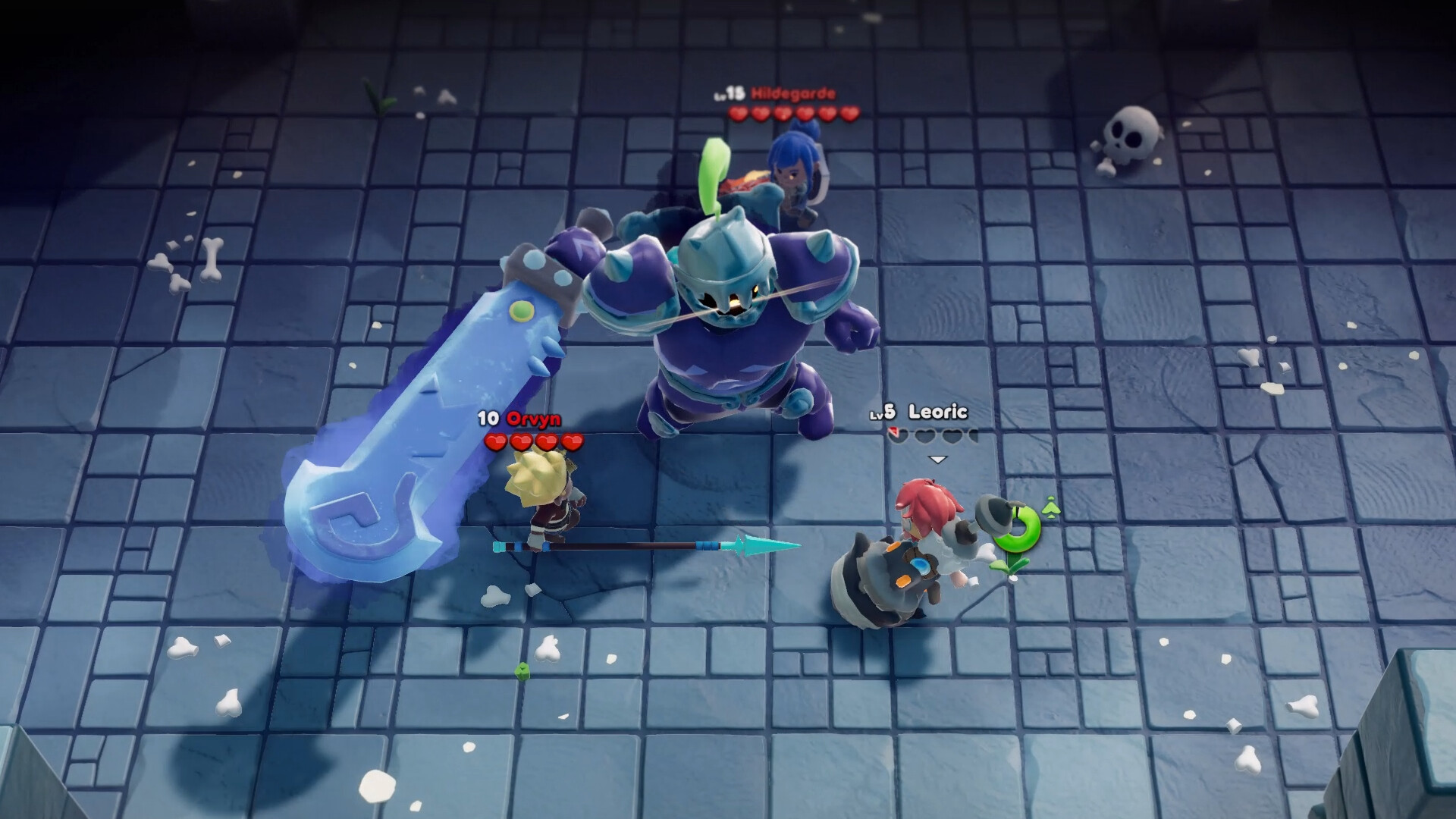
- The King Crab pattern. The flagship early boss teaches everything: attack the legs, sidestep the slam, never stand behind the shell. Legs first, always. When it rears, you move; when it recovers, you unload on the legs.
- The weather farm. Check the current weather and time in town. Identify which overworld mob you need for your next recipe. Wait out the cycle in the fishing spot nearest that spawn zone. Zero travel time between cycles, fishing income the entire wait.
- The recipe circuit. Overworld dungeons contain armor recipes and the blacksmith crafts them. Run three dungeons back-to-back, then one blacksmith session. Crafting in batches beats crafting after every run because menu time is dead time.
- The faction day. At level 10+, squad of three or four, join the same faction as your friends, run one PvP quest to test the waters. Targets are always the opposing faction, no outlaw-flagging accidents. Carry second-best gear. If the first session feels bad, faction membership costs you nothing in PvE.
- The log-off routine. Deposit PvP-risk gear in storage, fish until the next day/night tick, cook the catch, spend unspent skill points, log out mid-quest if you want. Save Anytime is a listed feature and the game honors it.
Advanced Tips
- The Skelle Outfit forges only in October. Skull items drop from the same places as bones and bone shards. If you're reading this in an October, spend one session collecting skulls; the outfit is time-gated and returns once a year at most.
- Poise works on you. Brutes stagger you mid-swing. Attack from angles after their swings, never trade face-to-face with heavy enemies.
- The Beta Cape identifies veterans. Playtest players wear it in the Town Square. They know spawn tables and dungeon tricks. Ask.
- Status effect rule of thumb: freeze/stun don't stack on a live target, poison does. Poison weapons out-DPS everything over long boss fights.
- Elite bandits before quest mobs. When both are on your route, kill elites first. Higher EXP, better drops, and quest mobs rarely move.
- Launch-week networking is patched but not perfect. The first hotfix killed the rubber-banding and spawn desyncs, and Funktronic has shipped fixes near-daily. If you see another knight rubber-banding, it's latency, not cheating.
- Loot is instanced everywhere. Never rush a chest, never race another player to a drop. The roll is yours regardless.
FAQ
How much content is there at launch? The complete 1-star quest set, roughly five hours of PvE, plus opt-in faction PvP, fishing, crafting, and overworld dungeons. Island Odyssey in December adds 2-star quests, new bosses, and new equipment; 3-star quests target Q1 2027.
Is my demo progress safe? Yes. Demo progress carried into Early Access and the developers confirmed no further wipes. Your knight is permanent.
Do I have to play with strangers? No. The shared world shows you other knights, but nothing except faction PvP requires grouping. Co-op makes dungeons faster and revives free, and ad-hoc squad-ups happen constantly in quest zones.
How does faction PvP work exactly? Join a faction (required for PvP quests since the final playtest patch), then take PvP quests or use the town square arena and duels. Your targets are always the opposing faction. Everything else in the world stays PvE.
Is there crossplay? Cross-Platform Multiplayer is listed on the store page. Steam is the launch platform; console versions were teased in the ID@Xbox Fall 2026 showcase.
Does it run on Steam Deck? It ships a native Linux build, and the requirements sit far below Deck hardware. No Verified rating as of launch week, but it runs.
What does poise actually do? Above 100 total poise from armor, you gain a stagger bar. Damage drains it alongside health. At zero, you take knockback and hitstun again until it refills 10 seconds later. Enemies run the identical system.
Single skill point per level sounds slow. What do I prioritize? One damage node immediately, then survivability, then utility. Depth over breadth until level 15, always.
Screenshots