Official game
Play Crystals Of Irm
This game is hosted by Steam. Continue to the official page to play or download it.
Wishlist on SteamOverview
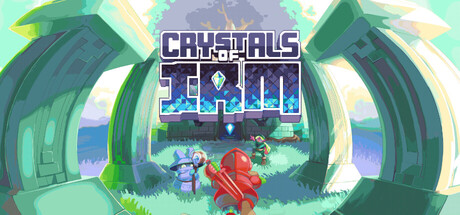
Crystals Of Irm is an old school RPG from solo developer David Schütze (LotsOfStuff Games), published by Deck13 and Drillhounds. It targets Windows and consoles with a 2026 release window. A playable demo is live on Steam right now, so you can test the combat before you commit.
The pitch is a genre blender. Take the party-based dungeon crawling of Eye of the Beholder, the free-roaming overworld of Ultima, first-person 3D cities, and then wrap it all around a combat system that plays like a bullet hell. The result is an RPG that respects old school design but refuses to feel like a museum piece.
You control three heroes chasing a legend. The red crystal of the mountains was the fire of the great forge. The blue crystal was the symbol of the eternal academy's knowledge. The green crystal was the patron saint of the endless forests. All three vanished from the world long ago. Legends say three dungeons hold them, one crystal per dungeon. Many adventurers tried. Most were never seen again.
Who it is for: Fans of classic dungeon crawlers like Eye of the Beholder and Legend of Grimrock, players who miss Ultima's open-world map exploration, and anyone who enjoys games where positioning matters as much as stats. The solo-dev passion energy is part of the charm.
Who it is not for: Players who want action combat, quest markers, fast travel everywhere, or hand-holding. Crystals Of Irm makes you explore, read, and learn from your deaths.
| Fact | Detail |
|---|---|
| Developer | David Schütze (solo, LotsOfStuff Games) |
| Publisher | Deck13, Drillhounds |
| Genre | Old school RPG / dungeon crawler |
| Platforms | Windows, consoles (to be announced) |
| Release | 2026 (release window confirmed) |
| Price | To be announced |
| Players | Single-player |
| Party | Three heroes |
| Crystals | Red, blue, green (one per dungeon) |
| Combat | Real-time grid battles with bullet-hell dodging |
| Dungeons | 3 main crystal dungeons + labyrinth dungeons |
| Controller | Full controller support |
| Steam features | Steam Cloud, Family Sharing |
| Languages | English, German, Simplified Chinese, Traditional Chinese, Italian, Spanish, Russian, Ukrainian, French |
| Demo | Playable demo on Steam (app 2209040) |
Getting Started: The First 30 Minutes
Before You Launch
- Understand that combat is real time. The game is not turn-based, no matter what the genre tags say. Battles run in real time on a grid, and your character keeps moving while enemies throw projectiles. Think Undertale's bullet-hell dodging fused with a tactics grid.
- Movement is your attack generator. Every step you take fills the energy bar that lets your heroes act. Standing still means no attacks and guaranteed hits. The single most important habit in the game is constant motion.
- Camp, but never trust the camp. The overworld lets you rest to recover resources. The game explicitly warns you to watch your back. Camps are safer than the open road, not safe.
- Pick up a fishing rod. Fishing is a real minigame with real rewards. It is the cheapest way to rebuild supplies between expeditions and a gentle way to learn the game's rhythm.
Your First 30 Minutes
- Learn your three heroes. The party is fixed at three. Each hero has their own weapon, their own energy loop, and later their own spells. Figure out who charges fast, who hits hard, and who dodges well before you touch a dungeon.
- Visit the first city. Cities flip into a first-person 3D view. Every citizen is a potential quest. Accept every task you find. Tasks are both your direction and your income.
- Fight overworld encounters on purpose. Do not avoid battles. The overworld is your training ground, and the stakes are lower than in a dungeon. Grind a few fights to learn the dodge-and-charge rhythm.
- Find the merchant. In the demo, the merchant in Miris sells the staff that lets your mage cast spells instead of throwing weapons. That purchase changes how combat works, so make it early.
- Scout a dungeon entrance before entering. The three crystal dungeons are the main goals. Peek at the entrance area, gauge the enemy density, then decide if you are ready.
Beginner Mistakes
| Mistake | Why It Hurts | Fix |
|---|---|---|
| Standing still in combat | You eat projectiles and generate zero energy | Keep moving on the grid at all times |
| Treating it like classic turn-based combat | You wait for a turn that never comes | Combat is real time; your movement IS your turn |
| Rushing into crystal dungeons | The monsters down below are grim | Level on overworld encounters first |
| Skipping city tasks | Tasks give rewards, gear, and direction | Accept everything, stack tasks before expeditions |
| Ignoring the mage's staff | Your mage throws weak weapon attacks forever | Buy the mana staff from the Miris merchant early |
| Selling loot without comparing | Spells and armor are combat-critical | Check every drop against current gear |
| Assuming camps are safe | Resting attracts trouble | Scout sightlines before you rest |
Core Mechanics Explained
The Real-Time Grid Combat System
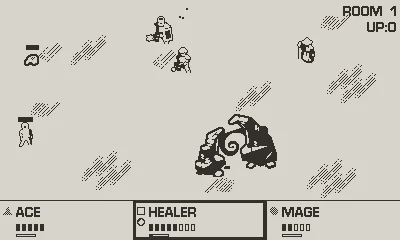
Forget everything the store page genre tags imply. Crystals Of Irm combat is not turn-based. The developer has stated it plainly: the game runs in real time and adds a bullet hell mechanic. When a battle starts, a separate combat screen appears with a grid. Your mission is to keep your heroes moving.
The loop has three parts:
- Move to charge. Every step fills each hero's energy. Watch the blue bar and the hero portrait. When both fill up, the hero readies an action.
- The weapon throw. When a hero's bar fills, they throw their equipped weapon onto the field. The weapon lands somewhere on the grid. Your job is to move your hero next to it and activate it.
- Dodge while you do all this. Enemies fire their own attacks constantly. Getting hit interrupts your plan and drains your HP. You are managing positioning, energy, and threat avoidance at the same time.
That is the whole combat identity: a fusion of classic grid tactics with the adrenaline of a modern bullet hell. Easy to learn, chaotic (but fair) once enemy counts go up.
The Energy Economy
Energy is the real currency of combat. Each hero has an energy bar that fills as they move. Filled bar means the hero can act. The tension is that you often need to move toward danger to collect the weapon your hero just threw, or to reach a safe spot to activate a spell.
Key principles:
- Distance traveled = energy gained. A hero who runs laps charges faster but exposes themselves to more projectiles.
- Weapon drops are positional. You control where the fight happens by where you stand when the bar fills.
- Spells replace the weapon throw. A mage with the right staff or skill casts mana instead of throwing the weapon. Spells have different positioning needs. You cast from a safe spot rather than running to a dropped weapon.
The Overworld Map
Between battles you explore an old school overworld in the style of Ultima. Travel through the multiple regions of Irm, find fishing spots, set up camp, and hunt for treasures. The overworld is not filler. It is where you level, where you gather resources, and where the game's quest hooks live.
Regions referenced by the developer include the Coast of Kalldor, home of the blue mages and their observatory headquarters, the Ulum Forests, and the lands to the north and south of Irm. Each region has its own quests and content. The coast's vaults are a known dungeon location.
First-Person Cities
Important landmarks such as cities switch the game into a first-person 3D view with its own unique look. These areas are packed with weird characters and citizens offering tasks. The perspective shift is a core part of the identity: top-down overworld for travel, first-person for socializing and shopping.
The Three Crystal Dungeons
The main progression goals are three dungeons, each home to one of the legendary crystals:
| Dungeon | Crystal | Theme |
|---|---|---|
| The mountain dungeon | Red crystal (fire of the great forge) | Fire, forges, harsh terrain |
| The academy dungeon | Blue crystal (knowledge of the eternal academy) | Magic, knowledge, puzzles |
| The forest dungeon | Green crystal (patron saint of the endless forests) | Nature, wild growth, hidden paths |
In addition to the three main dungeons, labyrinth dungeons are found throughout Irm. These have many levels, and the developer has been adding more of them. They are the best source of loot and the riskiest places in the game.
Progression Systems
- Skills and spells per hero. Each hero equips skills and spells. A mage needs the right staff or skill to cast mana instead of throwing weapons. The staff is sold by the merchant in Miris.
- Equipment. Armor and weapons are found across Irm. The developer confirms a wide variety of items and equipment to buy and find.
- Spell questline. The developer is building a quest series that introduces spellcasting. If you feel lost about magic in the demo, that questline is the intended teacher.
Progression Strategy
What to Prioritize First
- Buy the mage's staff early. The merchant in Miris sells the staff that lets your mage cast spells instead of throwing weapons. This single item transforms your damage output and your positioning options. It should be your first major purchase.
- Stack city tasks before expeditions. Cities are full of citizens with tasks. Grabbing several tasks from the same city lets you complete multiple objectives in one trip instead of zig-zagging across the map.
- Level on overworld encounters. Open-world fights are the safe way to learn the combat loop and build XP. Do not enter a crystal dungeon until overworld fights feel comfortable.
- Farm labyrinth dungeons for gear. The labyrinth dungeons scattered around Irm are the loot engine. Each level down increases risk and reward. Clear as deep as you safely can between main-story pushes.
- Fish as a fallback income. When you are low on supplies and not ready for a fight, fish. It is low-risk, renewable, and keeps your expedition budget healthy.
Dungeon Order Logic
The game does not force a specific order for the three crystal dungeons. A sensible path follows difficulty and gear progression:
- Start with the dungeon whose theme matches your current gear. If your party is stacked with fire resistance and fire spells, the mountain dungeon is a natural first target.
- Use the first clear's loot to prepare for the second. Each crystal dungeon drops gear that makes the next one easier.
- Save the dungeon that counters your playstyle for last. If magic-heavy enemies punish your mage, do the academy dungeon when your spell arsenal is deep enough to handle it.
There is no wrong order, but there is an order that wastes fewer lives.
Resource Priorities
- Early game: Staff for the mage, then any armor that upgrades the hero who keeps dying, then consumables for the first dungeon push.
- Mid game: Spell scrolls and skill books. Spells are force multipliers in a combat system where every attack costs energy and position.
- Late game: The best weapons per hero, then armor, then quality-of-life items like camping gear that reduce overworld risk.
Builds and Loadouts
Crystals Of Irm is not a class-based game, but the three fixed heroes create de facto roles. You do not choose classes; you choose what each hero carries and casts.
Hero Role Template
| Role | Job | Priority Stats | Best Early Gear |
|---|---|---|---|
| Melee anchor | Takes the enemy's attention, collects weapon drops in contested space | Health, movement efficiency | Armor with dodge bonuses |
| Scout / runner | Charges fast, picks up weapon drops on the flanks | Energy charge rate | Light armor, high mobility |
| Mage | Casts from safe space, never runs into the scrum | Mana, spell damage | Mana staff from Miris |
Early-Mid Loadout Priorities
- Mage: mana staff + one damage spell + one utility spell. The staff is mandatory. A damage spell gives you reliable ranged output, and a utility spell (shield, slow, or heal depending on what you find) covers your mage's weakness when projectiles converge.
- Melee anchor: highest armor in the party. Your anchor is going to get hit. That is the job. Armor is a direct HP multiplier for the entire fight.
- Scout: energy and speed gear. The scout's value is charging fast and reaching weapon drops before enemies camp on them. Anything that boosts movement or charge rate makes the whole party faster.
Spell Loadout Logic
Your three spell slots (one per hero, more as you progress) should cover three different jobs:
- One single-target damage spell for boss fights.
- One area or multi-hit spell for swarms.
- One defensive or utility spell for panic situations.
Never run three damage spells. The combat system punishes you when you have no answer to a crowded grid.
Step-by-Step Strategies
Strategy 1: The First Dungeon Clear (Mountain Dungeon)
- Prep: Complete three city tasks, fish for a full supply bag, and buy the mana staff. Grind overworld fights until your party survives every fight at 50%+ HP.
- Scout the entrance: Enter the dungeon, fight the first two encounters, then retreat. Note enemy attack patterns and how fast they spawn.
- Learn the spawn rhythm: Identify how many projectiles each enemy type fires and from what range. Ranged enemies are your priority targets because they control the grid.
- Clear floor by floor: After each floor, return to camp. Do not chain floors while low on supplies. The camp exists for a reason.
- Boss approach: Save all charged spells for the boss. When its weapon throw lands, do not chase it through enemy fire. Let the boss come to a lane you have pre-cleared.
- Take the crystal, loot everything: After the boss, search every wall. The dungeon's unique drops will not respawn.
Strategy 2: Surviving the Bullet-Hell Grid
- Find the diagonal: Enemy projectiles usually stream in lines. Move diagonally between the streams instead of running parallel to them.
- Charge in economy mode: Do not sprint laps. Circle in a small loop near the edge of the danger zone. You charge energy while staying ready to dodge.
- Let the weapon drop to you: When a hero's bar is almost full, position them near your planned safe zone. The weapon lands close to them, and you never have to cross enemy fire to grab it.
- Prioritize the mage's safety: The mage is your highest-value asset. If a projectile storm is coming, sacrifice the melee anchor's positioning to shield the mage's lane.
- Use the grid edges: Corners are death traps, but the edges give you predictable dodging lanes. Stay one tile from the wall, never pinned into the corner.
- Reset the fight state: If the grid gets chaotic, retreat to a quiet corner and let the enemy attacks clear. Most enemy volleys are finite. Wait them out.
Strategy 3: The Camp-and-Fish Economy Loop
- Start every expedition at full supplies: Fish until your bag is full, then camp to restore HP.
- Complete tasks in a cluster: Take every task from one city. Plan a route that hits them in one loop.
- Dungeon only after leveling: Fight overworld encounters along the task route. Arrive at the dungeon entrance with fresh XP and full HP.
- Return for the crystal, not before: Inside the dungeon, push until your supplies drop below half, then retreat. The crystal floor is a marathon, not a sprint.
- Sell nothing unique: Anything you have not seen before gets kept. Duplicates fund your next expedition.
Strategy 4: Building the Magic Engine
- Buy the mana staff from the Miris merchant first. Nothing else matters before this.
- Do the spell questline as soon as it appears. The developer built it to teach spellcasting. It is faster than trial and error.
- Run one damage spell plus one utility spell. Test each new spell in overworld fights before taking it into a dungeon.
- Learn which spells cast from range: A spell that casts from safe space changes how you position. Prefer spells you can use without running to a weapon drop.
- Pair the mage with the scout: Have the scout bait enemy fire while the mage stands in a safe lane and channels. The anchor protects the other flank.
Strategy 5: Boss Preparation Protocol
- Stock consumables: Two full bags minimum. Bosses in this game are attrition fights where dodging mistakes cost HP.
- Pre-charge everyone: Enter the boss room with all three energy bars as full as possible. The first 10 seconds of the fight are yours.
- Learn the boss's volley pattern: Watch one full cycle before committing offense. Every boss has a tell and a safe window.
- Burn the first weapon drop immediately: Get your first attack off before the boss's second volley starts. Early damage compounds.
- Fall back, not forward: If your HP drops below 30%, retreat to a defensive loop. Heal, let the mage cast from range, and only re-engage when the pattern resets.
- Do not greed the kill: The boss's last 10% HP usually comes with an enrage-style frenzy. Wait out the frenzy, then finish.
Advanced Tips
The Movement-Energy Loop
Master the rhythm of moving to dodge while charging spells simultaneously. A good player is never standing still and never wasting movement. Practice in overworld encounters where the stakes are lower. The goal is to reach a state where dodging and charging feel like one action instead of two.
Position Your Weapon Drops
When a hero's bar is nearly full, walk toward the spot where you want the weapon to land before it fires. The weapon lands near the hero. This micro-positioning lets you control the flow of the fight and keeps you from chasing drops through enemy fire.
Know When the Mage Casts Instead of Throwing
The mage with a staff casts mana instead of throwing weapons on the field. This is a positional advantage: spells go where you aim, weapons go where they land. Use the mage for targets you cannot safely approach.
Camp Sightline Discipline
Camps restore resources but are not guaranteed safe. Scout the area around a camp before resting. Pick spots with clear sightlines so nothing sneaks up on you. If the game warns you to watch your back, believe it.
Task Stacking
Stack multiple tasks from the same city before heading out. Complete several in one expedition instead of making many trips. The overworld is big, and every return trip is wasted time and risk.
Gear Comparison Discipline
Before selling or discarding any loot, compare it against your current equipment. A spell that looks weak on paper can be the key to a specific dungeon's enemies. Keep a wide arsenal and sell only confirmed duplicates.
Fishing as a Safety Net
Fishing gives you a steady, low-risk income of resources. When you are low on supplies and not ready for a dungeon, fish. It is a reliable way to rebuild between expeditions and costs nothing but patience.
Watch for the Party Knockout Change
The developer made party knockouts harsher during development. A full wipe costs you more than it used to. Treat retreats as a normal part of the loop, not a failure state.
Use the Demo to Test
The free demo is your training ground. Use it to learn the combat loop, test the mana staff, and map the first dungeon before the full release. Everything you learn carries over in skill if not in save data.
FAQ and Common Mistakes
When does Crystals Of Irm release?
The developer confirmed a 2026 release window for Steam and consoles. A playable demo is available now on Steam (app 2209040).
Is it turn-based or real time?
Real time, despite the genre tags on store pages. The developer has explicitly stated the combat is not turn-based. Battles run in real time on a grid with bullet-hell dodging.
How does combat actually work?
Each hero has an energy bar that fills as you move. When the bar and portrait fill, the hero throws their equipped weapon onto the field. You walk next to the weapon to activate it, all while dodging enemy projectiles. A mage with the right staff casts spells instead, which changes the positioning game completely.
How do I make my mage cast spells?
You need the staff or skill that converts the mage's weapon throw into mana casting. The merchant in Miris sells it. The developer also built a spell questline to teach spellcasting.
Can I play with a controller?
Yes, full controller support with DualShock and DualSense support. The developer himself plays with a controller.
How many heroes are in the party?
Three heroes, and they are fixed. You customize them through equipment, skills, and spells rather than a character creator.
Is there a demo?
Yes, a playable demo on Steam. It is the best way to test the grid combat before committing. The demo has been updated multiple times and is a good representation of the current gameplay.
What languages does it support?
English, German, Simplified Chinese, Traditional Chinese, Italian, Spanish, Russian, Ukrainian, and French.
Common Mistake: Treating combat like a standard turn-based RPG
The grid movement is not cosmetic and the game is not turn-based. Standing still gets you hit and starves your energy. The combat only works when you are moving.
Common Mistake: Letting the mage throw weapons
Without the mana staff, your mage plays like a weak melee hero. That staff from the Miris merchant is the difference between a liability and your best damage dealer.
Common Mistake: Ignoring the overworld
The overworld is where you level, gather, and find tasks. Rushing from dungeon to dungeon skips the game's core progression loop.
Common Mistake: Selling unique loot
Some dungeon drops are one-of-a-kind. Keep anything you have not seen before. You can always sell duplicates later.
Common Mistake: Chaining dungeon floors while low
The camp is there for a reason. Pushing one more floor on empty supplies is how parties get knocked out. Retreat, rest, and return.
Final Verdict
Crystals Of Irm is a love letter to old school RPGs from a solo developer who clearly adores the genre. The combat system is genuinely distinctive: real-time grid battles where every step charges your next attack and every enemy volley demands a dodge. It is the closest thing in recent memory to Undertale's bullet-hell combat fused with Eye of the Beholder's dungeon crawling, and it holds up.
The blend of overworld exploration, first-person cities, labyrinth dungeons, and the three-crystal main quest gives the game a rich, varied pace. It is deliberately old school, and that is its strength. You explore, you read, you die in dungeons, and you learn.
Wishlist it if you grew up on Ultima, Eye of the Beholder, or Legend of Grimrock. Skip it if you need modern conveniences, action combat, or hand-holding. The demo is free, so there is no reason not to test the combat system yourself. May the crystals shine upon you.
Last reviewed by Game How To Editorial. We play each game, verify controls against official sources, and update guides when game mechanics change.
Screenshots