Official game
Play Wishseeker
This game is hosted by Steam. Continue to the official page to play or download it.
Wishlist on SteamOverview
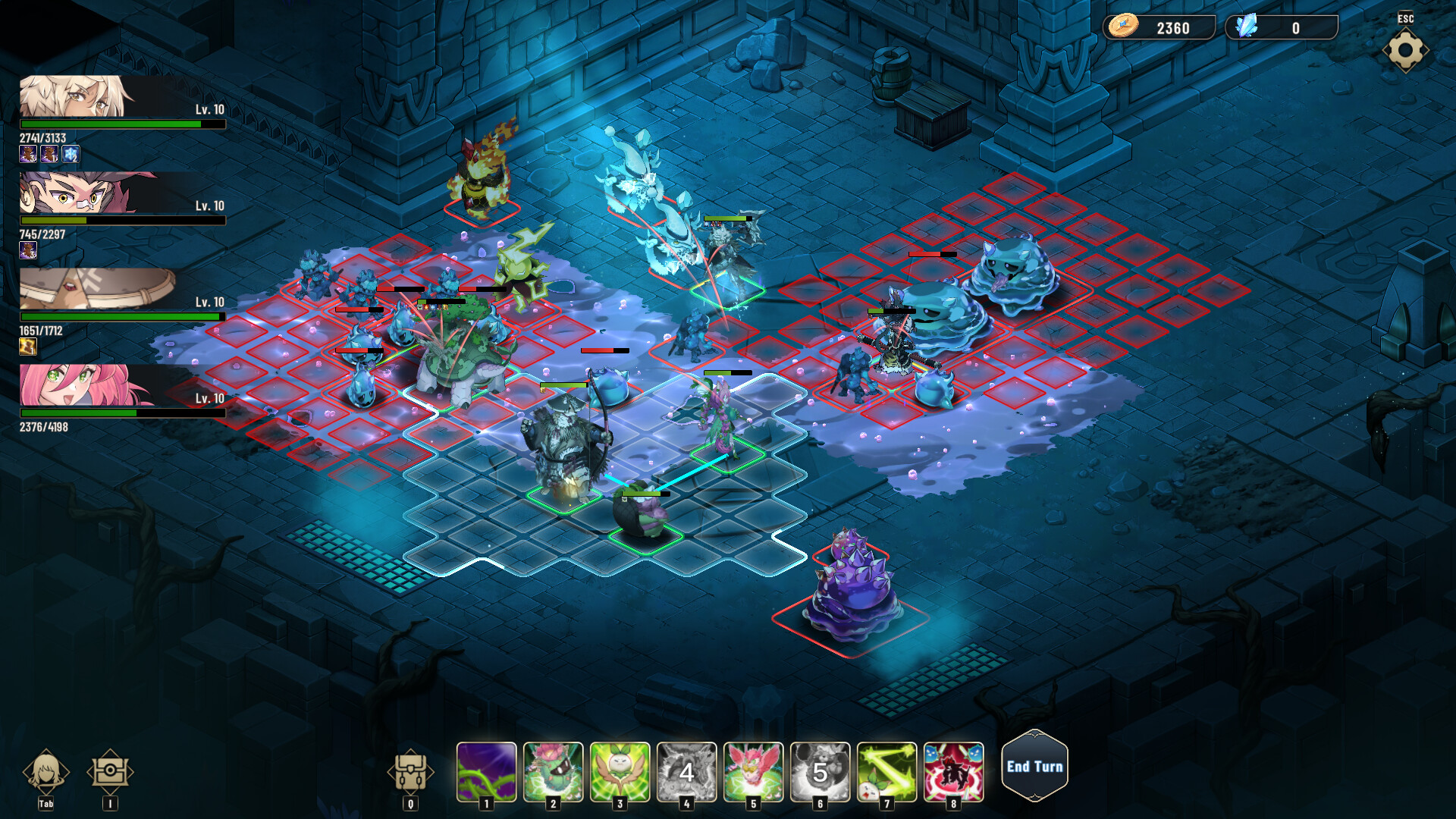
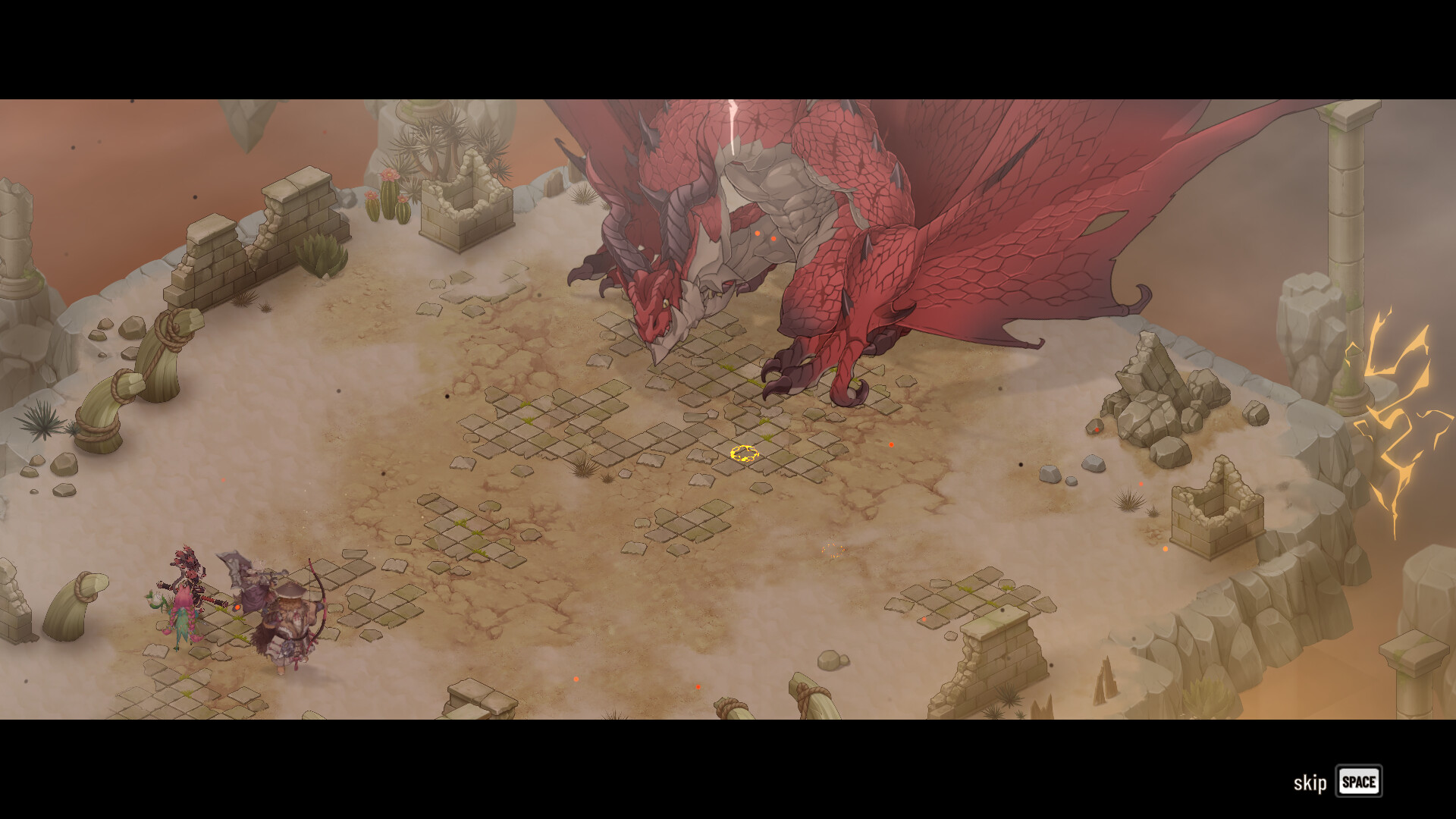
Wishseeker is a turn-based tactical roguelite from Indonesian studio MelonCat, published by Soft Source. You lead a party of four Wishseekers into the Hollow Vault, a dungeon that rerolls itself every expedition. Combat is grid-based and tuned for speed: enemy turns resolve with minimal downtime, so the tactical thinking stays while the waiting goes. Every run hands you a fresh mix of characters, skills, and artifacts, and the build you craft from that hand is the whole game.
Announced during the gamescom 2026 Awesome Indies Show Live, the game targets a 2027 release, with a closed playtest planned for Q4 2026. The developer is collecting playtest signups through meloncat.games, and an on-site demo ran at gamescom Booth E-045G. Wishlist numbers decide a lot for a studio this size, and the announcement picked up coverage from Gematsu, Niche Gamer, and The Magic Rain within days.
| Fact | Detail |
|---|---|
| Developer | MelonCat (Indonesia) |
| Publisher | Soft Source Publishing |
| Genre | Turn-based tactics, roguelite, tactical RPG |
| Platforms | Windows, macOS |
| Release | Targeting 2027; closed playtest Q4 2026 |
| Price | To be announced |
| Players | Solo, or online co-op up to 4 |
| Party size | 4 Wishseekers per run |
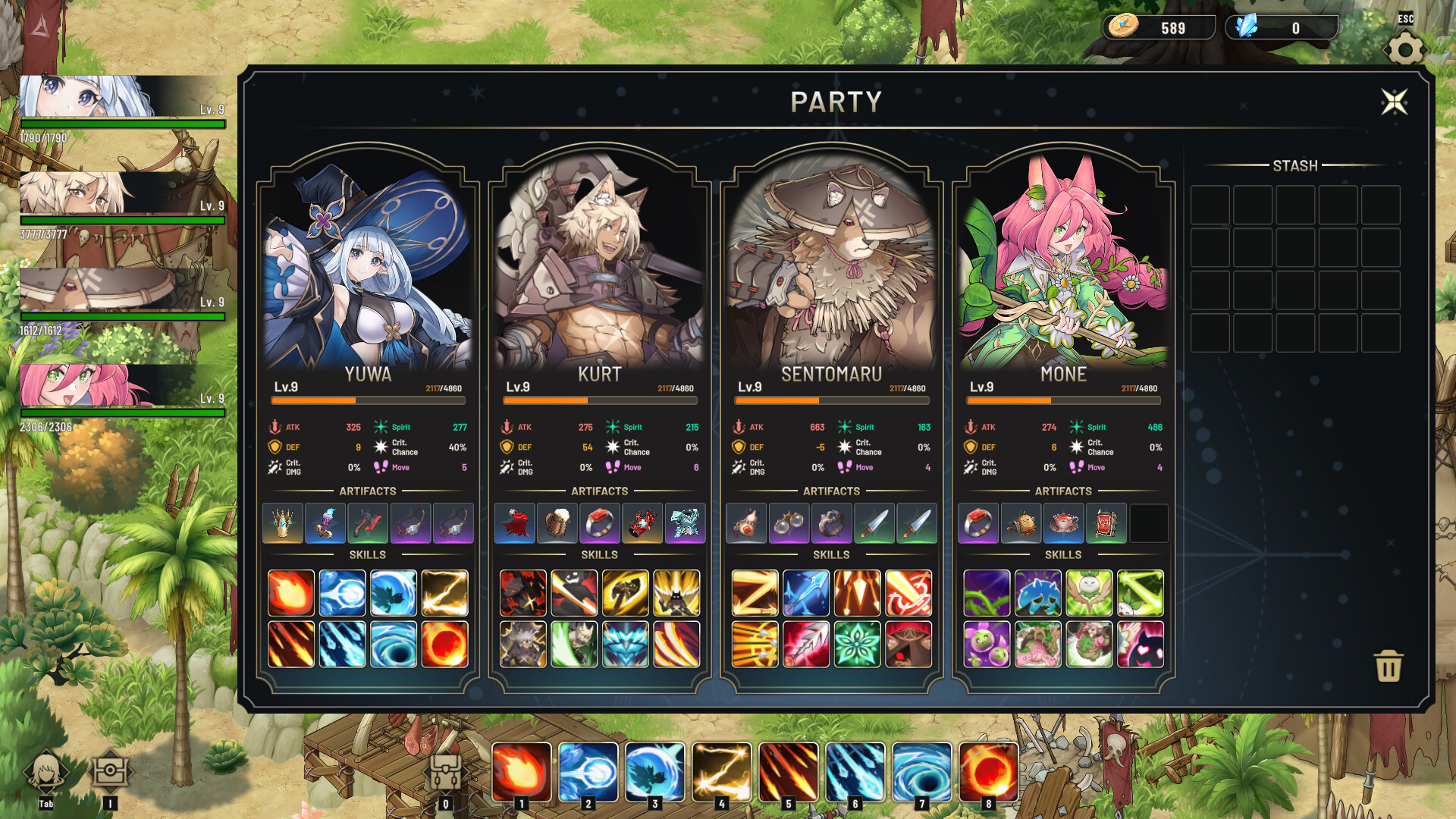
| Roster | 8 playable characters/classes |
| Skills | 20+ unique skills per character |
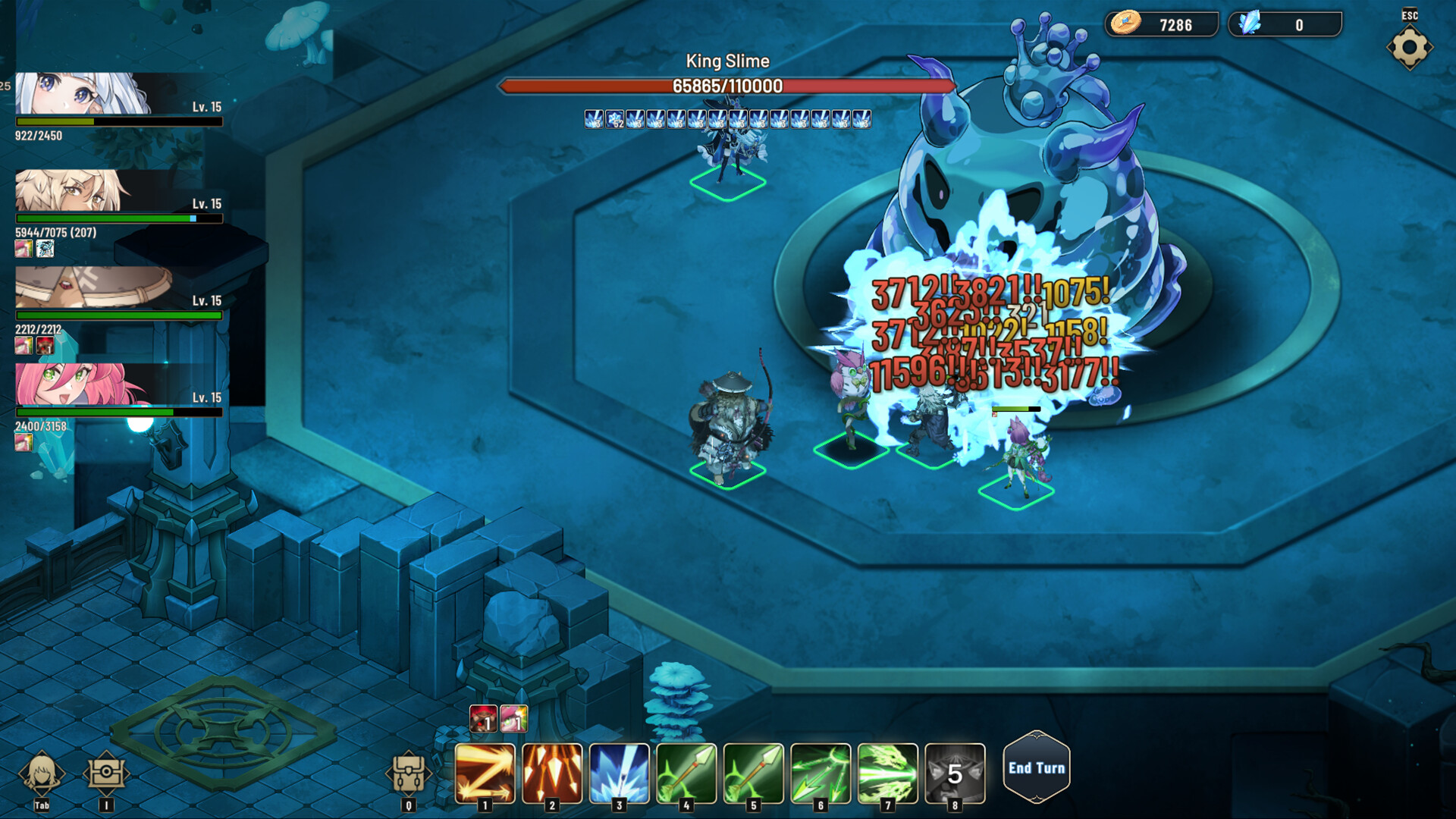
| Dungeon | The Hollow Vault, 5+ biomes, multiple bosses each |
| Systems | Artifacts, stat upgrades, skill chaining |
| Combat pace | Simultaneous turns, minimal enemy-phase downtime |
Who this is for: players who like Into the Breach's tight grids but want more build variance, or Mario-plus-roguelite fans who want anime-flavored heroes and co-op. Who should temper expectations: the game is early. Everything below is built on announced systems and pre-release material, and details will move before launch.
Getting Started: Your First Runs
The playtest is the way in, and the habits you build there carry straight to launch.
- Sign up for the playtest waitlist early. Invites go out by email, and Q4 2026 access means months of drafting reps before anyone else touches the game. Signing up costs nothing.
- Treat run one as a tour, not a test. Your first Hollow Vault dive should touch every system once: one skill chain, one artifact commitment, one boss attempt. Do not optimize what you have not seen.
- Learn the four-slot baseline. Every encounter is balanced around a party of four. Solo means you drive all four; co-op means you share them. Think in four roles from minute one.
- Position before you act. Grid tactics reward standing in the right tile more than picking the right button. The speed of combat hides this; do not let it.
- Chain skills deliberately. The store copy names skill chaining as a core verb. One hero's push plus another's area attack beats two uncoordinated nukes.
- Commit to your first strong artifact. Artifacts define the run's direction. The earliest one that changes how a hero plays is your thesis; build around it instead of hedging.
- Read the fight, then end the turn. Low downtime cuts both ways: the game moves fast, and a lazy turn ends as quickly as a planned one.
Beginner Mistakes to Avoid
| Mistake | Why it hurts | Fix |
|---|---|---|
| Planning your turn one hero at a time | Turns resolve as one wave; four isolated moves miss every combo | Decide the combined board state first, then assign actions |
| Forcing your favorite comp every run | The Vault rerolls your options; forcing one comp fights the game's core loop | Draft for the hand you drew |
| Ignoring the biome you are entering | 5+ biomes each pressure different builds | Roster for the next biome's threats, not generic power |
| Hoarding artifacts | An artifact in your pocket scales nothing | Equip and commit early; the run is short |
| Tunnel vision on one enemy | Multiple bosses and swarming grids punish focus fire without awareness | Scan the whole board before each confirm |
| Playing co-op like four solo games | Simultaneous turns mean your move interleaves with everyone else's | Call your combined move out loud before resolving |
| Skipping unfamiliar skills | 160+ skills exist; running the same three wastes the design | One new skill per hero per run, minimum |
Core Mechanics Explained
The Simultaneous Turn Engine
Wishseeker's sharpest differentiator is pace. The design goal is explicit: keep the depth of turn-based tactics without the waiting. Enemy turns resolve fast, and in co-op everyone's turns play out simultaneously so nobody waits on the slowest player.
That changes how you read the board. Sequential tactics let you solve one unit at a time. A simultaneous engine asks a different question: after this wave resolves, where is every piece standing? Your four actions plus the enemy's response form one continuous exchange, and the players who think in whole-board waves outscale the ones who think in individual kills.
Three practical consequences:
- Interrupt windows matter more. If an enemy dies before its action resolves, whatever it was going to do never happens. Killing in the right order is free damage prevention.
- Spacing is a shared resource. Your push hero and your co-op partner's area attack compete for the same tiles. Pre-plan who moves where before the turn resolves.
- Speed rewards preparation. When turns snap by, thinking happens between turns, not during them. Decide your next wave while the current one animates.
The Draft Loop
Every run starts with a hand: characters, then skills and artifacts as you progress. With eight heroes and 20+ unique skills each, the space is large on purpose. The roguelite contract is that you do not bring a saved build into the Vault; you assemble one from what the run offers.
The loop has three decision points:
- Roster pick. Which four heroes cover the roles the dungeon will demand.
- Skill selection. Which of each hero's 20+ abilities to take as they unlock during the run.
- Artifact commitment. Which run-defining relics you stack, and which you pass.
Mastery is not memorizing one build. It is knowing enough hero kits that any hand you draw has a recognizable shape within two floors.
Artifacts and Scaling
Artifacts are the build-defining layer, the equivalent of relics in Slay the Spire or boons in Hades. The store page also names ways to upgrade character stats and scaling, meaning artifacts amplify rather than just add. The design intent is exponentials: a skill that triggers on kill plus an artifact that triggers on skill-trigger plus a scaling upgrade produces a run where one hero carries.
The discipline that wins is commitment. Every turn an artifact sits un-equipped is value burned. Read an artifact, decide whether it bends your run's direction, and either commit fully or pass fully. Half-commitments lose to both.
The Hollow Vault and Its Biomes
The dungeon changes every playthrough, with branching paths visible on the expedition map. Five-plus distinct biomes each carry multiple bosses, and corruption lore ties the progression together: something underneath the Vault is the reason for every expedition.
Biomes are the game's difficulty dial. Different biomes pressure different party shapes: swarming corridors want area control, arena bosses want single-target burst, and hazard-heavy maps want mobility and repositioning. A run that coasts through one biome can stall hard in the next, which is exactly why drafting for the biome ahead beats drafting for raw stats.
Solo Versus Co-op
Solo: you control all four heroes, and the simultaneous-turn engine means your turn is one combined wave you fully own. This is the cleaner way to learn the game's systems.
Co-op: up to three friends share the party. Turns play out simultaneously, so the pace stays high, but coordination becomes a real skill. The team that pre-plans its combined move beats the team of four solo players sharing a screen, every time. The natural split is by board region: each player owns a lane or quadrant and declares intentions before confirming.
Party Building and Roles
Eight characters across classic tactical archetypes, from mages to warriors and archers, each with a distinct playstyle. Exact kits will settle during the playtest, but the role math is stable across the genre and maps cleanly here.
| Role | Job in the party | Bring when | Draft risk |
|---|---|---|---|
| Frontline / warrior | Holds ground, absorbs hits, controls space | Every run, one minimum | Under-drafted runs fold to swarms |
| Ranged DPS / archer | Consistent damage, picks targets safely | Swarm and boss biomes | Dies fast if the front collapses |
| Mage / area control | Zone denial, chained area damage | Swarming biomes, corridor maps | Mana or cooldown economy can stall |
| Support / utility | Healing, buffs, repositioning allies | Long runs, boss chains | Starved runs lose attrition wars |
Two comp principles hold regardless of roster:
- Cover four roles, double the weakest. A balanced party is four roles. Once covered, add a second copy of whichever role the next biome punishes hardest.
- Chain compatibility beats raw power. A push skill next to an area damage skill is worth more than two individually stronger skills that do not interact. Draft pairs, not pieces.
Progression Strategy
Within a Run
- Floors one and two: information first. Take fights that teach enemy patterns. Early floors are cheap lessons; later ones bill the same lesson at triple price.
- Skill picks: fill the combo hole. After each battle, ask what your party cannot currently do, and take the skill that answers it. Usually that is mobility or area damage early, sustain later.
- Artifact one: choose your thesis. The first build-bending artifact sets the run's direction. Equip it, announce it to yourself, and start rejecting artifacts that serve a different direction.
- Mid-run: commit or pivot. By the midpoint you know whether the thesis scales. If it does, deepen it. If it clearly does not, pivot once, cleanly, and do not look back.
- Boss floors: draft check. Multiple bosses per biome means you fight several without a full reset. Enter each boss floor with sustain topped and one burst window planned.
Between Runs
Meta-progression details are not fully announced. What is confirmed: stat upgrades and scaling improvements exist as a system layer. Expect some account-level growth that makes later runs start stronger. Until the playtest reveals specifics, the safe assumption is that your real between-run progression is pattern knowledge: biome threats, enemy behaviors, artifact synergies. That knowledge transfers to launch regardless of what numbers reset.
The Playtest as Progression
The Q4 2026 closed playtest is functionally the early meta. Players who get in will learn the draft shapes, the biome order, and the boss patterns months before release. If you intend to play Wishseeker seriously at launch, the single highest-value action available today is joining that waitlist at meloncat.games.
Step-by-Step Strategies
1. Opening a Standard Battle
- Scan the grid before moving: count enemies, note terrain, find chokepoints.
- Identify the enemy that acts first or hits hardest. That unit is your turn-one problem.
- Position the frontline to bottleneck the widest enemy approach.
- Park ranged units where they can act without repositioning next turn.
- Chain your actions as one wave: control skill first, damage into the controlled zone second.
- Before confirming, check what survives and where it will stand. End the turn facing that board, not hoping about it.
2. The Skill Chain Kill
- Find an enemy positioned near a wall, hazard, or cluster of its allies.
- Assign the displacement skill that moves it into the kill zone. Pushes, pulls, and throws all qualify.
- Assign the area damage that covers the tile where it lands.
- Add the finisher from a hero whose skill triggers on kill, if the draft has one.
- Resolve in order: displacement, area, finisher. The chain often clears two or three units instead of one.
- Log which hero pairs chained cleanly. That pair is your run's spine.
3. Drafting for a Swarm Biome
- Prioritize area damage in the roster pick: at least one mage archetype.
- Early skills: pick zone-denial and multi-hit over single-target burst.
- Artifacts: anything that scales with the number of enemies hit.
- Fight in corridors where possible; never let the swarm surround you in open ground.
- Hold one retreat skill per hero for the turn the pocket collapses.
- Boss floor: save one full wave of burst for the boss; swarms teach you to spread damage, and the boss punishes exactly that habit.
4. Drafting for a Boss Biome
- Prioritize single-target burst and sustain.
- Early skills: take damage amplifiers over area effects.
- Artifacts: anything that scales your main damage dealer's ceiling.
- Learn the boss's pattern on purpose. Take one low-risk turn to observe instead of dumping your wave.
- Burst in the window the pattern gives you. Bosses in this genre always give one.
- Keep the frontline alive as the priority; a dead tank in a boss fight costs two heroes, not one.
5. Co-op Turn Coordination
- Before the turn starts, each player calls their intention in one sentence.
- Assign board regions once at run start and respect them; rescuing a lane is a planned play, not an improvisation.
- Designate one player as the wave-caller who says when the combined move is locked.
- Chain across players deliberately: one player's control feeds another's damage.
- If plans conflict, the frontline player arbitrates; they see the most immediate threat.
- Resolve fast. The game's whole pitch is no waiting; a team that dawdles wastes the mode's advantage.
6. The Artifact Pivot
- Recognize the failure signal: two floors of no synergy with your committed artifact direction.
- Inventory what the run has offered since. Look for a second, emerging direction rather than forcing the dead one.
- Pick the pivot artifact and equip immediately, even if it feels wasteful.
- Redraft the next two skill picks toward the new direction.
- Accept a weaker mid-run in exchange for a coherent late run. A run with two half-builds loses to a run with one whole build, every time.
7. Solo Four-Hand Play
- Think in roles, not heroes. Your four characters are one machine with four limbs.
- Establish a fixed action order you always follow: control, reposition, damage, sustain. Consistency catches omissions.
- Give each hero a default job per battle type, so mid-fight decisions shrink to exceptions.
- Watch the whole board after your wave resolves; in solo there is no teammate to catch what you missed.
- When overwhelmed, sacrifice board position, not units. Retreating a floor is cheaper than rebuilding a party.
Advanced Tips
- Kill order is damage prevention. Simultaneous turns mean an enemy that dies before acting loses its action. Sequence your wave to delete the fastest enemy threats first.
- The first artifact is a contract. Half the run's power comes from committing early. Scouts who collect without equipping finish runs at half strength.
- Chains beat stats. A hero pair whose skills interact is worth more than two stronger heroes whose skills do not. Draft interaction, then numbers.
- Biome knowledge compounds. The Vault rerolls layout, not threat types. Learning what each biome family demands is permanent power.
- Pre-decide your retreat trigger. Pick the condition, one hero dead or a set HP threshold, where you stop pushing and start extracting. Runs die when the trigger is improvised.
- Watch the movement ranges, not just the attack ranges. In a fast engine, next-turn threat is movement plus attack. Tiles that feel safe on attack range alone are traps.
- In co-op, silence is the real enemy. The mode's simultaneous turns are wasted on teams that do not talk. Thirty seconds of planning per turn buys more than any skill pick.
- Your first playtest goal is vocabulary, not wins. Learn hero names, skill names, artifact names. The players who speak the game's language on day one of launch are the ones who drafted through the playtest.
- Wishlist now, play later. A 2027 target means long feedback cycles for the devs. Wishlist and playtest participation genuinely shape this one while it is soft.
FAQ
When does Wishseeker release?
No firm date. MelonCat is targeting 2027, with a closed playtest planned for Q4 2026.
Is there a demo?
Not online yet. An on-site demo ran at gamescom 2026 in Cologne, and the playtest waitlist at meloncat.games is the current way to play early.
What platforms does it support?
Windows and macOS are listed on the Steam page.
How many characters are there?
Eight playable characters, each with 20+ unique skills, for 160+ skills total across the roster.
Does it have multiplayer?
Yes. Online co-op for up to four players, with turns that play out simultaneously. Solo is fully supported with you controlling all four heroes.
Is it a roguelite or a roguelike?
Roguelite. Runs reshuffle characters, skills, and artifacts, and stat upgrades and scaling improvements exist as an additional progression layer.
How does combat differ from other tactics games?
Speed. Enemy turns resolve with minimal downtime, and co-op turns resolve simultaneously. The design goal is tactics depth without the waiting between decisions.
What are the system requirements?
Modest: Windows 10 or higher, 64-bit CPU with SSE2, 4 GB RAM, DirectX 10 GPU with 2 GB VRAM, 8 GB storage. Almost any machine from the last decade runs it.
Is controller support confirmed?
Not listed yet. Expect mouse-first controls at launch, consistent with the grid-click gameplay shown so far.
Will there be Chinese language support?
The community has asked on the Steam forums, and the store page currently lists English only. The question is open, and the developer's Discord is the direct channel to push for it.
How much will it cost?
Unannounced.
Is this like Into the Breach?
Closer to Into the Breach's pace philosophy than to Final Fantasy Tactics' scope, but with hero kits, artifacts, and co-op that ItB does not have. Think ItB speed with Hades-style run variety layered on top.
Last reviewed by Game How To Editorial. We play each game, verify against official sources, and update guides when mechanics change.
Screenshots