Official game
Play Wilderings: The Lost Spring
This game is hosted by Steam. Continue to the official page to play or download it.
Wishlist on SteamOverview
Wilderings: The Lost Spring is a creature-collecting roguelite from Herobeat Studios, the BAFTA-winning team behind Endling: Extinction is Forever. You play Abi, a young wilder who descends from her skyship into Kuxaan, a world corrupted by a failed society. Twisted creatures roam every biome. The land is dying. Your job is to fight it back to life.
The core pitch: what if nature could fight back? You do that with a three-part kit: Abi's own melee, ranged, and special attacks, a bonded spirit-companion, and the Hântu, native creatures you rescue, feed, and level into a squad that fights beside you. Each run drops you into a dynamic open world. Reactivate Springs, rewild areas, and the original inhabitants return. Die, and you rise on the skyship, where plants you gathered grow into permanent buffs.
This is not a turn-based collector. Combat is real-time action with a roguelite run structure. Enemy encounters reward rhythm: chain hits, escalate damage, weave companion abilities between your own attacks. Traversal plays metroidvania games with you, handing out a glider, a grappling hook, and wall-running as you clear obstacles and bosses.
Target audience: Endling fans who want combat with teeth, creature-collector players tired of turn-based battles, and roguelite players who prefer open exploration over corridor gauntlets. The demo is forgiving early and spikes hard at the Tormented Bosses, so newcomers can learn the loop before the difficulty bites.
Difficulty: Early Grasslands content is gentle. The Wetlands and the Tormented Boss fights ask for real execution. The developers have run three community playtests and each one reworked combat flow, targeting, and player agency, so the current build plays noticeably tighter than the June demo.
| Fact | Detail |
|---|---|
| Developer | Herobeat Studios (Endling, BAFTA winner) |
| Publisher | Kabam Games, Inc. |
| Genre | Creature-collecting roguelite, action adventure |
| Platform | Windows (Steam) |
| Protagonist | Abi, a wilder with a bonded spirit-companion |
| Setting | Kuxaan, a corrupted world of interconnected biomes |
| Companions | Hântu, native creatures tied to their home biomes |
| Traversal | Glider, grappling hook, wall-running |
| Base | Skyship with plant growing, companion evolution, decoration |
| Demos | Public demo (Grasslands + expanded Wetlands), Gamescom/PAX West exclusive Volcano demo |
| Festival | Official selection, London Games Festival 2026 |
| Status | Demo live, Early Access planned, release date TBA |
Story and Characters
The frame story is quieter than the action suggests. Abi descends into the corruption to rescue her tormented family. Her line from the character introductions says it all: "They're not a monster, they're my sibling, and they need me." The twisted creatures you fight are not a faceless horde. Some of them are people the corruption broke.
Abi. The hero, young, stubborn, and bonded to a spirit-companion. Her growth across a run mirrors the world's: she starts fragile and ends as a master of Hântu synergy.
Rif. A masked figure who mentors Abi and watches her from a distance. His advice is usually useful, sometimes pointed, and his motivation stays deliberately unclear. Treat his hints about biomes and rewards as free intel.
Ada. Abi's grandmother, too old to fight but loyal to her people and the pollinators they protect. She inspires the new generation, and her bee motif shows up again in the skyship's gardening systems.
The storytelling feeds the loop. The corruption is not a static backdrop; the more Springs you reactivate, the more the world visibly heals around you, and the more Hântu return to their native biomes. Every restoration is a story beat.
Getting Started: Your First 30 Minutes
The demo opens in the Grasslands with the basic movement kit and a single Hântu at your side. The first half hour teaches the loop the full game is built on: explore, fight, rescue, restore.
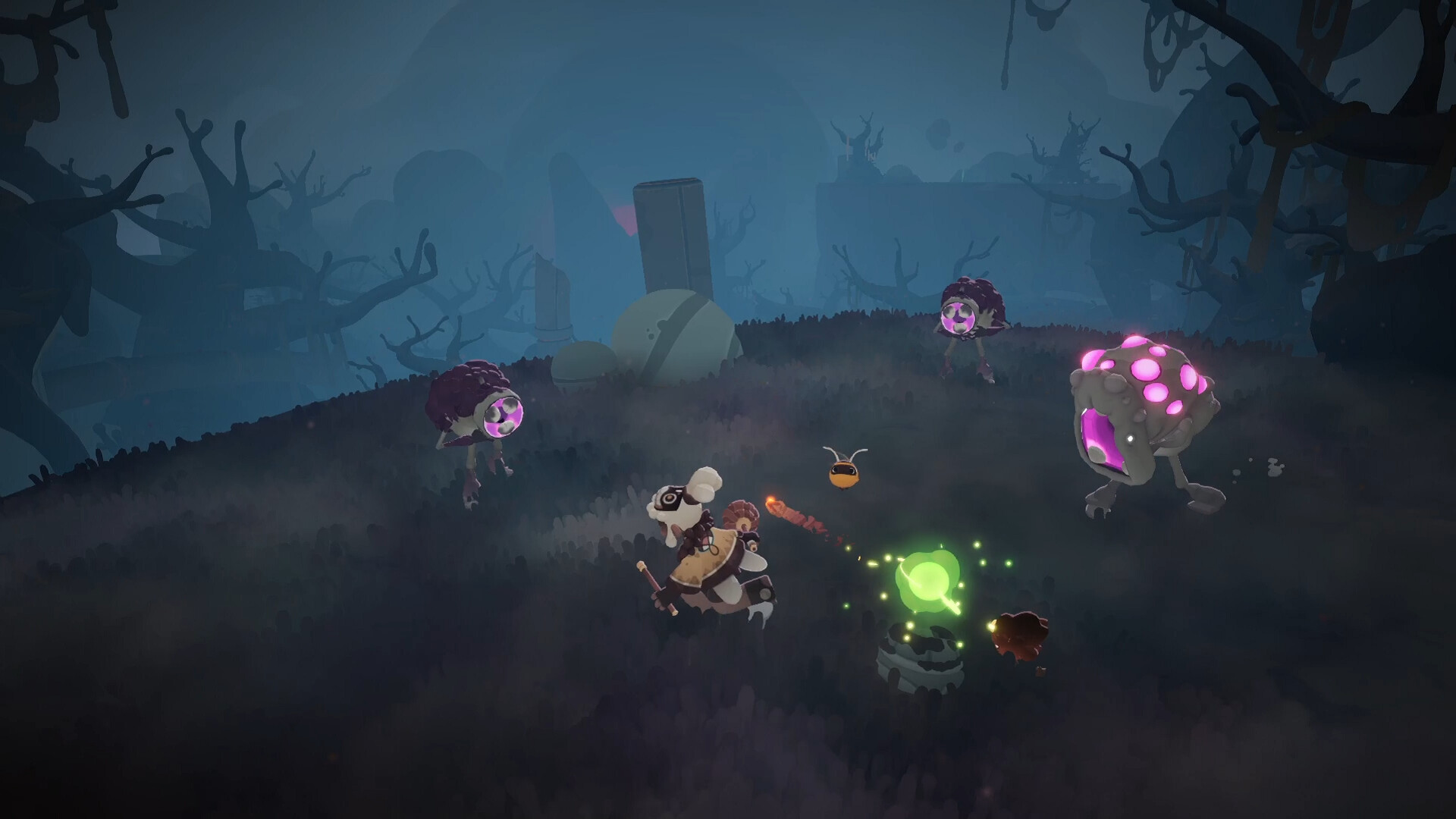
- Learn the three-part rhythm in the first enemy group. Attack, dodge, companion ability. The game does not force the habit, but the combat is designed around it. Melee to close, ranged to soften, special to break a cluster, companion ability on cooldown.
- Find the first Spring before you fight anything big. Spring reactivation is the visible win condition of an area. When the land heals, friendly wildlife appears and distracts enemies, which turns every subsequent fight easier.
- Rescue every Hântu you meet. Sleeping or trapped Hântu are the reason to detour. Rescues persist into your skyship collection even if the run ends badly, so a rescue run that fails is still a winning run.
- Chain wall-run into glide constantly. The glider is free, fast, and the cheapest way to skip enemy packs you are not ready for. Wall-running keeps your momentum and throws off enemy tracking. Practice the chain in the first open field.
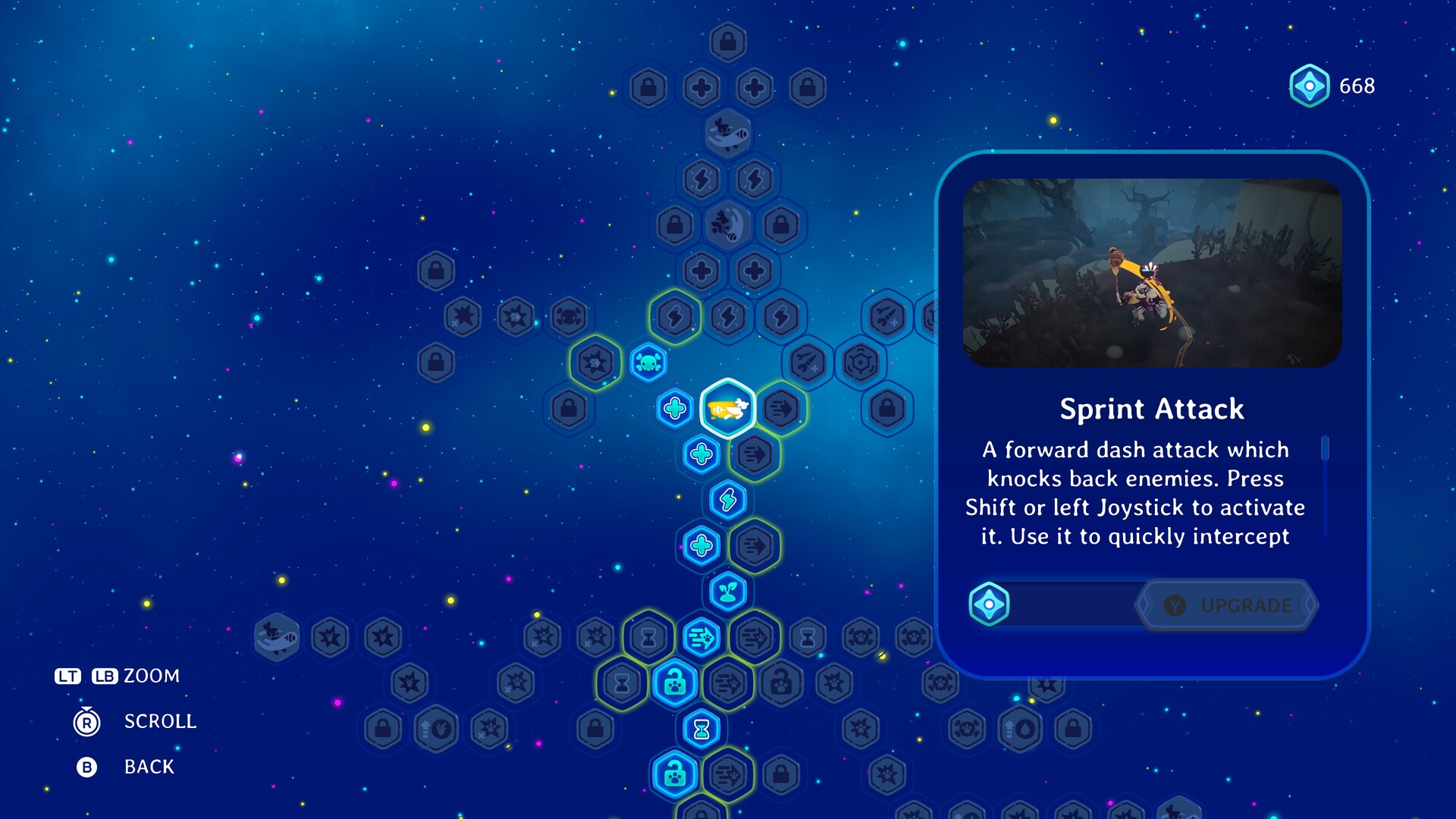
- Check the skill tree on the skyship after your first death. The demo moved the skill tree to the airship, so upgrade choices happen between runs. Spend your first points on what the tutorial just punished: stamina, healing, or luck.
- Do not hoard your special attack. Cooldown timers, not charges, limit it. Use it offensively on the biggest cluster in front of you. Saving it for an emergency that never comes is the most common first-run mistake.
Beginner Mistakes to Avoid
| Mistake | Why It Hurts | Fix |
|---|---|---|
| Fighting in front of your Hântu | Companion abilities are damage, not decoration; you want them between you and the pack | Let it take aggro, then hit from the side |
| Ignoring Springs for loot | Restored ground draws friendly wildlife that distracts enemies | Reactivate first, loot the edges after |
| Selling every seed for immediate buffs | Skyship progression runs on gathered plants, not on boss wins | Save the rare seeds, spend the common ones |
| Tunnel vision on one enemy | Targeting was rebuilt for control, but enemy timing demands you read the whole pack | Scan before you commit a swing |
| Skipping the skill tree | The airship tree is the only persistent power curve in the demo | Spend points between every run, even after a win |
| Treating the demo like a linear gauntlet | The open map hides Hântu and Springs off the main path | Detour constantly; the rewards are the point |
Core Mechanics Explained
The Run Structure
Every descent follows the same skeleton. You pick a biome, drop in, explore an open map, fight corrupted enemies, reactivate Springs, rescue Hântu, and either extract with resources or die trying. Death is not failure. Fall in battle, rise in the skyship. The plants, seeds, and rescued Hântu you collected become permanent progression.
The randomness is tuned to keep you adapting. Spring rewards are partly random, enemy placement shifts between runs, and higher-rarity rewards only show up when your luck stat is high enough. The roguelite loop is the standard one, but the open-world wrapper means you choose your own route through each biome instead of following a linear path.
The Hântu System
Hântu are reawakened native creatures, once driven to extinction, now tied to their home biomes. As Kuxaan heals, Hântu appear in their native biomes, and the roster shifts as new biomes open. The developers are explicit about this: the updated demo features more Wetlands and Grasslands Hântu than ever, while several older Hântu from other biomes are temporarily unavailable. They will return with their biome-specific friends.
Every Hântu has a unique ability. The official description groups them into three practical roles:
- Status soakers. They absorb the status effects that biome corruption throws at you. Poison, confusion pollen, slow fields. A soak companion removes the biggest run killer in the game.
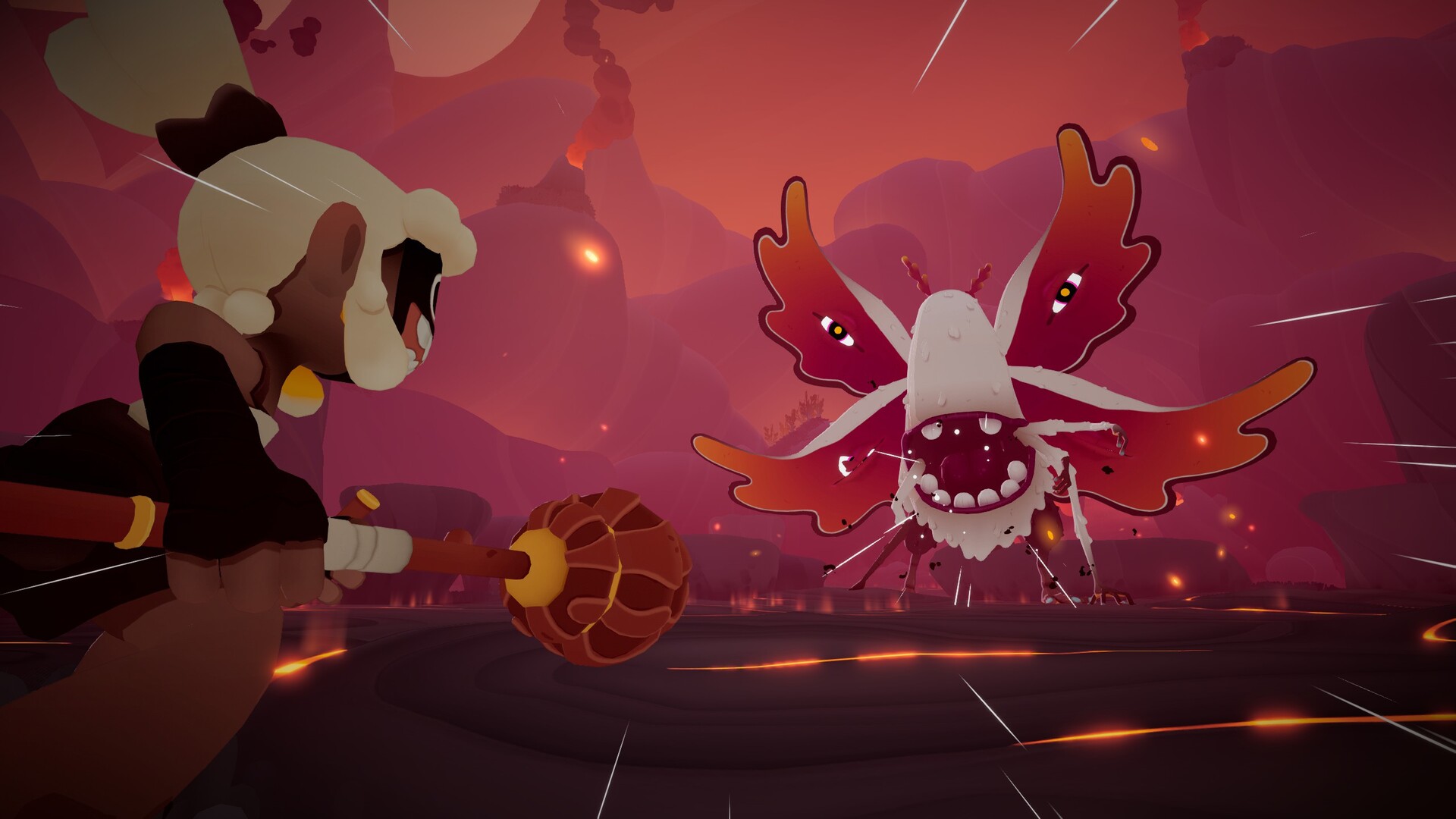
- Counter attackers. They punish enemies that hit them or punish you for getting hit. These carry runs against Tormented Bosses that out-damage you.
- Aggro drawers. They draw enemy attention and just look cute doing it, which frees you to attack from angles the enemy AI does not defend.
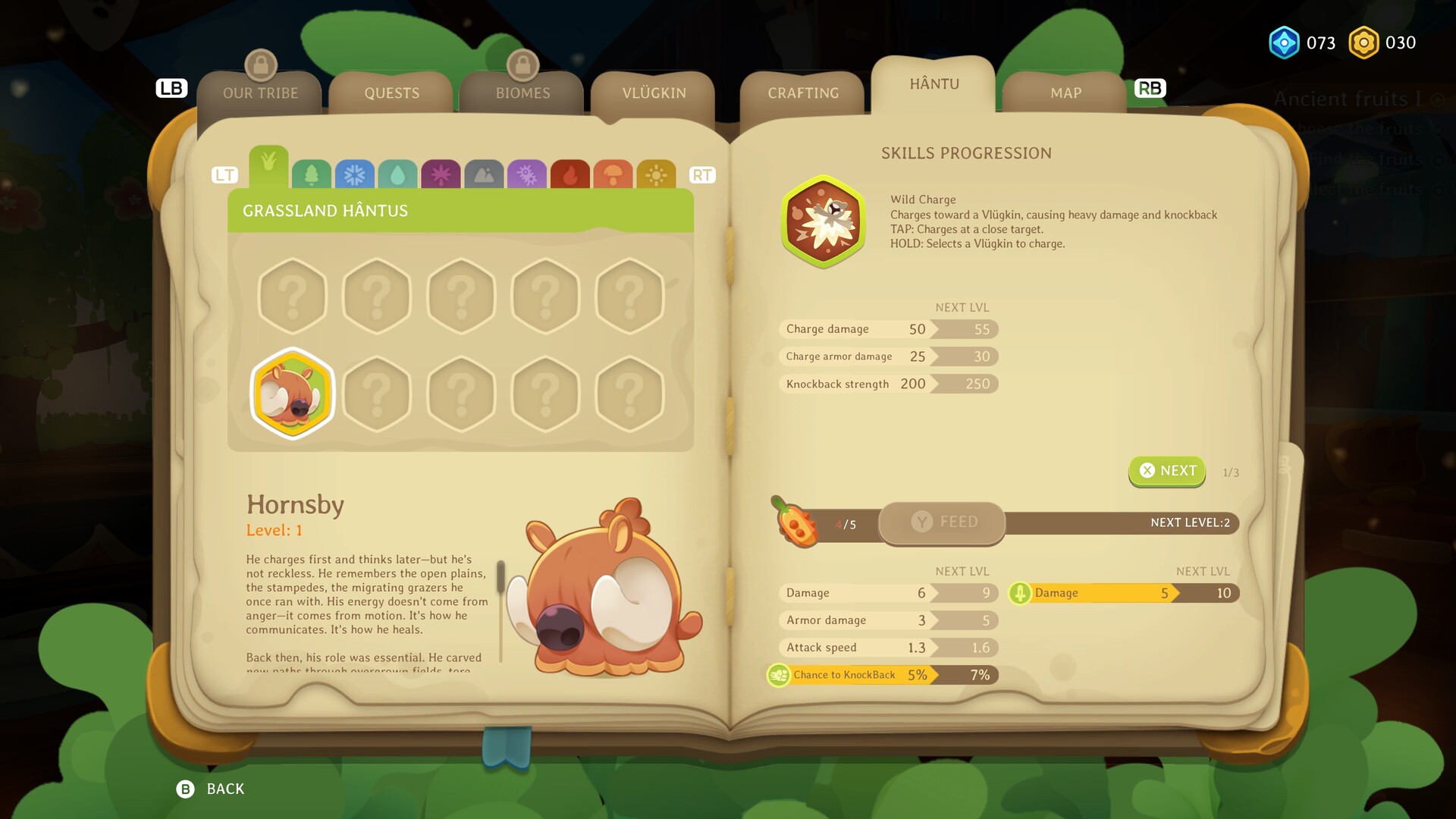
You feed and level Hântu, and they evolve. The evolution path lives on the skyship, so the squad you build is a between-runs project, not a single-run gacha. The playtest added six brand new Hântu, plus two Hântu-specific upgrade paths on the skill tree, which suggests squad composition will matter more the deeper the game gets.
Combat and Synergy
Abi's kit is melee, ranged, and special, and the depth comes from weaving Hântu abilities between them. The developers describe enemies as lessons in survival. Each creature type demands a different rhythm, and counter matchups matter more than raw damage.
The playtest and demo updates made four concrete combat changes that define how you should fight now:
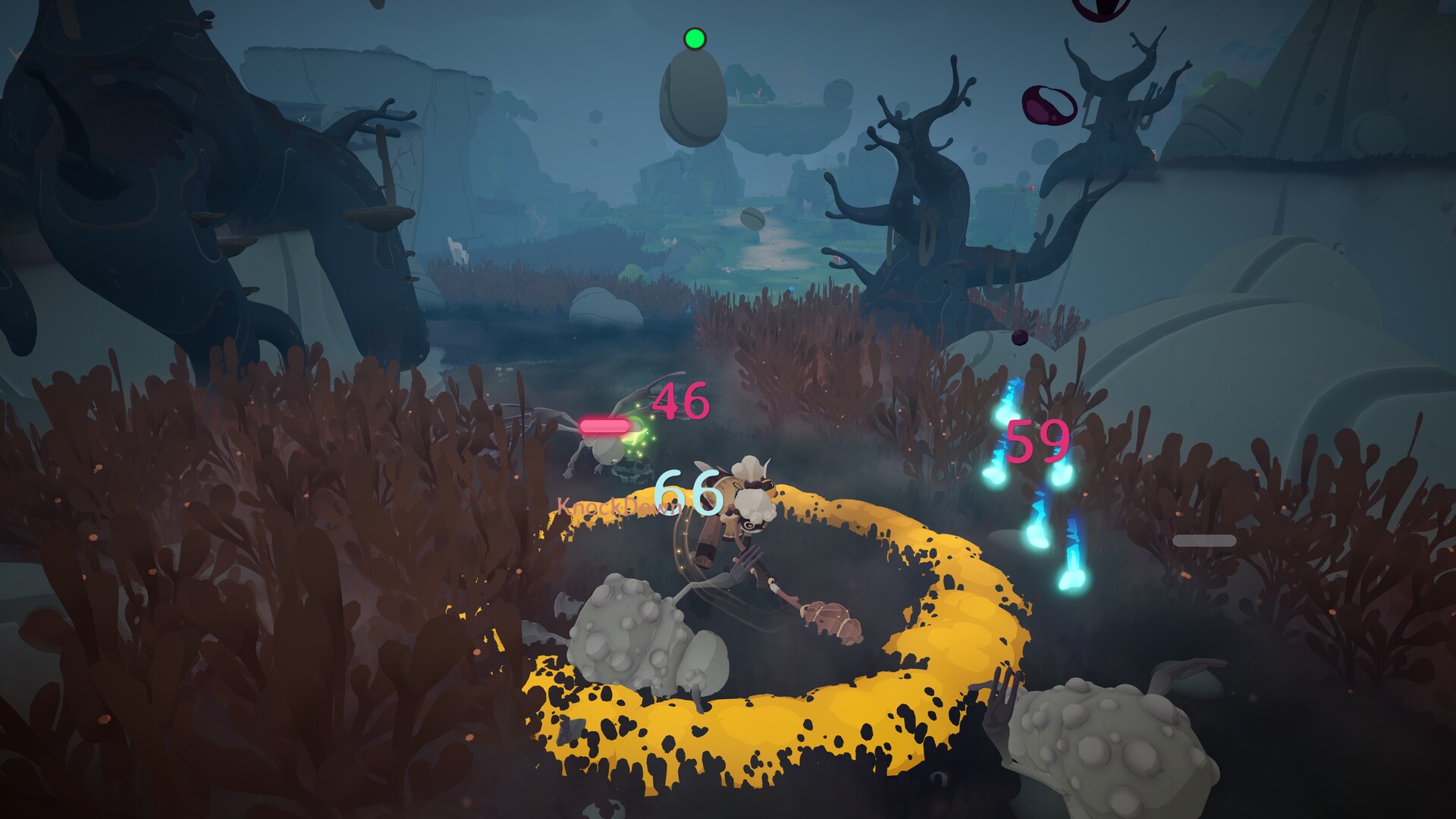
- Hit combo scales damage. Chaining attacks without getting hit does higher damage. The game rewards fluid, uninterrupted aggression.
- Targeting was rebuilt. You hit what you meant to swing at. Commit to a target and the game respects that choice.
- Enemy timing is consistent. Animations now telegraph attacks reliably, so you can learn patterns instead of guessing.
- Explosive barrels exist. Red means it goes boom. Bait enemies toward barrels or use them to clear clusters, but never stand inside the blast yourself.
Enemy sizes now vary, too. The first of the new sized variants, the Globbit, exists to test how you handle small, fast targets mixed into packs. Expect a mix of chaff, bruisers, and one or two threats that demand a dodge rhythm.
The Traversal Toolkit
Movement is a metroidvania-style ability gate. The glider covers distance, the grappling hook covers verticals, and wall-running covers speed. Corrupted biomes lock content behind these tools, so a boss that drops a new one opens whole regions you saw but could not reach.
The chain matters more than any single tool. Wall-run into glide covers the most ground. Grapple into wall-run keeps you climbing without touching enemy-filled ground. In combat, the glider doubles as an escape: coast out of an encounter, reposition, and re-enter from a better angle. Stamina gates the aggressive chains, which is why stamina upgrades on the skill tree pay off run-wide.
Springs, Rewilding, and the Luck System
Springs are the heartbeat of restoration. Reactivating one heals the land in a visible radius, draws friendly wildlife, and drops a reward. Reward rarity scales with your luck stat. The developers were explicit about the design: Spring rewards stay partly random by design, but the luck skill gives you a meaningful way to influence runs.
The luck skill does two things. It raises your crit chance in combat, and it improves the odds of higher-rarity rewards from Springs. That makes luck a rare double-threat: a combat stat and a progression stat. On any run where you plan to farm Springs, luck is the single best point spend.
The Demo Feedback Review confirmed the tension the team is still tuning: single-run upgrades can feel weak compared to taking resources back to the skyship for persistent upgrades. The current balance favors extraction. If a run is going badly, head for the exit with what you have. A full extraction of seeds and plants beats a heroic death every time.
Progression Strategy
What to Unlock First
The skyship skill tree is your persistent power curve. Priority order:
| Priority | Upgrade Type | Why |
|---|---|---|
| 1 | Healing and health options | Survival first; dead Abi collects nothing |
| 2 | Stamina | Stamina gates traversal chains and dodge windows; more stamina means more of everything |
| 3 | Luck | Crit chance plus better Spring rewards, a two-for-one that compounds all run |
| 4 | Hântu-specific paths | Squad power scales fastest once your roster has real options |
| 5 | Movement upgrades | Faster traversal shortens every run and skips fights you cannot win |
The Extract Early, Grow Big Philosophy
The most important progression habit: never gamble a good haul on a bad fight. The skyship converts gathered plants into permanent buffs and companion evolutions. A run that extracts at 40 percent of the map is worth more than a run that dies at 80 percent with a full inventory of loot you lose.
The demo's own feedback loop teaches this. The developers noted that run-based upgrades felt weak compared to persistent spending, so the current build leans into extraction value. Treat every descent as a farming expedition first and a boss attempt second.
The Biome Swap Rule
Build for the biome, not for a single boss. Each biome has its own corruption pattern and enemy mix. A counter-focused Hântu that carried the Grasslands will underperform in the Wetlands, where the enemies trade in different status effects and movement patterns. Before you descend, check which biome you are entering and swap your squad accordingly. Squad flexibility is a skill, not a preference.
Hântu Squad Building: Roles, Tier List, and Synergies
The confirmed Hântu abilities group into three tiers by how much they carry a run. These are role tiers, not a ranked list of named creatures, because the roster rotates as biomes open.
| Tier | Role | What It Does | When to Bring It |
|---|---|---|---|
| S | Status soaker | Absorbs poison, confusion, and slow effects from biome corruption | Any biome with a status theme; mandatory in the Wetlands |
| S | Counter attacker | Punishes enemies for hitting you or your companion | Tormented Boss fights and high-density packs |
| A | Aggro drawer | Draws enemy attention so you hit from undefended angles | General exploration and mixed packs |
| A | Combo battery | Keeps the hit chain alive while you reposition | Speed runs and extraction-focused runs |
| B | Cosmetic favorite | Cute, low pressure, fine for easy biomes | Forest and Grassland farming, screenshots |
| B | Situational pick | Strong against one biome's specific enemy, weak elsewhere | Swap in only for that biome |
Squad Builds to Run
The Wetlands Standard: one status soaker, one counter attacker. This pair handles the biome's status pressure and the boss's damage output. Everything else is optional.
The Grasslands Speedrun: one aggro drawer, one combo battery. You want packs to clump on the drawer while the battery keeps your chain alive. Extract fast, repeat.
The Boss Breaker: two counter attackers, one soaker. Counter damage is the only damage that scales when you are playing defensively, and the soaker keeps the boss's status nonsense off you.
The All-Rounder: soaker, drawer, counter. This is the safest first build for a new biome you have not learned yet. It sacrifices speed for survivability and teaches you the enemy patterns before you optimize.
Synergy Rules Experienced Players Use
- Deploy the aggro drawer first. Enemy AI commits to the first threat it registers. A drawer deployed at the edge of a pack freezes their attention while you flank.
- Trigger counters on purpose. Stand in a dodgeable attack's range to bait it, let the counter attacker punish, then dodge. Counter uptime is free damage if you time the bait.
- Keep one soaker equipped at all times in corrupted biomes. Status effects are the run killer that does not look like damage. One soaker makes every other system function.
- Swap before the boss, not during. The squad you descend with is the squad you fight with. Re-check the biome's status theme before you leave the skyship.
Step-by-Step Strategies
Strategy 1: The First-Descent Blueprint (Demo)
- Land in the Grasslands, sprint to the nearest Spring on the map.
- Reactivate it, grab the reward, note the rarity.
- Detour to every Hântu marker before touching the main path.
- Fight small packs with the melee-combo rhythm until your first Tormented encounter.
- If the boss fight goes badly, retreat, extract with seeds, and spend the skill points.
- Repeat with luck points spent.
Strategy 2: The Spring Farm Route
- Spend two skill points on luck before descending.
- Enter the biome and map out Spring locations first; do not fight until you have the layout.
- Reactivate Springs in a circuit, clearing only the packs that guard them.
- Collect rare seeds and Hântu rescues as you go.
- Extract the moment your inventory feels full. Rarity of rewards scales with luck, so this route compounds.
- Bank the plants, grow the buffs, evolve the squad.
Strategy 3: The Tormented Boss Approach
- Learn the boss's telegraphs on the first attempt. The playtest made enemy timing consistent, so every animation is readable.
- Bring one status soaker and one counter attacker.
- Open with the aggro drawer if you have one; otherwise bait attacks yourself.
- Chain four to six hits, then dodge. The combo scale rewards aggression, but the dodge keeps the chain alive, and a dead chain resets your damage.
- Save your special for the phase transition, when adds spawn around the boss.
- Use the barrel spawns during the boss fight to clear adds without breaking your rhythm.
Strategy 4: The Wetlands Survival Run
- Equip a status soaker before you descend. Non-negotiable.
- Move along raised ground and use the grappling hook to skip water-level packs.
- Reactivate the Wetlands Springs first; the friendly wildlife they summon distracts the worst of the biome's ambushes.
- Fight slow: the Wetlands punish rushed chains with poison fields.
- Extract with Wetlands-specific seeds. Later biomes will want those plants for their buffs.
Strategy 5: The Combo-Length Speedrun
- Build a squad with one aggro drawer and one combo battery.
- Route the biome in a loop that never backtracks: Springs on the way, Hântu on the way.
- Keep the chain alive across packs. The combo damage scale makes high-density fights faster than isolated ones.
- Use the glider mid-combat to reposition without dropping the chain.
- Extract at the loop's end. Speedruns are for seeds, not for boss glory.
Strategy 6: The Recovery Run (After a Bad Death)
- Spend points on healing and stamina only.
- Descend into the easiest biome you know.
- Do not fight anything optional. Sprint, Spring, rescue, extract.
- Bank the plants, then spend on luck and Hântu paths.
- The next descent is the real one.
Advanced Tips
The chain is a resource. Hit combo damage scales, so the measure of a good fight is not kills, it is uninterrupted chains. Mismanaged dodges cost more than health; they reset your damage multiplier.
Luck is the progression hack. It does two jobs, crit chance and reward rarity, for one skill point. Any run that farms Springs should take luck early. Any run that does not should still take it, because crits are never wasted.
Read the reward before you take it. Spring rewards are randomized but visible. A rare plant seed for the skyship beats a common single-run weapon almost every time, because the plant is permanent and the weapon dies with the run.
The glider is a combat tool. Coast out of bad engagements, reposition above packs, glide-strike into the back of an enemy clump. Movement is not just traversal; it is your best defensive cooldown.
Explosive barrels are part of the kit. Bait, blast, chain. A well-placed barrel clear is worth a full combo cycle and costs nothing.
Swap squads like a loadout, not a collection. The biome, not your favorites, decides the squad. The developers built the Hântu roster to rotate, and the habit of checking the biome before descending is the difference between easy runs and painful ones.
Watch the enemy sizes. The new sized variants change pack dynamics. A Globbit in a pack of bruisers needs a different answer than a Globbit alone. Small and fast means ranged or companion abilities; big and slow means the counter attacker's turn.
Treat updates as patches to your habits. The developers reworked combat between every playtest. Strategies from the June build do not all apply to the August demo. Re-check the skill tree and enemy behavior after every update.
FAQ
What is Wilderings: The Lost Spring? A creature-collecting roguelite from Herobeat, the BAFTA-winning Endling team. You explore corrupted biomes as Abi, rescue Hântu creatures, and restore the world of Kuxaan.
When does it release? No release date announced. The updated demo is playable now, and an exclusive Volcano biome demo runs at Gamescom and PAX West.
Is there a demo? Yes. The public demo includes the Grasslands and an expanded Wetlands biome with new Hântu, a deeper skill tree, voiced dialogue, dynamic music, and in-run rewards.
Is it multiplayer or co-op? No. Single-player only.
How does the Hântu system work? Hântu are biome-native creatures you rescue and befriend. They fight alongside you, soak status effects, draw aggro, or counter attacks. You feed and level them, and they evolve on the skyship between runs.
What is luck for? The luck skill raises crit chance and improves the rarity of Spring rewards. It is the best two-for-one upgrade in the tree.
What happens when I die? Fall in battle, rise in the skyship. You keep gathered resources, seeds, and rescued Hântu, and you spend the skill tree. Death is progression.
Can I play the Volcano biome? Only at Gamescom and PAX West in person for now. It will reach players in a future update.
What are the system requirements?
| Spec | Minimum | Recommended |
|---|---|---|
| OS | Windows 10 64-bit | Windows 10 64-bit |
| Processor | Dual Core 2.4 GHz | Quad Core 2.4 GHz |
| Memory | 8 GB RAM | 16 GB RAM |
| Graphics | GeForce GTX 950, Radeon R7 360, or Intel HD 630 | GeForce RTX 2060, Radeon RX 5600 XT, or Intel Arc A580 |
| DirectX | Version 11 | Version 11 |
| Storage | 6 GB | 6 GB |
What happened to Rewilders: The Lost Spring? The game was renamed. The team held a community vote and Wilderings: The Lost Spring won, chosen because it captures Abi's quest and stays close to the original identity.
Final Tips
The single best habit: spend skill points the moment you return to the skyship, even after a winning run. Power is persistent, combat is temporary, and every point spent makes the next descent faster.
The second best habit: prioritize extraction over heroics. A full inventory extracted beats a dead hero with a full inventory. The skyship runs on plants, not on boss kills.
And the third: treat the Hântu squad as a loadout. Check the biome, swap the squad, keep one soaker in corrupted zones, and let the counter attackers earn their keep against the bosses. The world of Kuxaan fights back, but a squad built for the biome fights back harder.
Last reviewed by Game How To Editorial. We play each game, verify controls against official sources, and update guides when game mechanics change.
Screenshots