Official game
Play Box Knight
This game is hosted by Steam. Continue to the official page to play or download it.
Play on Steam ($12.74)Overview
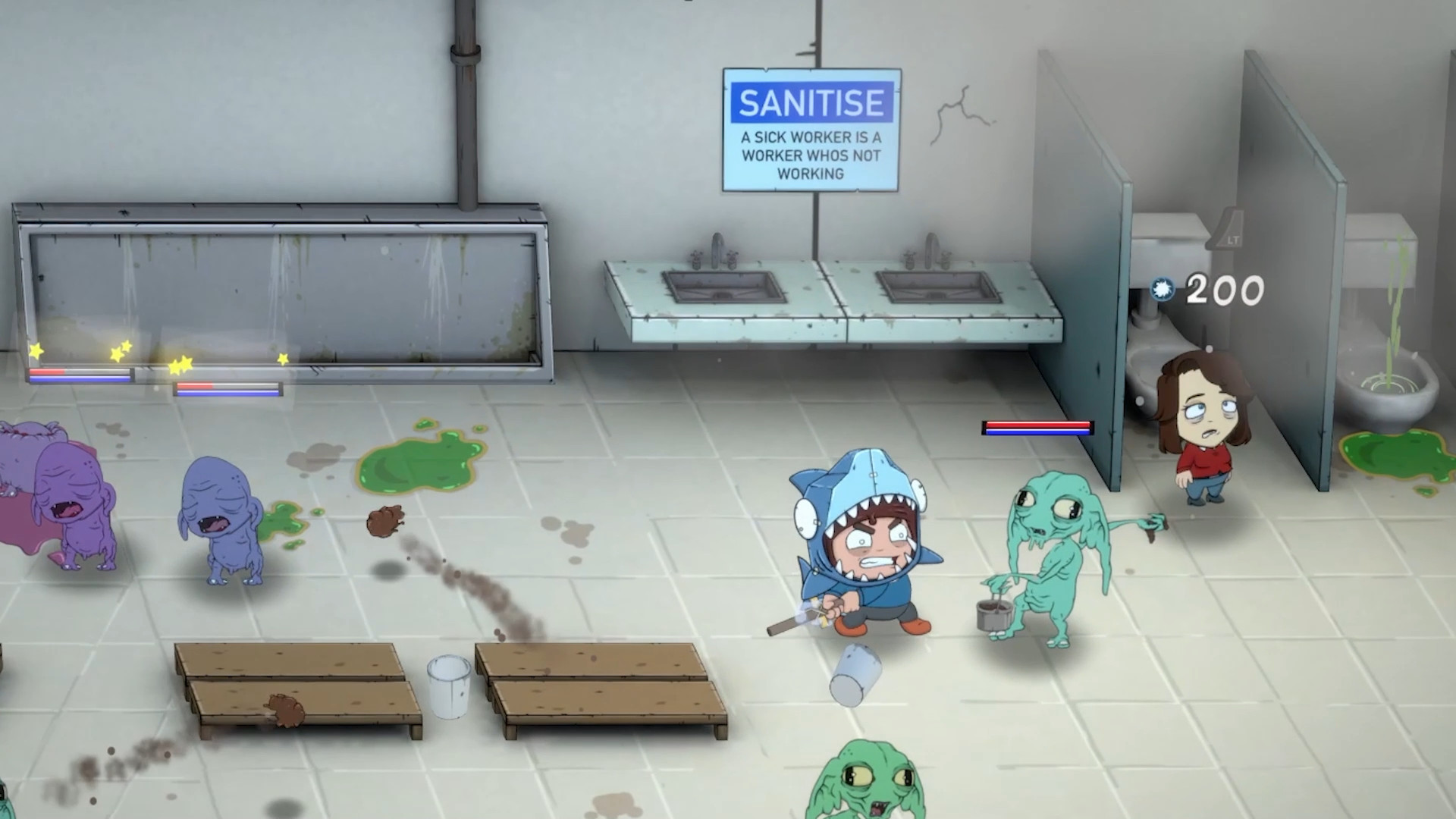
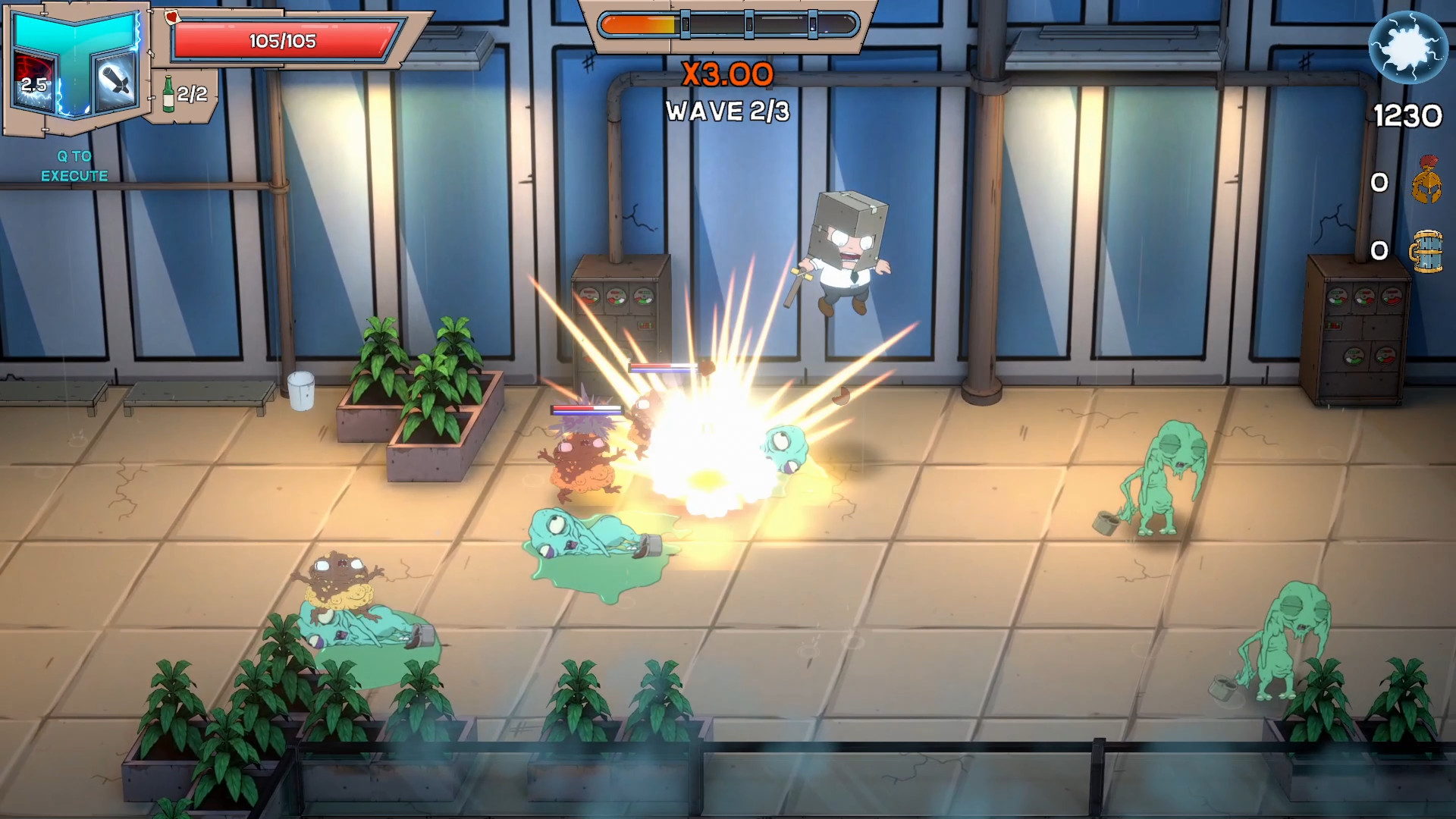
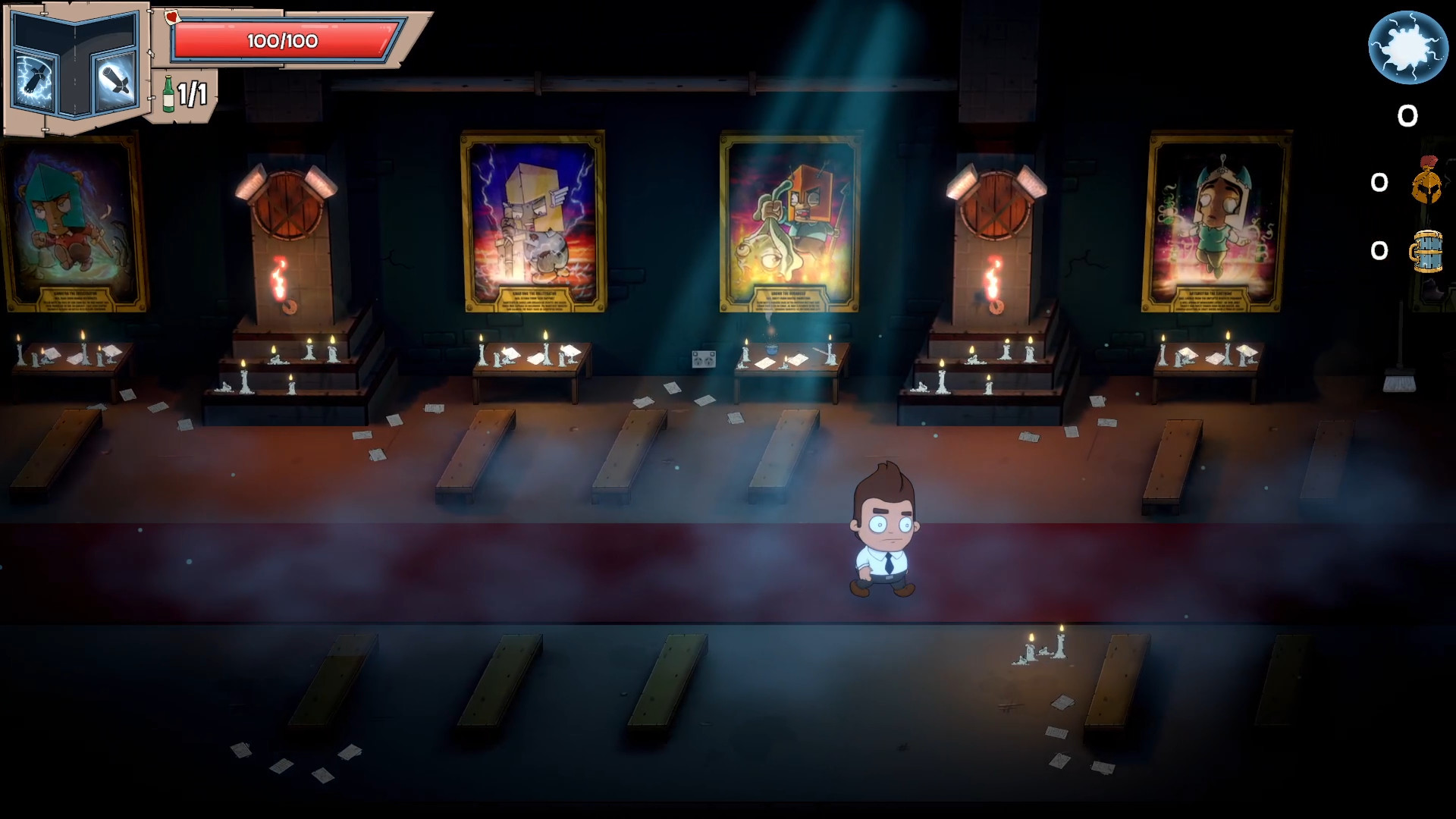
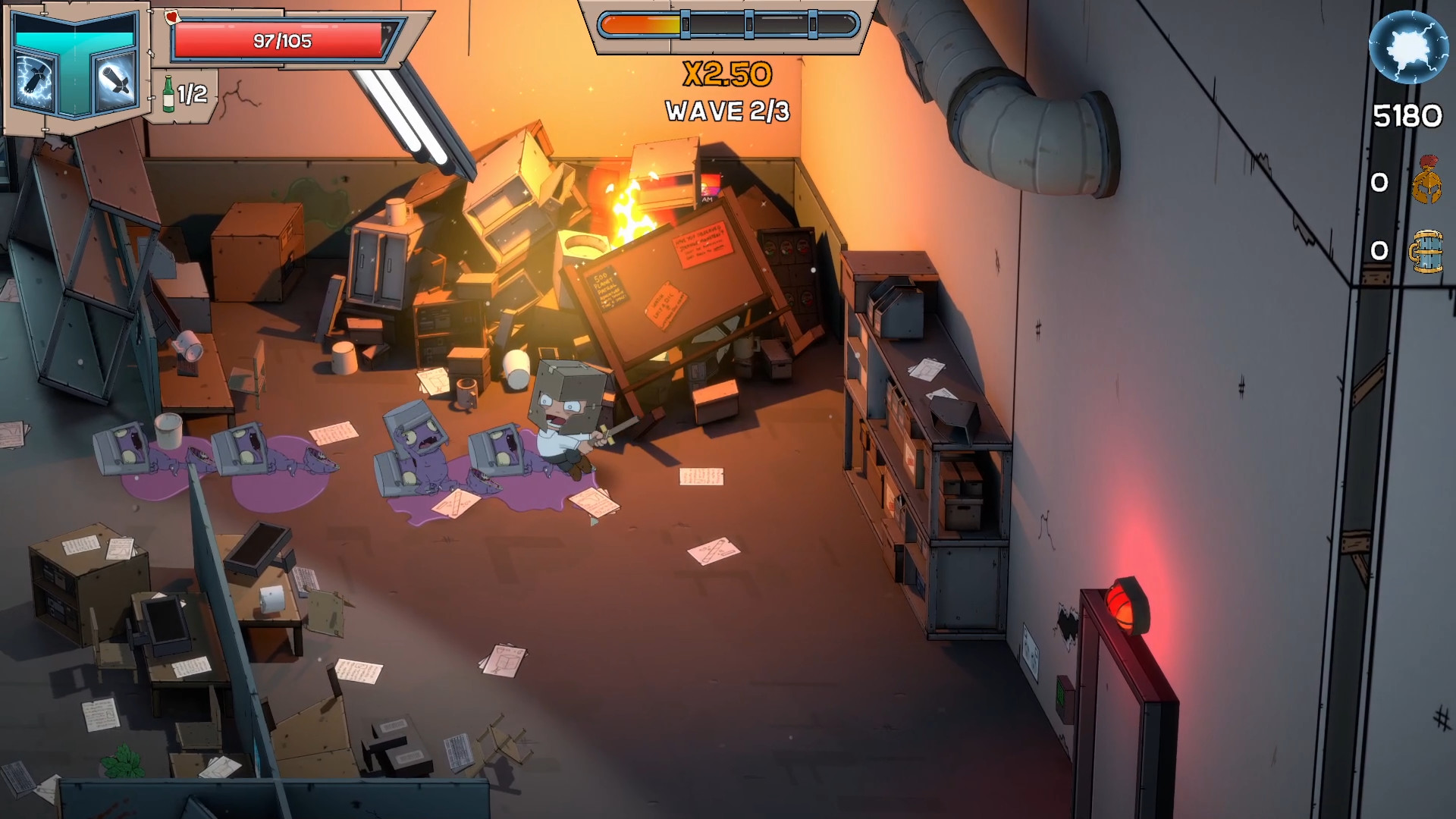
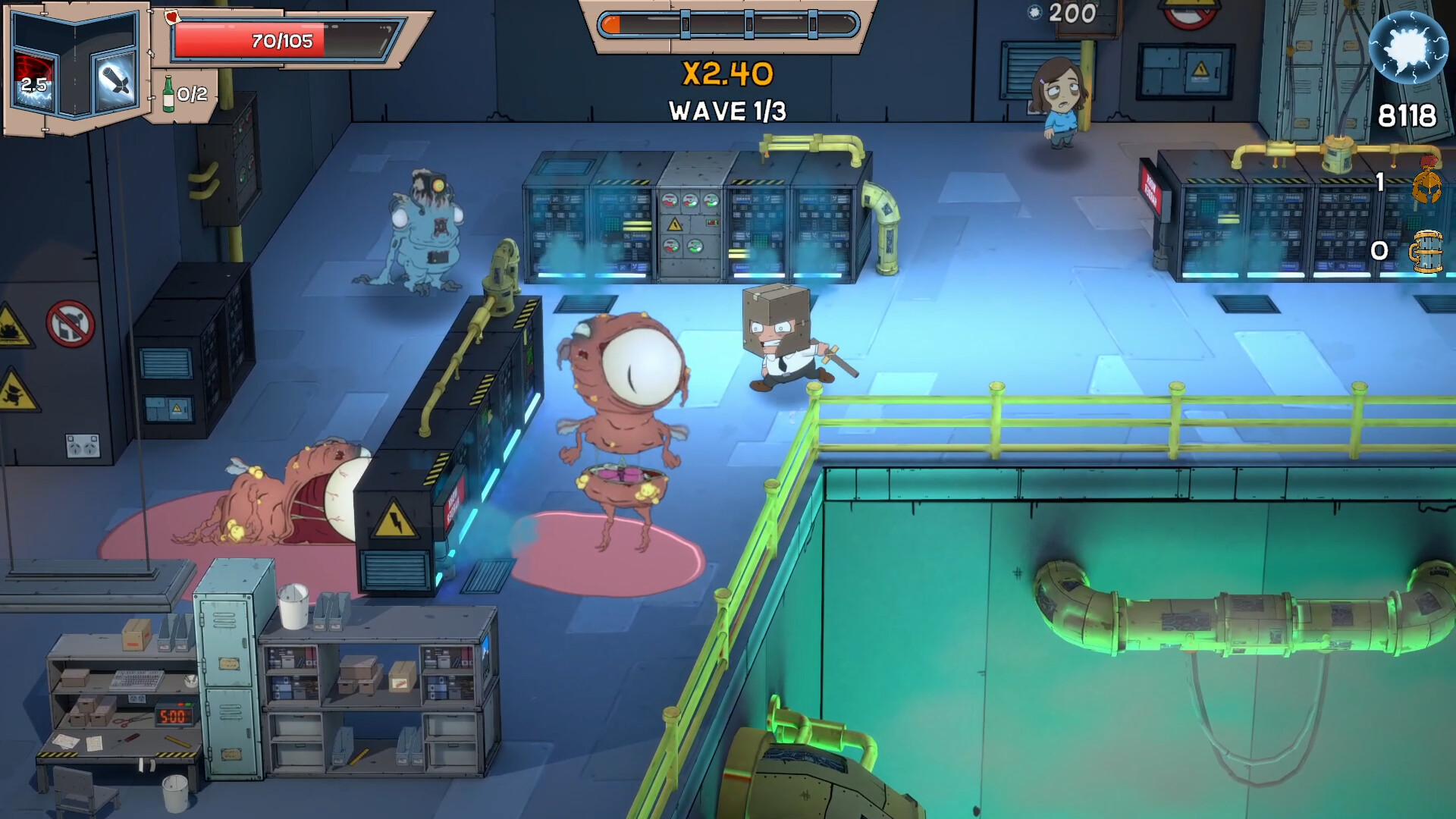
Box Knight is a fast, chunky brawler roguelite set inside a single cursed office tower. The pitch is simple and ridiculous: a toxic corporate takeover has banned Friday beers, turned happy employees into grotesque monsters, and darkened the office. By day you push paper. When the clock hits 5pm on Friday, you become the Box Knight: cardboard armor, a sword, and an infinite mandate to take the building back floor by floor, department by department, until you beat the CEO in his own conference room.
The game comes from We Made A Thing Studios (WeMaT), a three-person team in Adelaide, South Australia. They started it in 2020 during Covid with a prototype grant and six years of labor later, shipped it on August 25, 2026. The pedigree shows: Gamescom and PAX showings, a SAGE Best in Exhibition award in 2024, and a long public demo cycle that refined the combat before launch. It sells for $14.99, with a 15% launch discount to $12.74 through September 8, 2026.
This is not a slow tactical roguelike. It plays closer to Castle Crashers dialed up to eleven: rooms of enemies, screen-clearing specials, gory executions, and a randomization layer that reshuffles the tower every run. Reviews at launch are uniformly positive, with players clocking dozens to hundreds of hours. The game runs great on Steam Deck, ships with 70 achievements, full controller support including DualShock pads, and local co-op on shared or split screen with Remote Play Together.
Target audience: Hades and Dead Cells players who want dumb fun instead of Greek tragedy, Castle Crashers veterans who miss couch co-op, office workers seeking catharsis, and anyone who likes their roguelites with a sense of humor.
Difficulty: forgiving at the start, with a meta-layer that smooths the climb. The randomness rewards aggression and punishes hoarding. Expect your first handful of runs to end before floor four; expect that to stop happening once the upgrade economy kicks in.
| Fact | Detail |
|---|---|
| Developer | We Made A Thing Studios (WeMaT) |
| Publisher | We Made A Thing Studios |
| Genre | Action brawler roguelite, RPG |
| Platform | Windows (Steam) |
| Release | August 25, 2026 |
| Price | $14.99, launch week $12.74 |
| Achievements | 70 |
| Co-op | Local shared or split screen, Remote Play Together |
| Controller | Full support incl. DualShock |
| Content note | Cartoon violence, crude humor, alcohol, partial cartoon nudity |
| Verified | Runs well on Steam Deck |
Getting Started: Your First 30 Minutes
The opening run is a tutorial disguised as an office rampage. You will start on the ground floor, fight a few sparse rooms of weak creatures, and learn the three-punch rhythm of the combat: hit, stagger, execute.
- Play the first run lazy. Do not try to be clever. Swing your weapon, learn the dodge timing, and let the game teach you the stagger window. The first floor is built to be cleared by mashing with half attention.
- Do your first execution immediately. The first enemy you stagger will flash. Close the distance and trigger the execution. This is the single most important mechanic in the game and it is introduced in the first minute. Executions are instant kills, they look hilarious, and they drop the room's danger level fast.
- Check the pause menu key bindings. The game supports keyboard plus every controller scheme. Remap dodge to something your thumb finds instantly. If dodge is not on a comfortable button, everything later is harder than it needs to be.
- Spend your first in-run upgrade the second it appears. The game showers you with short-term upgrades for good performance. Take the first weapon or stat upgrade offered and keep moving. Hoarding currency to build a perfect kit will cost you the run.
- Die before the first boss if you can help it. That sounds wrong until you understand the meta loop. Death feeds the permanent upgrade hub, so an early death on run one is a head start on run three.
- In co-op, stick together for the first floor. Two knights clearing one room at a time is faster than two knights clearing two rooms separately and getting bracketed by spawns.
Beginner Mistakes to Avoid
| Mistake | Why It Hurts | The Fix |
|---|---|---|
| Ignoring staggers | Executions are the fastest crowd-clear tool; leaving staggered enemies alive lets them recover and rejoin the fight | The moment something staggers, close distance and execute before touching anything else |
| Hoarding in-run currency | Power spikes are time-limited; a "perfect build" you never reach is no build | Spend every upgrade the moment it is offered |
| Tanking hits to trade damage | The game punishes trading because health is scarce between floors | Dodge first, attack second; the execute window is your real damage |
| Skipping the quest log | Quests pay permanent progress and several reward upgrades; ignoring them slows your meta climb | Check the quest list after every run and before you quit |
| Playing one element only | Enemies are built around elemental rock-paper-scissors; a mono-element build dies one floor after it peaks | Carry a primary element plus a counter, or a physical fallback |
| Refusing to die | There is always a reward in death, and stubbornly dragging a doomed run wastes time | Reset early, bank the upgrades, go again |
Core Mechanics Explained
The Combat Loop: Hit, Stagger, Execute
Box Knight's combat is a three-beat loop. Normal attacks whittle enemy health and build stagger. Enough hits flip an enemy into a staggered state. Executing a staggered enemy kills it instantly with a theatrical animation. That loop is the entire game at its core, and mastering its rhythm matters more than any single weapon.
The loop punishes greed. If you ignore a staggered enemy to keep hitting a different one, the staggered enemy recovers and you have wasted free damage. If you execute too late, you eat a counterattack during the animation. The advanced game is sequencing: stagger the biggest threat, execute it, then use your special on the crowd that closed in while you were busy. Good players keep one special banked at all times and never walk into a room with empty resources.
Weapons and Build-Crafting
Weapons set your range, speed, and damage rhythm. The developer framing splits playstyles into two camps. The brawler is an aggressive damage dealer who wants heavy weapons, face-tanking, and front-door executes. The operator is fast and agile, built around quick hits, kiting, and vanish-style specials that reposition you while the crowd swings at air.
Your loadout is a weapon plus elemental specialization plus a stack of upgrades. Build-crafting "goes properly unhinged by floor four" according to the devs, which means the mid-run economy snowballs hard if you commit to an identity early. Choose a direction by the end of floor two, then take every upgrade that reinforces it.
The Run Structure
Each run is a randomized crawl up the office tower. Room order, enemy mixes, and loot shift between runs. You progress floor by floor, department by department, with each floor themed around an office archetype and ending in a boss fight. The early floors are gentle; the mid floors mix enemy families so your counters have to flex; the final approach to the CEO demands a build that survives multiple biome shifts.
The tower splits the game into distinct phases:
| Phase | Floors | What Changes |
|---|---|---|
| Opening | 1-2 | Sparse rooms, single enemy families, learning the loop |
| Mid-tower | 3-4 | Elemental rock-paper-scissors kicks in; build identity matters |
| Upper tower | 5+ | Mixed families, elite pressure, boss walls |
| The CEO | Final | One boss, full build check, no room to hedge |
The Council of the Janitors (Meta Progression)
Death is never the end. Between runs you return to the office's support staff: the Council of the Janitors (the "cubicle that levels you up when you die" in the launch copy). With their help you permanently upgrade the Box Knight's key stats and attributes. Health, healing, stagger resistance, damage, and drop odds all crawl upward run after run. The goal, per the devs, is a knight so upgraded that the Drone Goblins shake at the sight of you.
This is the game's difficulty valve. Every failed run feeds the next one. The Janitor math favors survival stats early: permanent health and healing upgrades beat damage because they let you survive the random early floors where most runs actually die. Damage catches up once you stay alive long enough to stack it.
Elements and Status
Enemies carry elements and combinations of elements that force you to adapt mid-room. The office monster types form natural counters, so a loadout that shreds one floor can stall on the next. Elemental specialization is how you weaponize this: your attacks can pulse with elemental effects, and high-tier (Epic) pulse effects trigger on specific events like On Damaged and On Execute. A patch shortly after launch actually buffed the unlock chance for these Epic pulse effects, which tells you how much the endgame leans on them.
Quests
A quest system tracks repeatable goals: kills, horde mode scores, floor completions, probably some office-theme jokes. Quests pay permanent progress and several reward upgrades that make the meta climb faster. The v1.0.0.1 patch fixed quest progress counting and made completed quests sort to the top of the list, so the system is clearly a core progression driver. Check it after every run.
Horde Mode
Beyond the tower campaign sits Horde Mode: endless survival against waves of office monsters, with its own scoring and its own quest integration. The launch patch fixed Horde kills not counting toward quest progress, which means leaderboard-style scores and quest rewards are both expected to be farmed there. This is also the post-game destination for players who have beaten the CEO and want to keep swinging.
Customization
Your look is a legacy. Unlock and customize helmets, uniforms, weapons, and more, framed in lore as the inheritance of the many great Box Knights who came before you. Customization costs nothing in combat power, but the silly loadouts are half the fun.
Progression Strategy: What to Unlock and When
The Meta Grind, Ordered
- Bank survival stats first. Health and healing from the Janitors. This is the single highest-return investment in the game because it converts failed runs into longer runs, and longer runs generate more upgrades and more quest progress.
- Unlock weapons you want to build around. Weapon variety is the build-crafting sandbox. Spread early unlocks across both archetypes (brawler and operator) so you can feel what clicks.
- Chase quest upgrades before pure damage. Quest rewards compound with the permanent hub. Clear a few quests early and the mid-game smooths out noticeably.
- Push for Epic pulse effects. The On Damaged and On Execute pulses are the endgame ceiling. Prioritize anything that raises their unlock or drop chance.
- Treat Horde Mode as a meta farm. Once you have a stable run, Horde Mode is the fastest way to stack quest progress and score. Do not let it wait until after the campaign; a few horde attempts mid-progression feed the upgrades that beat the upper tower.
In-Run Resource Priority
| Resource | Priority | Reasoning |
|---|---|---|
| In-run upgrades | Spend immediately | Power spikes are why the mid floors are survivable |
| Weapon upgrades | High | Your identity; commit by floor two |
| Elemental specialization | High | Counter coverage is what crosses floors |
| Survival pickups | Medium | Take them when offered over marginal damage |
| Currency hoarding | Never | A build you never finish is a build you never had |
Builds and Archetypes
There are no fixed classes in Box Knight, but the community has settled into two proven build identities, plus a hybrid that carries the upper tower.
The Brawler
The aggressive damage dealer. Heavy weapon, front-door executes, specials that clear the room you are standing in.
- Play pattern: walk in, swing big, stagger the biggest enemy first, execute it, special the pack.
- Strengths: fastest room clear, best boss damage, most forgiving execution windows.
- Weaknesses: vulnerable while committing; needs health and stagger resistance from the Janitors.
- Best with: heavy weapons, damage-on-execute pulses, damage-upon-taking-hits pulses.
The Operator
The fast, agile hit-and-run build. Quick attacks, vanish specials, kiting packs through corridors.
- Play pattern: tag enemies from range, let them chase, reposition with the vanish, pick off staggered stragglers.
- Strengths: safest against mixed floors, best at kiting dangerous elites, low health dependence.
- Weaknesses: slower clear, weaker in single-target boss checks.
- Best with: quick weapons, On Damaged pulses that punish the crowd while you are untouchable, cooldown upgrades.
The Hybrid (Recommended for the Upper Tower)
Primary weapon for your chosen identity, a secondary element covering your counter, and an execution combo that works on both enemy families. The floor-crossing build. It trades a little peak power for the ability to survive biome shifts, which is exactly what floors five and up demand.
Elemental Tier Notes
The best element is the one that covers the current floor's families, full stop. That said, elements with On Execute pulses scale better overall because they reward the loop you are already running, rather than asking you to change behavior. When a floor's counter coverage is equal, take the execution-trigger option.
Step-by-Step Strategy Sequences
Sequence 1: The First Clean Run
- Clear floor one using only your starting weapon. Skip nothing. Loot density feeds the in-run economy.
- Take the first weapon upgrade offered, regardless of type. A weapon you have practiced for two rooms beats a weapon you will never see.
- Execute every stagger immediately. Build the reflex before the floors demand it.
- Spend all in-run currency before each floor transition. Power now beats power later.
- Stop before the first boss if your health is below half. A reset here banks the Janitor points and is faster than a doomed boss attempt.
Sequence 2: Beating the First Boss
- Learn the boss's two tells before you attack. Every Box Knight boss telegraphs before its dangerous move.
- Keep the boss staggered-adjacent: chip with normal attacks, save your special for the add spawn phase.
- The moment adds spawn, special them, then execute any stragglers. Do not let the boss attack while you cleanup.
- Use your banked special only when the boss commits to its telegraphed attack, so the animation trades into nothing.
- If the boss is below 20% and you are below 20%, commit. The execute window will decide it faster than retreating will.
Sequence 3: Crossing the Mid-Tower Wall (Floors 3-4)
- Read the floor's enemy families in the first room. Identify which element counters them.
- Switch your elemental specialization to the counter before engaging the second room. Adapt first, fight second.
- Keep one special charged at all times. The mid-tower is where mixed spawns punish empty resources.
- Kite mixed packs into corridors so the line-of-effect specials hit the whole column.
- Re-evaluate after every boss. The next floor's families decide whether your current element stays or goes.
Sequence 4: Farming Horde Mode for Meta Progress
- Enter Horde Mode with your most stable build, not your most fun one. Consistency is the farm.
- Prioritize survival upgrades during the run; wave count is the score, and wave count needs you alive.
- Chain executions on every stagger. Horde kills count toward quests now, so the loop pays double.
- Play to the score benchmarks once your quest list names specific targets. Check the quest text.
- Exit a run the moment the build stops scaling. A fresh run beats a flatlined one.
Sequence 5: Co-Op Campaign Duo
- Assign roles: one brawler front-lining, one operator kiting the overflow.
- Never split across rooms. Enemies bracket solo knights; a partnered knight doubles the execute tempo.
- Alternate special usage. Two knights with empty specials are as vulnerable as one.
- The brawler executes first, the operator covers the animation. Trading the aggro during an execute is the whole co-op skill.
- If one knight dies, the survivor kites until the revive window. Do not trade a second death to save the first.
Advanced Tips
The stagger economy. Every room has a rhythm of staggering, executing, and specialing. Advanced play sequences the order: stagger the biggest threat, execute it, then special the crowd that closed in. This keeps you from wasting the execute window and never leaves you empty on both resources.
The Janitor math. Survival upgrades before damage, always. Health and healing compound across runs; damage only pays once you are alive longer to use it. The exception is stagger resistance, which you should match to your archetype's risk profile. Brawlers want stagger resistance early; operators can skip it and pour into damage.
Epic pulse farming. The On Damaged and On Execute pulse effects are the endgame. Run Horde Mode and mid-tower loops with builds that generate lots of staggers, because the unlocks roll on events, and events happen most where you are fighting most.
Death is a resource. Do not drag a run that has flatlined. The fastest meta progression comes from short, aggressive runs that die efficiently and bank Janitor points. A 25-minute doomed run is a 25-minute delay on your next good run.
Co-op revive discipline. In co-op, the revive is the run's real health bar. Whoever is alive when the partner drops must kite, not trade. Trading a second death to save the first ends the run; kiting buys the revive.
Steam Deck users. The game runs well on Deck out of the box. If the battery drains fast, cap the framerate; the brawler pacing does not need high refresh.
FAQ / Common Mistakes
What is Box Knight? A fast brawler roguelite set in a monster-infested office tower. You are the Box Knight, a cardboard-armored office worker who clears the building floor by floor to dethrone the CEO. From We Made A Thing Studios.
Is it like Castle Crashers? Yes, but faster, with roguelike leveling and build-crafting on top. Players describe it as Castle Crashers with randomized runs.
How much does it cost? $14.99 on Steam, with a 15% launch discount to $12.74 until September 8, 2026.
Is there co-op? Local co-op on shared or split screen, plus Remote Play Together. Two-player only.
Does it run on Steam Deck? Yes. Early reviews confirm it runs great on Deck.
I keep dying on floor three, what do I change? Bank more Janitor health and healing, and check your elemental coverage. Floor three is where the rock-paper-scissors starts, and mono-element builds stall there.
What is Horde Mode? An endless survival mode separate from the tower campaign, with its own scoring and quest integration. It doubles as the best meta-progression farm and the post-CEO destination.
How many achievements? 70 Steam achievements.
Who made Box Knight? We Made A Thing Studios (WeMaT), a three-person team in Adelaide, South Australia. Six years in development, SAGE Best in Exhibition 2024.
Common mistake: ignoring the quest log. Quests are permanent progression. Ignoring them is leaving upgrades on the table.
Common mistake: hoarding. Both in-run currency and a "perfect build" fantasy lose runs. Spend what you have, when you have it.
Common mistake: mono-element tunnel vision. One element wins floors, not towers. Carry a counter or a physical fallback.
Common mistake: playing scared. The game rewards aggression and punishes hesitation. The execute loop is your survival tool, not a risk.
Screenshots