Official game
Play Waveling Island
This game is hosted by Steam. Continue to the official page to play or download it.
Wishlist on SteamOverview
Waveling Island is a creature-collecting sim with real-time autobattling from BerserkBoy Games, the two-person studio behind Berserk Boy. You play a castaway who washes up on a hand-drawn pixel art island carrying nothing but a backpack. The island is crowded with creatures called Wavelings, and the whole game runs on one loop: explore, battle, catch, haul materials home, build, repeat. There is a story underneath the cozy surface too. The store page flatly states the island is hiding something, and the islanders each have their own reasons for being there.
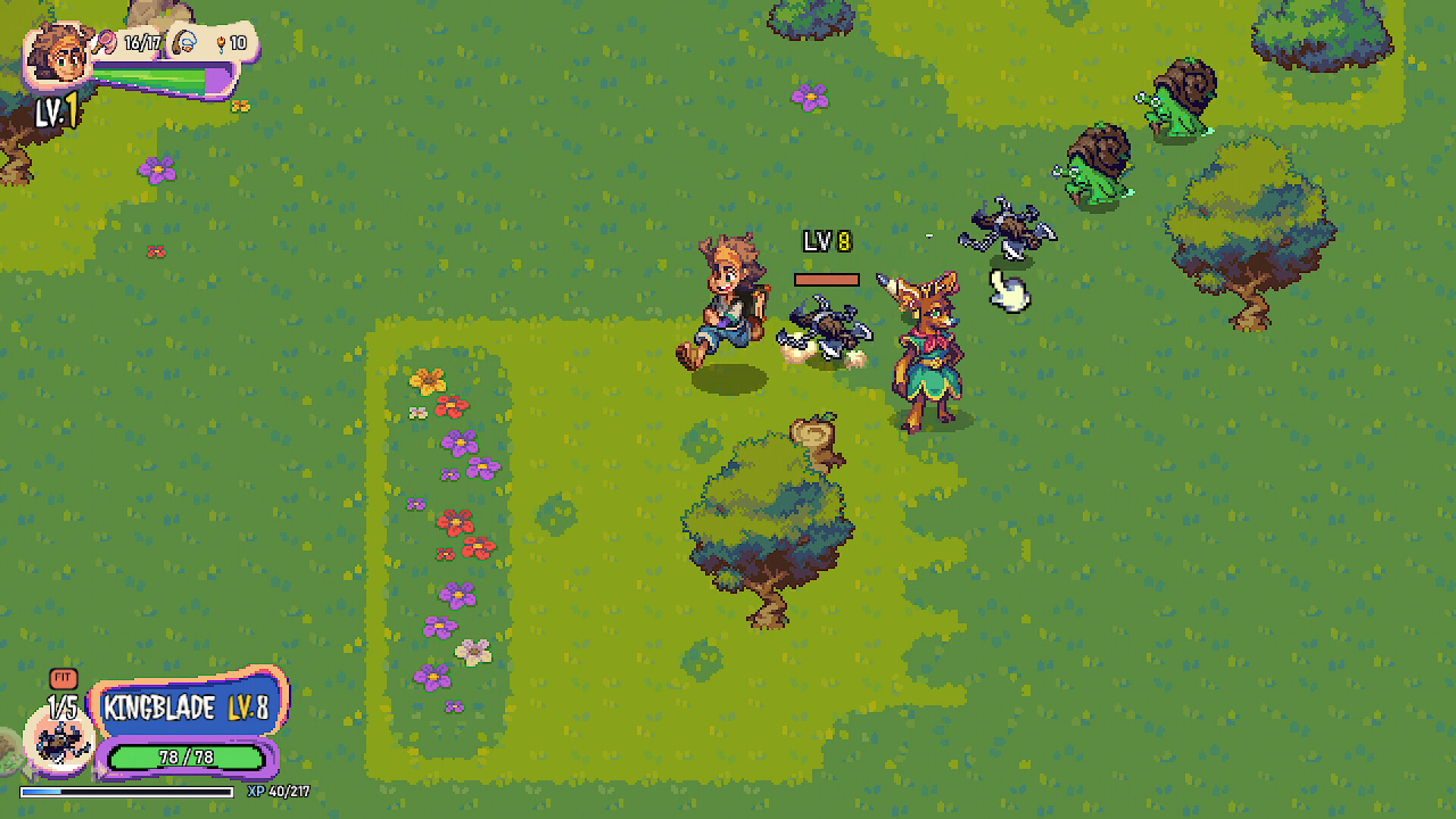
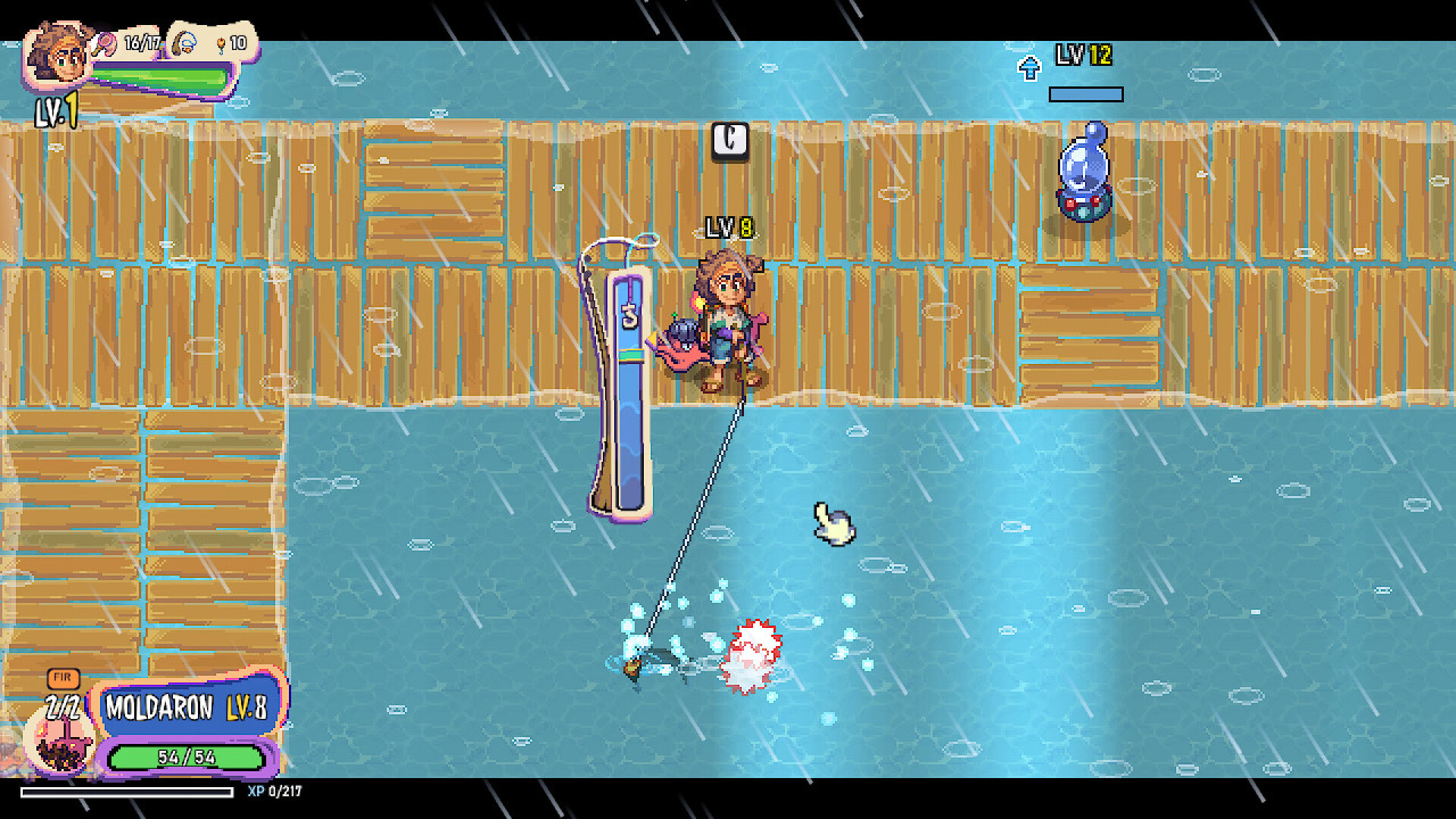
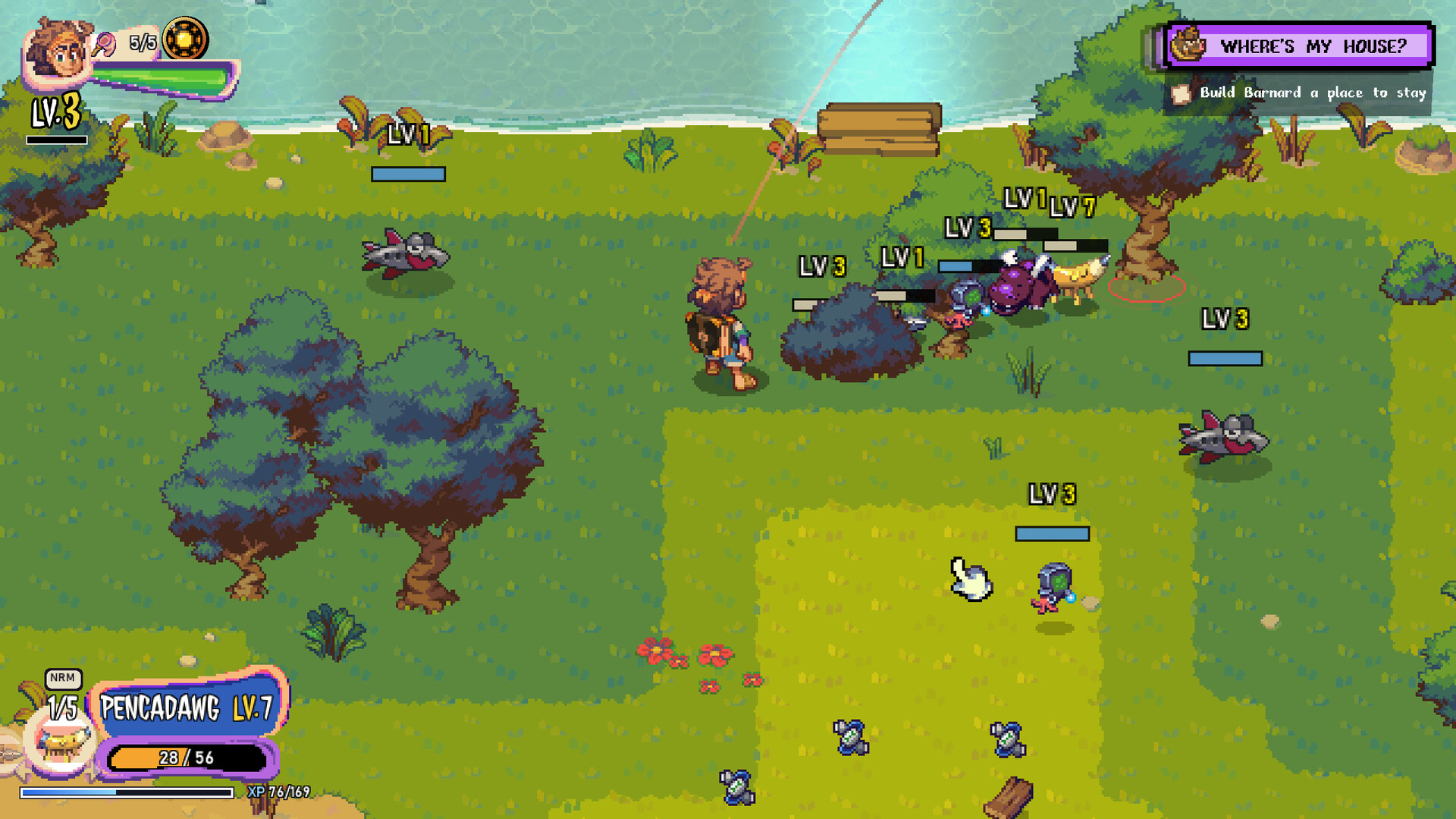
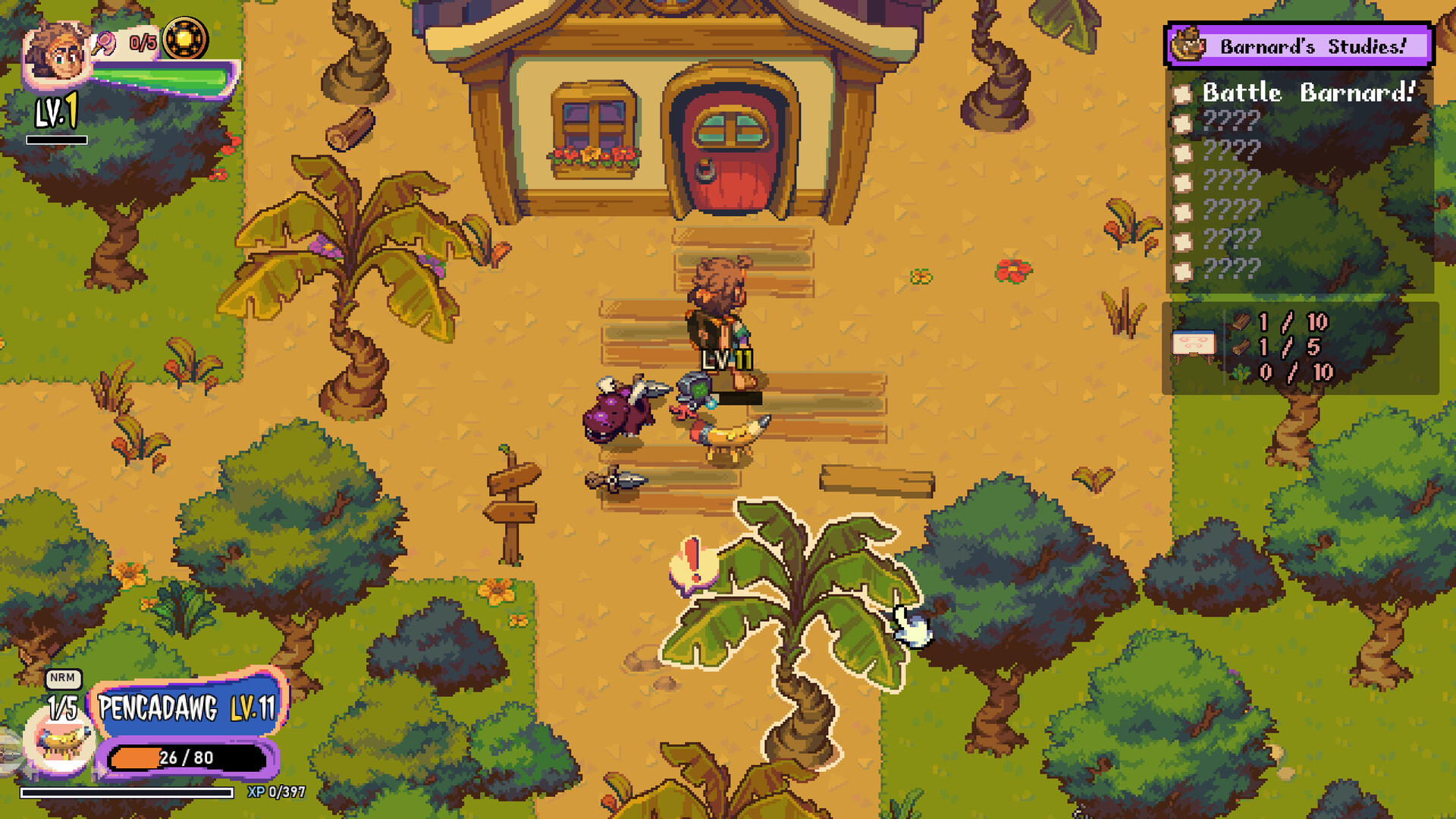
What separates this from the average monster catcher is structural. No random encounters. No separate battle screen. Wavelings roam the overworld, you walk up to one, and the fight happens on the spot, in real time. You command a party of five, each Waveling holds up to eight moves in a fully customizable set, and your input arrives through a frequency bar that fills as combat runs. Layered on top is an island-building meta: materials you gather in the wilds become decorations, flowers, and houses on your home beach, and housed islanders open questlines that push the story forward.
This is a game for players who liked the catching loop of Pokémon but want it faster and more physical, and for players who liked the base-building comfort of a life sim but want a reason to leave the village. The difficulty is moderate. The game never forces urgency, but night expeditions and storm expeditions genuinely punish unprepared teams, and the store description says so outright.
| Fact | Detail |
|---|---|
| Developer / Publisher | BerserkBoy Games |
| Genre | Creature-collecting sim, real-time autobattler, island builder |
| Release | Coming Soon (revealed at ID@Xbox Fall 2026) |
| Platforms | Windows (Steam), Xbox versions teased via ID@Xbox |
| Players | Single-player, controller support, Steam Cloud |
| Party size | 5 active Wavelings |
| Moves | Up to 8 per Waveling, fully swappable |
| Spawns | Weather-locked and time-of-day-locked species |
| Minimum specs | Windows 11, dual-core 2.0 GHz, ~2 GB storage |
Getting Started
Your first 30 minutes
The opening hours decide how fast everything else moves. Work this exact order:
- Catch until you have five Wavelings. Every system scales off party size. Battles run on five slots and a solo starter gets outpaced the moment you leave the beach. Catch quantity before quality; you can retire weak ones later.
- Take every islander quest the village offers before you explore. Quests route you through spawn zones and material nodes you would walk right past, and early quest rewards fund your first crafting.
- Gather everything that glitters on your first loop out. Wood, stone, fiber, odd drops. Materials are the island's second currency and early storage is the real bottleneck, so a fat first haul buys you options.
- Spend your first build on one house, not on decorations. An islander moving in opens a questline, questlines surface the island's secrets, and secrets are the actual endgame. Flowers can wait.
- Check the in-game clock the first time you see an off-color or oversized Waveling. That timestamp is the first entry in what should become a permanent spawn log.
Beginner mistakes to avoid
- Knocking out what you meant to catch. A Waveling at zero HP cannot be netted. The most common way to lose a rare spawn on day one is winning too hard.
- Throwing the net mid-exchange. The throw has a recovery animation and a miss is a free hit on your team. Wait for a stagger.
- Fighting a pack in a thicket. Battles happen where you stand, so terrain and nearby wilds are part of every engagement. Pull your target into open ground.
- Grinding levels when stuck. Stuck almost always means an unbuilt house or an unturned quest, not an underleveled team.
- Filling all five slots with duplicates. The fifth slot exists to answer weather surprises. Duplicates waste it.
Core Mechanics Explained
The frequency bar: how command timing actually works
Battles run in real time. Your Wavelings act autonomously between commands while the frequency bar fills; when it tops out, you pick the next move. The bar is a window, not a race, and everything about combat skill lives in how you spend it.
Three rules that hold across the whole game:
- Never hoard a full bar. An unspent bar is tempo donated to the enemy. Even a basic attack that interrupts an enemy windup is usually worth more than saving for the perfect moment.
- Interrupt on their windup, not on their hit. Command timing is strongest when it clips an enemy attack mid-animation. Watch the wild Wavelings' tells; the first hour of combat is learning them.
- Positioning survives into battle. Because fights happen in the overworld, spacing and nearby spawns still apply. A second wild Waveling wandering into the fight changes everything, so fight on ground you chose.
The party of five and the 8-move kit
Five active slots, eight learnable moves each, fully customizable sets. That combination means a Waveling is closer to a loadout than a fixed character. The same species can be a status support in one slot and a nuker in another depending on which four of its eight moves you equip.
Build each Waveling around one job:
- Frontliner: survivable stat spread, one taunt or bulk move, absorbs the opening hit of wild fights.
- Finisher: fast, high damage, comes in on weakened targets to end fights before they spiral.
- Catcher support: stat-lowering and slow effects. A weakened, slowed target is both an easier net throw and less damage taken while you throw it.
- Two flex slots: type coverage for the biome you are entering, plus one wildcard.
The store page explicitly blesses two approaches: lean into type advantages for safe progression, or stack one strategy and see how far it carries you. Both work. The monoculture team is faster when it works and catastrophic when it meets its counter, which is exactly what night spawns are for.
Type advantages meet the weather system
A standard elemental type system runs underneath the ecosystem, and the weather layer makes it spatial and temporal. If the counter you need is a rain-only species, you cannot just grind for it; you wait for the sky. Type advantage therefore becomes a scheduling problem, and players who treat it that way finish their collection dramatically faster.
The capture loop
Weaken the target, ready the net, throw. Two mechanics define it:
- The health sweet spot. Beaten but not broken. Veterans win the fight at roughly 20% of the target's health and throw immediately. Every point of overkill on a rare spawn is wasted.
- Status before net. Slows and stat drops do double duty for captures: they make the throw land and they keep the target from punishing the recovery animation.
Rare spawns flee. Open with chip damage, never your hardest hit, and box the target against terrain before reaching for the net.
Weather and time-of-day spawns
This is the system that separates tourists from residents. Some Wavelings surface only in specific weather. Others only at certain hours. Rarest and strongest of all are the ones where both conditions stack, and those are the encounters the store page warns about when it says heading out unprepared leads to trouble.
Spawn hunting checklist:
- Check weather and clock before every expedition, every time.
- Log sightings with time, weather, and location. A paper notebook beats memory and a screenshot folder beats both for sharing.
- Prioritize weather-locked species over time-locked ones early. Weather windows last longer and are forecastable.
- Night spawns hit harder. Gather by day, hunt by night, and only night-hunt once your party can absorb a bad opening exchange.
Crafting and island building
Materials convert at your home beach into decorations, flowers, and houses. The building layer is not cosmetic: islanders move into houses, housed islanders open questlines, and questlines unlock the island's deeper layers and secrets. Progress at your pace or don't progress at all, the page says, and that holds: nothing gates the catching loop but your own willingness to walk into the wilds.
Build priority that works: houses first, production or storage structures second, pure decoration last. Decoration happiness effects are real but they come after the questline pipeline is running.
Team Archetypes and Builds
Since individual stats are not published yet, the strongest planning unit is the team archetype. Four are worth building toward:
| Archetype | Core idea | Catch philosophy | Weakness |
|---|---|---|---|
| Weather Riders | Team built around rain and storm-locked species, water types up front | Storms become capture festivals | Drought days leave you benching half the squad |
| Night Shift | Hard-hitting night spawn specialists with high bulk | Hunts the rarest window in the game | Punishes an underhealed party badly |
| Status Lock | Slow and stat-drop kit on every slot | Near-perfect net success, zero overkill kills | Slower battle clears, more real time per catch |
| Type Ladder | One counter for each biome's dominant type | Safe progression, few surprises | The fifth slot does heavy lifting on weather days |
For a first playthrough, run Type Ladder with one Status Lock catcher, then convert to Weather Riders or Night Shift once your log shows which locked species your collection is missing.
A capture-support move set, concretely
Catcher support kit (equip 4 of 8):
1. Slow / speed-down move      -> keeps target in net range longer
2. Attack-down move            -> protects you during net recovery
3. Safe chip damage move       -> consistent, no crits, no overkill
4. Stagger or interrupt move   -> opens the throw window

Sequence: stagger -> slow -> chip to ~20% -> attack-down -> net.
Progression Strategy
Phase 1: Beachhead (first hours)
Five catches, every quest accepted, first house built. Do not optimize anything yet. The goal is a working loop: battle, net, haul, build.
Phase 2: The Log (first days)
Now you start recording. Every unusual spawn gets a timestamp, weather reading, and location. Unlock new questlines by housing more islanders, and let quests pull you into biomes you would not otherwise visit. Your party should hit full type coverage of the starting biome by the end of this phase.
Phase 3: The Windows (mid game)
With a log in hand, you schedule expeditions around the sky. Rain forecast means a Weather Riders night. Clear mornings mean the time-locked species checklist. This is also when you respec move sets toward locked species: the eight-move flexibility exists precisely for this pivot.
Phase 4: The Secret (late game)
The island is hiding something, and the story surfaces through islander questlines. By this phase your capture rate is near-perfect, your log covers every biome's windows, and the bottleneck is quest completion, not combat. If the endgame ever gates you, the answer is almost always a house you skipped or an islander you left unhoused.
Resource priority, in order
- Net and capture-related upgrades
- House capacity
- Storage
- Party healing and expedition supplies
- Decoration
Step-by-Step Strategies
1. The perfect first catch. Spot a Waveling, approach from open ground, open with your slow move, chip to 20% with safe damage, land one attack-down, throw the net on the stagger. This sequence works on nearly every standard spawn and builds the reflex you will need for rares.
2. The rare spawn protocol. Big, off-color, unusual silhouette: stop. Do not open with your strongest move. Chip once and watch whether it flees or fights. If it fights, terrain-box it against a rock or wall, status it, then work it down. If it flees, note the time and weather and come back with a plan, usually a faster opener or a slower approach.
3. The storm expedition. Check the forecast, rebuild the party for water types and rain-locked targets, pack full healing. Fight near the beach when materials are the goal. Take the highest-value locked target first, because weather windows close without warning.
4. The night rotation. Heal fully before dusk. Night spawns hit harder, so lead with your frontliner and keep the finisher benched until a target is weakened. Collect the night-only checklist in one expedition, not five. A night loop of three or four targets per outing beats greed every time.
5. The questline funnel. Whenever you build a house, immediately talk to the new islander twice, take their quests, and complete the first two steps before any free exploration. Questlines are the only path to the island's secrets, and the funnel keeps them flowing.
6. The stuck-player diagnostic. Feel stuck? In order: check for unturned quests, check for unbuilt houses, check your log for a species you know exists but have never caught, and only then consider grinding. Nine times out of ten it is the first two.
7. The collection closer. Endgame collection gaps are weather-and-time stacking problems. Cross-reference your log: for each missing species, list its window, then list the sessions when you can actually play during that window, and schedule. The last five entries in any collection are calendar problems, not skill problems.
Advanced Tips
- Fight where you want the drops. Caught and defeated Wavelings drop materials where the fight happened. Need wood? Fight near the trees. Building push? Fight the beach loop.
- Two conversations with every islander. First talk gives the quest tease, second talk gives the actual hint. The island's secrets hide in second conversations.
- The fifth slot is a weather answer. Keep one slot permanently flexible, never duplicated, so a surprise weather change never benches your whole plan.
- Screenshot everything rare. Community spawn charts form fast after launch and your log becomes tradable knowledge. Comparing notes is the fastest way anyone finishes the collection.
- Storage before greed. A full inventory on a storm expedition is a wasted storm expedition. Dump materials at the beach before every window hunt.
- Net recovery is the real HP bar. You take damage while netting, not while attacking. Every capture plan should minimize time spent in the throw animation against a live target.
FAQ
When does Waveling Island release? No date yet. The Steam page says Coming Soon, and the game appeared at the ID@Xbox Fall 2026 showcase. Wishlisting gets you the automatic notification.
Is it coming to consoles? An Xbox version was part of the ID@Xbox reveal. The Steam page currently lists Windows only.
How is it different from Pokémon? Real-time battles in the open overworld with no random encounters and no separate battle screen, a party of five with eight customizable moves per Waveling, an autobattler-style frequency bar for command input, and an island-building meta layer with quest-giving residents. The catching and type systems will feel familiar; the structure around them is not.
Is there real difficulty? Moderate. The game paces itself and never forces urgency, but night and storm expeditions punish thin parties hard, and rare spawns flee if you fumble the opening. Cozy by default, demanding if you chase the collection.
How does catching work exactly? Weaken a Waveling in real-time battle, ready your net, and throw while it is weakened but not knocked out. Some species resist capture more than others. Status effects and low health both improve the odds, and a missed throw leaves you exposed during recovery.
Does the island have a story? Yes. A full campaign branches on player decisions, islanders carry their own stories and reasons for being there, and the store page states the island is hiding something. Expect the cozy surface to peel back.
How many Wavelings are there? Not announced. Trailers show dozens of distinct species across biomes, with rarer and stronger variants tied to weather and night spawns.
Is it single player? Yes: single-player, full controller support, Steam Cloud. No multiplayer announced.
What are the system requirements? Minimum: Windows 11, dual-core 2.0 GHz, medium-tier graphics, about 2 GB storage. It is a light game by design.
How much will it cost? Unannounced. BerserkBoy Games has not listed a price.
Final Tips
Treat the island as a living schedule, not a static map. The sky is a content gate, the clock is a content gate, and your spawn log is the master key. Keep the five slots diverse, spend the frequency bar the moment it fills, throw nets on staggers instead of mid-exchange, and build houses the moment you can afford them. The catching loop is the heartbeat, the islanders are the story, and the secret under the island goes to whoever kept the best notes. Pack for rain.
Screenshots