Official game
Play Black Autumn: 1438
This game is hosted by Steam. Continue to the official page to play or download it.
Wishlist on SteamWhat Is Black Autumn: 1438?
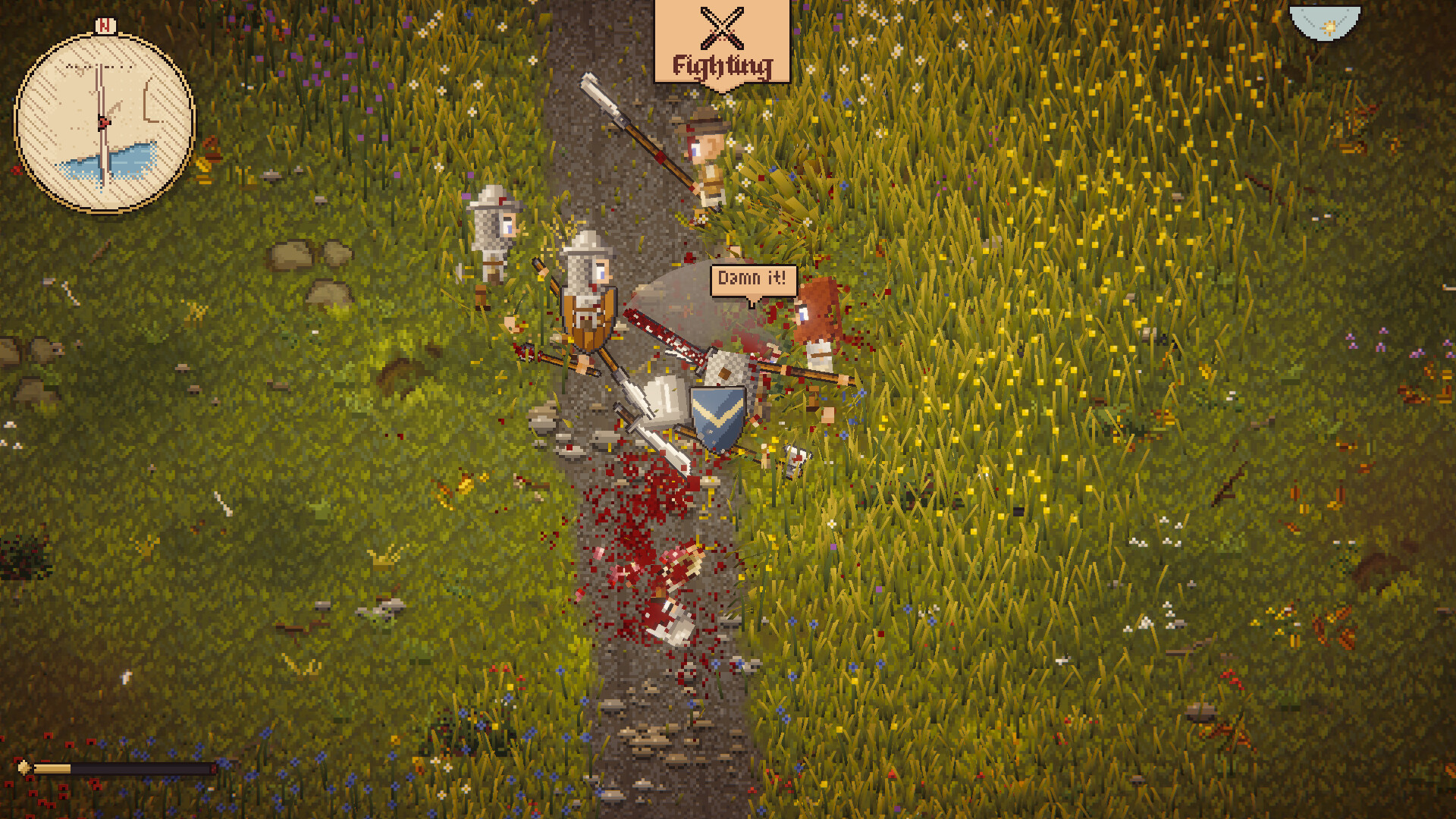
Black Autumn: 1438 is a realistic medieval pixel-art RPG from Zues Studio, set in the Hron valley in autumn 1438. The historical hook: King Sigismund died the previous winter, Albert of Habsburg now wears the crown of Hungary, and the road along the Hron below Šášov castle is no longer safe. You play, in the game's own words, "nobody in particular": one man in a valley of villages, mining towns and soldiers' camps that carries on whether you exist or not.
The pitch is the anti-fantasy. No magic. No monsters. The Hron valley is rendered as it actually was in 1438, in detailed pixel art, and every system is built around historical plausibility: armor you wear piece by piece, weapons that obey material physics, townsfolk with their own homes and daily routines, and period-accurate gambling games like Hazard and Karnöffel.
| Field | Detail |
|---|---|
| Genre | Realistic medieval action RPG |
| Developer | Zues Studio |
| Publisher | Zues Studio |
| Platforms | Windows, Mac, Linux (Steam) |
| Release | To be announced; wishlist open now |
| Price | Not yet listed |
| Players | Single-player |
| Art style | Detailed pixel art |
| Weapons | 40+, from pitchfork to halberd |
| Clothing/armor pieces | 100+ |
The store page lists Steam Achievements, full controller support with DualShock and DualSense pads, captions, adjustable difficulty, and custom volume controls. A demo has not shipped yet; the developer says wishlisting is how you hear when it does.
How to Play: The Layered Armor System
Armor is the game's core system, and the store description goes further on it than anything else. You dress the way a man-at-arms actually dressed in 1438: padding first, then mail, then plate, helmet last. Take the gambeson off and everything that needs it comes off with it.
What that means in practice:
- Layer order matters. The padding (gambeson) is the foundation. Armor pieces attach to it. You cannot wear plate over bare skin, and removing the foundation strips the plate with it.
- 100+ individual pieces exist. The loadout screen is a body, not a stat number. Each slot maps to a historical garment with its own weight and coverage.
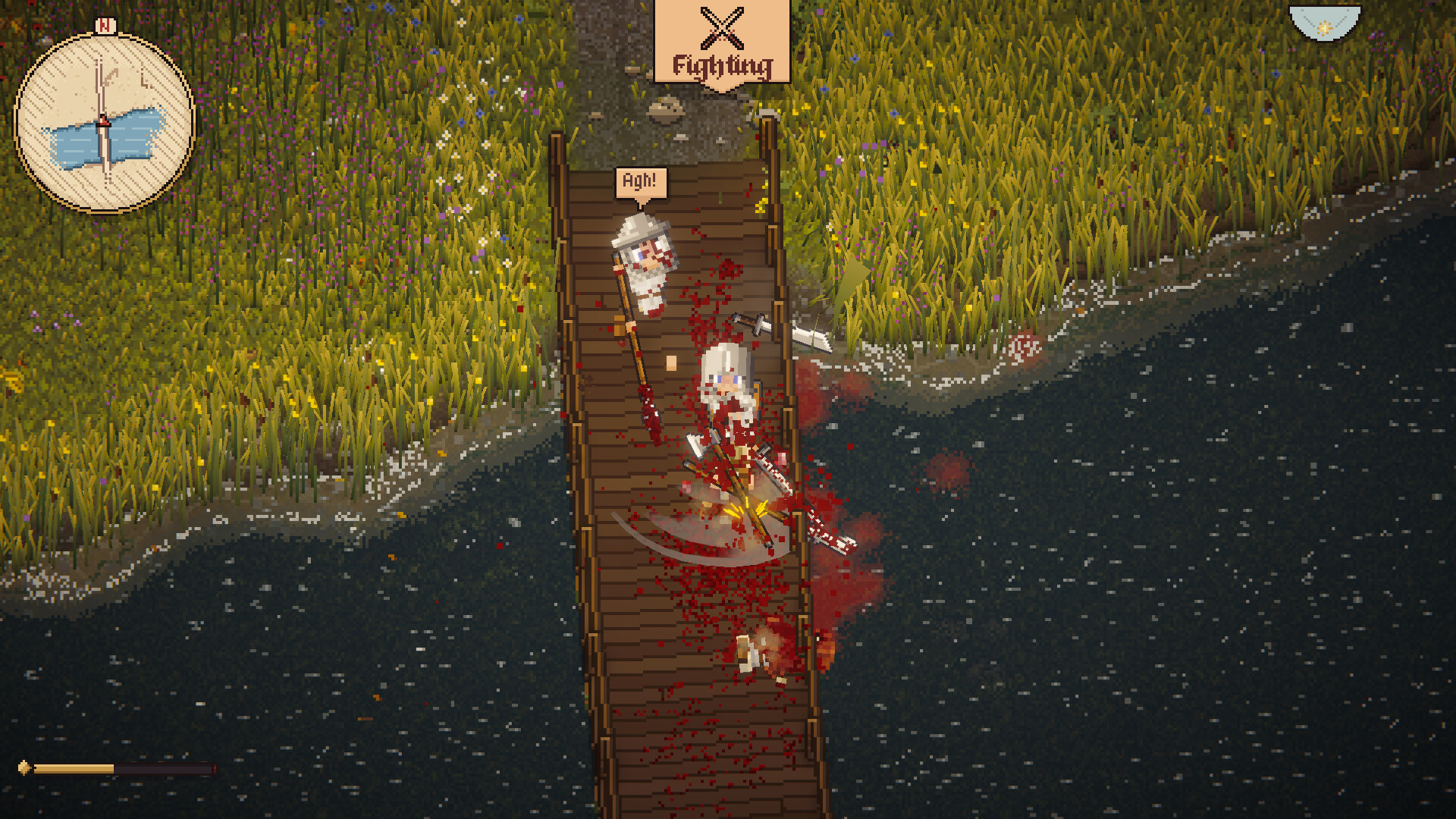
- Blows go through armor by what it is made of. A sword skids off plate. A war hammer does not. This single rule drives the entire weapon-matching game.
- A hard blow can knock your helmet off. Losing head protection mid-fight is an event, not a stat change. The next blow to the bare head is a different conversation.
The systemic payoff: your armor choices before a fight matter more than any level number. Walking into a bandit ambush in full plate makes you nearly immune to their swords and still vulnerable to the one mace in the group. Zues Studio has said fights are over in seconds and end when somebody cannot go on, so the pre-fight loadout is where battles are actually won.
Weapon Matchups: 40+ Tools and What They Beat
The roster runs from pitchfork to halberd, and the material rule gives each class a job. Based on the store description and trailer footage, the matchup logic works like this:
| Weapon class | Beats | Loses to |
|---|---|---|
| Swords | Unarmored or padded targets; speed | Plate armor (skids off) |
| War hammers / maces | Plate and mail; concussive force | Reach disadvantage vs. polearms |
| Polearms (halberd, spear) | Mounted opponents; keeping distance | Getting inside their arc |
| Axes | Mail and padding; shields | Plate |
| daggers / short blades | Gaps in armor at close range | Everything at range |
| Farm tools (pitchfork) | Desperation | Actual soldiers |
Two combat truths follow from the table:
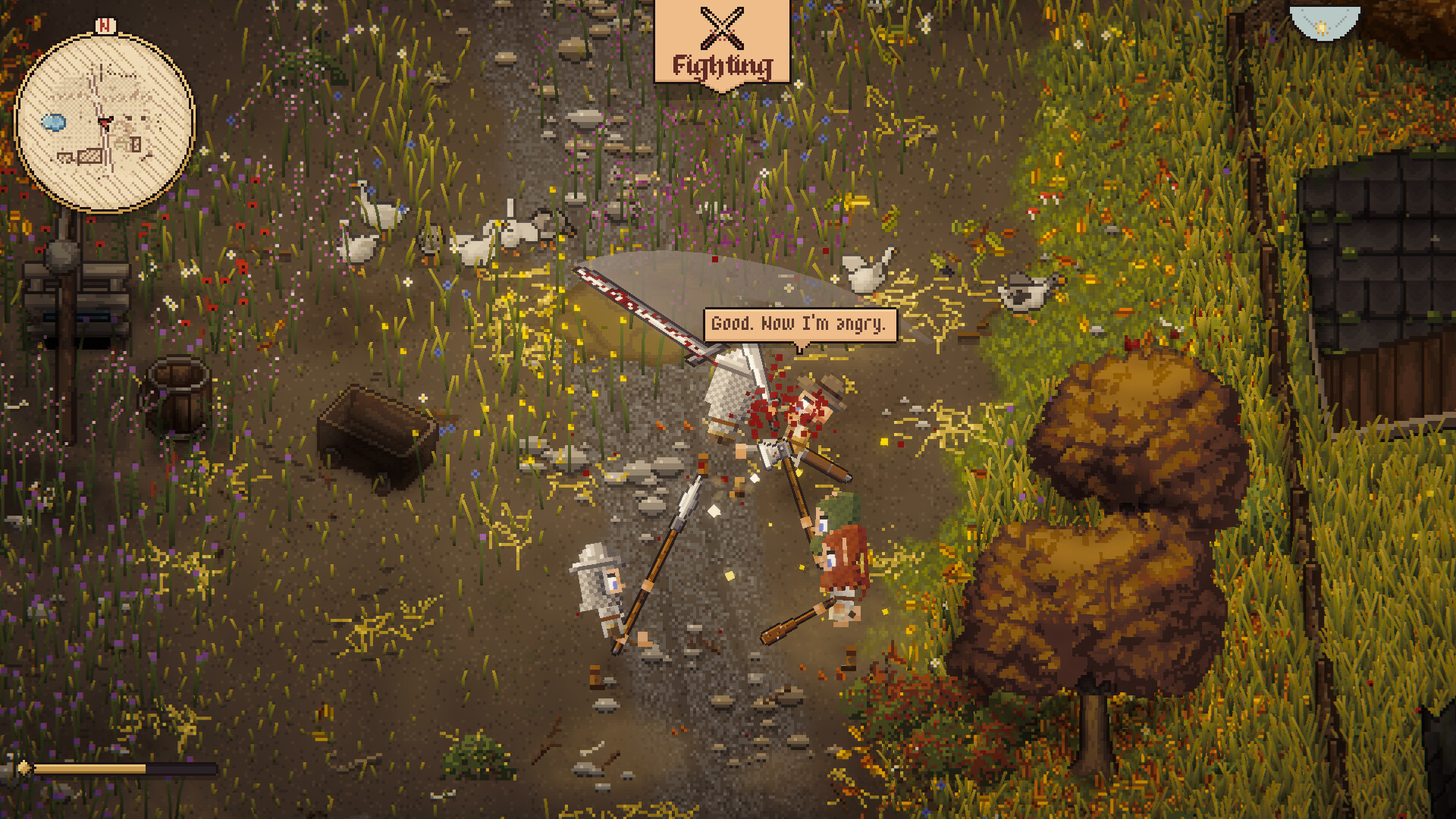
- Fights end in seconds. The store page is explicit. No stamina-chess duels. Whoever lands the material-advantaged blow first, wins. Aggression pays in a way most medieval games punish.
- Losing a leg means crawling. Damage is location-based and functional. A leg wound does not drain a health bar; it takes away your legs. Retreat planning starts before the fight, not during.
Horses: Movement, Formation and Cavalry Combat
Horse riding is a first-class system, not a fast-travel button. You ride various horses and choose your gait: walk, trot, canter, gallop. Each gait has combat implications, because hitting a man with a lance at a canter and at a gallop are different problems.
What the store page confirms:
- Multiple horses with individual equipment. Caparisons and decorations are cosmetic-on-top-of-functional; a caparisoned warhorse is telling everyone whose man you are.
- Mounted combat is expected. The trailer shows cavalry charges into infantry formations. Couched-lance mechanics are not confirmed, but the footage shows riders striking downward at footmen.
- Your horse is a target. Historical cavalry died when their horses died. No mechanical confirmation yet, but a game this committed to realism elsewhere will not let your mount be a car.
Practical note for when the demo arrives: practice gait control before you need it. Charging into a spear line at a full gallop with no way to stop is a lesson the game will teach exactly once.
The Living Valley: NPCs, Weather and Night
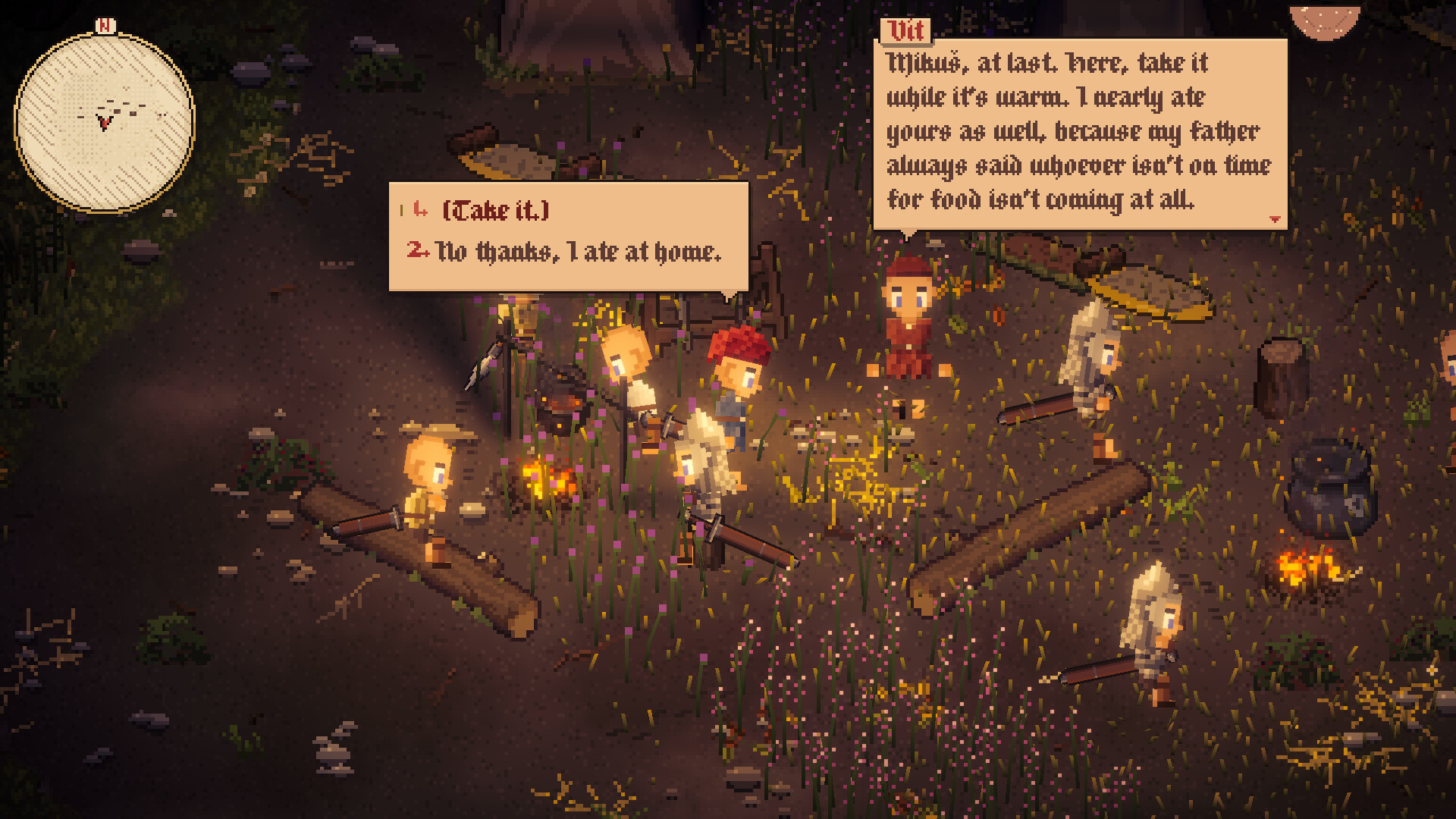
The simulation layer is what separates Black Autumn from Kingdom Come comparisons. Every villager, guard or lord has a home, an occupation, needs, and a day of their own. NPCs hear a fight before they see it and run from one they cannot win. When a friend goes down in the open, they drag him out of reach and bind his wounds.
Systems confirmed on the store page:
- Individual daily schedules. The valley runs whether you are there or not. Shops open and close because people live, not because you approached a trigger zone.
- Natural weather. Sunny days, foggy evenings, harsh thunderstorms at dark night. Storms are illuminated solely by candlelight and lightning. A night fight in a thunderstorm is a stealth opportunity for you and an equal hazard to your eyes.
- Sound propagation. Footsteps are heard. Crouching in long grass and keeping to shade is the stated stealth method, not a crouch-walk speed multiplier.
The tactical consequence: night and weather are your force multipliers. Attacking a camp at 2 a.m. in the rain, from the shaded side, against guards who can barely see torchlight, is how one man beats ten. The game's own systems are telling you to fight dirty.
Crime and Coins: Lockpicking, Pickpocketing and Haggling
Between battles, the game offers a quieter economy of larceny:
- Pick locks. Standard minigame expected, though no details yet on whether it is timing-based or pin-based.
- Lift purses from belts. The store description phrasing suggests proximity-based theft with NPC awareness. Given the sound-propagation system, stealing in a crowd while NPCs chatter is the likely counterplay.
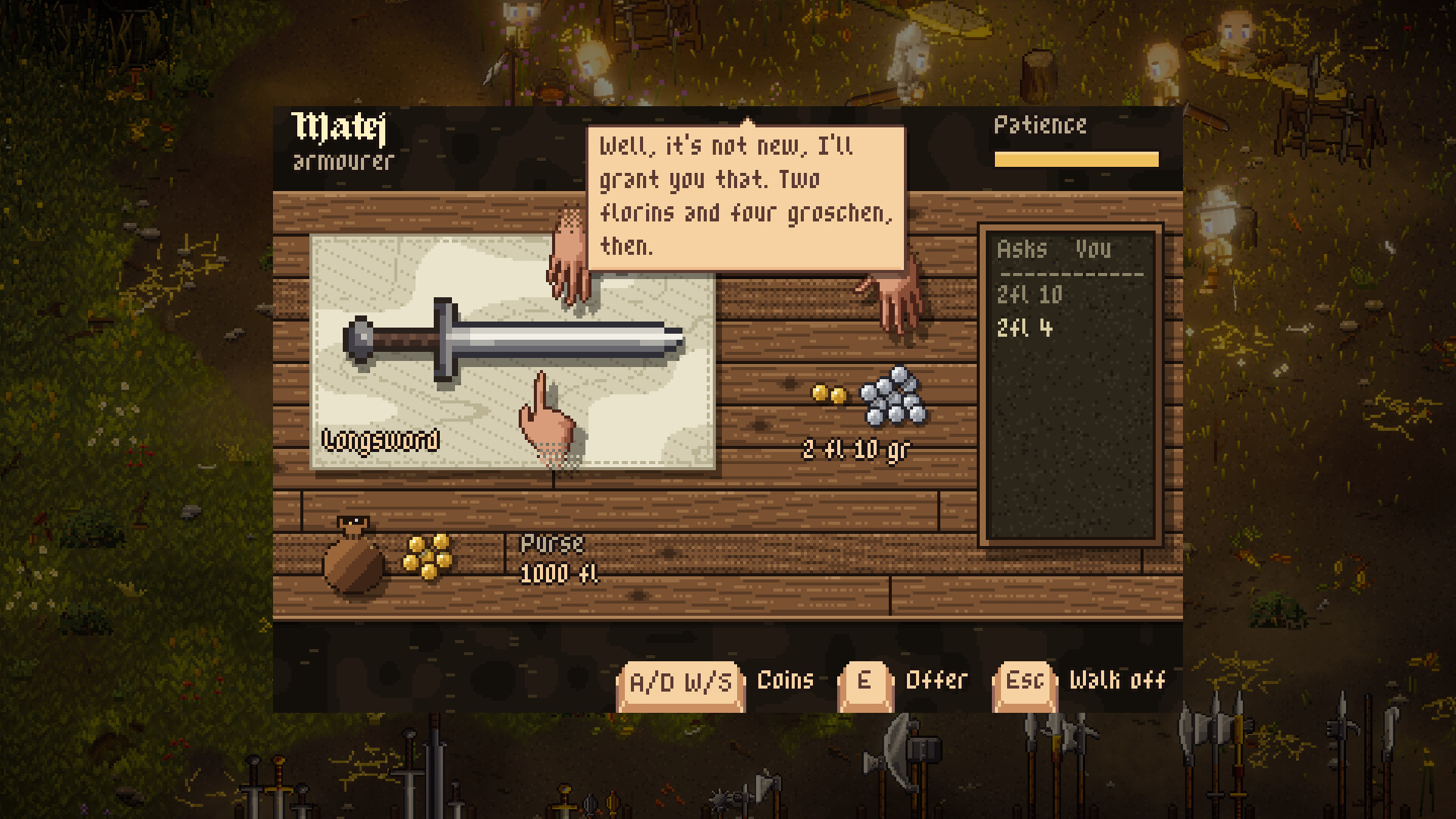
- Haggle over prices. Merchants negotiate. Your appearance probably matters; walking into a shop in blood-soaked plate reads differently than in a merchant's cloak.
And then there is the gambling, which deserves its own section.
Hazard and Karnöffel: The Period Games
Zues Studio put real detail into the gambling table, and knowing these games before the demo drops is free preparation:
- Hazard is the medieval ancestor of craps, played with two dice. The shooter calls a main number (5 through 9). Roll the main on the first throw and you win the stake; roll 2 or 3 and you crab out and lose; roll 11 or 12 and the outcome depends on the main. After a point is set, you keep throwing until you nick the point or throw an out.
- The game offers 36 kinds of dice, some loaded. The store page says this outright. That means dice selection is part of the game: if the table lets you bring your own bones, weighing your dice is period-accurate cheating.
- Karnöffel is a card game first written down in 1426, the oldest card game with playable rules in Europe. It is a trick-taking game with weird rank hierarchy where certain cards (the Karnöffel itself, the devil card) can trump even kings.
- Cheating is permitted at your own discretion. The store page ends the gambling section with a warning: "someone might be keeping an eye on you." Getting caught with loaded dice in a mining town in 1438 is not a fine; expect the game's violence systems to bleed into its gambling systems.
The practical guide for demo day: learn basic Hazard calls now. When the demo table asks you to call a main, knowing that 7 is statistically the safest call is the difference between funding your armor fund and crawling home.
Accessibility and Platform Notes
The store page lists an unusually thorough accessibility set for a studio's first title: captions available, custom volume controls, adjustable difficulty, full controller support, DualShock and DualSense support. Windows, Mac and Linux are all listed as platforms, which is rare for a pixel-art indie and good news for Steam Deck users; a Linux-native build implies Proton-friendly or native handheld play.
No system requirements have been published. Pixel art at this detail level is more memory-heavy than players expect, but nothing about the genre suggests a demanding GPU.
What We Know About the Road to Launch
The game is explicitly in development. The store page ends with: "Add it to your wishlist to hear when the demo is out." So the committed sequence is: demo first, then launch. No date, no price, no content-scope estimate beyond what the description implies (the whole valley, all systems).
The developer posts on X as @blackautumn1438, and the announcement trailer landed on Indie Games Hub in mid-October 2026 with over 30,000 views in its first days, strong traction for a no-name studio announcing a demo-less game. The historical commitment, Hron valley geography, Šášov castle, Albert of Habsburg's succession, suggests a Slovak or Czech-adjacent development team building the game about their own region's history.
Tips for When the Demo Arrives
| Priority | Why |
|---|---|
| Buy padding and mail before any plate | The layer system means early plate without foundation is wasted money |
| Carry a hammer-side weapon even if you prefer swords | Material matchups are the whole combat game |
| Learn one dice game before launch | Hazard knowledge transfers directly to in-game gambling |
| Watch the weather before traveling | Thunderstorm nights hide you, but also hide ambushers |
| Save before every gamble | The store page itself warns someone is watching for cheats |
| Practice horse gaits in open ground | Combat at the wrong gait is how cavalry demos go wrong |
Is Black Autumn: 1438 Worth Your Wishlist?
The comparison everyone will reach for is Kingdom Come: Deliverance, and the honest answer is that Black Autumn is chasing the same realism goals in pixel art at a fraction of the production scale. What it adds that KCD does not: the piece-by-piece armor layering is more granular, the dice game is deeper, and the whole thing runs on three platforms at indieweight requirements.
What is unproven: everything gameplay-side. No demo has shipped. No combat footage beyond trailer cuts exists. The store description is unusually specific about systems, which is either a developer who knows exactly what they are building or one writing checks the engine cannot cash. The 30,000-view trailer suggests an audience is already assembled; the demo will decide whether it stays.
The pitch alone, no magic, no monsters, the real Hron valley as it was in 1438, earns the wishlist click. The demo will earn or refund the rest.
FAQ
When does Black Autumn: 1438 release? No date announced. The store page says to be announced, and the developer states the demo comes first.
Is there a demo? Not yet. Wishlisting on Steam is how you get notified when it drops.
What platforms does it support? Windows, Mac, and Linux, all listed on the store page.
Is there magic or monsters? No. The game's stated premise is historical realism: no magic and no monsters, only the real Hron valley as it was in 1438.
How many weapons are in the game? More than 40, from pitchfork to halberd, per the store page.
How does armor work? You wear it in historical layers: padding, then mail, then plate, helmet last. Over 100 individual pieces exist, and blows penetrate by material: swords skid off plate, war hammers do not.
Is it like Kingdom Come: Deliverance? Comparable realism goals in a pixel-art scale. Black Autumn's armor layering and gambling systems go deeper than KCD's; the production scope is far smaller.
Can you play dice and cards? Yes: Hazard with 36 dice types (some loaded) and Karnöffel, a card game first recorded in 1426. Cheating is allowed at your own risk.
Does it have controller support? Full controller support with DualShock and DualSense, plus captions and adjustable difficulty.
Who is making it? Zues Studio, publishing self-developed. Active on X as @blackautumn1438.
Screenshots