Official game
Play Tiny Hero Courier
This game is hosted by Steam. Continue to the official page to play or download it.
Wishlist on SteamOverview
Tiny Hero Courier is a fast-paced action game set in a miniature tilt-shift world, developed by Polish studio Guillotine as a passion project. You play Rupert, an ordinary courier in a post-apocalyptic world who must deliver the last packages, dodge hordes of fast zombies, solve puzzles, and satisfy his demanding boss. The studio describes it as a "roguelite vehicle delivery game", part delivery sim, part survival action, part boss rush.
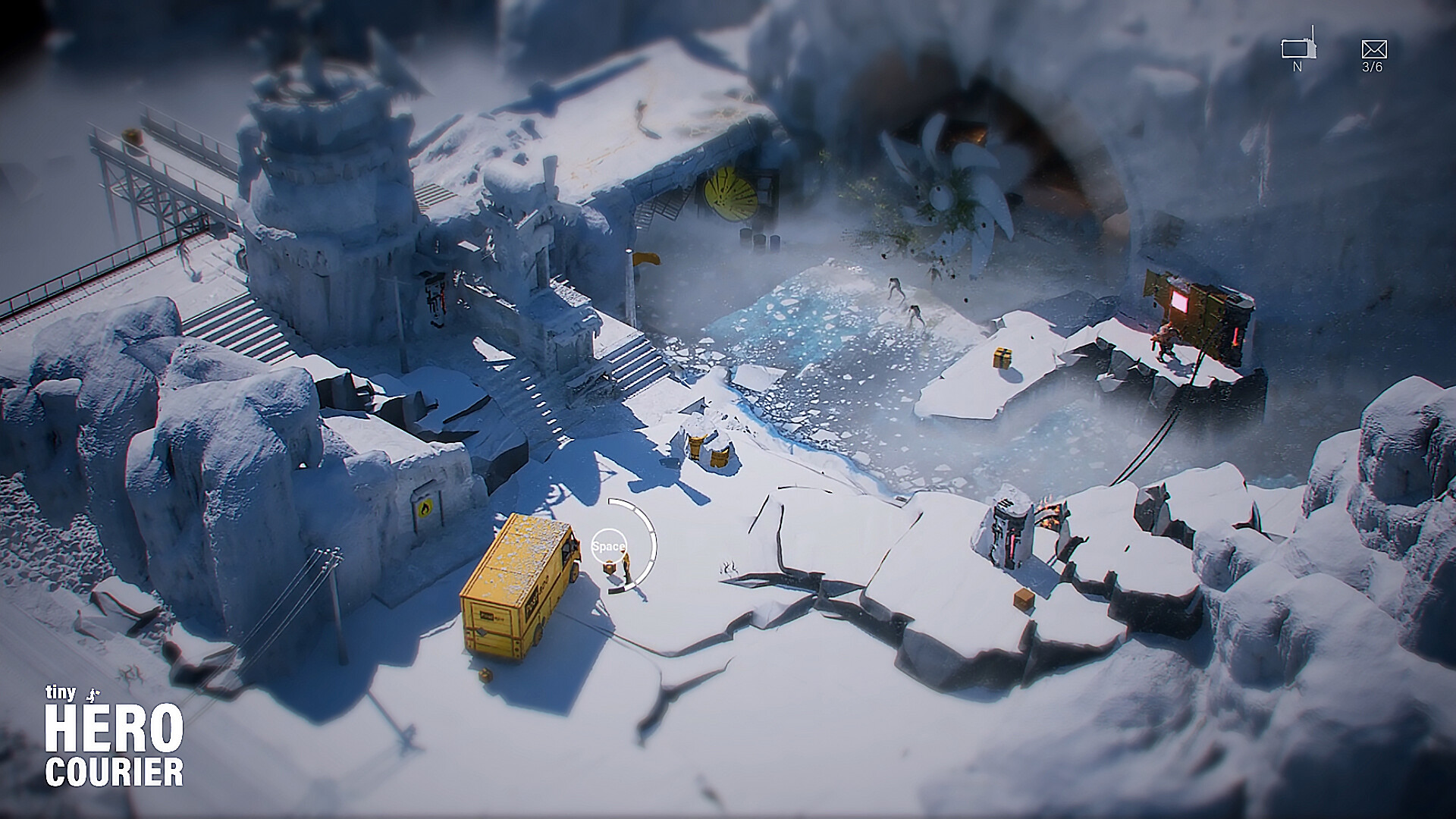
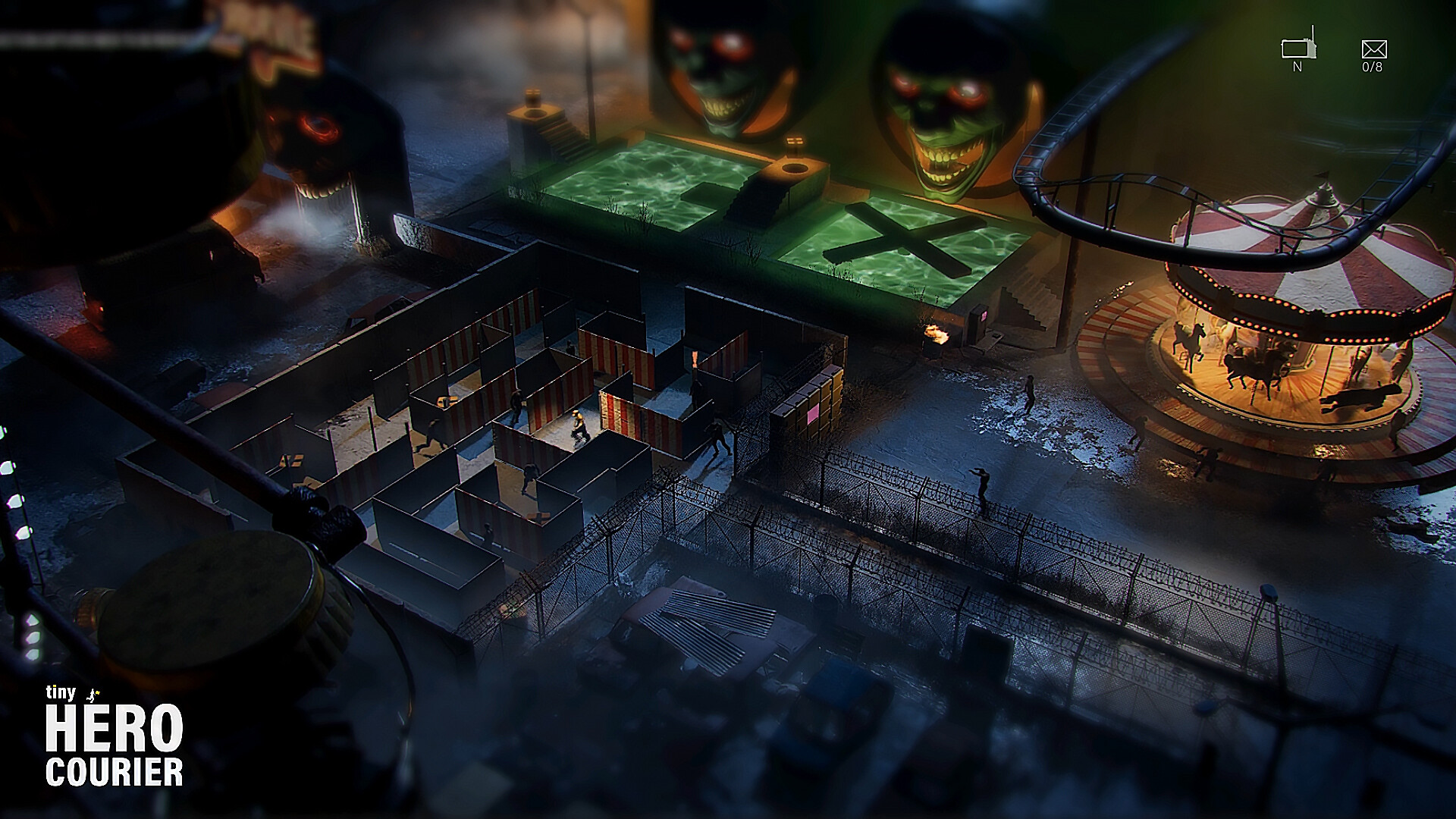
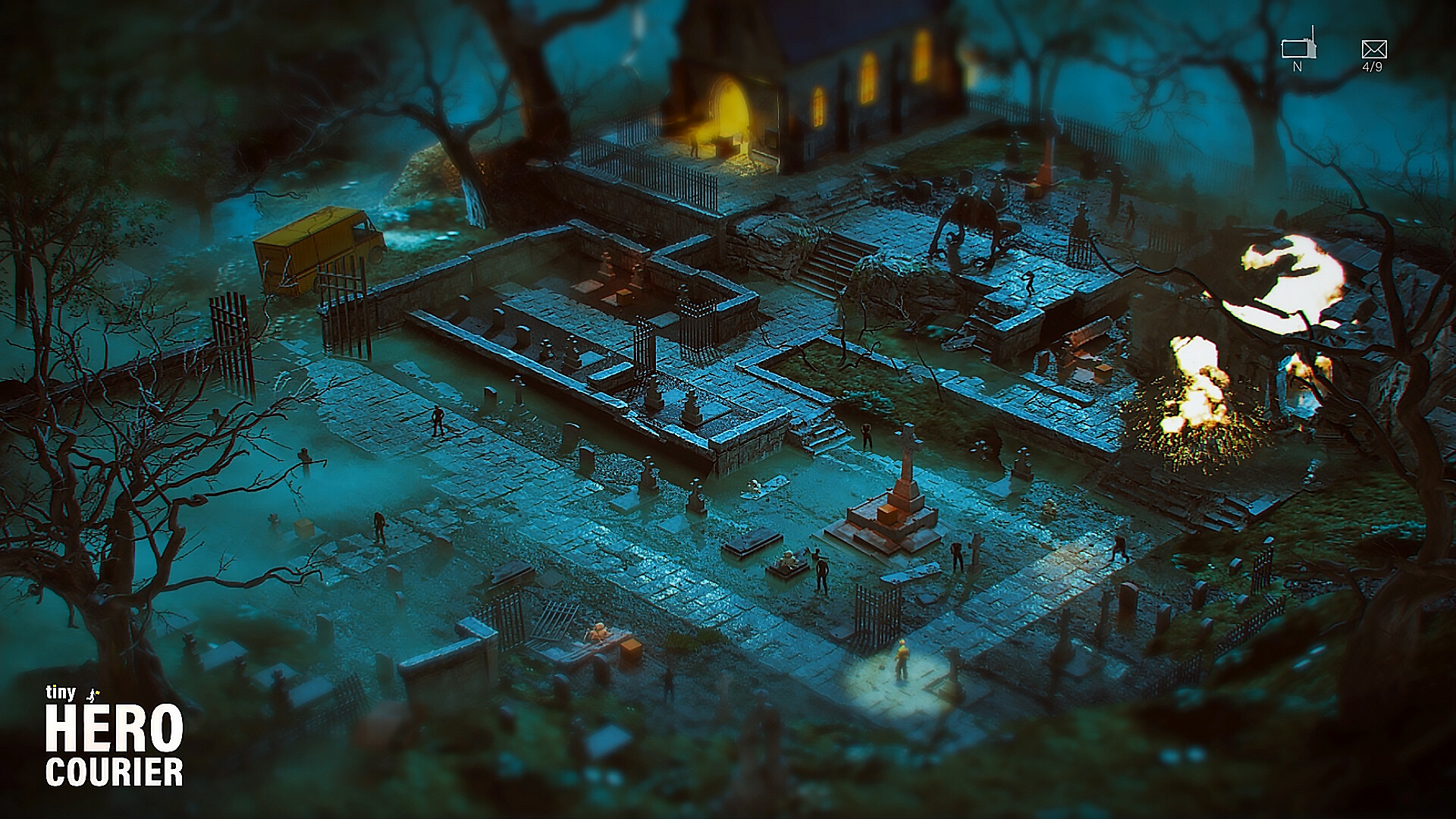
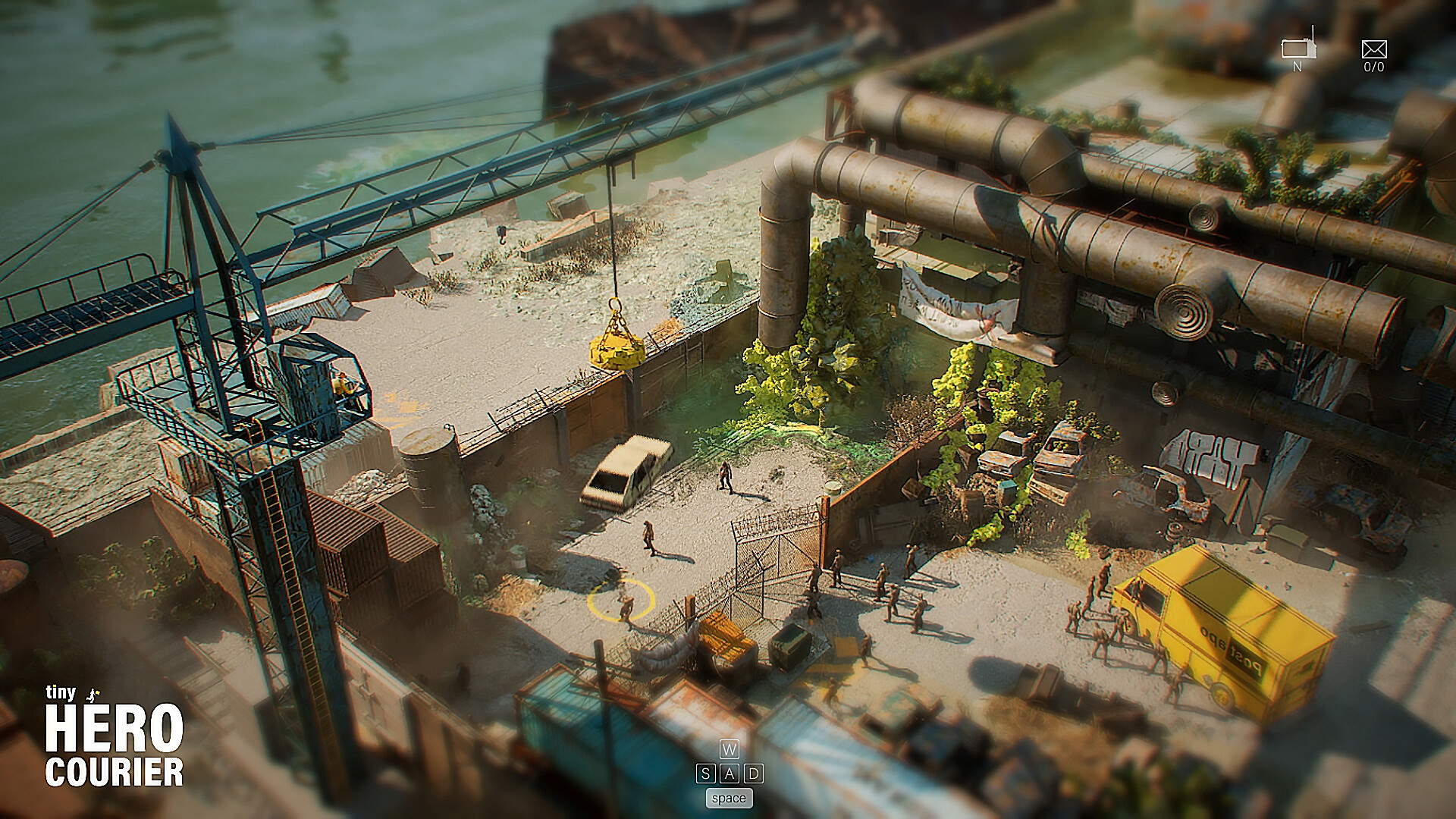
The game's visual identity comes from its tilt-shift diorama aesthetic, inspired by miniature worlds and the "Love, Death & Robots" episode "Night of the Mini Dead." Built on Unreal Engine with isometric graphics, the world reads like a living dollhouse: crumbling cities, foggy graveyards, eerie desert towns, snowy labs full of zombie scientists, and even hell itself. The tilt-shift effect compresses the scale so Rupert looks like a tiny figure scurrying through a model train set, which makes the post-apocalyptic setting charming instead of grim.
Guillotine is a small Polish team (Stanisław Grabiec, Jakub Woś, Arkadiusz Leszko, Łukasz Nowicki, and Waldemar Pater) working on the game in their free time. Tiny Hero Courier earned an Epic MegaGrants Recipient 2025 award from Epic Games, one of 102 games and projects on the official laureate list, and the team showed its Unreal Engine sizzle reel at Indie Games Week 2026. The game is listed as upcoming on Steam with a release date "to be announced."
| Field | Detail |
|---|---|
| Genre | Action, adventure, casual roguelite |
| Developer | Guillotine (Poland) |
| Publisher | Guillotine |
| Platform | Windows (PC) |
| Price | TBA (paid title) |
| Players | Single-player |
| Release | To be announced |
| Engine | Unreal Engine 5 |
| Graphics | Isometric, tilt-shift diorama style |
| Controls | Keyboard/mouse, controller questions raised by community |
| Languages | English, French, German, Spanish, Japanese, and 3 more (subtitles) |
| Awards | Epic MegaGrants Recipient 2025 |
The Steam page lists full subtitle support in eight languages including English, French, German, Spanish, and Japanese. Interface language support matches. System requirements are modest: minimum specs call for Windows 7 64-bit, an Intel Core i3 dual-core CPU, a NVIDIA GTS 450 or AMD Radeon HD 5570, DirectX 11, and just 10 MB of storage. Recommended specs step up to a quad-core i5/i7 and a GTX 750 Ti or Radeon R9 270x. Nearly any PC from the last decade runs it.
Target Audience
Tiny Hero Courier is for players who like their action games with a sense of humor and a toy-box aesthetic. If you enjoyed the diorama world of "Night of the Mini Dead," the package-delivery tension of Death Stranding without the three-hour cutscenes, or the boss-fight rhythm of Cuphead (whose world map the game's map is explicitly inspired by), this is aimed at you. The roguelite delivery loop means each run is a fresh set of challenges, good for short sessions and pick-up-and-play.
It is not for players who want a deep narrative, complex RPG systems, or a serious post-apocalyptic tone. The humor is front and center, the world is deliberately absurd, and the difficulty comes from reflexes and package management, not story choices.
One delivery destination tells you everything about the tone: at some point Rupert delivers a package to the devil in hell. The game treats that like any other shift.
Development Status and What It Means for Players
The game is unfinished, and the community has been watching closely. The Steam discussion forum went quiet for long stretches in 2025 and early 2026, enough that players opened threads asking if the project was abandoned. The developer broke the silence in late August 2026 with a direct statement: the game is still in development, things are picking up, and updates will come when there is something worth showing. A new trailer followed shortly after, which lined up with the official trailer crossing 229,000 views on YouTube.
The studio's roadmap, as stated directly by the developer in the forums:
- A playable demo is planned around the turn of Q1/Q2, after which the team focuses on the rest of the game
- The release target is ideally the end of 2026 or the beginning of 2027
- Platforms beyond Windows are not confirmed yet; when asked about a native macOS release, the developer said platform support cannot be confirmed while the game is in Unreal Engine 5 development
- A closed beta under NDA has been requested by community members but not announced
- Controller support (specifically Xbox pads) and Spanish localization have been requested; no commitments either way
- Package art uses a mix of 3D renders, AI-assisted drafts, and manual Photoshop painting by the team's artist and freelancers, per the developer's own answer about the game's imagery
For wishlisters, the practical play is simple: wishlist now, expect the demo first, and treat any release window before 2027 as a bonus rather than a promise. The developer's forum handle is active again, so worth checking the community hub for demo news.
Getting Started: First 30 Minutes
-
Learn the carry button before you move. Packages must be held with a button, not just picked up and dropped. Holding creates tension, you cannot fight or sprint freely while carrying. Practice picking up and setting down a package near the spawn before you attempt a real delivery.
-
Watch package size before you accept a job. Package size directly affects movement speed and strategy. A small box lets you move fast and dodge; an oversized crate turns you into a slow target. Match the package to the route.
-
Identify special packages immediately. Explosive TNT and fragile items behave completely differently. TNT punishes rough handling; fragile items break on impact. If the delivery brief mentions special cargo, treat the route as a stealth mission, not a sprint.
-
Scout the world map before driving out. The interactive world map (inspired by Cuphead's map system) is your mission hub. You drive Rupert's vehicle between areas, unlock missions, and discover secrets. Look at what's ahead before committing to a route.
-
Talk to your boss and characters. The map lets you make crucial calls to characters like your boss. These calls are not flavor, they shape which missions unlock and what information you have going in.
-
Respect the environment hazards. Locations have unique challenges: slippery ice, dense fog, and other environmental effects that change how you move and see. A route that was easy in the desert town is a different beast in the snowy lab.
-
Don't trigger bosses accidentally. One wrong move can trigger dangerous foes. Bosses and minibosses are powerful, and the game punishes careless exploration. If you see a suspicious open area, assume something is waiting.
Beginner Mistakes to Avoid
| Mistake | Why It Hurts | Fix |
|---|---|---|
| Sprinting while carrying fragile cargo | Fragile items break on impact, failing the delivery | Walk carefully with fragile packages; take the safe route |
| Ignoring package size | Oversized packages slow you to a crawl and attract zombies | Plan routes around your package; switch to small jobs when the map is dangerous |
| Dropping packages carelessly | Dropping a package has consequences, it can break or draw enemies | Set packages down deliberately in safe spots |
| Skipping the world map | You miss unlockable missions and secrets | Check the map before every run; visit new nodes when they appear |
| Fighting instead of delivering | The objective is delivery, not combat; fighting wastes time and health | Avoid enemies when you can; save fights for when they block the route |
| Triggering bosses unprepared | Bosses and minibosses punish careless movement | Treat open areas as potential boss arenas; approach with a plan |
| Treating every run the same | Roguelite structure means each run has different challenges | Adapt to the location's hazards and your current package |
| Expecting a release-date promise | The date is TBA and the team works on it part-time | Follow the demo news instead of waiting on a date |
Core Mechanics Deep Dive
The Package Delivery System
Delivery is the game's core mechanic. Packages come in various sizes, each affecting movement speed and strategy. Small packages keep you nimble; large ones slow you down and force route planning. The hold-to-carry system is the key tension: you must hold a button to carry a package, which means you cannot fully commit to combat while loaded. Dropping a package has consequences (it can break fragile cargo or put you in a bad position) so every delivery is a series of micro-decisions about when to hold, when to set down, and when to move.
Special packages add a second layer. Explosive TNT packages require careful handling to avoid failure, rough movement or impacts can detonate them. Fragile items break on impact, forcing slow, deliberate routes. Learning to read the delivery brief and adapt your movement is the skill ceiling of the game.
The Tilt-Shift World and Environments
The world is a miniature diorama realized with tilt-shift photography effects, the real-world technique that makes full-scale scenes look like models. This is not just visual dressing. The scale compression makes enemies read as immediate threats and makes the environment feel dense and tactile. The game's fast-paced movement of both player and enemies creates constant urgency.
Locations are deliberately diverse and absurd: crumbling cities, foggy graveyards, eerie desert towns, snowy labs filled with zombie scientists, and even hell itself. Each has unique hazards, slippery ice changes movement physics, dense fog reduces visibility, and the snowy lab's zombie scientists have their own behavior patterns. Every location makes missions unpredictable.
Zombies, Bosses, and Enemies
The post-apocalyptic world is overrun with fast zombies. Unlike slow shamblers, these hordes move quickly and punish hesitation. The game's fast-paced design means you are often running from a horde while carrying a package, the delivery tension and survival tension stack.
Bosses and minibosses guard key areas. One wrong move can trigger them, so exploration is risk management. The boss encounters test your reflexes and tactical skills, forcing you to decide whether to fight, avoid, or find a workaround. Boss design is a major part of the game's structure, and the Cuphead-inspired world map suggests the boss rhythm will be a core part of progression.
Puzzles sit between the combat encounters. Rupert uses switches and mechanisms to solve puzzles, activate traps, and clear obstacles. A trap triggered at the right moment can clear a horde blocking your delivery path, which makes the puzzle layer a combat tool rather than a separate minigame.
The World Map and Vehicle
The interactive world map is inspired by a similar system in Cuphead. You drive Rupert's vehicle to explore new areas, unlock missions, and discover secrets. The map also lets you access upgrades, you can upgrade your vehicle and make crucial calls to characters like your boss. This hub-and-spoke structure gives the game a meta-progression layer on top of the roguelite runs.
The all-in-one device Rupert carries handles three jobs: map access, vehicle upgrades, and calls. Treat it as your mission control between runs and your lifeline during them.
The Roguelite Structure
The developer's site describes Tiny Hero Courier as a roguelite vehicle delivery game. Runs are structured around deliveries with randomized or escalating challenges, and the world map provides persistent progression between runs. Vehicle upgrades and unlocked missions carry forward, while individual delivery runs reset. This hybrid structure rewards both skill (in-run) and persistence (between runs).
Progression Strategy
The fastest path through Tiny Hero Courier's meta-progression:
| Priority | Investment | Payoff |
|---|---|---|
| 1 | Vehicle speed upgrades | Fewer horde encounters on the way to missions |
| 2 | Vehicle handling | Safely navigates ice, fog, and tight corridors |
| 3 | Cargo stability | Reduces breakage on fragile and TNT runs |
| 4 | Unlock new map nodes | Opens easier routes and secret missions |
| 5 | Boss-fight prep | Unlocks the hardest, highest-reward deliveries |
Spend upgrade resources on improvements that solve your actual bottleneck. If you keep dying to hordes on the way to missions, upgrade speed or armor. If missions keep failing on fragile cargo, look for handling upgrades. Let the map's failure patterns drive your upgrades.
Builds and Loadout Priorities
The game has no character classes, but the vehicle upgrade tree effectively defines your build. Three archetypes emerge from the upgrade priorities:
The Speed Courier. Max movement and vehicle speed first. You accept only small packages, plan direct routes, and outrun every horde. Strong on missions with simple cargo and long distances. Weak against hazard-heavy maps where traction matters more than speed.
The Mule. Cargo capacity and stability first. You take the oversized and special-package jobs nobody else can, accept slower movement, and route through cover. Strong on high-value fragile and TNT deliveries. Weak on timed objectives and horde-heavy areas.
The Trapper. Puzzle and trap interactions first. You route deliveries through switch-and-mechanism puzzles so environmental traps clear your path. Strong on crowded maps where fighting is a losing proposition. Weak on open-field deliveries with no interactive objects.
Pick one archetype per playthrough and commit. Splitting upgrades across all three leaves you mediocre everywhere, and the roguelite difficulty curve punishes that faster than any zombie.
Step-by-Step Strategy
1. The Cargo-First Route Method
Read the delivery brief before you touch the map. Fragile cargo → take the safe, long route. TNT → avoid bumpy terrain and enemy clusters. Oversized → plan for slow movement and pick a route with cover. Match your route to the cargo, not the other way around.
2. The Set-Down Economy Tactic
You do not have to carry a package the whole way. Use the hold/release mechanic to your advantage: set the package down in a safe spot, clear the next section of zombies, then double back and carry it through. This trades time for safety and is the difference between a clean delivery and a broken one.
3. The Boss Arena Recon Rule
Before entering an open area, assume a boss or miniboss is present. Scout the edges, look for the arena's tells, and decide your trigger plan: do you fight, or do you have a route that avoids the activation? In a roguelite, a clean avoidance is often better than a risky fight.
4. The Hazard Read Discipline
Every location has a signature hazard: ice changes traction, fog hides enemies, zombie scientists have unique patterns. Before a run in a new location, do one low-stakes delivery to learn the hazard, then commit to the high-value mission. Knowledge of the hazard is worth more than any upgrade.
5. The Vehicle Scouting Loop
Drive out, scout the node layout, and return to the map. Every delivery run starts the same way: read the cargo, check the map nodes, choose the safest route to the objective, and only then commit. This routine prevents surprise triggers and wasted runs.
6. The Extraction Discipline
When your health is low, your package is fragile, or a boss is near, extract or abandon the risky objective. In a roguelite, the resources you keep matter more than the ones you gamble. A clean delivery with a small reward beats a broken one with a big reward.
7. The Wishlist-to-Demo Pipeline
For the pre-release phase: wishlist the game on Steam, turn on notifications, and play the demo the day it lands. The developer stated the demo comes before the full release, so demo feedback windows are the one period where player input actually shapes the game. Report bugs, flag controller issues, and the release version you eventually get will be better for it.
Advanced Tips
Chain set-downs on long routes. One set-down is a tactic; a planned chain of set-down points along the route is a system. Mark safe pockets mentally at every puzzle or switch location, because those spots are usually clear of spawns.
Use TNT as a weapon, not just cargo. Explosive packages detonate on rough handling. If a horde is blocking the only path, a deliberately dropped TNT package clears it. Just make sure Rupert is elsewhere when it goes.
Fog cuts both ways. Dense fog hides enemies from you, but it also hides you from them. Slow, deliberate movement in fog often lets you walk past encounters that would be a massacre in the open.
Ice rewards short inputs. Slippery ice punishes held movement keys. Tap-move on ice, especially when carrying, and stop accelerating well before you need to turn.
Boss tells beat boss fights. Every miniboss encounter is avoidable until triggered. The tell is almost always an open area with a clear centerpiece. If you can route around the centerpiece, you route around the fight.
Upgrade against your last failure, not your last success. The roguelite progression temptation is to polish what already works. Upgrade what killed you. The difficulty curve assumes you patch your weaknesses.
Wishlist notifications are mission intel. Pre-release, the Steam news feed and community hub are the only sources for demo timing, feature changes, and platform news. The developer confirmed they will be more present there going forward.
FAQ
When does Tiny Hero Courier release? No release date has been announced. The developer's stated target is the end of 2026 or the beginning of 2027, with a playable demo planned before that, around the Q1/Q2 turn.
Is the game abandoned? No. After months of forum silence, the developer confirmed in August 2026 that the game is still in development and that updates are coming as there is something worth showing. A new trailer released around the same time backs that up.
How much will it cost? Not announced. It is a paid title, not free-to-play.
What platforms is it on? Windows is the only confirmed platform. The developer declined to confirm macOS or consoles while the Unreal Engine 5 build is in progress.
Does it have controller support? Unconfirmed. The community has asked specifically about Xbox controllers and Steam Input; the developer has not committed. Keyboard and mouse are the safe assumption for launch.
Is it single-player only? Yes. The game is single-player only; no multiplayer modes are listed.
What engine is it built on? Unreal Engine 5, with isometric tilt-shift graphics.
What inspired the game's look? Miniature worlds, dioramas, and the "Love, Death & Robots" episode "Night of the Mini Dead." The developers have said directly that the episode was a huge inspiration.
Is it a roguelite? Yes. The developer describes it as a roguelite vehicle delivery game, with a Cuphead-inspired world map and persistent upgrades between runs.
Did it win any awards? It received the Epic MegaGrants Recipient 2025 award from Epic Games, one of 102 projects on the 2025 laureate list.
Will there be a demo or beta? A playable demo is planned. A closed beta under NDA has been requested by the community but not announced.
What are the system requirements? Minimum: Windows 7 64-bit, Intel Core i3 dual-core, NVIDIA GTS 450 / AMD Radeon HD 5570, DirectX 11, 10 MB storage. Recommended: Windows 10 64-bit, Intel Core i5-i7 quad-core, GTX 750Ti / Radeon R9 270x. The storage figure is unusually tiny for a UE5 game and may reflect placeholder values.
Final Tips & Verdict
The fastest way to improve at Tiny Hero Courier is to stop treating every delivery like a sprint. The hold-to-carry system and package sizes are the game's real mechanics, master the set-down economy, read the cargo before you move, and the zombies become manageable. A calm courier beats a fast one.
Verdict: a charming, fast-paced indie with a distinctive diorama look and a strong delivery-meets-survival hook. Best for players who like short, skill-based runs with humor, and for fans of the Cuphead-style map-and-boss structure. Wishlist it now, play the demo when it drops, and expect the full game around the 2026/2027 turn. 4/5 for its target audience.
Last reviewed by Game How To Editorial. We play each game, verify controls against official sources, and update guides when game mechanics change.
Screenshots