Official game
Play Slumber Realm
This game is hosted by Steam. Continue to the official page to play or download it.
Wishlist on SteamOverview
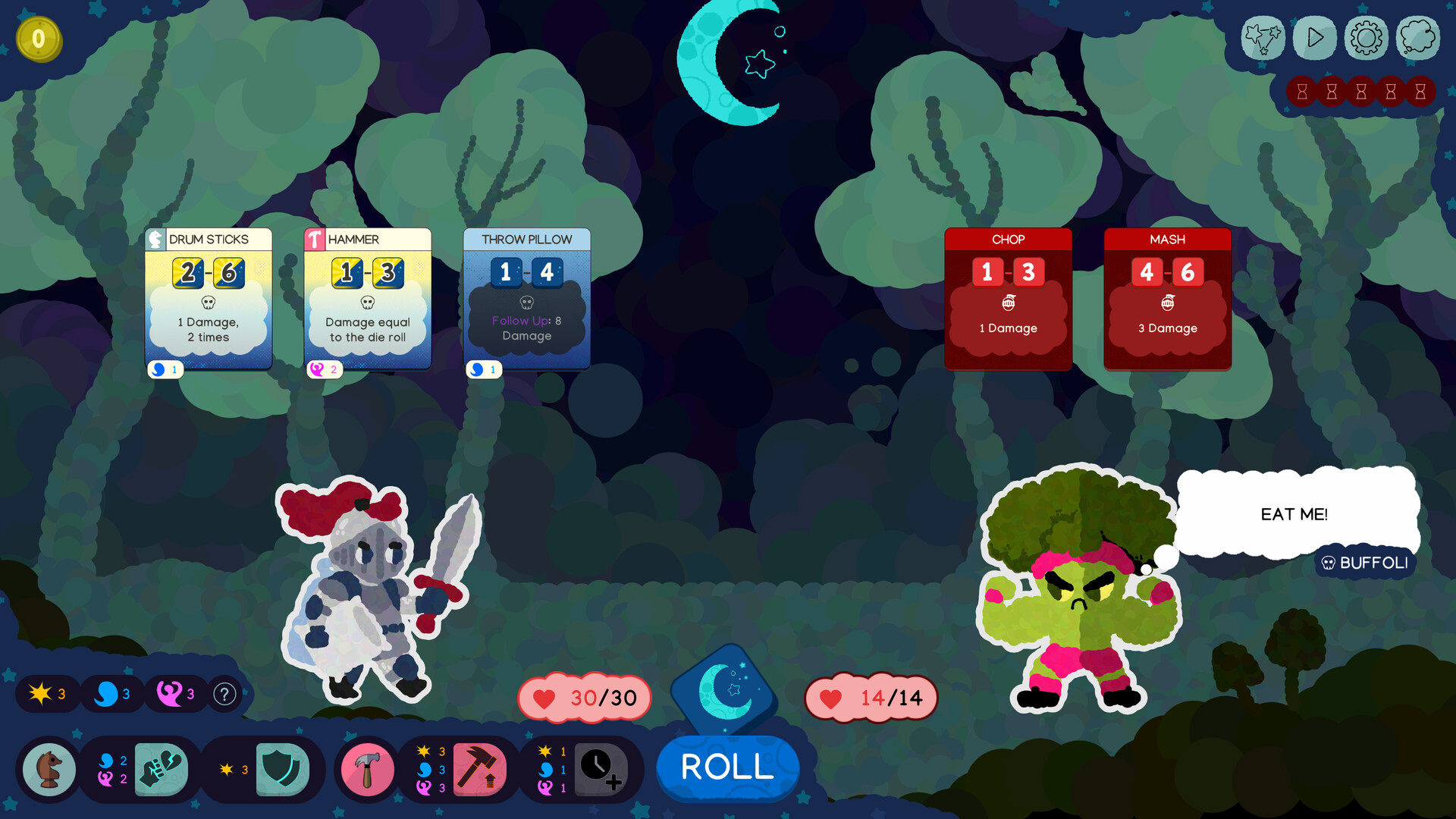
Slumber Realm is a turn-based dice roguelike soaked in 90s nostalgia from solo developer Chugga Chugga LLC, a project four years in the making that releases on Steam November 4, 2026. You are a kid armed with a single trusty d6, dropping into dreams to battle childhood fears: broccoli that fights back, dream-logic monsters, and a redesigned Sun boss built around a day-and-night cycle. One die roll triggers your entire build. Every equipment card, every memory, every class ability keys off the face you rolled, and when ten pieces of gear all want a 4 and the die shows a 4, all ten fire at once.
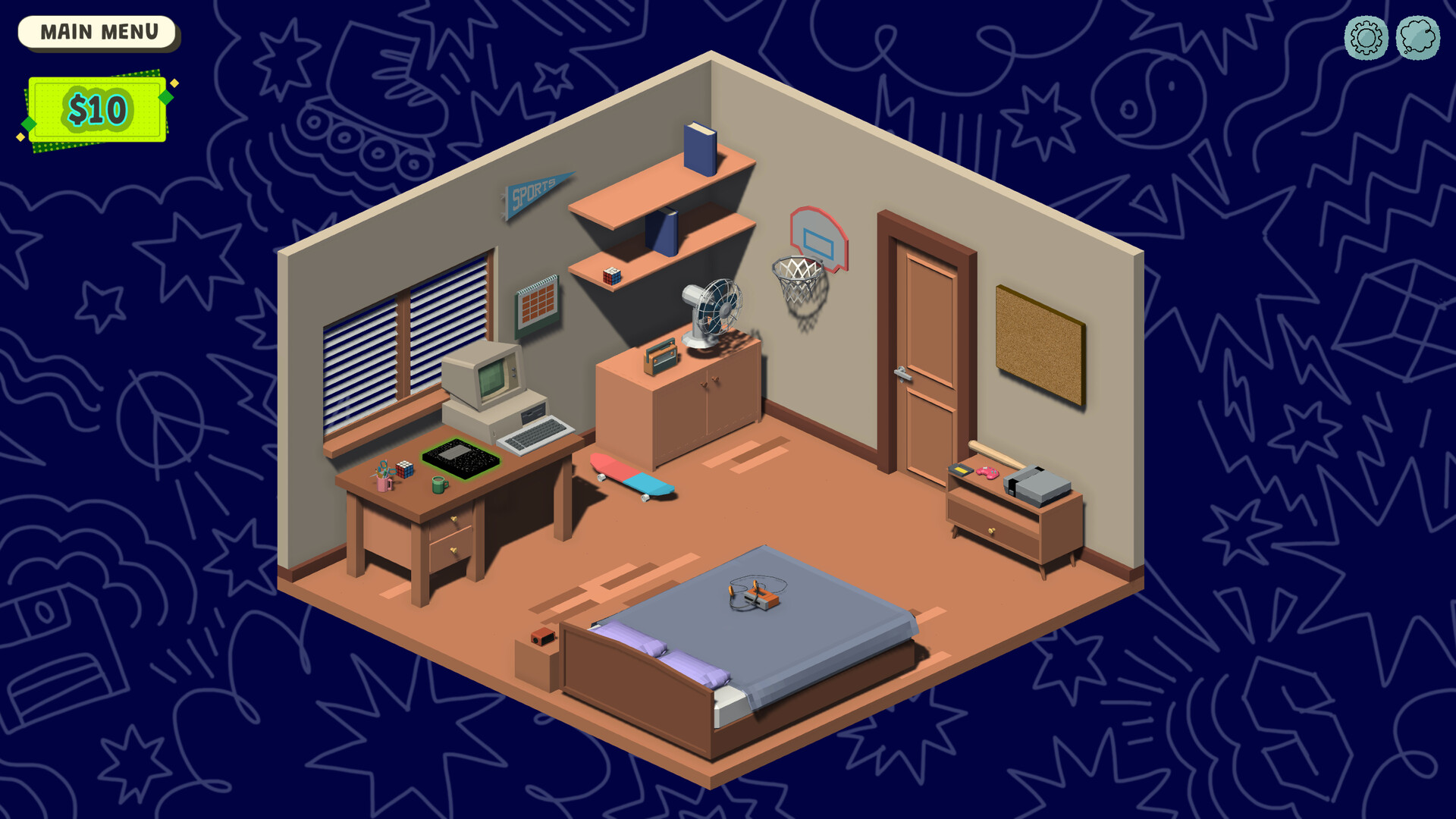
The pitch line that matters: craft degenerate combos to break the game, with new unlocks every time you wake up. The supporting cast is large for a 30-minute run format. Four playable classes, over 150 equipment cards, 30 memories that make battles easier or weirder, and 60 snacks that buff your runs. Between runs you decorate a bedroom with Y2K memorabilia, and the decorations themselves include secret unlock hides and achievement bait, from a lava lamp to a combination TV/VCR with animated channels.
Runs are about half an hour, and the design intent is that you try every combination. This guide covers the confirmed systems, the class and card intel from the demo and playtest builds, and the drafting math that keeps a run alive.
Who it is for: builders who love synergy-crafting roguelikes but want runs that fit in a lunch break, and 90s kids who want their anxiety dreams scored to dial-up-era nostalgia.
Who it is not for: players who need per-action tactical control or who bounce off randomness entirely. The d6 is the engine, not the garnish.
| Fact | Detail |
|---|---|
| Developer / Publisher | Chugga Chugga LLC (solo dev, 4-year project) |
| Release | November 4, 2026 (Steam), demo live now |
| Genre | Dice roguelike, deckbuilder, card battler, turn-based |
| Run length | About 30 minutes |
| Classes | 4 playable |
| Equipment cards | 150+ unlockable |
| Memories | 30 (permanent modifiers) |
| Snacks | 60 (per-run buffs) |
| Steam achievements | 35 confirmed, all 90s references |
| Controller | Support added in April 2026, first-pass and improving |
| Price | Not announced |
| Playtest | Free, sign up on the Steam page |
Getting Started: Your First Runs
Before You Draft Anything
- Play the demo, then join the playtest. The demo is a big vertical slice with its own content, and the playtest build has run since summer with balance patches every few weeks. Everything strong or broken in the live build is being rebalanced toward launch, which means early players are learning the newest version of every card.
- Read the Training Run. The opening run is a full tutorial that teaches Resource types, card triggers, and combat flow. Do not skip it even if you have logged a hundred roguelike hours; the one-roll trigger model is different from anything you have automated before.
- Understand Day and Night. Every combat runs on a day-to-night flow. Cards have Day triggers and Night triggers, and enemies change with the cycle. The redesigned Sun fight hands you control over the night-to-day flow, which tells you the whole game leans on cycle management.
- Know your resources. Cards generate and spend Resources, and the draft system actively helps you patch gaps: the first drafts are tuned to offer the Resource type missing from your Aspect pair. Take the hint the draft gives you.
Your First Three Runs
- Run one: learn triggers, ignore winning. Fire every card you can. Watch what activates on which face. You are building the mental table of trigger ranges.
- Run two: build wide. Try to get value from four die faces. Count them. Notice how much better a run feels when most rolls do something.
- Run three: build tall. Pick one strong card line and stack everything that supports it. Notice the ceiling, and notice the dead turns. Now you understand the trade the whole game asks you to manage.
Beginner mistakes to dodge:
- Equipping nothing. Cards in inventory do nothing. Swap equipment the moment a new card outclasses an equipped one.
- Drafting for one face. A build that only loves 6s does nothing on five out of six rolls.
- Ignoring snacks. Sixty snacks are the densest buff layer in the game, and the 0.9.0 patch added a pile of powerful new Gamer snacks. Free power left on the table.
- Sleeping on memories. The 30 memories are permanent meta-progression, and some are cheap: Chain Letter dropped to 15 Gold, What's That Racket? to 8.
- Treating the bedroom as a menu screen. Decorations include secret items tied to achievements and hidden exploration. The corkboard deliberately surfaces decorations you do not own yet.
Core Mechanics Explained
The One-Roll Engine
The d6 is your entire action economy. In a card game you pick plays from a hand; here the roll picks them for you. Equipment cards carry trigger ranges (1-3, 4-6, evens, a specific face, Day or Night) and when the die lands inside a range, the card activates. Nothing waits for permission. A roll of 3 wakes every card that loves a 3, simultaneously, and the chain resolves.
The design consequence: builds are machines with coverage percentages. Coverage is the share of die faces that produce value, and depth is how hard each face hits. The game's own balance patches teach this. When the dev widened the Sk8er card Board's trigger range from 1-3 to 1-5, that was a coverage buff. When Fixed Sling Shot jumped from 12 to 20 damage, that was a depth buff. Winning builds do both on purpose.
Triggers, Ranges, and Card Anatomy
Card anatomy from the live patch notes: a trigger range, an effect, sometimes a Resource generation, sometimes Uses (limited activations), and sometimes an evolution condition. The Tactical line shows how evolutions work: Pawn (formerly Kitten) now triggers on 1-6, pays 3 Resources, and evolves into Queen on a 6. Queen (formerly Cat) triggers on 1-6 after the same patch. The Tinker line has the deepest evolution chain: Busted Sling Shot evolves into Fixed Sling Shot when you have 2 or more Forged, and the fixed version deals 20.
Day and Night
Combat rounds flow day to night. Many cards specify a phase: Hand Drill became a Night card hitting for 5, Soldering Iron moved from Day 3-4 to Night 2-4, Lunch and Metal Lunchbox trigger on Day 1-3. Enemies follow the cycle too, and enemy abilities were updated to be announced more clearly. Phase-matching your card ranges to the current phase is the mid-fight skill on top of face-matching.
Mods, Charge, and Trick
Three status systems steer builds:
| System | What it does | Which builds abuse it |
|---|---|---|
| Charge | Stacks on Charge Cards; a Fully Charged effect fires once charged | Gamer builds, Tinker battery lines |
| Trick | Sk8er's stacking buff that moves between cards and buffs Follow Ups | Sk8er combo lines |
| Mods (Snooze, Insomnia, Trick Mod) | Enemy or self-applied modifiers with set priority display | Any build fighting control-heavy enemies |
Trick Mod now clears at the end of each combat round instead of persisting, so Trick value has to be renewed every round. That single change reshapes how you sequence a Sk8er turn.
Resources and Gold
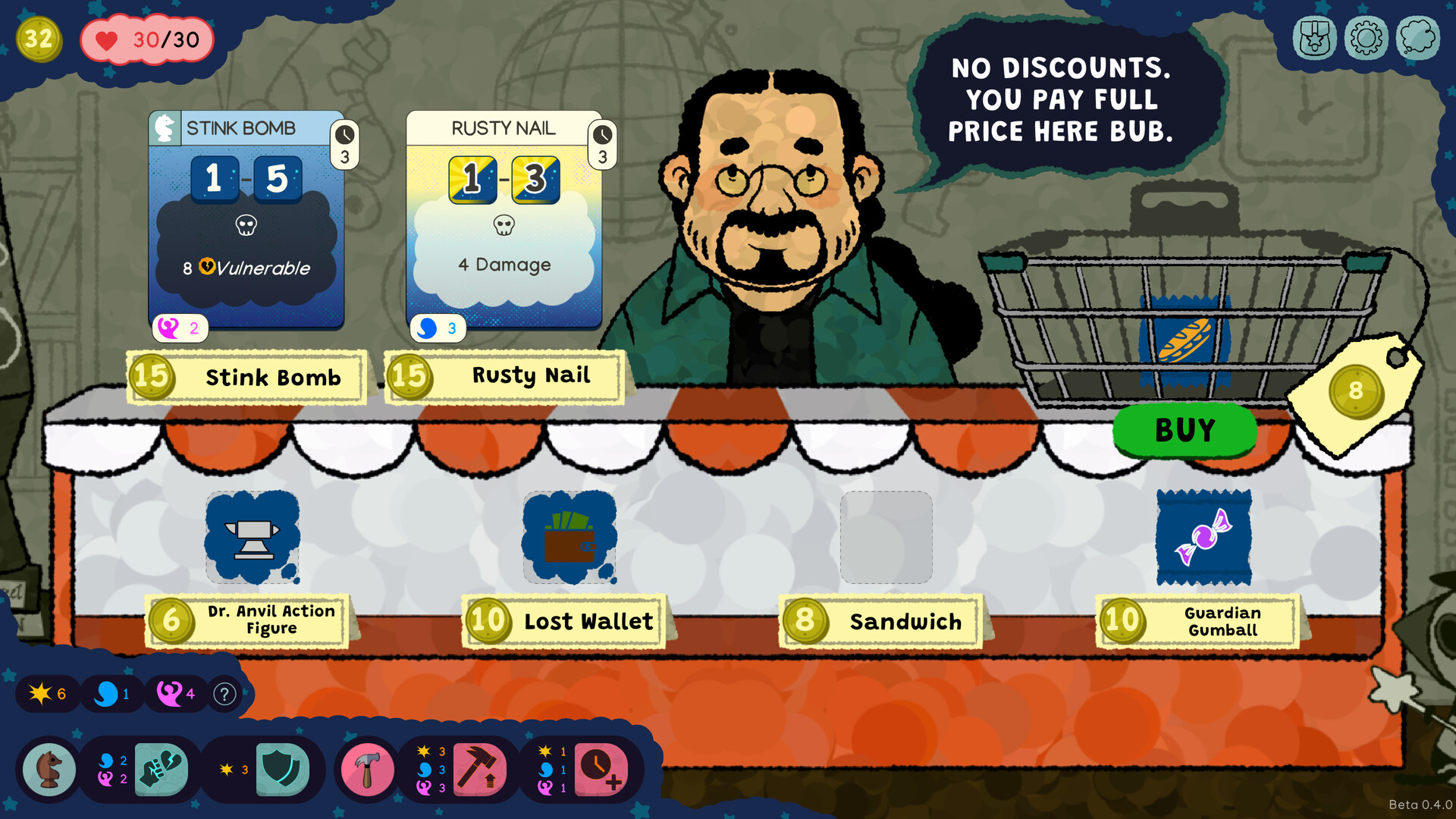
Cards generate Resource icons and gold drops fund snacks and memories. The Garage Sale memory pays 3 Gold whenever an Ability spends the last of a Resource, which turns every fully-spent card into income. Gold prices got heavy revision in the balance patches: Tinker snacks dropped from 8-9 Gold to 4-5 Gold, so snack purchase power roughly doubled in the current build.
Memories
Memories are permanent modifiers bought between runs. Confirmed examples: Safe! grants 2 Defense the first time you use an Ability each combat round. Secret Handshake gives a random card of your other Aspect 1 Charge after you use an Ability. 1-900-CHEATZZ grants 10 Turbo to any card that evolves. Garage Sale prints gold. Chain Letter, Sugar Rush Precision, Swiss Navy Blade, and What's That Racket? all dropped in price. A memory that says "easier" adds consistency. A memory that says "weirder" bends rules. Both are wins.
Snacks
Sixty consumables, per-run. The Gamer snack set grew the most in 0.9.0: Turbo Tots grant 4 Turbo to all cards, Split-Screen Sundae grants 5 Turbo to your first and last cards, High-Chew swaps Roll Low for Roll High plus 2 Pink, Boss Rush Bar grants Roll High and 4 Turbo to everything if the enemy has leveled up, Gambler's Gum is a 50% coin flip for 20 Gold gained or lost, and Goodie Bag grants two random snacks. Snack slots are limited, so the late-run question is always save-or-spend.
The Bedroom
Every run starts and ends in the bedroom, and the decoration list is a meta-progression showcase: Buffoli Stuffie, Fuzzy Rubber Stringy Thing, Guitar, Inflatable Chair, a lava lamp, a TV/VCR with animated channels, a boombox, two backpacks, plus two secret decorations, one tied to a special achievement and one for curious explorers. Unowned decorations show up more often on the corkboard, which is the game nudging you toward collection completion.
The Four Classes
The class roster is confirmed at four, with the demo and playtest already showing the Gamer and Sk8er classes in detail. Class identity shapes what your d6 means:
| Class | Confirmed intel | Build identity |
|---|---|---|
| Sk8er | Trick manipulation, Follow Up chains, Ollie and Send It abilities, board-theme cards | Combo breadth; keep Trick flowing every round |
| Gamer | Turbo, Roll High/Roll Low, Charge, level-up reactive cards | Scaling; snowballs when enemies level up |
| Tactical | Pawn/Queen evolution line, resource engines | Positioning and conversion plays |
| Tinker | Forged synergies, tool cards, the deepest evolution chains | Economy and gradual machine-building |
Sk8er build: the 0.9.0 patch made Trick more dynamic: Grip Tape grants 5 Trick to the next card, Curb Wax spreads 1 Trick to the next three cards, After-School Practice grants 3 Trick to an unactivated card at round end, and Drop In starts battles with 3 cards holding 1 Trick each. The build pattern is a relay: keep every card holding some Trick so Follow Ups always fire, and lean on Pop Shuv-Its (3 Trick to every card with Follow Up) as the multiplier. The 0.9.1 patch retuned the payment cards: Tip Jar now earns 1 Gold per card activation, Waxed Curb vacuums all Trick in play before dealing 3 damage, and Board now adds 2 Trick to the next active card instead of dealing damage.
Gamer build: Turbo is the stat that makes cards faster or stronger, and the snack list shows how hard it stacks: Turbo Tots (4 Turbo to all), Split-Screen Sundae (5 to first and last). Boss Battle evolves into a 50-damage Final Form when the enemy has leveled up, and No Risk, No Reward converts all your Defense into 3 damage per point removed. Score Tally deals damage equal to the total of all dice rolled, which rewards Turns where you hoard high faces. The Gamer wants long fights and level-up triggers.
Tinker build: the Forged mechanic is the spine. Jumper Cables deal 3 damage per Forged, Frisbee Wall grants 2 defense per Forged, and Busted Sling Shot evolves at 2 or more Forged. Deadly Sword pays a 10-damage follow-up on Forged. The build is a slow snowball: forge early, convert Forged stacks into scaling damage and defense, and let evolution chains finish fights.
Draft discipline for every class: the game improved first drafts to offer the Resource type missing from your Aspect pair. That is the designer telling you his intended fix for your build gap. When the draft shows a resource-matching card you do not understand, take it and read it before skipping.
Progression Strategy
Unlock order is a real decision because new unlocks arrive every run.
- Week one goal: consistency unlocks. Chase memories and cards that widen trigger ranges and add Defense. The live patches already buffed exactly these: D Battery, Empty Soda Cans, Trash Lids, Art Project, and Hammer all got wider ranges.
- Then: economy unlocks. Garage Sale, Tip Jar, and the discounted snack prices make every later run richer. Gold early is card slots later.
- Then: evolution chains. Pawn into Queen, Busted into Fixed Sling Shot, Boss Battle into Final Form. Evolutions are your run-ceiling raises.
- Always: one achievement direction per session. 35 achievements ship with the game, most are 90s references, and several tie to secret bedroom decorations. Picking a direction keeps 30-minute sessions purposeful.
The Librarian is a hidden conditional encounter: its appearance requirement was raised to 10 completed runs, and it shushes you after 20 seconds of inactivity. Consider run ten your graduation exam.
Step-by-Step Strategies
1. The coverage audit (every draft). Before confirming any card, count your active faces. Below three, fix it. At three, add the fourth if it is cheap. At four or five, you have earned the right to chase a nuke. Write your ranges on paper for your first ten runs; coverage math is counterintuitive until it is not.
2. The phase-matched opener. At battle start, note the phase and pick the card whose trigger range is widest in the current phase. Night lines (Hand Drill 1-3 for 5 damage) and Day lines (Lunch 1-3) should never both sit underfed. Draft so each phase has one heavy hitter.
3. The Trick relay (Sk8er). Sequence cards so the card activating next always holds Trick. Grip Tape (5 Trick to next) into your damage card into Curb Wax (spread to three more). End rounds with After-School Practice feeding an unactivated card so the next round starts warm. Trick Mod clears each round, so never bank Trick for later; spend it now.
4. The level-up bait (Gamer). When a fight can level the enemy, delay your Boss Battle card until the level-up fires, then ride the evolution into Final Form for 50. Bring Boss Rush Bar as insurance: Roll High plus 4 Turbo to everything exactly when the enemy levels.
5. The Forged snowball (Tinker). Spend the first two fights forging: Jumper Cables and Frisbee Wall both scale off Forged stacks, so early turns that feel slow are buying permanent scaling. Forge to 2, evolve the sling shot, then pivot from setup to damage. Deadly Sword's 10-point follow-up closes the fights the snowball opened.
6. The snack slot rule. Hold one slot for a defensive snack, one for a roll modifier, and spend the rest on scaling that matches your class. Buy High-Chew when your build hates low faces, Turbo Tots when your build is wide, Split-Screen Sundae when your build is a two-card combo. Gambler's Gum is for runs that are already ahead.
7. The memory economy. Between runs, buy the cheapest unowned memory that adds consistency before any expensive weird one. What's That Racket? at 8 Gold and Sugar Rush Precision at 12 are consistency buys. Chain Letter at 15 is an economy buy. Save the rule-benders for when your win rate is stable.
8. The bedroom completion loop. After each run, check the corkboard before queuing the next dream. Unowned decorations surface there deliberately, two decorations are secret, and one secret card hides somewhere in the Slumber Realm. Completion rewards players who look around.
Advanced Tips
- Ranges are the real rarity. A 1-6 trigger on a mediocre effect beats a 6-only trigger on a strong one for most of the game. The Pawn patch (3-6 to 1-6) made it a cornerstone overnight.
- Uses are burst, ranges are salary. Limited-use cards (AA Battery got cut to 1 Use) should resolve fights; unlimited triggers should pay your bills. Draft accordingly.
- Charge discipline. Charge Cards show Fully Charged before their big effect, and cards that grant no resource no longer gain extra resources from Charge. Do not stack Charge generators in a build with no spender.
- Read the Sun fight as a tutorial. Its redesign around day and night with player control of the flow is the dev showing you his favorite toy. Phase-control cards will matter most in fights like it.
- The journal sketches bosses early. The Burger Knight sketch and Dream Log art updates mean the journal is a bestiary. Check it before fights your build has not solved yet.
- Achievements teach mechanics. The achievement design philosophy is learn the game, try varied content, attempt challenges. Stuck on what to unlock next? Read the achievement list as a curriculum.
- Enemies have 9-card hands. FreeMoney.exe Spammed stops creating cards at 9 enemy cards, which tells you enemy board size caps. AoE and hand-pressure effects scale with that cap in mind.
- Insomnia now ends with the combat round, not your turn. Control effects got sharper in 0.9.1, so treat debuff timing as part of round math.
- Right-click less, click more. The background and characters react to clicks in battle (the jello dots), and mouse-wheel rotates bedroom decorations. Small QoL, real charm.
Difficulty and Balance Outlook
The first big balance patch cut standard enemy health by roughly 25 percent while leaving the Training Run untouched, halved post-battle healing rewards, and softened a launch-punishing curve after playtester feedback. Post-battle healing is a consumable-adjacent economy: halving it pushes you toward Defense cards and snack-based sustain instead of healing through mistakes. Expect the live-build meta to keep shifting until November 4, and expect your favorite card to get a patch note eventually. The dev reads Discord, Bluesky, Twitch VODs, YouTube, articles, texts, and anonymous telemetry, so feedback travels fast into balance changes.
FAQ: Common Mistakes and Quick Answers
When does Slumber Realm release? November 4, 2026 on Steam. The demo is live now and the playtest runs until launch approaches.
What does it cost? No price announced yet.
Is there a demo? Yes, a full-featured free demo on the Steam page, updated alongside the playtest builds with every patch.
How long is a run? About 30 minutes by design, tuned so you can try a different combination every wake-up.
How many classes, cards, memories, snacks? Four classes, 150+ equipment cards, 30 memories, 60 snacks, 35 achievements.
What is the single most common way to lose a run? Narrow coverage. Builds that trigger on one or two faces spend most turns doing nothing, and no boss nuke pays for that much downtime. Fix coverage before chasing ceiling.
Sk8er or Gamer for a first clear? Sk8er if you like maintaining a combo engine every round. Gamer if you like scaling that punishes long fights. Both got fresh patches in 0.9.0 and 0.9.1, so neither is running on old weak versions.
Do I have to decorate the bedroom? No, but two decorations are secret, one hides behind an achievement, and the corkboard pushes unowned items toward you. Collectors get a second game here.
Does the roll decide everything? The roll decides what fires, your build decides what that is worth, and snacks plus abilities decide what the roll means. Randomness is the input, not the verdict.
Controller or mouse? Controller support shipped in April 2026 and keeps improving, but the genre default is mouse-first for drafting and browsing. Either works; the new Unlocks menu supports both.
One line version: how do I win? Cover four faces, feed your relay every round, buy the cheap memory, and when the build starts firing on every roll, stop calling it fair and start calling it Tuesday.
Screenshots