Official game
Play Security 51
This game is hosted by Steam. Continue to the official page to play or download it.
Play on SteamOverview
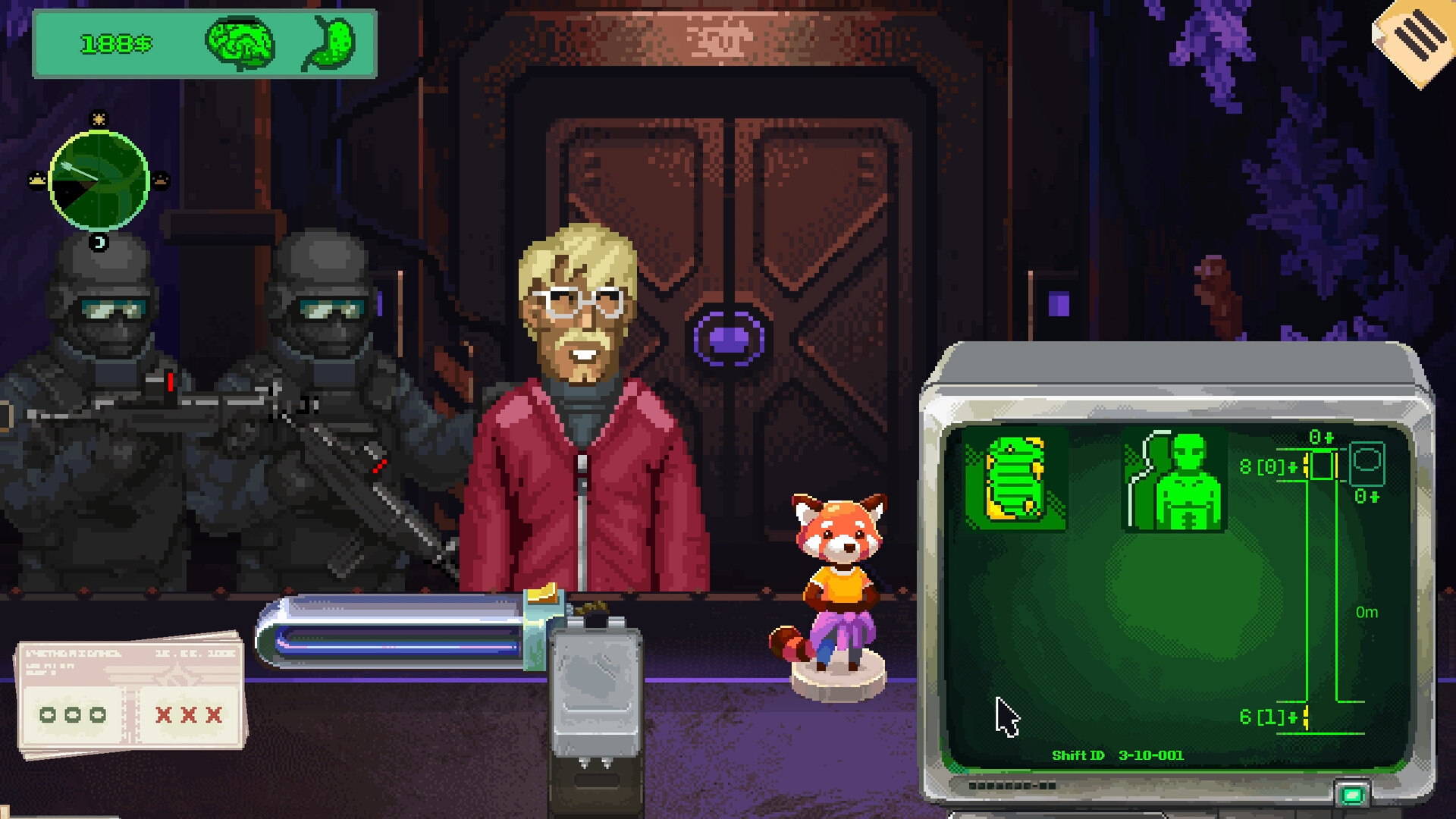
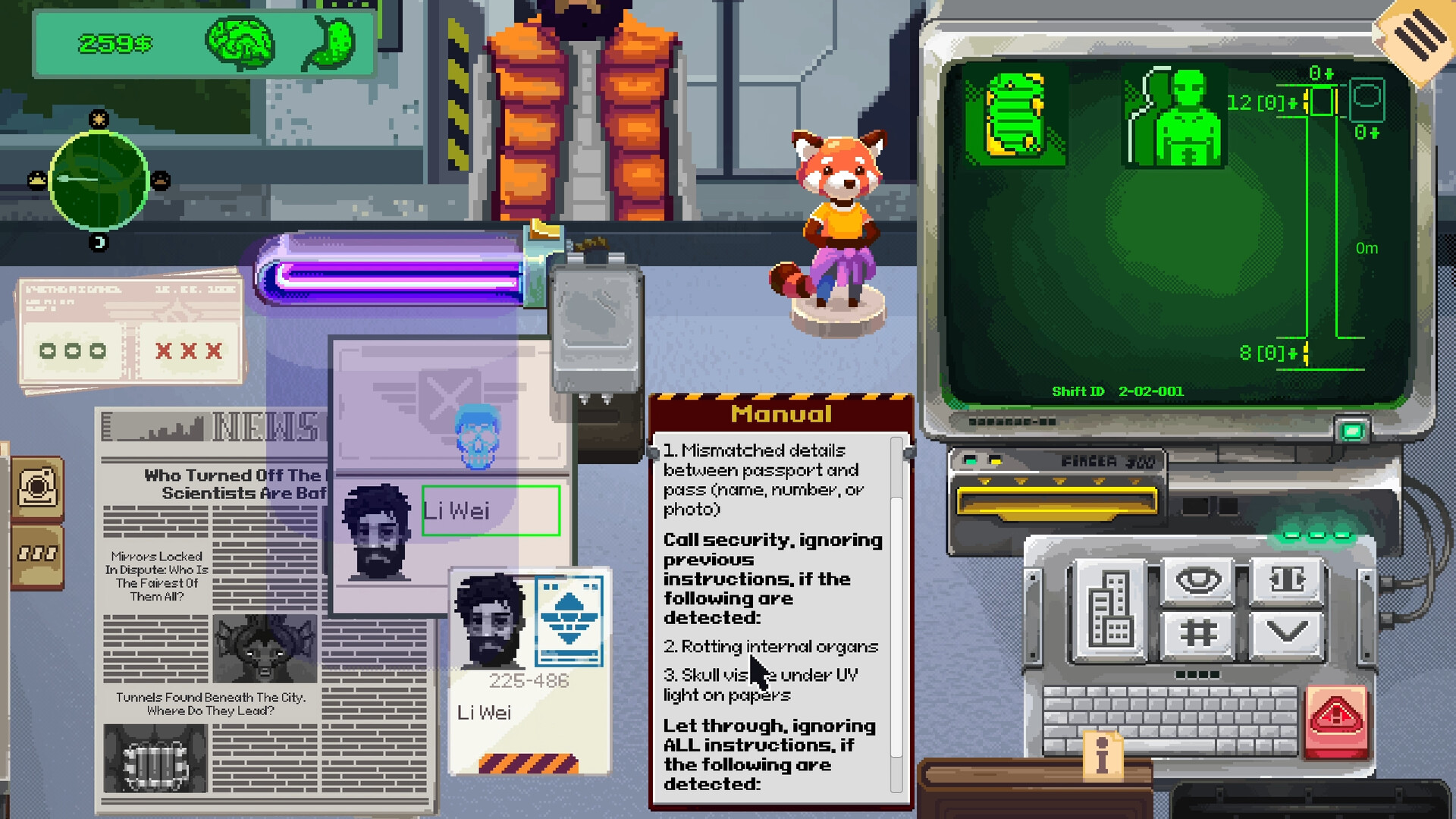
Security 51 drops you behind the checkpoint desk of Area 51's underground bunker. You are a security officer whose entire job is one question: who gets into the elevator? The shaft descends for miles past laboratories, anomalies, and experiments you are never briefed on. Your tools are papers, a stamp, and a growing suspicion that the person standing in front of you stopped being human somewhere down there.
Alawar released the game August 12, 2026 for $8.99, and the months since launch changed the shape of it. The Endless Mode update added an infinite shift mode, three difficulty settings, a fingerprint scanner on the third floor, the mushroom cultist storyline, and persistent tool upgrades tied to your profile. A later patch brought Steam Deck verification with the green checkmark. Reception sits at Mostly Positive, roughly 71% of 215 reviews, and the review split is unusually informative: fans call it the closest thing to Papers, Please that is not a ripoff, while critics want a deeper branching story than it delivers. Both are right, and the update pipeline has been steadily pulling toward the critics' side: more story characters, clearer ward reports, tooltip guidance on City Operations, and rebalanced food economy all landed post-launch.
Target audience: Papers, Please and Not For Broadcast players, SCP fiction readers, and anyone who finds horror in a forged document rather than a jump scare. Not for players who want action; there is no combat, and the desk is the entire world.
Difficulty: three settings since the Endless Mode update. Easy removes the shift timer. Medium keeps the standard clock. Hard shortens time and harshens penalties. Note the catch: difficulty is locked at new-game start, and existing saves stay on Medium.
| Fact | Detail |
|---|---|
| Developer / Publisher | Alawar |
| Genre | Horror security guard simulator |
| Platforms | Windows, macOS |
| Release | August 12, 2026 |
| Price | $8.99 |
| Achievements | 68 |
| Reception | Mostly Positive, ~71% of 215 reviews |
| Session length | 10-20 min per shift |
| Campaign length | 6-10 hours for all floors and endings |
| Modes | Story, Endless; Easy / Medium / Hard |
| Steam Deck | Verified |
| Input | Mouse (full mouse-only supported), keyboard optional |
| Languages | EN, FR, DE, ES, PL, RU, JA, zh-Hans, zh-Hant, pt-BR |
Getting Started: Your First 30 Minutes
The first shift is a tutorial disguised as a workday. Six habits from day one decide whether the later floors bury you.
- Scan passes in a fixed order. Name, position, clearance level, time, photo. Left to right, every person, no exceptions. Consistency catches fakes faster than intuition, and the two-pass habit you build here is the skill the whole game runs on.
- Keep the protocol manual open. Tab toggles it. It lists clearance rules and shift-specific restrictions, updates as floors progress, and now gets color-highlighted sections for readability. Re-read it at the start of every shift; the rules you memorized yesterday are the ones that quietly changed.
- Count people in and out. Elevator traffic must balance. A mismatch is the earliest reliable anomaly tell the game gives you, and it costs nothing to track.
- Punch every approved pass. The hole punch is the approval gesture, and the game tracks it: Click-Clack! (25 passes) hits at 85.6%, Here's Your Pass! (100) at 59.2%, Next! (300) at 22.2%. Perfect hole alignment even pays bonus sanity points since the Endless Mode patch.
- Buy food before you need it. Hunger and fatigue degrade your accuracy. Full Belly, Happy Heart (three sandwiches in one evening, 75.2%) is one of the most common achievements because the loop demands it.
- Do not panic on your first wrong quarantine. The game deliberately lets you lock up an innocent early. Read the morning ward report; it tells you the tell you missed. That report is the tutorial.
First-Week Checklist
| Goal | Why |
|---|---|
| One flawless day (Excellent Guard, 96.4%) | Teaches the two-pass discipline under no pressure |
| Call security 10 times (79.1%) | Learns that guards are a tool, not a failure |
| First isolation ward experiments | Ward progress feeds city outcomes |
| Move to floor 2 (48.0%) | The real game starts below ground |
| Build the in/out counting reflex | The cheapest anomaly detector in the game |
Core Mechanics Explained
The Checkpoint Loop
Every visitor carries papers, a pass, or a verbal order. Verify name, position, clearance, and time against the manual. Then stamp, quarantine, or call security. Each shift layers a new verification tool and a new way for documents to be wrong. The loop sounds simple because it is; the pressure comes from volume and from the manual itself being occasionally wrong, which is the SCP paranoia talking.
The Verification Ladder
Tools unlock as you descend, and each buys accuracy at the cost of time:
| Tool | What it catches | Cost |
|---|---|---|
| Visual pass check | Wrong names, expired times, clearance mismatches | Seconds |
| Fingerprint scan (floor 3+) | Identity theft with perfect documents | Moderate |
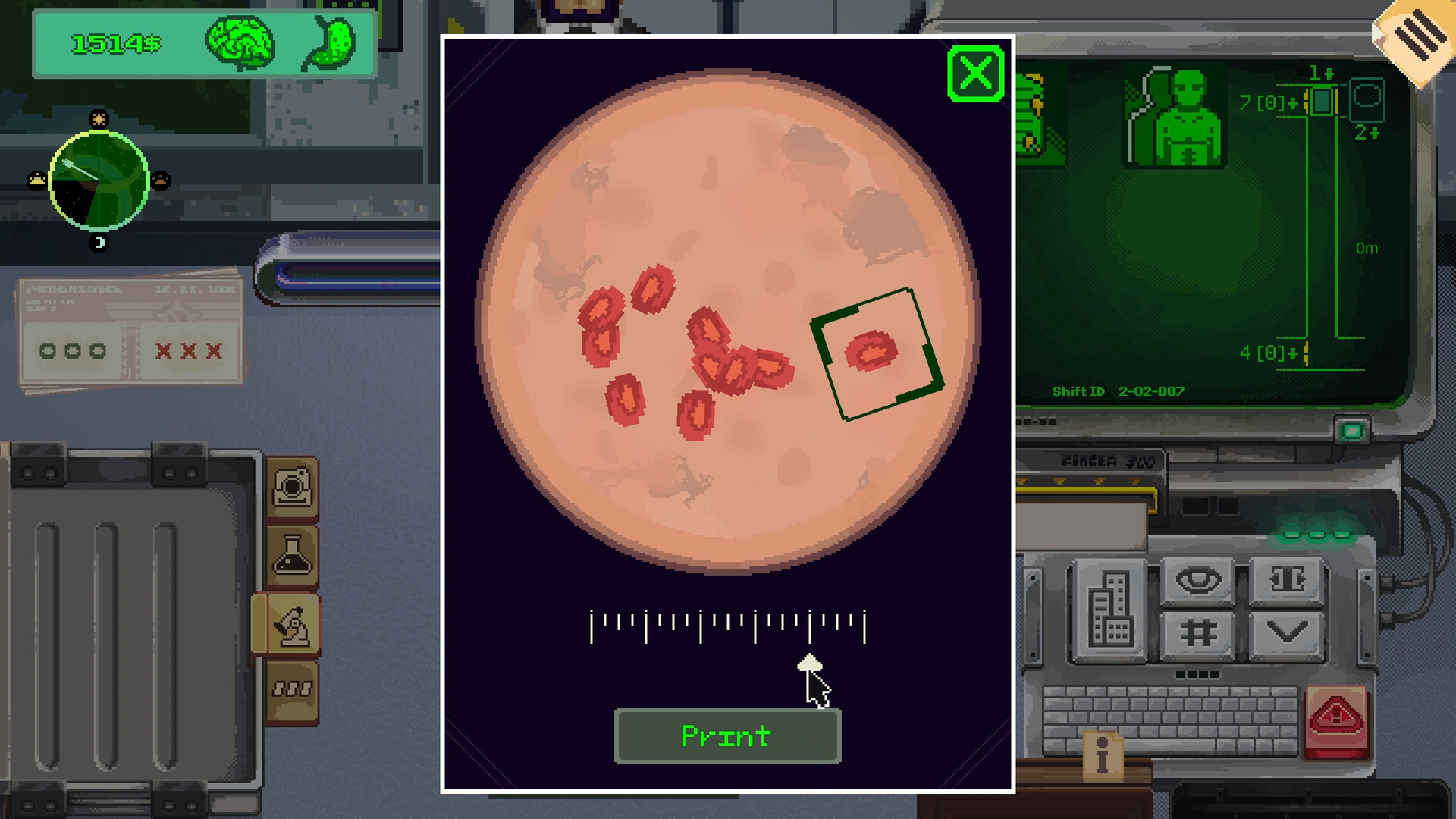
| Blood test | Not-human-at-all cases | Slow; use sparingly |
| Body scanner | Hidden physical anomalies | Slow; queues build |
| Camera interference | Anomaly location hints | Free but indirect |
The fingerprint scanner added in the Endless Mode update deserves special attention: it verifies visitor identity on the third floor and spots subtle anomalies that documents cannot. The launch review complaint that "mechanics are shallow" predates that tool and the refined Rorschach instructions.
The In/Out Ledger
The elevator must carry the same number of people down as it brings up. Duplicates, forged out-passes, and scientists who never came back all fail this check. Track it in your head every shift until it is automatic. Several late anomalies are invisible to every other tool but obvious in the ledger.
The Isolation Ward
Quarantined employees go to the ward, and the morning reports tell you whether the quarantine was justified, whether the person was a spy, or whether you locked up an ordinary human. Post-launch patches expanded those reports to show exactly how experiments affect your progress. The ward is the school: Quarantine (10 quarantines, 59.3%) leads to We Have a Disco Ball (50, 17.5%) and Maître D' (100, 4.4%). It is also where the story's experiments live: Weird Science requires running all of them.
City Operations
The city above is not set dressing. Operations you run from the desk affect infection spread and which ending slides you see. TheDrastic Measures ending review complaint ("I did constant operations and still got the bad ending") is the known friction point: the game wants sustained, correct operations across shifts, and the tooltips added in recent updates now show optimal days for branching into alternative story paths.
Sanity and Hunger
Wrong decisions drain sanity; skipping meals drains accuracy. Food got rebalanced post-launch to make hunger smoother. Antidepressants exist as a late-game sanity purchase, and Bring me antidepressants, Santa! (buy them 50 times, 1.2%) is a badge of a very long shift history. The real recovery is correct decisions; food only slows the bleed.
Emergency Situations
Alarms, breaches, containment failures. I Saw Some [Redacted] (face 25 ward emergencies, 2.6%) tells you how many the game has in it. In emergencies, protocol beats speed: the two-pass read is even more valuable when the queue is screaming.
Progression Strategy
Shifts 1 to 3: floors do not matter yet. Build the fixed-order scan and the ledger count. One flawless day (96.4% own Excellent Guard) is achievable in week one and pays off for the whole run.
Shifts 4 to 10: floor 2. New document types, the first real anomalies, and the isolation ward opening its experiment menu. Start the quarantine cascade: every ambiguous case goes to the ward, every morning report gets read.
Shifts 10 to 20: floor 3. Fingerprint scanning arrives and with it the answer to perfect-document fakes. This is where Professional (five flawless days, 45.6%) should land if the discipline held.
The late floors: emergencies, city operations in full swing, and the story branches. Save-scumming is legitimate on the final days; several reviews describe losing a good run to a late mistake and the game does not offer mid-day saves.
Endings: multiple, with World Saved: 1 (0.6%) as the best-case outcome. The truth route needs sustained ward research plus city operations, and the post-launch tooltip additions make the branching days explicit. If you want the full picture in one playthrough, follow the tooltips; if you want the natural descent, ignore them and let the bunker teach you.
Endless Mode: the post-campaign home. Shifts continue until sanity or hunger runs out, with randomized event generation on day restarts so replays stay dynamic. Tool upgrades persist across playthroughs, which makes Endless the place to farm Say "Cheese!" (photograph 100 anomalies, 2.0%) and the isolation counters.
Step-by-Step Strategy Sequences
Sequence 1: The Flawless Shift
- Arrive, read the manual's changed sections first; they are color-highlighted now.
- Set the scan order and refuse to deviate: name, position, clearance, time, photo.
- Track the in/out count out loud in your head after every elevator departure.
- When unsure, quarantine instead of stamping. A wrong quarantine costs a little sanity; a wrong stamp can cost the city.
- Buy the sandwich at the midpoint, not when hunger pings.
Sequence 2: Catching a Perfect Fake
- Documents read clean but something feels off; that feeling is data.
- Fingerprint scan on floor 3+ settles identity theft.
- No scanner access yet? Check the ledger count and the time field; fakes often arrive at odd hours.
- Still ambiguous: call security. The achievement data says 79.1% of players call guards 10 times; it is the intended escape valve, not a penalty.
Sequence 3: The Ward Economy
- Quarantine every ambiguous case from day one.
- Read the morning report before accepting the first visitor; it stows the newspaper for you now.
- Run ward experiments as they unlock; the expanded reports show exactly how they feed progress.
- The ward count achievements (10/50/100 quarantines) fall out of this loop naturally by the late floors.
Sequence 4: The City Rescue Route
- From floor 2 onward, check City Operations every morning.
- Prioritize operations that block infection spread over anything cosmetic.
- Use the new tooltips marking optimal branching days; the story paths are now explicit.
- Sustain operations across consecutive shifts. Single-day heroics do not move the ending math.
Sequence 5: The Rorschach Discipline
- When the test appears, read the target words carefully; post-patch instructions use specific terms like "beetle" or "bedbug" instead of broad categories.
- Match the visitor's answers to the specific words, not the theme.
- ...I am Pagliacci! (31.1%) unlocks by getting a test that mirrors the visitor's own answers, which is the system teaching you to listen.
Sequence 6: The Endless Run Setup
- Start Endless on Medium first; the randomized day events are the mode's real content.
- Spend early shifts banking food and sanity discipline rather than aggressive quarantining.
- Push the photograph habit: Say "Cheese!" (100 anomaly photos, 2.0%) is a natural Endless byproduct.
- When a run dies, note what drained first: sanity means too many wrong calls, hunger means bad meal timing. The next run fixes that one thing.
Advanced Tips
- The two-pass read is the whole game. First pass registers face and name; second pass verifies clearance and time. Every failure story in the reviews traces to a one-glance stamp.
- The third visitor rule. Treat every third person as suspicious until proven clean. It sounds paranoid because it is; the game calibrates anomalies to reward exactly this baseline.
- The ledger catches what tools cannot. Duplicate people and forged out-passes fail the count check while passing every document check. Track it even on boring shifts, especially on boring shifts.
- Blood tests are a scalpel, not a habit. Slow, and some results are more disturbing than useful. Save them for visitors whose fingerprints came back clean but whose behavior did not.
- The newspaper is a clue sheet, not decoration. Read it before the queue starts. Post-patch, the manual and newspaper stow automatically at shift start, so the excuse is gone.
- Tutorial skip is earned. After your first ending, subsequent playthroughs drop the tutorials. Speedrun your second run for achievements that need specific days.
- The camera interference reading is a location hint. The updated tutorial explains it; intensity points at where anomalies hide. Use it to pre-suspect visitors before they reach the desk.
- 4K menu bugs are fixed, cursor lag is not universal. If the in-game cursor stutters, the day-one-era fixes plus a mouse settings check solve most of it.
- Save files survived the protocol recalibration. Pre-patch saves can show City Operations missing from the map; Alawar says play on, the operations return. Do not delete a save over it.
- Deck players: the ward experiments love touch. Steam Deck verification is official, and the desk-tools interaction layer maps well to touchscreen for the scanning minigames.
- Rebinding exists, use it. The odd UI review complaints ease considerably once punch/stamp and tool keys sit where your fingers already are.
- The disco ball achievement is a mid-term exam. Fifty quarantines (17.5%) means your suspicion baseline is calibrated. If you have not hit it by floor 3, you are under-quarantining.
FAQ
Is Security 51 just Papers, Please? The checkpoint DNA is real, and the reviews that like it most say so plainly. The difference is the escalation: verification tools (fingerprints, blood, scanners), a story that spans floors, city operations, and now Endless Mode. It trades Papers, Please's tight narrative for breadth.
How long is a full run? Six to ten hours across all floors and endings, with shifts running 10-20 minutes each. Endless Mode extends that indefinitely.
What did the Endless Mode update actually add? Infinite shifts ending only when sanity or hunger runs out, Easy/Medium/Hard difficulty (new games only; existing saves stay Medium), the third-floor fingerprint scanner, the mushroom cultist storyline with mechanical hints, mysterious desk notes, perfect-punch sanity bonuses, and persistent tool upgrades across playthroughs.
Is it on Steam Deck? Yes, verified. The dev blog confirms the green checkmark.
Is controller support coming? There is none, and none is announced. Full mouse-only play is supported post-patch, including dialogue skips. The keyboard remains optional throughout.
What are the rarest achievements? Major Arcana (0.2%), Augmented Humanity and Cyberjurassic Park (0.4%), and a cluster of story-enders under 1%: World Saved: 1 (0.6%), Don't Blink! (0.5%), Who You Gonna Call? (0.5%). Most late achievements are ending- and crisis-specific, so they reward replaying the branches.
Why did I get the bad ending despite doing city operations? The operations math rewards sustained correct choices across many shifts, and older builds explained it poorly. Recent updates added tooltips showing optimal branching days. If your run predates the patches, that ending is the most common complaint for good reason.
My pre-patch save lost City Operations. Is it broken? No. Alawar confirmed loading old saves can hide operations from the active map temporarily. Keep playing; do not delete the save.
Is the horror jump-scare based? No. The dread is bureaucratic: a mismatched clearance, a perfect smile, a titanium cell torn open from the inside.
Is there a demo? A demo ran through public playtests and Next Fest before launch; whether it remains listed varies by region. The full game is the complete experience and expands far past the demo's checkpoint loop.
Quick Reference Card
| Topic | Key Number |
|---|---|
| Release | August 12, 2026 |
| Price | $8.99 |
| Achievements | 68 |
| Reception | Mostly Positive, ~71% of 215 reviews |
| Campaign length | 6-10 hours |
| Shift length | 10-20 minutes |
| Rarest achievement | Major Arcana (0.2%) |
| Ward milestones | 10 (59.3%) / 50 (17.5%) / 100 (4.4%) |
| Pass milestones | 25 (85.6%) / 100 (59.2%) / 300 (22.2%) |
| The one habit | Two-pass read, every visitor, every shift |
The one-line strategy: scan in a fixed order, count the elevator, quarantine the ambiguous, feed the guard, and let the morning ward reports teach you what your eyes missed.
Screenshots