Official game
Play PAPERHEAD
This game is hosted by Steam. Continue to the official page to play or download it.
Buy on SteamWhat Is PAPERHEAD?
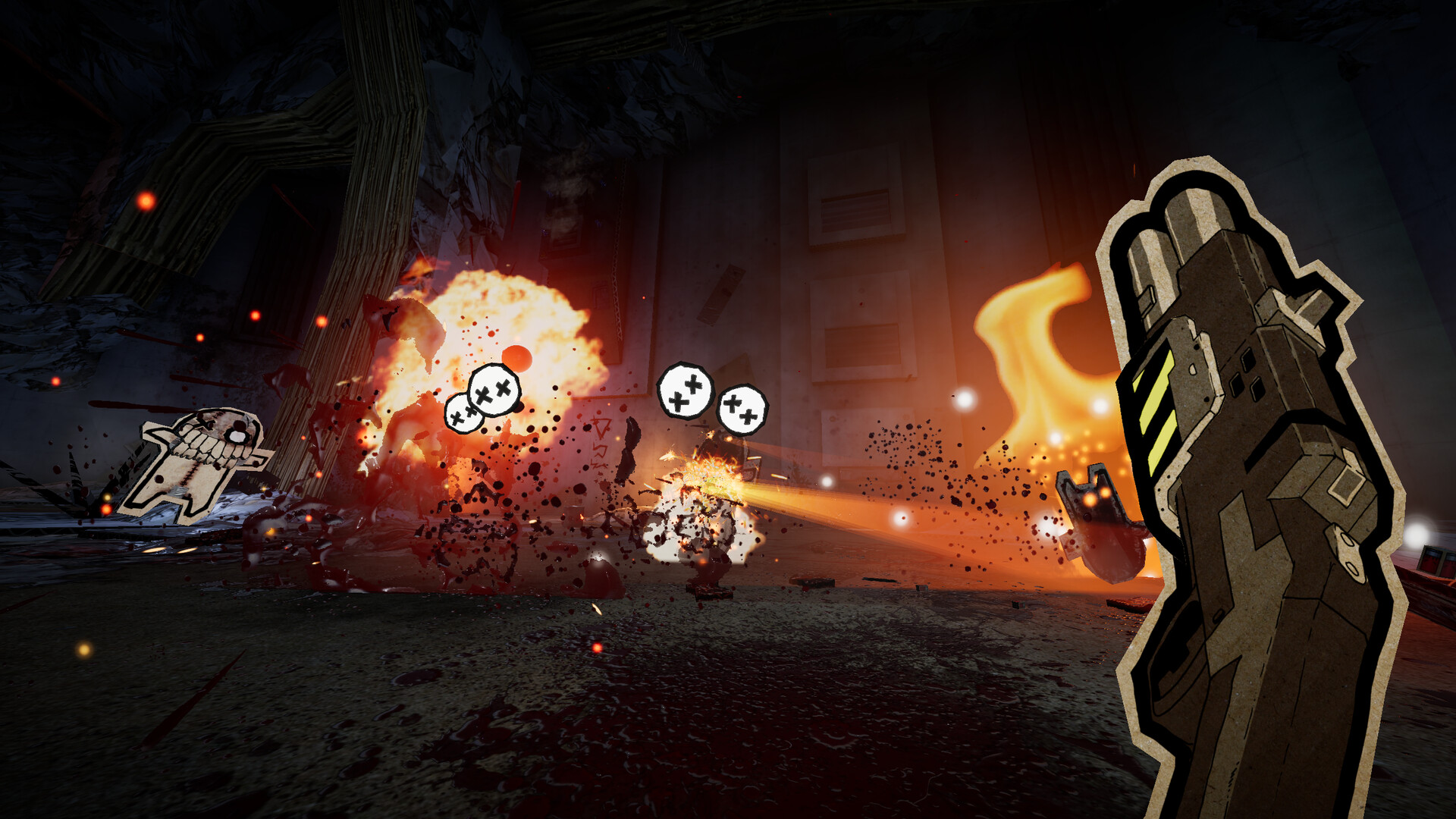
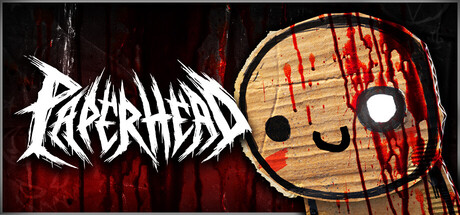
PAPERHEAD is a first-person boomer shooter dropped into a cardboard horror story, out on Steam October 9, 2026 for $15.99, published by HypeTrain Digital and developed by Paperhead te4m. You run through an abandoned research facility with a shotgun in one hand and a pencil that can redraw the room in the other. Everything is paper: the enemies, the props, the walls. The pitch, repeated across every store asset, is a single question: why would cardboard bleed?
The game grew out of PAPERHEAD EP.0, a free prologue that built a cult following (the launch trailer from a big FPS channel pulled over 250,000 views) before its Steam page closed on September 24, 2026. The 1.0 release keeps the prologue's movement-and-kick combat and adds a two-currency shop economy on top. Reviews in the first 48 hours sit at Positive across 40+ reviews, with players calling out level design, music, and movement as the highlights, and a few flagging performance hitches on mid-range PCs.
Expect a 5-8 hour campaign depending on how hard you chase secrets, plus achievement hunting across 25 achievements.
Game Details
| Field | Detail |
|---|---|
| Genre | Boomer shooter / movement FPS with horror |
| Developer | Paperhead te4m |
| Publisher | HypeTrain Digital |
| Platform | Windows 7 64-bit or later |
| Price | $15.99 |
| Players | Single-player |
| Release date | October 9, 2026 |
| Controller | Full support, DualShock and DualSense included |
| Achievements | 25 |
| Steam Cloud | Yes |
| Languages | English, French, German, Spanish, Japanese, Korean, Polish, Russian, Simplified Chinese, Portuguese-Brazil, Turkish |
System Requirements
| Component | Minimum | Recommended |
|---|---|---|
| OS | Windows 7 64-bit | Windows 10 64-bit |
| CPU | 64-bit processor | 2.4 GHz quad-core |
| RAM | 2 GB | 4 GB |
| GPU | GeForce 9800GT class | GeForce GTX 460 class |
| DirectX | Version 9 | Version 11 |
| Storage | 2 GB | 3 GB |
Those minimums look ancient, but launch-week reviews mention lag on decent hardware, so treat the listing as aspirational. Cap your FPS and drop shadows if the paper textures start chugging; the art style hides low settings better than most shooters.
Getting Started — The First Hour
1. Learn the Four Verbs
PAPERHEAD's combat is four actions, and the whole skill ceiling is chaining them:
- Toss — throw enemies into the air. This sets up everything else.
- Kick — boot exploding barrels into crowds. The barrel is a grenade you already owned; kicking it costs nothing.
- Stomp — land on airborne enemies, Mario-style. It is a movement kill, and it keeps your momentum alive.
- Blast — the shotgun. The honest answer when the joke stops working.
The order matters more than the tools. Kick the barrel first. Stomp what is airborne. Draw when you are dry. Shoot when nothing else applies. Players who lead with the shotgun run out of shells in every arena, because the game prices shells as the scarcest resource and everything else as free.
2. Understand What the Pencil Is For
The pencil is both weapon and room editor, with three documented uses:
- Sketch bombs — draw a bomb, then kick it at enemies. Treat this as craftable grenades.
- Draw doors — soft lockpicks for blank walls. If a corridor dead-ends in cardboard that looks thinner than the load-bearing stuff, try a door.
- Write on walls — the store says "no reason needed." It is flavor. Do not stand in a fight to graffiti.
There is no published ink meter or durability stat. Play like sketches are cheap, and re-check after patches. The pencil is the answer when the room is the puzzle; the shotgun is the answer when the room is already solved and something is still standing.
3. Do Not Hunt a Shop in the Prologue Mindset
If you played EP.0, forget its economy. The prologue had clips that did nothing, and the 1.0 release is where they start spending. Two shops exist now, and they take different currencies.
The Clip Economy — Two Colors, Two Shops
Devlog 4 laid out the 1.0 economy, and getting it wrong for the first two floors is the most common launch-week mistake. There are two clip colors:
| Clip | Where it comes from | What it buys |
|---|---|---|
| Regular clips | Common pickups across levels | Consumable shop: HP refills, ammo restocks, armor, extra weapons. A huge dump can buy a skill point. |
| Golden clips | Secrets | Upgrade tree: more ammo/HP capacity, better abilities and weapons, plus joke extras. |
The regular clip shop is the comfort layer. It lets you play sloppy and recover: refill when a room punished you, buy armor before a boss, grab an extra weapon when your loadout has a gap. Golden clips are the long game. They feed the upgrade tree, and they hide in secrets, so skipping secret-hunting means skipping the tree entirely.
The developer framed both shops as optional comfort rather than a mandatory grind, naming all-in pencil builds and coin-farming runs as viable. Two named tree upgrades are worth planning around:
- Prop-carry, rank 1: carry physics objects. This was a last-minute EP.0 feature that players either loved or called a Half-Life 2 bug. The developer almost cut it, then made it an optional purchase instead.
- Prop-jump, rank 2: jump off carried objects mid-air. Glitchy movement tech, deliberately preserved as an upgrade. If you want the jank, buy it. If you never touched props in EP.0, leave it.
Combat Strategy
The Arena Rhythm
Every arena in PAPERHEAD follows the same read: the room has barrels, the enemies cluster, and the exit unlocks when the music drops. The industrial soundtrack is doing real mechanical work. When the track ramps, the room is telling you the next wave is a chain, not a single target. Set your pace to the music and you will almost never get flanked.
Movement Is Your Real Weapon
This is a Newgrounds-era movement shooter wearing a horror mask. Standing still is how you eat every shell in the room. Slide jumps between corridors, stomp-chains across airborne enemies, and never reload in a doorway. The store screenshots put enemies in doors on purpose, and the geometry wants you airborne.
Shotgun Amplitude
Shells are priced as the scarce resource, so the discipline is: barrels for crowds, stomps for singles, pencil bombs for armored silhouettes, shotgun for what remains. Large grinning doorway creatures are shotgun problems. Everything smaller is a free-kill problem the room already solved for you.
Difficulty Tuning
Launch reviews flag the game as "too difficult for no good reason" in spots, and the general read is that arenas assume you are using barrels. If a room is walls-of-damage hard, the answer is usually environmental, not aim.
Secrets and Collectibles
Golden clips live in secrets, and secrets lean toward back-tracking collectibles. Several launch reviews note the same friction: some secrets need tools you unlock later in the run, so full completion means re-walking early floors once your kit is complete. Two habits make this painless:
- Mark blank-looking walls. If a stretch of cardboard looks drawable, it probably takes a door later.
- Spend golden clips in order of movement first. Prop-jump rank 2 changes which secrets are reachable, so movement upgrades compound. Ammo capacity can wait.
The lore collectibles tie into the cardboard-bleeds mystery. Full-lore runs are a popular challenge category already; a 100% lore walkthrough sits at 10K+ views in launch week, and the community treats the hidden documents as the real story delivery mechanism.
Weapons and Upgrades Overview
The launch kit is deliberately small: shotgun, boots, pencil. The 1.0 shops add extra weapons through the regular-clip consumable shop and weapon upgrades through the golden-clip tree, but the store does not publish the full list. What the developer confirmed:
- Regular clips buy extra weapons outright (names unpublished)
- Golden clips upgrade abilities and weapons
- "Funny extras" exist in the tree without names attached
- The skill point purchasable with a huge regular-clip dump is a late-game sink, not a starter buy
Until the tree gets documented, "pencil main" is the only named build: golden clips into pencil upgrades, regular clips into the ammo you hopefully won't need.
Advanced Tips
- Kick before you shoot. Barrels are the resource. Dumping shells into the first hallway leaves you poor later.
- Treat the pencil as ammo craft. Sketch, then kick. It is a loop, not a cutscene gimmick.
- Two clip colors, two shops. Regular clips heal and restock. Golden clips buy the tree. Never dump gold into a healing kiosk.
- Stomp is a movement kill, not a finisher cutscene. Chain it off tosses to keep momentum.
- Cap your FPS if the build hitches. Launch-week reviews report performance issues even on good hardware.
- Music ramps mean waves. When the track intensifies, chain damage is coming.
- Back-track on purpose. Locked secrets open up once your kit grows; plan a return lap instead of forcing them early.
- Controller players: full pad support including DualSense is in, and the launch notes called it a first-class option.
Steam Deck and Performance
PAPERHEAD ships Windows-only with no Steam Deck verification listed at launch. The minimum spec (9800GT-class GPU) suggests the Deck can run it, but launch-week reviews report lag on mid-range desktop cards, so Deck performance is unproven. ProtonDB has an entry for the EP.0 build. Practical settings for weak hardware: lower shadow quality first, cap FPS at 60, and close background apps. The cardboard art style is flat-colored, so medium settings cost little visually.
The game supports eleven languages, including Simplified Chinese, Japanese, Korean, and Portuguese-Brazil, with full text localization at launch.
How It Compares
PAPERHEAD gets shelved next to ULTRAKILL and the Newgrounds-era shooters, and the comparison from launch reviews is fairer than usual: tight movement, joke-forward enemies, and arenas built around one mechanic. The horror angle is what separates it. Where ULTRAKILL is hell-themed chrome, PAPERHEAD is a children's-craft-world gone wrong, and the horror comes from the material itself bleeding. An FPS developer review on launch week called it "a horrifying, brutal boomer shooter" while still rating the art as cute, which is the whole tonal trick in one sentence.
The other common comparison is the Edmund McMillen style (Super Meat Boy, The Binding of Isaac): scatological humor, hidden lore, punishment-difficulty arenas. A Steam discussion asking whether McMillen is involved got no official answer; the store credits only Paperhead te4m and HypeTrain Digital.
Known Issues at Launch
- Performance hitches. Multiple reviews report slideshow framerates on capable hardware at launch settings. Lower shadows and cap FPS as a workaround; a patch is the real fix.
- Back-track secrets. Some collectibles require late-run tools. Not a bug, but worth knowing before you 100% the first floor.
- No pre-order or demo button. The Next Fest demo and the EP.0 prologue have both been pulled; the full game is the only install.
- Ending reception is mixed. One long-session reviewer loved the game start to finish but hoped for more from an ending that resolves as a boss fight plus cutscene.
Is PAPERHEAD Worth It?
For $15.99 you get a 5-8 hour campaign, 25 achievements, a movement system with real depth, and a two-currency economy that rewards secret hunting. The first-week review average is Positive, with the level design and soundtrack getting named praise and performance the main complaint. If you like boomer shooters, the cardboard premise alone justifies the price of admission. If you bounce off high-movement FPS games, the difficulty spikes will sting; the arenas assume you are kicking barrels, not camping corridors.
FAQ
What is PAPERHEAD's release date? October 9, 2026 on Steam, published by HypeTrain Digital. The date slipped once from September 18.
How much does PAPERHEAD cost? $15.99 with a 20% launch discount window on the store.
What happened to PAPERHEAD EP.0? The free prologue's Steam page closed on September 24, 2026. If it was in your library, you keep it. The 1.0 release replaces it, adding the shop economy the prologue lacked.
Is PAPERHEAD on consoles? An Xbox store listing exists, but the October 9 launch is PC (Steam) only. No console date is public.
Does PAPERHEAD have Mac or Linux support? No. The store lists Windows only, and community questions about Mac have no official answer.
How many achievements are in PAPERHEAD? 25, all visible on the Steam achievements page.
What does the pencil actually do? Three things: sketch bombs to kick at enemies, draw doors in weak walls, and write graffiti for flavor. No ink resource is documented.
Is PAPERHEAD a horror game? Both horror and comedy, on purpose. The cardboard world is cute until it bleeds, and the facility design leans into dread between arenas.
Does it have controller support? Full support, including DualShock and DualSense.
Screenshots