Official game
Play MAGNUM Protocol
This game is hosted by Steam. Continue to the official page to play or download it.
Play on SteamWhat Is MAGNUM Protocol?
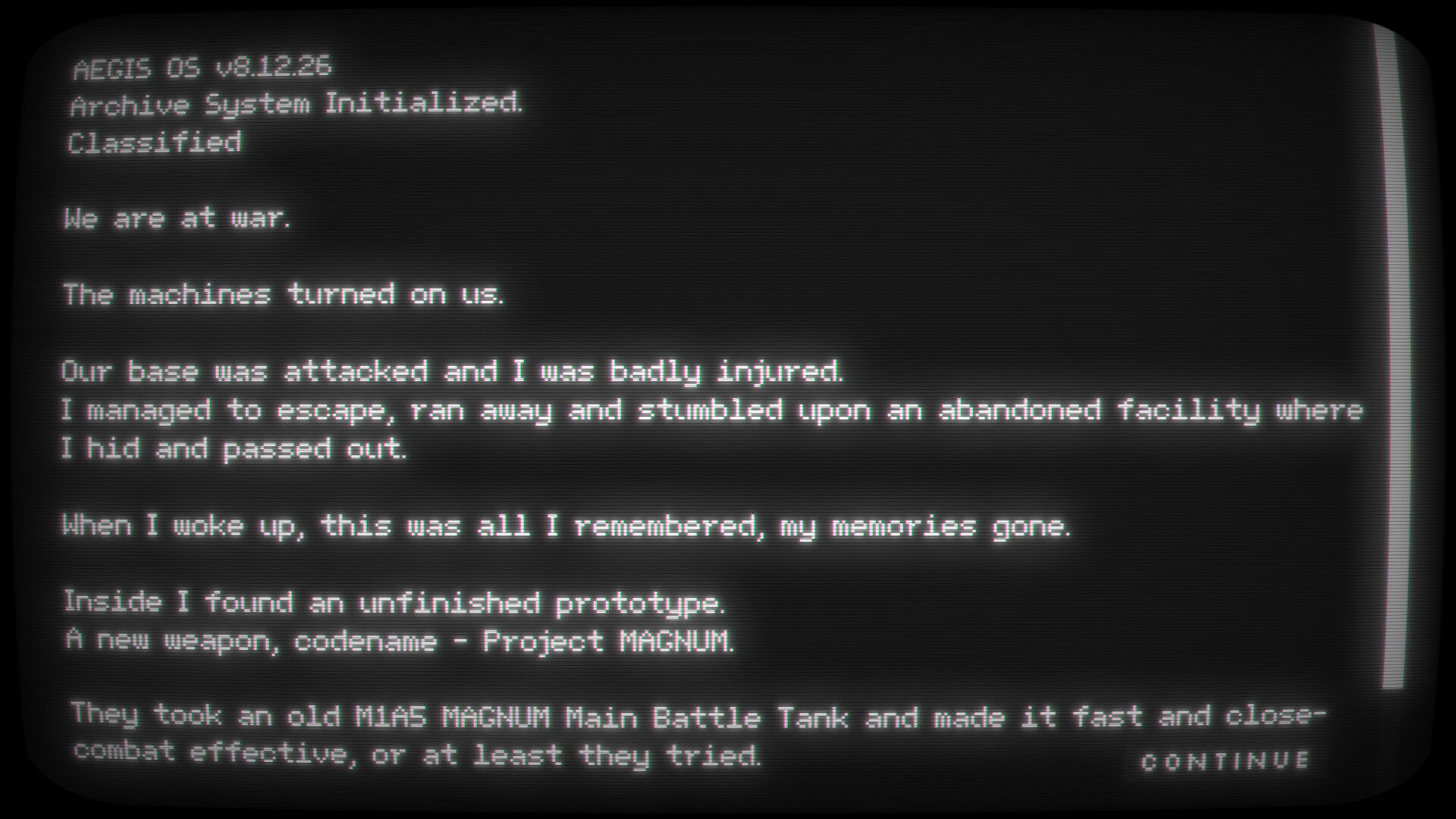
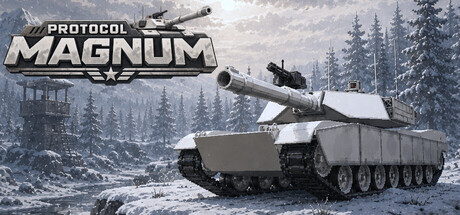
MAGNUM Protocol is a single-player tank action game from FIREHIVE Studio, coming to Steam on January 20, 2027 for Windows. You pilot the M1A5 MAGNUM, a one-person main battle tank built around advanced automation, through a world that machines have already ruined. The pitch is direct: fight mechs, drones, robots, and enemy tanks across ruined cities, frozen wastelands, and abandoned battlefields while a mysterious directive pulls you deeper into the ruins.
The look is deliberate PS1-era retro. Low-resolution pixelated rendering and optional CRT effects give it that late-nineties console feel, and the store page confirms it ships with full controller support, Steam Cloud saves, and Family Sharing. At 1 GB of storage and a 2 GHz minimum spec, this is a game built to run on anything.
The Steam feature list breaks the game into five pillars, and together they describe the full loop you will actually play:
- Fight powerful war machines — mechs, drones, robots, enemy tanks, and more
- Explore a hostile world — ruined cities, frozen wastelands, abandoned battlefields, forgotten facilities
- Customize your tank — equip different weapons and upgrade the hull between missions
- Complete objectives — solve problems and find ways through blocked or heavily defended areas
- Story — follow a mysterious directive and uncover clues hidden beneath the ruins
Notice what is missing from that list: no multiplayer, no live service, no microtransactions. MAGNUM Protocol is a campaign game. You take the tank out, complete the objective, bring back whatever the mission exposed you to, and refit for the next one.
MAGNUM Protocol Details
| Detail | Info |
|---|---|
| Genre | Tank action, retro shooter |
| Developer | FIREHIVE Studio |
| Publisher | FIREHIVE Studio |
| Platforms | Windows (Steam) |
| Price | to be announced |
| Players | Single-player |
| Release | January 20, 2027 |
| Controller | Full controller support |
| Aesthetic | PS1-inspired low-poly with optional CRT effects |
| Store ID | Steam app 5152000 |
How to Play MAGNUM Protocol
Your First Session
The opening hours follow the shape the store description lays out. You start in the M1A5 with its baseline loadout, drop into an early mission zone, and learn three skills in order: driving, turret control, and shooting. Because the tank is a one-crew vehicle, every input is yours — the onboard automation covers secondary systems, not the fundamentals. Expect the first missions to pair a straightforward combat objective with one blocked-route problem, which is the game teaching you that shooting is only half of the answer. Turn on the CRT filter if you want the period look, but check it against readability during your first drone encounter; a clean pixel image is easier to aim with.
The M1A5 MAGNUM
Your tank is the whole game. It is a one-crew vehicle, so you handle driving, aiming, and firing while the onboard automation covers the rest. That single-seat design keeps the controls readable: move, rotate the turret, shoot, and manage what the tank is carrying. The customization system sits on top of this base, letting you reconfigure the M1A5 between missions instead of mid-fight.
Two consequences follow from the one-seat design. First, you are always doing at least two things at once — repositioning and aiming — so smooth driving directly improves your gunnery. Second, there is no crew to lose and no vehicle to swap. Damage management is about positioning and retreat, not about distributing roles, which keeps the decision load focused on tactics rather than micromanagement.
Fighting the War Machines
The enemy roster spans mechs, drones, robots, and other tanks. Each category pressures a different part of your play, and learning to read the mix in front of you is the core skill:
Tanks trade armor for armor. Angling your hull, keeping your front toward the threat, and landing shots before the enemy does is the core duel. Against armor, patience beats aggression: the tank that reverses out of a bad angle survives to shoot again.
Drones punish turret discipline. Fast aerial targets want you to keep moving and use weapons that track or spray rather than slow single shots. Drones are the strongest argument for carrying at least one fast-firing weapon in every loadout.
Mechs and robots mix both problems. They hit hard at range and shrug off careless fire, so you weaken them with positioning first and firepower second. Break line of sight, force them to close distance through rubble, and hit their approach instead of trading shots in the open.
Unknown war machines are the wildcard. The store description says "and more," which signals enemy types the game introduces as the directive pulls you deeper. Treat every unfamiliar silhouette as a mech-class threat until its behavior proves otherwise — cautious opening engagements cost less than confident mistakes.
The store page also mentions solving problems and finding ways through blocked or heavily defended areas, which suggests objectives that reward routing and terrain use over pure gunfights. In practice that means the map itself is a weapon: rubble blocks return fire, wrecked vehicles make hull-down positions, and a defended chokepoint usually has a flank the defending machines cannot cover.
Customization and Upgrades
Between fights you equip different weapons and apply upgrades to the hull. The game does not lock you into one loadout: a run through a drone-heavy sector justifies a different kit than a duel with enemy armor. Treat the arsenal as answers to the enemy list. When a mission brief mentions what is ahead, build for it.
A practical loadout rule from the enemy taxonomy: cover at least two range bands. One weapon for distant armor and mechs, one for close-in drones and robots. If both slots point at the same problem, the mission will find the gap. Upgrades are the quieter half of the equation — hull and mobility improvements pay off in every encounter type, while weapon-specific upgrades only pay off when the matching weapon is the right answer. When in doubt, upgrade the tank, not the gun.
Exploring the Ruins
MAGNUM Protocol threads a story through its combat. You follow a mysterious directive and uncover clues buried beneath the ruins of abandoned locations. Objectives are framed as problems to solve, so expect scavenger-style exploration between firefights. The environment list (ruined cities, frozen wastelands, abandoned battlefields, forgotten facilities) doubles as a difficulty map: later areas layer tougher machines over tighter terrain.
Each environment changes the tactical math. Ruined cities mean short sightlines and ambush geometry, favoring fast turrets over long-range cannons. Frozen wastelands read as open ground, where the tank duel rules dominate and your hull angle matters most. Abandoned battlefields promise both cover and cover-fired enemies. Forgotten facilities, by the naming alone, are the endgame zones — tight, story-dense, and guarded by whatever the machines have been building.
Objectives: Solve, Don't Charge
The most distinctive phrasing on the store page is "solve problems and find ways through blocked or heavily defended areas." That is a design statement. Some objectives will have a combat solution, but the framing expects you to look for a route solution first: an entrance the defenders do not watch, a stretch of terrain that breaks their firing lines, a path that trades one careful engagement for five bad ones. When a blocked area looks impossible from the front, drive along it. The retro genre has a long tradition of maps that look linear but reward a two-minute detour.
Advanced Tips
Reverse into cover, always. Front armor toward the threat applies to retreats too. Tanks that turn to flee show their engine deck, and any armor game punishes that. Practice driving backward while keeping the turret on target.
Pre-aim your hull angles. Since you aim and drive simultaneously, develop the habit of ending every movement with the hull roughly facing the last known enemy position. Free aim time is a resource you accumulate by driving well.
Rebuild the loadout after every new enemy type. First encounters are reconnaissance. If a mission introduces a machine you have not fought, take the safe reward and refit around what it did to you rather than pushing deeper on the same kit.
Use the low-res render as a spotting tool. At PS1 fidelity, enemy silhouettes stay distinct against terrain even at distance. Learn the outline of each machine class — a drone outline crossing a rooftop is an early warning worth more than any minimap.
Save the CRT filter for screenshots. Optional effects that soften contrast cost you target clarity in exactly the fights where clarity matters. The game runs fine without them, and your kill rate will show it.
Read terrain before you shoot. Wrecked vehicles and rubble that block your line of fire also block return fire. Fighting from a position the enemy cannot cleanly answer is worth more than any weapon upgrade.
Tips and Tricks
Build before you deploy. Upgrades apply between missions, so read the objective text and match your loadout to the enemy types the mission name implies.
Keep the hull moving in open ground. Stationary tanks are target practice for drones and mechs with line of sight.
Front armor first. The classic tank rule applies: face the threat, retreat in reverse, and never show the engine deck to an enemy gun.
Controller is the intended way to play. The game advertises full controller support on the store page, and turret aiming on a stick suits the tank feel. Keyboard works, but start on a pad.
Cloud saves let you experiment. With Steam Cloud enabled, try a weird weapon combo on a mission and revert if the result disappoints.
Watch the objective, not the minimap. Missions are framed as problems to solve, so a blocked route usually has a flanking answer the combat-first player misses.
Who Is This Game For?
MAGNUM Protocol sits in the retro-tank niche that games like the original PlayStation armor shooters carved out. If you want a single-player machine-combat game that respects your evening (short missions, one tank, no microtransactions) and runs on modest hardware, the January window belongs to this one. It is also a low-commitment entry point into the genre: no multiplayer anxiety, no live service, just you and the directive. Players who bounced off modern tank games because of crew management or launcher bloat will find the opposite here — one tank, one seat, and a clear objective list.
System Requirements
| Tier | Specs |
|---|---|
| Minimum | Windows 10, 2 GHz processor, DirectX 11 graphics, 1 GB storage |
That minimum list is close to the floor Steam allows. Any working Windows PC from the last decade runs it, which fits the retro pitch: the PS1 look is partly an excuse to make a game every machine can play. There is no demanding hidden cost either — 1 GB of storage means the install will not fight your SSD for space, and DirectX 11 compatibility reaches back to very old GPUs.
FAQ
When does MAGNUM Protocol release? January 20, 2027 on Steam for Windows.
Is MAGNUM Protocol on console or Mac? The Steam page lists Windows only. No Mac, Linux, or console versions are announced.
Does it have controller support? Yes, full controller support, plus Steam Cloud and Family Sharing.
Is it multiplayer? No. MAGNUM Protocol is single-player only.
What kind of game is it exactly? A mission-based tank action game with story objectives, tank customization, and a PS1-inspired presentation. Think retro machine combat with a mysterious sci-fi directive driving the campaign.
How big is the download? 1 GB of storage per the minimum requirements, one of the smaller footprints you will see for a 3D action game.
How much will it cost? The store page has not announced a price yet. Wishlist the game on Steam to get the pricing announcement the moment it lands.
Does it have achievements? Yes. The Steam feature list includes Steam Achievements alongside Cloud saves.
What enemies will I fight? The store description names mechs, drones, robots, and enemy tanks, plus "other war machines" — so expect additional enemy classes revealed deeper in the campaign.
Is the story important? The store page lists Story as one of five pillars: you follow a mysterious directive and uncover clues hidden beneath the ruins. Expect narrative progression tied to exploring abandoned locations, not just mission-to-mission combat.
Can I turn off the CRT filter? Yes. CRT effects are listed as optional; the base pixelated render is the default look.
Is this good on a laptop? The minimum spec (2 GHz CPU, DirectX 11, 1 GB storage) is deliberately minimal. A basic laptop from the last decade clears it comfortably.
Last reviewed by Game How To Editorial. We play each game, verify controls against official sources, and update guides when game mechanics change.
Screenshots