Official game
Play Lone Chef
This game is hosted by Steam. Continue to the official page to play or download it.
Wishlist on SteamOverview
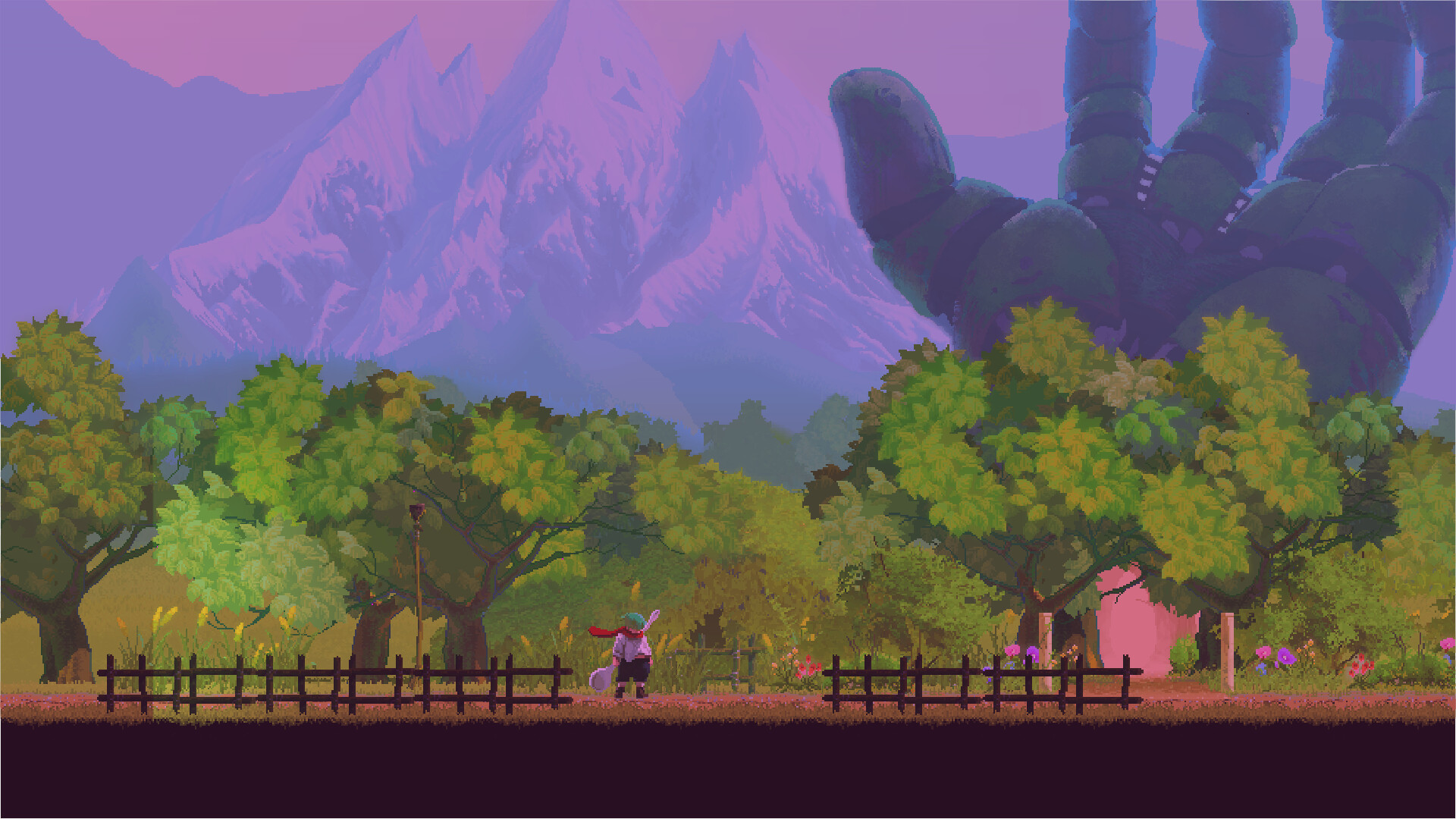
Lone Chef is a side-scrolling "Cooktroidvania" from Project Moreum Inc., a Korean studio whose first blog post coined the genre label honestly: cooking plus Metroidvania. The game is currently in development with a free demo on Steam covering roughly half of Chapter 1, a Tumblbug crowdfunding campaign that closed at 141% of goal with 377 backers, and a release date still to be announced. You play the Chef, a quiet protagonist rebuilding a restaurant the Dark Lord destroyed, hunting mutated wildlife across a post-apocalyptic Korea, cooking 170-plus dishes at campsites, and letting the buffs from those meals define your combat style.
The premise earns its hook in one line: thousands of years after civilization collapsed under a food shortage, cooking is the lost art, dishes made from forgotten recipes trade like jewels, and adventuring for recipes is a respected profession. The Dark Lord Helen herself runs cooking competitions hunting the memory of "the most delicious meal in the world." Every system in the game feeds that theme, and understanding how they interlock is the difference between a starving scrappers' run and a chef who walks into bosses already buffed.
| Fact | Detail |
|---|---|
| Developer / Publisher | Project Moreum Inc. |
| Status | In development, release date TBA; free demo live |
| Genre | Cooktroidvania: Metroidvania + cooking action RPG |
| Platform | Windows, full controller support (Xbox), Steam Achievements and Cloud |
| Combat | Side-scrolling action, kitchen tools as weapons, day-night enemies |
| Recipes | 170+ total: 121 standard + 48 ancient |
| Ingredient types | Meat, Fruit, Vegetables, Grain, Mushrooms |
| Demo content | ~half of Chapter 1, 14 quests, boss Aria + field bosses |
| Crowdfunding | Tumblbug, 141% funded, 377 backers |
| Demo version | v0.48.2 (August 2026) |
Who this is for: Metroidvania players who want their build to be a menu, cooking-mechanic fans who want danger attached to their groceries, and story chasers who like companions that open up over shared meals. Who should wait: players needing a finished game now; the demo is a taste test and the price and date are unannounced.
Getting Started: First Hours in the Wasteland
The demo drops you into the ruins of your restaurant with one tutorial line worth tattooing on the HUD: an empty stomach makes for a poor adventure. Everything follows from it.
- Hunt before you need the food. Pigeons, squirrels, and bandit-type enemies drop meat and materials, but pigeons were recently tuned to drop Bird Meat less often. Kill everything you pass anyway; ingredients are experience, and the STR you skip today is the boss you lose to tomorrow.
- Cook at the first campsite you see. Campsites are the game's heartbeat: rest to fully restore HP, pass time, change weather, and stack multiple foods. A campsite visit before every new region should be reflex, not choice.
- Eat for the fight you are walking into, not the one you left. Food buffs are temporary stat increases plus tag effects, and they replace each other. Before a boss door, cook a dish whose tags match the boss's pattern; before exploration, eat a movement-friendly spread.
- Learn the new default controls once. Attack Z, Jump X, Dash C, Special Attack D on keyboard, with tap-for-Quick-Slot and hold-to-eat combined into one button. Short press uses a quick slot; holding consumes food. The ESC menu now includes a full control guide, and menus pause the game, so read everything safely.
- Track quests on the world map. Quests with location data pin to the map, and campsite icons open Fast Travel from the map screen. The v0.48.2 map improvements exist because early demo players got lost; use the tracking and never wander purposeless.
Beginner Mistakes to Avoid
| Mistake | Why it hurts | Fix |
|---|---|---|
| Saving ingredients "for later" | Untagged raw ingredients grow nothing | Cook and eat; stats come from dishes |
| Eating one buff and forgetting | Equipped tags persist until replaced; plan the slot | Keep one attack-tag dish banked for bosses |
| Fighting at night unprepared | Enemies and bosses shift on the day-night cycle | Scout by day, hunt night targets deliberately |
| Ignoring weather | Rain and snow trigger falling rocks; some puzzles need rain | Change weather at campsites on purpose |
| Mashing attacks into every enemy | Enemy attacks now damage other enemies | Bait ranged shots into packs, dodge, punish |
That last row is quietly one of the strongest mechanics in the game: friendly fire between enemies is real since the August patch. A pigeon flock and a bandit can be introduced to each other's faces.
Core Mechanics Explained
Ingredient Tags Are Your Skill Tree
Ingredients sort into five families, each mapped to a stat: Meat drives STR, Fruit feeds VIT, Vegetables boost AGI, and Grain contributes heavily to HP. Dishes carry two kinds of tags. Standard tags grant stat experience on consumption or temporarily raise stats until the next dish. Equipped tags exist only on ancient-recipe dishes, persist until another equipped-tag dish replaces them, and can rewrite your moveset entirely.
The developers' own examples show the depth. Overheated Orb Meat, a rare drop from the Turbo Rabbit, turns your ground basic attack into a heated explosive projectile with area damage. Deboned, from Mushroom Beef Noodle Soup built on Bone Mushrooms, hands you a massive bone as a weapon and multiplies basic attack damage. Scattering, tied to Wind Grain in Heaping Rice Sikhye, scatters rice grains outward and widens your attack range. Since the v0.48.2 split, equipped tags divide into Active effects, attack triggers usable with the D key, and Passive effects like size changes, and both can run simultaneously. Your build is literally your last good meal.
The Buff Economy
Cooking converts hunted ingredients into stat experience and combat effects, which makes every kill a grocery run and every campsite a character sheet. Three rules govern the economy. First, dish quality follows ingredient quality: rare, high-value ingredients hide off the beaten path, and the store page's "uncover rare recipes hidden off the beaten path" is a literal instruction to check every corner. Second, stacking works at campsites: multiple EXP foods and temporary-stat foods can be consumed in one sitting, so pre-boss you chain a full meal. Third, Digest at the campsite wipes all active food effects; when a size-shrinking debuff style no longer fits the room, clear it and re-eat for the right shape.
Day-Night and Weather as Enemy Design
Enemies and bosses change with the day-night cycle, and the demo's field bosses got harder and more patterned in the latest patch: Turbo Rabbit, Blood Pigeon, and the assassin Toccata all attack differently now. Weather is a puzzle layer as much as ambience: rain and snow trigger falling rocks outdoors, falling rocks are always live indoors, and certain field objects only react when you make it rain. The campsite's wait-for-weather option turns that from waiting game into tool.
Movement, Stamina, and Traversal
The stamina system was rebuilt in August: stamina now regenerates naturally without eating, and actions beyond basic movement consume it. Attacks can be canceled into jump or dash, which turns the combat into a rhythm of swing-cancel-dash. Rising water jets launch you to consistent heights, and dashing lets you pass straight through water streams, which is both a traversal trick and a checkpoint gate in maps like Crossroads. Climbing hanging rocks no longer drops you, but spikes and falls off-screen hurt more than before, and a new falling-rock mechanic punishes standing under ceilings in the rain.
Companions, Skills, and the Social Loop
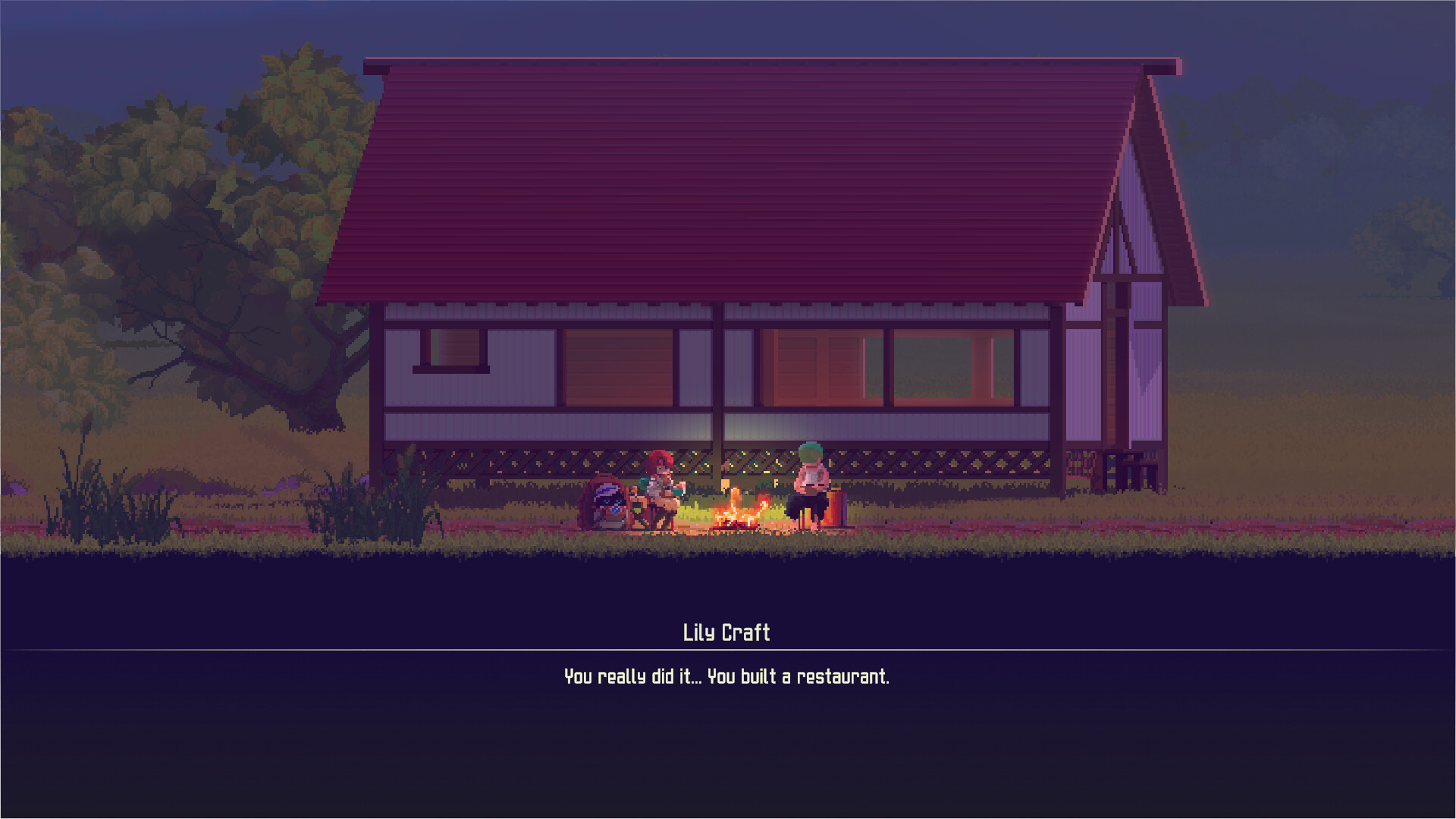
Fellow adventurers teach powerful new skills, and shared meals drive relationship bonds. The cast is the game's story spine: Lily Craft, an old-world scientist awakened from cold sleep, explores ruins with her robot Bleepy; Arlene, a foxkin of the New Humanity, fights beside you on a revenge trail; Irudeon, a robot who believes she is human, joins the journey to find her purpose; and the Old Man knows everything and hides something. The Chef is a poor talker who communicates through food, and characters open up when fed. Companions also co-star in exploration: the Lily ruins segment was rebuilt from scratch in the August patch.
The Cooking Contest
Contests are the chapter climaxes and the game's proving grounds. Entry requires a Recommendation Letter from the judges, earned through the region's social fabric: helping an apprentice chef, repairing kitchen tools, exposing a corrupt judge, or sabotaging a rival. Judges score on three axes: flavor preference covering taste, texture, and temperature; dish quality; and the contest theme. Winning pays currency, rare recipes, and exclusive cooking tools that boost both kitchen and combat power. And the contest is not peaceful: a rampaging android can crash the hall mid-judging, turning the tasting into a battleground where recipes are strategies and kitchen tools are weapons. The demo ends at the first contest venue; the full game builds every chapter toward one.
Progression Strategy
Chapter 1 shape (demo-visible)
├── Tutorial → destroyed restaurant → first campsite
├── Hunt grasslands (Bandits) and ruins (Golems)
│     drops: Bird Meat, Wild Meat, orbs, materials
├── Cook early and often; stack EXP foods at camp
├── Field bosses: Turbo Rabbit → Overheated Orb Meat
│                Blood Pigeon, Toccata (assassin)
├── Companion quests (14 in demo) → skills + letters
└── First Cooking Contest → chapter climax

Full-game priorities (announced systems)
├── Ancient recipes: 48 dishes, discovered via exploration
│     some tied to companions who request specific dishes
├── Contest circuit per region → exclusive kitchen tools
├── Equipped-tag loadout planning per boss
└── Story branches: relationships bloom or fall apart
Priority order for resources: ingredients for cooked meals, recipe discovery, contest eligibility letters, then gear. Money matters less than momentum; the demo economy rewards players who convert everything edible into stat experience immediately.
Builds: The Menu Is Your Class
The equipped-tag system creates three coherent builds visible in the demo and confirmed by announced effects.
The Bombardier (Overheated build). Core dish: anything cooked with Overheated Orb Meat from the Turbo Rabbit. Your ground basic attack becomes an explosive projectile with area damage, aimable in all four directions since the August patch. Pair with Meaty-tag STR EXP dishes to raise the damage underneath. This build clears packs from safety and shreds the Bandit-heavy grasslands. Its cost is access: Orb Meat is a field-boss drop, so the Bombardier starts online only after you have beaten the rabbit.
The Bonelord (Deboned build). Core dish: Mushroom Beef Noodle Soup with its Deboned equipped tag, wielding a massive bone with significantly increased basic attack damage. This is the melee ceiling of the demo, and it rewards the swing-cancel-dash rhythm: big bone swings, cancel into dash, reposition, repeat. Pair with Numbing-tag AGI food from Bone Mushroom lines for attack speed. The catch is supply: Bone Mushroom is an ancient ingredient unavailable in the current demo, so this build fully comes online in the full game.
The Scattergun (Scattering build). Core dish: Heaping Rice Sikhye with the Scattering tag, which spreads rice grains outward and expands attack range, plus strong HP EXP from the grain-heavy recipe. This is the safe-growth build: widest hitbox, fattest health pool, and the best fit for players still learning enemy patterns. The size-change passive family belongs here too; Bitter grows you and Astringent shrinks you, and shrinking is a genuine difficulty knob for tight arenas.
| Build | Key ingredient | Equipped tag | Playstyle |
|---|---|---|---|
| Bombardier | Overheated Orb Meat | Overheated (Active) | Ranged AoE, pack clearing |
| Bonelord | Bone Mushroom | Deboned | Heavy melee, boss duels |
| Scattergun | Wind Grain | Scattering | Wide safe melee, growth HP |
The meta rule: bank one Active attack-tag dish for bosses and one Passive utility dish for exploration, and switch at campsites rather than mid-dungeon. Digest wipes effects cleanly when the room changes.
Step-by-Step Strategy
- Open with a full hunting circuit. Before pushing the story, loop the grassland and kill everything: bandits, pigeons, squirrels. Cook the haul at the first campsite and eat a stacked meal. You enter Chapter 1 proper with stats a fresh player does not have.
- Farm the Turbo Rabbit for your first real weapon. The Turbo Rabbit is the demo's skill check: patterned attacks that got harder in August, and a chance at Overheated Orb Meat. One successful orb is a build. Farm it until the Overheated tag drops, cook it with grain dough, and your basic attack becomes a bomb.
- Fight on your schedule, not the map's. Because the day-night cycle reshuffles enemies, use the campsite to pass time deliberately. Scout new zones at day, then set night for farming targets that only appear or matter after dark. Never let the clock ambush you into a boss.
- Weather-gate your routes. Check the forecast before long traversals: rain outdoors means falling rocks, and indoor sections keep them live always. When a puzzle clearly wants rain, cook, rest, and change the weather at camp instead of hunting for a trigger in the field.
- Complete all 14 demo quests before the contest. Quests teach companion skills, feed the relationship system, and practice the exact loop the contest judges: who you helped, what you cooked, and how you fought. Walking into the first contest with a full quest log is the closest thing the game has to being overleveled.
- Master swing-cancel-dash. Attack animations cancel into jump or dash since the May patch. The combo is swing, cancel at contact, dash through or away. Against Toccata's assassin patterns this is the difference between trading hits and never being touched.
- Use enemies against each other. Enemy attacks damage other enemies now. Lure a Blood Pigeon flock into a bandit patrol, sidestep, and watch the Wasteland do your work. It costs nothing and scales with how crowded the map gets in the full release.
- End every session at a campsite. Resting fully restores HP, the save icon is now always visible, and campsites let you re-eat your buff loadout for tomorrow. Logging out mid-field wastes a free heal and a fresh meal.
Advanced Tips
- Active and Passive stack by design. Since v0.48.2, D-key attack effects fire while a size-changing passive runs. A shrunken Bombardier is a harder-to-hit artillery piece; a giant Bonelord trades hitbox for reach. Build around the pair, not one slot.
- Aim your projectiles. Overheated-style shots aim up, down, left, and right. Aerial enemies and low ceilings both stop being problems once you stop aiming forward by default.
- Digest is a build reset button. Wrong equipped tag for the room costs one campsite visit to replace. Think of Digest as unstucking yourself rather than losing buffs.
- Read the camera. The view range tightened from 6 to 5.1 for immersion, which means offscreen threats exist again. Approach tall grass and ruins edges at walk speed; the basic walking animation was added exactly for this.
- Water streams are doors. Dashing through rising water skips vertical launch puzzles in Crossroads-style maps. If a route looks locked, test it with a dash before hunting a switch.
- Bird Meat math changed. Pigeons drop Bird Meat less often post-patch, so meat-based STR builds should diversify hunting into bandits and squirrels early instead of pigeon-farming.
- Treat spike damage as lethal. Spikes and off-screen falls deal increased damage now. In ruins with golems, the floor is more dangerous than the enemies; route along walls.
- Quest tracking is free navigation. Any quest with location data pins to the world map. Open the map, pick the pin, and Fast Travel from campsite icons shaves minutes off every errand.
Known Issues and Demo Notes
The demo is honest about its scope: roughly half of Chapter 1, 14 quests, and a hard stop at the first contest venue. Aria, the boss teased as the demo's skill wall, received a unique revive-animation touch-up in August. Local saves arrived in the May patch alongside fullscreen mode, and low-HP audio warnings now exist. Camera and control complaints from early players drove most of the v0.48.2 changes: default keys moved to Z/X/C/D, quick slots and eating merged, menus pause the game, and the ESC menu carries a control guide. The Bone Mushroom ingredient is intentionally absent from the current build, gating the Deboned build to the full game. Requirements are light, an i3-6100 or FX-4100 with 2 GB RAM and a GTX 960-class GPU runs it, and an Xbox controller is the listed reference pad.
FAQ
When does Lone Chef release, and how much will it cost? No date and no price yet. The Steam page says coming soon, the demo is free, and the Tumblbug campaign closed at 141% of goal in July 2026. Wishlist and play the demo; that is the entire meta right now.
What is a Cooktroidvania? The studio's own label for cooking plus Metroidvania: side-scrolling exploration and combat where your build comes from dishes you cook, and gated routes open as you grow.
Is the demo save carrying to the full game? Not promised. The demo covers about half of Chapter 1, and nothing in the patch notes guarantees save transfer. Treat it as a taste test, as the developers call it.
How do food buffs actually work? Every dish carries tags from its ingredients. Standard tags grant stat EXP or temporary stats. Ancient dishes add equipped tags that persist until replaced, split into Active attack effects and Passive effects like size changes. Both slots can run together.
Where do I get Overheated Orb Meat? It drops from the Turbo Rabbit field boss. Its attacks were reworked and hardened in the August patch, so learn the patterns; one orb converts into the Overheated explosive build.
Why can't I find Bone Mushrooms? They are an ancient ingredient deliberately excluded from the demo. The Deboned weapon build is a full-game system.
Is combat hard? The demo got harder, not easier: bosses gained patterns, fields gained enemies, spikes and falls hit harder. It is a fair action game with a buff economy that rewards preparation over reflexes.
Do choices really matter? The structure says yes: contest entry runs through NPC relationships and requests, some morally gray, and the store page promises relationships that bloom or fall apart. The contest is where exploration, combat, cooking, and social choices cash out together.
Quick Reference Card
| System | What to do | Why |
|---|---|---|
| Ingredients | Kill everything, cook everything | Dishes are stat EXP and combat effects |
| Campsites | Rest, stack meals, pass time, change weather | The build menu, save point, and heal in one |
| Equipped tags | Bank one Active + one Passive; Digest to reset | Your loadout is your last good meal |
| Day-night | Scout by day, hunt by design | Enemies and bosses change with the clock |
| Weather | Rain = falling rocks; some puzzles need it | Weather is a tool, not a backdrop |
| Turbo Rabbit | Farm until Overheated Orb Meat drops | One orb = the demo's best build |
| Combat rhythm | Swing, cancel, dash | Cancels into jump/dash define the meta |
| Contests | Earn letters via quests and kindness | The chapter climax cashes in everything |
Lone Chef bets that a build you can taste beats a build you can read. Hunt well, cook better, and let the Wasteland's most dangerous person be the one who just ate.
Screenshots