Official game
Play Elixir of Moonglow
This game is hosted by Steam. Continue to the official page to play or download it.
Buy on SteamA girl wakes up under moonlight with no memory and a wolf who refuses to leave. Everything else in Elixir of Moonglow flows from that image.
Overview: A Cozy Adventure With One Real System
Elixir of Moonglow is a hand-drawn cozy adventure from Lineria launching November 10, 2026 on Steam. You play Ella, an apprentice alchemist traveling through glowing caves, towering mountains, and lush oasis pools alongside Umbra, a wolf who doubles as toolkit, escort, and emotional anchor. The design philosophy fits on a sticky note: no combat, no fail states, no lives to lose. The store page says "play on your own pace" and the demo backs it up.
Do not let the cozy label fool you into thinking there is nothing to optimize. The game has three interlocking systems: ingredient gathering, potion brewing, and companion utility. A demo covering the Prologue and Chapter 1 has been out since December, and the studio already shipped a feedback-driven update (version 0.2) that reshaped movement, visibility, and the stealth layer. That demo is the source of most concrete knowledge in this guide, and the full game builds directly on its loop.
Who this is for: cozy game fans, families (Family Sharing is enabled and the couch pitch is explicit), players who want a story-rich adventure without timers, and anyone who buys games for hand-drawn art. Difficulty is close to zero; the interesting decisions are about exploration efficiency and experimentation order.
Getting Started: Your First 30 Minutes
The demo's opening is the full game's opening. Here is how it plays and what to do differently than your instincts suggest.
- Follow the moonlight, not the path. The opening teaches movement with light cues. Glowing things in this game are interactive by design, and after demo patch 0.2 they also have raised contrast. Sweep every screen for glow before moving on.
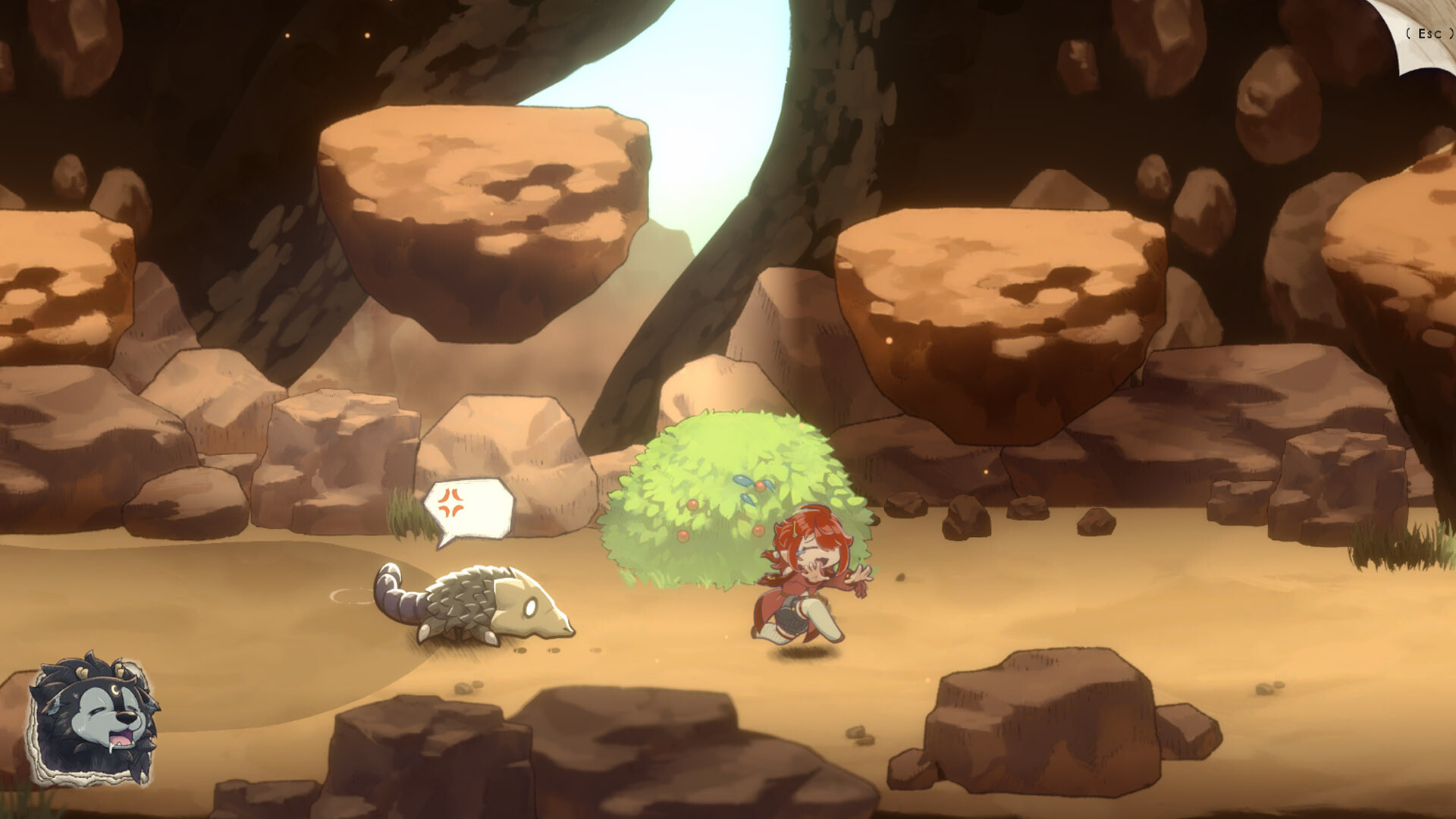
- Meet Umbra, then abuse his summon button. His three confirmed jobs are clearing thorns, scaring off critters, and carrying Ella across rivers. New players burn time hunting for alchemical workarounds to obstacles the wolf solves in one button. Summon first, craft second.
- Pick up every ingredient twice. Once to collect it, once mentally: note where it grew. Ingredient locations are biome-stable, meaning the patch of glowing moss by the cave entrance regrows or recurs as a pattern across the region.
- Brew a bad potion on purpose. Failed combinations cost nothing. The alchemy system runs on combining "tangy, juicy, and whimsical" ingredient categories, and the only way to learn the grammar is to speak it badly a few times early when you have nothing to lose.
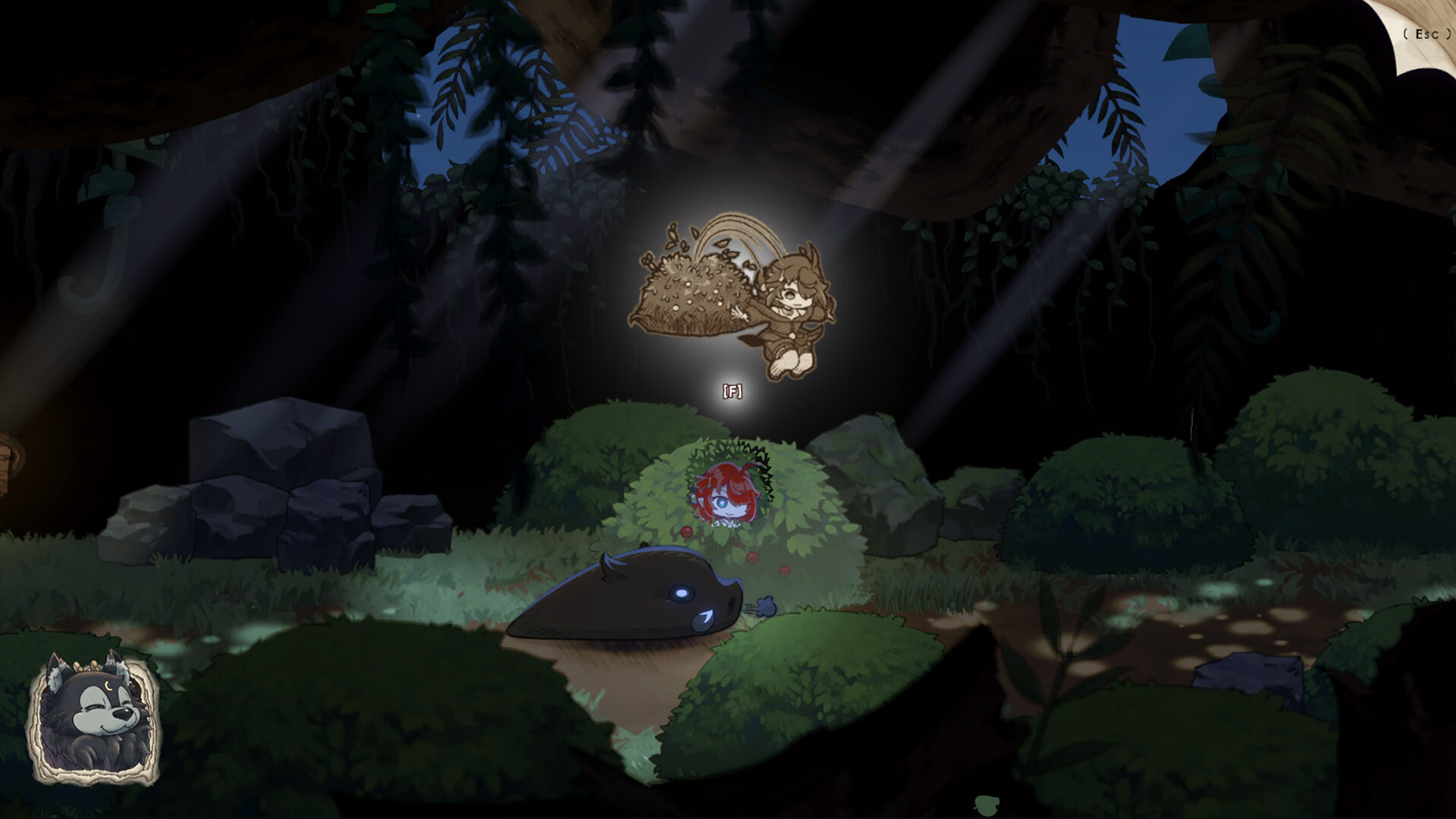
- Learn the crouch before you need it. Chapter 1 in Talla introduces hiding bushes and the Black Mist. The 0.2 patch added highlight-lines to the hiding tutorial, but muscle memory still beats tutorial text. Crouch into a bush once during a calm moment so your hands know the input before a chase sequence asks for it.
Beginner mistakes to avoid:
- Treating the wolf as a mount and nothing else. Umbra's utility solves three categories of obstacle. Players who forget the critter-scaring ability invent problems.
- Hoarding ingredients. There is no evidence of scarce recipes or missable items, and Steam Cloud plus Save Anytime means experimentation is always safe. Brew early, brew often.
- Rushing past oasis pools. The pool areas sit between biomes and function as rest and crafting points. Every pool you skip is a brewing station you walked past.
- Fighting the Black Mist. You cannot. Cover is the answer, and after 0.2 the second hiding spot in Talla sits further from the cave specifically to give you runway.
Core Mechanics Explained
Alchemy brewing is the progression spine. Ingredients fall into flavor categories, and combining them produces potions that unlock tools and open paths. The system is built for experimentation: failed mixes cost a moment, successful mixes tend to convert old obstacles into new routes. The loop is gather, combine, unlock, reopen. If a path blocked you an hour ago, a potion is probably the key now.
Umbra's companion kit covers exactly three friction points, and each maps to an obstacle type:
| Obstacle | Umbra's answer | Why it matters |
|---|---|---|
| Thorn barriers | Clears them so Ella passes | Keeps paths open without crafting a cutting potion |
| Small critters | Scares them off | Removes the need for any combat or repellent system |
| Rivers | Carries Ella across | Turns water from a wall into a route |
The design intent matters. Most adventures would make you craft a thorn potion or time a crossing. This game hands those jobs to the wolf so the alchemy inventory stays focused. Expect deeper biomes to layer the abilities: a river guarded by critters, thorns hiding ingredients on the far bank.
Hiding and the Black Mist form the demo's one danger layer. Certain bushes are cover. The Black Mist drifts through playable space, and when it reaches Ella she enters an "uncontrolled state" (the chase sequence trigger). Patch 0.2 standardized hiding behavior across all bush types and lowered the Mist's hovering height so you can visually read what is safe. Practical rule: bushes are placed deliberately, one is usually within a few seconds of sprint, and the Mist always telegraphs with position and height before it threatens.
Movement was rebuilt in 0.2. Acceleration and control handling were overhauled for responsiveness. If you played the first demo build and found Ella floaty, the current build is a different game to steer.
Progression Strategy: The Apprentice's Roadmap
No full recipe list exists publicly yet, but the demo establishes the shape of progression, and it rewards a specific order of operations:
- Chapter 1 (Talla and the cave). Learn hiding, meet the alchemy station, brew your first working potions. Every obstacle here is solvable with Umbra alone, so use this chapter to build the experiment habit without stakes.
- Ingredient mapping before advancing. Before leaving a biome, sweep it twice. The second sweep catches glow you filtered out as scenery. Ingredients are the only resource that gates progression, so leaving a biome under-harvested costs you backtracking later.
- Unlock tools in puzzle-solving order, not aesthetic order. The demo hides its best hints in what obstacles appear repeatedly. Three thorn walls in one region means a thorn-relevant tool is coming; stockpile accordingly instead of chasing the newest visual toy.
- Bank potions before story beats. Cutscenes in the demo tend to precede obstacle gauntlets. Walking into a story beat with a full potion satchel means the next section is exploration, not resource stress.
- Chase the secrets, not the checklist. The store page sells "quiet corners where magic lingers." The game's achievement list is confirmed but not yet public; cozy adventures of this shape almost always tie achievements to exploration depth rather than speed.
The pacing target: the demo's Prologue plus Chapter 1 runs roughly 30 to 60 minutes for a thorough player. Expect the full game to scale each chapter's biome with one new ingredient category and one new Umbra layering trick per region.
Builds: Three Ways to Play a Cozy Game
A no-fail game still has play styles, defined by which system you lean on.
The Botanist (alchemy-first). You sweep every screen for ingredients, brew before every crossing, and solve everything the slow way. Strongest for secret hunting, because most hidden content in this genre locks behind tool use, and the Botanist always has the tool brewed in advance. The cost is pace: this style doubles playtime.
The Wolf Whisperer (companion-first). Umbra handles everything his kit allows, and you only brew when an obstacle clearly exceeds wolf jurisdiction. This is the fastest route through chapters and the recommended style for family playthroughs with younger players, since it minimizes menu time.
The Wanderer (exploration-first). You follow glow wherever it leads, brew opportunistically, and let the story catch up to you. This is the style the game is tuned for. The biomes, the wind-sway vegetation added in 0.2, the quiet corners: the game wants detours. If you play any other style to completion, do one Wanderer replay.
Honest recommendation: Wolf Whisperer for the first chapter while you learn the world, then Botanist habits layered in from Chapter 2 once the ingredient categories multiply.
Step-by-Step: Five Concrete Game Plans
1. The two-sweep biome clear. Enter a new area. Walk its full perimeter once, collecting every glowing pickup. Then walk it again in reverse, with your eyes on backgrounds instead of the path. The reverse sweep exists because 0.2's contrast changes make interactables readable, but only if you are actually looking at the scenery layer. Mark in your head anything you could not reach; that is tomorrow's potion key.
2. The Umbra decision tree. At every obstacle, run this checklist in order: Is it thorns? Summon Umbra. Is a critter blocking the way? Summon Umbra. Is it water? Summon Umbra. Is it none of those? Only now open the brewing menu. This one habit eliminates the majority of "I'm stuck" reports the studio received from the demo, which the patch notes admit were common enough to drive a whole update.
3. The Black Mist drill. When the Mist enters your screen, do not sprint away from it. Sprint toward the nearest bush. After 0.2, hiding spots are placed with clear approach runway, and hiding works identically in every bush type. Stay in cover until the Mist's hovering height visibly rises and its drift moves away from your exit path. Exiting early resets the chase and wastes the cover you earned.
4. The recipe grammar exercise. In a calm moment with a full satchel, brew deliberately weird combinations: two tangy, two whimsical, one of each across categories. The demo rewards experimentation, failed combos cost nothing, and the point is to learn which categories pair into movement tools versus path tools versus pure story items. Fifteen minutes of deliberate failure teaches more than three hours of cautious brewing.
5. The launch-day route. On November 10, do not restart from scratch if you played the demo. Play the demo to the end of Chapter 1 first so the movement overhaul and current hiding rules are fresh, then buy. The full game picks up where the demo's arc ends, and the first hour of a cozy adventure is the worst place to relearn controls you already know.
Advanced Tips
- Oasis pools are checkpoints disguised as scenery. Stop at every one, even if the pond looks empty. The demo places crafting opportunities and rest beats at pools, and that pattern will hold across biomes.
- Read the Mist's height, not its distance. After the 0.2 height adjustment, a low-hanging Mist far away is more dangerous than a high-drifting one close by. Visual language beats the minimap instinct.
- Contrast is a hint system. The 0.2 patch adjusted contrast and asset variants specifically for interactables. If something looks slightly more saturated than its surroundings, the game is telling you it matters.
- Controller is the intended way to play. Full controller support with DualShock and DualSense explicitly listed, and the gamepad hint UI was redesigned in 0.2 to match the game's aesthetic. Keyboard works (there is a keyboard-only option), but the game was clearly built around a gamepad in hand.
- Steam Cloud means your experiment log follows you. Note unusual recipe results somewhere persistent. There is no in-game recipe book confirmed yet, and your own notes will outperform memory by Chapter 3.
- Couch co-op by proxy. There is no multiplayer, but the family pitch plus Family Sharing makes a two-player pattern viable: one player drives, the other calls glow spots. It sounds silly and it genuinely speeds up the two-sweep clear.
The Story: What Ella Is Walking Toward
The framing tale is alchemy as inheritance. Ella wakes with no memory into a world of "forgotten alchemy," and the store language has her "accept" the world's chaos and wonder rather than conquer it. Umbra is written as a co-learner; the pair is "learning together what life means in this world." Expect the chapters to function as a slow reveal of where the alchemy went and why Ella starts with nothing.
The practical implication for players: story beats gate biome unlocks, not the reverse. If you feel underpowered in a new region, the answer is usually a story conversation you skipped past, not a potion you failed to brew.
FAQ: Common Questions and Gotchas
When does Elixir of Moonglow release? November 10, 2026 on Steam for Windows PC.
How much does it cost? Lineria has not listed a price yet. The page is live for wishlists.
Is there a demo, and is it worth playing? Yes. It covers the Prologue and Chapter 1, runs 30 to 60 minutes, and has already received one major feedback-driven update. Play it; demo feedback has directly shaped the game you will buy.
Is there combat? None. The Black Mist is avoided by hiding, critters are scared off by Umbra, and nothing in the store listing or demo suggests a combat system exists.
How does hiding work, exactly? Crouch into a bush when the Black Mist approaches. Behavior is standardized across all bush types as of 0.2, so any bush is safe cover. Exit only when the Mist drifts away and its height rises.
Can you get soft-locked? No fail state exists, Save Anytime is enabled, and the studio specifically patched friction points that made demo players feel stuck. The worst case is backtracking for an ingredient.
Steam Deck? Not yet verified. The game is 2D hand-drawn, light on hardware, and controller-first, which is a good profile for Deck, but treat it as unconfirmed until Valve badges it.
Is it good for kids? The no-fail design, the family couch pitch, Family Sharing, and the art style all point to yes. The Black Mist is the spookiest element, and it resolves without harm.
Will there be achievements? Confirmed on the Steam listing. The list is not public yet.
How long is the game? Unannounced. Chapter-based structure, demo pacing, and the genre suggest somewhere in the 4 to 8 hour range for a thorough single run, with extra time for secret hunting.
Written November 3, 2026, one week before launch, based on the official store page, demo patch notes, and Steam feature listings. This deep dive will be updated with launch-verified recipes, achievement lists, and full chapter walkthroughs after November 10.
Screenshots