Official game
Play BARKOUR
This game is hosted by Steam. Continue to the official page to play or download it.
Wishlist on SteamOverview
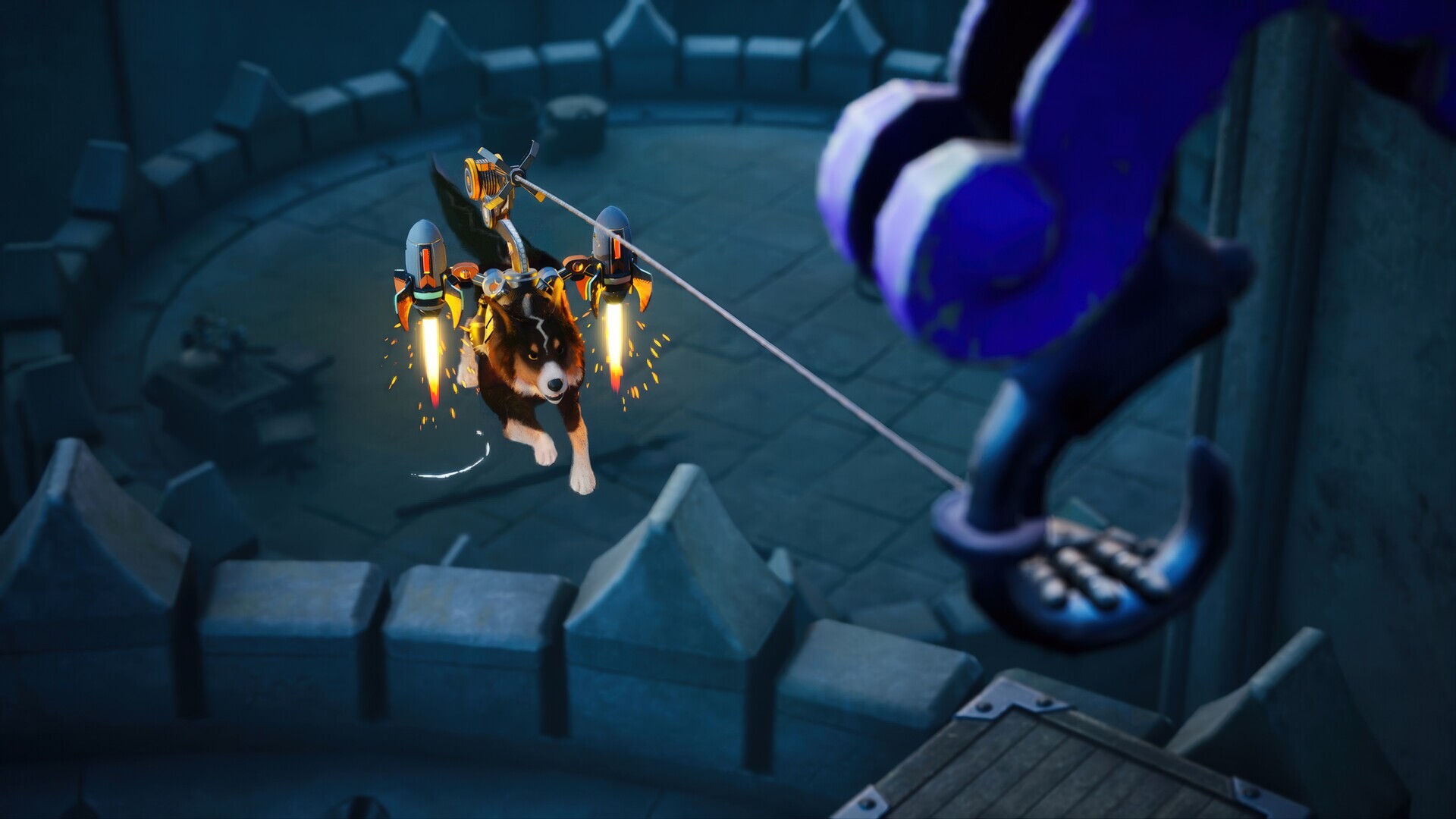
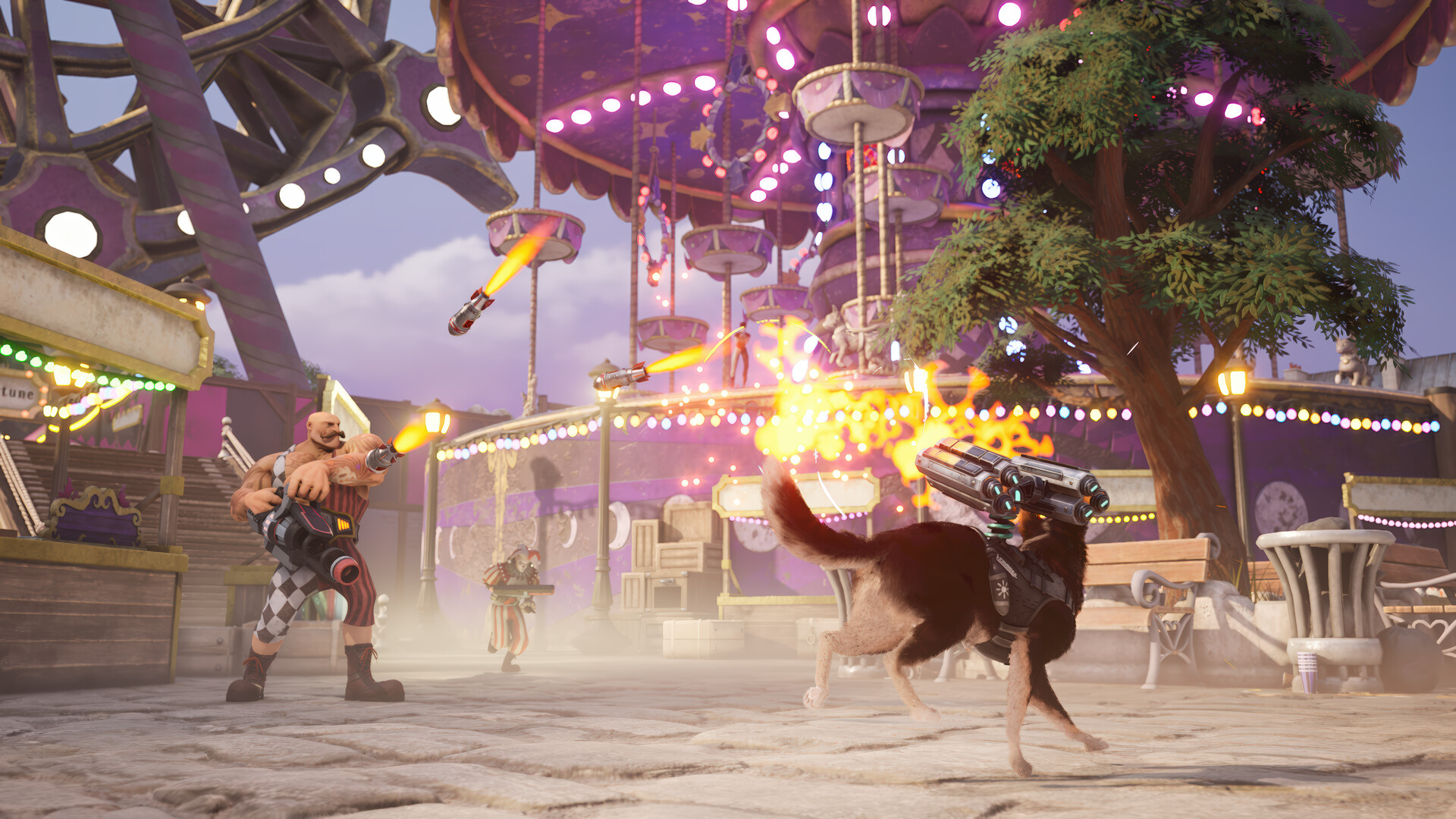
BARKOUR is a fast-paced stealth-action platformer from Polish studio VARSAV Game Studios, the team behind Bee Simulator and Giants Uprising. You play Agent T.H.U.N.D.E.R., a highly trained special agent who also happens to be a very good boy. He works for M.A.N., a secret organization where every agent is an exceptionally skilled animal united by one goal: save the world from the forces of evil and mischievous cats.
The pitch is pure genre mashup. It pulls the rooftop chases and gadget play of a mascot stealth game, the movement freedom of a momentum platformer, and the absurd sitcom tone of a Saturday-morning cartoon. Run across walls, grind along rails, leap through missions with canine agility. Sneak through shadows, distract enemies with spy gadgets, find a secret passage, or forget subtlety and jump straight into the action. The game's own motto says it best: "Stealth is optional. Making a mess definitely isn't."
BARKOUR launches in Q4 2026 on PC, PlayStation 5, and Xbox Series X|S. A brand-new demo is live on Steam, updated with human voiceovers, improved movement, smarter AI, updated UI, and more detailed level art. The full game promises over 15 hours of gameplay, 26 distinctive characters, an arsenal of over 30 gadgets, over 100 customization items, and over 30 emotes inspired by real canine behavior.
| Fact | Detail |
|---|---|
| Developer / Publisher | VARSAV Game Studios |
| Genre | Stealth-action 3D platformer, spy comedy |
| Platforms | PC (Steam), PlayStation 5, Xbox Series X |
| Release | Q4 2026 |
| Length | 15+ hours |
| Agency | M.A.N., all-animal secret organization |
| Sidekick | A.L.F.-RED, trusty AI companion |
| Gadgets | 30+ in the arsenal |
| Customization | 100+ items |
| Emotes | 30+, based on real dog behavior |
| Languages | 13 at launch, including English, Simplified Chinese, Brazilian Portuguese |
| Steam features | Achievements, Cloud saves, Stats, Family Sharing, full controller support |
Who it is for: movement fans who loved A Hat in Time, stealth toybox players from the Sly Cooper era, dog owners, and anyone who wants a light, funny single-player platformer with real freedom of approach.
Who it is not for: players who need deep combat systems, competitive online play, or a serious narrative. The action is light and the tone is comedy-first.
Getting Started: The First 30 Minutes
Before you launch
- Grab a controller. The developers recommend a gamepad. The barkour moveset is built around analog-stick precision for wall-runs and slides, so a controller makes the acrobatics feel natural. Keyboard works, but you will fight the camera in fast vertical chases.
- Understand your movement first. You are a dog spy with a full parkour kit: sprint, slide, jump, wall-run, rail-grind, and gadget use. The opening mission layers these on one at a time, but rehearse chaining them before a real firefight.
- Treat stealth as optional, not required. Every level is designed so you can sneak or sprint. If you fail stealth, you can usually just outrun the guards with barkour. Picking one approach and sticking to it beats half-committing.
- Set up your gadget hotbar early. Gadgets are your utility answers to puzzles and enemy groups. The game lets you rebind the hotbar, so configure the two or three tools you lean on before the chaos starts.
The demo's opening sequence
The demo drops you in an alley. A robot dog approaches, convinces you to join him in training, and the story starts with an implant that lets you understand everything around you, including English. From there the tutorial walks you through four systems in order: stealth, barkour, gadgets, and combat.
- Follow the RoboDog through the tutorial stages. Each stage teaches one move and one tool. Do not skip ahead; the demo's castle mission assumes you know all four.
- Learn the sniff tutorial early. Sniffing is how you follow clues, find hidden paths, and spot Easter eggs. It feels like a flavor mechanic. It is not. It is the game's exploration radar.
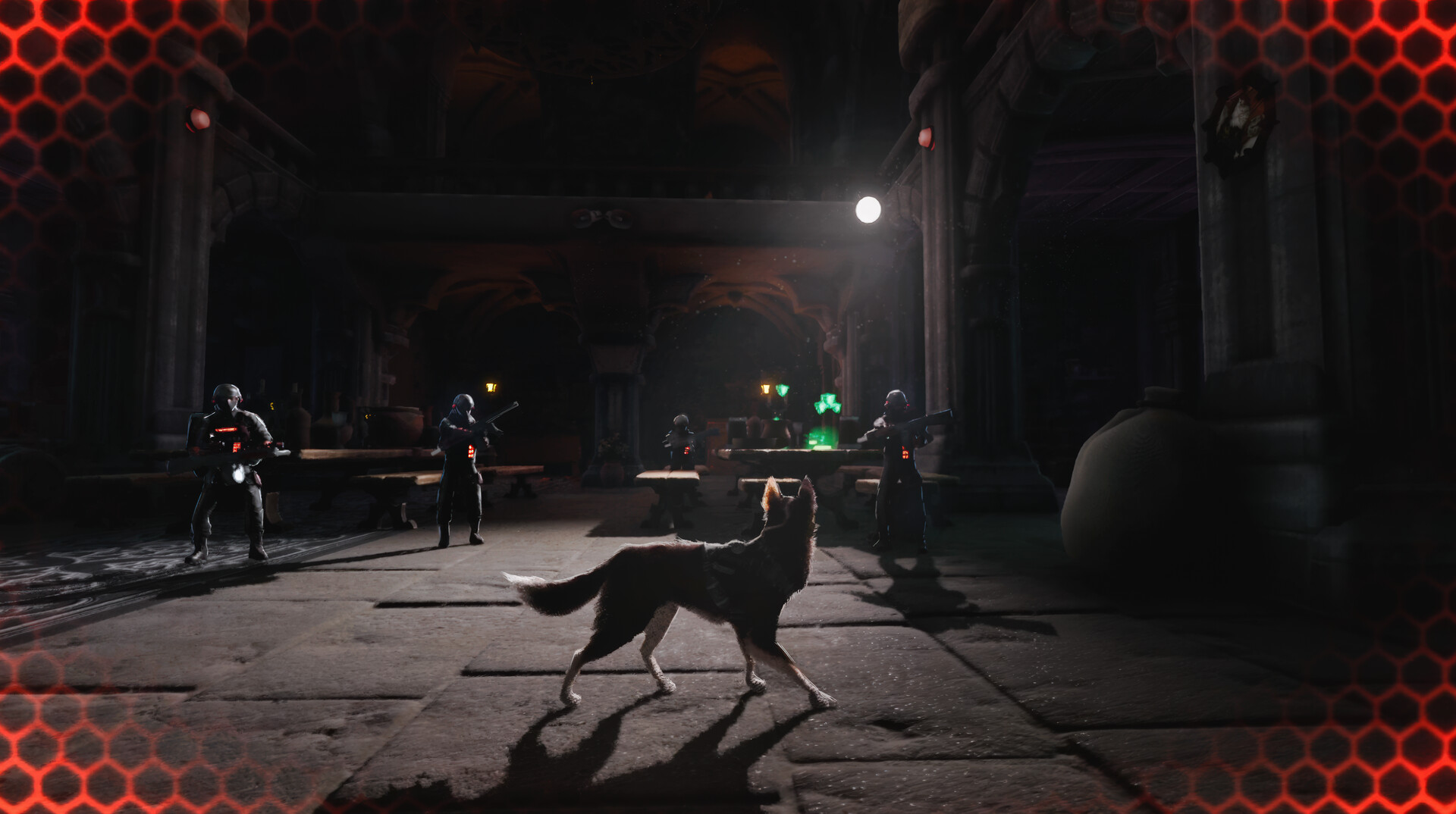
- Test dog-sense vision. You can see enemies through walls and eavesdrop on conversations. The wall vision alone changes how you approach every guard layout.
- Try both playstyles in the castle. The demo's mission sends you through a castle hunting cat-themed villains, with levers, elevators, and collectibles along the way. Play one section stealthy, one section loud. Both work, and both are fun.
- Break crates and sniff corners. Hidden paths and Easter eggs sit off the main line. BARKOUR rewards curiosity everywhere.
Beginner mistakes
| Mistake | Why it hurts | Fix |
|---|---|---|
| Always going loud | Alerted guards clump up and turn chases into slogs | Mix stealth for the first pack, then go loud once you have an exit route |
| Hoarding gadgets | Some gadgets open routes or clear rooms instantly | Use your best tool when it saves you a chase, not later |
| Ignoring wall-runs | Wall-run is your fastest vertical escape | Treat walls as launch pads, not obstacles |
| Never sliding | Slide is your speed under obstacles and past guards | Slide into a jump to keep momentum through gaps |
| Sneaking everywhere | Stealth is slower and some sections are meant to be sprinted | Run the open sections, sneak only where guards are dense |
| Skipping side paths | Optional challenges hide customization items and Easter eggs | Sniff every dead end before exiting a mission |
| Forgetting the rail-grind | Grind rails cross gaps and chasms that jumps cannot clear | Look up: if there is a rail, use the rail |
Core Mechanics Explained
The barkour moveset
The heart of BARKOUR is movement. Your dog spy has a full parkour kit, and mastery comes from chaining moves:
- Sprint — your baseline speed. Builds momentum for jumps and escapes.
- Slide — drop low to slip under obstacles, through gaps, and past low-aiming guards. Slide into a jump to preserve speed.
- Jump — the core vertical; combine with everything.
- Wall-run — run across walls to reach ledges, cross gaps, and change direction mid-run. The fastest way up in vertical sections.
- Rail-grind — grind along rails to cross chasms and long drops that jumps cannot clear. Rail lines are the level designers' secret highways.
- Gadget use — your utility tools answer enemies, puzzles, and environmental obstacles.
- Emote — a dedicated set of silly animations. Purely for fun, and the game fully supports it.
The grid matters as much as the moves. Run across walls, grind along rails, and leap through missions with canine agility. If a route looks like it should connect, wall-run or grind toward it.
Stealth vs. loud play
BARKOUR is built as a choice, not as one required style:
- Stealth — use shadows, silence, and gadgets to slip through undetected. Slower but safer, and it rewards map knowledge with faster clean routes.
- Loud — sprint past or blast through. Faster, but alerted enemies group up and chase, and some rooms get harder when the alarm is raised.
- Hybrid — the intended sweet spot. Sneak to clear the first dense pack, then go loud once you have an exit route, using wall-runs to leave the chaos behind.
The demo proves both approaches work and neither is punished.
Dog senses: the real stealth system
Being a dog is a mechanic, not a skin. You have senses that no human spy has:
- Sniffing — follow scent clues, uncover hidden passages, and locate Easter eggs. If you are stuck, sniff. If you are exploring, sniff. If you are about to leave a mission, sniff once more.
- See through walls — spot enemies through solid geometry before you enter a room. This turns every guard layout into a solvable puzzle instead of a surprise.
- Eavesdrop — listen in on conversations for clues and mission shortcuts. Dialogue is not filler; some of it points at secrets.
Gadgets and loadouts
The arsenal has over 30 gadgets, and the demo already shows the design philosophy: each tool answers a question. Distract enemies with spy gadgets, open a secret passage with the right tool at the right wall, or blow through a chokepoint with an area gadget.
Gadget categories to expect:
| Category | What it answers |
|---|---|
| Stealth tools | Distractions, noise-making, marking targets |
| Combat tools | Direct damage, area denial, crowd clearing |
| Traversal tools | Grappling, launchers, movement assists |
| Utility tools | Opening passages, disabling alarms, puzzle solves |
Build your loadout around your playstyle. Stealth runs want distraction and marking tools. Loud runs want area damage. Exploration runs want traversal and utility. The game lets you rebind the hotbar, so two or three well-chosen tools beat a cluttered wheel.
Hidden paths and Easter eggs
Every level hides secrets: destructible crates, off-route ledges, non-obvious wall-runs, and suspicious-looking walls. The developers say it outright: take your time, step off the obvious path, and find out what they hid behind that wall. The reward for exploration is real progression, not just flavor. Collectibles, challenges, and customization items sit in the side paths, and sniffing is the fastest way to find them.
Customization and emotes
Over 100 customization items let you give T.H.U.N.D.E.R. your own style, including ideas inspired by the community. Over 30 emotes are based on real canine behavior, the kind that makes dog owners say "my dog does exactly that." Neither system affects combat. Both are a core part of the comedy, and the game actively encourages stopping to play with them.
Builds and Tier Lists
Gadget tier list (based on demo behavior and the design pillars)
| Tier | Gadget type | Verdict |
|---|---|---|
| S | Wall- and rail-based traversal tools | Movement is king; anything that extends wall-run/rail-grind range wins |
| S | Enemy marking / see-through-wall assist | Turns stealth into planning |
| A | Distraction tools | The cheapest way to split a guard pack |
| A | Area-clear combat tools | One gadget that clears a room wins chases |
| B | Direct-damage weapons | Fine for loud builds, unnecessary for stealth |
| B | Puzzle utilities | Mandatory for the specific doors they open |
| C | Situational one-offs | Swap in per mission, not per loadout |
The three working loadouts
The Ghost (stealth). Distraction tool, enemy marker, silent takeout gadget, one traversal tool. Slow and surgical. Clear every room without an alarm, then walk the exit.
The Mess (loud). Two area-damage gadgets, one chokepoint breaker, one traversal tool. Sprint everywhere, thin packs with one gadget, wall-run out when the alarm sounds. Fast, chaotic, and surprisingly reliable once you know your exit routes.
The Sniffer (exploration). Utility tools for opening passages, one traversal gadget, one combat gadget for emergencies. This is the 100% loadout: it prioritizes reaching every secret over clearing any room.
Loadout rules
- Read the environment before you grab gadgets. A greenhouse with destructible walls rewards an explosive tool; a castle with patrolling guards rewards a stealth gadget.
- One tool per category is usually enough. Overlapping tools waste hotbar slots.
- Match two tools to the mission and you remove most of the friction before it starts.
Step-by-Step Strategy
The demo progression sequence
- Complete the full tutorial. Stealth, barkour, gadgets, combat, sniffing. This is a 15-minute investment that pays for the whole demo.
- Enter the castle and clear the first guard pack stealthily. This teaches the wall-vision planning loop: look, mark, move.
- Find the first lever and ride the elevator. The demo's castle is a compact metroidvania-esque loop: levers open paths, elevators connect floors, collectibles sit off the main route.
- Sniff the main route before you leave any room. Hidden passages usually lead to customization items or Easter eggs.
- Attempt one loud section on purpose. The demo wants you to feel that both approaches work. Knowing the loud option exists removes the fear of failing stealth.
- Beat the cat-themed villain encounter. The demo's boss-adjacent fight tests the movement chain: wall-run away, gadget to break pursuit, slide under the attack, counter.
- Finish with a clean exit. The demo ends when you complete the mission, so sweep the collectibles you missed before the final trigger.
The ghost approach, room by room
- Scope the room with wall vision before entering. Count the guards and note the patrol routes.
- Mark the isolated guard first. The loner is always the easiest remove.
- Use one distraction gadget on the far side of the room. Guards turn, you move.
- Clear the pair next, using the exit route you identified at the door.
- Move on. Never fight a room you do not have to fight.
Escaping an alarmed room
- The instant the alarm drops, wall-run to high ground. Guards chase on the ground plane.
- Use one area gadget at the chokepoint behind you. One gadget that clears the pack ends the chase.
- Rail-grind across the gap to break line of sight.
- Slide into the exit tunnel and keep moving until the music calms.
- Hide and sniff to confirm the guards reset, then resume the mission.
The 100% sweep
- Before the final mission trigger, backtrack through every room you rushed.
- Sniff every dead end, every suspicious wall, and every destructible crate.
- Check above eye level: wall-run ledges hide secrets that ground-level paths never show.
- Interact with every lever and device twice. Some passages open only after a second activation.
- Eavesdrop on every conversation you can find. Dialogue points to hidden content.
Advanced Tips
The slide-jump momentum loop
Slide into a jump constantly. The slide preserves forward speed, and jumping out of it carries that speed into a long arc. Chaining slide-jumps across open sections beats sprinting flat, and it is the difference between escaping an alerted room and getting cornered.
Clear-then-run room order
When you enter a room with a dense guard pack, do not commit to one tactic for the whole room. Clear the first pack quietly to open your exit, then run the rest on speed. This hybrid order means you never fight a full alerted room, and you never waste time sneaking through sections you can simply outrun.
Use one gadget to break a chase
When an alarm drops and a pack starts chasing, your instinct is to run. Instead, use your single best area tool once to thin the pack, then wall-run away. One gadget that clears a room is worth more than a wasted minute of running. The moment you clear the chokepoint, the chase ends.
Sniff for route verticals
Most missions have a primary horizontal path and a hidden vertical route above it. Before committing to a fight, wall-run up and check the ledges. Many floors are skippable entirely, and the vertical route is usually where the genuinely good collectibles hide.
The rail-grind habit
Rail lines are the level designers' secret highways, placed to carry you over chasms and past guard towers. When you hit a gap that a jump cannot clear, look up. If a rail exists, the intended path uses it. Grinding is also the fastest way to break line of sight: guards chase on foot, and rails put you out of reach.
Wall-run beats doors
Doors funnel you into guard layouts. Walls do not. Before walking through the obvious entrance, check the walls next to it. A wall-run over the doorway skips the entire room's patrol design and drops you behind the guards.
Tailor the loadout to the mission
Read the environment before you grab gadgets. A greenhouse with destructible walls rewards an explosive tool; a castle with patrolling guards rewards a stealth gadget. Matching one or two tools to the mission removes most of the friction before it starts.
Play the comedy
The game is built on humor, absurdity, and carefully controlled canine chaos, with visual comedy and emotional beats mixed in. Many of the 26 characters are comedy devices as much as story characters. Stopping to emote is harmless, the developers actively built for it, and the game's collectibles reward the habit of playing with the world instead of rushing it.
Performance and Settings
The updated Next Fest demo runs with "more detailed level art," and the developers list full controller support with gamepad recommended. The demo ran cleanly in early impressions with no notable issues. Launch settings to prioritize:
- Use a controller. The analog sticks matter for wall-run and slide precision.
- Keep the camera sensitivity moderate at first; the fast vertical chases punish twitchy camera settings until you know the level flow.
- Rebinding the gadget hotbar is worth doing before the first mission; two or three tools on comfortable keys beats scrolling mid-chase.
The game targets Windows PC plus PS5 and Xbox Series X|S at launch, with 13 languages including English, Simplified Chinese, and Brazilian Portuguese.
FAQ and Common Mistakes
Is BARKOUR single-player or multiplayer? Single-player only. There is no co-op or competitive mode listed.
What platforms is BARKOUR on? PC (Steam), PlayStation 5, and Xbox Series X|S, all in Q4 2026.
Is there a demo? Yes. The brand-new demo is live on Steam, featuring human voiceovers, improved movement, smarter AI, updated UI, and more detailed level art.
Does BARKOUR support controllers? Yes. Full controller support, and the developers recommend gamepad.
How long is the full game? Over 15 hours of gameplay, with 26 characters and over 30 gadgets.
Can you play BARKOUR stealth-only? Yes. Stealth is fully supported. The game is designed so you can sneak through shadows for the entire run, though some sections reward sprinting.
Are there hidden collectibles? Yes. Hidden passages, secret rooms, collectibles, and challenges sit off the main route, and sniffing is the intended tool for finding them.
Is there an emote system? Yes. Over 30 emotes based on real canine behavior. Purely cosmetic, and the developers actively encourage playing with it.
Will BARKOUR have Steam achievements? Yes. Steam Achievements are confirmed in the store features.
Common mistake: treating sniffing as a flavor mechanic. Sniffing is the exploration radar. It finds hidden passages, follows clues, and reveals Easter eggs. If you never sniff, you miss a third of the content.
Common mistake: walking through doors. Doors funnel you into guard layouts. Wall-running over the entrance skips the patrol design and drops you behind the enemies.
Common mistake: saving gadgets "for later." Some gadgets open routes or clear rooms instantly. Hoarding them turns a one-second solution into a two-minute chase.
Common mistake: ignoring rail-grinds. Rails cross gaps that jumps cannot clear and break line of sight faster than anything in the moveset. If there is a rail, use the rail.
Bottom Line
BARKOUR is a comedy platformer with real movement depth hiding under the jokes. Wall-runs, rail-grinds, and slide-jumps form a chain that rewards practice; dog senses turn stealth into a planning puzzle; and 30-plus gadgets give every mission a different toolkit. The demo is a genuine slice: it teaches all four core systems, proves both stealth and loud approaches work, and shows off the castle mission with its levers, elevators, and cat-themed villains.
The single best habit to build: chain slide-jumps everywhere, treat walls as launch pads, and sniff everything. Movement is your strongest weapon; it beats fights, escapes chases, and unlocks hidden routes. Once barkour feels automatic, the game opens up, and Agent T.H.U.N.D.E.R. becomes the best boy the Q4 2026 launch could ask for.
Screenshots