Official game
Play Altered Alma
This game is hosted by Steam. Continue to the official page to play or download it.
Add to Wishlist on SteamWhat Is Altered Alma?
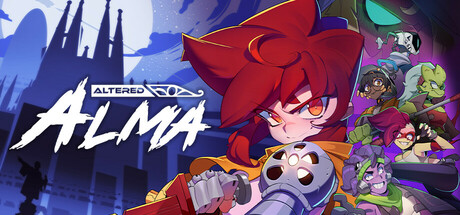
Altered Alma is a pixel-art cyberpunk metroidvania from 2Awesome Studio, published by CRITICAL REFLEX. The developers describe it as "a space opera metroidvania" — and that label fits. You play as Jackelyne (called "Jack" for short), a young mercenary carving her way through the neon-drenched underworld of Neo Barcelona, a futuristic reimagining of the real Spanish city.
The game fuses three genres that rarely share a room: classic ability-gated metroidvania exploration, RPG-style character progression with skill trees, and a full dating sim relationship system where your bonds with NPCs unlock combat perks, side stories, and alternate endings. You operate out of The Esperanza, Jack's customizable spaceship that serves as your mobile headquarters — upgrade it, recruit crew members, and the ship's capabilities directly influence your playstyle.
Altered Alma has been showcased at Steam Next Fest (February 2026), The MIX Spring Showcase, Convergence Games Showcase, and IGN's Secret Sauce Showcase. A free demo is available now on Steam. The writing team includes industry veterans Antony Johnston (Resident Evil: Village, Dead Space) and Emma Beeby (Tails of Iron, Still Wakes The Deep). The full game is currently in development with a release window still to be announced — the developers delayed the release date announcement to ensure the game lands in the best possible launch window given the crowded 2026 calendar.
Why it stands out: The dating sim integration isn't cosmetic. Relationships directly affect combat capabilities, unlock alternative routes through areas, and determine which of multiple endings you see. The Esperanza spaceship adds a base-building layer that most metroidvanias lack. And the setting — a cyberpunk Barcelona with landmarks like Sagrada Familia and Park Güell reimagined as gang-controlled megastructures — gives the exploration a sense of place that abstract fantasy castles can't match.
Game Details
| Field | Details |
|---|---|
| Genre | Metroidvania, Action, RPG, Dating Sim |
| Developer | 2Awesome Studio |
| Publisher | CRITICAL REFLEX |
| Platform | Windows (Steam) |
| Price | Not yet announced |
| Release Date | Not yet set (delayed from planned announcement) |
| Demo | Free demo available now on Steam |
| Players | Single-player |
| Controller | Full controller support (Xbox + PlayStation) |
| Languages | English (full audio), French, Italian, German, Spanish, Japanese, Korean, Portuguese (BR + PT), Russian, Simplified Chinese, Traditional Chinese, Polish, Turkish, Ukrainian, Catalan |
| Difficulty | Adjustable — enemy damage, enemy health, parry timing windows, player strength all configurable |
| Estimated Playtime | 15–25 hours (first playthrough, developer estimate) |
| Steam Features | Achievements, Family Sharing, Cloud Saves |
| Storage | ~2 GB |
Target Audience
Altered Alma is for players who want their metroidvania with more story and character depth than the genre typically offers. If you enjoy the tight combat and ability-gated exploration of Hollow Knight or Blasphemous but wish those games let you build relationships with the NPCs you meet, this is your game. The dating sim layer is substantive — think Persona's social links grafted onto a side-scrolling action framework.
It's also a strong fit for players who enjoy base-building mechanics alongside action. Upgrading The Esperanza and recruiting crew members gives you a strategic layer between combat runs, similar to how the Normandy worked in Mass Effect 2 as a hub that grew with your choices.
Who might not enjoy it: Players looking for a pure, minimalist metroidvania (think Super Metroid or Axiom Verge) may find the dialogue scenes and relationship management disrupt the pacing. The dating sim elements are real, not optional flavor — pursuing relationships is required to unlock certain combat abilities and endings. If you bounce off games that mix genres aggressively, the tonal whiplash between brutal Killshift executions and heartfelt dialogue scenes might not click.
Getting Started — First 30 Minutes
The demo drops you into Neo Barcelona with a brief combat tutorial. Here's the optimal first half-hour:
1. Complete the tutorial combat sequence. Pay attention to the parry timing. The parry window is generous on default difficulty but tightens if you raise the challenge. Landed parries stun enemies and open them up for counterattacks — this is the game's core defensive tool, not an optional flourish.
2. Learn the Bladeshift → Killshift chain. Jack's basic combo strings can flow into a Bladeshift (a powered-up transition attack), and from there into a Killshift — a brutal, stylish execution that instantly finishes standard enemies. Killshifts also grant brief invincibility frames, making them survivability tools in crowded fights. Practice the full chain in the opening area before moving on.
3. Explore The Esperanza when it unlocks. Your ship is more than a menu screen. Walk around, talk to any crew members present, and check the upgrade console. Early upgrades to the ship expand your minimap, reveal hidden collectibles, or provide passive buffs. Don't rush back into the city without poking around.
4. Find the first ability shrine. The dash (Blink Dash) is your first traversal upgrade. It crosses gaps, dodges through attacks, and opens blue-coded gates scattered across earlier areas. The game won't explicitly point you to it — follow the critical path until you reach a room with a glowing altar.
5. Talk to every named NPC before leaving the hub. Relationship affinity starts tracking from your first conversation. Dialogue choices matter immediately — picking responses that match a character's personality gives small affinity gains that add up across a playthrough. There's no "neutral" greeting that avoids commitment.
6. Mark locked gates on your map. The game has a manual map-marker system. Whenever you see a color-coded gate you can't open (blue = dash, green = wall jump, red = double jump), drop a marker. Backtracking with new abilities is the primary source of health upgrades, currency caches, and hidden NPC encounters.
7. Check the difficulty settings early. Before investing an hour, open the options menu. You can independently adjust enemy damage, enemy health, parry timing windows, and player damage output. If the combat feels too punishing or too forgiving, tweak these sliders rather than restarting. The settings were added based on player feedback after Steam Next Fest.
8. Attempt Harry's side quest (demo only). In the demo, an NPC named Harry offers a platforming-heavy side quest. The developers later reduced its difficulty and added an extra checkpoint based on demo feedback. Completing it rewards a useful early-game item and establishes the pattern: side quests are your main source of rare upgrade materials.
Advanced Tips
| Mistake | Why It Hurts | Fix |
|---|---|---|
| Ignoring the parry | Parried enemies take bonus damage and get stunned. Boss fights without parrying take 2-3x longer. | Practice on the first enemy type until you can parry three times in a row. Then take it into real fights. |
| Skipping side quests | Side quests provide rare upgrade materials, XP, and relationship affinity. The main story alone leaves you underleveled. | Clear all available side quests before pushing into a new story chapter. |
| Hoarding currency | There's no late-game mega-item that requires saving. Currency is meant to flow — spend it on ship upgrades and gifts. | Keep a small reserve (~500) for emergencies. Spend everything else. |
| Ignoring The Esperanza | Ship upgrades provide passive buffs (expanded minimap, faster health regen, collectible radar). Delaying these makes exploration slower. | Visit The Esperanza after every major story beat. At minimum, grab the minimap expansion. |
| Rushing dialogue | NPC affinity is tracked per-conversation. Skipping through dialogue can lock you out of high-affinity rewards. | Read dialogue carefully. If you're unsure about a response, check the character's personality profile in your relationship log. |
| Fighting every enemy | Some encounters are designed to drain your resources before a checkpoint. Running past trash mobs is a valid strategy. | If you've cleared a room once, don't feel obligated to fight through it again on the runback to a boss. |
| Ignoring the Quantum State | During certain sequences (Quantum State segments), health regeneration works differently — faster regen but also different enemy behavior. The game doesn't tutorialize this well. | When the screen shifts to a purple/blue tint and you see the Quantum State indicator, adjust your playstyle: you can play more aggressively because health recovers faster. |
| Not adjusting difficulty | The default settings may not match your skill level. The demo's updated difficulty sliders let you customize enemy damage, enemy health, and parry windows independently. | If a boss takes more than 10 attempts, adjust enemy damage down 10-15% and try again. You can always raise it later. |
Core Mechanics Deep Dive
Combat System — Flow, Parries, and Killshifts
Combat in Altered Alma is built around a rhythm combo system. Landing consecutive hits builds a multiplier that increases damage output. Drop the rhythm — miss an attack, get hit, or pause too long — and the multiplier resets. This rewards aggressive, uninterrupted offense.
Weapon Categories: Jack wields three broad weapon types, each with distinct combo timing:
- Blades: Fast, medium-range weapons that excel at building and maintaining combos. The Bladeshift ability triggers most naturally with blade weapons.
- Gauntlets/Fists: Short-range but high stun damage. Ideal for parry-focused builds because the stun-lock window after a successful parry is longer.
- Tech Weapons: Ranged or gadget-style weapons that consume energy instead of stamina. Situationally powerful — some boss encounters are designed around specific tech weapon matchups.
Bladeshift and Killshift: The Bladeshift is a powered transition attack that bridges basic combos into Killshifts. A Killshift is a cinematic execution that instantly kills standard enemies and deals heavy damage to elites. Killshifts also grant brief invincibility frames, giving you a moment to reposition. The chain is: basic combo → Bladeshift activator → Killshift finisher. Each weapon type has unique Bladeshift and Killshift animations.
Parry System: A well-timed parry negates incoming damage, stuns the attacker, and opens a damage-amplified counter window. The parry timing window is adjustable in the difficulty settings. Elite enemies and bosses often require parrying specific telegraphed attacks to create damage windows — you can't brute-force every fight with dodging alone.
Quantum State: Certain story sequences and special areas shift Jack into a Quantum State, indicated by a purple/blue screen tint. In this state, health regeneration accelerates significantly but enemy attack patterns change — some enemies gain new moves, others become more aggressive. Treat Quantum State segments as high-risk/high-reward windows where you can afford to trade hits.
Enemy Types (from developer updates):
| Enemy | Description |
|---|---|
| Sweeper Bot | A modified cleaning robot with razor spikes. Looks harmless. Isn't. Dies quickly but attacks in swarms. |
| La Familia Thugs | The foot soldiers of Neo Barcelona's mafia-like gang. Standard humanoid enemies with melee and ranged variants. |
| Giant Lizards | Gang-controlled bio-engineered reptiles. High health, telegraphed charge attacks. |
| Cyborg Enforcers | Heavily augmented soldiers. Resistant to stun. Weak to tech weapons. |
| Bosses | Large-scale encounters with multiple phases. Each boss guards a critical path unlock or story milestone. |
The Esperanza — Spaceship Headquarters
The Esperanza is Jack's spaceship and the game's central hub. It's a fully navigable environment, not a menu-driven base. Key systems:
- Ship Upgrades: Spend currency and salvaged materials to improve the ship's systems. Upgrades include an expanded minimap (reveals hidden rooms in explored areas), a collectible radar (pings nearby secrets), faster health regeneration between combat encounters, and a fast-travel network that connects previously visited safe rooms.
- Crew Recruitment: As you build relationships with NPCs across Neo Barcelona, some will join your crew. Each crew member provides a unique passive bonus — one might improve shop prices, another reveals enemy weaknesses in combat. Crew members also have their own dialogue and mini-arcs aboard the ship.
- Customization: Cosmetic changes to The Esperanza reflect your progress and choices. The ship's appearance evolves based on which crew members you've recruited and which upgrades you've installed.
Relationship System — Forge Bonds, Earn Perks
The dating sim layer tracks affinity with named NPCs through four channels:
- Dialogue Choices: Each conversation presents response options aligned with different personality types. Picking responses that resonate with a character's values earns affinity. Incorrect choices don't lose affinity but miss the gain.
- Gifts: Items found throughout Neo Barcelona can be given to specific NPCs. Each character has preferences — giving a character a gift they dislike is wasted. The relationship log hints at preferences after your first gift attempt.
- Side Quests: Each romanceable character has a personal questline. Completing these quests provides the largest single affinity boosts and unlocks unique combat abilities tied to that character.
- Combat Assistance: Certain story missions feature AI-controlled allies. Protecting them and performing well in those fights boosts affinity.
Affinity Rewards:
- Tier 1 (Friends): Bonus dialogue, lore reveals, small passive buffs.
- Tier 2 (Close): Unique combat ability unlocked (character-specific special move).
- Tier 3 (Intimate): Alternate path through a specific area, exclusive story scene.
- Max Affinity: Determines available endings. The game's final chapter forces a choice between your highest-affinity characters. You can build relationships with everyone, but the ending path is exclusive.
Exploration & Ability Gating
Neo Barcelona is divided into interconnected districts (referred to as "biomes" in developer updates), each with distinct visual themes, enemy rosters, and secrets. Confirmed locations include:
- Sagrada Familia Megastructure: Controlled by La Familia, Neo Barcelona's mafia-like gang. This area runs gambling and entertainment operations on both sides of the law. The gang's boss, known only as "Father," rules from within the structure. Expect high-security corridors and organized resistance.
- Park Güell: The iconic Gaudí park reimagined as a cyberpunk zone.
- Multiple unnamed biomes with background NPCs and destructible environmental objects (confirmed in developer updates).
Ability Progression (typical metroidvania structure):
- Blink Dash: First traversal upgrade. Crosses small gaps, dodges through enemy attacks, passes through blue-coded gates.
- Wall Jump: Enables vertical exploration. Opens green-coded gates and access to elevated platforms.
- Double Jump: Extends aerial movement. Required for red-coded gates and late-game platforming sequences.
- Ground Pound: Breaks through weakened floors and cracked walls. Reveals hidden underground chambers.
Abilities are acquired at shrines scattered through the world. Some are on the critical path; others require backtracking with previously unlocked abilities.
RPG Progression — Skill Trees
Jack earns XP from defeating enemies and completing quests. Leveling up awards skill points to invest across three trees:
- Combat Tree (Brawler): Increases raw damage output, maximum health, and stun resistance. For players who want to overpower enemies through stats.
- Technique Tree: Extends combo chains, improves parry window (stacks with difficulty slider), and unlocks advanced combat maneuvers. Rewards mechanical skill.
- Utility Tree: Improves consumable effectiveness, increases currency drops, reveals hidden passages, and enhances The Esperanza's passive buffs. For players who prefer preparation over execution.
Each tree has five tiers. Investing a minimum in earlier tiers unlocks later ones. Respeccing is available at specific NPCs for a currency cost — experiment freely early on, but commit to a direction by the mid-game when respec costs rise.
Advanced Strategies
Killshift Chaining for Crowd Control: Killshifts aren't just flashy finishers — their invincibility frames let you chain through groups. When surrounded, trigger a Killshift on the weakest enemy. Use the i-frames to reposition behind the next target, land a Bladeshift activator, and Killshift again. Three chained Killshifts can clear a room that would otherwise drain your health. This technique is essential for the Sweeper Bot swarms in late-game areas.
Quantum State Aggression: During Quantum State segments, the accelerated health regen means you heal faster than most enemies can damage you — provided you stay aggressive. The trap players fall into is playing defensively, which wastes the regen window. Instead: push forward, trade hits deliberately, and let the regen recover what you lose. The only thing that kills you in Quantum State is hesitation.
La Familia Boss Preparation: The "Father" encounter in the Sagrada Familia megastructure is a multi-phase fight that tests everything. Phase 1 is a standard duel — parry his telegraphed overhead smash and punish. Phase 2 adds ranged attacks from elevated platforms — bring a tech weapon with range to clear the snipers. Phase 3 triggers at 30% health and shifts into Quantum State, where Father gains new attack patterns. Save your consumables for Phase 3 and play aggressively.
Relationship Priority for Combat Builds: If you're optimizing for combat effectiveness, prioritize relationships in this order: crew members who reveal enemy weaknesses (mid-game), characters whose Tier 2 combat ability complements your weapon type, and romance options last. The combat perk from a Tier 2 bond can define your build — don't spread affinity thin across too many characters early on.
Backtracking Route Optimization: After unlocking the wall jump, your first backtracking sweep should hit every green gate in the first two biomes. The most valuable collectibles — health upgrades and ability shrines — are concentrated behind green gates. Red gates (double jump) tend to hide optional lore rooms and cosmetic items. Prioritize green gates for combat power; hit red gates for completionism.
FAQ
When will Altered Alma be released? The release date has not been announced. The developers stated in June 2026 that they delayed the announcement because "with the ever-growing amount of games launching in the 2nd half of 2026, we want to make sure we give the game the best shot we can at launch." The Steam page shows the game as upcoming.
Is there a demo? Yes. A free demo is available now on Steam. It was featured during Steam Next Fest (February 2026) and received a major update in July 2026 with expanded difficulty settings, accessibility options, and bug fixes.
What platforms will Altered Alma be on? Currently only Windows (Steam) is confirmed. Mac and Linux support have not been announced.
Is Altered Alma a dating sim or a metroidvania? Both. The core gameplay is a metroidvania with ability-gated exploration and combo-driven combat. The relationship system is a full dating sim layer that affects combat abilities, story outcomes, and available endings. It is not optional — engaging with relationships is required to unlock certain content.
How long is the game? Developer estimates suggest 15–25 hours for a first playthrough. Side content and relationship quests extend this significantly.
Does Altered Alma have difficulty settings? Yes. The July 2026 demo update added granular difficulty options. You can independently adjust enemy damage, enemy health, parry timing windows, and player strength. This was added in direct response to player feedback from Steam Next Fest.
What languages are supported? 17 languages are supported for interface and subtitles: English, French, Italian, German, Spanish (Spain + Latin America), Japanese, Korean, Portuguese (Brazil + Portugal), Russian, Simplified Chinese, Traditional Chinese, Polish, Turkish, Ukrainian, and Catalan. Full audio is available in English only.
Will there be multiple endings? Yes. The dating sim mechanics and branching story choices point to multiple endings based on your strongest relationships and key decisions. The final chapter forces a choice between high-affinity characters.
Is there a New Game Plus? Not confirmed. The skill tree depth and relationship branching suggest NG+ could be a post-launch feature, but the developers haven't announced it.
Can you romance multiple characters? Yes. You can build relationships with everyone, but the final chapter forces an exclusive choice. The ending you see is tied to your highest-affinity bond.
What are the minimum system requirements? Windows 10 64-bit, AMD FX-4350 or Intel Core i5-4460, 4 GB RAM, AMD Radeon R9 280X or NVIDIA GeForce GTX 760, 2 GB storage.
Who is writing the game? Antony Johnston (Resident Evil: Village, Dead Space) and Emma Beeby (Tails of Iron, Still Wakes The Deep). The writing team is one of the game's marquee features.
Does the game have controller support? Yes — full controller support with both Xbox and PlayStation controllers confirmed. The developers recommend playing with a controller.
Is there a Kickstarter? Yes, Altered Alma ran a Kickstarter campaign. The game is now in active development with a published demo.
Final Verdict
Altered Alma is shaping up to be one of the more ambitious genre-blends in the metroidvania space — and the demo backs up the pitch. The combat has real depth thanks to the Bladeshift/Killshift chain and the adjustable difficulty sliders, the pixel art is crisp and evocative, and the Esperanza hub gives you a sense of progression between combat runs that pure metroidvanias often lack.
Buy it if: You want a metroidvania with substantial story and character depth, you enjoy Persona-style social mechanics, or you're drawn to the cyberpunk-Barcelona aesthetic. The writing pedigree alone (Resident Evil: Village, Dead Space, Tails of Iron) suggests the narrative will deliver.
Wait for reviews if: You prefer minimalist metroidvanias without dialogue scenes, or you're skeptical about dating sim mechanics in an action game. The genre-blend is ambitious, and ambitious genre-blends can miss as often as they hit.
Play the demo now — it's free on Steam, represents 30–45 minutes of content, and will tell you within the first 10 minutes whether the combat feel and relationship mechanics click for you.
Verdict: Wait for release, but strongly wishlist. ★★★★☆ (4/5, based on demo content)
Last reviewed by Game How To Editorial. We play each game, verify controls against official sources, and update guides when game mechanics change.