Official game
Play DREADMOOR
This game is hosted by Steam. Continue to the official page to play or download it.
Add to Wishlist on SteamOverview
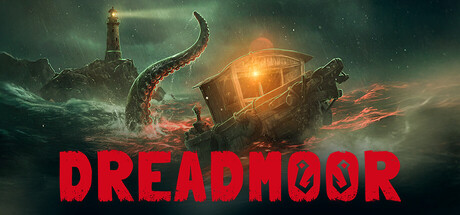
DREADMOOR is a dark, first-person Lovecraftian fishing survival game from Dream Dock, set in a world drowning under the weight of a catastrophic human mistake. You are not a hero — you are a desperate survivor at the helm of a rust-bucket trawler, scraping a living from irradiated waters where the fish bite back. Published by Digital Vortex Entertainment and targeting a Q4 2026 launch on Steam, this is the game that answers the question nobody asked: what if Dredge had a baby with S.T.A.L.K.E.R., and the baby grew up angry?
You fish. You fight. You scavenge. You upgrade. You go deeper. And if you screw up, the sea takes everything. The core loop is brutally simple: push into increasingly dangerous waters to haul mutated catches, sell them to scattered survivor settlements, and pour every scrap of profit back into your boat. Because in DREADMOOR, your boat isn't a vehicle — it's your hit points, your inventory, your escape plan, and your only friend. Let it sink and the run is over.
The game sold its vision hard during Steam Ocean Fest 2026 with a playable demo that racked up 60,000 trailer views on Indie Games Hub. Pre-alpha playtesters consistently describe it as "Dredge with actual teeth" — the fishing mechanics are familiar, but the moment a Crag-Shell rips your port engine off in the dark or you open your hold to find your prize Grotesque Mackerel has eaten three smaller catches, you realize this isn't a cozy pastime. It's a survival horror that happens to use a fishing rod.
Game Details
| Detail | Info |
|---|---|
| Title | DREADMOOR |
| Developer | Dream Dock |
| Publisher | Digital Vortex Entertainment |
| Release Date | Q4 2026 (Announced) |
| Platform | Windows (PC via Steam) |
| Steam App ID | 3629430 |
| Price | TBA (not free) |
| Genres | Action, Adventure, Indie, RPG, Simulation |
| Languages (UI) | English, French, Italian, German, Spanish, Portuguese-Brazil, Traditional Chinese, Simplified Chinese, Korean, Polish, Russian, Japanese |
| Full Audio | English, Russian |
| Multiplayer | No — single-player only |
| Controller | Full controller support (DualShock 4/5) |
| Steam Features | Achievements, Cloud Saves, Family Sharing |
| Storage Required | 60 GB |
| Minimum RAM | 8 GB |
| Minimum GPU | Not specified (DX11 required) |
| Recommended CPU | Intel i7-8700 or higher |
| Recommended GPU | Nvidia RTX 3070 or AMD Radeon RX 6600 XT |
| Recommended RAM | 16 GB |
| Content Rating | Violence, alcohol/tobacco references, coarse language |
| Official Site | dream-dock.com |
| Support Email | [email protected] |
Target Audience
DREADMOOR is built for players who found Dredge compelling but too polite. If you want a fishing game where the atmosphere curdles into genuine dread, where inventory management is a puzzle and combat is a last resort you can't always avoid, this is your game.
You'll love DREADMOOR if:
- You enjoyed the tension loop of Dredge but wanted bigger stakes and real combat.
- You play survival games like Subnautica and The Long Dark for the feeling of barely scraping by.
- You obsess over modular upgrades — swapping engines, hulls, rods, nets, and lights until your boat is a floating Swiss Army knife.
- You appreciate Lovecraftian worldbuilding where the lore is buried in environmental clues, fish shrines, and cryptic survivor dialogue.
- You have a dark sense of humor about watching one mutated fish cannibalize another in your cargo hold.
You'll bounce off DREADMOOR if:
- You want a relaxing, low-stakes fishing sim. This is not Stardew Valley on a boat.
- You dislike inventory tetris. Mutated catches are oddly shaped and space management is a core mechanic.
- You need fast-twitch FPS combat. Melee and boat-mounted weapons are deliberate, not twitchy.
- You can't handle losing progress. One bad night on deep water can cost you hours of accumulated cargo.
Getting Started
Follow these steps to survive your first 90 minutes in the Drownlands without becoming chum.
1. Learn Your Trawler's Controls Cold
Your starter trawler handles like a floating refrigerator. Before you cast a single line, drill the basics: rudder steering, throttle control, anchor deployment, and the quick-repair binding. In a panic — and panic will come — you need muscle memory, not a tutorial pop-up. Spend 10 minutes just driving around the Shallows, practicing tight turns and emergency stops.
2. Fish the Shallows First — Don't Chase the Horizon
The Shallow Shorelines are boring. Good. Stay there. The starter rod can only handle small panfish and common species, but that's exactly what you need to learn the casting-and-reeling mini-game. Here's the mechanic: cast toward visible ripples on the water surface, wait for the bite, then manage the tension bar. Red zone? Ease off. Green zone? Reel hard. The rhythm varies per species, and you need to internalize it on easy fish before a Grotesque Mackerel snaps your line 3km from the nearest settlement.
3. Sell Fast, Sell Often
Your first few hauls will be unremarkable — scrawny mutated bass and the occasional slightly-less-scrawny mutated bass. Sell them immediately at the nearest survivor dock. Do NOT sit on cargo hoping for a better price. As you progress you'll learn which traders pay premiums for which species, but in the opening hours, liquidity is survival. Cash = engine upgrades = speed = not dying at night.
4. Engine First, Always
The single most important upgrade in your first 5 hours is engine speed. A slow boat at night is a coffin. Prioritize reaching 30–40 knots. The Refined Outboard Engine is cheap, easy to install, and two of them stacked give roughly 52.6 knots — enough to outrun most early threats. Do NOT rush a big single engine. Multiple smaller engines provide redundancy: if a Drowned rips one off, you can still limp home. One big engine gets hit and you're dead in the water.
5. Craft the Telescope Early
The telescope (craftable from basic scrap and glass) lets you scan water from a distance before committing. Murky brown = polluted, likely predators. Crystal clear = safe but small catches. Dark green with ripples = deep water, big fish, worth the risk. Red-tinged mist on the horizon = turn around, you're not ready. Use the telescope every time you enter a new zone.
6. Understand the Panic Meter
Your sanity is a resource. It depletes in deep water, during storms, at night, and after creature encounters. When panic hits critical, your screen distorts, your reaction time tanks, and the fishing mini-game becomes nearly impossible. Reset it by sleeping at a dock or consuming sanity-restoring items (cooked rare fish, found photographs, crafted talismans). Never push through a panicked night unless you've accepted you might lose everything.
7. Deposit, Don't Hoard
Survivor camps and settlements let you store materials. Use them. Only carry what you need for the current run. If you die at sea, you lose everything in your boat's hold — but materials stashed at camp are safe. Every time you dock, ask yourself: "If a Deep Maw Kraken ate me right now, what would I regret not storing?"
8. Build a Crab Pot Economy
As soon as you can craft Efficient Crab Pots, deploy them near accessible shoreline routes. They generate passive income — you check them on your way out and back, and the steady trickle of cash buys research parts and bait so you're not grinding basic fish for pocket change.
Tips & Beginner Mistakes
| Mistake | Why It Kills You | The Fix |
|---|---|---|
| Sailing into deep water at night with a stock engine | Slow boats are meat. Deep-sea angler mutants swarm in seconds. | Hit 40+ knots before attempting night runs. Stick to coastlines after dark. |
| Running one massive engine instead of multiple small ones | One hit from a Drowned disables your entire propulsion. | Stack 2–3 smaller engines (Refined Outboards or Improved Outboards). Redundancy is survival. |
| Ignoring the panic meter and "pushing through" | High panic causes hallucinations and makes the fishing mini-game borderline unplayable. | Sleep at docks regularly. Keep sanity-restoring items in your quick bar. |
| Hoarding mutated catches in your hold overnight | Aggressive/corrupted fish eat other fish in your hold. Your haul can literally cannibalize itself. | Sell immediately after every run. Check inventory before logging off or sleeping. |
| Fishing without bait diversity | Standard bait won't attract rare or deep-water species. You waste fuel chasing empty water. | Always carry at least two bait types: one general and one biome-specific. |
| Ignoring the "red mist" warning | The red mist is an environmental hazard that overtakes you if you linger too long in one zone. It wipes your cargo. | Keep an escape route mapped. Monitor the mist edge on your compass. When it creeps close, leave. |
| Exploring wrecks without checking tide levels | Some caves, tunnels, and loot rooms are only accessible at low tide. Arrive at high tide and you waste the trip. | Use the in-game tide clock. Plan wreck dives around low-tide windows. |
| Neglecting hull repairs between runs | Hull damage reduces speed and increases vulnerability. A limping boat in monster territory is a death sentence. | Repair at every dock visit. Carry emergency patch kits for mid-run fixes. |
Core Mechanics
Fishing: Skill-Based, Not a Minigame
Fishing in DREADMOOR is the center of gravity for the entire experience. Here's how it actually works: you navigate your trawler into a visible ring on the water's surface — a designated fishing zone. Equip your rod and lure, hold the trigger to build cast power, and release toward visible ripples or dark patches. Once a fish bites, a tension-based reel battle begins. The tension bar has a green safe zone and red danger zones on either end. If you push into red, the line snaps. If you let it go slack, the fish escapes.
Species dictate the rhythm: small panfish let you reel aggressively; mid-tier predators require pulsing — reel, pause, reel; legendary abyssal fish demand patience measured in minutes, not seconds, as you let them exhaust themselves before applying pressure.
Bait matters enormously. Standard worms work for common shallows fish. Glowing lures attract deep-water exotics. Chum draws predators — and sometimes the monsters you'd rather not meet. Biome-specific bait (heat-resistant for volcanic zones, anti-tangle for silt-heavy water) becomes mandatory in later regions.
Boat Management: Your Floating Fortress
Your trawler is a modular platform. The hull determines your equipment grid — more slots means more engines, rods, nets, lights, and storage compartments. Hull upgrades require Refined Metal, a gated resource found behind explosive barriers or purchased from the Traveling Merchant.
Engine placement is tactical. Central mounting protects against side-attacking predators. A Jet Drive engine (1×1 grid slot, high efficiency) is the gold standard for mid-game. The optimal early layout is: 1× Jet Drive flanked by 2× Refined Outboards for a combined speed approaching 55 knots with redundancy.
Lights serve dual purpose: high-lumen output slows panic accumulation at night, but bright lights also attract predators. It's a constant trade-off. DARK = stealth, faster panic. LIGHT = safety from panic, higher aggro radius. Experienced captains toggle lights situationally rather than leaving them on.
Combat: Deliberate, Not Frantic
Combat happens on water and on land, and neither plays like a traditional FPS. From your boat, you use a harpoon gun with limited range — useful for yanking smaller mutants out of the water and finishing them on deck. The harpoon also retrieves resources from killed creatures. Later, ship-mounted cannons and Repeater Cannons handle larger threats.
On land, you start with a gaff hook (melee) and eventually upgrade to specialized weapons. The key mechanic is timing: wait for the creature's telegraph, dodge, and strike its weak point during the recovery window. Crowd control matters because many enemies hunt in packs. Use environmental hazards — explosive barrels, carnivorous flora, cliff edges — to thin numbers without wasting ammo.
Stealth is viable. The Wraith ability highlights enemies through walls (red = elite/captain, standard = grunt). Silent takedowns from ledges or behind enemies avoid drawing aggro. An enemy awareness indicator (yellow = searching, red = fully alerted) lets you salvage botched approaches.
Survival Systems: Hunger, Thirst, Sanity
Three meters govern your character: hunger, thirst, and panic (sanity). Hunger depletes slowly but inflicts severe penalties if ignored. Clean water sources are fixed — specific island springs you must remember and revisit. Panic is the most dangerous: it spikes in deep water, at night, during storms, and after creature encounters. Critical panic triggers visual distortions, auditory hallucinations, and drastically reduced reaction times. Reset it by sleeping at docks or consuming sanity items.
Inventory management is insidious. Mutated fish have irregular shapes that don't stack neatly. Corrupted fish can damage or consume other catches in your hold overnight or during long hauls. The cannibalism mechanic means a valuable predator you caught might eat three smaller catches before you reach port — forcing you to choose between selling immediately at lower prices or gambling on reaching a premium buyer.
Progression: Zones, Shrines, and Research
The world is divided into distinct biomes, each gated by boat capability:
- The Shallows — safe, small catches, no predators. Your training ground.
- The Wetlands (Sunken Suburbs) — flooded streets, Drowned mutants, narrow alleys. Spear + Buckler Shield territory.
- Abyssal Trenches — pitch-black caves, high-pressure zones, armored Crag-Shells. Requires Warhammer and Glowstick Lures.
- Rotting Overgrowth — toxic spores, regenerating plant-beasts, leaping enemies. Dual Sickles + Fire Flasks stop regeneration.
- Forsaken Citadel — vertical ruins, Wraith-Hawks, narrow ledges. Greatsword + Crossbow with Grapple Bolts.
- Deep Maw — open ocean, colossal bosses like the Kraken. Ship-mounted Repeater Cannons required.
Fish Shrines in each region request specific species. Completing shrine offerings grants permanent upgrades — faster reel speed, increased storage, panic resistance — that compound across a playthrough. These are not optional side content; they're the difference between a 20-hour struggle and a 30-hour mastery.
Advanced Strategies
The Redundancy Doctrine
Never trust a single point of failure. This principle applies to engines (multiple small over one big), lights (carry a backup), and weapons (bring a sidearm even if you main melee). The Drownlands punish overconfidence. If a monster can disable one component, build your loadout so you can still function with it disabled. The most consistent veteran strategy is: 2–3 Refined Outboard engines centrally mounted, 1 backup light, 1 emergency repair kit, and never sail without enough fuel to reach two different docks.
Biome-Specific Loadout Switching
Each region demands different equipment. Do not carry your Shallows spear into the Abyssal Trenches — Crag-Shells have armor that laughs at piercing damage. Build regional loadouts at your storage camp and swap before departing. The optimal path: Sunken Suburbs → Spear + Buckler (stamina build). Abyssal Trenches → Warhammer + Glowsticks (strength build). Rotting Overgrowth → Dual Sickles + Fire Flasks (agility build). Forsaken Citadel → Greatsword + Crossbow with Grapple Bolts (poise/defense build). Deep Maw → Repeater Cannon + Soul of the Leviathan artifact (engineering build). The Soul of the Leviathan adds a 20% chance to trigger lightning chains on hit — devastating against multi-tentacled bosses.
The Dawn/Dusk Window
Predators are most aggressive at midnight and least active during full daylight. The 30-minute windows around dawn and dusk are the sweet spot: visibility is adequate, panic buildup is moderate, and predators are transitioning. Plan your riskiest runs — deep water hauls, wreck dives, new biome exploration — for these transition periods. Schedule dock maintenance, crafting, and trading for peak daylight or peak darkness (when you should be sleeping anyway).
Passive Income Multiplier
Crab pots and trawl nets are not side attractions — they're force multipliers. The Silt Filtering Trawl Net in the Twisted Strand catches mission-critical fish automatically while you explore. Deploy 4–6 Efficient Crab Pots along your regular routes and check them on every pass. The cumulative income over a play session funds research parts, bait, and emergency supplies without adding a single minute of active grinding. Late-game, the passive income stream lets you focus entirely on exploration and boss encounters.
Shrine Optimization
Fish Shrines request specific species and reward permanent character upgrades. The optimization play: before entering a new biome, research which species the local shrine wants. Carry that bait type. Catch the shrine fish first — before filling your hold with general cargo — so you can deliver immediately. Shrine rewards are account-permanent; completing all shrines in a region before attempting its boss makes the fight substantially easier. The most impactful shrine rewards are panic resistance and reel speed; prioritize those.
FAQ
When does DREADMOOR release? Q4 2026. A playable demo launched during Steam Ocean Fest in May 2026. Pre-alpha playtests ran through early 2026 with strong community feedback.
What platforms will it be on? Windows PC via Steam, confirmed. No console or Mac/Linux announcements yet, though full controller support and DualSense compatibility suggest console ports are plausible post-launch.
Is DREADMOOR a horror game or a fishing game? Both, but the horror serves the fishing, not the other way around. The atmosphere is oppressive, the creatures are unsettling, and the panic mechanic punishes carelessness — but the core loop is casting, catching, selling, and upgrading. Think survival-horror framing around a fishing simulation, not a horror game with fishing minigames.
How long is the game? Approximately 20–30 hours for the main story and essential upgrades. Completionists chasing all shrine rewards, rare species, and lore collectibles can expect 40+ hours.
Is there permadeath? No. Death resets you to your last camp save with lost cargo and equipment degradation. Stored materials at survivor camps are safe. The punishment is resource loss, not full restart.
Does the hold cannibalism mechanic really matter? Yes. Aggressive predators and corrupted fish will eat smaller catches if you don't sell quickly. It's not flavor text — your inventory shrinks in real-time. Check your hold before long journeys and sell or offload anything volatile.
What's the red mist? An environmental hazard that encroaches on zones where you linger too long. If it overtakes your position, your cargo is wiped. The mist pushes you to keep moving, discouraging endless grinding in one safe spot.
What's the best early-game engine? The Refined Outboard Engine. Cheap, small grid footprint, and stacking two gives ~52.6 knots. Transition to a Jet Drive (1×1, high efficiency) once you have research parts.
Can you avoid combat entirely? Mostly, but not always. Stealth, Wraith vision, and environmental hazards let you bypass many encounters. However, certain story events and boss fights force engagement. You can minimize combat, but you can't eliminate it.
Is there a story? Yes. The Submerged Land has a backstory involving a catastrophic event that flooded the world. Exploration notes, survivor dialogue, and environmental storytelling piece together what happened. The narrative is delivered through discovery, not cutscenes.
Are there factions? Yes. Scattered survivor settlements have distinct allegiances and ideologies. Trust is a resource — some factions trade better prices, others offer unique blueprints. Your choices affect faction reputation and access.
What happened during the pre-alpha playtest? The playtest ran in early 2026 with an "impressive" turnout per The Guide Hall. Feedback focused on engine balancing, panic tuning, and inventory UX. The developers incorporated community input into the demo build shown at Steam Ocean Fest.
Final Verdict
DREADMOOR isn't trying to be the biggest game of 2026 — it's trying to be the most atmospheric. And on that measure, it succeeds. The combination of skill-based fishing, modular boat customization, and genuine survival tension carves out a niche that Dredge fans have been hungry for. The cannibalism mechanic in your hold is the kind of twisted detail that turns a good concept into a memorable one. The biome-specific combat loadouts give depth to what could have been a one-note loop.
Wait for reviews if you're allergic to early-access roughness — the Q4 2026 launch window means we don't yet know final polish levels. But if the demo grabbed you, the full game promises more of everything: more biomes, more monsters, more boat parts to obsess over, and more reasons to fear the water. For anyone who believes fishing games have been too nice for too long, DREADMOOR is the corrective you've been waiting for.
Last reviewed by Game How To Editorial. We play each game, verify controls against official sources, and update guides when game mechanics change.