Daily Pick
One deeply researched guide worth reading today.
A practical route through the systems that matter most, written to help new players make confident decisions quickly.
Overview
Theropods is a wordless point-and-click adventure from indie studio Lost Token, published by Dionous Games. Every line of dialogue is missing on purpose. No text, no subtitles, no voice acting. The story runs on animation, sound, and visual logic, the way classic adventures like Machinarium and Gobliiins told theirs. The result is a game any player in any language can follow. The interface even ships in 103 languages at launch, which is a polite irony for a game with zero written words.
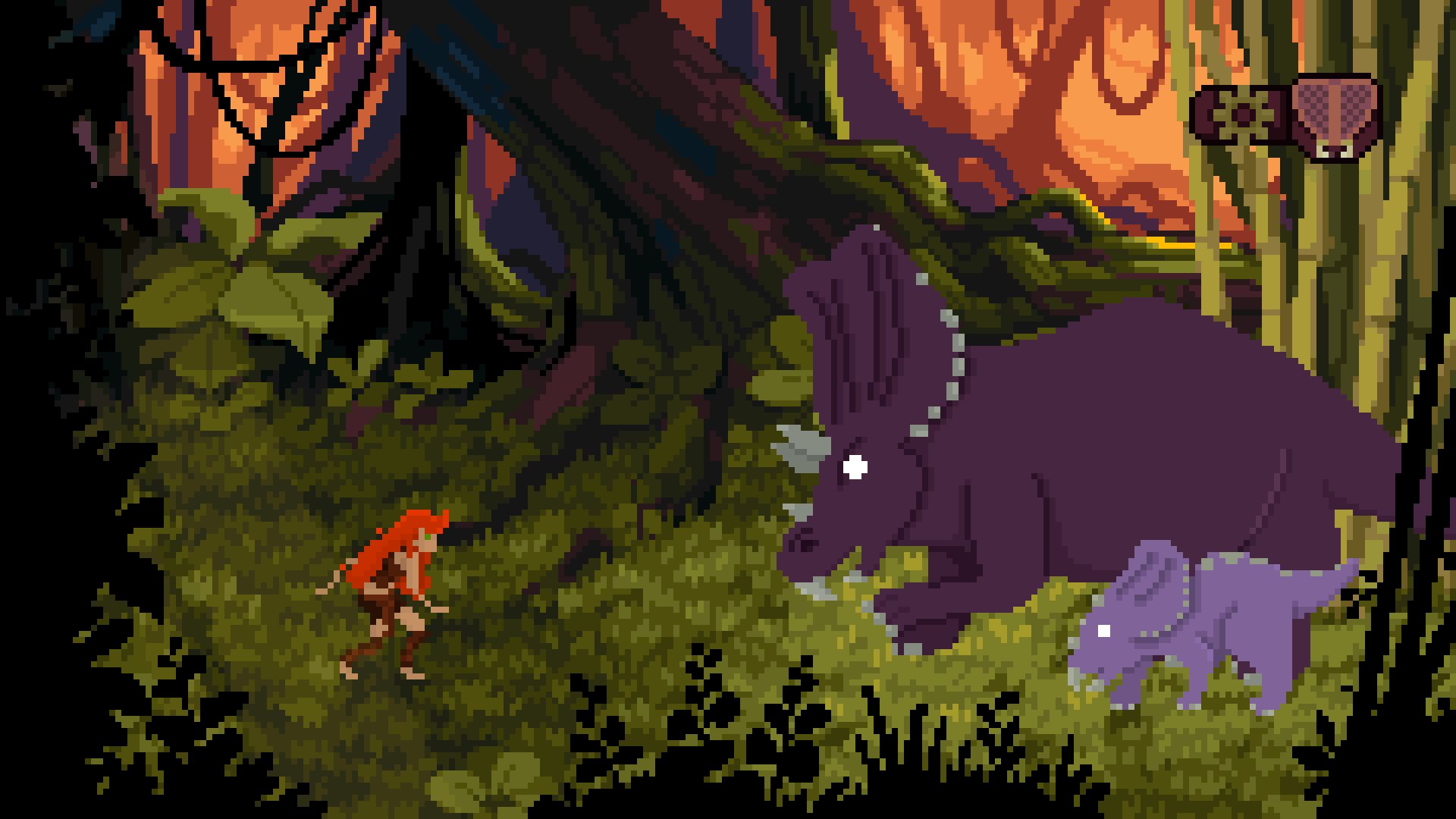
The premise is a culture clash thousands of years wide. A glowing stone crashes from the sky into a young hunter's village. Its arrival draws a bloodthirsty tribe, who attack the settlement and enslave her people. Barely escaping into the jungle, she discovers the stone's true origin: a stranded spaceman whose damaged pod depends on it. Together, this unlikely pair cross dinosaur-infested lands to free her tribe and find a way to send him home. What follows is a short, hand-crafted journey through jungles, valleys, canyons, caves, and wild dinosaur territory, told entirely through gestures, expressions, and environmental reactions.
The core loop is observation first, action second. You watch how characters move, how creatures behave, and how each scene reacts as you poke, prod, and experiment. Instead of fighting your way through danger, you solve your way through it, distracting predators, avoiding enemies, triggering reactions, and finding clever ways past situations too dangerous to face head-on. It rewards patience and pattern-reading over reflexes, and its pixel art, animated frame by frame, is the best argument for giving the genre another look.
Who it's for: Fans of Machinarium, Gobliiins, and Samorost, puzzle adventurers who prefer visual storytelling, and players who like their games short, warm, and carefully made.
Who it's not for: Players who want combat, open exploration, or a long campaign. Theropods is a three-to-five-hour linear adventure, and its puzzles reward slow, deliberate observation rather than speed.
| Fact | Detail |
|---|---|
| Developer / Publisher | Lost Token / Dionous Games |
| Genre | Wordless point-and-click adventure |
| Platforms | Windows, macOS, Linux (Steam, GOG, Epic Games Store) |
| Release | August 20, 2026 |
| Price | $13.99 after 20% launch discount off $17.49 (first two weeks) |
| Players | Single-player |
| Story | Hunter and spaceman freeing an enslaved tribe |
| Dialogue | None, visual storytelling only |
| Interface languages | 103 at launch |
| Achievements | 20 total |
| Steam review score | Very Positive (107 recommendations as of late October 2026) |
| Typical playtime | 2 to 3 hours |
| Demo | Free demo removed from Steam after launch |
| Min specs | Windows 7, x86/x64 SSE2, 4 GB RAM, DX10 |
| Rec specs | Windows 10, 8 GB RAM, DX10/11/12 |
| Engine | Visionaire Studio |
| Background | 2015 Flash game jam project, Kickstarter-funded, 10 years in development |
Getting Started: The First 30 Minutes
Before You Launch
- Understand the no-text rule. Everything the game tells you comes through motion and sound. Watch what a character does twice before assuming what the game wants. Repetition is the game's language.
- Know that clicking is your only verb. You click to move, click to pick up, click to use an item on a target. There is no fail state from idling, and save is available anytime. Timed sequences exist, but they are puzzle segments, not reflex tests.
- Use the interactable highlight. When you are stuck, the game can highlight every clickable spot in the current scene. This removes pixel-hunting entirely and converts every puzzle from "find the hotspot" to "figure out the logic." Bind it early and use it as a sanity check, not a crutch.
- Expect a short game. Most reviewers finish in 2 to 3 hours and complete every achievement in about 2. That is not a flaw; it is the format. Treat the run as a focused story, not a 20-hour commitment. The free demo that used to preview the puzzle style has been pulled from Steam, so the purchase decision rests on reviews and trailers.
- Fix your load screen expectation now. The main menu starts you at a new game every time. Your progress loads through the up arrow below the Play button. Knowing this on day one prevents the single most frightening false alarm in the game.
Your First 30 Minutes
- Learn the hunter's village before the attack. The opening frames establish who the hunter is, what her people value, and where the danger comes from. Absorb the tone; the game rewards paying attention from the first screen.
- Greet the villagers. After the old lady drops her vase, say hello to the sitting man eating apples beside her. Repeat the greeting several times. It feels like filler; it is the path to the game's rarest achievement.
- Follow the spaceman's pod. The first act is a guided introduction to the pair's dynamic. Watch the spaceman's gestures whenever he reacts; they telegraph puzzle solutions more clearly than any tutorial text.
- Experiment with one object at a time. Click something, watch what changes, then click again. Theropods is built so that every poke teaches you something about the next step.
- Pick up everything that looks interactive. Inventory items may not be used immediately, but the game is compact enough that almost every object has a purpose somewhere.
- Let the environment react. Dinosaurs patrol, creatures have habits, and objects respond to being disturbed. The puzzle is often just noticing the reaction you caused.
Beginner Mistakes
| Mistake | Why It Hurts | Fix |
|---|---|---|
| Clicking rapidly everywhere | You miss the reaction each click produces | Click once, watch, then decide |
| Assuming a character fights | Theropods has no combat; forcing encounters fails | Distract, avoid, or solve around threats |
| Ignoring repeated animations | Repetition is the hint system | Watch a creature's cycle a full loop before acting |
| Hoarding items without using them | Some solutions need the item combined with a location | Try obvious uses early; the game is forgiving |
| Skipping the opening village | The intro establishes the tribe and the threat, and hides two achievements | Let the opening play out and greet the villagers |
| Expecting dialogue clues | There are none by design | Read body language and scene changes |
| Never using the highlight | You grind through pixel guessing on a puzzle built for logic | Toggle it when you have no idea what is clickable |
| Trusting the S prompt as a quick-time event | Holding it skips the cutscene you thought you were playing | Treat S and Esc as skip buttons only; replay anything missed from the pause menu |
| Panicking at a fresh main menu | Progress loads from the arrow under Play, not automatically | Open the load screen before assuming a wipe |
Core Mechanics Explained
Visual Storytelling as the Interface
Theropods replaces dialogue trees, long conversations, and text walls with gestures, expressions, sound, and visual storytelling. The story unfolds through action: what characters do, what they notice, and what changes around them. With no subtitles or text-heavy exposition to translate, the adventure is built to be understood by players anywhere in the world. The design consequence is that every animation does double duty: it characterizes and it hints. A creature that circles a rock three times is either territorial or curious, and telling the difference is the puzzle.
Observation and Experimentation Loop
The core loop is deceptively simple: watch, poke, and learn. The game stages each scene as a small system. A sleeping predator, a guarded passage, or a curious creature with an exploitable habit can all be read from behavior alone. The golden rule is to change one variable at a time. If you click a lever and a gate rattles, the causal chain is clear. Clicking everything at once buries the signal in noise.
The Interactable Highlight
Unique among many pixel-art adventures, Theropods offers a built-in aid that reveals all interactive spots in a scene on demand. Reviews singled this out as the reason the game never frustrates: when you are confused, the problem narrows from "where is the hotspot" to "what does this object do with that one." Treat the highlight as a debugging tool. Solve the puzzle's logic yourself, then use it only to confirm your read of the scene.
One practical detail the reviews skip: the highlight draws circles that alternate between white and red, and on brightly colored jungle screens the red ones blend in badly. If you swear the highlight found nothing but a puzzle still blocks you, sweep the scene a second time and look specifically for the red rings.
The Cursor and the Grunt
With no text anywhere, the game needs two other channels to tell you what a click did. The first is the cursor itself: over a live hotspot it changes shape, gaining four lines that meet in the middle. No tooltip, no label, no verb. The second is the hunter's voice. Her grunt on a rejected click carries a pitch difference between "no" and "maybe later," and once your ear catches the distinction the game gets noticeably smoother. A "no" means wrong object entirely. A "maybe" means right idea, wrong time or missing item, which tells you to bank the thought and move on.
One Interaction per Hotspot
Every hotspot does exactly one thing. Clicking it either performs an action, produces the refusal grunt, or moves an item into the inventory. The classic adventure-game Examine verb does not exist here, so you never inspect anything twice. The flip side: repeated clicking is sometimes required on multi-stage objects, where two or three clicks in a row each advance a physical action. If a first click does nothing, one more click before giving up is cheap insurance.
Brain Over Brawn
Theropods is deliberately non-violent. Rather than fighting, you distract hungry dinosaurs, slip past bloodthirsty barbarians, and trigger environmental reactions. Solutions lean on misdirection, timing, and patience. This is the genre's classic ethos: a puzzle solved through cleverness feels earned in a way a combat kill never does. Expect to feel smart, not powerful.
Item Use and Inventory
Inventory items behave like classic adventure objects. Pick something up, then click it on a target. The game is compact enough that item logic stays intuitive, and its "Save Anytime" and "Playable without Timed Input" tags mean you can experiment without pressure.
Three inventory rules shape every puzzle. First, you rarely carry more than three or four items at once, so the brute-force space stays small: with four items and eight scene objects, a full sweep is thirty-two clicks. Second, items belong to the chapter that introduced them. Nothing carries over, so a stubborn unused item is always used somewhere nearby. Third, items can appear in locations you already visited. If a scene gave you nothing, walk back one screen and look again; the game restocks quietly.
One recurring complaint deserves a workaround. Large pixel art makes some inventory items hard to identify, and players reported staring at a stake for minutes without knowing what it was. When an item puzzles you, try clicking it on the scene's most obvious matching target first, then on its environment: the game accepts a correct item on the correct target even when you do not know what the item is called.
Hand-Drawn Pixel Art and Sound
The art is hand-drawn pixel art brought to life with cinematic frame-by-frame animation, and the soundtrack blends tribal rhythms with eerie sci-fi synthesizers. The audio does heavy lifting in a wordless game: a change in the music or the percussion signals danger, discovery, or progress. Play with sound on.
The Puzzle Grammar Playbook
Every screen in Theropods is built from the same handful of puzzle patterns. Learn the patterns and almost nothing will stall you. The five families:
| Pattern | How It Reads | Telltale Sign |
|---|---|---|
| Patrol timing | A moving threat with a fixed route | Creature walks the same loop twice |
| Distraction | A bait object placed near a threat | Something throwable sits far from where you need to go |
| Chain reaction | One action sets off a sequence | A lever, rope, or trigger near a gate or bridge |
| Item + location | Inventory object used on a specific spot | A slot, gap, or container that visibly matches an item |
| Behavior exploit | A creature's habit is its weakness | Animal fixates on food, noise, or a shiny object |
The trick is identifying the family before touching anything. Stand still, run the scene through the list, and the intended solution usually announces itself.
Two pattern variants crop up often enough to name. The repeat verb puzzle asks for the same action three or more times, and the game's timing puzzles reward doing the thing inside a window rather than only doing the thing. Chapter 3 and 4 lean hardest on both: the feeding sequence asks you to satisfy four separate baby creatures, each with its own want, before any of them melts down. The playbook for that one: scout every food source in the scene first, plan the delivery route, then execute without detours. Improvising mid-sequence is how the timer wins.
Act-by-Act Journey Map
Theropods ships six chapters, and its story runs through five clear phases. Knowing the shape of the journey helps you read the tone and the puzzle density of each one.
- The Village. The opening establishes the tribe, the attack, and the hunter's loss. Mostly observational, low puzzle density, high emotional setup. Chapter 1 doubles as a tutorial in disguise: fetch water for an exhausted villager, play hide and seek with the children, greet the sitting man who eats apples. None of it is throwaway; the greeting ritual pays off later.
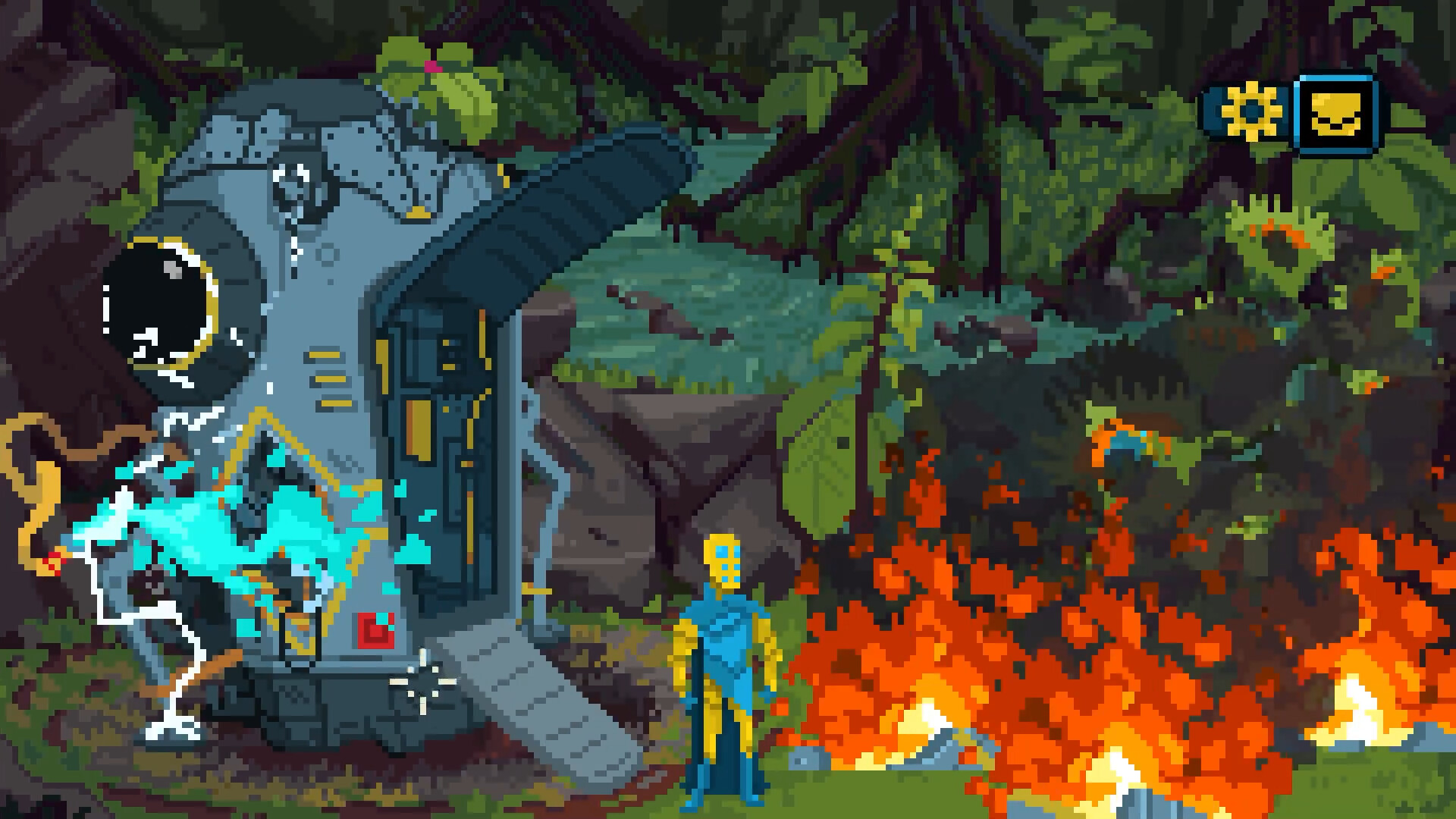
- The Jungle Escape. The hunter meets the spaceman and his pod. This act teaches the pair dynamic: the spaceman's gestures act as a compass pointing at solutions.
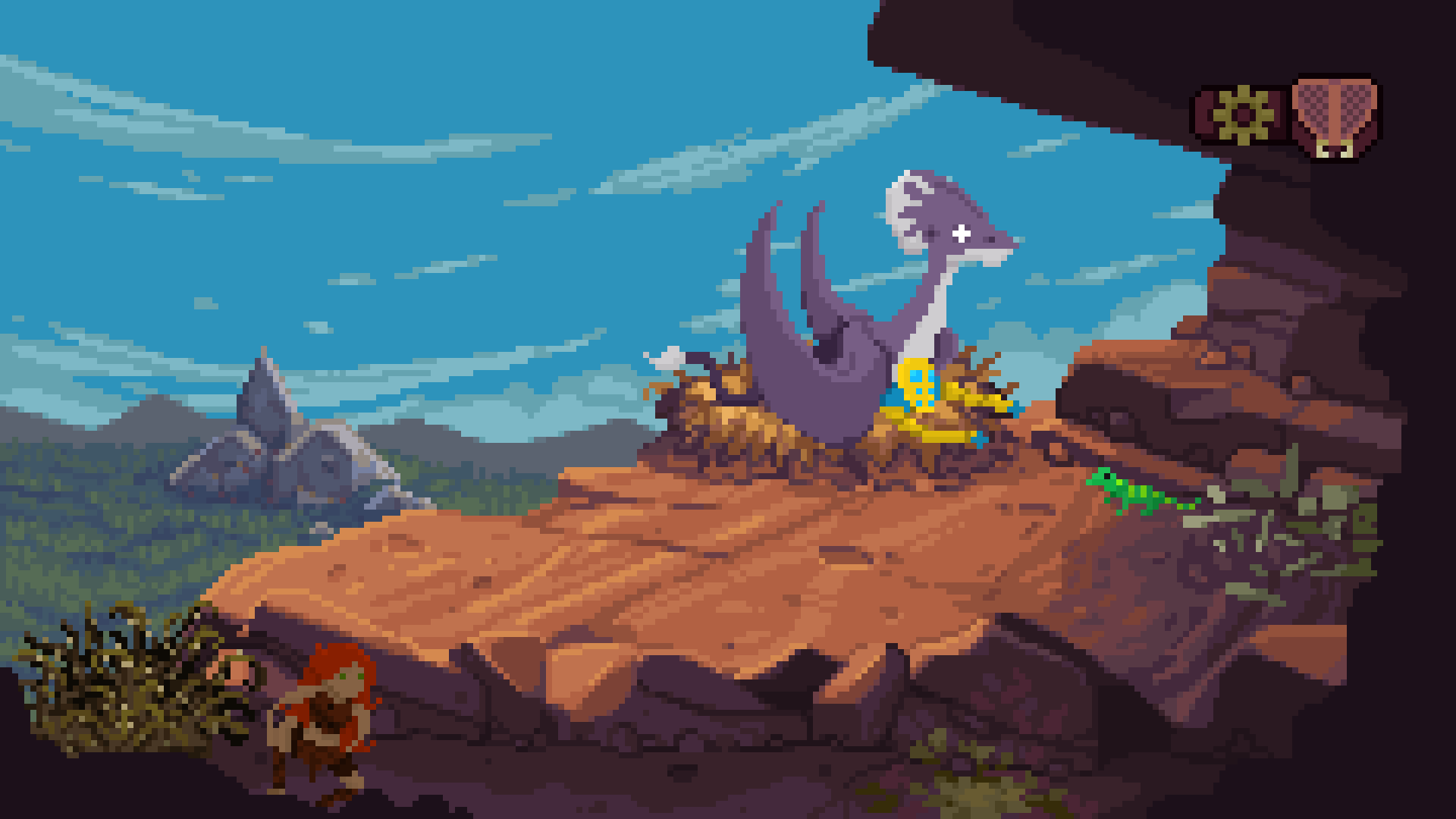
- The Valleys and Canyons. The pair moves through dinosaur territory proper. Patrol timing and distraction puzzles dominate here. The mountain section with the trapped pterosaur and the lizard marks the point where character switching unlocks, and it is where the most reported progression bug lives (see Troubleshooting).
- The Caves and Underwater. The sci-fi elements surface. Expect dark scenes, glowing artifacts, and puzzles built around the stone's strange properties. Players can tackle parts of this stretch in different orders, which matters for gallery completion.
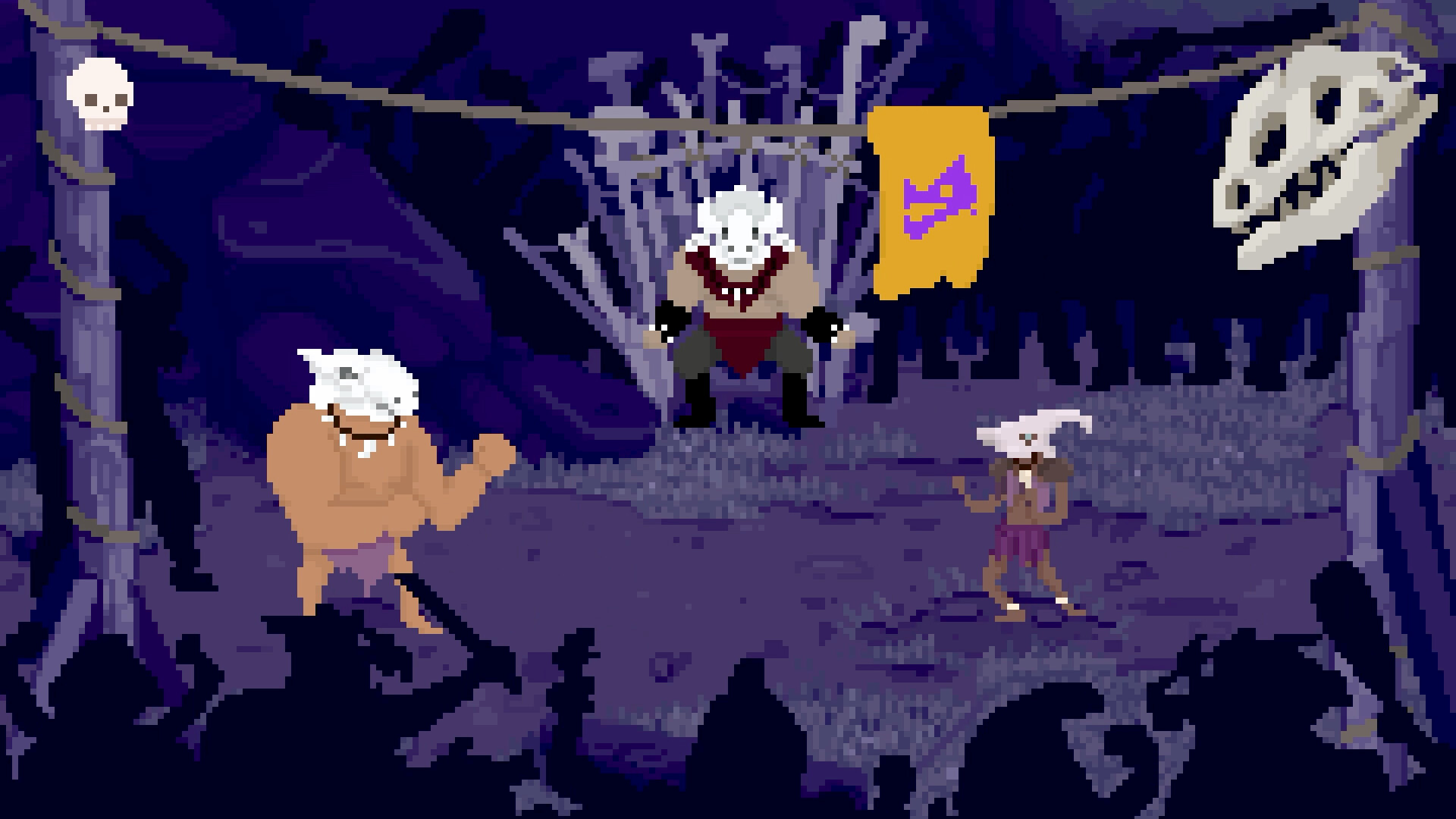
- The Raft and the Island. The hunter builds a raft, the pair crosses together, and the story pivots to the barbarian stronghold.
- The Climax. Freeing the tribe and resolving the spaceman's fate. The crystal shards become the key to the final confrontation, and the game consolidates every mechanic from earlier acts into the closing sequences.
There is a single ending. The final act lands harder if you let the opening village play out in full, because the game pays off the emotional stakes it set in the first screen. One heads-up from players who finished it: beating the game used to reset gallery unlocks, a launch bug the developers acknowledged and promised to fix, so screenshot your favorite cutscenes before the credits if you care about the movie gallery.
Step-by-Step Strategies
Strategy 1: Read the Patrol Loop
Every patrolling enemy has a cycle. Stand at a distance and watch a full loop before moving. The safe window is almost always after the creature turns away, giving you two to three seconds to cross. This is the single most useful technique in the game. Count the steps, not the seconds: the loop is fixed, so the rhythm you memorize in one pass holds for the rest of the scene.
- Position the hunter at the edge of the threat's range.
- Watch one complete loop from turn-around to turn-around.
- Mark the moment the creature's back faces you.
- Move only during that window, in a straight line, no inventory fiddling.
- If the crossing has two threats, offset their loops by baiting one with a thrown object first.
Strategy 2: Distract, Don't Confront
When a barbarian or predator blocks a path, find something to throw, drop, or trigger on the opposite side. The game consistently provides a proxy target within reach. If you are stuck, scan the scene for an object that makes noise or moves. The distraction object is almost always the visually loudest thing in the scene: a bone, a fruit, a dangling vine. Use it, then move while the threat investigates the noise.
Strategy 3: Test Environmental Reactions
Lever, rope, rock, fruit, bone: each object reacts to being clicked or used. If a scene offers an obvious interactive element, it is there to be tested. When a path seems blocked, test every interactive object in the room, not just the ones aimed at the obstacle. Keep a mental note of every reaction you trigger, because a gate that rattles in scene one often becomes the key in scene three.
Strategy 4: Use the Spaceman as a Clue
The spaceman reacts to the world with gestures. When he points, looks, or flinches, he is narrating the intended solution with his body. If you are stalled, move him to a different position in the scene and watch how his attention changes. His fear and curiosity are both signposts: whatever he keeps glancing at is worth your attention.
Strategy 5: Save Before Big Experiments
Save Anytime is a gift in a game built on trial and error. Before a risky combination, save. If the solution fails, reload and try the other reading of the behavior you observed. This turns each puzzle into a clean two-branch test instead of a chain of compounding mistakes.
The specifics matter. The game auto-saves at the start of each scene or chapter, and manual saves live in the gear menu. Quicksave on F5 works but shows no confirmation, so press it and then open the menu once to confirm the save registered. Loading happens from the main menu: the up arrow below the Play button opens the load screen. If you launch the game and it looks like a fresh file, your progress is not gone. It is hiding behind that arrow.
Strategy 6: The Two-Pass Scene Audit
When a scene defeats you, run this numbered sequence:
- Toggle the interactable highlight. List every hotspot out loud (in your head is fine).
- For each hotspot, ask what changed the last time you touched it: nothing, a sound, a movement, an inventory pickup.
- Group the hotspots into pairs: which two objects could plausibly interact?
- Find the threat in the scene. What is it guarding, and what would it take to look elsewhere?
- Try the least obvious pair first. In this game, the counter-intuitive solution is almost always one of the two things you dismissed.
Strategy 7: The 100% Route
Reviewers confirmed the full achievement set is completable in about two hours on a focused run. The shape of that run:
- Play the opening naturally. Village story beats double as achievements.
- In every scene, before solving the exit puzzle, poke every non-essential object once. Side-interaction achievements live here: pet the dog, charm the snake, poke oddities.
- Save before any scene that looks like a set piece (escapes, chases, big falls). These moments carry multiple achievements.
- Use the highlight at scene start to catch small interactive objects that a natural run blinks past.
- After the ending, check which achievements remain and replay only the relevant act with the save system; the game is short enough that a partial replay costs ten minutes.
The Two-Character System
Everything changes the moment the spaceman joins. Late in the game you control two characters, and knowing how the switching works saves you from the single most common stuck-point in the game.
How Switching Works
Press Tab to swap characters instantly, or click the arrows under the inventory icon. Each character keeps a separate inventory, so an item picked up by the hunter does not appear in the spaceman's pockets. Some sections lock you to one character, some let you swap freely, and a handful even hand you control of the spaceman's droid for short sequences.
The Lizard Rule
One restriction trips up almost everyone. On the mountain, during the pterosaur scene, the spaceman cannot interact with the lizard. Only the hunter can pick it up. If clicking the lizard makes the character flicker and do nothing, check whose inventory you are holding: the spaceman's UI sits in the top right and glows blue. Switch to the hunter and try again.
There is a second layer to this. Character switching is not available from the first frame of that section. You need to trigger the introductory cutscene first, either by clicking the lizard or walking toward it, and the swap UI appears only after it plays. If Tab does nothing at all, you have not advanced the scene far enough. Walk to the lizard, let the cutscene fire, then switch.
Split-Party Puzzles
Once both characters share a scene, puzzles start using both of them. The hunter handles anything physical: climbing, carrying, feeding. The spaceman handles his own technology, and his reactions often flag which half of the puzzle belongs to him. When a scene stalls, ask the question the game cannot ask in words: is this a job for the other character? Swap first, then start clicking.
Controls Reference
Theropods is a mouse-first game with a scattering of keyboard shortcuts. There is no controller support and no rebind options, so the defaults below are the whole story.
| Input | Action |
|---|---|
| Left click | Move, inspect, pick up, use item on target |
| Hover | Cursor gains four lines meeting in the middle over a usable hotspot |
| Tab | Swap between hunter and spaceman (once unlocked) |
| S (hold) | Skip the current cutscene after a few seconds |
| Esc | Skip cutscenes, open menu |
| F5 | Quicksave (no on-screen confirmation) |
| Gear menu | Manual save, load, volume, resolution |
Two quirks deserve a warning. The S prompt during cutscenes looks exactly like a quick-time event, and a stream of players held it waiting for a fail state that never came. It only skips. Second, the inventory panel covers a chunk of the screen, and during timed sequences you sometimes need to close it before acting. Open it, grab what you need, close it, then execute.
Known Issues and Troubleshooting
Theropods launched clean for most players but shipped with a short list of documented bugs, several of them answered directly by the developer in the Steam forums. Here is every known problem and its fix or workaround.
| Problem | What Happens | Fix / Workaround |
|---|---|---|
| Lizard won't pick up | On the mountain, the hunter flickers when clicking the lizard | You are probably controlling the spaceman; only the hunter can grab it. If Tab does nothing, trigger the scene's opening cutscene first |
| Cursor locked after changing resolution | On Steam Deck, touching the in-game resolution option can pin the cursor to the screen's corner; reinstalling does not help | In Steam: game page, cog wheel, Properties, General, set Maximum Game Resolution to 3840x2160, enable "Allow resolution override for internal display" |
| Progress looks wiped | The main menu shows a fresh game | Click the up arrow below the Play button to open the load screen; the game auto-saves each chapter |
| Gallery movies missing after finishing | Credits roll, then the movie gallery resets | Known launch bug, acknowledged by the developer with a fix promised; keep manual saves from before the finale |
| Rock doesn't stay pushed | Reload places the rock back even though the scene remembers the puzzle solved | Save-state bug, fix planned; work around by saving after the sequence completes |
| Quicksave feels ignored | F5 gives no feedback | It does save; open the gear menu once to confirm |
| Inventory shows ghost items | Used or lost items linger until the panel reopens | Cosmetic; close and reopen the inventory |
| Island music over the raft cutscene | Soundtrack from the previous scene bleeds into the crossing | Audio bug acknowledged by the developer, patch promised |
| Cutscene volume ignores settings | The music slider does not affect cutscenes | Same patch queue |
| macOS hard locks | On Apple Silicon Macs, the game can freeze in chapters 1 and 3, and the save icon may appear without an actual save | Force-quit via Activity Monitor, relaunch, and manually verify saves from the gear menu; macOS builds are the least-tested |
| Steam Deck comfort | Rated Playable, not Verified: no hint hotkey, inventory-heavy timed puzzles run slow on the trackpad | Map a mouse button to the highlight function, or play with a real mouse attached |
The general pattern: the puzzles hold up, the plumbing around them occasionally creaks. Save often, keep two rotating save slots per chapter, and none of these will cost you real progress.
Steam Achievement Guide
All 20 achievements with global unlock rates as of late September 2026. Rarity is your hint at difficulty: the rarest ones come from side interactions, not main-path progress. Two of them are missable, and both sit in the opening village, so a missed early achievement costs only a ten-minute replay of the first area.
| Achievement | Unlock Rate | Likely Trigger (from the verb + story context) |
|---|---|---|
| Legacy | 78.3% | Early story milestone in the village opening |
| Hunter | 71.9% | Progression through the first act |
| Slide | 68.5% | A traversal moment, likely an escape slide |
| Fired | 65.7% | Using fire as a tool or weapon |
| Popular | 65.4% | Winning over a creature, possibly the dog |
| Snap | 64.8% | A trap or snapping mechanism defeated |
| Beepboop | 58.2% | Interacting with the spaceman's tech |
| Guts | 57.3% | A daring action or a gore-related moment |
| Snake Charmer | 52.9% | Charming or calming a snake |
| Yum | 49.3% | Feeding a creature |
| Zap | 45.6% | Using the stone's electric property |
| Fishy | 44.0% | A fishing or water-based interaction |
| Bamboozled | 44.0% | Outsmarting a barbarian |
| Stab | 42.7% | A specific weapon moment |
| A Long Drop | 42.6% | Surviving or causing a long fall |
| One-Punch Spaceman | 41.4% | The spaceman lands a single decisive hit |
| Escape | 41.3% | Escaping the village or a dangerous scene |
| Big Bang | 41.1% | A major explosion set piece |
| Tribe | 41.0% | Freeing or reuniting the tribe |
| Woof | 21.2% | The rarest: hidden dog interaction, easy to miss |
Tips for the hunters:
- Woof is the one that punishes blind play. At 21.2% it is the rarest achievement in the game, and the developer himself confirmed the method in the forums: in the opening village, after the old lady drops her vase, greet the sitting man eating apples next to her. Keep saying hello. After several greetings the dog appears, and the interaction with it earns the achievement. Both missable achievements live in this first area, so if you blitzed the opening, a partial replay catches everything in minutes.
- Side verbs pay out. Snap, Zap, Stab, Slide, and Fired are all tied to verbs, not destinations. If an object suggests an action, do it once, even if the path forward seems clear.
- Save before set pieces. Escape, A Long Drop, Big Bang, and One-Punch Spaceman cluster around scripted moments. A save before the scene lets you redo it without replaying an entire act.
- Watch the gallery order. The movie gallery unlocks per cutscene, and one player found saves from after the final boss missing specific entries depending on the route taken through the underwater section. If you care about a complete gallery, keep a save from mid-game before committing to the finale.
Advanced Tips
- The tribe attack is linear. Do not rush past the village opening; the emotional stakes set up the whole journey and make the final act land harder.
- Listen for the music shift. The soundtrack cues danger and discovery. A sudden percussion build means a threat is near; a warm synth swell usually means progress.
- Revisit scenes after major events. The world changes as the story advances, and the game restocks items in places you have already cleared. An object that did nothing early may become the key after the pair's relationship develops.
- The sci-fi twist recontextualizes everything. The spaceman's technology looks like magic to the hunter. Pay attention to what "magic" can do; it is the game's second language next to body language.
- The stone is a button. The glowing stone is not decoration. When the environment shows sockets, coils, or crackling surfaces, the stone is the intended key. Hold that thought for the caves.
- The crystal shards matter at the end. The final confrontation with the barbarian leader resolves through the energy crystal's shards. The game shows rather than tells, and the moment is easy to misread as a cutscene error. When the shards appear, the puzzle is already solving itself.
- Watch the spaceman's screen time during cutscenes. The cinematic sequences are not wallpaper; they quietly demonstrate mechanic combinations you will need in gameplay immediately after.
- Close the inventory before timed actions. The panel eats screen space, and the timed sequences punish any fumbling. Grab the item, shut the panel, then act.
- The highlight is also a spoiler filter. If you want a pure experience, solve without it. If you value your time, use it the moment you stop making progress. There is no penalty either way.
- Play with sound on. Characters communicate in grunts, and the difference between a rejection grunt and a maybe-grunt is audible, not visible. Muting the game blinds you twice over.
- Buy on GOG if you want it forever. The game is on Steam, GOG, and Epic. The GOG copy is DRM-free and the identical build.
FAQ
What is Theropods about?
A wordless point-and-click adventure about a young hunter whose village is attacked by a bloodthirsty tribe. A stranded spaceman, whose pod depends on a glowing stone, joins her on a journey across dinosaur-infested lands to free her people and find a way home.
Does Theropods have any dialogue or text?
No. The game is fully wordless: no dialogue, no subtitles, no text-heavy exposition. Story and puzzle hints come through animation, sound, and visual storytelling. The interface itself is translated into 103 languages, but the game world never says a word.
How much does Theropods cost?
$13.99 on Steam at launch after a 20% discount off the $17.49 base price, valid for the first two weeks. The same pricing applies on GOG and Epic.
What platforms is Theropods on?
Windows, macOS, and Linux, on Steam, GOG, and the Epic Games Store. GamingOnLinux confirmed native Linux support, which is rare for point-and-click releases. Console and mobile versions were left as "to be confirmed" at launch.
Is there a demo?
There was. A free demo ran through Steam Next Fest and stayed up past launch, but it has since been removed from Steam. If you are deciding on a purchase, the full game is the only way to try it now; refund windows cover a full playthrough's worth of time if the wordless style does not click for you.
How long is Theropods?
Most players finish in roughly two to three hours. Reviews call it short but complete, with several reviewers wishing it were longer. A focused run earns all 20 achievements in about two hours.
Does Theropods support controllers?
No. The Steam page lists Mouse Only Option and ships no controller support or remapping. Play with a mouse. Steam Deck works through mouse emulation and holds a Playable rating, but timed puzzles feel better with a real mouse attached.
Is there combat in Theropods?
No. The game is brains over brawn. You distract predators, avoid enemies, and solve environmental puzzles; there is no fighting. The story around the puzzles is another matter: the game is rated by players as teen-and-up territory, with the mother's death shown on screen, a village massacre, and outright gore in places. Cute pixels, sharp teeth.
Is there pixel-hunting?
No. The game includes a feature that highlights every interactable area on demand, which reviews singled out as the reason the game never frustrates. The challenge stays in the logic, not the scanning.
Does Theropods have Steam achievements?
Yes, 20 achievements total, including "Woof" (rarest at 21.2%), "Snake Charmer," "One-Punch Spaceman," and "Big Bang." The full list with unlock rates is in the achievement section above.
What are the system requirements?
Minimum: Windows 7 (SP1+) or Linux, x86/x64 architecture with SSE2, 4 GB RAM, DX10-capable graphics, 1 GB storage. Recommended: Windows 10, 8 GB RAM, DX10/11/12-capable graphics. Mac needs macOS 10.15 with a Metal-capable GPU; Linux needs OpenGL 3.2 or better.
Why did this game take ten years to make?
What began as a 2015 Flash game jam project grew into a Kickstarter-funded, full hand-animated adventure. The two-person core team hand-drew characters and dinosaurs frame by frame, then pixel artists colored and converted each frame, through engine switches, a pandemic, and spare-hours development.
Does the game save automatically?
Every chapter, yes, plus manual save and quicksave (F5) anytime. The load screen hides behind the up arrow below the Play button on the main menu, which catches enough players off guard that it reads as the game's most dangerous design decision.
Is there anything after the ending?
A movie gallery of unlocked cutscenes, replayable from the pause menu. A launch bug wiped gallery progress on credits for some players; the developers confirmed the fix was coming, so keep a pre-finale save until you see the patch land.
Is a written walkthrough planned?
Players have asked on the forums. Nothing official yet. This guide covers the systems, patterns, and troubleshooting, and the puzzle solutions themselves stay learnable in-game because every scene holds only two or three objects.
Final Tip and Verdict
The final tip: trust the animation. Every repeated gesture, every directional glance, and every environmental response is the game talking to you. Theropods never lies; it just refuses to use words. Read its body language and the puzzles open themselves.
Who should buy it: Players who loved Machinarium or Gobliiins, fans of hand-crafted pixel art, and anyone who wants a warm, complete adventure they can finish in an evening.
Who should skip it: Players who need combat, want a long campaign, or bounce off slow observational puzzles. This game asks for patience and rewards it quietly.
Rating: 4/5 in its niche. The wordless format is a genuine achievement, the art is gorgeous, and the hunter-spaceman pairing is memorable. Its short length and gentle difficulty keep it from masterpiece territory, but it is an easy recommendation for genre fans. The interactable highlight, near-universal language support, and DRM-free GOG option make it one of the most accessible adventure games of the year.
Quick Reference Card
| Thing | Answer |
|---|---|
| Length | 2-3 hours, 6 chapters, single ending |
| 100% time | ~2 hours, 2 missable achievements, both in the opening village |
| Controls | Mouse only; Tab swaps characters, F5 quicksaves, hold S or Esc skips cutscenes |
| Saving | Auto-saves each chapter; manual saves in the gear menu; load via the up arrow under Play |
| Rarest achievement | Woof (21.2%): greet the apple-eating villager repeatedly in the opening, then interact with the dog |
| Most common stuck-point | Lizard on the mountain: switch to the hunter, and trigger the cutscene before Tab works |
| Biggest menu trap | Fresh-looking main menu means your save is behind the load arrow, not deleted |
| Platform notes | Native Linux; Steam Deck Playable; Apple Silicon Macs have had freeze reports |
| Patch status | Dev-active: save bugs, gallery wipe, and audio bugs acknowledged on the forums with fixes promised |
Last reviewed by Game How To Editorial. We play each game, verify controls against official sources, and update guides when game mechanics change.
The Single-Sitting Route Plan
Theropods fits in one evening, and the right plan turns two-and-a-half hours of stop-and-go puzzling into one smooth session. The shape of the run matters because four of the six chapters have no fail states at all, and the two that do are exactly the ones where a fresh save makes the difference.
0:00-0:15  Chapter 1, the village. Do NOT rush. Greet the apple-eater
           until the dog shows up (Woof, rarest achievement).
0:15-0:40  Chapter 2, jungle escape. Meet the spaceman. Poke everything;
           this chapter has zero timed segments.
0:40-1:10  Chapters 3-4, valleys and caves. Quicksave (F5) at the start
           of every new screen. The mountain/pterosaur stretch lives here.
1:10-1:40  Feeding sequence and underwater section. Plan routes before
           touching any food source; improvise nothing.
1:40-2:10  Raft build and crossing. Keep a manual save from before the
           crossing (gallery-wipe insurance).
2:10-2:40  Climax. Watch the shard scene fully; do not skip.
Three rules hold the plan together. First, never skip a cutscene on the first playthrough: the S prompt tempts you, but cutscenes demonstrate mechanics you need minutes later, and the gallery-wipe bug can permanently cost you the entries. Second, rotate two save slots per chapter from the gear menu, because one documented bug (the pushed-rock reload) only bites single-slot players. Third, leave the inventory panel closed between uses; the timed chapters punish fumbling more than they punish thinking.
If the evening collapses at the mountain, do not push through tired. The mountain is the most reported stuck-point in the game and its solution is a character-swap rule, not a logic wall. Come back fresh, walk to the lizard, let the cutscene fire, then press Tab.
Three Completion Routes
The same two-to-three-hour game supports three very different runs. Pick yours before chapter 1; mixing them mid-game is how achievements get missed.
| Route | Goal | Highlight use | Time | Difficulty |
|---|---|---|---|---|
| Story run | Finish the narrative, see the ending | Freely, the moment you stall | 2-3 hours | Relaxed |
| 100% run | All 20 achievements, full gallery | Once at scene entry, then hands off | ~2 hours + partial replays | Moderate |
| Purist run | No highlight, no guide, pure visual logic | Never | 3-4 hours | Hard but fair |
The story run is what most players want. Use the highlight whenever progress stops, save at chapter boundaries, and let the opening village play out completely even though nothing seems to be happening. The greeting ritual in chapter 1 costs ninety seconds and pays off at both the rarest achievement and the finale's emotional beat.
The 100% run reorders priorities. Side-interaction achievements (Woof, Snake Charmer, Popular, Yum) all come from verb experiments on non-essential objects, so the pattern is: enter a scene, sweep the highlight once, poke every hotspot once before solving the exit. Set-piece achievements (Escape, A Long Drop, Big Bang, One-Punch Spaceman) cluster in scripted moments, so drop a manual save before every chase, fall, or explosion scene. Both missable achievements live in the opening village, meaning a blitzed opening costs a ten-minute replay, not the run.
The purist run is the game as the developers designed it. Every scene holds only two or three relevant objects, and the puzzle grammar (patrol timing, distraction, chain reaction, item-plus-location, behavior exploit) is consistent enough that logic alone carries you. The rejection grunt is your only feedback channel, so play with sound on and listen for the pitch difference between "no" and "maybe later". Expect the caves to be the wall: dark scenes hide the visual reactions the other chapters wear openly.
Difficulty Curve: Where Players Actually Stall
Theropods is gentle by design, but its difficulty is not flat. Community stumbles cluster in three specific spots, and knowing them converts a stall into a checkpoint.
Stall point 1: the mountain (chapter 3). The trapped pterosaur and lizard scene is the most reported wall in the game, and it is not a logic puzzle at all. The failure is a UI trap: the spaceman cannot pick up the lizard, only the hunter can, and the flicker animation on a rejected click looks like a bug rather than a rule. Compounding it, character switching does not unlock until the scene's intro cutscene plays, so pressing Tab early does nothing at all. The fix sequence: walk toward the lizard, wait out the cutscene, confirm the hunter's UI (not the blue-glowing spaceman panel in the top right), then click.
Stall point 2: the feeding sequence (chapters 3-4). The only genuinely timed gauntlet. Four baby creatures, four separate wants, one melting point. Players fail it by improvising. Scout every food source before touching the first creature, plan the full delivery circuit, then execute without detours. Close the inventory panel between pickups; the sequence leaves no room for panel fumbling.
Stall point 3: the cave puzzles (chapter 4). Not hard, just dark. The stone's electric property (Zap) and the glowing artifacts do the signposting, but on bright monitors the glow reads weak. Drop your screen brightness or play in a dim room and the intended paths surface on their own. Players who tackle the underwater stretch out of order should expect to backtrack once; the game permits partial ordering there, and some achievements (Fishy among them) only unlock on the route branch you skipped.
Everywhere else, difficulty stays in the pattern-reading, not the execution. If a scene defeats you for more than ten minutes, run the two-pass audit: highlight sweep, list the hotspots, pair the plausible interactions, try the least obvious pair first. The counter-intuitive solution is almost always one of the two options you dismissed.
Accessibility Report
Theropods is one of the more accessible adventures released this year, with caveats worth knowing before purchase.
| Need | Status | Detail |
|---|---|---|
| Language | Excellent | Interface ships in 103 languages; the wordless story needs no translation at all |
| Reflex-free play | Excellent | Playable without Timed Input is an official store tag; one timed sequence aside, nothing punishes slow hands |
| Vision | Good with one caveat | The highlight aid removes pixel-hunting entirely, but its rings alternate white and red, and red blends into bright jungle palettes |
| Hearing | Weak spot | Grunt pitch differences and music shifts carry real puzzle information; muted play loses a genuine channel |
| Motor | Good | Mouse-only, single-button, no precision demands; Steam Deck trackpad is the worst-case input, a real mouse fixes it |
| Reading | Excellent | Zero text in the game world; nothing to read means nothing to miss |
Two practical notes. The red-ring blending issue has a trivial workaround: when the highlight seems to find nothing on a bright screen, sweep again looking specifically for red rings. And for players who need the highlight constantly, consider the purist-to-assisted hybrid: play scenes blind first, then toggle the highlight only after ten stalled minutes. The game applies no penalty either way, so the difficulty dial is entirely yours.
Buying Guide: Steam vs GOG vs Epic
The same build sells on three stores, and the differences are real.
| Factor | Steam | GOG | Epic |
|---|---|---|---|
| Price at launch | $13.99 (20% off $17.49, first two weeks) | Matches Steam launch discount | Matches Steam launch discount |
| DRM | Steamworks | None, fully offline installers | Epic account |
| Linux | Native build | Native build | Not listed |
| Achievement tracking | Yes | GOG Galaxy, optional | Yes |
| Refund window | 2 hours / 14 days | 30 days, unconditional | 2 hours / 14 days |
| Best for | Deck + achievements players | Ownership purists, offline archivists | Epic coupon stackers |
The refund angle deserves weight for this specific game: the wordless style divides players sharply, and both Steam's and Epic's two-hour windows cover a full playthrough. If the no-text approach does not click within one sitting, the refund path is a legitimate purchase strategy, which is rare for adventure games. GOG is the pick if the ten-year development story makes you want to own the artifact; the installers are identical and DRM-free.
Story Recap and Ending Explainer
Full spoilers ahead. Stop reading here if you want the journey clean.
The glowing stone that opens the game is the spaceman's power source, and its crash landing is the butterfly wing of the whole plot: it draws the barbarian tribe, the tribe destroys the hunter's village and enslaves her people, and the survivor's path to rescue runs directly through the alien whose arrival caused it. The game never states this loop in words; it shows the stone's dual nature through play, first as the spaceman's lifeline, then as the weapon that frees the tribe.
The finale consolidates every mechanic by turning them against the barbarian leader. The crystal shards picked up across the cave chapters are not collectibles; they are the confrontation's solution, and the game stages their payoff as an interactive sequence rather than a cutscene, which is why players sometimes misread it as the game breaking. When the shards appear during the climax, keep clicking; the puzzle is solving itself through your input.
The single ending resolves the spaceman's fate through the repaired pod and sends the story's only genuine theme home: cooperation across an unbridgeable language gap. That theme is also the design thesis. Every mechanic in Theropods, from gesture-reading to grunt pitch to creature habits, is communication without words. The ending works because you spent three hours learning to listen.
The post-credits movie gallery replays every cutscene, and one route-dependent quirk means saves from after the finale can miss gallery entries depending on choices through the underwater section. Keep a mid-game manual save until the acknowledged gallery-wipe bug is patched.
Expert FAQ
Can I play on a laptop trackpad?
Yes, badly. The game is single-button mouse, so a trackpad technically works, but the inventory-panel juggling during timed sequences turns miserable without a real mouse. On Steam Deck, attach a mouse or map a back button to the highlight.
Is there any replay value after the ending?
The movie gallery and the achievement sweep are the honest answers. A purist replay after an assisted first run plays like a different game, because the highlight teaches you to lean on it. If you finished clean, a second pass hunting the side-verb achievements (Snap, Zap, Stab, Slide) reuses your pattern knowledge and takes under two hours.
A puzzle stopped responding. Bug or me?
Check two things before filing a bug. First, whose inventory are you holding? The lizard rule and several item gates are character-locked, and the rejected-click flicker reads exactly like a frozen game. Second, did you skip the scene's opening cutscene? Several triggers, including the mountain swap, only arm after their intro plays. Genuine progression bugs exist (the rock that will not stay pushed), but most "bugs" are unwritten rules the game showed you once.
Do choices matter? Are there multiple endings?
No and no. Theropods is a linear story with one ending, and the partial ordering in the cave chapters changes the route, not the outcome. The only persistent choices that matter are which achievements you earned before the credits, because two of them are missable.
What should the developers fix first?
The community's wishlist ranks itself: the gallery wipe on credits (progress destruction), the resolution-change cursor lock on Steam Deck (bricks sessions), and the cutscene volume ignoring the music slider (quality of life). All three are acknowledged on the forums with fixes promised. Until they land, the workarounds above cover every case.