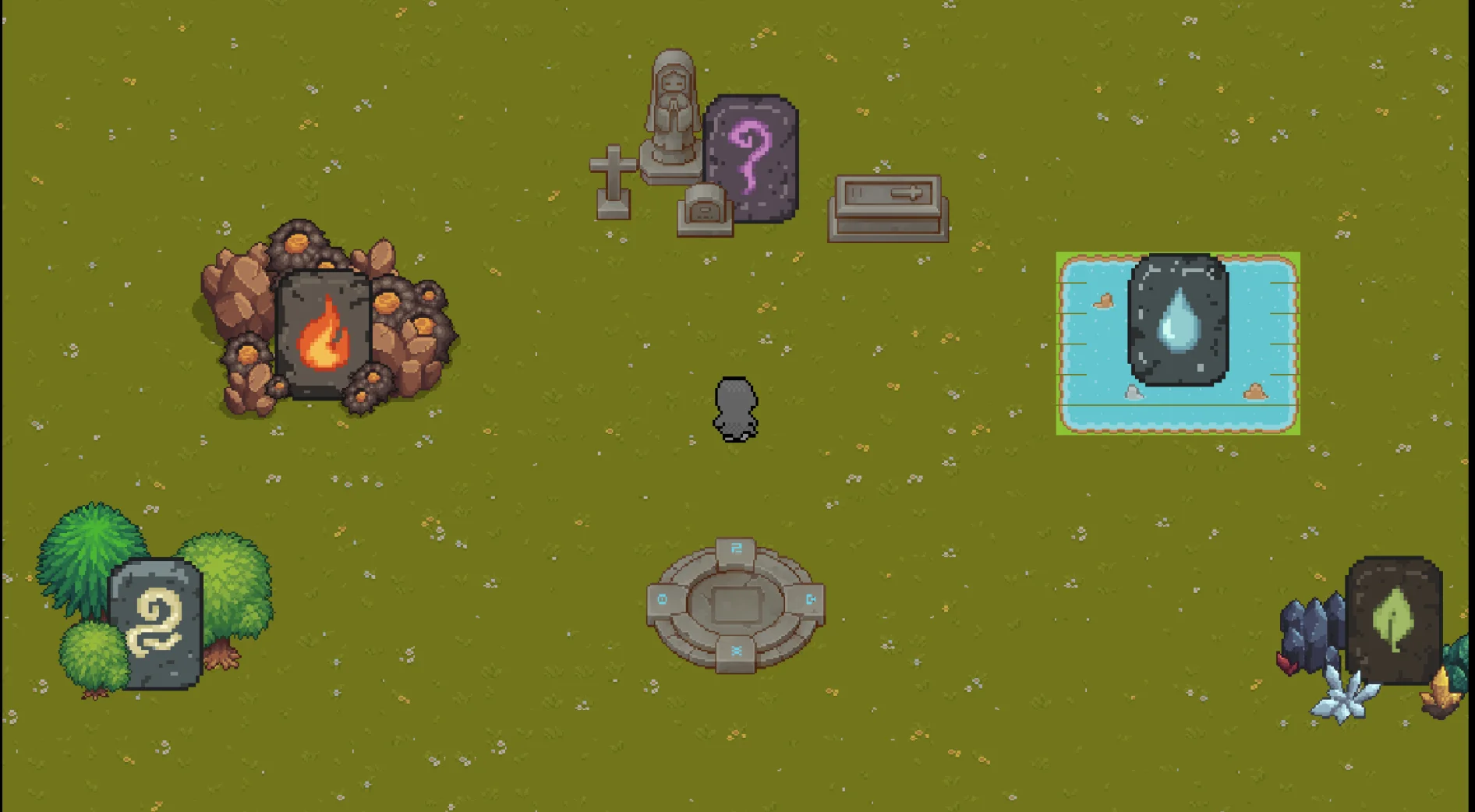
Official game
Play The Wyndfinder
This game is hosted by Steam. Continue to the official page to play or download it.
Wishlist on SteamOverview
The Wyndfinder is a party-based computer role-playing game (CRPG) developed and published by solo indie studio Cat Lord Games. Built on the framework of the 5th Edition SRD (Systems Reference Document), it channels the spirit of classic isometric RPGs from the late 90s and early 2000s — Baldur's Gate, Planescape: Torment, Fallout — while layering on a distinctive visual identity drawn from 1980s hand-drawn fantasy animation. Think The Last Unicorn, Fire and Ice, or The Black Cauldron meets modern turn-based tactics.
The game is set in Tarlisalia, a high-fantasy realm scarred by the ancient Celestial War. For centuries, its people believed that peace was preserved by the heroic deeds of legendary figures. You play as The Wyndfinder — a unique hero who discovers that the truth behind that peace is far darker than the songs and statues suggest. The core question the game poses: If the heroes of old become the villains, would you pull their statues down?
Your journey takes you across the Wynding Way through the Vale, abandoned magical mines, a dormant Shrine, marshlands where a Titan felled a dark god, and finally the capital Jestril — seat of power guarding dark secrets.
The Wyndfinder features a dynamic grid-based turn-based combat system, deep character customization through the Wyndstone and Prismata system, and a party of nine unique companions, each with their own story, opinions, and personal quests that only unlock once they fully trust you.
2. Game Details Table
| Attribute | Detail |
|---|---|
| Title | The Wyndfinder |
| Genre | CRPG (Computer Role-Playing Game) |
| Developer | Cat Lord Games |
| Publisher | Cat Lord Games |
| Steam App ID | 4671110 |
| Platforms | Windows, macOS (Linux not supported) |
| Release Date | Not yet set (wishlist on Steam) |
| Price | TBA |
| Engine / Ruleset | Custom, based on 5E SRD |
| Ancestries | 7 playable |
| Character Classes | 12 |
| Subclasses | 24 |
| Party Size (Companions) | 9 unique recruitable characters (4 in combat) |
| Combat Style | Turn-based, grid-based tactical |
| Primary Mechanic | Wyndstone + Prismata gem system |
| Difficulty Modes | Multiple, including Story Mode |
| Audio | Original soundtrack by Witchbolt (ambient dungeon synth) |
| Art Style | 80s hand-drawn fantasy animation-inspired |
| Languages | English |
| Features | Steam Achievements, Steam Cloud, Save Anytime, Adjustable Difficulty, Custom Volume Controls, Camera Comfort, No Timed Input, Family Sharing |
| Minimum Specs (PC) | Ryzen 3 1300X / i5-7400, GTX 1070 8GB / RX 5700 8GB, 8GB RAM, 10GB storage |
| Recommended Specs (PC) | i7-13700K / Ryzen 9 7900X, RTX 2070 10GB / RX 5700 16GB, 16GB RAM |
| Minimum Specs (Mac) | Apple M1 / Intel Core M, 8GB RAM, 10GB storage |
| Support | [email protected] |
3. Target Audience
The Wyndfinder is designed for players who:
- Love classic CRPGs — if you grew up on Baldur's Gate, Icewind Dale, Planescape: Torment, or the Fallout series, the structure here will feel immediately familiar, but the modern grid-based tactics add a fresh layer.
- Enjoy deep character building — with 7 ancestries, 12 classes, and 24 subclasses, plus the Prismata system that lets you graft abilities from one class onto another, buildcrafters will have a field day.
- Appreciate narrative consequence — your companions remember your choices. Relationships evolve based on their likes and dislikes. Not all nine companions agree with each other, and some stories only unlock when trust is earned.
- Prefer turn-based tactics over real-time — the dynamic grid system rewards positioning, area control, and thoughtful action economy. No click-spam required.
- Have limited time or accessibility needs — the game includes Save Anytime, multiple difficulty modes (including a Story Mode that biases dice rolls in your favor), no timed inputs, and adjustable text size and volume controls.
- Enjoy 80s fantasy aesthetics — if the look of The Last Unicorn, Heavy Metal, or classic D&D module covers speaks to you, the visual direction here will resonate.
Getting Started
Step 1: Create Your Wyndfinder
You begin by building your main character. Choose from 7 ancestries and 12 classes with access to 24 subclasses. Your Wyndfinder is the party leader and the only character who can use the Wyndstone — so build them with versatility in mind.
Tip: Do not over-specialize your Wyndfinder at creation. Since they alone can equip Prismata (gems that grant abilities from any class), building a flexible hybrid from the start — like a Fighter with some support capability — lets you adapt to whatever companions you find early.
Step 2: Learn the Grid Combat Basics
The tutorial encounter introduces the dynamic grid system. Each character has:
- Movement range (in grid squares)
- Action points per turn
- Reactive abilities that the system auto-resolves (you do not need to manually trigger opportunity attacks or parries — the game handles them intelligently)
Get comfortable with positioning: Flanking gives accuracy bonuses. High ground adds damage. Chokepoints let you control the flow of battle.
Step 3: Recruit Your First Companions
You will encounter the first of nine unique party members early in the Vale. Each companion has:
- A personal backstory and quest line
- Likes and dislikes that affect their approval
- A trust meter — their full story is only revealed once they trust you completely
Do not neglect their personal quests. Companion trust impacts not just story resolution but also combat effectiveness (higher-trust companions may unlock unique abilities).
Step 4: Explore the Vale Thoroughly
The starting region (the Vale) is packed with hidden paths, abandoned mine entrances, traps, and lore items about the Celestial War.
Check every corner. The hand-drawn art style hides visual storytelling cues — cracked walls may conceal secret passages, unusual flora marks hidden items.
Step 5: Experiment with the Wyndstone
Once you acquire your first Prismata, open the Wyndstone interface. Each gem grants a spell or class feature. Attach them to create hybrid builds — a Paladin who teleports, summons undead, and sings Bardic inspiration.
Early priority: Slot a healing Prismata if your Wyndfinder lacks healing abilities.
Step 6: Understand Dice Rolls
The game uses a dice-rolling system for skill checks. Use character skills, spells, and magic items to earn Rerolls, and the Wyndstone to change fate.
Save Rerolls for critical story checks.
Step 7: Set Your Difficulty
Before you leave the tutorial area, open the settings and choose your difficulty. Options include Story Mode (combat rolls are nudged in your favor), Standard (balanced challenge), and higher difficulties for tactical purists.
Step 8: Save Early, Save Often
The game supports Save Anytime — use it. Manual saves before any major conversation, unexplored dungeon, or boss arena are recommended.
Advanced Tips
| Mistake | Why It Hurts You | How to Avoid |
|---|---|---|
| Ignoring companion approval | Companion quests and unique abilities lock behind trust thresholds. Displease a companion too often and you may permanently miss their story. | Pay attention to dialogue feedback. Each companion has stated likes/dislikes — respect them. |
| Over-specializing your Wyndfinder | Only the Wyndfinder can use Prismata. If you build a pure DPS with no flexibility, you cannot pivot to fill gaps. | Leave room in your build for hybrid options. Use early Prismata to cover healing or utility. |
| Neglecting the grid | Standing in the open against ranged enemies or clustering for AoE spells is a fast way to wipe. | Use chokepoints, spread out against AoE, and always try to claim high ground. |
| Skipping side content | Companions, Prismata, and story context are often hidden in optional areas. The game rewards thoroughness. | Explore every region fully before moving to the next. Talk to every NPC. |
| Ignoring crafting | You can craft magical swords, jewelry, spell scrolls, and potions. These provide crucial mid-game power spikes. | Gather reagents as you explore. Dedicate a companion to crafting skills. |
| Using Rerolls on trivial checks | Rerolls are limited. Spending one on a minor check means you will not have it for the persuasion check that determines a companion's fate. | Reserve Rerolls for high-stakes story moments and locked narrative checks. |
| Bringing the same party everywhere | Different regions have different enemy types. Heavy armor requires armor-piercing; swarms require AoE. | Rotate your four active party members based on the region. The bench exists for a reason. |
| Rushing the main quest | The narrative is paced around exploration. Rushing to Jestril skips regions, companions, and power-ups. | Let curiosity guide you. The Wynding Way has branches — take them. |
6. Core Mechanics Deep Dive
6.1 The Wyndstone and Prismata System
The Wyndstone is the eponymous artifact that sets your character apart. It functions as a socketable ability grid worn only by the Wyndfinder. Into it you place Prismata — magical gems harvested from the world, earned through quests, or crafted.
- Each Prismata grants a specific ability, spell, or class feature. These are drawn from the full pool of class abilities, spells, and unique effects in the game.
- No class restrictions. A Fighter can slot a Prismata that grants Fireball or Turn Undead. A Wizard can slot Healing Word or Divine Smite.
- Prismata scale with your party level, not with the originating class's level. You never need to micromanage leveling up a Prismata — it grows with you.
- Build examples the developers cite: A teleporting, undead-summoning, Bard-singing Paladin. A Rogue who can cast area-of-effect crowd control. A Cleric who fights like a Barbarian.
Strategy: Think of the Wyndstone as your class bridge. Identify what your party of four is missing — reliable healing, AoE damage, tanking, lockpicking — and use Prismata to fill that gap on your Wyndfinder.
6.2 Grid-Based Turn-Based Combat
Combat in The Wyndfinder is turn-based on a dynamic grid. Key mechanics:
Action Economy
- Each character gets movement and action points per turn.
- Abilities cost varying amounts of action points.
- Some abilities are reactive — the system auto-resolves them (e.g., opportunity attacks, parries, dodges) without requiring you to manually confirm each one. This keeps combat flowing smoothly.
Positioning and Terrain
- Flanking — attacking an enemy from opposite sides grants accuracy bonuses.
- High ground — elevation adds damage and range.
- Chokepoints — narrow passages let a single tank block multiple enemies.
- Area hazards — some spells and abilities leave persistent effects on the grid.
Scaling
- Spells and abilities scale with your party's overall level, not individual character levels. There is no need to separately manage ability ranks or spell tiers.
- This means you can freely experiment with party composition without worrying that swapping in an under-leveled companion will gimp your effectiveness.
Difficulty Modes
- Story Mode — dice rolls are nudged in the player's favor.
- Standard — balanced, designed for CRPG veterans.
- Higher difficulties — tighter resource management, more punishing enemy AI.
6.3 Party System and Companion Dynamics
You can recruit nine unique companions to your cause, but only four accompany you into combat at any time. The rest wait on the bench and can be swapped between encounters.
Trust and Approval
- Each companion has stated preferences (likes and dislikes) that affect their approval when you make story decisions.
- Approval feeds into a trust meter. At certain trust thresholds, companion-specific quests and story beats unlock.
- Not all companions agree with each other. Some have conflicting goals. Keeping both in your active party may create tension — or opportunities for interesting roleplay.
Companion Roles While the full list of nine companions is not detailed publicly, based on the 12-class system you can expect a spread covering:
- Frontline tanks (Fighter/Paladin types)
- Arcane casters (Wizard/Sorcerer equivalents)
- Divine support (Cleric/Druid equivalents)
- Skilled utility (Rogue/Bard equivalents)
Tip: Keep at least one companion on the bench from each broad role category. When you enter a region full of undead, you will want your divine caster. When you face heavily armored knights, swap in your armor-piercing specialist.
6.4 Dice Rolling, Skill Checks and Crafting
Outside combat, the game uses dice-rolling mechanics derived from the 5E SRD:
Skills
- Use character and companion skills to: search for clues, pick locks, discover lost histories, detect traps, persuade NPCs, and more.
- Skill checks are resolved with a simulated dice roll modified by relevant stats and proficiencies.
Crafting The game supports a full crafting system:
- Magical swords and jewelry — requires schematics and rare ore.
- Spell scrolls — scribed by characters with arcane knowledge.
- Potions and elixirs — brewed from alchemical reagents found throughout Tarlisalia.
Rerolls and Fate
- Certain spells and magic items grant Rerolls that let you re-roll failed checks.
- The Wyndstone can also be used to change fate directly — a meta-resource that ensures critical checks do not brick your playthrough.
7. Advanced Strategies
7.1 The Prismata Sniper Build
Concept: Build your Wyndfinder as a hybrid ranged DPS/controller by slotting Prismata that grant long-range spells, teleportation, and crowd control from different classes.
- Core: Start as a class with ranged weapon proficiency (Fighter, Ranger, or Rogue equivalent).
- Prismata targets: Wizard AoE spells (for grouped enemies), Bard control abilities (for single-target lockdown), Cleric heals (for sustain).
- Execution: Teleport to high ground, drop AoE on clustered enemies, use control on the biggest threat, fall back if engaged in melee.
7.2 The Iron Bulwark Formation
Concept: A defensive party built around a single immovable tank supported by zone-control casters and a backline healer.
- Frontline: Your toughest companion (Paladin or Fighter equivalent) holds the chokepoint.
- Midline: Wyndfinder with Prismata granting AoE control and defensive buffs.
- Backline: Two companions — one dedicated healer (Cleric/Druid), one ranged damage (Wizard/Ranger).
- Terrain priority: Always fight with your back to a wall or in a doorway. Never let enemies surround you.
7.3 The All-Caster Gambit
Concept: Four characters with strong spellcasting. High risk, high reward — melt enemies before they reach you.
- Requirements: At least two companions with AoE damage spells, one with control/utility, and your Wyndfinder slotting Prismata for healing and defensive spells.
- Execution: Pre-buff before engagement. Open with control spells to lock down enemies, then drop AoE damage. Use the Wyndstone's change fate to ensure your most important spell lands.
- Weakness: Vulnerable to enemies that close distance quickly. Save one companion's turn for a retreat or emergency barrier.
7.4 The Trust Maximizer (Diplomatic Approach)
Concept: A playthrough focused on maximizing companion trust and unlocking every personal quest.
- Strategy: Before any major story decision, check which companions are present and weigh their stated preferences. Keep a rotating bench — swap out companions who would disapprove of an upcoming decision.
- Prismata focus: Slot abilities that open non-combat solutions — telepathy, animal friendship, illusion magic — to resolve encounters without violence.
- Reward: Maximum narrative content, potentially unique endings, and companions who reach their full power curve.
7.5 The Speed Route
Concept: Minimalist party, strategic skips, and high-damage focus for experienced players who want to see the credits fast.
- Wyndfinder build: High-damage glass cannon. Slot Prismata for burst damage and mobility only.
- Companions: Recruit only the two or three essential ones. Ignore side quests.
- Combat approach: Kill priority targets first (spellcasters, commanders). Use the grid to break line of sight and force enemies to waste turns repositioning.
- Note: Many companions and significant story context will be missed. This is a replay option, not a first-playthrough strategy.
FAQ
Q1: What is The Wyndfinder?
A: It is a party-based turn-based CRPG developed by Cat Lord Games. Set in the high-fantasy realm of Tarlisalia, you play as the Wyndfinder — a hero wielding the Wyndstone — who discovers that the legendary heroes of old may actually have been villains. It features grid-based tactical combat, 9 unique companions, and deep character customization through the Prismata gem system.
Q2: When will The Wyndfinder be released?
A: The release date has not been announced yet. The Steam page lists it as upcoming. You can wishlist it on Steam to be notified when a date is set.
Q3: What platforms is it available on?
A: Windows and macOS. Linux is not currently supported. There is no announced console release.
Q4: How much will it cost?
A: Pricing has not been announced. The game is not free-to-play. Check the Steam page for updates.
Q5: How many classes and ancestries are there?
A: 7 playable ancestries, 12 character classes, and 24 subclasses. The game is based on the 5E SRD, so class archetypes will be familiar to TTRPG players.
Q6: How many companions can I recruit?
A: Nine unique characters. You can only bring four into combat at a time, but you can swap between encounters.
Q8: Is combat real-time or turn-based?
A: Turn-based, on a dynamic grid. The game also features reactive ability automation (e.g., opportunity attacks) to keep combat flowing.
Q9: Does the game have crafting?
A: Yes. You can craft magical swords and jewelry, brew potions, and scribe spell scrolls. Crafting uses reagents found throughout the world.
Q10: Is there a Story Mode?
A: Yes. One of the difficulty options — Story Mode — nudges dice rolls in your favor, making the game more accessible for narrative-focused players.
Q11: How long is the game?
A: While not officially stated, based on the scope (nine companions, multiple regions, a capital city, side quests, and a morality-driven narrative), a first playthrough likely runs 20-40 hours. Completionists who pursue every companion quest and hidden area can expect more.
Q15: Who composed the soundtrack?
A: Witchbolt, an ambient dungeon synth artist, composed the original soundtrack. The music aims to evoke old-school fantasy tabletop RPG sessions.
9. Final Tip / Verdict
The Wyndfinder is shaping up to be a love letter to classic CRPGs with enough modern innovation to stand on its own. The Wyndstone and Prismata system is the standout feature — it collapses traditional class rigidity and lets you build genuinely unique characters.
Final tip: Treat your main character's build as a flexible toolkit. The game rewards adaptability in combat and story. Explore every corner, listen to your companions, and break your build — the game encourages it.
Verdict: High potential for fans of Baldur's Gate 3, Pathfinder, Solasta, and classic isometric RPGs.
Guide written for GameHowTo.com. All game information sourced from the official Steam store page, developer interviews, and the Cat Lord Games Itch.io devlog. Game details subject to change before final release. Last updated: July 2026.