Official game
Play SYLVA
This game is hosted by Steam. Continue to the official page to play or download it.
Buy on SteamOverview
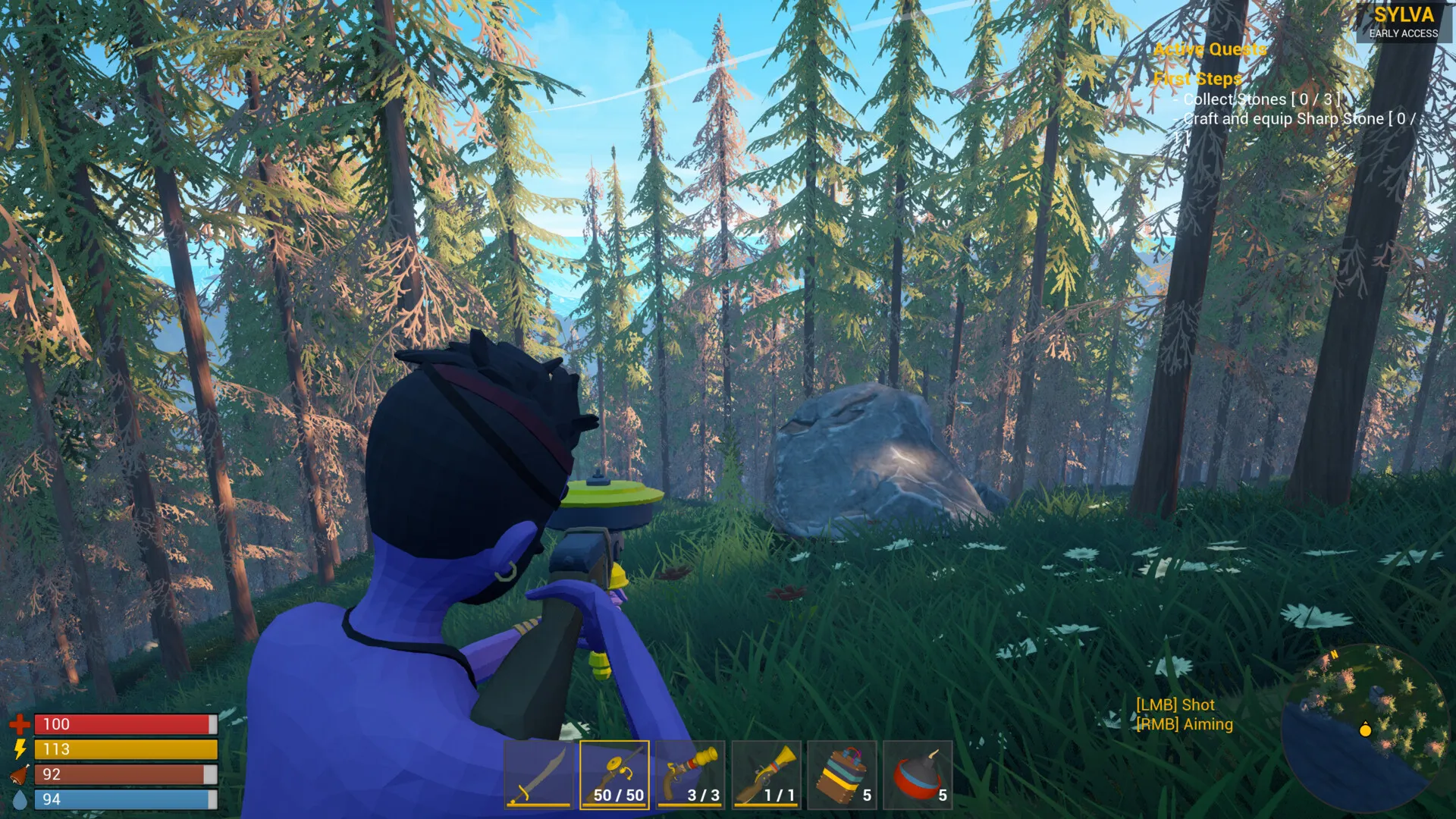
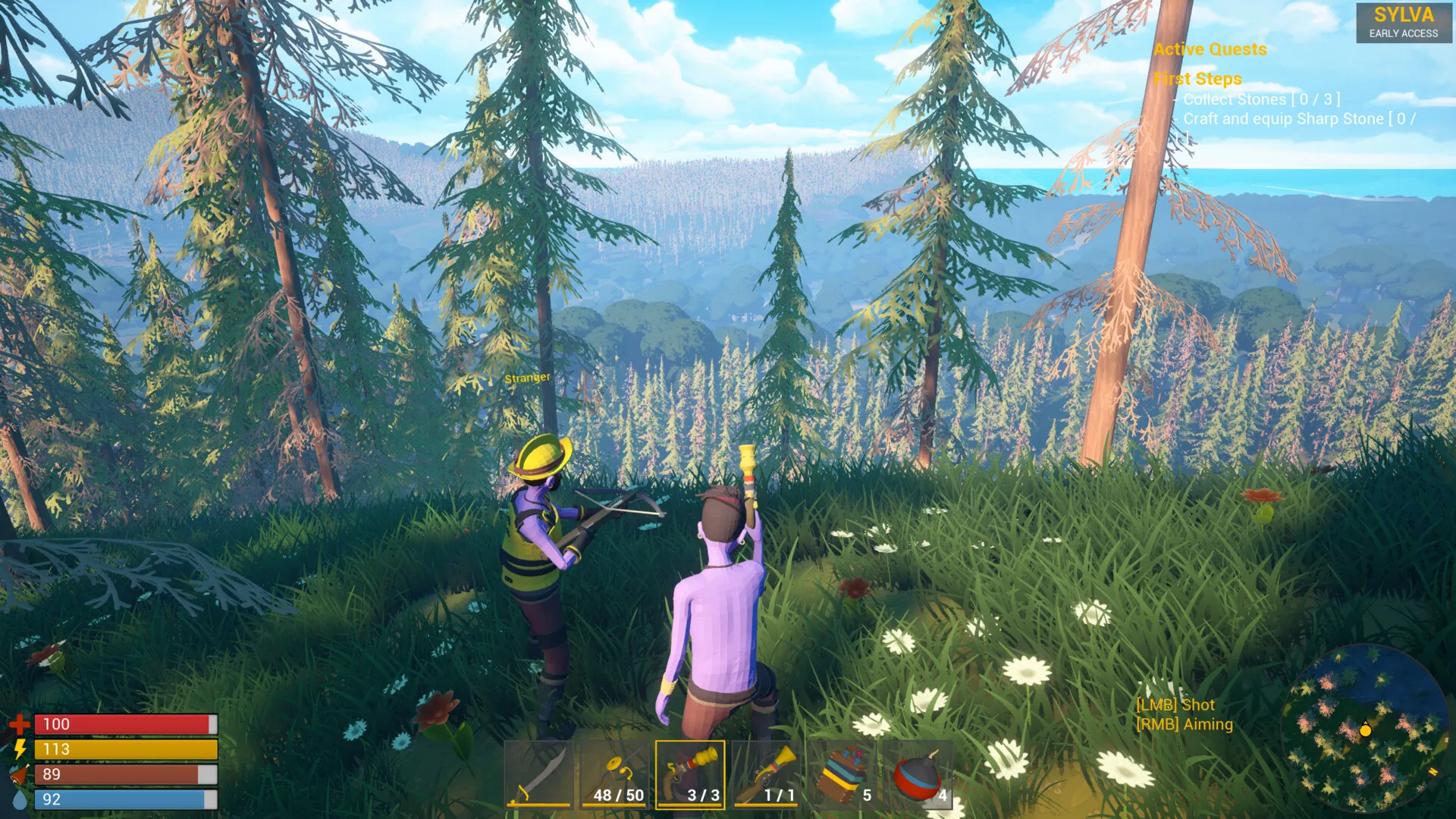
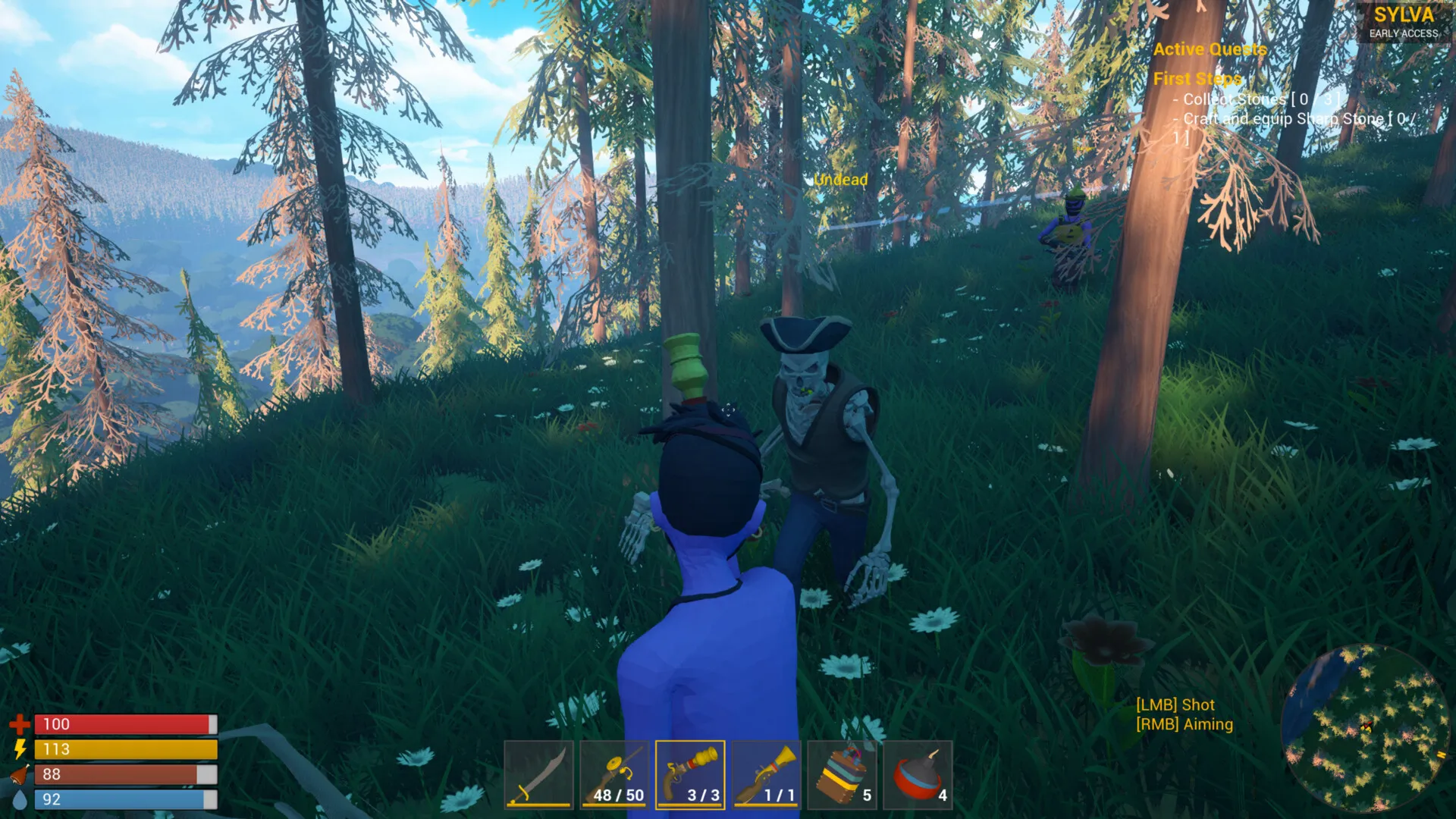
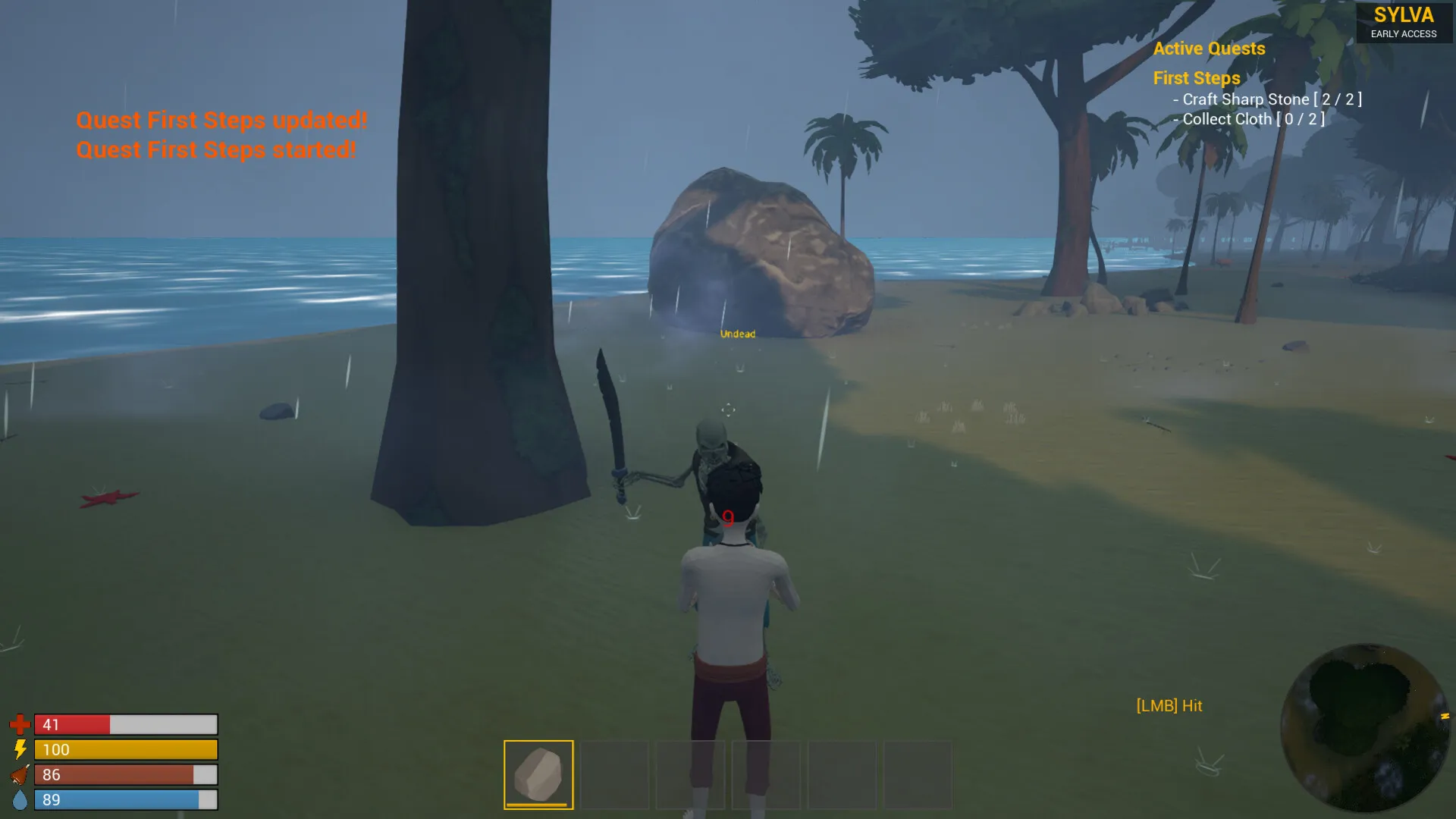
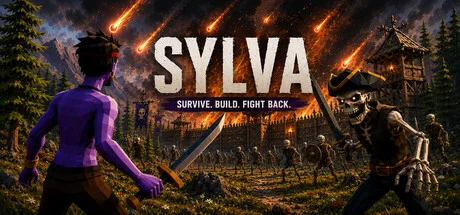
SYLVA is an open-world survival RPG from solo developer EVERCHARGED, released on Steam Early Access June 21, 2026. You crash-land on a deserted tropical island where skeleton warriors patrol the beaches, ancient ruins hide dark secrets, and the environment itself tries to kill you. Think Valheim meets Dark Souls with a skeleton fantasy skin — deliberate combat, heavy stamina management, and a day-night cycle that transforms the island from manageable to lethal.
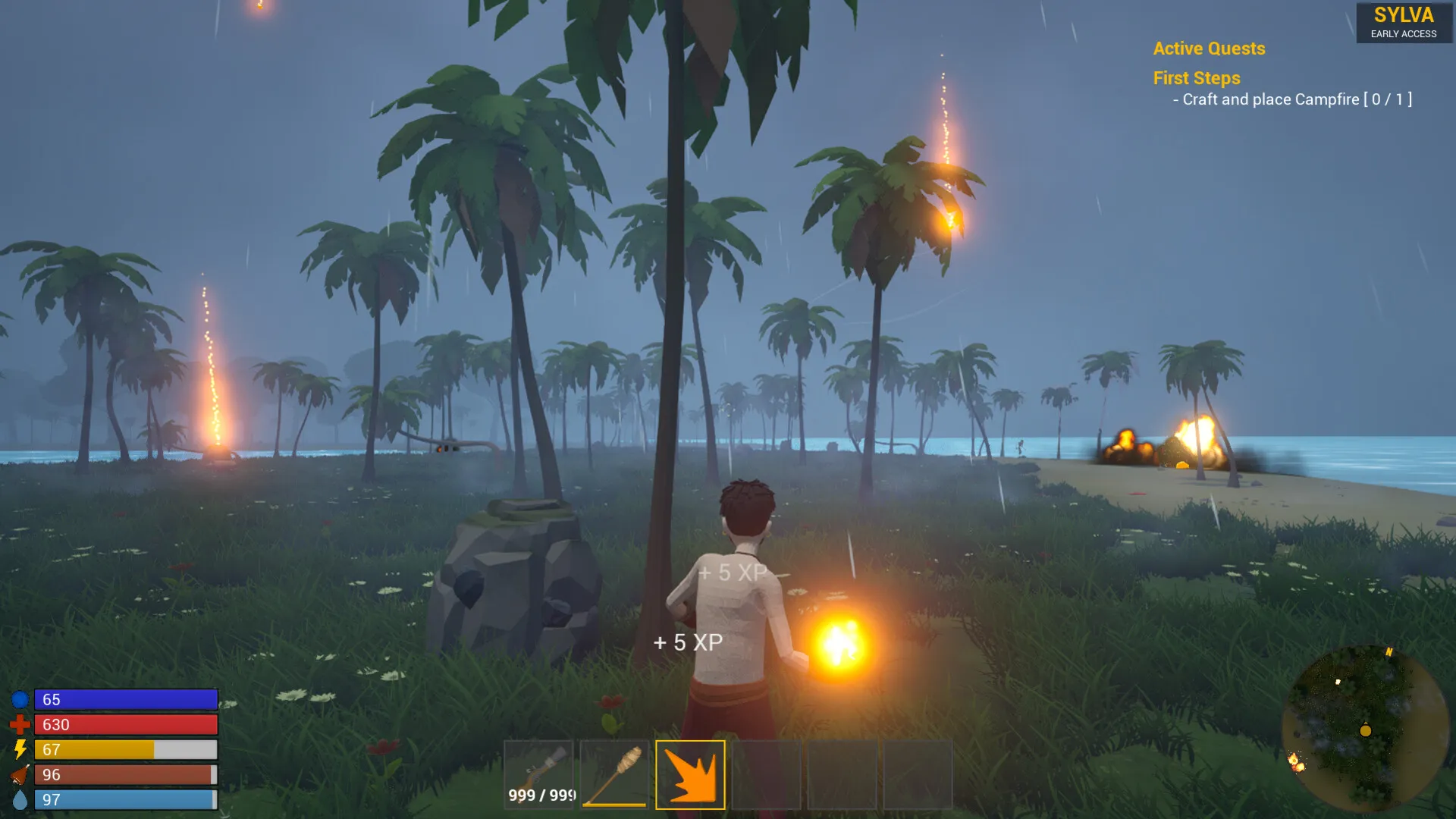
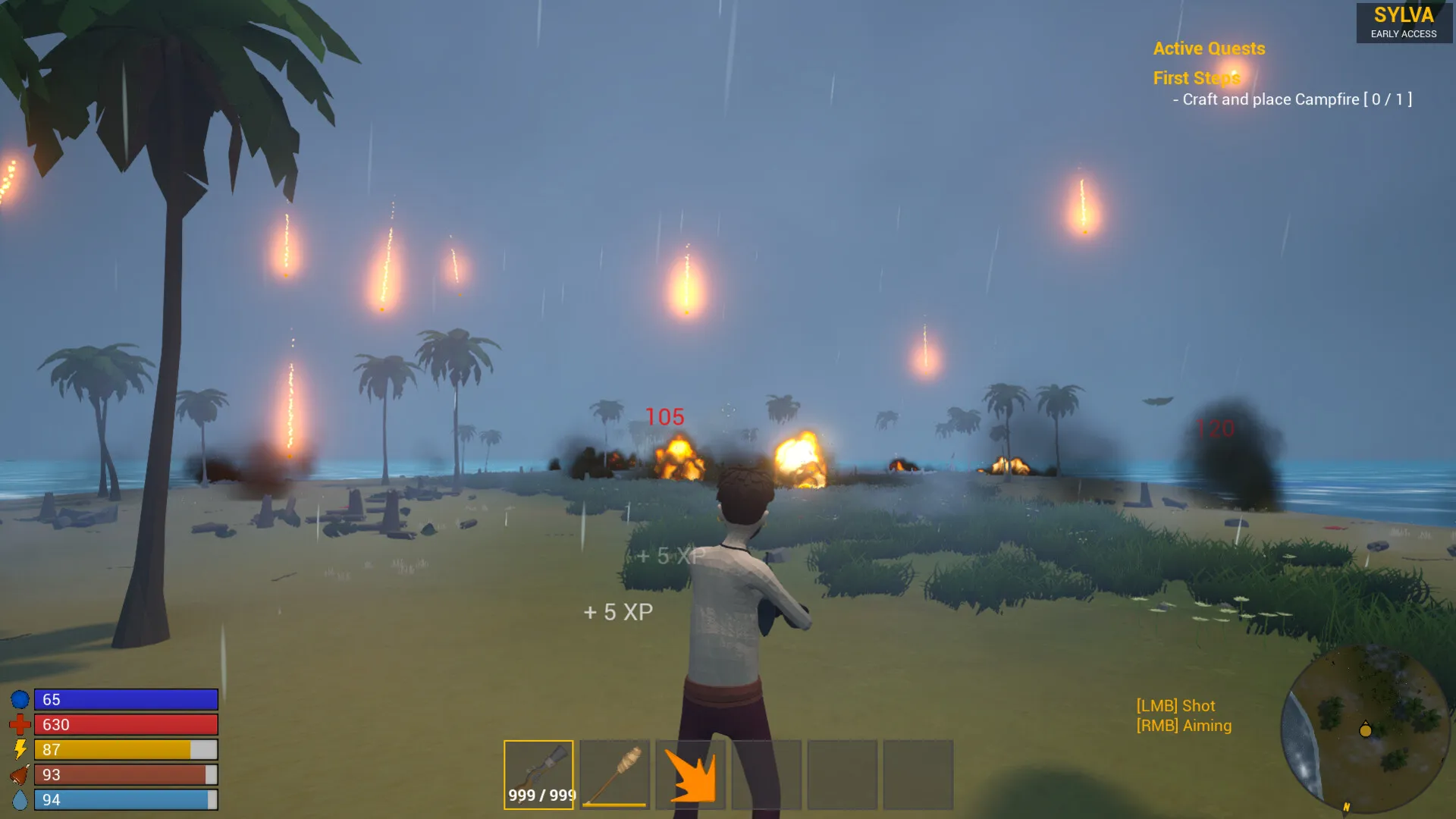
The game blends survival crafting, action RPG combat, base building, and exploration across a 4 km² island with six distinct biomes. Daytime is for gathering and building. Night brings aggressive skeleton waves. After midnight, meteor showers bombard the island. Every 7th day, an eclipse supercharges every skeleton on the map.
SYLVA supports solo play and multiplayer co-op for up to 32 players. PvP servers allow full loot-on-death raiding. The Early Access roadmap promises a main questline, additional islands, and expanded skill trees over 12-18 months.
| Attribute | Detail |
|---|---|
| Developer / Publisher | EVERCHARGED |
| Release Date | June 21, 2026 (Early Access) |
| Price | S$7.29 (~$5.99 USD) |
| Platforms | Windows 64-bit only |
| Steam App ID | 4663930 |
| Genres | Action, Adventure, RPG, Survival, Open World, Early Access |
| Max Players | 32 (co-op, PvP, LAN) |
| Current Version | v0.2.2 |
System Requirements
| Component | Minimum | Recommended |
|---|---|---|
| OS | Windows 10 64-bit | Windows 11 64-bit |
| Processor | i5 | i7 |
| Memory | 16 GB RAM | 32 GB RAM |
| Graphics | 6 GB VRAM | 8 GB VRAM |
| DirectX | Version 12 | Version 12 |
| Storage | 3 GB | 3 GB |
These specs are high for a $6 Early Access title. The developer says they'll optimize further during Early Access.
Getting Started — Your First 7 Days
Hour Zero: The Beach
You wake up with nothing. No tools, no clothes, no map. The first 20 minutes decide whether you survive night one.
Immediate priority chain:
- Punch trees for 5 Wood. Takes seconds.
- Scavenge stones from the beach for 3 Stone.
- Harvest bushes for 3 Fiber.
- Craft Stone Axe (3 Wood + 2 Stone + 2 Fiber) — this multiplies your wood gathering speed by 3x.
- Craft Stone Pickaxe (3 Wood + 3 Stone + 2 Fiber) — needed for ore.
- Chop exactly 12 Wood, mine 8 Stone before moving inland.
Day 1 Checklist (20-minute timer)
Before sunset, you need:
- Shelter: A 2x2 roofed structure counts. Place it within 100m of fresh water and a forest.
- Campfire: 5 Wood + 3 Stone. You need this for cooking and light.
- Weapon: Wooden Sword (4 Wood + 2 Fiber) or Wooden Spear (5 Wood + 3 Fiber).
- Bed: 8 Wood + 6 Fiber. Sets your respawn point.
- Torch: 2 Wood + 1 Fiber. Portable light source.
Skipping any of these means death on night one. No exceptions.
Day 2-3: Establish the Base Loop
Once you survive the first night, your routine becomes:
- Dawn: Gather resources within a 2-minute run of your base.
- Midday: Expand base — add walls, a second room, storage chests.
- Afternoon: Hunt for meat, cook it, stockpile.
- Dusk: Repair structures, fill torches, organize inventory.
- Night: Craft, cook, plan — do NOT explore after dark unless you're geared.
Day 4-5: Gear Up for the Eclipse
Your first Eclipse hits on Day 7. Days 4-6 are your preparation window:
- Craft a Resonance Beacon: 50 Crystalline Shards + 10 Biolumin Gel. This is mandatory — without it you cannot build beyond a basic hut.
- Upgrade to Stone walls: Wood walls break in 3-4 skeleton hits. Stone walls hold for 15+.
- Craft defensive spikes: 3 Wood + 2 Stone per spike. Place them in 2 layers around your perimeter.
- Cook extra food: You won't have time to cook during the eclipse night.
- Stockpile repair materials: Carry 20 Wood + 20 Stone in your inventory during the eclipse.
Day 6-7: Eclipse Preparation Protocol
- Morning Day 6: Finish all gathering. No long expeditions.
- Afternoon Day 6: Repair every structure. Fill all spike traps.
- Evening Day 6: Cook 10+ pieces of meat. Fill your hunger bar.
- Morning Day 7: Equip your best weapon and armor. Fill quivers with 50+ arrows.
- Afternoon Day 7: Double-check perimeter. Add a second layer of spikes.
- Sunset Day 7: Stay inside or on your walls. Do not go mining or exploring.
- During Eclipse: Repair between every wave. Use ranged weapons from elevated positions.
- After Eclipse: Loot skeleton remains for bones and rare components. Rebuild. Expand.
Core Mechanics — Deep Dive
Combat System
SYLVA's combat is stamina-driven and pattern-based. You cannot swing wildly — each action costs stamina, and running out leaves you immobile for 3 seconds.
Stamina Budget:
| Action | Stamina Cost | Notes |
|---|---|---|
| Light Attack | 10% | Fast, low damage |
| Heavy Attack (hold) | 25% | Stagger bonus, shield break |
| Dodge Roll | 15% | Invincibility frames active |
| Block (per hit) | 20% | Reduces damage, slows movement |
| Sprint (per second) | 8% | Pauses stamina regen |
Golden Rule: Keep 20% stamina reserved at all times during combat. That's one dodge roll or one block. Running to zero is a death sentence.
Enemy Tier List
| Rank | Enemy | Threat | Strategy |
|---|---|---|---|
| S | Elite Skeleton | Extreme | Treat as mini-boss. Dodge-roll through attacks, strike once during recovery, retreat. Never trade hits. |
| A | Skeleton Brute | High | Two-hand weapon, slow wind-up, devastating damage. Bait the overhead slam, dodge sideways, punish the 2-second recovery. |
| A | Armored Skeleton | High | Carries a shield. Opens up after 3 heavy attacks break the shield. Use heavy attacks only. |
| B | Undead Guardian | High | Added in v0.2.2. Found in Village POIs. Hybrid moveset — both melee and ranged. Clear the area before engaging. |
| C | Skeleton Archer | Medium | Prioritize closing distance. Use terrain as cover. One headshot from your bow kills them. |
| D | Skeleton Warrior | Low | Basic enemy. Two swings then pause. Dodge both, attack during the pause. Rinse. Repeat. |
Weapon Tier List
| Rank | Weapon | How to Get | Why |
|---|---|---|---|
| S | Iron Sword | Smelt Iron Ore | Best balance of speed, damage, and stamina cost. |
| S | Iron Bow | Smelt Iron Ore + Fiber | One-shots archers, 3-shots warriors from range. |
| A | Spear | Stone → Iron | Longer reach than sword. Can be thrown. |
| A | Bone Arrows | Craft from skeleton bones | Higher damage than stone arrows. Farm skeletons for ammo. |
| B | Stone Sword/Early weapons | Craft from stone/wood | Viable for days 1-3. Falls off hard by day 5. |
| C | Wooden Sword | Starter | Better than fists, barely. |
Armor Progression Path
- Fiber Armor (Day 1-2): 10 Fiber per piece. Minimal protection. Better than naked.
- Hide Armor (Day 3-4): 6 Hide per piece. Craft from hunted animals. Solid mid-game set.
- Bone Armor (Day 5-7): 10 Bones + 4 Fiber per piece. Good protection, farmed from skeleton raids.
- Iron Armor (Day 8+): 8 Iron Ore + 2 Hide per piece. Best available in current build.
Priority order: Chest → Legs → Head → Boots. Chest piece gives the most damage reduction per resource.
Builds and Playstyles
The Warrior (Solo, Combat-Focused)
Skill Focus: Combat + Defense Armor: Iron (priority chest + legs) Weapons: Iron Sword + Shield Strategy: Face-tank with shield, stagger with heavy attacks, execute with light combos. Best for: Players who prefer direct confrontation.
Progression Path:
- Day 1-2: Wooden Sword, Fiber Armor
- Day 3-4: Stone Spear, Hide Armor
- Day 5-7: Iron Sword, Bone Armor
- Day 8+: Full Iron Armor, Iron Shield
The Ranger (Ranged Kite, Exploration)
Skill Focus: Ranged + Survival Armor: Hide/Bone (light — prioritize mobility) Weapons: Iron Bow, Bone Arrows, Spear (backup) Strategy: Maintain distance. Thin groups before they close. Use terrain elevation. Best for: Players who hate getting hit.
Progression Path:
- Day 1-2: Wooden Bow (craftable early), Stone Arrows
- Day 3-4: Better Bow, 100+ arrow stockpile
- Day 5-7: Iron Bow, Bone Arrows, scouting POIs
- Day 8+: Sniper from walls during eclipse
The Builder (Base Architect, Co-op Essential)
Skill Focus: Building + Crafting Armor: Whatever is available (your base is your real defense) Weapons: Spear (reach + throw for self-defense) Strategy: Build forward bases at resource nodes. Design killboxes for skeleton waves. Let others fight while you scale production. Best for: Co-op groups. Less effective solo but viable.
Priority Upgrades (in order):
- Stone Walls (replaces Wood)
- Defensive Spikes (2 layers)
- Watchtower (elevated archer position)
- Secondary Base at resource-dense location
- Metal Walls (endgame)
The Survivalist (Balanced, Best for Solo)
Skill Focus: Even split across all trees Armor: Mix of Hide and Bone Weapons: Spear (primary) + Bow (secondary) Strategy: Jack of all trades. Can handle anything but excels at nothing. Best for: First playthrough. Discover your preferred style.
Step-by-Step Strategy Sequences
Sequence 1: First Night Survival
- Spawn on beach. Immediately face away from water and run inland until you see trees.
- Punch 3 trees (6 Wood). Gather 3 stone from ground. Harvest 3 fiber from bushes.
- Open inventory (Tab). Craft Stone Axe (3W+2S+2F).
- Chop 8 more Wood with the axe. Mine 5 stone with bare hands (you'll make pickaxe next).
- Craft Stone Pickaxe (3W+3S+2F). Mine 3 more stone.
- Find a flat spot near fresh water. Craft Campfire (5W+3S), place it.
- Build a 2x2 foundation (4 walls, 1 floor, 1 roof) around the campfire. Total: ~12 Wood.
- Craft Bed (8W+6F). Place it inside. You now have a respawn point.
- Craft Wooden Sword or Spear.
- Before dark: gather 5 more Wood, cook any meat you found.
- Night falls. Stay inside. If skeletons approach, block at the doorway — only one can reach you at a time.
Sequence 2: Resonance Beacon Rush (Days 2-3)
- Locate a cave entrance (look for cool mist emanating from rock faces).
- Enter with torches equipped. Mark your path by placing torches at every fork.
- Mine Crystalline deposits (blue glowing crystals) until you have 50 Shards.
- Harvest Biolumin Gel from glowing plants in swampy cave sections or surface swamps.
- Return to base. Craft the Resonance Beacon at a campfire or crafting station.
- Place the Beacon in the center of your base. Your construction radius expands by 300%.
- Immediately build stone walls around the perimeter.
Sequence 3: Eclipse Night Survival (Day 7)
- Pre-sunset (Day 7): Eat to full. Equip best armor. Fill quick slots: weapon, bow, 50 arrows, 20 repair materials, 5 cooked meat.
- Wave 1 (Skeleton Warriors): Easy. Pick them off from walls with arrows. Save stamina.
- Wave 2 (Warriors + Archers): Use walls for cover against arrows. Prioritize archers first.
- Wave 3 (Armored + Brutes): Drop down and fight on ground. Use heavy attacks to break shields. Dodge brute overheads.
- Wave 4 (Elite + Undead Guardian): This is the boss wave. Kite the Elite. Use terrain. If overwhelmed, retreat inside and block the doorway.
- Post-wave: Immediately repair walls before the next wave. Eat to regain health.
- Dawn: Loot everything. Skeletons drop bones, weapons, and rare materials.
Sequence 4: Iron Age Transition
- Locate dark ore deposits on mountain slopes. Mine with Stone Pickaxe.
- Smelt Iron Ore at a campfire or forge (unlock via Crafting skill).
- Craft Iron Sword first — it's the single biggest damage improvement.
- Craft Iron Pickaxe next — faster mining, opens deeper cave runs.
- Craft Iron Armor (chest → legs → head → boots).
- Replace all stone tools and weapons with iron equivalents.
- Upgrade base walls from Stone to Metal.
Sequence 5: Multiplayer Group Strategy (4 Players)
Designated Roles:
- Tank (Player 1): Full Iron Armor, Sword + Shield. Frontline during raids.
- Builder (Player 2): Oversees base construction and defense layout.
- Scavenger (Player 3): Fast build, runs resource loops between base and nodes.
- Craftsman (Player 4): Stays at base, processes materials, crafts gear.
Command Center Setup:
- Build a central 5x5 main hall with shared chests.
- Each player gets a private 2x2 sleeping quarter.
- Shared forge/crafting area in the center.
- 2-layer stone perimeter wall with watchtowers at corners.
Eclipse Night Coordination:
- Tank + Builder hold the main gate.
- Scavenger runs repair materials between waves.
- Craftsman snipes from watchtower with bow.
Biome Guide
| Biome | Resources | Danger Level | Best For |
|---|---|---|---|
| Beach | Wood, Fiber, Stone, Shells | Low | Starting base location |
| Forest | Wood, Fiber, Berries, Hide | Medium | Primary resource gathering |
| Mountain | Stone, Iron Ore, Crystalline Shards | High | Mining operations |
| Swamp | Biolumin Gel, Rare Herbs | High | Mid-game resource runs |
| Caves | Crystalline Shards, Rare Ores | Very High | Advanced materials |
| Ruins | Lore items, Unique Loot, Blueprints | Extreme | Endgame gear |
Pro Tip: Set up small satellite bases with a chest and bed near high-value biomes. Saves 5-10 minutes of running per trip.
Resource Optimization
Resource Loop Efficiency
| Resource | Best Source | Tool Required | Per-Minute Yield |
|---|---|---|---|
| Wood | Dense forest | Iron Axe | ~40 Wood |
| Stone | Mountain base | Iron Pickaxe | ~30 Stone |
| Iron Ore | Deep cave veins | Iron Pickaxe | ~15 Ore |
| Fiber | Swamp bushes | Hands | ~20 Fiber |
| Bones | Skeleton farming | Any weapon | ~10 per wave |
| Crystalline Shards | Cave deposits | Iron Pickaxe | ~8 per trip |
| Biolumin Gel | Swamp + Caves | Hands | ~6 per trip |
What NOT to Hoard
- Raw meat: Cook it immediately. Spoils in inventory.
- Excess Wood beyond 2 stacks: You'll always find more. Convert to charcoal or spikes.
- Low-tier weapons: Replace with iron as soon as possible. Don't keep "just in case" stone tools.
- Seeds and saplings: Plant them near your base for renewable resources.
Advanced Tips
- Skeletons glow at night. You see them before they see you. Use this to pick your engagements.
- Dodge rolling has invincibility frames — about 0.3 seconds mid-roll. Time through attacks, not away from them.
- Cave entrances are marked by cool mist. Learn to spot them from 50m away.
- The world map UI barely exists. Use physical torches as waypoints. Place them at forks, near your base entrance, and along resource paths.
- Food poisoning from raw meat stacks with combat damage. Always cook before eating. One raw meat mistake can cost you an entire day.
- Meteor showers after midnight damage structures but drop rare resources. Build a roof over high-value areas. If you see the sky flash red, take cover.
- Undead Guardians (v0.2.2) guard Village POIs. They drop unique crafting components. Farm them after establishing iron gear.
- Flowers now give more Fiber (v0.2.2 buff). In early game, pick every flower you see — it's the fastest path to your first set of Fiber Armor.
- The island is approximately 4 km². Travel time from beach to mountain peak is roughly 8 minutes at a jog. Plan expeditions accordingly.
- PvP servers have full loot drop on death. Everything in your inventory drops. Never carry your best gear on a casual run. Build a secure vault in your base.
Known Issues and Workarounds
| Issue | Workaround |
|---|---|
| High system requirements for an Early Access title | Lower shadows and view distance. Both settings eat GPU. |
| Limited tutorial | Follow the Day 1 checklist in this guide. The v0.2.x updates improved this. |
| Only 1 Steam review as of July 2026 | The game is new. Check back after more players discover it. |
| No dedicated Linux/Mac support | Windows-only. Proton compatibility untested. |
| Competitive crafting recipes unclear | The v0.2.x updates added recipe tooltips. Right-click any material to see what it crafts into. |
FAQ
Q: Is SYLVA worth $6 in its current state? The foundation is solid — functional combat, working base building, a decent-sized island to explore. Content is thin (no main quest, limited enemy variety) but the core loop is engaging. If you liked Valheim's early access launch, you'll appreciate what's here. If you need a polished 40-hour experience, wait 12 months.
Q: How long does a full playthrough take? Current content supports roughly 15-25 hours of gameplay before you've explored everything and maxed your gear. The remaining playtime comes from building elaborate bases or playing on PvP servers.
Q: Does the game run on Steam Deck? Untested officially. The developer hasn't confirmed Linux support. Early reports suggest it may work with Proton Experimental but expect performance issues.
Q: Can I play solo or do I need a group? Solo is fully supported. Enemy spawns scale with player count. The Survivalist build is designed for solo play. That said, co-op dramatically accelerates progression — four players can reach the iron age in half the time.
Q: What's coming in future updates? The roadmap promises: main questline, additional islands, expanded skill trees, more enemy types, dedicated server support, and performance optimizations. The developer has been releasing updates every 2-3 weeks (v0.2.0 → v0.2.1 → v0.2.2).
Guide last updated: July 29, 2026. Based on SYLVA Early Access v0.2.2.
Screenshots