Official game
Play Scarlet Skips
This game is hosted by Steam. Continue to the official page to play or download it.
Wishlist on SteamOverview
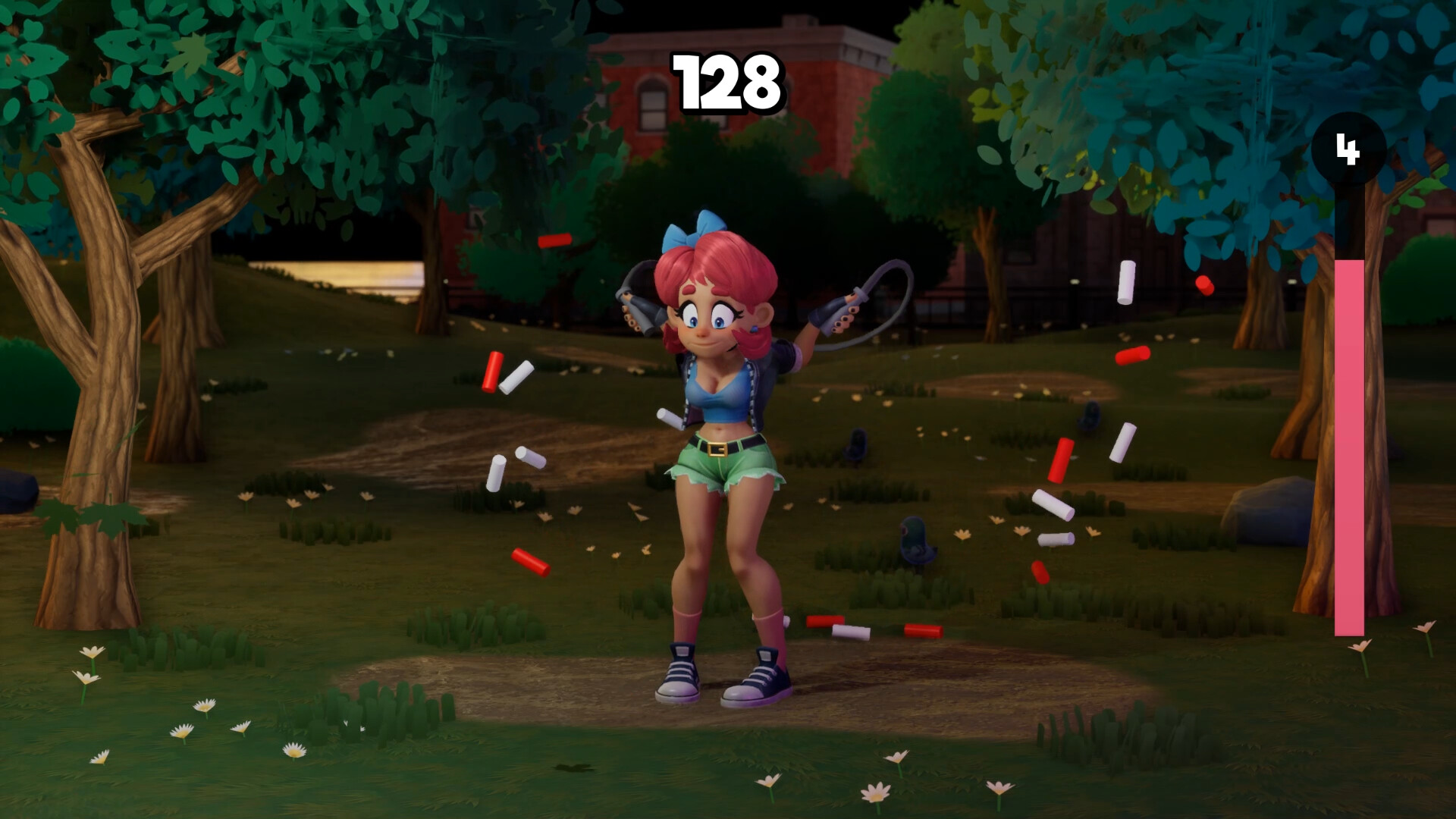
Scarlet Skips is a one-button roguelike about skipping rope, made by solo studio Yerk Games and launching on Steam September 3, 2026. Scarlet is a girl in a funk. Life got heavy, so the game's premise is simple: help her touch grass, one jump at a time. The whole game runs on a single input, press to start the jump, hold to charge it, release to let go. That's it.
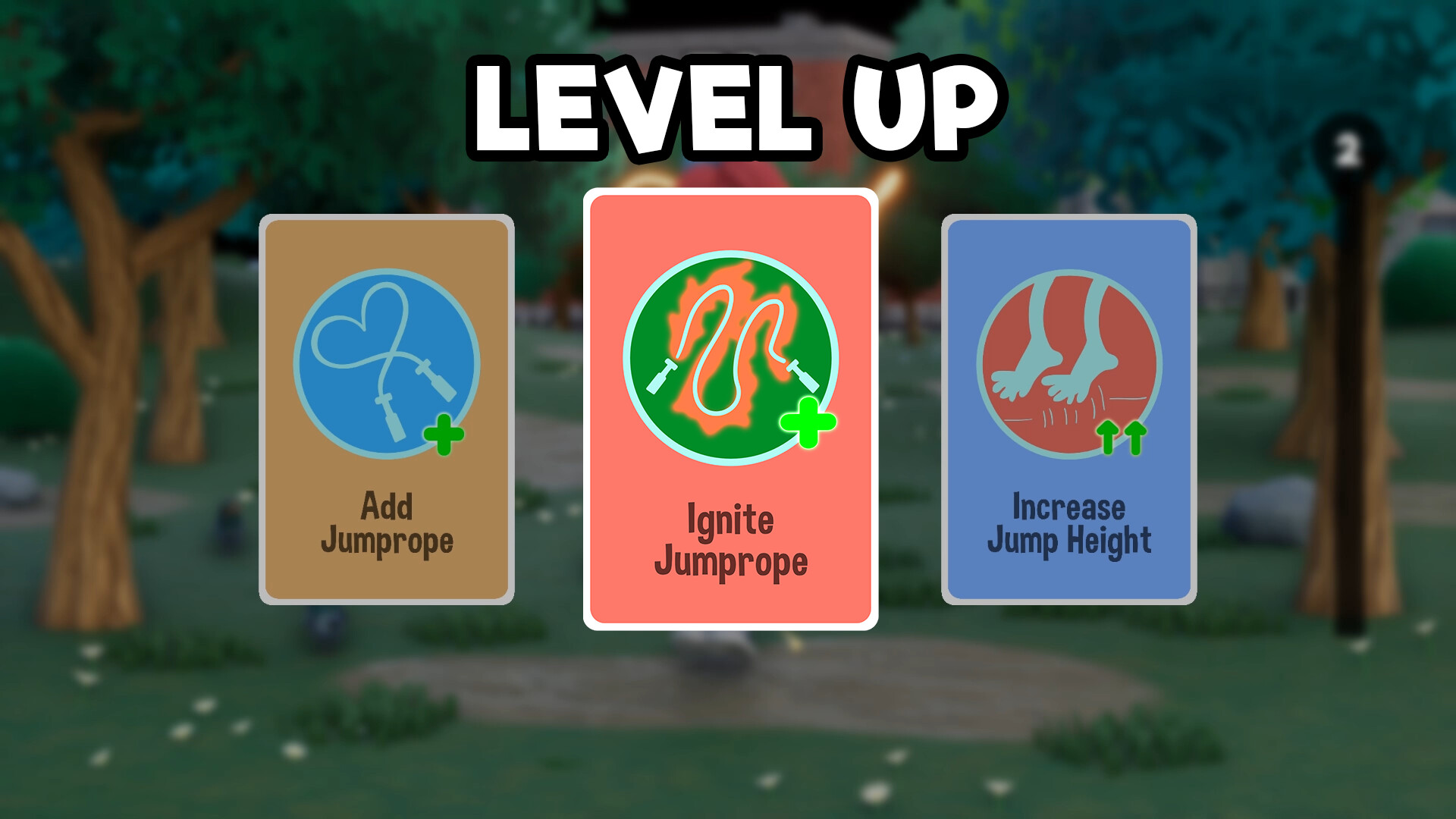
What makes the game stand out is how much depth comes out of that one button. Each jump has a hold window that determines height and distance, and the roguelike layer sits on top: level up and pick 1 of 3 random upgrade cards, stack them however you like, and bend the physics until the run gets silly. The developer describes the upgrade system as "completely original", 10 base upgrade cards that can be stacked and combined into a practically infinite number of configurations.
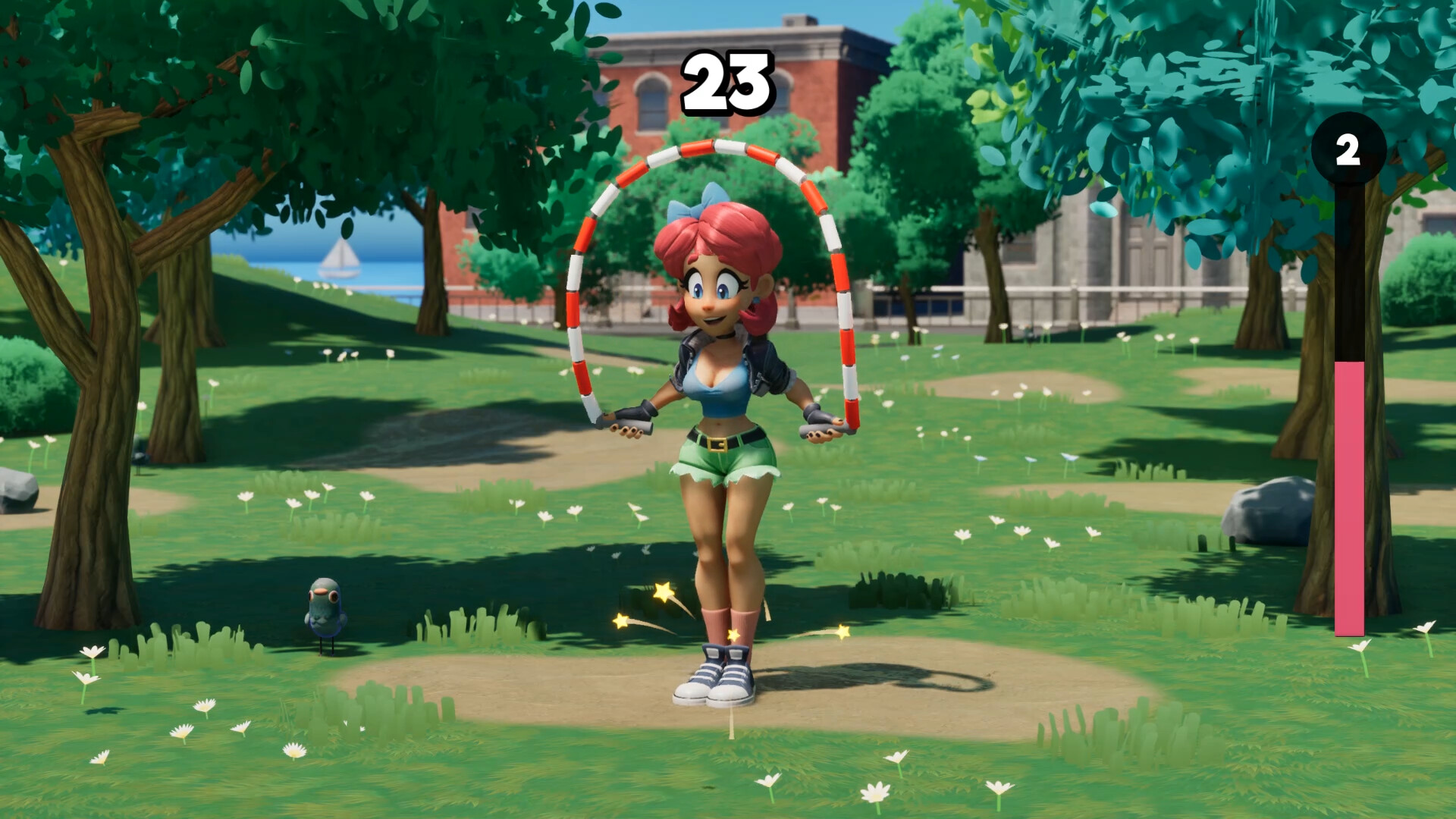
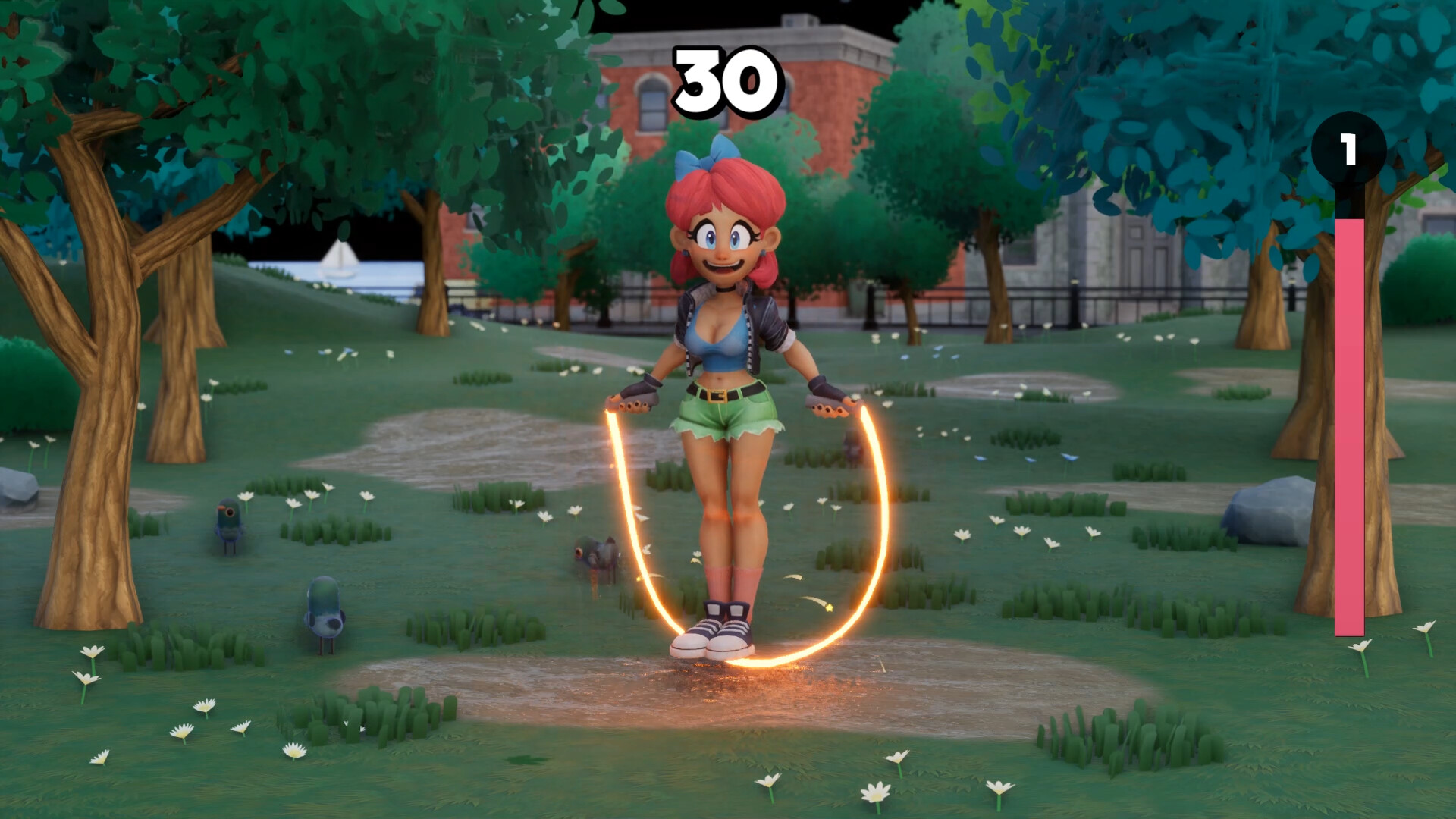
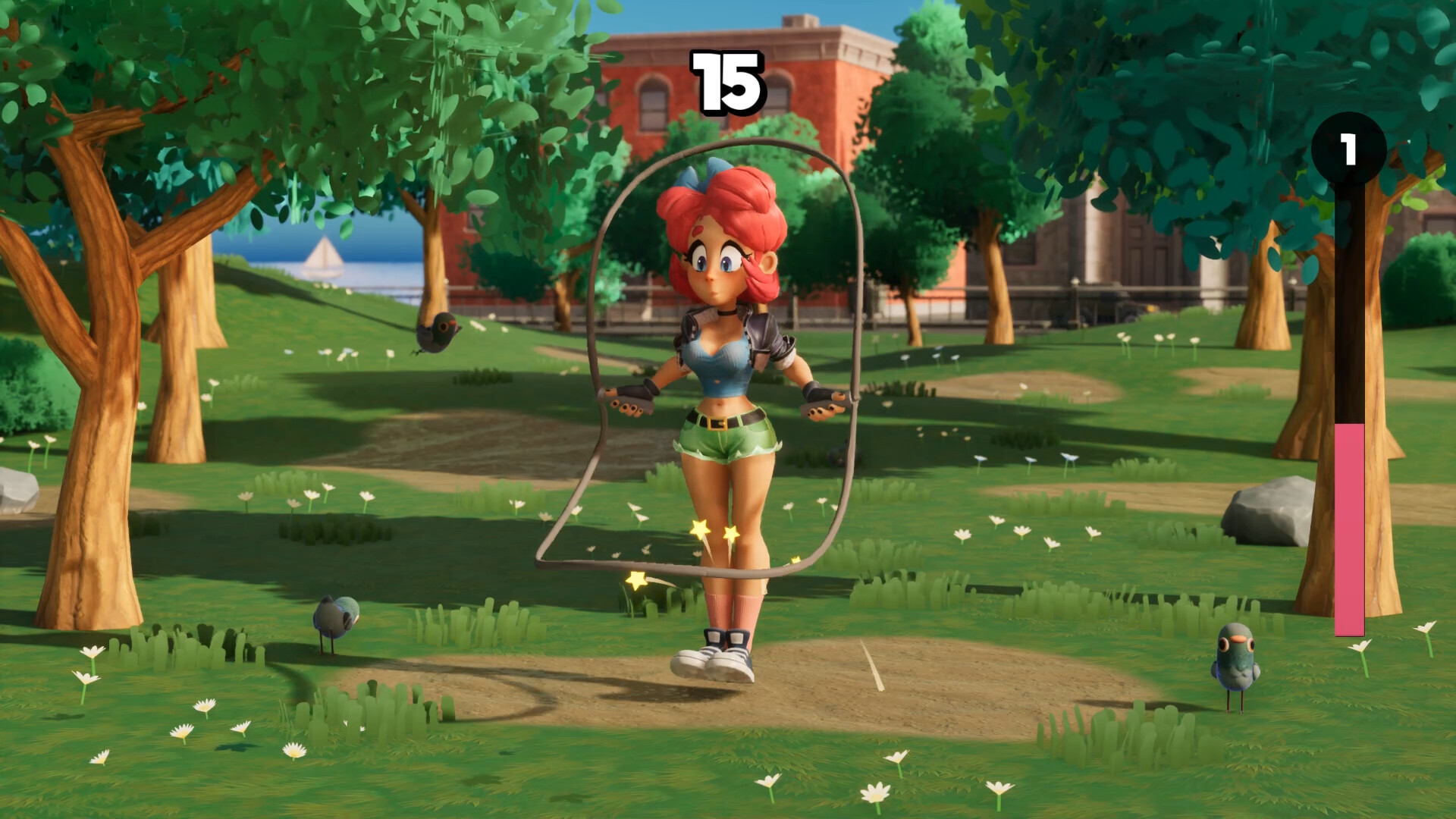
The presentation is deliberately adorable. Yerk Games built Scarlet's movement in Unreal Engine by blending dozens of hand-animated poses with procedural animation logic, so she reacts to the game state as she jumps: flailing on a bad landing, determined on a long charge, delighted when the rope catches fire.
| Fact | Detail |
|---|---|
| Developer / Publisher | Yerk Games (solo studio) |
| Genre | One-button roguelike, arcade high-score |
| Platform | Windows (Steam) |
| Release date | September 3, 2026 |
| Price | To be announced |
| Input | One button only (keyboard Space or mouse click) |
| Players | Single-player |
| Upgrade cards | 10, stackable and combinable |
| Progression | Level up → choose 1 of 3 random power-ups |
| Score system | High-score chasing, no fixed win condition |
| Animation | Unreal Engine, procedural + hand-animated |
| Features | Steam Achievements, Family Sharing |
| Languages | English |
Who it is for: players who liked the one-button purity of Flappy Bird but want actual progression systems, roguelike fans who enjoy build-crafting over twitch combat, and anyone who finds a tiny bird set on fire by its own jump rope funny. The skill ceiling is real: hold timing, landing windows, and upgrade synergy are all learnable.
Who it is not for: people who need a story, players who bounce off score-attack games, and anyone expecting a second button. If you don't enjoy replaying the same loop chasing a number, this will feel thin.
Getting Started, First 30 Minutes
The full game releases September 3, 2026. Wishlist the Steam page now so you get the launch notification; the price is still unannounced but the previous trailer run focused on the release window, so expect news soon.
- Just start jumping. The tutorial layer is light. Press and release quickly to do a small hop. The game reads you instantly, so don't overthink the first ten jumps.
- Learn the hold. Hold the button to charge a bigger jump. Release to launch. The core tension of the game is that every obstacle wants a different hold duration, a gap wants a long charge, a low branch wants a short one.
- Watch the landing. Scarlet's jump has a landing recovery. Land on flat ground and she recovers fast; clip a ledge and she stumbles, eating time and often costing the rope.
- Take your first upgrade seriously. After the first level-up you see the 3-card choice. Early on, jump height and extra rope reach feel best; the fiery variants pay off but they change your timing, so don't grab them in a run you want to survive.
- Set a baseline score. Your first real goal is beating your own record by a meaningful margin. The game tracks and displays it, and pushing one run at a time beats restarting on every mistake.
- Treat every death as data. If you keep dying on the same obstacle, you're either overcharging or undercharging. Adjust the hold, not the route.
Beginner Mistakes to Avoid
| Mistake | Why It Hurts | Fix |
|---|---|---|
| Mashing instead of holding | Rhythmic taps keep you at minimum height, so gaps and ledges become impossible | Deliberately experiment with hold durations, a full charge covers roughly double the distance |
| Grabbing fire upgrades early | Burning ropes change your timing windows and add a risk element before you've mastered the base jump | Wait until you can clear the first sections comfortably with plain ropes |
| Ignoring landing recovery | Landing at a bad angle gives a stumble animation that costs your chain | Aim for flat, wide landing zones over tight ones |
| Choosing greed cards on a score run | Some upgrades maximize score potential but shorten the run; on a score attempt that's fine, on a survival attempt it kills you | Match the card to your run's goal: survival cards for learning, score cards when you know the route |
| Not watching the rope state | Several upgrades modify the rope (extra rope, fire rope) and each has its own physics | Re-learn your timing after any rope-affecting pick, don't assume the old rhythm still works |
Core Mechanics Deep Dive
The single-button input model
Everything maps to press, hold, release. The button is context-free: the same input that starts a jump also triggers interactions. Keyboard players use Space; mouse players use left click. There are separate Keyboard Only and Mouse Only options in settings, and no controller mapping exists because the game is built around a single abstract button.
Jump physics and the hold window
A jump's power comes from the hold. Short press = short hop. Full hold = maximum height and distance. Mid-hold = everything in between. Because the hold window is continuous rather than stepped, small timing differences produce different outcomes, that's where the skill expression lives. Landing quality matters too: the procedural animation system gives Scarlet distinct recovery states, and a clean landing lets you chain into the next jump faster.
The roguelike upgrade deck
Every level-up offers a choice of 3 random cards from a pool of 10 base upgrades. Cards aren't one-and-done: they stack. Take jump height twice and you get a compounded boost; take the fire rope because you like chaos and now every jump leaves ember trails. Some upgrades explicitly read as "score multipliers" while others are survival picks, which creates the classic roguelike tension between greed and safety.
Score chasing vs. survival
The game has no fixed win state. Your objective is the score, and score scaling rewards risk: fire ropes, tight landings, and rapid chains all multiply. A survival-first build keeps you alive longer but scores slower; a greed build ends runs early but produces huge numbers when it works. Both are real strategies, and the game leans into that by letting you self-impose limitations like "no fire cards" or "short hops only."
Advanced Tips
The Long-Charge Economy. Charging to full is slower per jump than short hops, but full jumps cross multiple obstacles and earn higher landing bonuses. The optimal mix is route-dependent: on straightaways, chain short hops fast; before gaps and steps, commit to full charges. Never full-charge in the middle of a flat section, you lose time.
Landing-Lock Rhythm. Because landing recovery is the main speed tax, treat the game as a rhythm of jump → land → jump. Landing on the far edge of a platform gives a smoother arc into the next jump than landing dead center. Slight overshoot beats slight undershoot.
Fire-Rope Discipline. The fire rope is a damage and score multiplier, but it forces a longer, more committed hold because the ember arc is slower. If you take it, re-learn the timing on the first two easy sections before trusting it in a deep run.
Greed-Layer Sequencing. In a score run, take survival cards first to establish a safe baseline, then layer score multipliers once you've seen the route. Because cards stack multiplicatively, three late score cards outperform three early ones if they let you reach the section where multipliers really count.
Self-Imposed Runs. The developer explicitly supports challenge runs with limitations. "Short hops only" trains your hold control like nothing else; "no landing on the same platform twice" forces route planning. These runs also build the muscle memory that makes normal runs feel easy.
FAQ
What platforms is Scarlet Skips on? Windows via Steam. No Mac or Linux build is listed, and no console ports have been announced.
When does Scarlet Skips release? September 3, 2026.
How much will it cost? The price is unannounced. Wishlisting gets you the launch notification when Yerk Games sets it.
Is it really one button? Yes. Press, hold, and release is the entire control scheme. Keyboard Space or mouse click, with separate keyboard-only and mouse-only options.
Does it support controllers? No controller mapping. The single-button design makes a gamepad pointless; Steam lists Keyboard Only and Mouse Only options.
Is it single-player only? Yes, completely single-player.
Does it have achievements? Yes, Steam Achievements are listed on the store page.
What are the system requirements? Minimum: Windows 10, Intel i7-6700HQ, 8 GB RAM, NVIDIA GTX 1060, DirectX 12, 2 GB storage. The requirements are oddly heavy for a one-button game because it runs on Unreal Engine.
How long is a run? Runs are length-flexible. Survival builds can extend a run substantially; greedy builds end fast. The session loop is designed for "one more run" play in short bursts.
Is there a story? A light premise, not a story campaign: Scarlet is in a funk, and the game's fiction is helping her touch grass one jump at a time. Progression is score-based, not narrative-based.
What languages are supported? English.
Final Tip and Verdict
The single most valuable habit: spend ten minutes in a run just holding the button. Learn every charge length by feel before you ever bother with cards. Once the hold window is muscle memory, the roguelike layer stops being noise and becomes a real build system.
Verdict: Scarlet Skips is a tight, funny little score-attack roguelike with a genuinely unusual input model. If you want a game you can pick up for five minutes and still feel yourself improving, this is a strong pick at launch. If you need narrative or a second button, it's not for you. 4/5 for its niche, a weird, focused, deceptively deep one-button package.
Last reviewed by Game How To Editorial. We play each game, verify controls against official sources, and update guides when game mechanics change.
Screenshots