Official game
Play Poly Fighter
This game is hosted by Steam. Continue to the official page to play or download it.
Wishlist on SteamOverview: What Kind of Game This Is
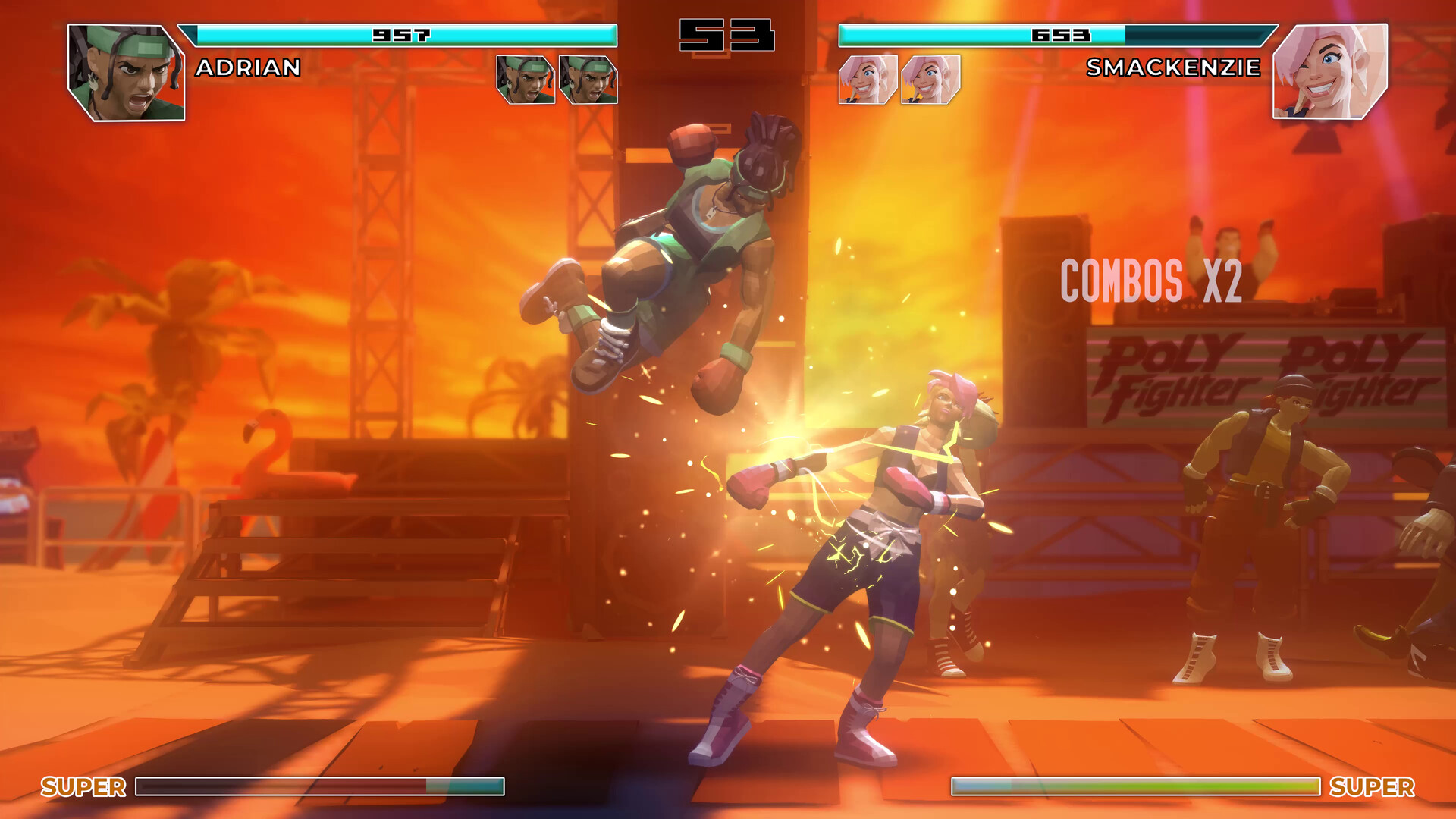
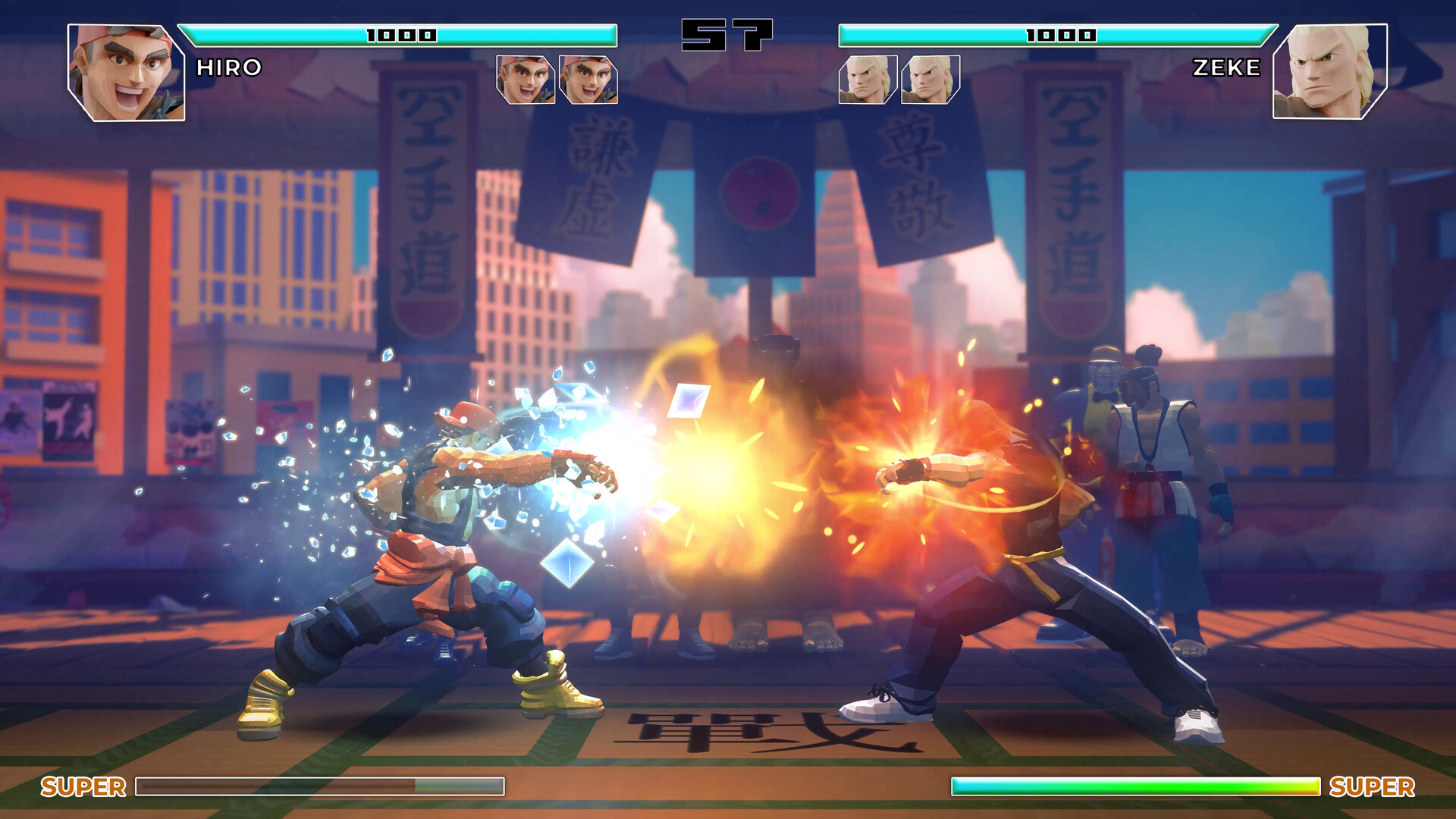
Poly Fighter is a single-player roguelike fighting game from HeartLoop Games, a two-person studio in Montréal. Every opponent you defeat teaches your fighter one of their moves, and the run structure turns a traditional fighting game roster into a deckbuilding problem. You walk a branching map through three leagues, pick your fights, stack moves and perks into an archetype, and try to survive opponents tuned to punish exactly the habits you developed two nodes ago. It launches into Steam Early Access on October 13, 2026, and a free demo with four playable characters and all three acts is live now.
| Fact | Detail |
|---|---|
| Developer / Publisher | HeartLoop Games (Montréal, Québec) |
| Genre | Single-player roguelike fighting game |
| Platform | Windows (Steam), Family Sharing enabled |
| Release | Early Access October 13, 2026; demo available now |
| Run structure | 3 leagues, branching node map, ascension runs, secret bosses |
| Move system | Learn moves from defeated opponents, swap and upgrade mid-run |
| Archetypes | Zoner, grappler, rushdown, plus hybrid chimera builds |
| Rivals | 3 per character, one per act, character-gated |
| Inputs | Simple inputs and classic motion inputs, mixable per move |
| EA content scope | 16 playable characters, complete Discovery Loop, full technique system |
| Min specs | i5 12th gen, 8 GB RAM, GTX 2060 / RX 5700, 10 GB storage |
Who this guide is for. Two groups: fighting game players who want to theorycraft builds without a ranked ladder watching, and roguelike players who never learned frame data but like the idea of a deck that punches. The demo rewards both. Difficulty in league one is gentle, league two bends upward hard, and the real skill check is beating all three of your character's rivals in one run.
The one-sentence mental model: your moveset is a deck, the node map is a draft, and every fight is a chance to steal the card that just beat you.
Getting Started: Your First Three Runs
Run 1: Turn Simple Inputs On and Lose on Purpose
The settings separate simple and motion inputs per move, not per profile. Simple mode lets specials come out from a button plus a direction. Your first run has exactly two goals: learn what a reward screen looks like, and feel how the node map branches. Do not sweat the losses. A failed run still progresses your account, and character unlocks carry between runs while movesets reset, which means run one is pure information gathering.
Play it with simple inputs even if you have motion muscle memory. You cannot evaluate a moveset you cannot execute, and simple input removes execution from the equation for one full run. Switch specific moves back to motion later, once you know which ones you actually throw.
Run 2: Unlock the Two Hidden Characters
The demo ships four characters: two starters, two unlockables. Hidden characters unlock through the Discovery Loop, the meta-progression layer that tracks conditions across runs. Unlocking both should be your second-run priority because rival encounters are character-gated, and the character you bring determines which rivals can appear. More characters unlocked means more rival paths means more reward variety per hour played. The efficient order is: unlock both hidden characters first, then start building real strategies.
Run 3: Commit to an Archetype for the Full Run
Now pick a direction and hold it for all three leagues, even if the offers tempt you sideways. A run where you take the projectile at node two, the command grab at node six, and the counter at node eleven teaches you less than a worse build that stayed on plan. You need one complete archetype run to learn what a finished build feels like before you can judge when to break the pattern.
Beginner Mistakes to Avoid
| Mistake | Why It Costs You the Run |
|---|---|
| Hoarding one archetype with no answer move | A pure zoner dies the first time a rushdown rival corners you. Keep one reversal or pushback option in every moveset. |
| Skipping Gym nodes | Gyms carry traits like Projectile Invulnerability and Charge to Crit. They look like side content. They are where you practice the exact condition your next elite fight will punish. |
| Treating jobbers as free wins | Jobber fights grant a random move in the current build. That randomness is free build experimentation. Read what you got and think about which reward nodes ahead would pair with it. |
| Mashing through rival dialog | Pre-fight conversations telegraph the rival's gimmick. Rivals are tuned like mini-bosses. The dialog is intel, not filler. |
| Taking a Grudge fight at half health | Grudge rematches spawn a stronger version of someone you already beat. The rewards are real, and a mid-run loss costs everything after it. |
| Picking moves that look cool over moves that cover gaps | A long poke solves more problems than a flashy super. Evaluate every reward against what your current moveset cannot do. |
Core Mechanics: How the Build Machine Works
The Three Reward Tiers
Every defeated opponent pays out based on their tier, and the tiers shape your entire run economy:
| Tier | Reward | Strategic Role |
|---|---|---|
| Jobber | One random move | Free build experimentation, fills gaps, occasionally hands you a load-bearing tool |
| Elite | One move + one perk | The build accelerators. Perks change rules, not just numbers |
| Boss | One move + one perk (anchoring moves) | Boss moves tend to define an archetype. Plan routes around which boss you want to face |
Because rewards arrive mid-run, your character at node one and node twenty share a name and almost nothing else. Swapping is free between fights, moves can be upgraded and replaced, so an early pick is a rental, not a marriage. The buildcraft question is never "is this move good" but "does this move complete a plan."
Perks Are Scarcer Than Moves, So Build Around Them
Moves are plentiful and perks are rare. A run that snipes one rule-bending perk, like charge-to-crit on a slow launcher, and then picks moves that feed it, beats a run that grabs fifteen individually good moves with no plan. When two reward nodes both offer moves and one offers a perk, the perk usually wins. Read the perk first, then ask which moves turn it from a gimmick into an engine.
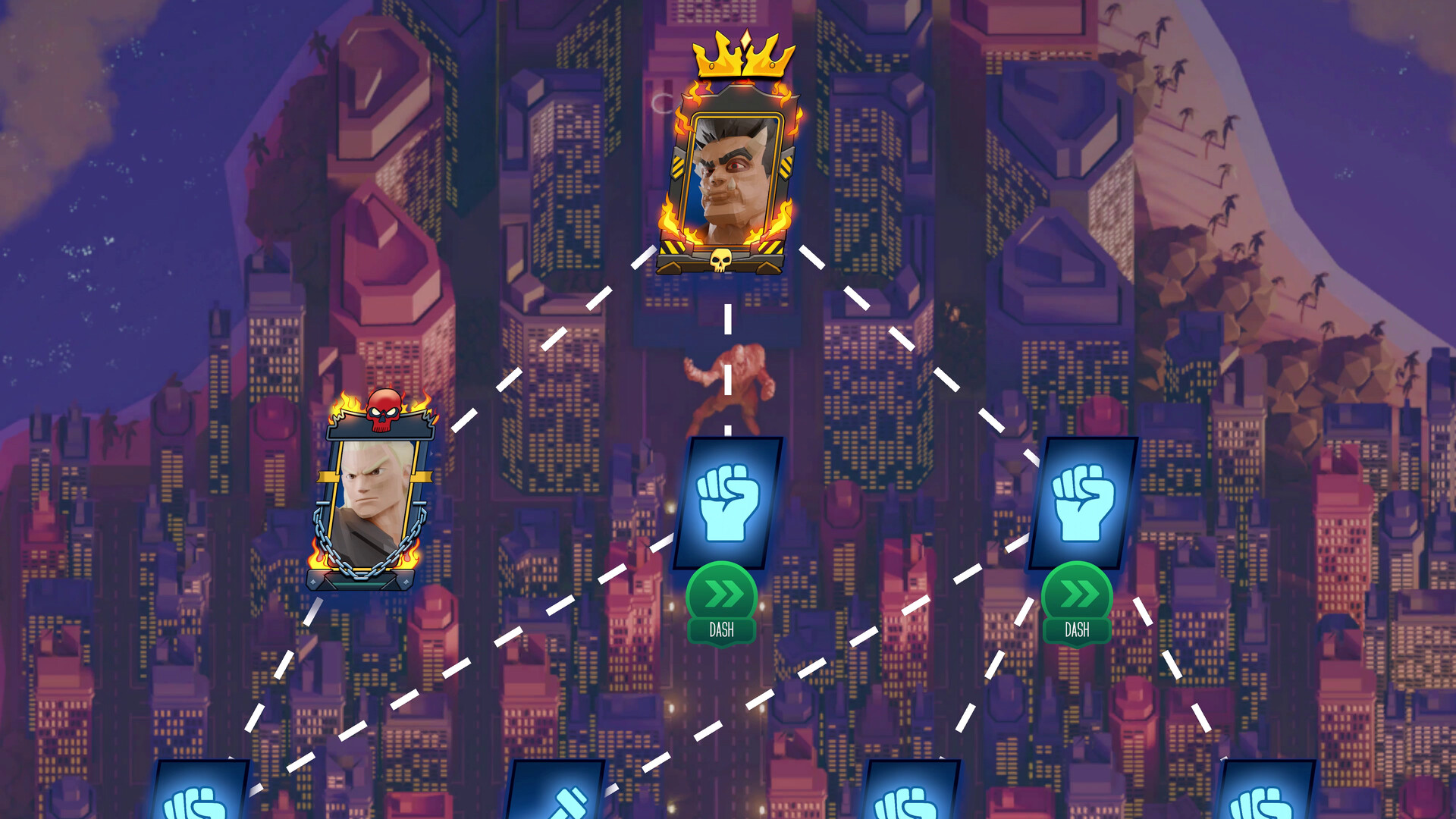
The Node Map Is a Draft, Not a Gauntlet
The Next Fest rework made node choice matter at nearly every step. The current node types:
- Fight nodes — guaranteed jobbers, the safe route and the random-move farm
- Elite nodes — riskier, but the only reliable perk source before bosses
- Gym nodes — practice under a trait like Projectile Invulnerability or Charge to Crit; the trait applies to your practice and teaches the timing your next elite will demand
- Grudge nodes — rematches against upgraded versions of opponents you beat; high reward, real risk
- Mirror nodes — fight a copy of your own current moveset, the cleanest diagnostic tool in the game
Node choice is also build choice. A zoner who takes a gym with projectile invulnerability is practicing for the rushdown rival waiting in act two, and a grappler who routes through two elites before the act boss arrives at that boss with a perk the boss cannot answer.
Rivals Are the Real Difficulty Curve
Each playable character has three assigned rivals, one per act. They only appear on paths when you brought a character who can face them, and some rivals are shared between characters. Base roster fights are honest; rivals are tuned like mini-bosses with a gimmick their dialog previews. Beating all three of your rivals across one run is the game's true skill check, and HeartLoop has said seeing every rival requires playing most of the roster, which turns character unlocks into content.
Ascension Runs and Secret Bosses
Above the three leagues sit ascension runs and secret bosses, confirmed for Early Access and teased in the demo. Treat ascension like arcade mode for people who got good: same structure, sharper margins, rewards that justify the pain. Secret bosses are the theorycraft layer and the team has kept their unlock conditions quiet. Expect the community to map them within a week of launch.
Inputs: Why the Dual System Matters for a Roguelike
Every special move accepts motion inputs (quarter-circles, dragon-punch motions) or simple inputs (direction plus button), and you can mix per move. This design is the reason the game works as a roguelike at all: when your moveset changes every run, execution cannot be the barrier. Keep your bread-and-butter on motions if that is your habit, and map the awkward command grab you picked up at node nine to simple input. There is no honor bonus for suffering.
Build Guide: The Three Archetypes and What Feeds Them
Zoner: Control the Range, Tax Every Approach
Win condition: stay at max range, chip with projectiles, and make every inch of approach cost health.
Priority picks:
- A fast neutral projectile you can spam without commitment
- A slow, big-body projectile for corner pressure
- An anti-air that answers jump-ins, because zoners without one get skippered
- A pushback or reversal tool for the corner escape
- Perks that punish approach windows or extend projectile screen presence
The failure mode: a rushdown rival in your face. Your answer is the reversal or pushback you took at pick four, which is why a pure zoner build is a trap build. The archetype is a pyramid and the corner-escape tool is the base.
Grappler: Solve the Getting-In Problem
Win condition: one touch, one opening, one command grab, one scary screenshot of damage.
Priority picks:
- The best command grab available, ideally with invulnerable startup
- A gap-closer: dash attack, lunging normal, anything that eats space
- An armored advance tool for walking through projectiles
- A hit confirm into grab route from a fast mid-range normal
- Perks that reward commitment: charge-to-crit on the approach, damage on grab, anything that raises the ceiling of a single opening
The failure mode: a zoner who never lets you touch them. Your gym visits matter more here than for any other archetype; practice walking through projectile patterns until the approach is muscle memory instead of hope.
Rushdown: Turn Plus-Frames into a Life Sentence
Win condition: start your offense and never return to neutral.
Priority picks:
- A low-risk pressure starter from mid range
- A plus-on-block string extender
- A mixup tool: overhead or low that forces a guess
- A cancel or link extender that stretches combos
- Perks that extend pressure windows or reward consecutive hits
The failure mode: an opponent with a fast reversal you refuse to respect. Rushdown is the archetype most punished by repetition; when the rival reverses you twice, stop pressing the same string. Mirror nodes are unusually valuable for rushdown players because your mirror copy runs your own unbreakable habits back at you.
Hybrid Builds: The Chimera Rule
The strongest demo builds are usually two-archetype chimeras held together by one load-bearing perk. The pattern: take the perk that changes a rule, then take the best two moves from each adjacent archetype that feed it. A grappler with one projectile is not confused; that projectile is a patch on the archetype's only losing matchup. The discipline that matters is that every pick still answers the same question: what does my plan need next. A hybrid with no plan is just a bad random build.
A Sample Build Route
Act 1
  Node 1-2: Jobber x2 (random moves, read what the draft gives you)
  Node 3:   Elite -> take the PERK, evaluate moves later
  Node 4:   Gym under the perk's trait (learn the timing it enables)
  Node 5:   Boss -> anchoring move that defines the build

Act 2
  Node 1:   Grudge (you know their moves, you have a real build now)
  Node 2-3: Fill archetype gaps (anti-air for zoner, gap-closer for grappler)
  Node 4:   Rival fight (dialog previews the gimmick, respect it)

Act 3
  Route toward the boss your build beats best
  Save one swap slot for the final boss's worst matchup answer
  Rival 3 is the skill check; expect to lose it on your first two runs
Step-by-Step Strategy: A Full Run Walkthrough
- Read the map before the first fight. Identify where the elites, gyms, and grudges sit, and route backward from the act boss you want. The boss's anchoring move should be the cornerstone of the archetype you commit to.
- Take the first two jobbers every run. Two random moves cost nothing and often define your draft direction for free. If a random move is already archetype-adjacent, your route is chosen; if both are junk, you lost two minutes.
- Spend Act 1 building the engine, not winning pretty. Take the elite perk early, gym under it immediately, and reach the act boss with a functional two-move plan plus a rule-bender. Style points do not carry between nodes.
- Gym before every Grudge. Grudge fights are rematches against upgraded versions of opponents you already beat, so you know their moves and they got buffs. A gym stop under the relevant trait converts a coin-flip into a plan.
- Hold one moveset slot in reserve through Act 2. Free swapping means an unused slot is optionality. The Act 3 boss's worst answer is often a move you passed over twice; keep the flexibility to grab it late.
- Scout every opponent for the move you want. The move you take is the move your opponent just used on you. If their best tool beat you up, taking it removes it from the pool of things that can hurt you and adds it to your kit. Denial and acquisition in one pick.
- Budget health like a roguelike resource. A league-one grudge that costs half your bar is a loan you repay in league two at interest. Take the guaranteed route when your build is mid-transition; take risks only when your moveset just came online.
- Win the rival dialog before the rival fight. The pre-fight conversation previews the gimmick every time. Zoner rival means projectile answers, grappler rival means spacing discipline, rushdown rival means reversal timing. Walk in with the counter already mapped to a button.
Advanced Tips
- Perk-first drafting. Reads: perks are the scarce resource. Route through every elite you can reach in Act 1, because a two-perk build entering Act 2 outperforms a five-move build with no rules bent.
- The Mirror is a diagnostic, not a fight. When you lose to your mirror copy, note exactly which move killed you. That move has no answer in your own kit, and that is your next pick.
- Losses are meta-progression. The Discovery Loop tracks conditions across runs, failed or not. A run that dies at the Act 2 rival still advanced your unlock conditions, so play bad runs to their conclusion instead of rage-resetting.
- Character choice is route planning. Rivals are character-gated, so the character select screen is a map read. Stuck on the same wall two runs in a row? The wall is probably a rival your character cannot draw. Bring someone else.
- Mix input styles per move. Simple input the awkward stuff, motion input the stuff you already know. The game prices both identically, and every quarter-circle you do not drop is a punish you land.
- Watch what beats you twice. Roguelike drafting rewards pattern recognition. If the same jobber move has beaten you in three runs, it is probably strong enough to anchor a build, and it will be offered to you the next time you beat its owner.
- Act 3 routing beats Act 3 fighting. By Act 3 your build is what it is, and the map is the only thing left you control. Choose the node path that feeds your engine, even when it means skipping fights you would win.
System Requirements and Performance
| Tier | Minimum |
|---|---|
| OS | Windows 10 64-bit |
| CPU | Intel i5 12th gen or AMD equivalent |
| RAM | 8 GB |
| GPU | NVIDIA GTX 2060 or AMD Radeon RX 5700 |
| Storage | 10 GB |
The GPU floor sits above the indie average for a stylized 2D fighter, which suggests the 60fps target holds even during heavy hit-spark moments. Full controller support ships day one with native DualShock/DualSense mappings; keyboard works but is clearly the second-class input for a fighter. Family Sharing is enabled, so one purchase covers a household.
Early Access Roadmap and What That Means for Your Builds
The Early Access version contains 16 playable characters, a complete Discovery Loop, and the full technique-learning system. The 1.0 target is before summer 2027, with more characters, techniques, bosses, bonus stages, and more complex boss encounters planned. The team states the price will not change when the game leaves Early Access, and community playtests run regularly through their Discord.
Practical read for build crafters: movesets you master in the demo carry over as knowledge, not as data. Balance patches will retune moves during Early Access, which is normal for a fighter and exactly what the EA period is for. The archetypes and the drafting logic in this guide are structural, and structure survives balance patches.
Developer Background
HeartLoop Games is a Montréal studio and Poly Fighter is their flagship. Through 2026 they ran an unusually offline playtest circuit for a fighting game: a booth at EVO 2026 in Las Vegas, the Montreal Comiccon Indie Zone, Eh! Game Expo in Kingston, an appearance in The MIX Summer Showcase, and the Québec Game Celebration. That much stranger-playtesting before launch shows in the demo's iteration speed; the Next Fest rebuild came directly from booth feedback. Press noticed: Kotaku called it their favorite game at PAX East, The Escapist credited it as the fighting game that might get them into fighting games, and Creative Bloq tagged it possibly the most inventive game of the year.
How It Compares
Against traditional fighters (Street Fighter, Tekken): no online, no forty-character roster, no ranked anxiety. Lower execution ceiling by design, higher build variety, same fundamental respect for spacing and punishes.
Against roguelites: it is Slay the Spire's "your deck is your character" logic applied to frame data, with Dead Cells' commitment to animation feel. If you loved learning a boss's moveset in a soulslike, here the boss's moveset becomes yours.
Against other solo fighting content: most single-player fighting modes are gauntlets with fixed rewards. Poly Fighter's node map and archetype system make each run a build puzzle first and an execution test second, which is the exact niche solo fighting fans have asked studios to fill for years.
FAQ
When does Poly Fighter release? Early Access on October 13, 2026. Price is unannounced; the team says EA pricing holds through 1.0.
Is there multiplayer? No. Strictly single-player 1v1 against AI, no ranked, no matchmaking.
Do I need motion inputs? No. Every special supports simple inputs, and you can mix per move.
How long is a run? Roughly 30 to 60 minutes for a full three-league run, shorter for early failures.
What carries between runs? Character unlocks and Discovery Loop conditions carry. Movesets reset each run.
How many characters at launch? 16 in Early Access, with more planned before 1.0 in 2027.
What platforms? Windows via Steam. Mac and Linux are not listed. Steam Deck is unconfirmed.
Is the demo progression separate from the full game? The demo teaches the same systems; treat it as practice for day one, not a head start to hoard.
Quick Reference Card
| Topic | Answer |
|---|---|
| Release | Early Access, October 13, 2026 |
| Demo | Live now, 4 characters, 3 acts |
| Reward tiers | Jobber = random move, Elite = move + perk, Boss = move + perk |
| Draft rule | Perk first, moves that feed it second |
| Node types | Fights, Gym (traits), Grudge (rematches), Mirror, Elite |
| Rivals | 3 per character, one per act, character-gated, dialog telegraphs gimmick |
| Endgame | Ascension runs, secret bosses |
| Inputs | Simple + motion, mixable per move |
| Specs floor | i5 12th gen, 8 GB RAM, GTX 2060, 10 GB |
| First goal | Unlock both hidden characters, then archetype-commit a full run |
Screenshots