Official game
Play Moonfrost
This game is hosted by Steam. Continue to the official page to play or download it.
Play on SteamOverview: What You Are Getting Into
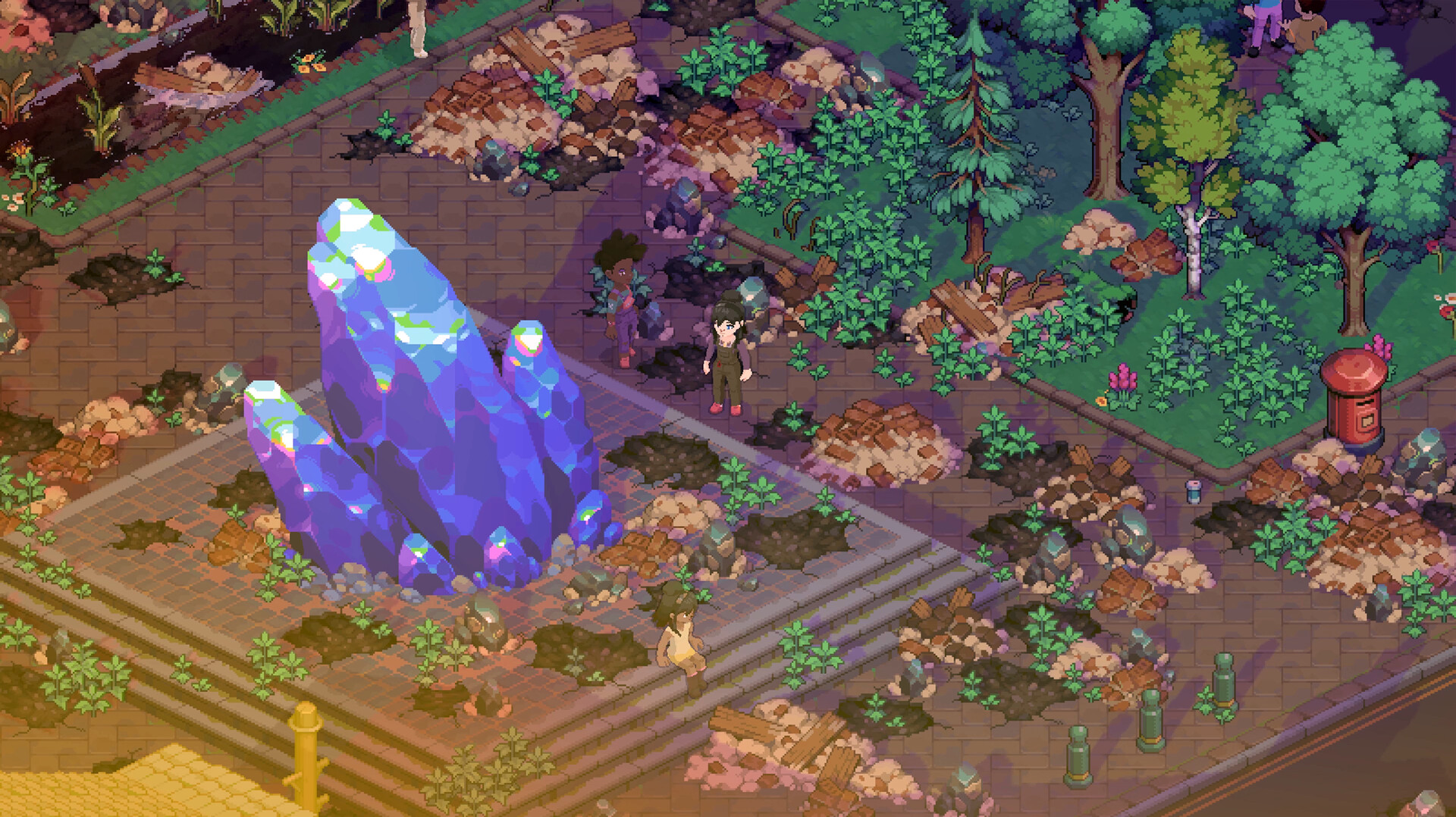
Moonfrost dropped into Steam Early Access on October 12, 2026 at $14.99, and it arrives with more baggage than your average farming sim. Oxalis Games, a five-person studio in the UK, spent four years building this world, and part of those years ran through a Web3 era that a chunk of the launch playerbase will not let anyone forget. The release version has no crypto mechanics, no NFTs, no tokens. It is a straight premium purchase. The old controversy still drags the review score down to Mixed, so judge the build on its own terms: a cozy isometric life-sim with real dungeon crawling, a village restoration meta, and the most unusual crop growth system in the genre.
The setup: a second moon appeared a century ago and has been bombarding the world with icy meteorites ever since. People learned to harness the material, called MOONFROST, and the ones who do the harvesting are Frost Hunters. You wake up in a shattered village with no memory, get handed the Frost Hunter job, and start rebuilding. Around you live eleven villagers, each with fears, flaws, and their own storyline. Below the village sits a temple that works like a proper dungeon crawl, twenty rooms deep in the current build.
| Field | Detail |
|---|---|
| Genre | Farming life-sim / RPG / dungeon crawler |
| Developer | Oxalis Games (5 people) |
| Price | $14.99 EA, introductory discount ends October 26 |
| Early Access scope | First half of main story, temple rooms 1 to 20, 11 villagers |
| Friendship cap | Level 3 in EA (romance arrives with 1.0) |
| Platforms | Windows PC, Steam Cloud saves |
| Languages | English, Spanish, Simplified + Traditional Chinese, Japanese, Indonesian |
| 1.0 target | Full storyline within roughly 6 months of launch |
Who this game suits: players who liked Stardew's loop but burned out on the calendar, players who want a life-sim with an actual dungeon, and players patient enough to ride out Early Access jank. Who should wait: anyone who needs a polished 1.0, wants romance now, or is motion sensitive, since the camera behavior has rough edges.
Getting Started: The First 30 Minutes
The opening drops you into the village with amnesia and very little hand-holding. The tutorial character guides you through the first tasks, but players consistently report the same confusion points, so here is the path.
- Follow the main quest marker to meet Ash. Ash anchors the early story and several quests require finding her. She wanders, so check the map icon. If she ever goes missing with no map icon, that is the known disappearing-NPC bug, and reloading the save brings her back.
- Clear your first debris patches before planting anything. Meteor garbage litters the ground, and cleaning is how you both farm materials and progress the village restoration track.
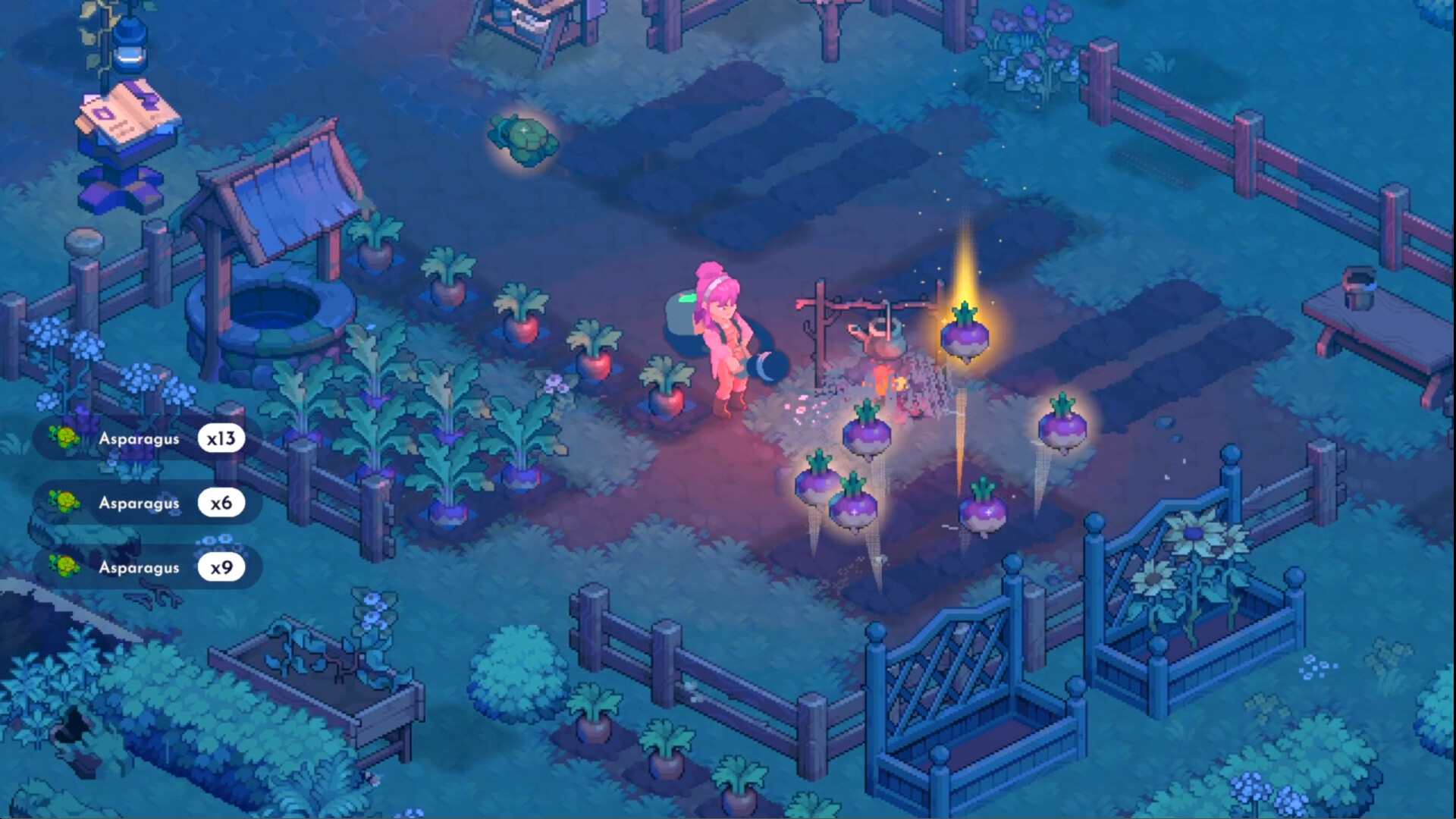
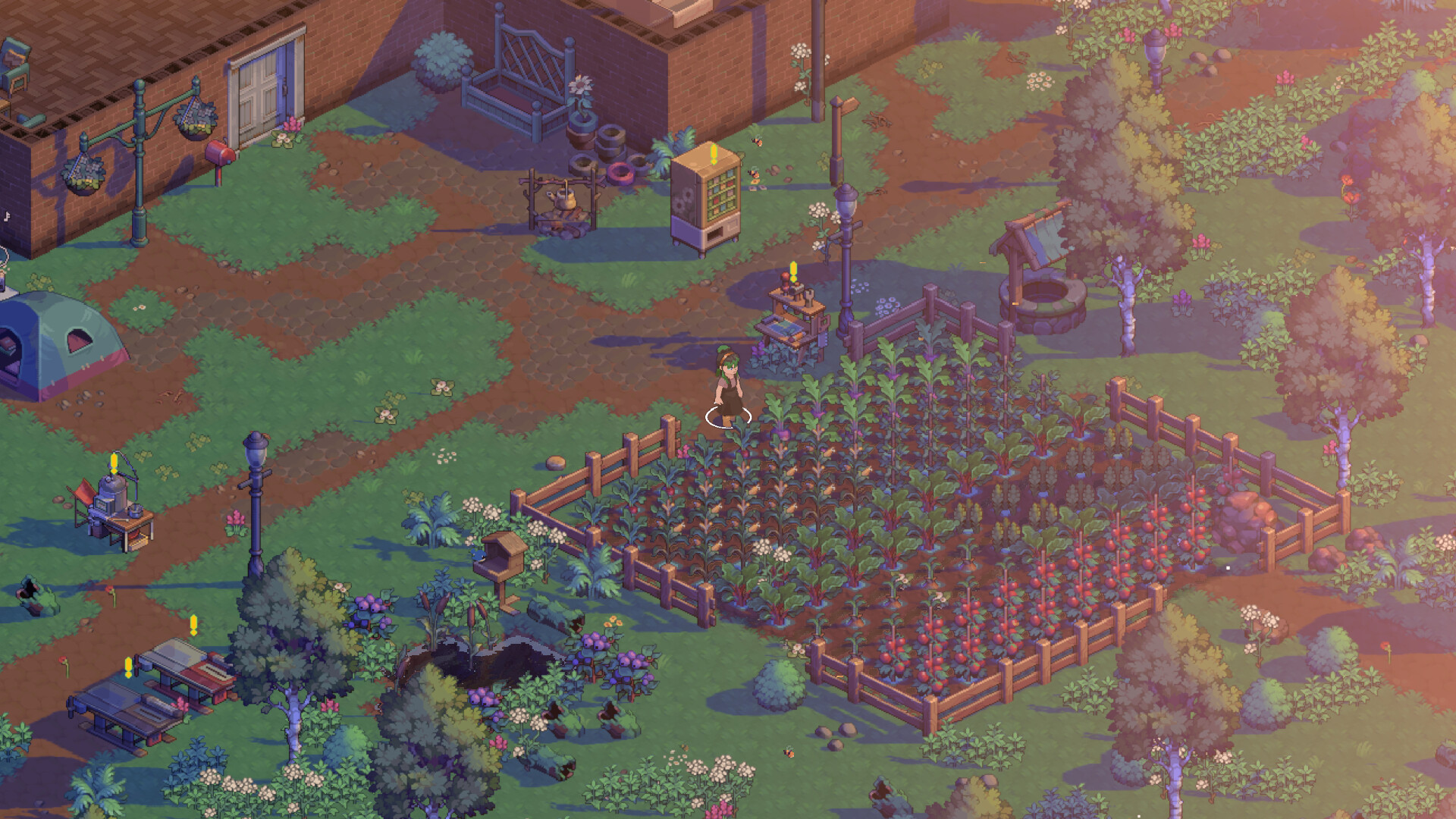
- Plant a small starter plot. Crops here grow in real time and fast, often popping up near-instantly after watering. Do not replant your whole inventory in one go.
- Open the Phone. The in-game Phone is your quest hub and the Frost Hunter Association order board. Almost every progression step routes through it.
- Fix your camera before anything else. Zone transitions used to slam the zoom back in; patch v0.1.1 made zoom levels persist, but if you are on the launch build or the setting fights you, set zoom once per session and check the options for camera comfort settings.
Beginner mistakes that cost hours:
| Mistake | Why it hurts | Do this instead |
|---|---|---|
| Selling every crop immediately | Orders and recipes consume produce as ingredients | Keep a pantry reserve, sell only surplus |
| Chasing the level 24 wall with farm XP | Most XP past the mid-20s comes from first-time crafts and quests, not repeat farming | Rotate new crafting recipes for XP |
| Ignoring villagers | Friendship gates story beats and shop unlocks | Talk to a different villager every in-game day |
| Hoarding shards for a big house | Village restoration projects unlock before you feel ready | Keep a 200 to 300 shard standing buffer |
| Filling your inventory with wood, weeds, and rocks | Storage is one chest early and inventory caps fast | Deposit before every temple run |
Core Mechanics: How Moonfrost Actually Works
Crops Grow in Real Time, Not In-Game Days
The genre's founding contract is sleep-to-skip. Moonfrost tears it up. Crops sprout while you stand there, often within minutes of planting and watering. There is no day-skip mechanic because the design does not want one. This changes every habit you carry from Stardew or Harvest Moon:
- Long sessions compound. A three-hour block cycles crops several times and feeds the order board continuously.
- Short sessions stall your farm, not punish it. Nothing withers overnight while you are away.
- Plant before you go do something else in-game. Farm, then fish, then explore, then harvest on the way back.
One warning from launch players: the near-instant growth makes the farming loop feel closer to order fulfillment than agriculture. That is the intended design. The Frost Hunter Association wants specific goods on rotation, and your farm is the supply line.
The Frost Hunter Association Economy
Here is the single most misunderstood system in the game. There is no general store to sell whatever you want. The Frost Hunter Association posts item requests, and those requests are the main outlet for turning goods into currency. The requested item list rotates. You can grow a plot of something, harvest it, and find none of it on the current list. Launch players found this maddening, and the practical adaptation matters:
- Treat the current order list as your planting instructions. Check the Phone first, then plant to match.
- Keep a diversified pantry so a list rotation never leaves you empty.
- Fish and temple loot follow the same rule: check what is requested before stockpiling for profit.
- Extra goods are not wasted. Quests, gifts, and cooking all consume produce, so overflow has uses even when the board does not want it.
First-Time Crafting Is Your XP Engine
Crafting something for the first time pays meaningful experience. Crafting the same thing again pays little. The community hit a wall around level 24 where farm grinds stopped moving the bar and every pending quest demanded items from recipes they had not found yet. The fix is systematic:
- Buy and collect every new blueprint you can afford as soon as it appears.
- Craft one of everything new, even items you do not need, for the XP.
- If all quests are blocked on locked recipes, push the temple. Deeper rooms drop the blueprints and materials that reopen quest lines.
The Temple Is the Real Progression Gate
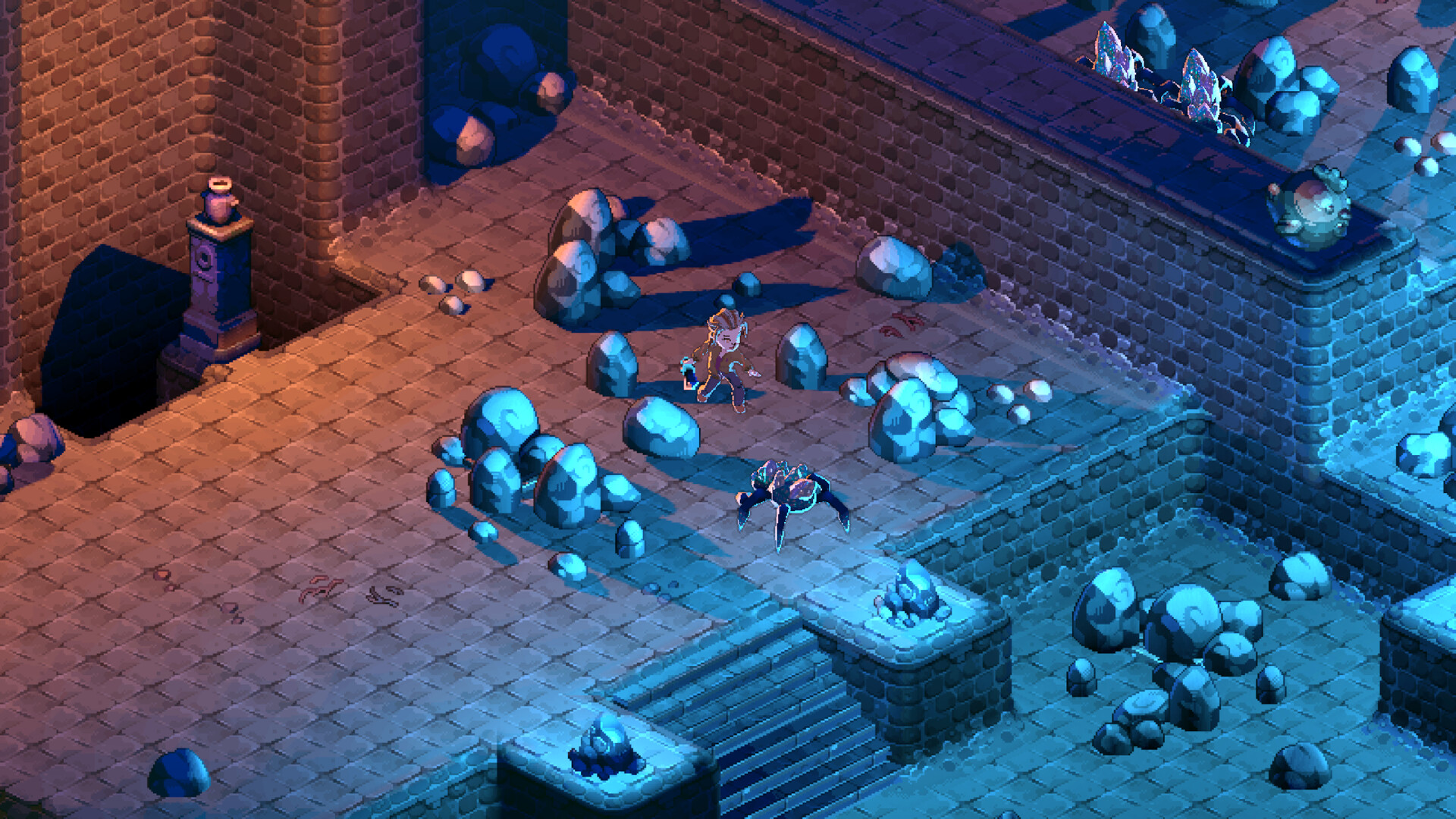
Twenty rooms were available at EA launch, and the difficulty ramps from trivial puzzle rooms to fights that demand stocked supplies. The temple is where quartz, silver ores, blueprint drops, and several quest-critical materials come from. Players stuck on the Nightveil Tonic or concrete block quests were almost always stuck because they had not pushed the temple far enough.
Temple rules of thumb:
- Enter with food, a full inventory cleared down, and your best tool tier.
- Rooms 1 to 10 teach mechanics. Rooms 11 to 20 demand combat planning and hoarded consumables.
- Chest rooms and resource nodes inside do not all respawn the same way. Learn which nodes are repeatable and route your runs around them.
- The deepest reachable room is your farming target once quest lines stall. If quests demand materials from room 15 and you can only clear room 12, farm 12 until your gear and consumables carry you deeper.
Friendship, Gifting, and the Villager Cast
Eleven villagers are live, with friendship capped at level 3 until 1.0. Each has personal storylines that open through conversations and friendship events, and those events are the primary story delivery system in Early Access. Gifts work best when they are cooked dishes made from your pantry surplus, and villager dialogue often hints at preferences. The practical loop: talk to someone new daily, gift cooked dishes to whoever has an active story beat, and keep friendship progressing on every front because story chapters and area access ride on it.
Crow, Walter, Ash, and Celeste anchor the early game quest chains. Walter handles workbench-related guidance, Celeste's shop unlocks through village restoration, and Crow's potion line is where most players first hit the crafting-material wall.
Progression Blockers: The Big Four and How to Clear Them
Early Access progression funnels through four items that stall nearly everyone. They are all solvable in the current build.
Bone Dust (Crow's Potion Line)
Bone Dust has no obvious source and no starting recipe. The unlock is blueprint-gated: progression through the story and temple awards the grinding recipe, after which bones from temple drops convert to dust at the workbench. If Crow's potion quest is active and you cannot grind bones, you are earlier in the chain than you think. Push story quests and temple rooms until the blueprint lands.
Nightveil Tonic
The Nightveil Tonic is a potion, not a shop item, and it does not drop in the temple. It requires the potion-crafting line that starts with Bone Dust. Clear Crow's chain first, and the tonic recipe follows.
Concrete Blocks
Concrete blocks gate Celeste's shop restoration and several later repairs. The recipe comes from the restoration track itself. Work the village restoration quests in order and the block blueprint unlocks as a reward. Skipping restoration steps to rush the shop is what causes the "I need concrete but have no recipe" dead end.
Copper Wire, Quartz, and Silver
Copper wire needs a draft drawing that unlocks through quest progression, and the refrigerator task behind it demands silver. Quartz and silver both come from deeper temple mining. The sequence that works: unlock the copper draft through Walter's line, mine quartz in temple rooms past 10, and push toward the silver nodes in the deepest rooms you can clear.
The meta-pattern behind all four: when every quest looks blocked, the answer is almost never waiting or replanting crops. It is the next temple floor or the next restoration milestone.
Economy Strategy: Money, Shards, and Storage
| Priority | Buy first | Why |
|---|---|---|
| 1 | Tool and bench upgrades | Raise your material income rate permanently |
| 2 | New blueprints | First-time crafts pay XP, XP opens quest gates |
| 3 | Restoration projects | Unlock shops, recipes, and villagers' home builds |
| 4 | Kitchen upgrades | Cooked dishes gift better and fulfill richer orders |
| 5 | Decorations and furniture | Last, always. Style after function |
Storage is the hidden difficulty spike. Inventory caps quickly, and Early Access ships with a single chest. Two habits keep you sane: deposit everything except active quest materials before any dungeon run, and process raw goods into cooked dishes or crafted items, which compress several materials into one slot.
Shard discipline matters more than income. Village restoration projects and villager home builds unlock with little warning, and each eats hundreds of shards. A standing buffer of 200 to 300 means you start building the day a project opens.
Step-by-Step Playbooks
Playbook 1: The First Week Roadmap
- Day 1: finish the tutorial, meet Ash, clear your homestead, plant a starter plot, fix camera settings.
- Day 2: talk to all available villagers once, check the FHA order board, plant to match it, run temple rooms 1 to 5.
- Day 3: start Celeste's shop restoration, keep the order loop running, push temple to room 8.
- Day 4: farm quartz runs in the temple, begin Crow's potion chain, cook your first gift dishes.
- Day 5: unlock concrete blocks, finish the shop, buy every new blueprint, first-time craft everything affordable.
- Day 6 to 7: push toward room 15, start Walter's copper line, build your shard buffer past 300.
Playbook 2: The Order Board Arbitrage Loop
- Open the Phone and read the current FHA requests before touching your farm.
- Plant exactly what the board wants, in surplus of the request quantity.
- While crops grow, fish or run two temple rooms for requested loot.
- Harvest, fulfill orders, and bank the currency immediately.
- Recheck the board before replanting. Never replant yesterday's crop out of habit.
Playbook 3: The XP Climb Through the Level 24 Wall
- List every purchasable blueprint you have not crafted.
- Buy the cheapest three and craft one of each, even useless items.
- If no affordable blueprints remain, run the temple until a new one drops.
- Repeat. Each cycle costs materials but restores quest flow, and quests are where the real XP lives.
Playbook 4: The Temple Supply Run
- Deposit all non-essentials in your chest.
- Pack food, consumables, and one empty stack of slots for loot.
- Clear to your deepest reliably-winnable room.
- Mine every ore node on the route, loot every chest, exit before resources run low.
- Convert raw ores at the workbench on return, then first-time craft anything new.
Playbook 5: The Friendship Machine
- Each in-game day, talk to every villager with an available dialogue, prioritizing anyone with a story beat.
- Cook two to three dishes from pantry surplus every session.
- Gift to whoever has an active event, no wasted gifts on maxed friendships.
- When a friendship event fires, finish it the same day. Events gate the next story chapter.
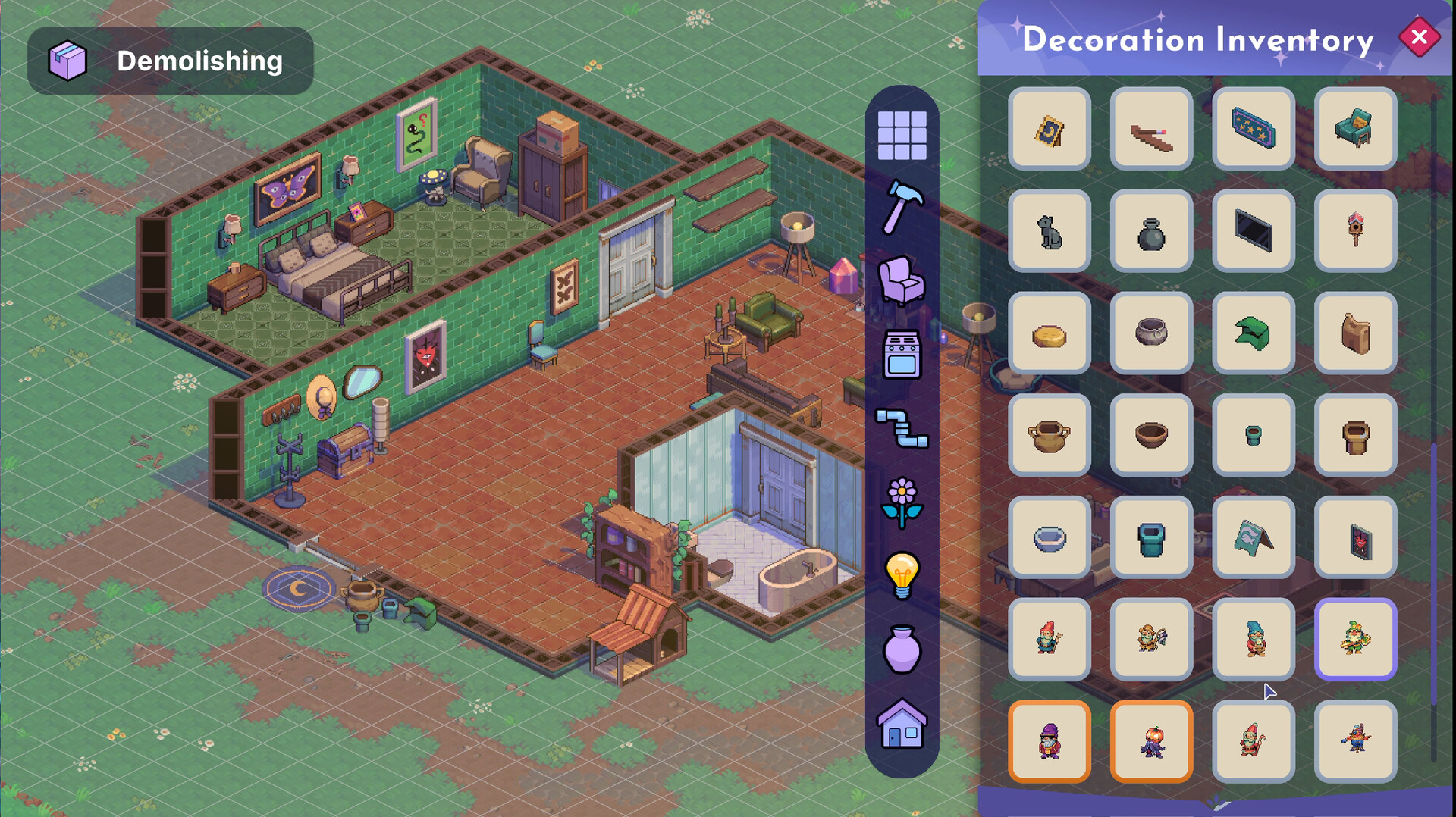
Playbook 6: The Build Mode Budget House
- Start with a 6 by 6 footprint. Roofing and wall costs scale with size.
- Place lighting early. The dynamic light system makes lamps the cheapest atmosphere upgrade.
- Leave one wall unwalled until furniture is placed, so you can walk pieces in.
- Only expand after your shard buffer is full. A cozy finished cottage beats a half-built castle.
Advanced Tips
The respawn timer works for you. Wood, weeds, and rocks reappear in cleared areas after a day or two. Route your daily loops through previously cleaned zones and you will never run out of basic materials, no hoarding required.
Chicken physics are a feature. Chickens spin and "dance" when chased, and eggs drop a few meters away from them. Chase toward a wall corner, then collect. The drop offset means chasing in open fields scatters your loot.
The zoom reset is dead, long live the zoom. Patch v0.1.1 fixed zoom persistence across maps and restarts. If you are still fighting the camera, update. The same patch fixed the dock-stuck bug, so the unstuck-by-reload workaround is mostly obsolete.
Water reflections cost frames at night. The most common performance complaint traces to night scenes with heavy lighting plus reflections. If storms plus lamps stutter, drop shadow quality before resolution.
Refund math favors trying it. Steam's two-hour window covers the entire tutorial and several days of the loop. If the order-board economy or the camera annoys you beyond tolerance, you will know inside 90 minutes.
Patch velocity is high. Oxalis shipped v0.1.1 within days of launch, fixing crashes, the cemetery storyline, dock trapping, zoom persistence, and cleaning-task tracking. Systems you learned last week may behave differently this week, and the news hub lists every change.
Do not burn shards on cosmetics before the restoration track. Villager home builds and shop restorations gate content. Furniture does not.
The Phone is your to-do list. Every stalled session, open it first. Pending requests, quest items, and the current order rotation all live there, and nine out of ten "I am stuck" moments resolve by reading it.
Known Issues and Workarounds
| Issue | Status | Workaround |
|---|---|---|
| Stuck on village dock | Fixed in v0.1.1 | Reload last save on older builds |
| Camera zoom resets per map | Fixed in v0.1.1 | Update the game |
| Ash disappearing, no map icon | Being tracked | Reload save; report on the bug thread |
| Crash on loading screen | Partially fixed | Verify files; lower reflections at night |
| Inventory controls freeze in menu | Live | Close and reopen the inventory |
| All quests blocked, no XP gain | By design | Push temple deeper, buy new blueprints |
| Windows not placing in player houses | Live | Save, reload, reposition |
| Chicken/egg drop offset | Quirk | Chase chickens into corners |
| Motion discomfort in some players | Live | Play zoomed out, limit session length |
FAQ
Is the Web3 stuff still in the game? No. The release has no NFTs, tokens, or crypto mechanics. It is a standard premium single-player purchase. The old community funding fight is why review scores are Mixed, and it is history you can read about or ignore.
Is there multiplayer? No. Single-player by design, and the team has been explicit about it.
How much content is in Early Access? Roughly half the main storyline, twenty temple rooms, eleven villagers, several restorable businesses, hundreds of blueprints, and dozens of hours if you engage with building and restoration.
When do I get to romance anyone? With 1.0. Friendship caps at level 3 in EA, and romance events for all bachelors arrive with the full release.
Why can I not sell my crops anywhere? The Frost Hunter Association order board is the market in the current build. Sell into requests, keep a pantry, and treat off-list surplus as ingredient stock for cooking and gifts.
Is it worth buying during Early Access or should I wait? Buy now if the loop appeals and you tolerate jank, since the EA price is the lowest it will be and the roadmap promises the full story within about six months. Wait if you want romance, the complete story, or a bug-free experience.
Does it run on Steam Deck? Not officially. Some players run it with resolution quirks. Windows PC is the supported platform.
Was the game made with AI? No. Oxalis states the art, writing, and systems are handcrafted, and they commit to human translators for localization.
Quick Reference Card
| System | Key fact |
|---|---|
| Crops | Grow in real time, no day-skip exists |
| Selling | FHA order board only, list rotates |
| XP | First-time crafts pay best, quests above all |
| Temple | 20 rooms in EA, source of quartz/silver/blueprints |
| Villagers | 11 live, friendship cap 3, romance at 1.0 |
| Shards | Keep a 200 to 300 buffer for restorations |
| Storage | One chest in EA, process goods to compress |
| Big four blockers | Bone Dust, Nightveil Tonic, concrete blocks, copper wire |
| Patch | v0.1.1 fixed dock, zoom, cemetery line, crashes |
| Price | $14.99 EA, discount ends October 26 |
Screenshots