Official game
Play Monshifter
This game is hosted by Steam. Continue to the official page to play or download it.
Wishlist on SteamOverview: What Kind of Game Is Monshifter?
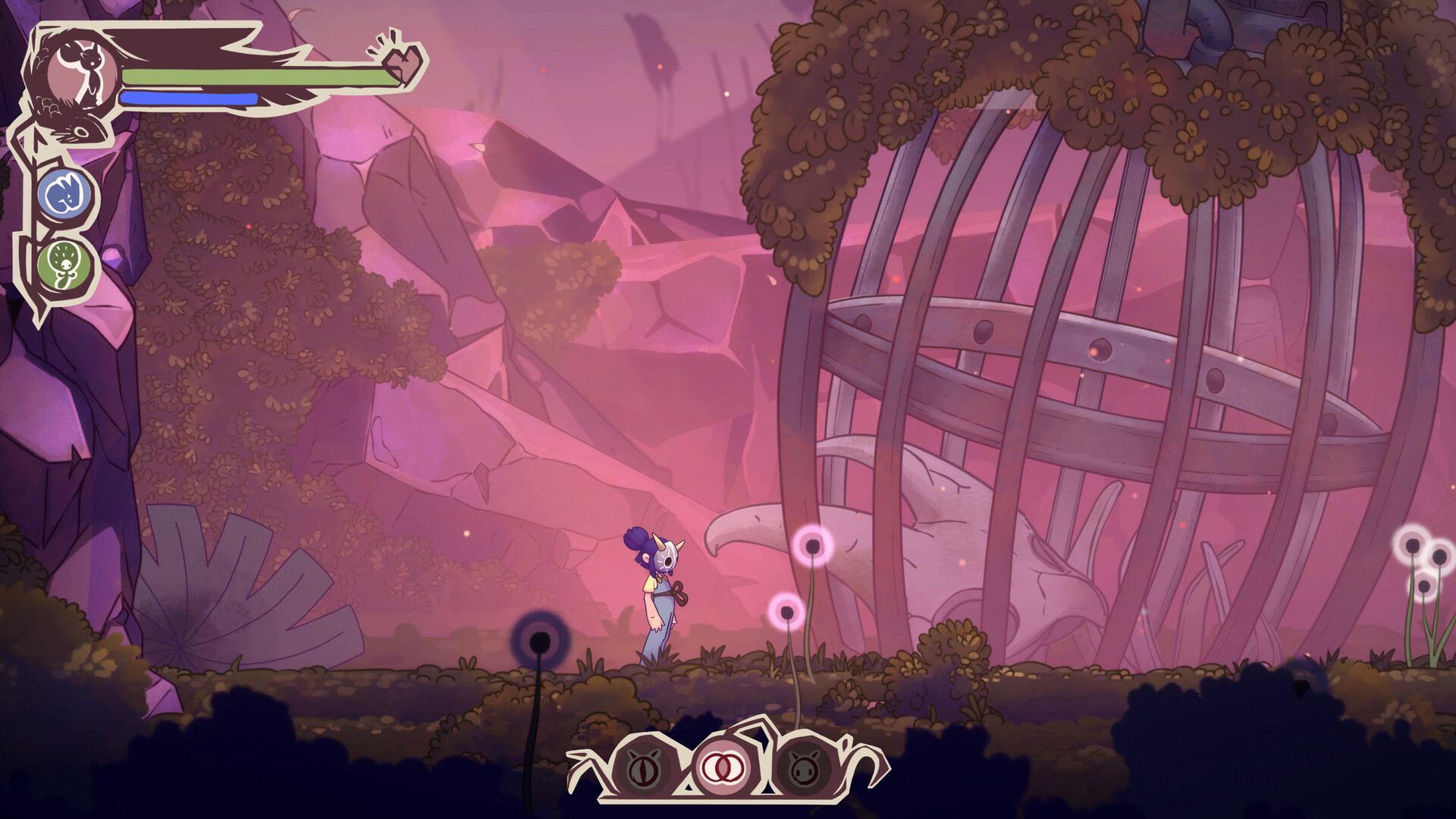
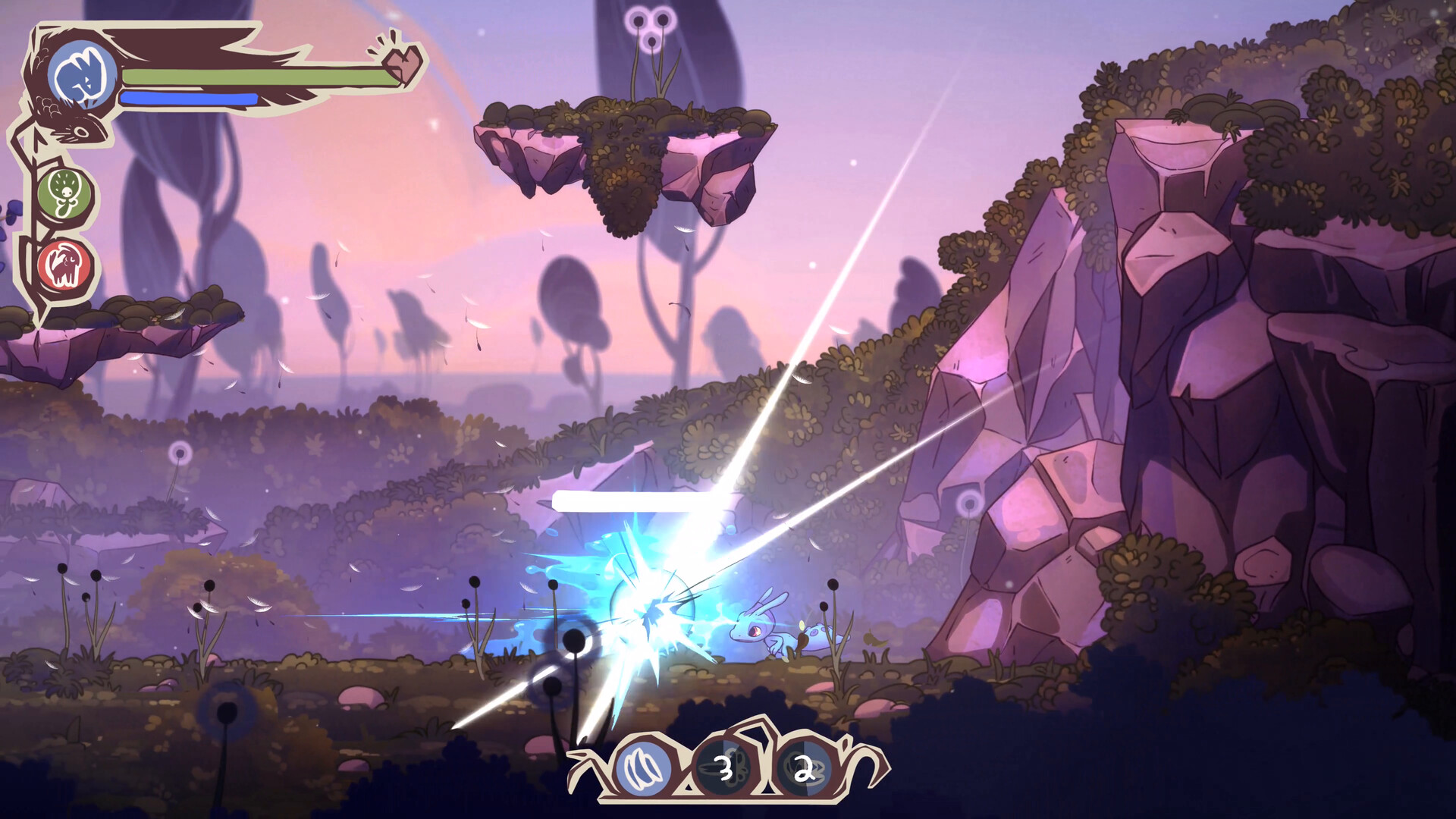
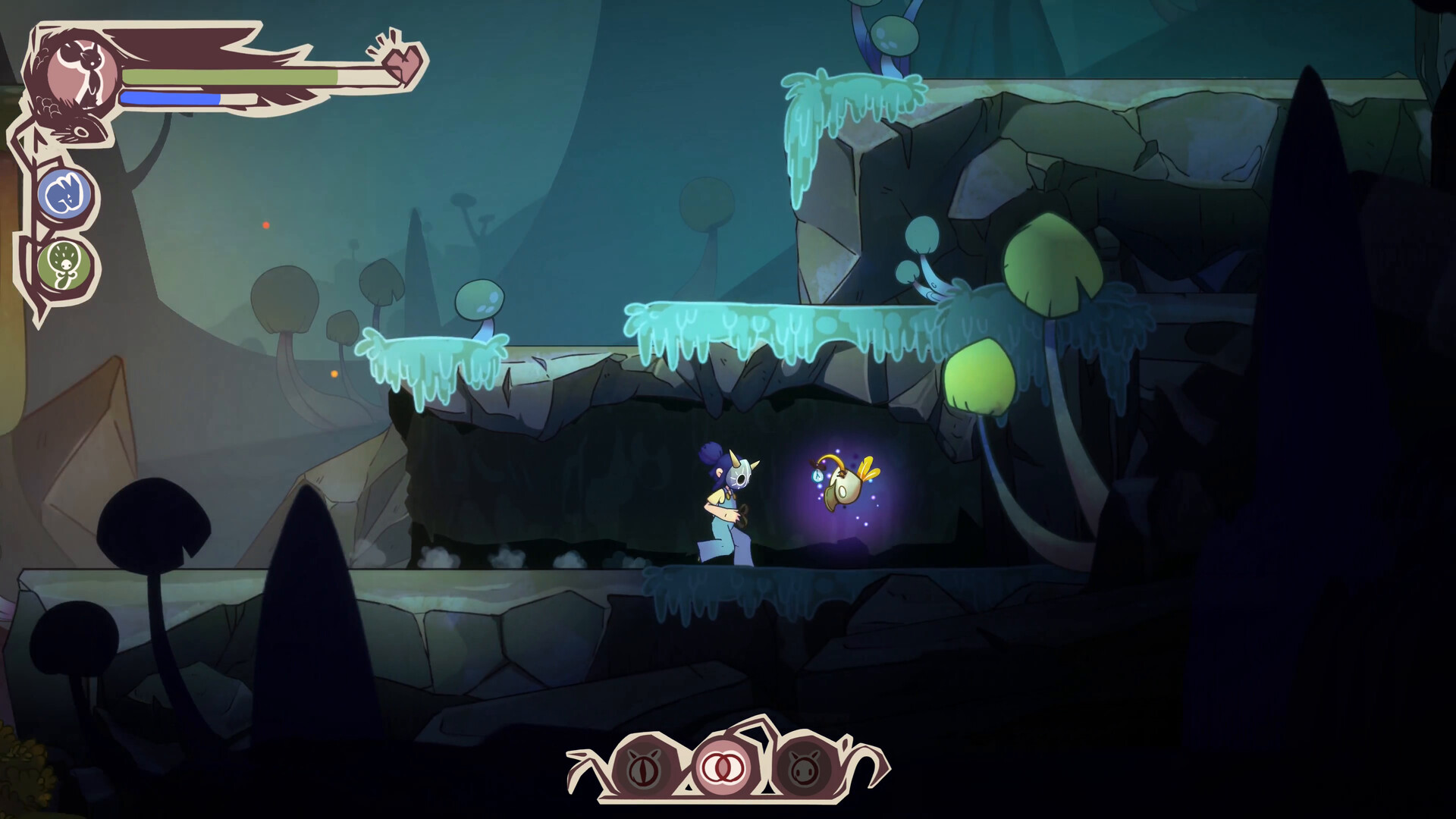
Monshifter is a single player action-adventure monster tamer from Oriol Cosp Games, a solo developer working out of Catalonia. You play a human who bonds with the monsters roaming a wounded open world, and the bond works both ways: once a monster accepts you, you shapeshift into its form at will and use its abilities to fight, move, and solve the world's obstacles. The hook is that your roster is not a party of fighters waiting on a bench. Each form is a different way for your own body to exist in the world.
The design pulls from two genres the developer names outright. From metroidvanias like Hollow Knight and Blasphemous it takes dodge-and-punish combat, ability gated exploration, and hidden treasure off the main path. From creature collectors like Monster Sanctuary and Cassette Beasts it takes taming, form progression, and build customization. The difference from both: instead of commanding a creature, you become it, so every fight is a question of which body you currently wear.
The story has real stakes behind the cozy creature-collecting surface. You play a key role in a three way conflict between human progress, monster exploitation, and ecosystem stability. Ruined cities and wild landscapes tell that story without cutscenes. The developer cites local Catalan landscapes and culture as a direct visual inspiration, which gives the world a look you will not find in the usual fantasy checklist.
| Field | Detail |
|---|---|
| Genre | Action adventure / metroidvania / creature collector |
| Developer | Oriol Cosp Games |
| Publisher | Oriol Cosp Games (self published) |
| Platforms | Windows, macOS, Linux (Steam) |
| Price | TBA (not yet announced) |
| Players | Single player |
| Release | To be announced (wishlist page live) |
| Controller | Full support, gamepad recommended, keyboard-only option available |
| Languages | 12 at launch, including English, Japanese, Simplified Chinese, Catalan |
| Accessibility | Camera Comfort, Custom Volume Controls, Playable without Timed Input |
| Cloud saves | Steam Cloud + Family Sharing supported |
The Steam achievements list is already wired in and the store page promises a world you can cross by many routes. Treat the current build as pre-release: everything below comes from the developer's own feature breakdown on the store page, so expect numbers to shift before launch.
Getting Started: Your First Hours (Planned Progression)
The game is not out yet, so this section maps the opening loop the developer has confirmed, in the order new players will meet it.
- Learn your human body first. Your base form is the weakest thing in the world and that is the point. The opening stretch teaches dodge timing and enemy pattern reading without a monster's powers to lean on, so respect it. Every skill you build here transfers to every form you unlock later.
- Bond with your first monster before pushing deep. Bonds form by meeting monsters in the world and building trust with them. Until you have a form with a movement ability, exploration stalls fast. Early monsters exist to unlock early paths; grab one before chasing treasures.
- Swap forms to match the obstacle, not the enemy. A blocked path is a puzzle about which body solves it: something that flies, something that breaks, something that squeezes. Combat forcing a form swap mid-fight is the intended rhythm. Resist settling on one favorite.
- Chain abilities instead of mashing. The combat system rewards timing and creativity: dodge through attacks, read the pattern, chain your current form's abilities into combos. Button mashing against an enemy you have not read is the fastest way to lose a form's stamina pool for nothing.
- Take the odd side path. The developer states there are many ways to reach any destination and hidden treasures reward the curious. Ruined cities hide buried secrets. If a ledge looks like it might be reachable in some form you have not met yet, remember it and come back.
- Revisit old areas after every new bond. New monster forms open new paths, which is textbook metroidvania structure. The route you could not open an hour ago is probably the route to your next form.
Beginner Mistakes to Avoid
| Mistake | Why It Hurts | Fix |
|---|---|---|
| Treating it like a turn-based tamer | Monsters do not fight for you; your body becomes them. Keeping distance and waiting does nothing. | Engage with action rules: dodge, read, punish |
| Ignoring dodge i-frames | Combat rewards timing. Getting clipped by attacks you could have dodged through drains health you need for pattern learning | Practice dodging into attacks, not away |
| Hoarding one strongest form | Obstacles gate on specific abilities. A maxed combat form cannot fly | Rotate forms per obstacle; keep bonds broad |
| Skipping the story beats | The human progress vs ecosystem conflict explains why regions differ. Rushing past it leaves you optimizing in a world you do not understand | Talk, look, read the ruins |
| Fighting every enemy head on | Pattern knowledge is the real progression. Dying to the same enemy twice means you have not read it yet | Observe one full attack cycle before committing |
| Missing accessibility settings | The game ships with Playable without Timed Input and Custom Volume Controls. Playing through friction you could toggle away is wasted comfort | Check settings before the first boss |
Core Mechanics Deep Dive
Shapeshift Bonding
The bond is the core system. Monsters you meet across the world become part of you, which means your unlock list is your character sheet. Each species brings its own set of abilities, and using them is the only way your human body interacts with the world beyond the basics. The developer frames this as the difference from other creature collectors: beasts in those games fight independently; the beasts of Monshifter give your character their power. Practically, a new bond is simultaneously a combat option, a traversal key, and a story beat, since every monster you bond with deepens the ecosystem theme.
Skill-Based Combat
Fights reward timing, creativity, and enemy knowledge. You dodge through attacks rather than blocking them, you read patterns before committing, and you chain the current form's abilities into combos. The developer's line is that the more forms you master, the more expressive your fighting style becomes, which sets combat up as a style system rather than a stat race. Expect the classic metroidvania loop: a foe that walls you early becomes trivial once you internalize its tells, and the fun is in building a combo route across two or three forms rather than grinding numbers.
Open 2D World and Ability Gating
The world is a single open 2D map of ruined cities and wild landscapes rather than a chain of levels. The developer confirms many ways to reach your destination, which makes Monshifter less linear than most metroidvanias. New monster forms open new paths, so ability gates are keyed to your bonds, and hidden treasures plus buried secrets reward the curious. The efficient habit: after each new bond, redraw your mental map of everywhere you were blocked.
Build Customization
Each transformation is customizable in two layers. You select which abilities the form carries, and you equip items that grant passive bonuses. That gives you two knobs per form: what it can do, and what it passively boosts. A form you use for traversal can be specced for movement, while the same species in a combat slot can carry damage passives. This is where Monshifter's collector side pays off: two players with the same monster roster can run meaningfully different kits.
Story With Stakes
The narrative places you inside a conflict triangle: human progress, monster exploitation, ecosystem stability. You are not a bystander collecting badges; the bonds you form are themselves a position in that conflict. The developer draws visual inspiration from real Catalan landscapes and culture, which shows up as region identity rather than generic biomes. Story delivery leans on the world itself: ruined cities and wild spaces carry the history.
Advanced Tips (What Masters Will Do Differently)
The Rotation Habit. Because every species has its own spell set, the strongest players will think in rotations, not characters. Enter a fight in a form whose opener is safe, swap mid-combo to a form whose abilities chain from that opener, and keep a third form for the escape or the finisher. The build screen supports this by letting you pre-select each form's abilities, so a rotation is something you design at the menu, not improvise under pressure.
Traversal-First Unlock Order. Open world routing rewards movement abilities over combat power early. The player who bonds the flier or the climber first opens treasure routes the combat specialist cannot reach, and hidden treasures fund the item passives that later make combat forms stronger anyway. When in doubt, bond for movement.
Passive Economy Stacking. Equipped items grant passive bonuses per transformation. Treat passives as a per-form economy: stack movement passives on travel forms, damage or stamina passives on fighting forms. The trap is spreading passives evenly; the payoff is specializing each form for the job you actually use it for.
Pattern Journaling for Bosses. The combat line is dodge through attacks, read patterns, chain abilities. Against anything with a health bar, the efficient approach is to spend the first cycle purely watching: one full pattern, no attacks. That single observation is worth more than three retries of swinging blindly, and it is how the speed of your kills will actually improve.
System Requirements and Platforms
The store page lists deliberately modest minimum specs: any SSE2-capable CPU, 1 GB of RAM, and 1 GB of storage on Windows 7 SP1 or newer, with macOS and Linux builds planned. That profile fits a 2D game and signals it will run on very old machines and handhelds. Full controller support is confirmed with a gamepad recommended, and a keyboard-only option exists for players who prefer it. Wishlist the Steam page to catch the release date announcement and launch pricing, which have not been published yet.
FAQ
Is Monshifter like Pokémon? Only in the collecting layer. You do not command monsters; you shapeshift into them and use their abilities yourself. The developer cites Monster Sanctuary and Cassette Beasts as closer influences, and the combat is real-time action, not turn-based.
Is it a metroidvania? Yes, one of its two pillars. Ability gated exploration across an open 2D world with many routes, in the lineage of Hollow Knight, Blasphemous, Nine Sols, the Ori games, and Tunic.
When does Monshifter release? To be announced. The Steam page is live for wishlists with no date and no price published yet.
How much will it cost? Not announced. Pricing will appear on the Steam page closer to launch.
What platforms does it support? Windows, macOS, and Linux via Steam, with Steam Cloud saves and Family Sharing.
Does it have controller support? Full controller support, gamepad recommended by the developers, with a keyboard-only option for those who want it.
Does it have achievements? Yes, Steam Achievements are listed, along with Steam Cloud.
Is there a demo? No demo is on the store page as of this guide's last review. Watch the page or the developer's channels for a playtest.
What languages does it support? Twelve at launch, including English, French, German, Spanish, Japanese, Korean, Polish, Portuguese-Brazil, Russian, Simplified and Traditional Chinese, and Catalan.
Is it single player? Yes, single player only. There is no multiplayer or co-op listed.
Can you play without fast reactions? The accessibility flags include Playable without Timed Input and Camera Comfort, so the game is being built to accommodate players who need input timing relaxed.
Who should skip it? Players who want competitive multiplayer, turn-based monster battles, or a game they can finish in a weekend session. This is a solo exploration game with a story that takes its time.
Final Verdict
Monshifter is the rare creature collector where the collection is also your moveset, and the rare metroidvania where the keys are alive. Wishlist it if Hollow Knight-style exploration, Cassette Beasts-style monster rosters, or a Catalan-flavored world with an ecological conscience sounds like your week. Skip it only if you need multiplayer or turn-based battles; this one wants your full attention on its own terms. The solo-developer pedigree plus the accessibility settings make it one of the more promising indie action adventures on the upcoming slate.
Last reviewed by Game How To Editorial. We play each game, verify controls against official sources, and update guides when game mechanics change.
Screenshots