Official game
Play Hollow Home
This game is hosted by Steam. Continue to the official page to play or download it.
Wishlist on SteamWhat Is Hollow Home?
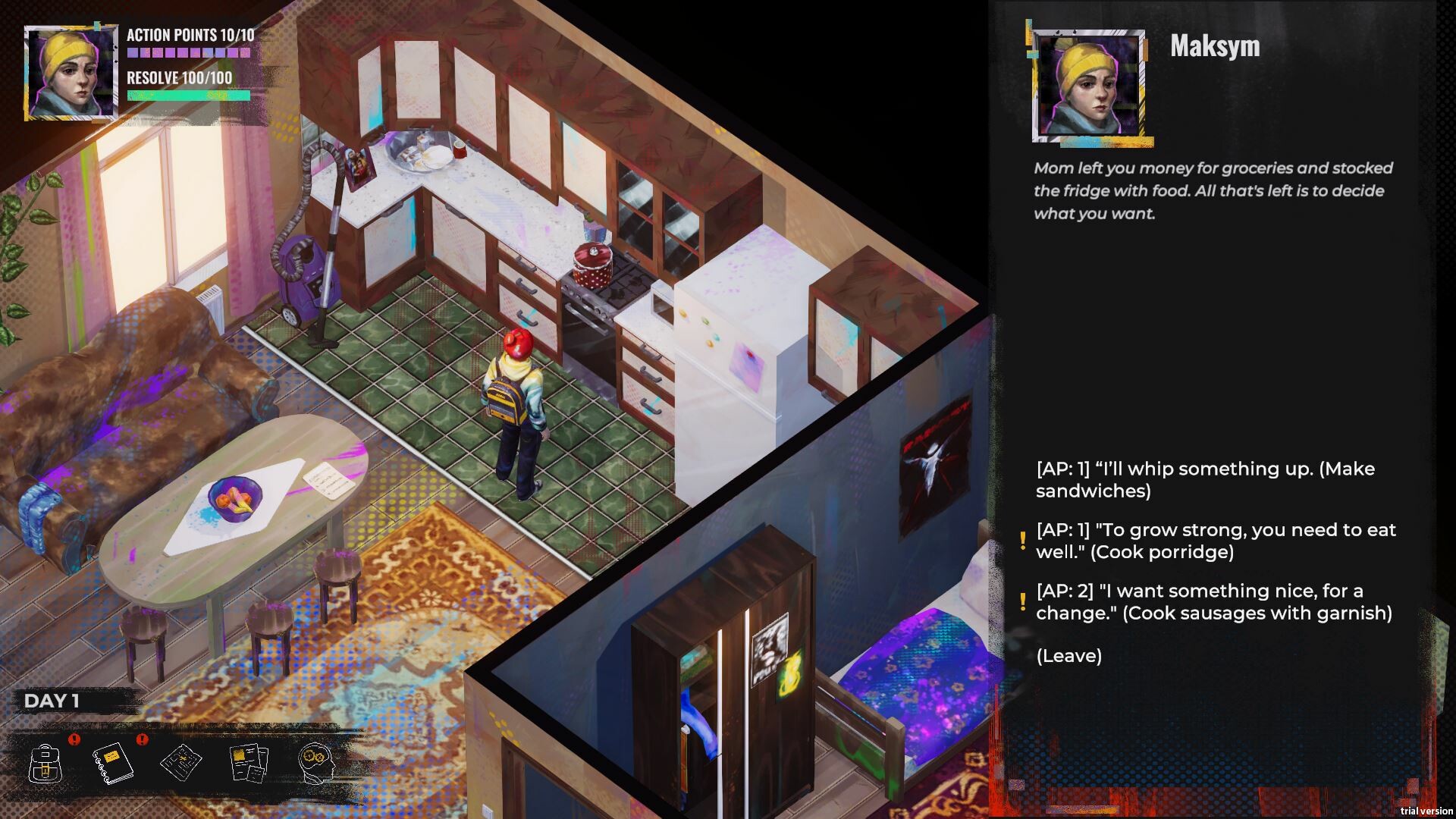
Hollow Home is a narrative survival RPG with no combat, developed by Twigames in Kyiv and published by Crunchy Leaf Games. It launches January 27, 2027 on PC and Xbox. You play Maksym, a 14-year-old boy who wakes up one morning to find his country invaded and his city under siege. There are no weapons and no combat system. Survival means dialogue, resource triage, and deciding who deserves your limited hours each day.
The game draws directly on the 2022 invasion of Ukraine. Twigames is a Kyiv team living through the war it depicts, and the studio partnered with Ukrainian Radio to include real archive recordings from the first days of the full-scale invasion. A demo has been available on Steam since August 2024, the Kickstarter closed at 140% funded, and the game collected awards at Games Gathering 2024, Nordic Game 2024, and Indie Cup Ukraine 2023 before most players had heard of it.
| Field | Detail |
|---|---|
| Genre | Narrative survival RPG, choice-driven, no combat |
| Developer | Twigames Inc. (Kyiv, Ukraine) |
| Publisher | Crunchy Leaf Games |
| Platforms | Windows, Xbox One, Xbox Series X |
| Release | January 27, 2027 |
| Price | Not yet listed |
| Players | Single-player |
| Demo | Available on Steam (App 3142360) |
| Endings | Multiple, shaped by who you reached and who you did not |
| Foundation | 140% funded on Kickstarter |
Getting Started: The Core Loop
Each in-game day gives Maksym a fixed budget of time and energy. The city offers more demands than any day can cover. A neighbor needs medicine carried across a closed district. A friend has not answered in two days. The shelter needs water. Your own Resolve is fraying. Every morning you pick what matters, and the evening tells you what your choices cost.
Three rules govern the loop:
- Actions are exclusive. Crossing town to help one person means you are not helping another. The game never offers a catch-up errand; time spent is time gone.
- Consequences mature slowly. A neglected character does not vanish the next day. They fade over a week of in-game time, which makes it easy to believe you have time you do not have.
- The city shrinks regardless of what you do. Districts close on their own schedule. Shelled streets cut routes you were saving for later. The map tightening is the timer under every decision.
Managing Resolve
Resolve is Maksym's psychological stamina. It drains from danger, grief, overwork, and hunger. It recovers from safety, small comforts, and keeping promises. The Steam page calls it the pressure gauge of the whole game, and the demo shows why:
- Below half, dialogue options start narrowing. Maksym hesitates, and the game removes the braver choices.
- Near empty, the day shortens. He will not cross the city, and characters who needed him that day remember.
- Certain story beats check Resolve directly. A specific late-demo conversation plays differently at high Resolve than at low, with different outcomes available.
The practical discipline: spend one action slot every two days on something that restores Resolve. Reading in the shelter, a meal cooked properly, keeping a small promise to a friend. Players who treat Resolve as waste motion run out of brave choices exactly when the story needs them.
The City: Districts, Routes, and the Shrinking Map
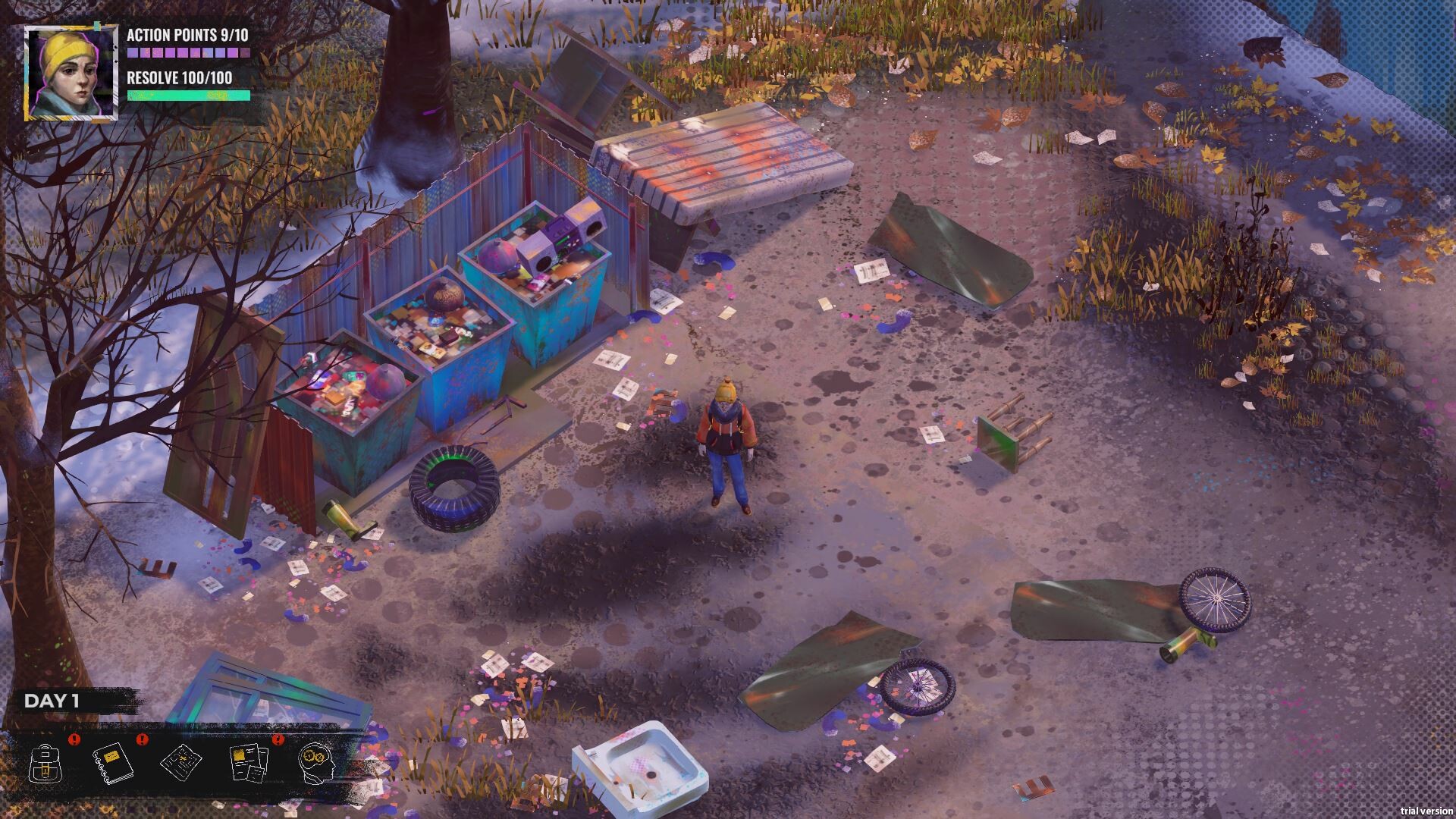
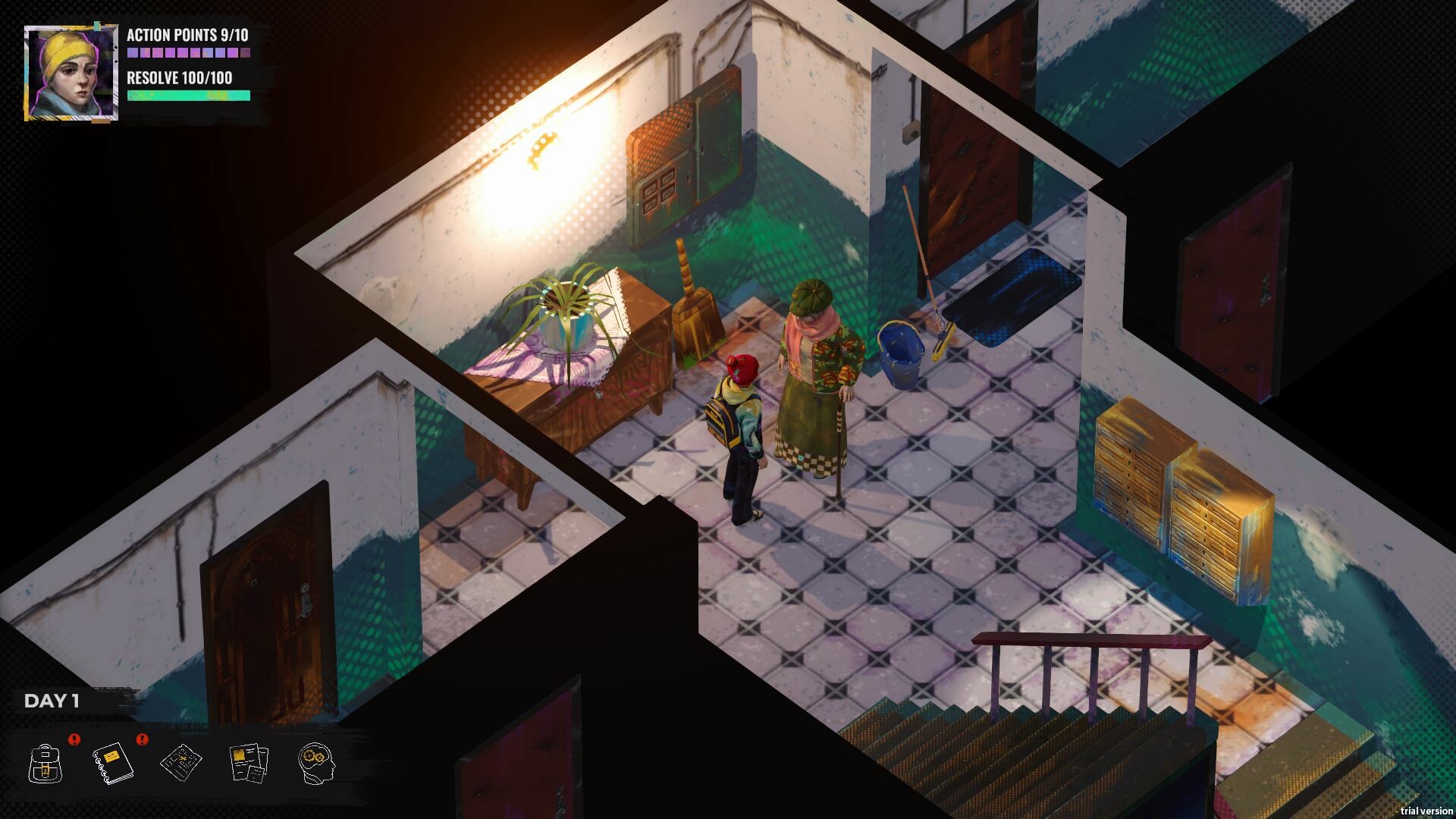
The city is an isometric map of several districts, each changing daily. The demo covers three; the full game expands the network. Districts close permanently as the siege tightens, and closed means closed: characters inside them leave the story or vanish into uncertainty.
How to plan around the contraction:
- Learn the two main connectors early. Most districts link through a pair of streets. When shelling closes one, the other becomes a bottleneck with lines and delays. Know both paths before you need them.
- Do not hoard errands for future trips. The district you plan to visit in four days may not exist in four days. When a character needs something and the district is open, the efficient move is usually going now.
- Listen to the radio. Ukrainian Radio's archive recordings are not just atmosphere. Broadcast content hints at which districts are about to worsen, and the game rewards players who treat the radio as intelligence rather than wallpaper.
- Familiar faces vanishing is the real loss condition. The game tracks relationships, not quests. A closed district with all its people already evacuated reads very differently from one where you left someone behind.
Dialogue and Choices: How Branching Actually Works
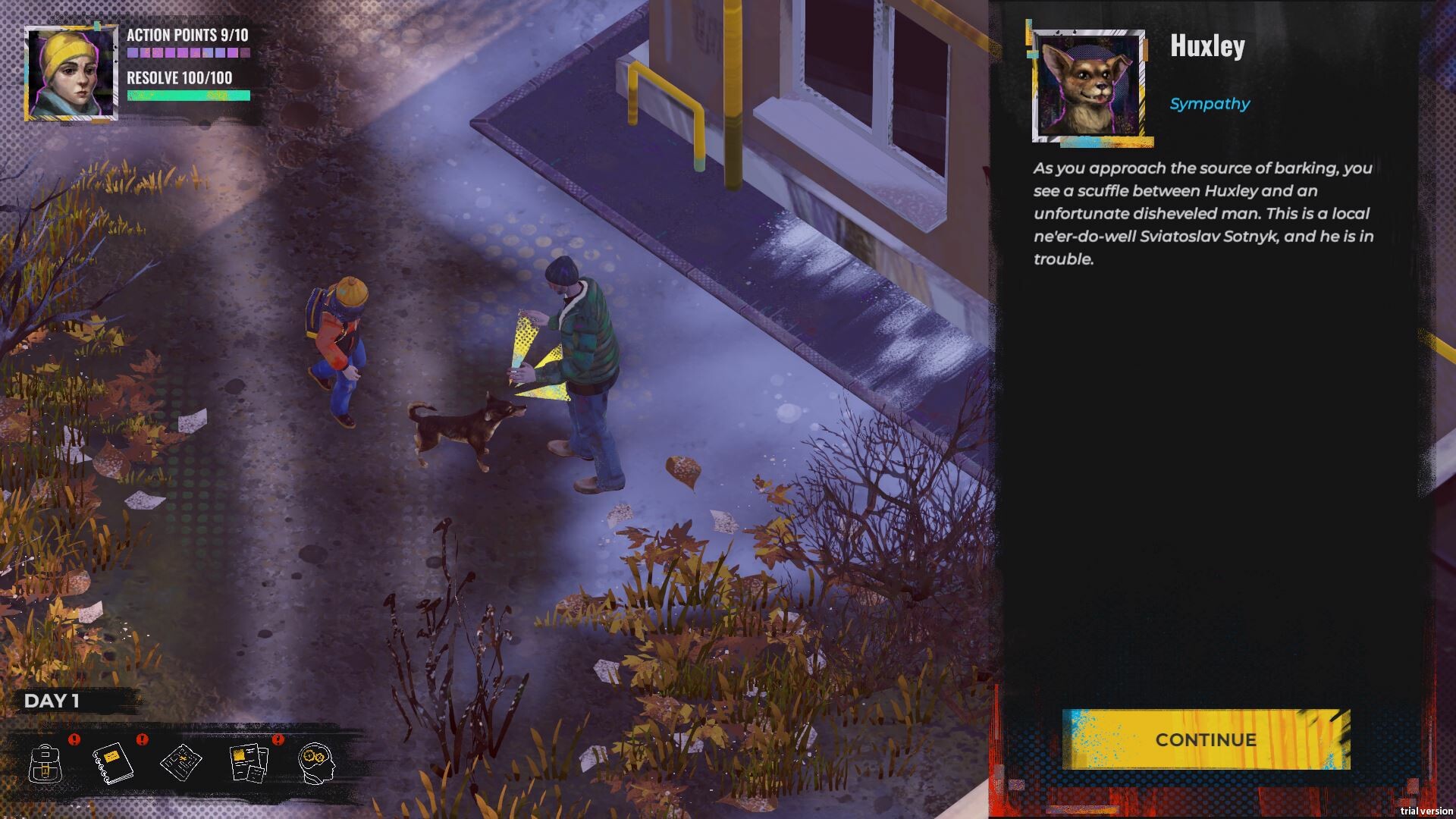
Conversations carry the game. Most dialogue trees are short, but they check state: who you helped, what you promised, whether you kept it, and how much Resolve Maksym has.
- Promises are tracked silently. The game does not flash a quest log entry when you tell someone you will bring water tomorrow. It remembers anyway.
- Kindness compounds. Characters you helped early open options later: safer routes, extra supplies, warnings about closures. The demo's most useful shortcuts all come from relationships, not exploration.
- Some choices are only visible at high Resolve. The brave dialogue options, the ones that change a scene's direction, gray out when Maksym is running on empty. Resolve management is conversation management.
- You will miss things. The design assumes it. Multiple endings exist because no player reaches everyone. A missed rescue is not a failure state; it is an ending ingredient.
The Demo: What It Covers and How to Use It
The demo (App 3142360) has been updated several times since August 2024, most recently alongside the release date announcement. It covers the invasion's first days: Maksym waking to the attack, the first shelter moves, the initial character web, and the first district closure.
Playing the demo before launch does three things. It teaches the daily budget rhythm so the full game's first week does not overwhelm you. It introduces several characters who carry into the main story. And it demonstrates the Resolve system in a low-stakes context where you can experiment with neglect and see the consequences without committing a full save.
The demo has no user reviews yet and sits outside the main store listing, but Crunchy Leaf Games has kept it updated through the development cycle, including a minor update after the January date announcement.
Awards and Recognition: The Track Record
Before writing a wishlist off as hype, the game's competition history is unusually strong for a pre-release indie:
| Event | Result |
|---|---|
| Games Gathering 2024 | Best Conference Game & Game Star (Winner) |
| Nordic Game 2024 | Pitch Battle (Winner) |
| Indie Cup Ukraine 2023 | Most Promising Game & Critics' Choice (Winner) |
| GDWC 2023 | Studio Award (Nominee) |
All four results came from jury and festival contexts, not popularity contests. Combined with the 140% Kickstarter and the Ukrainian Radio partnership, the trajectory is credible: this is a small game with unusually strong institutional backing for its size.
Settings and Accessibility
The store page lists full controller support including DualShock 4 and DualSense via the Steam Input API, Steam Cloud, and Family Sharing. As a dialogue-driven isometric game, its accessibility profile is strong: no twitch inputs, no timed combat, reading pace under player control. The Xbox versions mean Game Pass subscribers may get access at launch depending on distribution deals, though nothing is announced.
Is Hollow Home Worth Playing?
For players who want the genre it sits in, it is the most distinctive entry since This War of Mine. The distinction is perspective: This War of Mine spread its weight across a household of adults making utilitarian choices. Hollow Home narrows to one child's eye level, where the utilitarian math of siege survival runs through a 14-year-old's relationships, promises, and limited reach. The no-combat design is total: not a simplified combat, but none.
The honest caveats are scope and pace. This is a narrative game with an estimated runtime in the hours, not weeks, and players who need mechanical depth will find the systems thin by design. It is a game about weighing choices, and it prices everything in human terms rather than loot terms.
Wishlist it on Steam if the premise lands. January 27, 2027 is the date, the demo costs nothing, and the demo's final scene is a better sales pitch than any trailer.
Tips and Tricks: Common Beginner Mistakes
| Mistake | Why it hurts | The fix |
|---|---|---|
| Skipping Resolve recovery days | Brave dialogue options lock out late | One restorative action every two days |
| Saving errands for future trips | Districts close on their own schedule | Go when the district is open |
| Treating promises as flavor | The game tracks and surfaces them | Only promise what you will do that week |
| Ignoring the radio | Closure warnings arrive through broadcasts | Listen every morning, plan around reports |
| Trying to help everyone | The design makes it impossible | Choose your people and accept the cost |
| Rushing dialogue | Branch checks reference earlier details | Read; the state checks are in the words |
FAQ
Is there really no combat? None. Survival is dialogue, planning, and Resolve. The store page leads with it: no weapons, no combat, just choices.
How long is the game? Not officially stated. The demo runs a few hours; the full game covers a longer siege arc. Expect a narrative game's length rather than a survival game's.
Is it based on real events? Yes. Twigames is based in Kyiv and built the game from real events of the 2022 invasion, including real Ukrainian Radio archive recordings from the invasion's first days.
When does it release? January 27, 2027, on Steam and Xbox. The date was announced in October 2026 after a delay from a earlier target.
Is the demo save transferable? No transfer has been announced. Play the demo to learn the systems and meet characters, not to bank progress.
Multiple endings? Yes. Endings reflect who you reached and who you did not, shaped across the whole run rather than a final choice.
Is it on Game Pass? Not announced. Xbox One and Xbox Series X|S versions are confirmed for the January launch.
Screenshots