Official game
Play Fields of Aaru
This game is hosted by Steam. Continue to the official page to play or download it.
Wishlist on SteamOverview
Fields of Aaru is a cozy open-world life sim from Zymartu Games, a two-person studio in Sacramento made up of Marcel and Thu, a married team of former Google and Amazon software engineers who spent three years building it. The entire game takes place in Aaru, the ancient Egyptian afterlife: the Field of Reeds where the justified dead farmed eternally along an idealized Nile. You start a second life there. Build a home on the river, help a village of the blessed dead get back on its feet, farm, fish, craft with genuinely ancient technology, then walk into the desert to find oases, ruins, pyramids, and tombs.
Three things make this more than a Stardew reskin. First, the cultural systems are the mechanics: digging irrigation canals through real terrain, firing clay, shaping stone, repairing shadufs. Irrigation was the technology that made Egypt possible, and here it is a hands-on terrain-shaping verb rather than a menu toggle. Second, the deity system: offerings at shrines earn blessings from named gods with distinct domains, so divine favor is a strategic specialization choice. Third, the desert is a real expedition layer with survival pressure: you carry water, you look for shade, and Sekhmet's blessing exists because the sands hold dangers worth being protected from. A free Steam demo is available and was substantially updated in October 2026 with land shaping, expanded character creation, autosaves, and seven languages.
| Detail | Info |
|---|---|
| Developer / Publisher | Zymartu Games (self-published) |
| Genre | Cozy open-world life sim, farming, light RPG |
| Release | Coming soon (targeting Q4 2026 window per previews; demo live now) |
| Platforms | Windows PC (Steam) |
| Players | Single-player |
| Setting | Aaru, the ancient Egyptian Field of Reeds |
| Languages | English, Japanese, Simplified Chinese, French, German, Spanish, Brazilian Portuguese |
| Reveal | Summer Game Fest Women-Led Games Showcase 2026 |
Getting Started
Your first 30 minutes (and what the demo teaches)
The demo is the real tutorial, and it is free. Play it before buying anything. Within the game proper, the opening follows the genre's shape with one large difference: water is infrastructure, not weather. Work your first session in this order:
- Take the first village quests immediately. Quests are the skill system's front door. The store description ties learning the ancient crafts directly to helping villagers, which means progression flows through people, not through a shop menu.
- Plant your first field close to the water. Before you can dig canals, proximity to the Nile is your irrigation. Save the fancy distant plots for after you can move water to them.
- Fish every new water edge you find. Fishing is tied to spots "where wildlife gathers," which signals location-dependent catches. Log where you caught what.
- Gather a full toolkit's worth of raw materials before nightfall. Stone, clay, wood, fiber. The three ancient crafts all eat raw inputs, and a day of gathering funds a week of crafting.
- Repair the first broken thing the village shows you, not the prettiest one. Village restoration quests chain. The first repairs unlock the NPCs and shops the later ones need.
Beginner mistakes to avoid
- Treating irrigation as decoration. Canals are terrain engineering. A badly dug channel is wasted labor; plan the route from the Nile to your driest field before the first shovel hits sand.
- Pushing into the deep desert unprepared. The store page is explicit: carry water and look for shade. Desert expeditions without supplies end early.
- Ignoring one god entirely. The three named gods cover craft, crops, and combat. Ignoring any one domain leaves a permanent hole: unbuffed tools, slow harvests, or dangerous tombs.
- Selling rare tomb materials. What you bring back from the desert "changes what you can craft and build." Tomb loot is usually an input, not income.
- Grinding one activity. The loop is designed to interlock: farm funds offerings, offerings fund powers, powers speed the farm. Single-axis play is the slow way through.
Core Mechanics Explained
Irrigation and land shaping
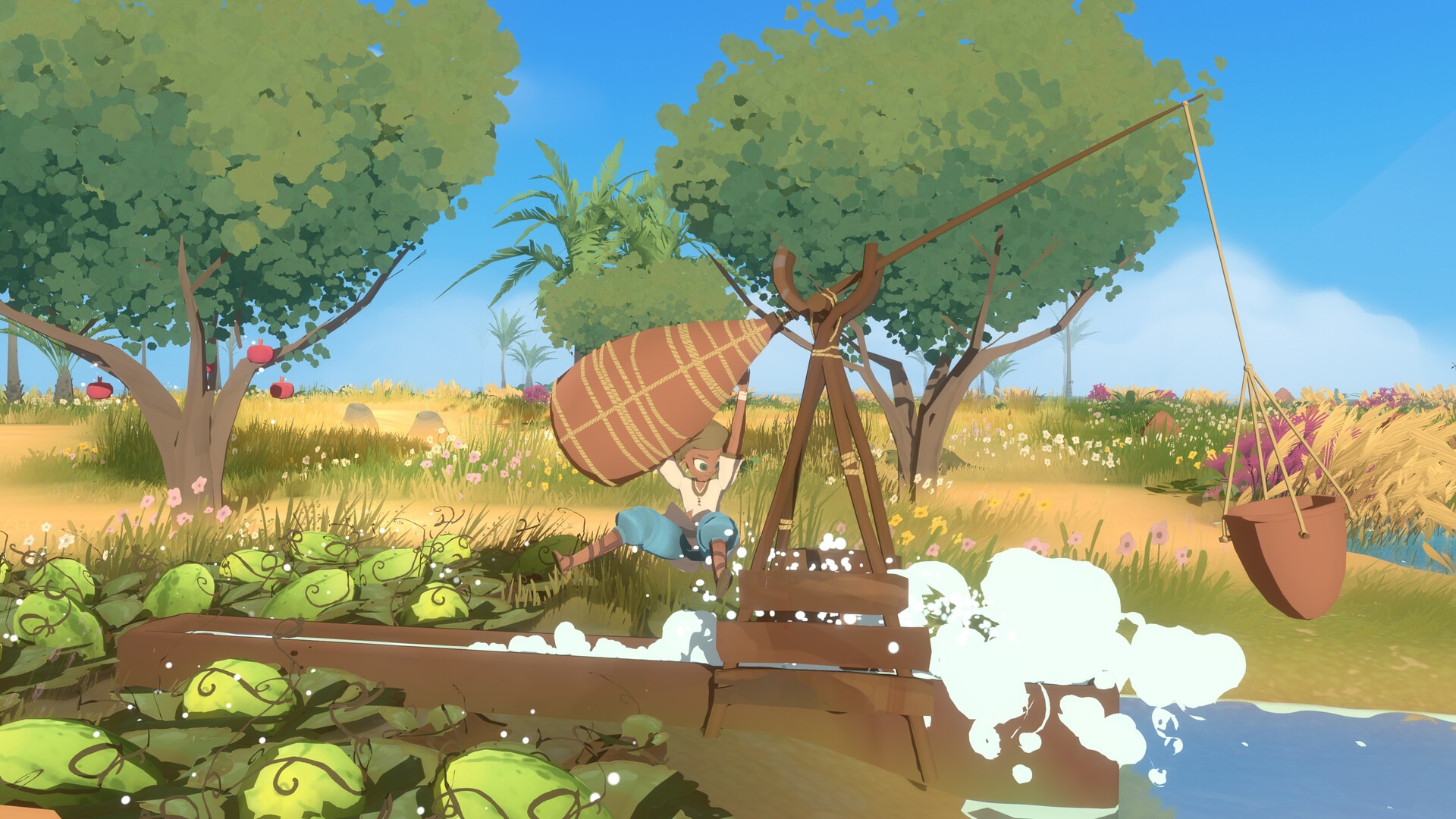
The headline system. You dig channels through the terrain and guide the Nile's water toward dry fields, turning sand green. The demo's irrigation progression also includes repairing a shaduf, the counterweighted lever Egyptians used to lift water into channels for millennia.
How to think about it: water flows downhill from the river, and your job is drawing the path. Practical rules:
- Design the network before digging. One main channel branching into field laterals beats a spiderweb of exploratory ditches. You can reshape terrain, but every block you move is time.
- Irrigate to expand, not to decorate. New watered fields are how you unlock new crops and scale harvests. The green radius of your farm is effectively your progression bar.
- The shaduf extends your reach. Where gravity alone cannot pull the Nile far enough, the repaired shaduf lifts water to the next tier of land. Expect higher ground to become farmable only after that repair.
- Terrain shaping is permanent infrastructure. Unlike crops, canals persist. Early investment in a clean channel network pays out for the entire save.
The three ancient crafts
Progression is themed as rediscovering lost technology, and the three confirmed crafts map onto real Egyptian industry:
| Craft | Real-world basis | What it feeds |
|---|---|---|
| Stone shaping | The stoneworking tradition behind Egypt's monuments | Construction, village repairs, ruin restoration |
| Clay firing | Egyptian pottery: storage jars, vessels, ushabti | Tools, containers, tradeable goods |
| Irrigation | Basin irrigation, the foundation of Egyptian agriculture | Field expansion, crop unlocks |
The framing matters for how you prioritize: quests teach these crafts, so the village quest board is functionally your skill tree. Chase repairs and the tech tree fills in behind you.
The deity blessing system
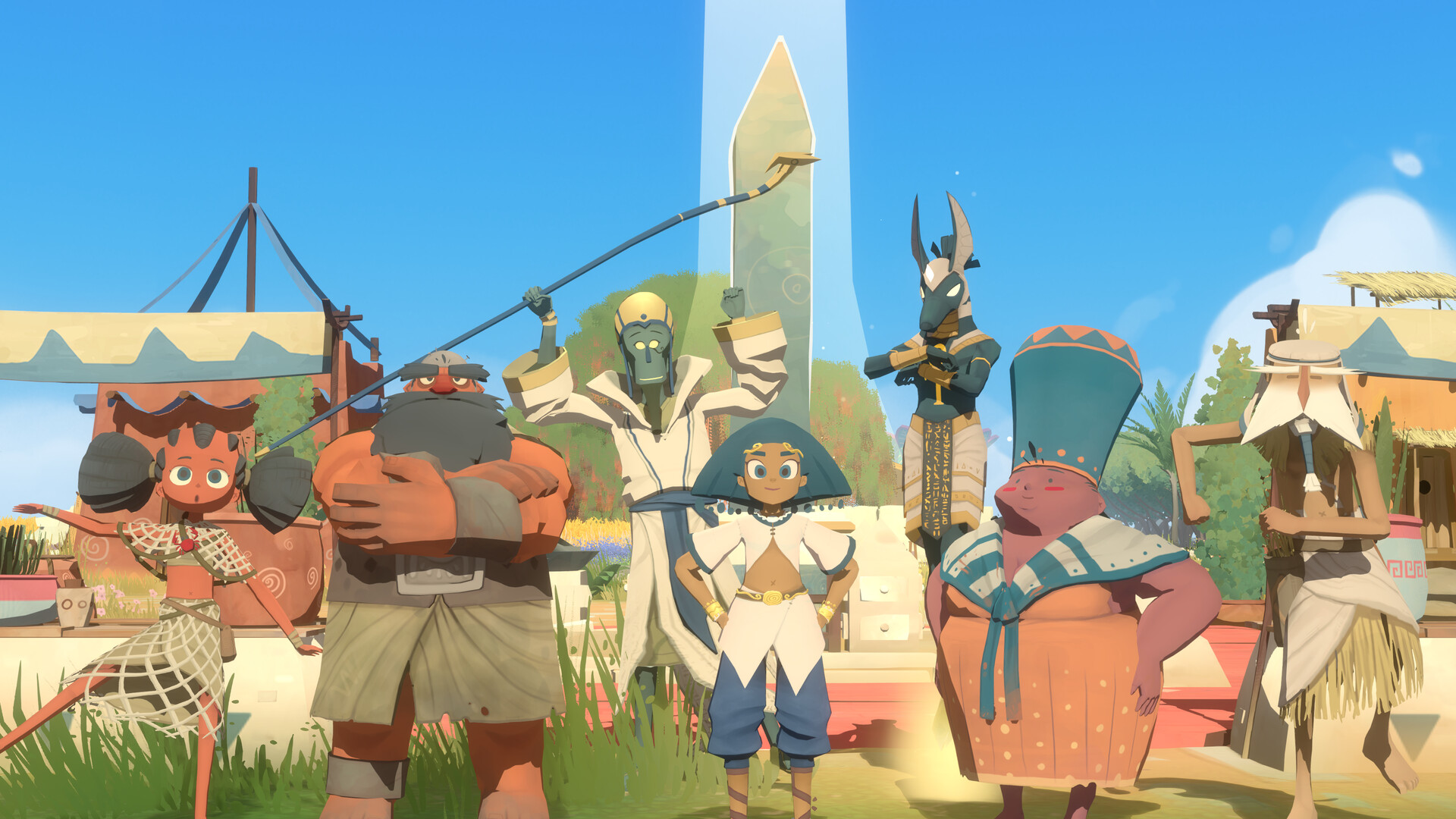
Shrines are scattered across the world. Bring offerings, earn favor, unlock powers. Three gods are named on the store page, and each covers a different play pillar:
| God | Domain | Blessing effect | Build around it if you... |
|---|---|---|---|
| Ptah | Craft and creation | Empowers tools and craftwork | Love building, crafting, and village restoration |
| Hapi | The Nile's flood and fertility | Speeds crop growth, richer harvests | Run the big farm economy |
| Sekhmet | Protection and war | Grants protection and combat prowess for the desert | Expedition deep into tombs and dunes |
This is a real specialization system, not set dressing. Offerings are finite, so decide which divine relationship you are courting this week. The historically minded note: ancient Egyptians practiced exactly this strategic polytheism, making offerings to whichever god governed the help they needed. The game recreates practical religion rather than abstract spirituality, which means your offering schedule is a build decision.
Sample offering rotation for a balanced farm: Hapi during planting season, Ptah while a construction project is open, Sekhmet the week you plan a tomb run. Rotate by calendar, not by mood.
Obelisks and regional travel
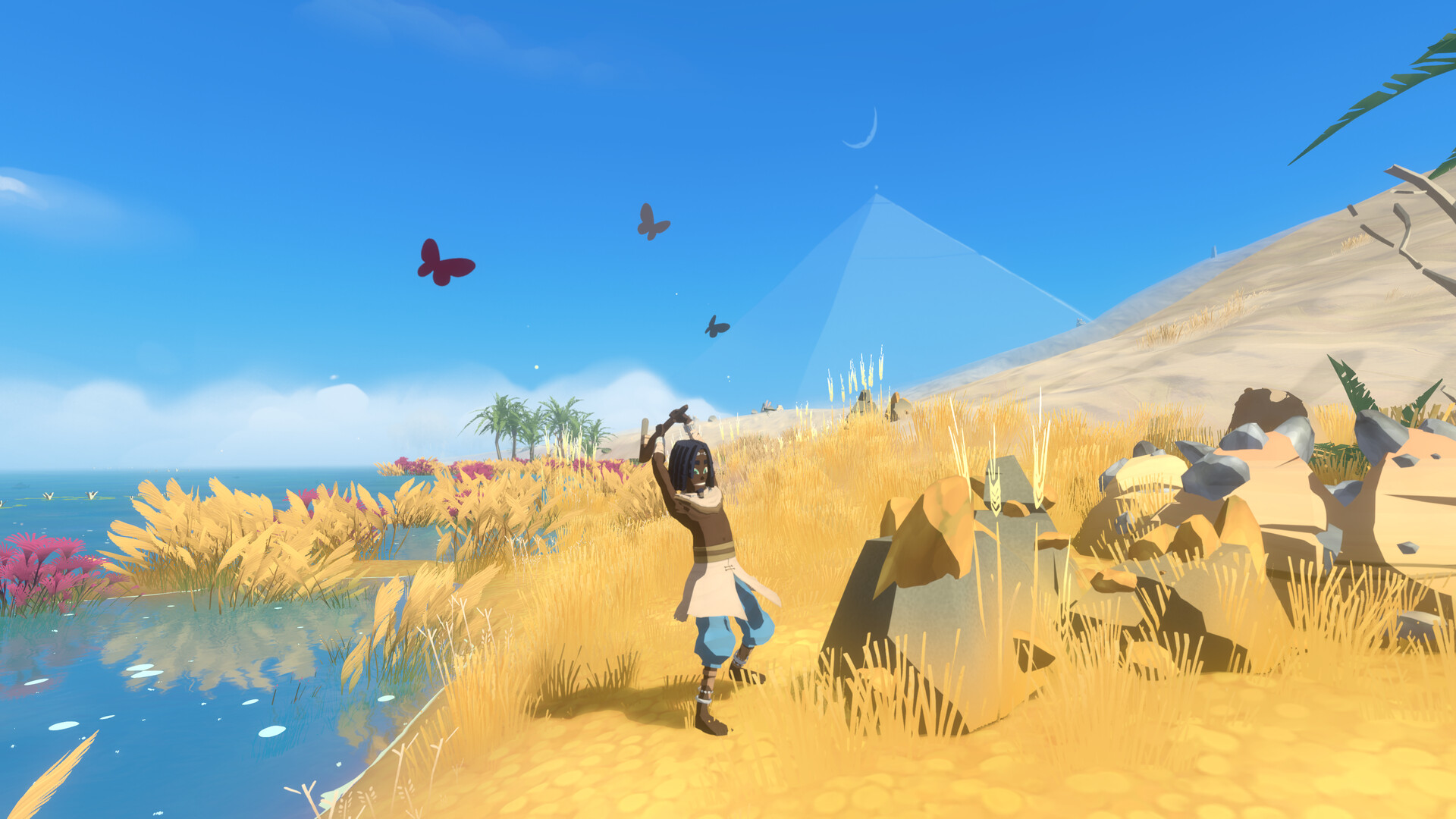
Restoring ancient obelisks awakens their power and creates travel links between distant regions. This is the game's fast-travel and gating layer combined: the obelisk you restore is the region you can reach quickly. Cross the Nile and the sands turn white and pyramids rise on the horizon; obelisks are what make those distances livable.
Priorities: restore every obelisk near the village first, because local convenience compounds daily. Treat deep-desert obelisks as expedition goals: plan the crossing, survive it, restore the obelisk, and the region opens permanently.
Desert expeditions
Beyond the Nile's reach, the rules change. The store page gives you the survival brief in two sentences: carry water and look for shade. Oases are the natural waypoints and likely the water refill points that define expedition range. Ruins and tombs hold rare materials and lost knowledge, and that knowledge feeds back into village crafting.
Expedition planning template:
1. Destination:   nearest unexplored oasis / ruin / tomb
2. Supplies:      water for the round trip, food, tools in repair
3. Blessing:      Sekhmet active if the route passes danger
4. Waypoints:     route anchored on known oases, one new target per trip
5. Return goal:   fill the pack with rare materials, never leave early empty-handed
One new target per trip is the rule. Chain exploration trips that push the frontier one oasis at a time, and every tomb gets closer.
Progression Strategy
Phase 1: Establish the homestead
Home built, first fields planted riverside, fishing spots logged, village quests flowing. Your economy at this stage is crops and fish. Do not spend on decoration; spend on tools and repairs.
Phase 2: Water engineer
The irrigation arc. Dig your main canal, repair the shaduf, and push your green radius outward. New fields mean new crops, and new crops mean the offering economy opens up. This phase converts the farm from subsistence to industry.
Phase 3: Divine relations
With surpluses flowing, start the shrine circuit. Pick a primary god based on how you like to play and court them consistently. Restore the local obelisks. By the end of this phase, the village should be visibly alive: repairs done, NPCs unlocked, daily rhythm restored.
Phase 4: The frontier
Cross the Nile. The white-sand region with pyramid horizons is the mid-late game: longer expeditions, deeper tombs, rare materials that unlock the top crafting tiers, and distant obelisks that knit the whole map together. The farm keeps paying the bills while the desert supplies the meaning.
Resource priority, in order
- Tool and craft upgrades (Ptah's domain pays here)
- Canal infrastructure and the shaduf
- Village quest repairs (they unlock people and crafts)
- Offerings
- Expedition supplies
- Home decoration
Step-by-Step Strategies
1. The canal that never needs redoing. Stand at the river and at your driest field. Draw the straightest downhill path between them in your head, extend a branch to each future field plot, then dig once. A planned network takes an afternoon; an unplanned one takes three.
2. The offering economy loop. Plant a surplus field you never eat from. Its entire harvest is offering stock. A dedicated offering field turns divine favor from an occasional splurge into a standing subscription, and standing favor is what makes blessings feel permanent.
3. The oasis leapfrog. Map the route from your village to the nearest oasis. Walk it with full water, note the shade points and the wildlife spots, and make that crossing routine. Then target the next oasis from the first one, not from the village. Expedition range grows by leapfrogging anchors, never by hero marches.
4. The tomb kit. Before any tomb descent: tools repaired (Ptah's blessing on if you have it), Sekhmet's protection active, water for the trip plus reserve, and pack space kept half empty for what you find. Tombs are the rare-material pipeline, and a full pack abandoned at the entrance is the classic first-timer's loss.
5. The village snowball. Do repairs in quest-chain order rather than by proximity. Each completed chain unlocks the villager who offers the next one, and the crafts teach themselves along the way. One finished chain is worth five scattered errands.
6. The dual-economy day. Structure each in-game day as one production block and one progress block: mornings on the farm and at the fishing spots for income, afternoons on a quest, canal, or shrine. Days that do both keep the economy compounding while the story moves.
7. The obelisk opening. When a new region unlocks, find and restore its obelisk before doing anything else there. Everything else in the region gets easier with the travel point live, and the restoration itself usually teaches you the region's material language.
Advanced Tips
- Sand footprints and Nile ripples are information. The demo's detail work (footprints in sand, water that splashes when you wade) points at a world tuned to be read. Wildlife gathering spots are fishing spots; disturbed sand near ruins is a path someone once used.
- Court Hapi before planting season, not after. Blessings that speed growth pay most when they are active during the growth. Time your offering schedule to your crop calendar and the same favor goes further.
- Ptah is the quiet power god. Tool empowerment looks minor next to rich harvests and combat protection, but every activity in the game runs through tools. Craft-focused players get the largest compounding returns.
- Tomb knowledge compounds at the crafting bench. Lost knowledge from the desert changes what you can craft back home. If a new recipe appears after an expedition, the tomb was the ingredient; plan your next build around it.
- Keep one field fallow for rotation experiments. New crops arrive with new fields, and testing them on a fallow plot protects your staple income from a bad season.
- The demo is a save-file decision. Playing the demo first tells you which god's playstyle is yours before you commit a full purchase to it.
- Boats change the math. The Nile supports boat travel, and water crossings that look slow on foot are often the fast route once you are afloat. Check the river route before trekking the bank.
FAQ
When does Fields of Aaru release? No confirmed date. The Steam page says coming soon, previews in mid-2026 pointed at a Q4 2026 target, and the free demo remains available while the full game finishes.
Is there a demo? Yes, a free Steam demo, substantially updated in October 2026 with land shaping and canal digging, expanded character creation (height, build, color sliders, more hairstyles), richer visuals, autosaves, better controller navigation, and seven languages. It stays up after Steam Next Fest.
What are the gods and what do they do? Three are confirmed: Ptah empowers tools and craftwork, Hapi speeds crop growth and improves harvests, and Sekhmet grants protection and combat prowess for the desert. Each has their own set of boons earned through offerings at shrines.
Is there combat? The game is cozy first, but the desert has dangers: Sekhmet's blessings specifically grant protection and combat prowess for the sands and their threats. Expect expedition risk out there and peace along the Nile.
How does irrigation work? You dig channels through the terrain and guide the Nile's water toward dry fields, and the progression includes repairing a shaduf to lift water to higher ground. It is hands-on terrain shaping, not a menu upgrade.
Is it multiplayer? No. Single-player.
What platforms is it on? Windows PC via Steam. Mac, Linux, consoles, and official Steam Deck verification are unannounced.
Do I need to know Egyptian mythology? No. The game teaches its own references through quests and exploration. Knowing who Ptah, Hapi, and Sekhmet are just makes the blessing choices read faster.
How is it different from Stardew Valley? The setting is a real mythology rather than a generic valley, the crafts are actual ancient Egyptian technology, water management is physical terrain work, the meta-progression runs through gods and obelisks instead of town upgrades, and exploration targets tombs and pyramids instead of mines.
How much will it cost? Unlisted so far. Wishlist the game on Steam for the price and date announcement.
Who made it? Zymartu Games: Marcel and Thu, a married couple and former Google and Amazon software engineers based in Sacramento, who developed the game over three years and revealed it at the Summer Game Fest Women-Led Games Showcase 2026.
Will it come to consoles? Nothing announced. The demo's controller support suggests console versions are technically plausible, but there is no confirmation yet.
Final Tips
Fields of Aaru rewards the player who builds systems instead of checking boxes. Dig the canal once and dig it right. Court one god at a time and on schedule. Let the farm pay for the desert, and let the desert pay for the farm. The village comes back to life one repaired wall at a time, the obelisks stitch the map together, and the tombs hold the knowledge that makes the whole valley sing. Carry water. Respect the shade. The afterlife is long, and it is yours to green.
Screenshots