Daily Pick
One deeply researched guide worth reading today.
A practical route through the systems that matter most, written to help new players make confident decisions quickly.
Overview
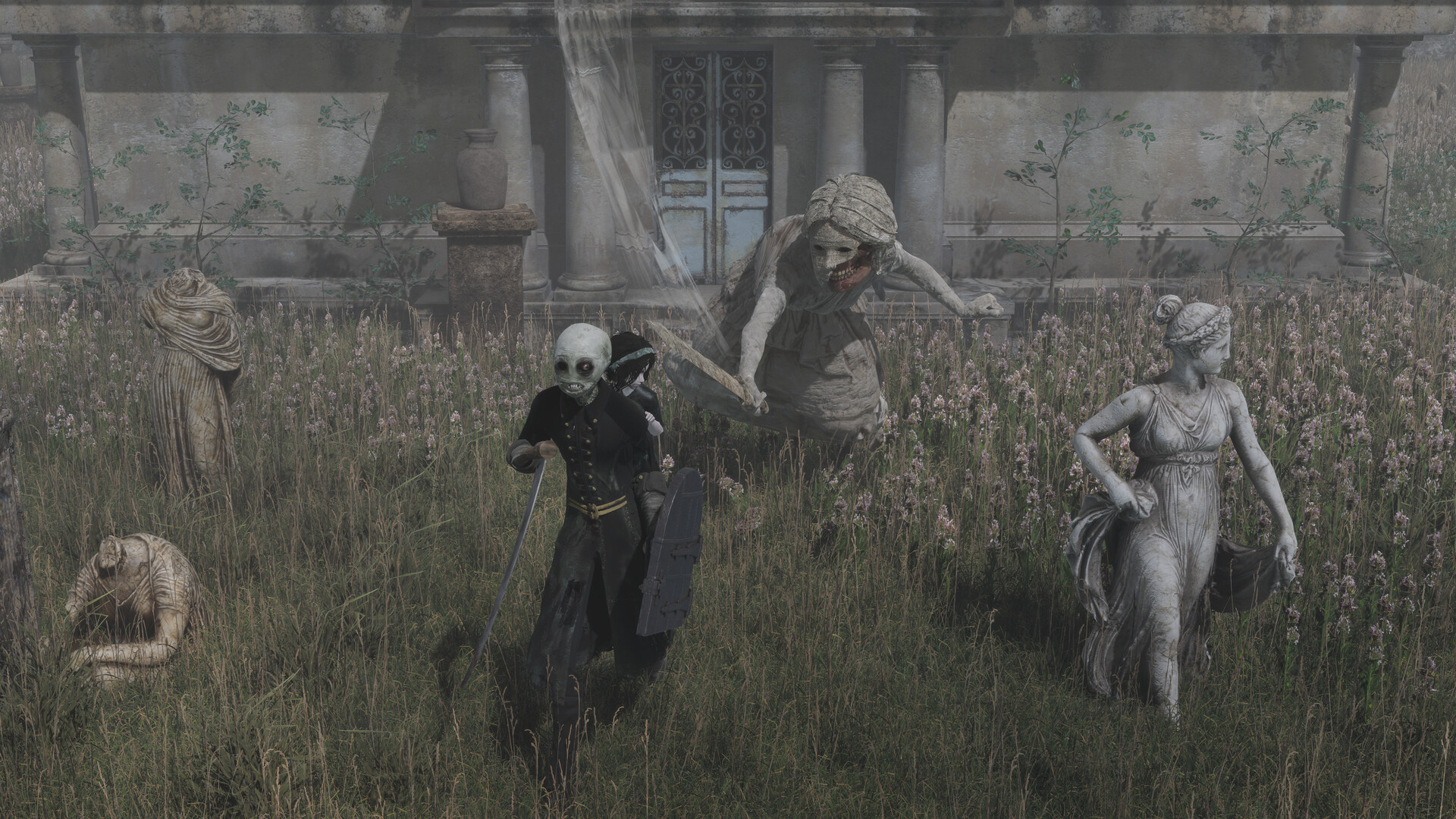
Withering Realms is a horror action RPG from Moonless Formless, the one-person studio of Troy West, and the follow-up to Withering Rooms. The year is 1926, ten years after an occult event stopped the Great War and rewrote reality. Nine-year-old Clover wakes up alone in a decaying mansion near the epicenter and discovers she is a ghost. Her guardian is a seven-foot doll built from wood, metal, bone, and flesh, with a socket where its right arm should be.
Early Access launched on September 4, 2026 after a short Steam approval delay, and this time the guide is written from the shipped game, not from pre-launch material. The build is complete start to credits: 50+ weapons and tools, 70+ talismans, 7 large dungeons, 110+ bestiary monsters, and the town of Penwyll. The game sits at Very Positive on Steam from around 350 reviews, sells for $19.99, and targets a full release in Q2 2027 with consoles and more languages. Players report 15 to 20 hours for a full pass with side content, and about 8 to 12 hours for the main path.
| Fact | Detail |
|---|---|
| Developer / Publisher | Moonless Formless (solo) |
| Genre | Horror action RPG, 3/4 top-down with fixed-camera sections |
| Platform | Windows (Steam); consoles at full release |
| Early Access date | September 4, 2026 (delayed from Sept 2) |
| Full release | Q2 2027 |
| Price | $19.99, expected to rise at 1.0 |
| Setting | Penwyll, Monmouthshire, Wales, 1926 |
| Party | Clover (ghost, casts from the doll's back) + The Doll (fighter) + Althea Crossley (town) |
| Death penalty | None for items, equipment, or story progress |
| Steam Deck | Playable start to finish, no major issues |
| Achievements | 28 |
Who it is for: horror fans who want atmosphere over punishment, players who loved the PS2-era survival horror classics, and anyone who wants soulslike weight without losing progress on death.
Who it is not for: players who need frictionless frame-perfect combat, and anyone expecting co-op. This game is strictly single-player, and combat carries EA jank. One recent patch overhauled movement and fixed the worst of it, but hitboxes and telegraphs still wobble.
Withering Realms vs Withering Rooms and Other Soulslikes
Coming from the first game? The sequel keeps the setting, the tone, and much of the cast's sensibility, then rebuilds the moment-to-moment play in three dimensions. The biggest mechanical differences, all confirmed by the Early Access release:
| System | Withering Rooms | Withering Realms |
|---|---|---|
| Camera and movement | 2.5D side-scrolling lanes | Full 3D, 3/4 top-down with fixed-camera interiors |
| Death penalty | Lost items, reshuffled areas | Nothing lost; layouts mostly stable on death |
| Loot | Roguelite randomized drops | Traditional ARPG: craft and buy gear with stat requirements |
| Guns | Ammunition | Mana |
| Structure | One haunted house, ever-shifting | World map of dungeons plus a hub town |
| Healing | Scarce, survival-horror style | Flask-based with shrine rests |
Some veterans of the first game read this list as a loss of identity: the shifting-house tension and resource dread were the point. That is a fair take, and if that tension is what you loved, temper your expectations. What the sequel buys with the change is reach. Build variety is wider, exploration covers a whole valley instead of a house, and nobody loses a night of progress to a death mechanic.
Against mainstream soulslikes (the Elden Rings and Lies of Ps of the world), Realms competes on personality, not combat feel. The dodge and stamina discipline are serviceable, with enemy telegraphs that vary in readability and some near-zero-startup attacks that punish proactive play. Where it pulls ahead is density of ideas: a town that runs its own stealth game, a card game in the pub, a camera that freezes ghosts, ten arena challenges, ten hunts, a dream world with its own rescue quest, and a bestiary north of 110 monsters, all from a studio you can count on one finger. Play it for the world and the builds. Play something else for frame-perfect duels.
Community Hub
Everything below is official and live during Early Access.
| Channel | Where | What it is for |
|---|---|---|
| Discord | Linked from the main menu and witheringrealms.com | Dev answers directly; beta testers and veterans hang out here; free keys were handed out during the launch delay |
| Steam forums | Community Hub for app 3441990 | Long-form feedback, build threads, puzzle help |
| In-game bug tool | Slash (/) key anytime | Screenshot, save, and device info attach automatically; this is how 0.36 and 0.37 got fixed so fast |
| Patch notes | witheringrealms.com/patch-notes.html | Every change, plus how to join the #nextversion test branch |
| Support | [email protected] or the title-menu Support option | Save issues, purchase problems |
The #nextversion branch deserves a note: a few days before each monthly major update lands, you can opt into the upcoming build and test it early. Roll back if it misbehaves; saves are not always compatible in both directions.
Getting Started
Three characters, three loops
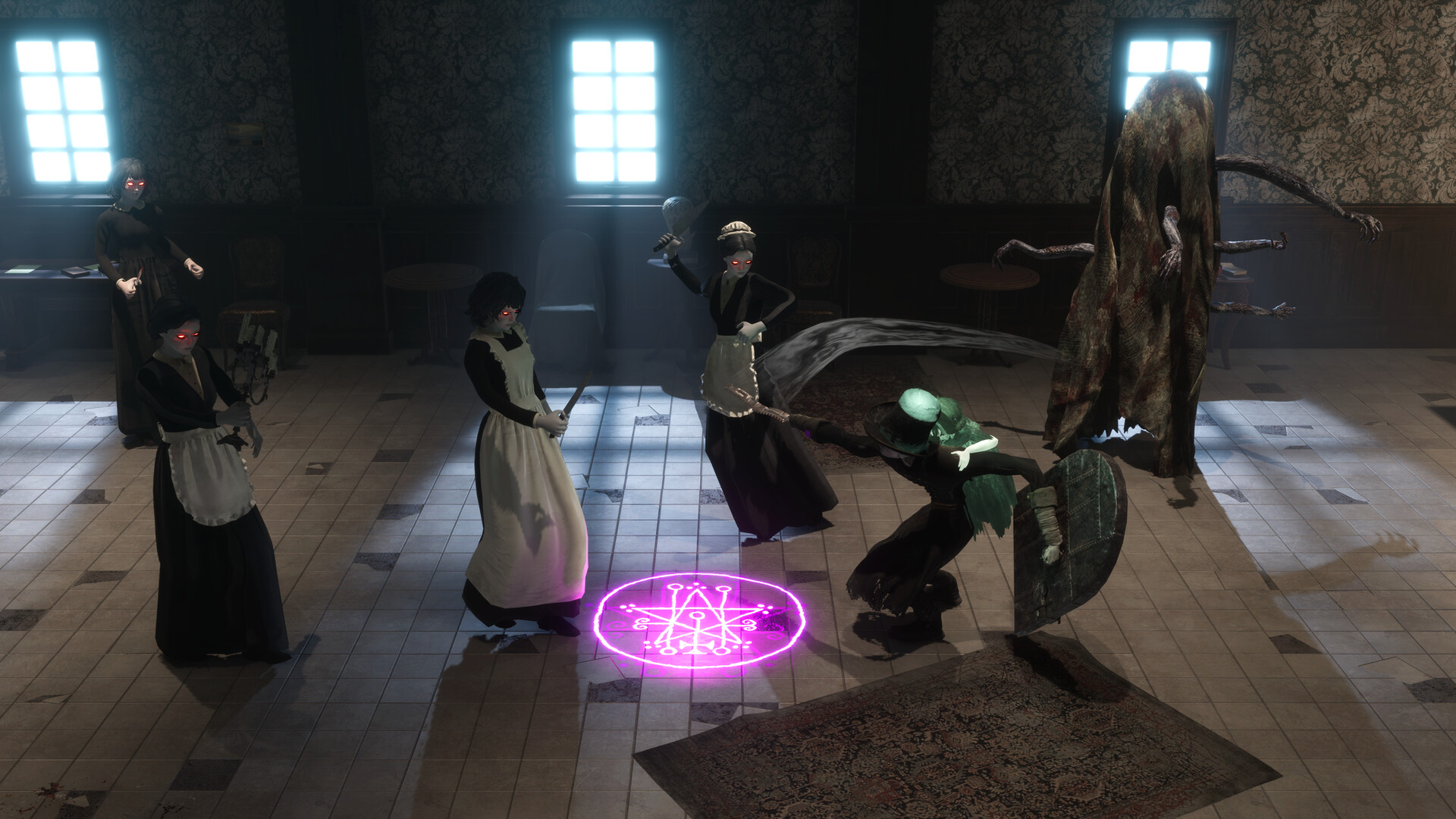
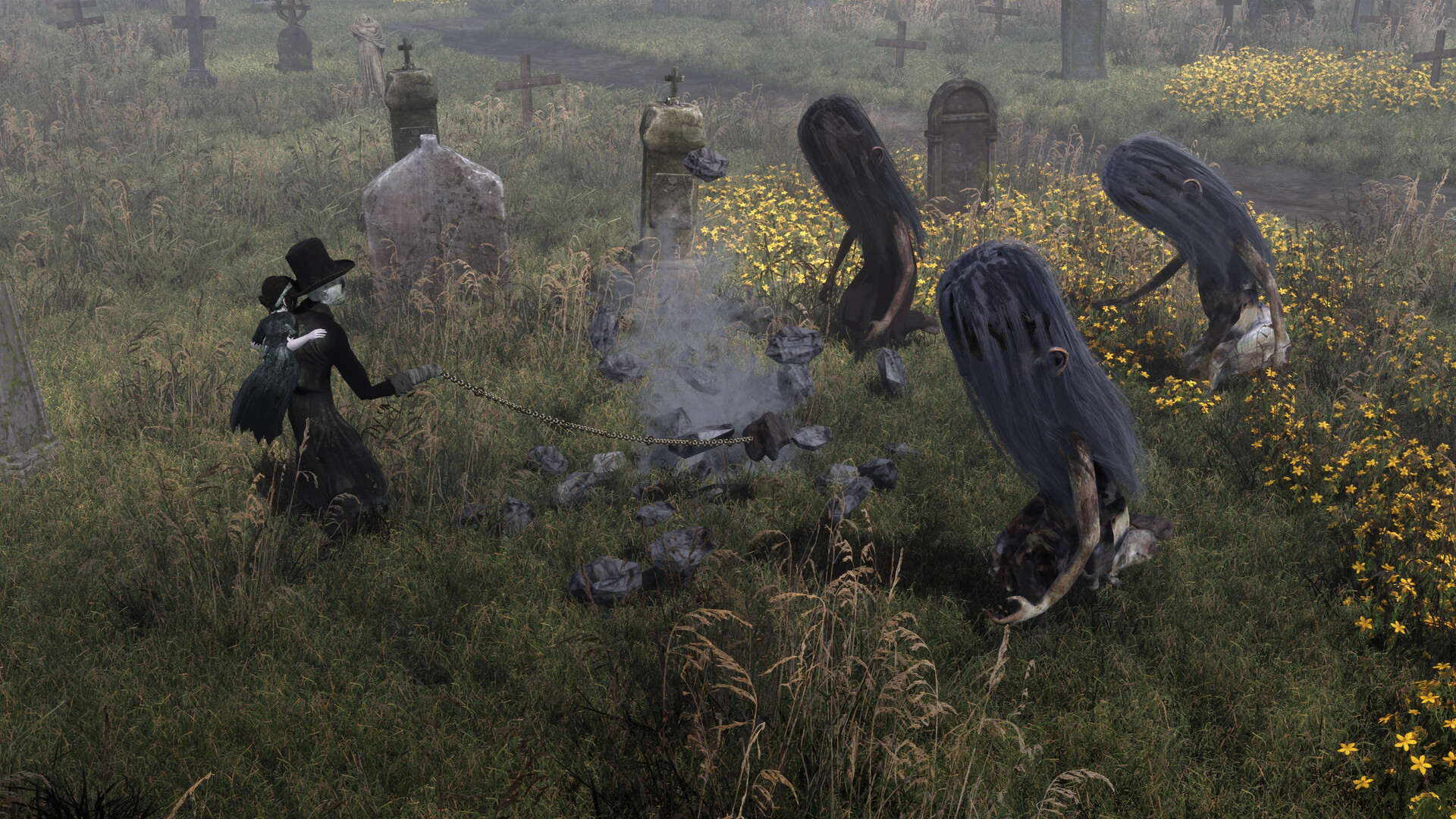
The Doll handles the field. Graveyards, tombs, mines, caves, and rotting estates run from a 3/4 top-down camera, described by the developer as top-down Zelda meets Bloodborne. The doll swings, blocks, and dodges; every crafted weapon or machine slots into the empty right-arm socket, and shields and other tools occupy a separate left-hand slot.
Clover rides on the doll's back. She casts spells and uses items at any moment, including mid-swing. Her casts never interrupt the doll's animation, which makes her a free second damage stream and your panic button.
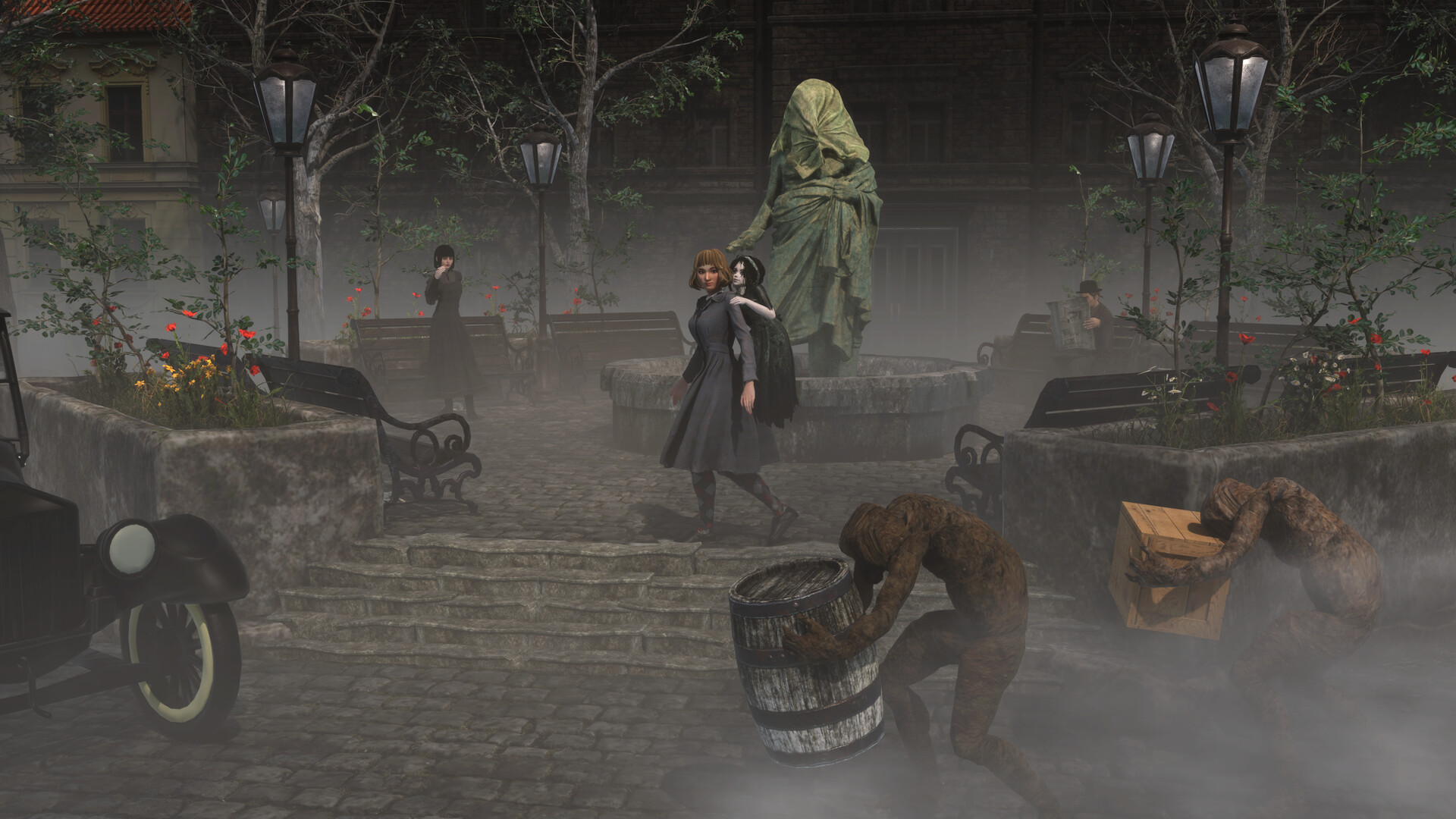
Althea Crossley owns Penwyll. She is a freelance investigator and a poor fighter, so her toolkit is stealth, lockpicking, interrogation, and forgery. Her interiors mix top-down framing with classic fixed-camera survival horror. Cash and materials the doll drags home become Althea's shop purchases and crafting jobs, which feed back to the doll as new arms, replacement eyeballs, and talismans.
Leveling: three body parts, one ichor pool
Ichor is your XP. It levels three slots separately: Body, Right Arm, and Left Arm. The Stats screen shows the ichor needed for the next level of each part, and the level-up screen names the part you are raising. This is the build system in miniature: a Body focused doll tank through packs while an Arm focused doll deletes bosses.
- Put your first stretch of ichor into Body. Early enemies swarm, and hit points plus poise keep you alive while you learn timings. The knockdown system rewards this: when the doll's head hits the ground, the impact scales with your Poise investment, and a recent patch added knockdown protection on getting up.
- Level your favorite arm second. Arm levels raise the tools you actually use, not a hypothetical future build.
- Feed Left Hand last, and note that Left Hand tools including shields became upgradeable in the 0.37 patch. Before that patch, shields were fixed-strength; if you read an older guide, this changed.
- Spend ichor before boss doors. Dying costs nothing, but neither does hoarding. There is no reason to enter a boss arena underleveled.
- Keep one unspent pocket for emergencies at shrines. Hand shrines are your rest points, and the "Murder" achievement (kill 50 things without resting) proves how tempting resting becomes.
Your first hour plan
- Treat Beynon House as the tutorial it is. It teaches the swing, Clover's casts, and trap avoidance, and it ends with your first boss. Loot every sarcophagus and chest; explosives open secret walls, so retrace rooms after any detonation.
- Learn stagger in the Study. The rotter room in Beynon House exists to teach poise. Attack until the enemy staggers, punish, then reset. Swinging into an unstaggered rotter is the number one way new players trade damage for nothing.
- Walk Saintswood before you judge the combat. The first field area teaches the real rhythm: packs, environmental traps, and spell-on-swing offense.
- Read the world map before traveling. You pick a location and then pick day or night. Night areas outside Penwyll warn you for a reason.
- Build a two-hand loadout immediately. One crowd-control right arm, one single-target or shield left hand. Swapping beats dying.
Beginner mistakes to avoid
- Mashing attack into packs. Combat is mob management. Enemies come in threes and fours, stagger states are inconsistent across monster types, and greedy swings are how chip deaths snowball. Stagger, punish, retreat, repeat.
- Ignoring Clover for minutes at a time. She is a whole character. A spell on the doll's recovery frames doubles your output in boss fights, and a clutch item use has saved more runs than any dodge.
- Treating guns like ammo weapons. Guns burn mana, not ammunition. The demo era's ammo system is gone. A machinegun doll with zero mana pool is a decoration, so level the stats your weapons eat.
- Treating the left hand as dead weight. Shields took until patch 0.37 to become upgradeable, so older advice says skip them. Current build: an upgraded shield teaches you boss patterns on attempt one, and the slot also holds utility tools you will actually use. Left Arm levels are worth some ichor again.
- Wandering night zones early. Night reskins field areas with new creatures and better loot, and currently applies a ground slow effect that players consistently call the most infuriating mechanic in the game. There is a teleport spell that escapes the slowed ground, but it burns magic you need for offense. Save nights for a leveled doll.
- Skipping the bomb walls. Destructible walls hide secrets in almost every dungeon. If a room reads smaller than the map suggests, blow something up.
- Fighting in the dark with a dying light source. The most common practical complaint in reviews: getting stuck on terrain you cannot see when your light gutters out. Re-light before pushing deeper, and know that the flashlight-style camera tool doubles as a ghost-freezing weapon (three ghosts with one flash is an achievement).
- Resting before a 50-kill streak. If you want the Murder achievement, plan a route through dense, easy areas and do not touch shrines until the counter pops.
Core Mechanics
Poise, stagger, and the rhythm of packs
Every enemy has poise. Deplete it and they stagger, opening a punish window. The combat reads slower than Bloodborne and denser than Zelda: attacks have commitment, dodges have recovery, and enemies telegraph with variable clarity. Post-launch patches extended knockdown invulnerability and tuned specific offenders like the Great Corpse Worm's grab, which for one patch in September could hit far outside its animation.
The layered offense is the real system. While the doll mid-swings, Clover can cast. That means your damage rotation is: doll swing, Clover spell during recovery, doll swing. Against casters and witches with projectile patterns, use Clover's casts to interrupt. Against packs, position the doll so swings catch two or three bodies, then let Clover clean up the edges. When you get knocked down, do not panic-roll: the 10% health protection window on getting up means you have a beat to read the room.
The arm socket is the class system
The doll's missing right arm takes crafted weapons and machines, and Left Hand takes shields and tools. Confirmed standouts:
| Tool | Slot | What it does | Best use |
|---|---|---|---|
| Enchanted Candelabrum | Right arm | Melee weapon with magic utility; secondary attack counts as Spell damage | Early game all-rounder; pairs with spell-boosting talismans |
| Spectral Blade | Right arm | Projectile weapon reclassified as Spell damage | Spell builds that want ranged pressure |
| Chain Rock | Right arm | Ranged bludgeon that chains or yanks | Dragging casters out of packs |
| Machinegun / Tommy Gun | Right arm | Sustained rapid fire, mana-fed | Melting a single boss in phase three |
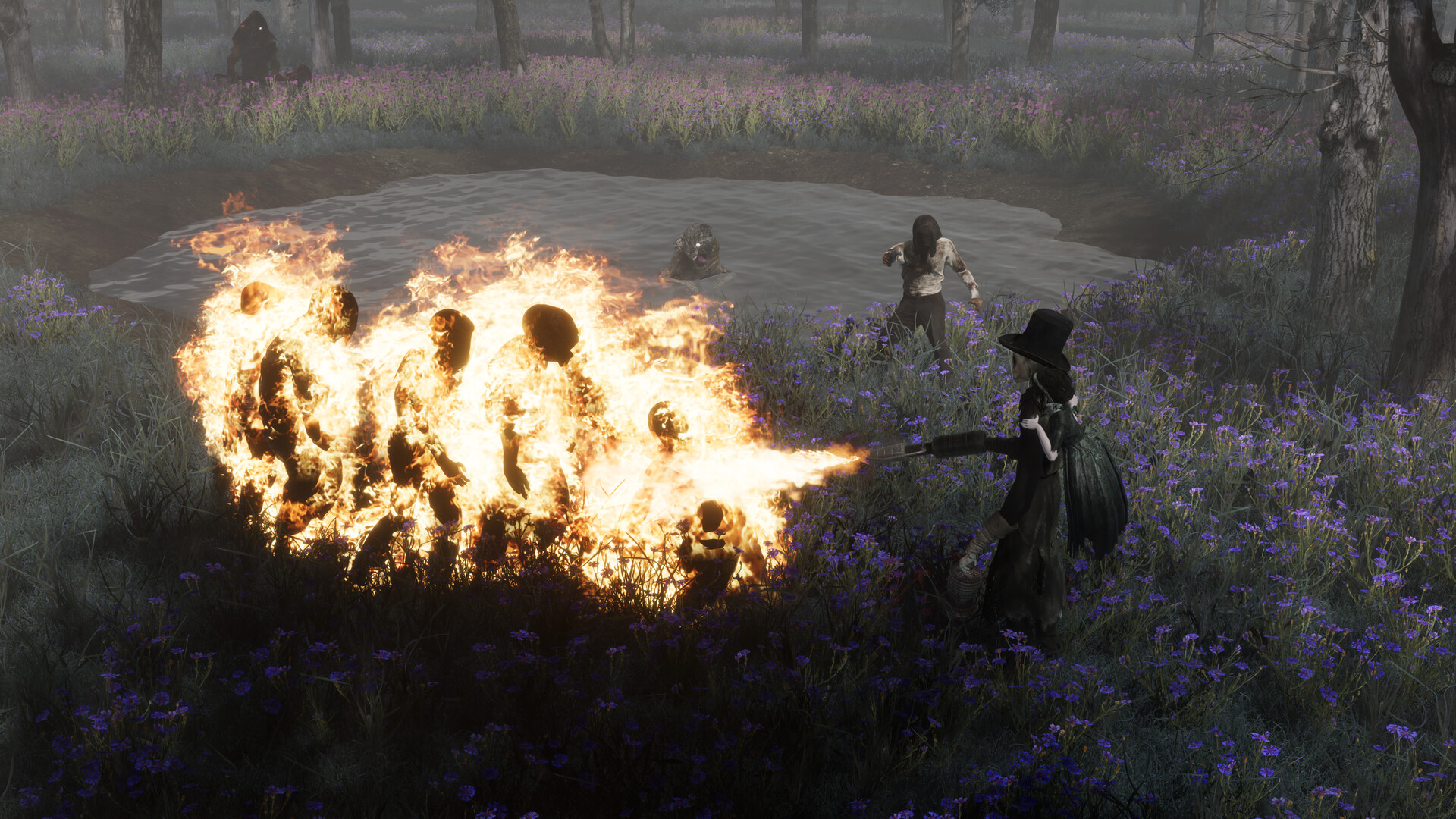
| Flamethrower | Right arm | Cone of area damage | Dense tomb corridors |
| Lee-Enfield Rifle | Right arm | Long-range rifle; tracking consistency improved in 0.36 | Picking off threats before they close |
| Shields | Left hand | Blocking, now upgradeable (0.37) | Learning boss patterns on a first attempt |
Because each arm levels separately, your class is literally which arm you feed. A spell arm with spell-classified weapons (Candelabrum secondary, Spectral Blade, Initiate's Candlestick) multiplies with the Freak talismans that boost Spell damage. The 0.36 patch reclassified several weapons precisely so these talismans read correctly, and the 0.37 patch nerfed The Freak's Left Hand talisman because the combination had gotten out of hand.
Talismans: the build multiplier
Talismans are passive modifiers, 70+ of them, and the developer openly expects overpowered combinations during Early Access. The Freak set (Melee, Projectile, Spell boosters) is the known anchor for damage builds. The Book of Burdens holds risk-reward trade talismans, and balancing it is on the roadmap. Read every talisman as an ingredient: damage-type match matters more than raw numbers, which is why the damage-type reclassification patch mattered so much to build crafters.
The world map, day and night
From the map you choose day or night for any unlocked location. Day is for progress and materials. Night is for unique spawns, better loot, and secrets, populated with new horrifying creatures. The night slow-ground effect is the current pain point and roadmap item number one for improvement. Penwyll itself stays safe after dark, and Althea actually prefers it: several town doors only open to lockpicking under cover of night.
Death, shrines, and what the world does about it
Death sends the doll back to an ichor pool. Items, equipment, and story progress are never lost. Unlike Withering Rooms, the world does not strongly reshuffle on death in Realms; some areas randomize on entry, but the death-reroll farming loop of the first game is toned down. Treat death as a teleport home with extra steps, use your consumables freely, and never end a session hoarding flasks.
The town loop
Penwyll is the economy. The doll farms ichor, materials, and treasure in the field; Althea converts them into arm tools, replacement eyeballs, talismans, and upgrades at shops and the Reliable Repairs hub. Reliable Repairs gains a pettable cat in the 0.37 patch, and the roadmap promises to grow it into a real hub. The Clocktower and the Mazechapel are multi-floor dungeon-lets in town with fixed-camera survival horror framing and the best loot behind the hardest sneaks.
Step-by-Step Strategy
Progression order that works
- Clear Beynon House fully, including its boss and secret walls.
- Sweep Saintswood day-only until the doll handles packs comfortably.
- Reach Penwyll, meet Althea, and spend your first haul on a second right-arm tool and Body levels.
- Clear Old Penwyll Mine. The 0.36 patch moved its Ichor Shrine to just before the boss, guarded by ghostly hands, and Geordie warns you if you arrive without the camera tool. Take the hint.
- Rotate: one dungeon for progress, one day-run for materials, one town pass to spend. The dungeon list runs Old Penwyll Mine, Saintswood Mine, western Penwyll Cemetery, Penwyll Public Vaults, Penhaligon Manor, Williams House, Cae Gwyn Public Vaults, Twr Gwaed Ruins, and the Bellflower Occult Institute idol, with the Dream and the Holy Abode waiting late.
- Defeat the perimeter guardian on the map edge when your build comes online. Each one expands the world map and advances the story.
Boss template that beats most fights
- Enter with full heals, Clover's spell charged, and a tool swapped for the specific boss.
- Spend the first 20 seconds doing nothing but dodging and reading telegraphs.
- Find the punish window: usually recovery after a heavy swing or a whiffed grab.
- Run the loop: Clover spell on the boss, two doll swings, disengage.
- When phase two adds a new attack, stop attacking and re-read the pattern. Greed kills more dolls than bosses do.
- Save burst tools like the Machinegun for the final third, when the pattern is learned and the kill window opens.
Specific notes: the Bridge Guard got his own boss theme in 0.37 and fights like a wall, so circle rather than trade. The Mine Hag heals, and patch 0.36 extended her healing cooldown, so burst her windows instead of attrition. Jones in the mines blocks dodge angles with a wide arc; dodge perpendicular, never through. The Great Corpse Worm's grab no longer reaches across the arena as it did in the launch window, but the fight is still about staying off its centerline.
Night farming run
- Wait until the doll has Body levels, a crowd arm, and two spare tools.
- Pick a cleared field area you know by feel.
- Enter at night with full heals and kill the night spawns for unique drops.
- Open every secret wall you skipped by day.
- Extract when heals run thin. Death is cheap but a night cycle is not.
Althea town sequence
- Watch one full guard patrol loop before moving.
- Lockpick the quietest doors first. Loud failures raise suspicion.
- Interrogate witnesses out of guard sightlines.
- Forge documents before someone asks for them.
- Loot the Clocktower top-down. The best town gear hides behind the hardest sneaks, and town interiors are where fixed-camera survival horror earns its keep.
Dungeon dive template
- Enter with a crowd arm and a boss arm both equipped.
- Clear the first room completely to learn the local enemy mix.
- Loot as you go; some rooms open only after the boss key.
- Spend explosives on suspicious walls, never on enemies.
- Before the boss door: rest, spend ichor, swap tools, re-read talismans.
Advanced Tips and Strategies
Build archetypes that carried players through EA
- Occult gunner: Spell-classified weapons plus Freak Spell talismans plus a pistol offhand. Reviewers call this the strongest and most fun early combination; the gun-mana economy makes its stat investment mandatory but its output undeniable.
- Flame sweeper: Flamethrower arm with area talismans. Deletes tomb corridors and pack-heavy dungeons, weaker against single bosses, so carry a second arm for duels.
- Poise tank: Heavy Body investment, shield in the left hand, slow heavy swings. The safest way to learn boss patterns, made better by the 0.37 shield upgrade system.
- Caster hybrid: Candelabrum secondary plus Spectral Blade plus Clover's raw casts. Three damage streams that all scale off the same Spell bucket. A note on respecs: community consensus says the game lets you pivot builds without level-gates, and reviewers who bounced off the combat on one archetype often finished the game on another. If a weapon class feels useless, that is a build problem more often than a game problem. Swap the arm, retarget the talismans, and retest in the arena before writing the tool off.
The balance curve, and how to exploit it
The game is hardest in the first third and softest in the last third. Early packs overwhelm an unarmored doll; late-game builds melt everything. So front-load defensive stats, over-prepare for the mid-game dungeons (mines and vaults, where the achievement data shows most players stalling around the 50% completion marks), and do not waste materials trying to perfect a build before the Bellflower Institute. The endgame content (arena challenges, Hunting Club hunts, the Dream) assumes a completed build and is balanced around it.
Side systems worth your time
- Arena challenges: ten of them grant Arena Champion. The arena is also the cleanest place to test a new arm against known waves.
- Hunting Club hunts: ten hunts, Master Hunter at completion. Hunts teach monster behaviors that boss fights then reuse.
- The Dream: a late area with its own rescue questline. Enter it before finishing the story; its content feeds the endings.
- Blighter's Bounty: an in-game card game. Winning three in a row is the rarest achievement in the game (13.2%), so learn the opponent patterns in the town pub before you commit.
- Night Mother's Skins: three collectibles with a secret attached. Find all three before the point of no return.
- Premonition: a status effect with an achievement tied to it. It arrives naturally in the Dream storyline.
Blighter's Bounty: how to win three in a row
Card Sharp is the rarest achievement in the game at 13.2%, and the way there is repetition, not card skill. Treat the pub table as a research project.
- Play your first several games expecting to lose. Losses cost nothing, and every game teaches you one more of the opponent's set plays. Keep notes; his responses cycle through a fixed pool, and mapping the pool is the whole game.
- Bait his answers. He holds removal for your biggest threat, so throw a sacrifice play at it before you commit whatever your actual win condition is.
- Win fast. Streak attempts that drift long run into his late-game cards, and that is where most failed runs die. Take the sloppy early win over the elegant long one.
- Bank wins carefully. One loss erases the streak, so after win one or two, only sit down for the next game when the pattern feels mapped.
- Remember the achievement counts consecutive wins, not total effort. A hundred losses before the three-in-a-row still counts the same. There is no reason to tilt; the pub is not going anywhere.
The endings, and what to do before the point of no return
The shipped build ends with The End ("save the world, at least for now," in the achievement's own words), and the roadmap promises more detailed endings and a post-credits epilogue during Early Access. The current differences between endings hinge on exploration and side engagement, not on a final dialogue pick. Concretely, before you push into the late-game sequence:
- Finish the Dream rescue questline. The Dream feeds the endings.
- Make your Shadow Chapel choice in the Realm of Mutilation deliberately. Future updates will make it matter.
- Grab the flask recipes from Scamps and brew a stockpile; acid-opened bosses are a different fight.
- Find all three Night Mother's Skins and their secret.
- Complete the Bellflower idol, the Hunting Club hunts, and as many arena challenges as your build survives.
- Hand in the Dave sidequest chain in town even if the payoff feels thin right now; more detailed endings are explicitly on the roadmap, and safe means done.
- Reach the Holy Abode before finishing the story if you care about its achievement; it is missable once the credits roll.
Patch awareness
This game moves. The 0.36 to 0.37 window reclassified weapon damage types, made shields upgradeable, reworked Old Penwyll Mine, overhauled movement code, and added a cat. If a tip here stops working, check the patch notes in the news hub; the developer ships monthly major updates with the next version testable on the #nextversion branch. The October 14 major update adds two NPCs aimed at helping struggling players, which tells you where the pain points are.
Performance and settings
The game runs well: players report 4K at 120 FPS on strong hardware, and the Steam Deck runs it start to finish with no issues. The known soft spots are town scenes with many NPCs and fights with many active enemies.
| Setting | Recommendation |
|---|---|
| Perf HUD (Graphics Options) | On while tuning; shows exact FPS and resolution |
| Slow Shader Compilation | On for below-min-spec GPUs; spaces out the shader compile step |
| Run in Background | On (default); keeps audio if you alt-tab |
| HUD size | Raise it; the default mimics a 1997 RPG UI, and you can disable the HUD entirely after Beynon House |
| Difficulty | Narrative mode exists in Gameplay Options and is fully legitimate; note it does not work while a certain artifact is active |
| Camera | Outdoor and boss arenas pull back; give yourself a beat to re-orient after big shifts |
Known issues and workarounds
- Stuck between one-way doors: a rare save-wipe bug from launch. The general fix for geometry traps: change difficulty in Gameplay Options to force an area reload, then change it back. The change does not persist and does not affect achievements.
- "title_" on the main menu: a launch-window language bug. Set Options to English and start a New Game.
- Demo saves misbehaving: not recommended to carry forward; new content was added to the opening hours.
- Movement felt clunky at launch: the 0.37 patch rewrote character movement to fix terrain tunneling, monsters leaping out of rooms, and unresponsive direction changes. Update before judging the combat.
- Guns feel weak: you are starving the mana stat. Guns scale off mana, not ammo; level the pool or swap weapons.
The October Content Update: Flasks, the Realm of Mutilation, and a Louder Clover
The first major Early Access update shipped a month after launch, and it changes the early hours, the build economy, and the story in one sweep. Everything below assumes you are on the current build (0.40 hotfix or later); if you finished the game on the launch build, all of this is new to you.
The flask crafting system
Empty ichor flasks are no longer dead weight. Recipes let you refill them as throwable weapons and tools, with ingredients looted from drawers, crates, and the general clutter of Penwyll. Five recipes exist in the current build; the three with confirmed effects:
| Flask | Effect | Where it shines |
|---|---|---|
| Acid Flask | Temporarily reduces bleed, poison, and physical resistance on everything it hits | Opening move of a boss fight; your bleed build suddenly hits 30% harder |
| Decoy Flask | Spawns a distracting illusory Clover | Night runs and stalker enemies; also breaks up packs before a fight starts |
| Blinding Flask | Staggers nearby enemies and eliminates night shadow hands | The single best answer to the night-horror spawns that made early evenings miserable |
The acquisition path is built to be unmissable: a new NPC named Scamps waits in the cellar stairwell near the start of the game and hands you the Acid Flask recipe just for showing up. He sells the remaining recipes later. Grab the first one immediately, because acid-debuffed bosses are the biggest power jump per recipe in the game.
The Realm of Mutilation
The headline new area sits between The Dream and Reality and folds in pieces of Clover's own psyche. It exists to teach you who Clover is, and it will expand in future updates into higher-level territory. The Shadow Chapel choice you make there will have consequences in a later update, so treat it as a real save-file decision, not flavor.
To find it: travel to southeast Saintswood, speak to the new NPC waiting there, and level up once. That is the entire trigger. If you are past the credits and wondering what you missed, this is it.
Clover got a voice (and a mute button)
Clover now speaks voice lines, including mid-combat. If her commentary breaks your concentration, the audio options gained a Voice Volume slider plus two checkboxes that stop her speaking during combat, contextually, or both. The 0.39 patch also added a new cutscene to the Next Circumambulation ritual (when not running Skip Beynon House) that starts you holding the Beynon House Key, removing a fetch detour from repeat playthroughs.
Post-update bug to know about
Some saves started after the content update load into an odd or broken room in Penwyll or Saintswood; the 0.40 hotfix fixes it and resets the affected area on load. If you are still on 0.39 or earlier, update before starting anything new. The #nextversion beta branch remains the early-access lane for the next version if you want patches before they ship publicly.
Controls
- Keyboard and mouse: WASD to move, mouse to attack, Shift to dodge, number keys for Clover's spells, Slash (/) to open the bug report tool anywhere.
- Controller: full support including DualShock and DualSense. Dodge on a bumper, spells on shoulder buttons. Bindings save per controller as of 0.37, so a PS5 pad and an Xbox pad keep separate layouts, and there is a Reset to Defaults button plus an Input Diagnostics HUD for troubleshooting stick drift.
- Steam Deck: fully playable, with the key bindings editor available on Deck.
- Steam Cloud and Family Sharing: enabled.
Roadmap
The developer publishes one major update per month through Early Access, with smaller balance and bug-fix patches between, and stops major updates as Q2 2027 approaches. The first of those majors, the October Content Update, is out: flask crafting, the Realm of Mutilation, four new NPCs, a new enemy, Clover voice lines, a training room overhaul, and the promised post-credits epilogue. Still on the roadmap: new talismans, tools, and items for complicated builds; nighttime improvements; Book of Burdens balancing; Strict mode improvements; expansion of the Realm of Mutilation into higher-level areas; Reliable Repairs hub growth; Creation Rituals for replay; a game section starring both Althea and the doll; and basic mod support. Full release in Q2 2027 brings consoles and additional languages.
Steam Achievements
All 28 achievements with global completion rates, a clean progress map of the game:
| Achievement | Requirement | Global % |
|---|---|---|
| Maid Blood | Defeat a foe in the gallery | 92.0% |
| Scarecrow Blood | Defeat a foe in Saintswood | 79.9% |
| The Craft | Craft your first spell | 65.3% |
| Idol Secured | Obtain the idol from Bellflower Occult Institute | 56.9% |
| Ogre Blood | Defeat a chained foe | 54.4% |
| Poisoned Blood | Defeat a foe in Old Penwyll Mine | 51.6% |
| Murder | Kill 50 things without resting | 50.9% |
| Worm Blood | Defeat a foe in western Penwyll Cemetery | 48.8% |
| Mole Blood | Defeat a foe in Penhaligon Manor | 48.2% |
| Tomb Blood | Defeat a foe in Penwyll Public Vaults | 48.1% |
| Premonition | Become afflicted with the Premonition status | 43.5% |
| The Other World | Activate a hand shrine | 43.4% |
| Brain Blood | Defeat a foe in Saintswood Mine | 42.8% |
| All-Seeing Blood | Defeat a foe in Williams House | 42.0% |
| The Truth | Find out the truth about what happened to Clover's father | 38.8% |
| Necromancer Blood | Defeat a foe in Cae Gwyn Public Vaults | 38.3% |
| The Dream | Find a way to enter the Dream | 37.3% |
| Ritual Blood | Defeat a foe in Twr Gwaed Ruins | 37.2% |
| Arena Champion | Complete 10 arena challenges | 33.3% |
| Final Blood | Defeat the final foe | 32.8% |
| The End | Save the world, at least for now | 31.9% |
| Night Mother's Skins | Find all three Night Mother's Skins and discover their secret | 31.4% |
| Holy Abode | Enter the Holy Abode | 29.7% |
| Master Hunter | Complete 10 Hunting Club hunts | 27.4% |
| Dream Rescue | Rescue someone from the Dream | 26.1% |
| Action Shot | Freeze 3 ghosts with a single camera flash | 22.2% |
| Hidden Blood | Defeat a hidden foe | 16.9% |
| Card Sharp | Win 3 games of Blighter's Bounty in a row | 13.2% |
The Blood series doubles as a progression census: nearly everyone clears the gallery, four in five reach Saintswood, and about one in three finishes the story. If you are stuck, the numbers say the walls are at the mid-game mines and vaults, exactly where Body investment pays off.
Quick Reference Card
| Situation | Play |
|---|---|
| Facing a pack of 3-4 | Stagger one, punish, retreat; let Clover pick edges |
| Boss arena door ahead | Spend ichor, full heals, right arm swapped for the fight |
| Night zone on the map | Only with Body levels, a crowd arm, and full heals |
| Ichor near level-up threshold | Spend it at a shrine before pushing deeper |
| Light source guttering | Re-light now, not after the next fight |
| Suspicious wall | Explosive. Loot rules of this game reward demolition |
| Knocked down | Wait the get-up window; do not panic-roll into the swing |
| New arm tool bought | Test it in the arena before taking it to a boss |
| Wandering night town | Bring the lockpicks; some doors only open after dark |
| Card Sharp attempt | Losses are free; map the pattern before the streak run |
System Requirements
| Component | Minimum | Recommended |
|---|---|---|
| OS | Windows 10 | Windows 10 |
| Processor | i5-2500K / Ryzen 5 1400 | i7-8700K / Ryzen 5 3600X |
| Memory | 8 GB | 12 GB |
| Graphics | GTX 970 / RX 570 | GTX 1070 / RX Vega 56 |
| DirectX | 11 | 12 |
| Storage | 14 GB | 14 GB |
English ships with full audio at Early Access; additional languages arrive with the full release in 2027.
FAQ
Is Early Access the whole game? Yes. The build is playable start to credits with all seven dungeons, the town, and 28 achievements. EA-period updates add modifiers, more detailed endings, end-game modes, and Creation Rituals on top.
How long is it? Main path 8 to 12 hours, 15 to 20 with side content. Community beta runs ranged 15 to 42 hours, and one player 100%'d all achievements in a single run.
What happens when I die? You return to an ichor pool. Items, equipment, and story progress are kept. Area layouts do not strongly reshuffle on death in this game, unlike Withering Rooms.
Is it a roguelike? No. Some areas randomize on entry, but nothing permanent is ever lost.
Do guns use ammo? No. Guns consume mana. This is one of the biggest changes from the demo era, and it makes mana investment mandatory for gun builds.
Can I play co-op? No. Single-player only, with consoles and more languages planned for the Q2 2027 full release.
Does it run on Steam Deck? Yes, start to finish, and the key bindings editor works on Deck.
How hard is it? The first third is genuinely hard, especially packs, and the late game tilts easy once your build comes online. Narrative mode exists and is respected by the community; use it if the combat fights you more than the monsters do.
Is the combat janky? Some. Launch movement issues were largely fixed in 0.37, but hitboxes, telegraphs, and homing projectiles still wobble in EA. Monthly patches are visibly working through the list.
How do I report a bug? Press Slash (/) at any time, even during dialog. Reports include a screenshot, options, save game, and anonymized device info.
Do I need to play Withering Rooms first? No. Same universe, new story. The developer says no familiarity is expected.
Is there a demo? The demo is offline. Demo saves carry into Early Access but carry-forward is not recommended since content was added to the opening.
What is coming next? The October 14 major update adds two new NPCs aimed at helping struggling players, followed by nighttime improvements, Creation Rituals, a joint Althea-and-doll section, mod support, and a post-credits epilogue through the road to Q2 2027.