Official game
Play Elderfeast
This game is hosted by steam. Continue to the official page to play or download it.
Play on SteamOverview
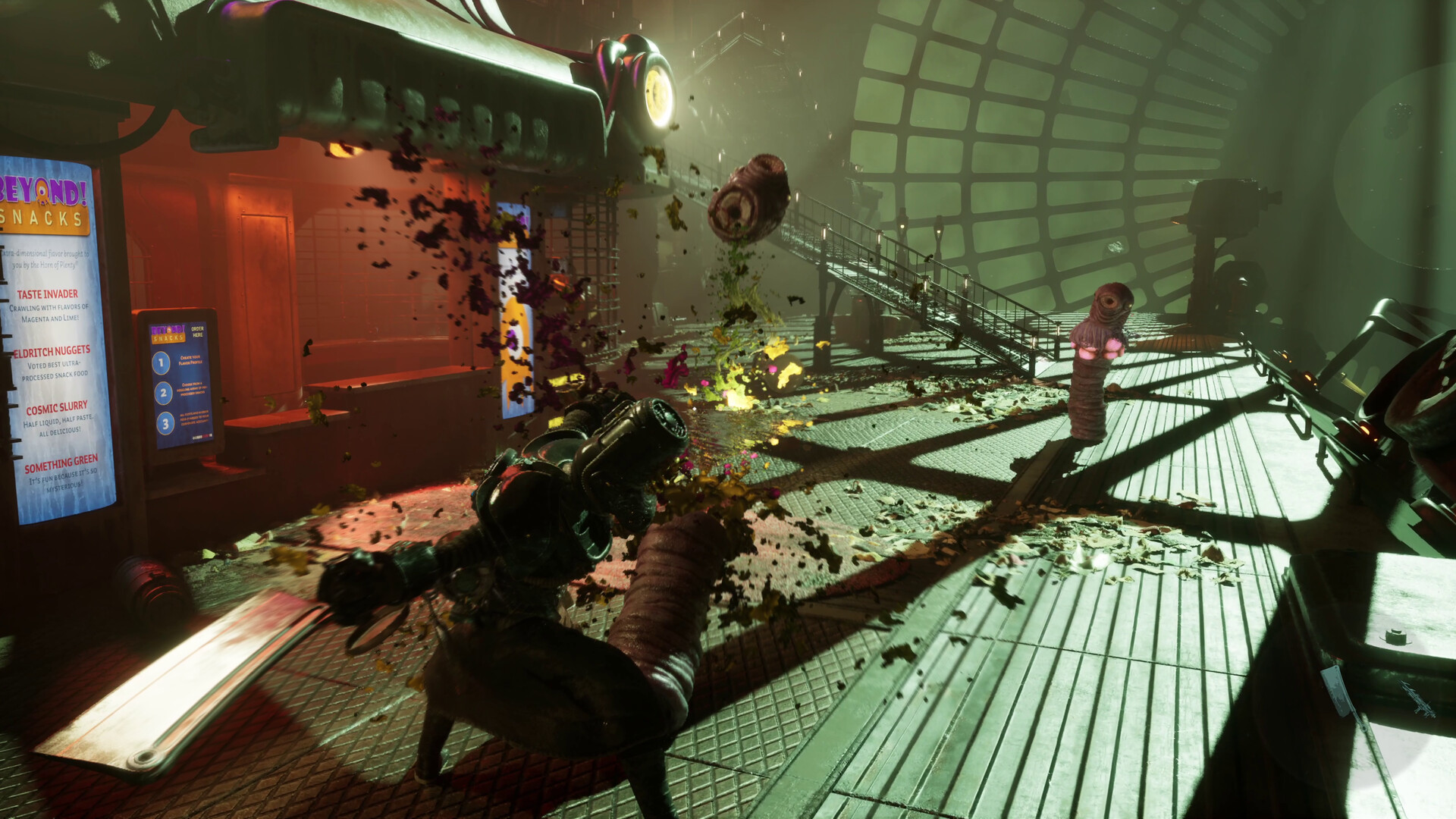
Elderfeast is a co-op action-horror RPG from indie developer Lurker Entertainment that flips the monster-hunting genre on its head with a deliciously twisted premise: the monsters are the menu. You play as a newly inducted member of the Order of the Void Eaters, a cultish conclave of intergalactic chefs who track, dismember, and cook Lovecraftian horrors across the cosmos. The better you cook, the stronger you become — and there's always something more terrifying to hunt next.
The game fuses third-person combat, systemic dismemberment, survival-crafting, and an immersive in-world cooking system into a single cohesive loop. Every hunt yields ingredients (tentacles for broth, eyes for alchemical reagents, scales for armor enhancements), and every meal you prepare grants buffs that enable you to take on deadlier prey. It's a living ecosystem where monsters will eat anyone and anything — including each other — meaning you can feed them toxic ingredients or poisoned meals to turn the tide before a single swing is thrown.
Whether you hunt solo or with friends in online co-op, Elderfeast's galaxy is packed with unique biomes, each populated by distinct eldritch creatures with their own attack patterns, weak points, and ingredient tables. The game is scheduled for a 2027 release on Steam and has already crossed 10,000 wishlists within its first 48 hours of announcement, signaling strong interest from fans of cosmic horror, co-op action, and culinary chaos.
| Detail | Info |
|---|---|
| Genre | Action / RPG / Horror / Co-op |
| Developer | Lurker Entertainment |
| Publisher | Lurker Entertainment |
| Engine | Unreal Engine (inferred from visuals) |
| Platform | Windows (Steam) |
| Price | TBA |
| Players | 1–4 (Online Co-op) |
| Release Date | 2027 |
| Perspective | Third-Person |
| Tags | Cooking, Hunting, Online Co-Op, Sci-fi, PvE, Extraction Shooter, Atmospheric, Gore, Horror, Dark Fantasy, Dungeon Crawler |
Target Audience
Elderfeast is designed for players who enjoy:
- Co-op monster hunting games like Monster Hunter: World or Dauntless, but crave a darker, Lovecraftian atmosphere.
- Horror-action hybrids where survival depends on preparation, positioning, and teamwork — think Dead Space meets Dark Souls with a cooking twist.
- Creative crafting and cooking systems where ingredient choice and recipe discovery matter as much as combat skill.
- Extraction-style gameplay loops where you venture into dangerous biomes, secure rare ingredients, and return to base to craft upgrades.
- Cosmic horror fans who appreciate H.P. Lovecraft-inspired creature design, atmospheric world-building, and a touch of dark humor.
If you enjoy games where the prep phase (cooking, gear selection, inventory management) is as engaging as the action phase, Elderfeast will hook you immediately.
Getting Started — First 30 Minutes
1. Character Creation & Induction
You begin by creating your Void Chef — choose your appearance, starting gear loadout (default is a butcher knife and scanner), and receive a brief induction into the Order of the Void Eaters. Pay attention to the tutorial prompts here; they explain the three-phase loop that governs everything: Hunt → Carve → Cook.
2. Your First Biome — The Whispering Shallows
The tutorial drops you into a relatively safe starting biome: a misty, coastal region where the spawns are low-tier horrors. Your objective is to track, kill, and carve your first creature.
Do this:
- Use your scanner (default key: Q or middle mouse) to highlight nearby creatures and their health pools.
- Approach the first target — a Gibbous Skitterer, a crab-like entity with a soft underbelly weak point.
- Engage in combat: dodge its claw swipes, circle to its flank, and land hits on the glowing weak point.
- Once it's down, approach the carcass and enter Carving Mode.
3. Carving 101
Carving is not just looting — it's a precision mechanic. Different body parts yield different ingredients. The Gibbous Skitterer drops:
- Skitterer Leg (x2) — common ingredient, good for basic broths.
- Glimmering Carapace (1–2) — used for light armor upgrades.
- Bioluminescent Gland — rare; used in early-game alchemy recipes.
Use your carving knife and target specific hit zones on the carcass. A precise cut yields +1 bonus ingredient per part. Rushing the carve loses material.
4. Your First Meal
Return to the camp kitchen. The cooking system uses an immersive in-world grid — you place ingredients on a hot surface in specific patterns. For your first meal, the game provides a recipe:
- Skitterer Stock: 2x Skitterer Leg + 1x Any Herb → +15% move speed for 10 minutes.
Follow the placement pattern shown in the recipe. Time the flip/cook duration — overcooking reduces buff potency, undercooking leaves the meal ineffective. Successfully cook the stock and consume it.
5. Heading Back Out
With your buff active, the game opens up. You're now free to explore the Shallows, hunt larger prey, or attempt your first minor Elder-class creature — a mid-boss designed to teach group coordination.
Key tip for the first 30 minutes: Don't rush. Spend time learning the carve hitboxes and cooking grid. Every ingredient wasted early is a buff you won't have for your first real challenge.
Advanced Tips
| Mistake | Why It Hurts | How to Fix |
|---|---|---|
| Rushing into combat without scanning | You miss weak points and deal reduced damage, prolonging fights and wasting resources. | Always scan before engaging. Mark weak points for your team. |
| Ignoring the cooking system | You fight without buffs, making every hunt harder than it needs to be. | Cook before every expedition. Even basic meals provide meaningful edge. |
| Splitting up in co-op | Enemies scale with player count. A solo player vs. a scaled-up Elder is a quick death. | Stay within visual range of teammates. Use pings to coordinate. |
| Overcarving or carving blind | Rushing the carve means fewer/lesser ingredients. You lose permanent upgrade materials. | Take 5 extra seconds per carve to aim for precision cuts on each highlighted zone. |
| Hoarding rare ingredients | Rare ingredients spoil or take up inventory space that could hold immediate-use resources. | Use rare ingredients for current-tier upgrades. Better gear = better hunts = more rare drops. |
| Ignoring the ecosystem | Monsters eat each other — and you. If you don't use the environment (toxic plants, bait creatures), you miss free damage opportunities. | Lure aggressive creatures into each other. Feed poisonous plants to herbivore horrors before engaging. |
| Neglecting inventory management | You fill up on common drops and have no room for the rare carve from a boss kill. | Know what you're hunting. Clear space for the carve beforehand. Coordinate with teammates on who carries what. |
| Treating it like a pure action game | Elderfeast punishes button-mashing. Positioning, stamina management, and timing matter. | Watch attack patterns. Dodge first, punish second. Treat combat like a rhythm game. |
Core Mechanics
1. The Hunt — Tracking & Combat
The hunt phase is Elderfeast's adrenaline core. Each biome functions as a semi-open arena where creatures roam, interact, and react to your presence.
Tracking: Your scanner reveals creature locations, health bars, and weak point markers within a radius. Higher-tier scanners unlock the ability to see ingredient composition before you engage — invaluable for planning your carve before the monster is dead.
Combat System:
- Third-person, lock-on optional. Movement and camera control are WASD + mouse.
- Stamina-based. Dodging, sprinting, and heavy attacks consume stamina. Managing it is critical against faster horrors.
- Dismemberment as strategy. Targeting specific limbs mid-combat isn't just flashy — it physically alters the creature's behavior. Sever a tentacle and its reach attack is disabled. Crack a leg and its mobility drops. This is the key to controlling the battlefield against multi-limbed Elders.
- Weapon types include the Butcher Knife (heavy, slow, high dismemberment chance), Harpoon Gun (ranged, pierces, extracts organs mid-combat for instant ingredient gain), Cleaver (balanced), and more unannounced tools. Each weapon has a preferred target type — experiment to find what works against each creature family.
Co-op multipliers: Scaling is dynamic. Two players face ~1.6x health; four players face ~3x health. However, dismemberment thresholds also scale, meaning coordinated limb targeting becomes more important with larger groups.
2. The Carve — Precision Harvesting
Carving is Elderfeast's loot system, but it's interactive rather than passive. When a creature falls, you enter Carving Mode — a third-person view of the carcass with highlighted harvest zones.
How it works:
- Each creature has 3–8 harvestable zones (limbs, torso, head, glands, etc.).
- Each zone yields a specific ingredient type. You must target the zone and execute a timed cut.
- A perfect cut (hitting the small inner sweet spot) grants +1 bonus ingredient and sometimes unlocks a higher rarity tier of that ingredient.
- Poor cuts (outside the zone entirely) waste the part permanently.
- Carving tools can be upgraded to widen sweet spots or reveal hidden harvest zones.
Strategic tip: Coordinate carves in co-op. Assign one player to legs, one to torso, one to head. You maximize yield and minimize time spent vulnerable (some biomes have roaming scavengers that attack mid-carve).
Ingredient rarities: Common (white) → Uncommon (green) → Rare (blue) → Eldritch (purple). Rarity determines what recipes it can be used in and the potency of the resulting meal.
3. The Cooking — The Grid & Recipe System
The cooking system is Elderfeast's most unique feature and the primary character progression driver. Rather than a simple crafting menu, cooking takes place on an in-world grid — a hot stone, grill pan, or cauldron depending on your camp's upgrade level.
The Grid:
- A 4×4 or 5×5 grid (upgradeable) where you place ingredients.
- Placement matters: adjacency can trigger synergy bonuses (e.g., placing a tentacle next to a reagent herb doubles the duration buff).
- Timing minigame: Each ingredient has an optimal cook time. A progress bar appears — click to flip/remove when the bar is in the green zone.
- Overcooking (red zone): Buff reduced by 50%.
- Undercooking (too early): No buff, ingredient consumed anyway.
Recipe Discovery:
- Recipes are found as loot in biomes, purchased from vendors, or discovered experimentally by trying new ingredient combinations.
- The game tracks which combinations you've tried and hints at undiscovered recipes through environmental clues (e.g., a mural showing a specific creature being cooked with a specific herb).
- Each recipe has a Cuisine Rating (1–5 stars) that determines the stat multiplier. Higher stars require rarer ingredients and more precise execution.
Meal Effects:
- Combat buffs: Damage up, defense up, stamina regen, elemental resist.
- Utility buffs: Move speed, scan radius, carve quality bonus, ingredient find rate.
- Special effects: Temporary abilities like "Void Sight" (see all creatures through walls) or "Ecosystem Manipulation" (aggro creatures against each other for 60 seconds).
4. The Ecosystem — Your Secret Weapon
Elderfeast's biomes are living systems, not static arenas. Creatures have diet preferences, territorial behaviors, and social hierarchies.
Key ecosystem mechanics:
- Food chain: Herbivore horrors graze; carnivore horrors hunt herbivores; apex Elders hunt everything. You can exploit this by luring smaller prey into a predator's territory — they'll fight, weakening both.
- Baiting and poisoning: You can place bait items (crafted from ingredients) to attract specific creatures. You can also poison bait with toxic ingredients — the creature that eats it takes damage over time and drops corrupted ingredients with unique recipe uses.
- Environmental hazards: Poison spore fields, electrical water, unstable ground — all can be used against monsters if you position correctly.
- Day/night cycle: Some creatures only spawn or become aggressive at night. Others are docile during the day and deadly after dark. Pay attention to the biome clock.
Mastering the ecosystem means you can defeat enemies without ever swinging a weapon — or at least soften them up so the fight is trivial.
5. Progression & Upgrades
Progression in Elderfeast is multi-layered:
| System | What Improves | How to Improve |
|---|---|---|
| Void Chef Rank | Unlocks new biomes, recipes, equipment slots | Complete hunts, cook unique dishes, discover recipes |
| Weapons | Damage, moveset, dismemberment chance | Upgrade with monster parts at the forge |
| Armor | Defense, resistances, carry weight | Craft from carapaces, scales, hides |
| Cooking Station | Grid size, heat control, ingredient capacity | Upgrade with rare metals and Eldritch cores |
| Scanner | Range, weak-point highlight duration, ingredient preview | Upgrade with bioluminescent glands and optical organs |
| Ship / Hub | Storage space, recipe library, NPC vendors | Complete story milestones and side objectives |
Advanced Strategies
1. Pre-Hunt Meal Stacking
You can consume one meal before a hunt, but you can prepare multiple dishes and store them. Coordinate with your co-op team to have each member eat a different meal type — one takes the damage buff, another takes defense, a third takes a utility effect. The effects stack across the party. This is the single biggest power multiplier in the game.
2. Limb Targeting Priority
Against multi-limbed Elders, the order in which you sever limbs dramatically changes the fight:
- Move-impairing limbs first (legs, tentacles): Reduces the creature's mobility, making dodging simpler.
- Attack limbs second (claws, pincers, biting heads): Reduces its damage output and attack patterns.
- Utility organs last (glands, eyes): These grant the rarest ingredients but give the creature dangerous special attacks if left intact.
For example, the Spindle-Winged Watcher has four attack tentacles and two eye stalks. If you sever both eye stalks first, it becomes blind and wildly inaccurate, but enrages and attacks faster. The safer approach: sever one eye stalk (reducing accuracy by 50%), then two tentacles, then the second eye stalk. You control the rage timer.
3. The Poisoner's Route
Invest in the Alchemy skill tree (if available) or prioritize carrying toxic flora from each biome. A dedicated "poisoner" role in co-op can:
- Lace bait with paralysis toxins to immobilize a target for 8 seconds.
- Feed apex Elders gradual-damage poisons that tick for 2% max HP per second over 30 seconds.
- Create "corrupted meals" that, when fed to herbivore horrors, turn them aggressive toward nearby predators.
This playstyle requires more prep but enables teams to take on content 2–3 tiers above their gear level.
4. Extraction Discipline
Elderfeast leans into extraction-game tension. When you die in a biome:
- You drop all unsecured ingredients (secured = deposited at camp).
- Your teammates can recover your drops by looting your corpse.
- If the whole team wipes, everything unsecured is lost.
Advanced extraction rules:
- Always designate a "runner" in co-op — a player who stays at max range and books it to extraction if the fight turns bad.
- Deposit rare ingredients immediately after carving. Don't carry a full inventory through another fight.
- Learn the extraction point spawn logic. Extraction points appear on the opposite side of the biome from where you entered — plan your route accordingly.
5. Biome-Specific Prep
Each biome demands a different approach:
- Whispering Shallows (starting): Bring a shield-bypass weapon. Many creatures here have armored fronts.
- Bone Cathedral (mid-game): High necrotic damage. Bring anti-necrotic meals and blunt weapons (skeletons resist slashing).
- The Umbral Deep (late-game): Zero visibility without scanner. Prioritize scanner upgrades and bring bioluminescent meals.
- The Feast Pits (endgame): Multiple apex Elders in an arena. Requires full meal stack, maxed weapons, and flawless coordination.
FAQ
Q: When does Elderfeast release? The Steam page lists a 2027 release window. A specific date has not been announced.
Q: Is Elderfeast single-player or co-op? Both. You can play solo or team up with up to 3 friends in online co-op. The game scales difficulty dynamically based on party size.
Q: What platforms will it be on? Currently announced for Windows via Steam. No console announcements have been made.
Q: How much will it cost? Pricing is TBA. The developers have not revealed the price point.
Q: Is there PvP? No. Elderfeast is PvE-only. The competition is against the environment, the ecosystem, and increasingly dangerous horrors.
Q: How long is a typical session? A single successful hunt takes 15–30 minutes including prep, travel, combat, carving, and cooking. Longer expeditions into late-game biomes can take 45–60 minutes.
Q: Is there a permadeath or roguelike element? Elderfeast has extraction-style risk — you lose unsecured ingredients on death — but there is no permanent character death. Progression (upgrades, recipes, rank) persists.
Q: Can I play with random players? The developers have confirmed online co-op but matchmaking details (open lobbies, friends-only, etc.) have not been detailed yet.
Q: How deep is the cooking system? Very deep. With ingredient rarity tiers, grid placement synergies, timing minigames, recipe discovery through experimentation, and cuisine ratings, the cooking system is as complex as the combat system.
Q: Will there be mod support? No official word yet. The game is early in development (pre-release).
Q: Is there a story campaign? Yes. The narrative follows your rise through the Order of the Void Eaters, uncovering why the eldritch horrors are appearing, what the Void Eaters' true purpose is, and what lies at the center of the galaxy.
Final Verdict
Elderfeast is shaping up to be one of the most creatively original co-op action games on the horizon. By mashing together Lovecraftian horror, monster-hunting gameplay, a living ecosystem, and a genuinely detailed cooking system, Lurker Entertainment has built a premise that's not just novel — it's mechanically sound. The hunt-carve-cook loop is self-reinforcing in a way that should keep players engaged for dozens of hours.
The golden rule for every Void Chef: A prepared hunter is a living hunter. Never skip the cooking phase. Never rush a carve. Never ignore the ecosystem. The galaxy is full of things that want to eat you — make sure you eat them first.
Wishlist it on Steam, join the Discord, and get ready to become the galaxy's most terrifying chef. The Order of the Void Eaters awaits.
Guide last updated: July 2026 | Based on Steam store page, announced features, and official trailers. Details may change as development progresses.