Official game
Play Drop Chance Oracle
This game is hosted by itch.io. Continue to the official page to play or download it.
Play on itch.ioOverview
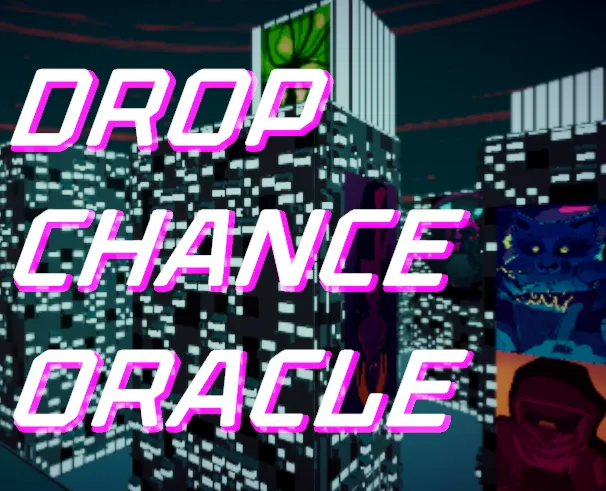
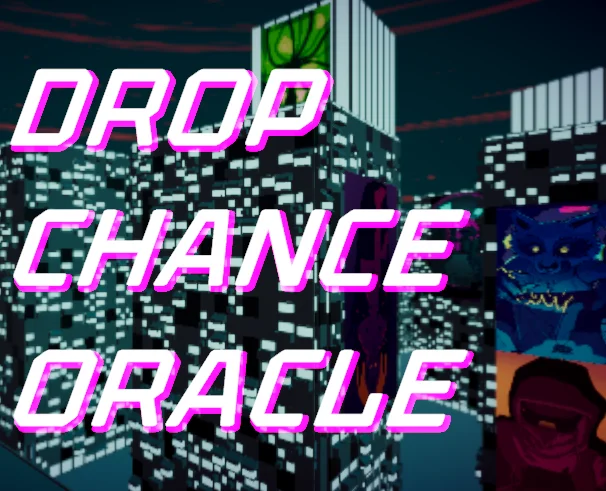
Drop Chance Oracle is a free browser-based card-pack-opening game that wraps surprisingly deep RNG-driven collection mechanics inside a biting capitalist dystopia satire. Developed by Fearsome Critter for the Summer Slow Jams 2026: Luck game jam, it asks: Do you seek fleeting nostalgic joy in a capitalist dystopia? Your answer comes in pulling pack after pack of Cyber Tarot Pull cards, hunting the one-of-a-kind, hyper-legendary THE WORLD — a card so rare that only a single copy has ever been printed.
What begins as a casual click-to-open experience reveals layered systems: you place pulled cards on a board to trigger combo synergies, each trigger earns points that escalate your drop rates, and a relentless rent mechanic forces you to sell portions of your collection just to stay afloat. It's part gacha simulator, part resource-management puzzle, and part commentary on modern life — delivered through a sleek cyberpunk tarot aesthetic and a haunting lo-fi soundtrack.
This guide covers everything from your first pack to the pursuit of THE WORLD, including the combo system, drop-rate mechanics, rent management, and the hidden math behind your odds.
Game Details
| Detail | Info |
|---|---|
| Genre | Card Game / Simulation / Casual |
| Developer | Fearsome Critter (Ryan Koning — Programming, Ian Rickett — Narrative Design, sardanella_illustrates — Card Art, backspace_ — Music) |
| Platform | Browser (itch.io / HTML5) |
| Price | Free |
| Players | Single-player |
| Release Date | June 23, 2026 (Updated July 3, 2026) |
| Status | Prototype (Game Jam Entry — Summer Slow Jams 2026: Luck) |
| Tags | Card Game, Deck Building, Gacha, Capitalism, Gambling |
| No AI | Verified — no generative AI used in development |
| Session Length | 15–45 minutes per run; endless replayability with escalating difficulty |
Target Audience
Drop Chance Oracle sits at the intersection of several player archetypes:
- Gacha / loot-box enthusiasts who enjoy the dopamine hit of pulling rare cards.
- Strategy fans who appreciate balancing short-term greed against long-term survival.
- Cyberpunk/dystopian-fiction fans who will love the world-building and thematic loop.
- Solo card-game lovers — if you enjoy Balatro, Luck Be a Landlord, or Scoundrel, this will click.
- Game-jam explorers seeking innovative, sharply-scoped experiences.
If you've ever opened a pack and thought "what if this was a whole game?" — this is for you.
Getting Started — First 30 Minutes
Your First Pack
When you load the game, you're greeted by a minimalist cyber-tarot interface. Click the pack to open it. Five cards spill out — each belongs to one of the Cyber Tarot Pull suits. At this stage, simply click cards to add them to your collection board. The game is teaching you the core loop: open → collect → organize.
Understanding the Board
Your board is a grid where placed cards can interact. Cards of the same suit or matching numerical values trigger combos when placed adjacent to each other. Early on, you won't have enough cards to worry about optimal placement — just fill the grid and watch what happens.
Your First Rent Payment
Around the 10-minute mark, the rent timer appears. A countdown begins, and when it hits zero, you must pay a sum proportional to your current collection size. You sell cards from your collection to generate currency. This is your first real decision: Which cards do you sacrifice? Selling higher-rarity cards gives more currency but hurts your collection progress.
The Score and Drop-Rate System
Every time a combo triggers after you pull a pack, your score increases. Your score directly influences your drop-rate multiplier — the higher your score, the better your odds of pulling rare and legendary cards. This creates the game's central feedback loop:
Pull packs → Place cards → Trigger combos → Score rises → Rarer drops → Pull better packs
First Run Expectations
Your first run will likely end within 20–30 minutes when rent overwhelms you. This is normal — each run teaches the pacing: when to hoard, when to sell, and how to build a board that generates score efficiently.
Advanced Tips
| Mistake | Why It Hurts | What to Do Instead |
|---|---|---|
| Hoarding every card | Rent scales with collection size. Keeping low-value commons bloats your rent without boosting score. | Sell common duplicates immediately — they clutter your board and inflate rent. |
| Ignoring board placement | Random placement misses combos, which means lower score and worse drops. | Study card suits and numbers. Place matching cards adjacent to trigger synergies. |
| Selling high-rarity cards first | You lose the cards that contribute most to combos and score generation. | Sell extra commons and uncommons. Only sell rares if rent is due and you have no other option. |
| Opening packs without board space | Cards go to waste if your board is full and you can't place them. | Manage board space before opening. Sell or reorganize to leave strategic slots open. |
| Ignoring the rent timer | Surprise rent = panic selling valuable cards at the worst moment. | Always keep a small currency reserve. Sell proactively when you see the timer approaching. |
| Over-focusing on THE WORLD | The hyper-legendary is deliberately near-impossible. Tunnel vision makes you mismanage your run. | Build a stable, high-scoring board first. THE WORLD comes from sustained high drop-rate runs, not from brute force. |
Core Mechanics
1. Pack Opening & Rarity System
The heart of the game is the pull. Each pack contains five cards drawn from the Cyber Tarot Pull set. Rarity tiers (from lowest to highest) appear to follow a standard gacha curve:
| Rarity Tier | Approximate Base Odds | Example Cards |
|---|---|---|
| Common | ~50% | Standard suit cards |
| Uncommon | ~30% | Cards with minor combo bonuses |
| Rare | ~15% | Cards with special effects |
| Legendary | ~4% | High-score combo anchors |
| Hyper-Legendary (THE WORLD) | <0.1% | The one-of-a-kind card |
Critical insight: Base odds are modified by your current score. A player with a high score sees significantly better pull quality than a player who just started a run. This means the optimal strategy is to build score first, chase rarity second.
The game only requires one copy of THE WORLD to exist in any player's collection at a time — it's a server-side singleton (or simulated singleton in the prototype). This creates a genuine "race" element even in single-player.
2. Board Placement & Combo System
This is where skill separates luck from strategy. Cards placed on your board interact based on:
- Suit matching: Cards of the same suit placed adjacent trigger a suit synergy, granting bonus score per combo step.
- Numerical sequencing: Cards with consecutive numbers (e.g., 3–4–5) in a row or column create a run combo that multiplies score.
- Cross triggers: Where suit matches intersect with run combos, you create a cross synergy — the highest-value trigger in the game.
Placement strategy evolves over a run:
- Early game: Fill the board efficiently, prioritizing suit adjacency.
- Mid game: Tear down suboptimal placements and rebuild around high-value legendary cards that serve as combo anchors.
- Late game: Every slot is precious. Plan 3–4 moves ahead before opening a new pack.
3. Rent Economy & Collection Management
The rent mechanic is the game's pressure valve. Each tick of the rent timer, you owe:
Rent ≈ Base Rent + (Collection Size × Rent Multiplier)
This means every card in your collection costs you. The game forces you to constantly evaluate the marginal value of each card:
- Cards on the board generate score (which improves drops).
- Cards in your collection but not on the board generate nothing but increase rent.
- Selling a card gives instant currency but permanently removes it.
Optimal rent strategy:
- Keep only your best ~20 cards on the board.
- Hold ~5–10 high-value duplicates in reserve for selling.
- Sell everything else immediately.
- Never let rent arrears build up — late fees compound the debt.
Advanced tip: If you time a large pack-opening spree right after paying rent, you have a full rent cycle to build score before the next payment. Use this window to maximize pulls while your board is fresh.
4. Score Progression & Drop-Rate Escalation
Your score is more than a number — it's the engine that improves your pulls. Score is earned from:
- Combo triggers (the main source)
- First-time card discoveries (small bonus)
- Selling cards (diminishing returns)
As your score crosses thresholds, your drop-rate multiplier increases. This means the game gets easier to sustain the longer you survive — if you can survive.
| Score Threshold | Effect |
|---|---|
| 0–500 | Base drop rates |
| 500–2,000 | Uncommon rate +10%, Rare rate +5% |
| 2,000–10,000 | Uncommon +25%, Rare +15%, Legendary +5% |
| 10,000+ | Significant across-the-board boosts |
The catch: rent also scales (indirectly) with score because your collection size tends to grow with your score. You must balance growing your score against managing your rent burden.
5. The "THE WORLD" Endgame
THE WORLD is the mythical capstone card. Only one copy exists per game session, and pulling it requires:
- A score above the hyper-legendary threshold (estimated ~15,000+).
- Sustained high-score pulls — one lucky pack isn't enough; you need to maintain elevated drop rates across multiple pack openings.
- Board space when you pull it — if your board is full when THE WORLD appears, you may lose it.
Pulling THE WORLD effectively completes the run — it's the ultimate card, and once it anchors your board, you've essentially "won" that session. The game doesn't end, but you've achieved the primary goal.
Advanced Strategies
The "Rent-Cycle" Method
Plan your run in rent-cycle blocks:
- Pay rent → you have a full cycle of breathing room.
- Spend freely — open packs aggressively, build your board, stack combos.
- Mid-cycle — evaluate your score. If plateauing, sell weak cards and replace them.
- Pre-rent — sell extras to build a currency buffer. Don't wait for the timer to hit zero.
This cadence prevents panic selling and maximizes high-score pulls per cycle.
Combo Anchor Prioritization
Not all legendaries are equal. Some cards are combo anchors — they provide a persistent score multiplier for all adjacent same-suit cards. When you pull one:
- Build around it immediately. Remove any off-suit cards adjacent to it.
- Prioritize pulling packs that have higher odds of matching its suit (the game subtly weights drops toward suits you have on board).
- Never sell an anchor. They're worth more generating score over multiple rent cycles than the one-time currency you'd get.
The "Lean Collection" Approach
Keep your collection as small as possible while maximizing board score. This means:
- Only keep cards that are actively on the board generating combos.
- Immediately sell all duplicates of cards that aren't on your board.
- If a card hasn't triggered a combo in three pack pulls, sell it and try something else.
A lean collection pays less rent, which means more currency for pack opening, which means more pulls, which means more chances at high-rarity cards. This is the single most impactful strategic shift most players can make.
Score Farming Before Boss Pulls
If you're approaching a score threshold (e.g., 1,950 / 2,000), don't open major packs yet. Instead:
- Reorganize your board for maximum short-term combo generation.
- Trigger as many combos as possible.
- Cross the threshold.
- Now open packs — every pull benefits from the improved drop-rate multiplier.
This sequencing can mean the difference between a run that stalls at Rare and one that breaks into Legendary territory.
FAQ
Q: Is Drop Chance Oracle free? A: Yes — completely free. No microtransactions, no ads.
Q: How do you "win"? A: Pull THE WORLD — the hyper-legendary singleton card — and place it on your board.
Q: Does progress carry over between runs? A: No. Each run is a self-contained roguelike-lite session starting fresh.
Q: Is it available on mobile? A: HTML5 works in mobile browsers, but the interface is optimized for desktop.
Q: Does it require internet? A: Yes — it's hosted on itch.io and runs in your browser.
Q: Are there secret cards beyond THE WORLD? A: Currently the prototype focuses on THE WORLD as the ultimate prize. More content may come post-jam.
Q: I keep dying to rent. What am I doing wrong? A: Over-collecting. A focused board of ~20 well-placed combo cards outperforms 40 random cards that bloat your rent. Sell aggressively.
Q: How long is a typical run? A: 15–45 minutes. Runs reaching THE WORLD territory can last an hour.
Q: Is it still being updated? A: Last updated July 3, 2026. Future updates depend on developer interest.
Final Tip & Verdict
Final Tip: Treat rent not as a punishment, but as a forced pruning mechanic. Every time you sell cards to pay rent, you're being given permission to clean out the weak cards from your collection. Embrace it. A ruthless, minimalist approach — where every card on your board earns its keep — is the fastest path to high scores and legendary pulls.
Verdict: Drop Chance Oracle is a remarkable game-jam entry that punches far above its weight. The core loop is deceptively simple (click → pull → place), but the interplay between combo placement, rent pressure, and escalating drop rates creates genuine strategic depth. The cyberpunk-tarot aesthetic is gorgeous, the soundtrack by backspace_ sets a melancholic, synth-driven mood, and the satirical "grind forever" narrative gives the mechanics a thematic punch that elevates it beyond a mere gacha simulator.
For fans of Balatro, Luck Be a Landlord, or anyone who has ever stared at a digital pack and wondered "what if this was the whole game?" — Drop Chance Oracle is an easy recommend. It's free, it's thoughtful, and it has one of the most compelling single-card chase objectives in recent memory. Pull the world, one pack at a time.
Guide last updated: July 2026 | Game How To Editorial
Screenshots