Official game
Play Where Stones Sleep
This game is hosted by Steam. Continue to the official page to play or download it.
Buy on SteamOverview
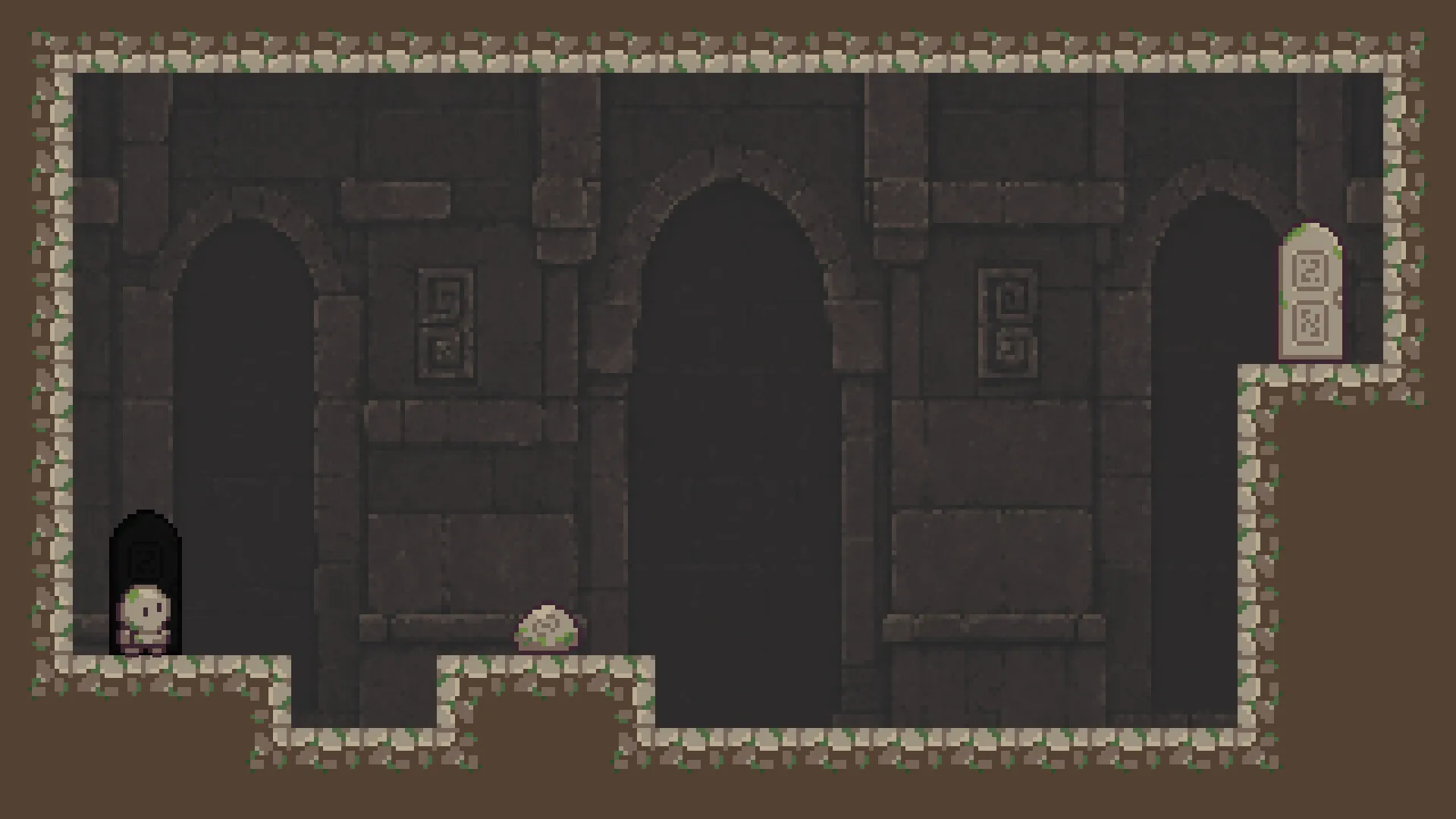
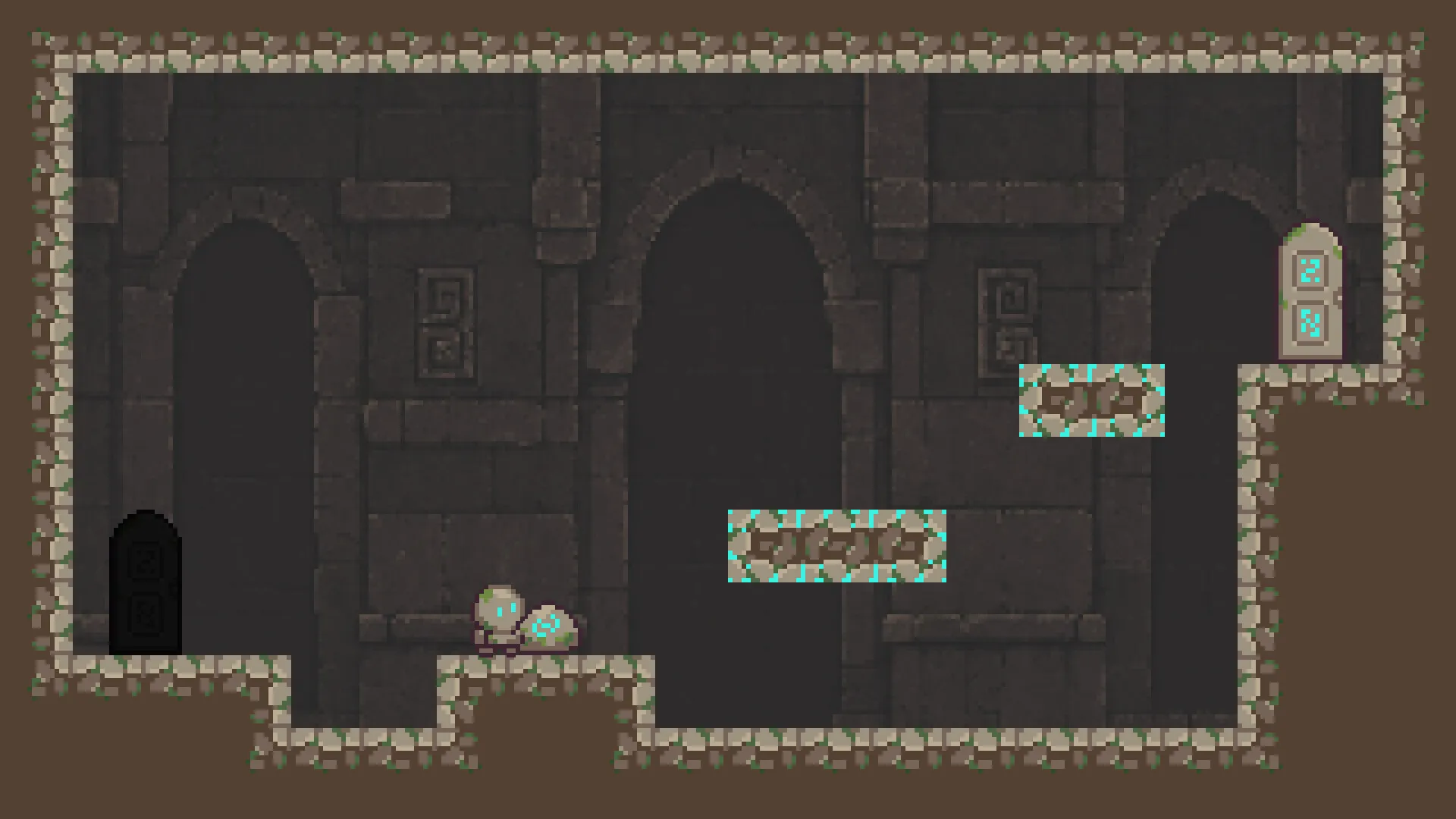
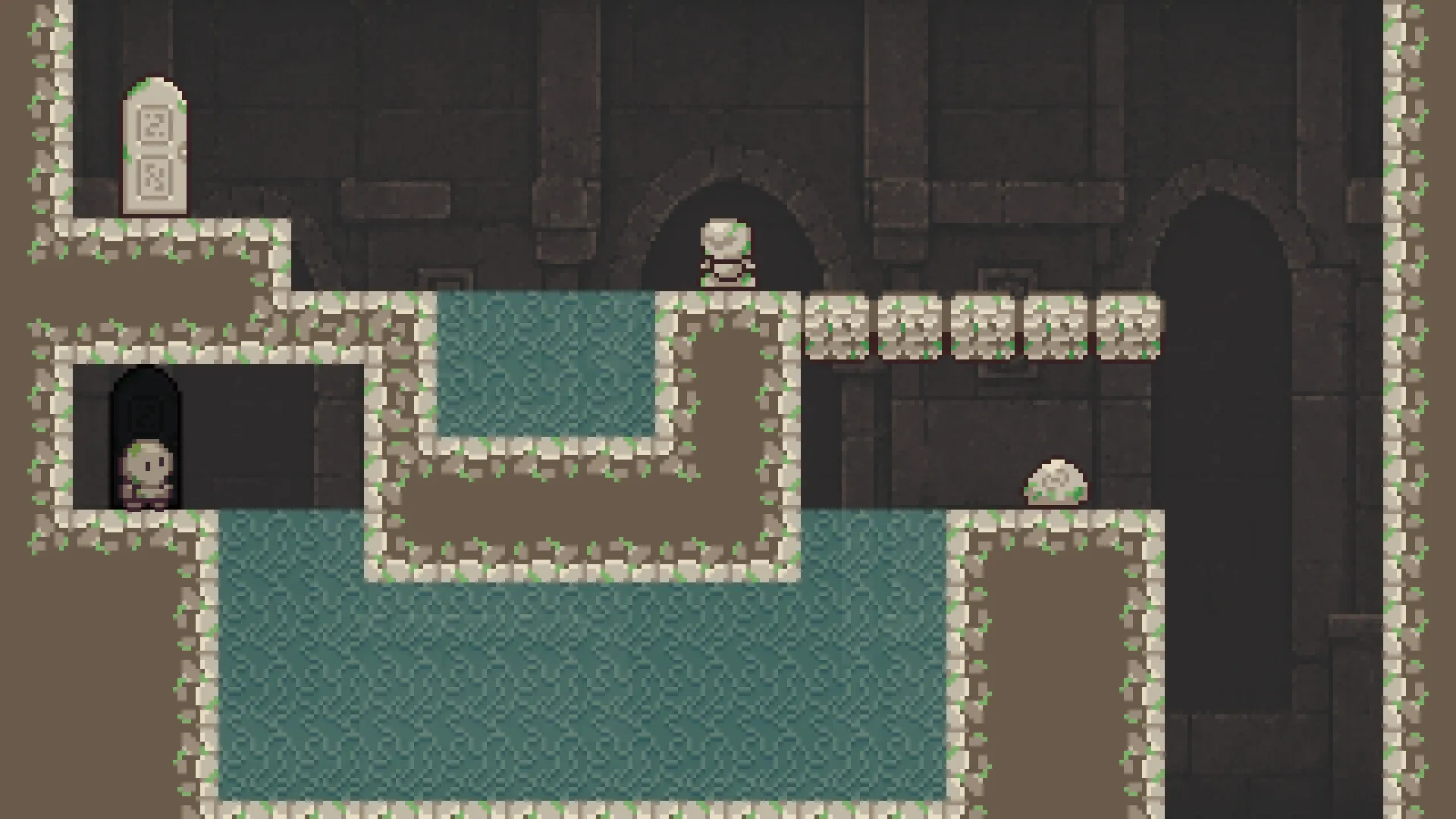
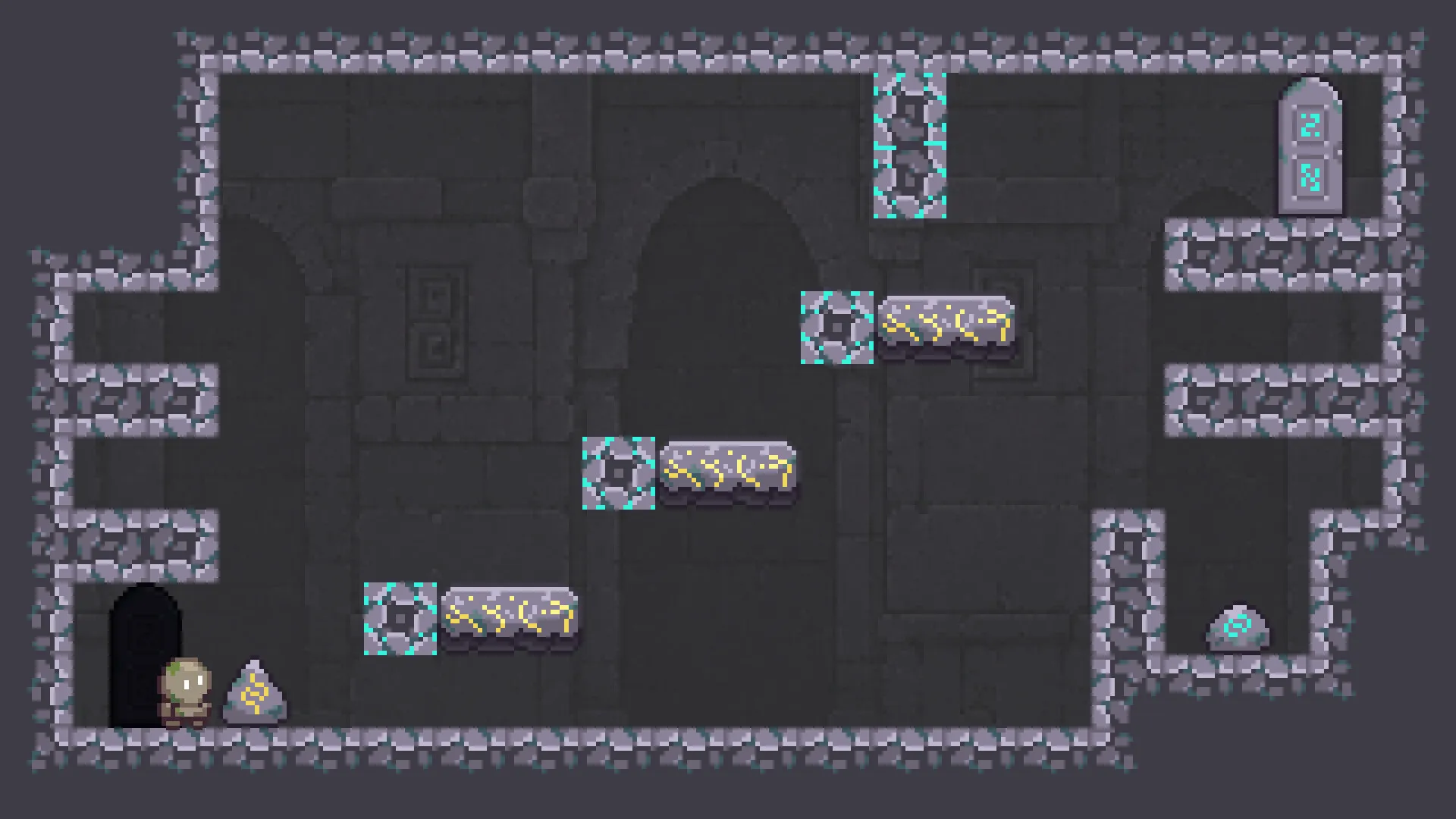
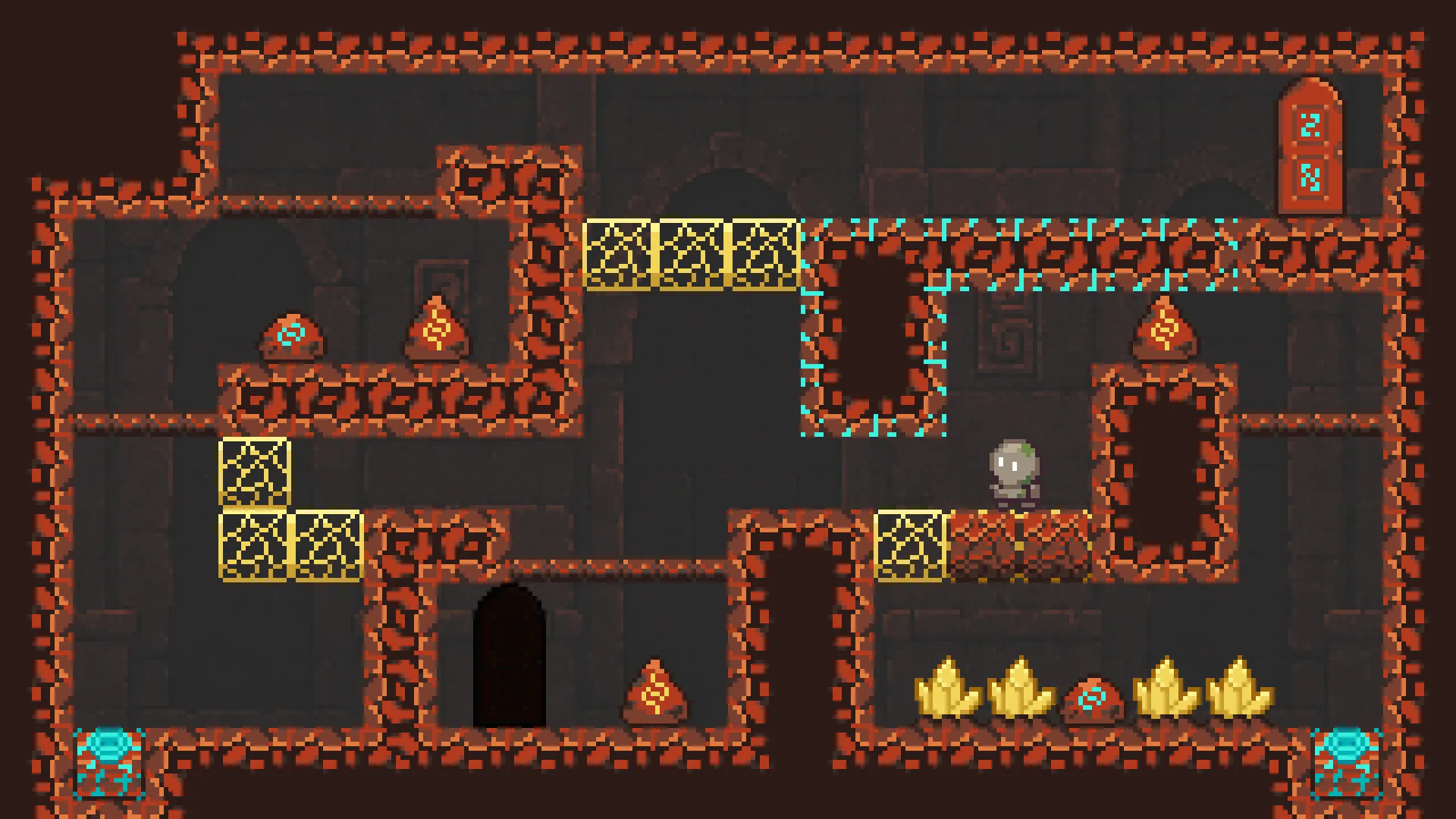
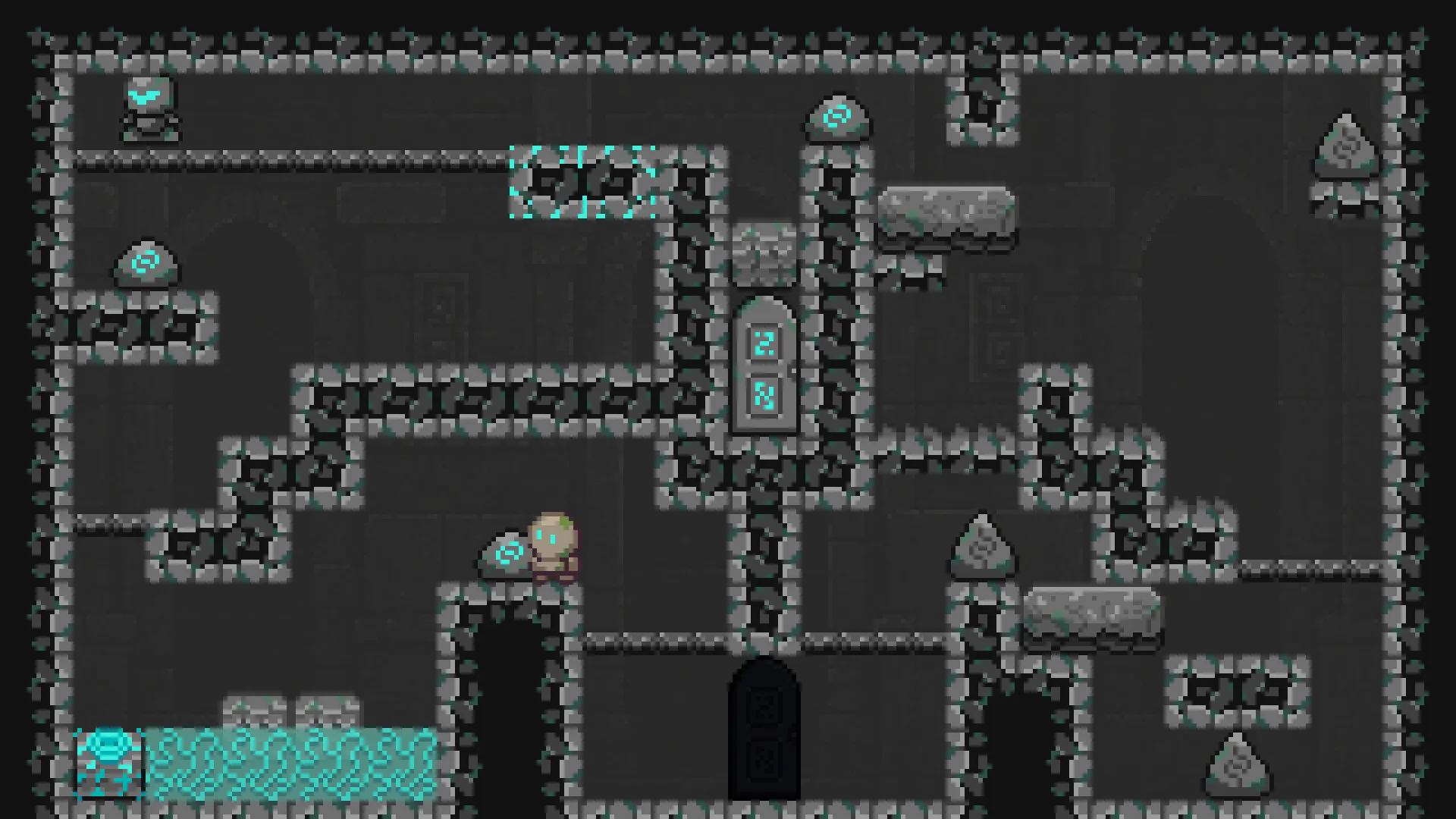
Where Stones Sleep is a 35-room single-screen puzzle platformer built around a deceptively simple idea: every room exists in two world states, and shifting between them changes the geometry. Developed and published solo by CptnCodyCentral, it released June 21, 2026 on Steam for $3.99.
The game draws clear lines to Baba Is You, Stephen's Sausage Roll, and A Monster's Expedition — thoughtful puzzlers where observation trumps reflexes. There's no combat, no timer, no death. Just 35 rooms across 5 Acts, each a self-contained logic puzzle where you shift, push, and sequence your way to the exit.
Update 1.1 (June 29) added 20 Steam achievements and a three-tier built-in hint system per room. File size sits around 500 MB. A standard playthrough runs 4-6 hours.
This guide focuses on what the standard walkthrough doesn't cover: the methodology behind solving puzzles efficiently, the achievement requirements, speedrunning optimization, and the hidden interactions that 100% completion demands.
Getting Started
There's no combat, no timer, and no fail state — only observation and logic. Your first session should focus on building the core habits rather than rushing rooms.
First-session priorities:
- Learn the two-state rule early. The fundamental mechanic: some objects exist in only one state, some persist across shifts, and some change what they do when you shift while standing on or near them. Test everything before you commit to a solution.
- Use the hint system, but calibrate it. The three-tier hint system is designed to preserve satisfaction: Hint 1 after 3 minutes stuck, Hint 2 after 5, Hint 3 after 10. Following that rhythm keeps frustration low without spoiling the solve.
- Master the Room Scan Protocol. The methodology chapter below breaks it down, but the habit is: walk every wall, interact with every tile, compare both states before touching a block.
- Undo is your friend. The undo stack is strictly better than reset for recovery — unless you've made more than ~15 actions, in which case reset is faster. Use undo liberally; it costs nothing.
Puzzle-Solving Methodology
The Room Scan Protocol
Every room has an intended solution. The designer placed every element with purpose. Before you touch a key, run this mental scan:
- Locate the exit. What holds it closed? A pressure plate? A switch? A specific world state?
- Identify all interactable objects. Pushable blocks, switches, pressure plates. Count them.
- Map the two states. Press shift immediately. Note everything that changes. Platforms appear/disappear? Walls move? New objects spawn?
- Find the constraints. One-way platforms? Crumbling tiles? Dead ends? Areas only reachable in one state?
- Form a hypothesis. "I need to push this block onto that plate in State A, then shift to State B to walk across the new bridge to the exit."
If you can't form a hypothesis after 60 seconds of scanning, you missed something in step 3. Scan again.
The Backward Chain Method
When stuck, reverse-engineer from the exit:
- "The door opens when this tile is pressed."
- "To press it, something needs to stand on it — either me or a block."
- "If a block, that block is currently unreachable in this state."
- "It's reachable in the other state, but the path from there to here is blocked."
- "So the sequence is: State A → push block → shift → State B → push block further → shift back → stand on plate."
This backward chain is the single most effective problem-solving tool for Where Stones Sleep. Every puzzle yields to this approach.
The Three-State Sequencing Trick
Many mid-to-late puzzles require multiple shifts per room. The standard pattern:
- State A (initial): Push a block into a holding position.
- Shift to State B: The block's position now blocks something or enables a new path.
- Shift back to State A: Walk the newly accessible path, push something else.
- Repeat until exit condition is met.
Key insight: A block pushed in State A stays pushed when you shift to State B. The block's position persists across states. But the obstacles around it change. This is the core of every multi-shift puzzle.
The Reset Discipline
Most players waste time trying to salvage a bad sequence. The rule: if you've taken more than 3 actions in the wrong direction, reset. The game resets instantly (R key) — no animation delay. A 3-second reset is cheaper than a 30-second recovery.
When to reset:
- You pushed a block to a position you can't reach anymore
- You're in a state you can't shift out of (you broke the sequence chain)
- You've been staring at the same layout for 3 minutes without progress
When NOT to reset:
- You made one wrong step. Use undo (Z) instead
- You're mid-sequence and not sure if it's working. Finish the sequence, then evaluate
Act-by-Act Difficulty Analysis
Act I: Tutorial (5 rooms)
Mechanics introduced: Movement, interaction, basic world-shift Difficulty: 1/10
These rooms teach the fundamentals. Each room introduces exactly one concept. If you're stuck here, you're overthinking. The exit is always visible from the starting position. Act I establishes a single golden rule: shift the world immediately and note what changed.
Act II: The Shift (7 rooms)
Mechanics introduced: Multi-step shifting, block-on-plate logic Difficulty: 3/10
Rooms 6-12 introduce the core loop: push in State A, shift, walk in State B. The puzzles are still linear — there's one correct sequence with no branching. Focus on learning the undo button here. It's faster than resetting.
Common trap in Act II: Players shift too often. Each shift is a deliberate action, not something to spam. Ask "What does shifting RIGHT NOW accomplish?" before pressing the button.
Act III: Complexity (8 rooms)
Mechanics introduced: Multi-shift puzzles, toggle vs. momentary plates Difficulty: 5/10
Rooms 13-20 branch into non-linear solutions. You'll need to shift 3+ times per room. Toggle plates stay activated after you step off; momentary plates reset instantly. Identifying which is which saves massive frustration.
Toggle plate tell: Toggle plates have a colored ring that stays lit after activation. Momentary plates return to default color when you step off.
Mental framework for Act III: Build a timeline of actions in your head. "State A: push block left. Shift. State B: walk across bridge. Push block down. Shift back. State A: block is now in position to reach exit."
Act IV: Advanced Logic (8 rooms)
Mechanics introduced: Hidden interactables, nested state dependencies Difficulty: 7/10
Rooms 21-28 are where the game separates casual players from puzzle enthusiasts. These rooms require you to:
- Shift mid-action (while pushing a block)
- Use the environment as a timing mechanism
- Interact with objects that are only visible in one state
Pro tip for Act IV: Try interacting with everything in the room — every tile, every wall, every decorative element. Some interactables don't look interactable. If your cursor changes when hovering, it's usable.
Act V: Mastery (7 rooms)
Mechanics introduced: Full mechanical integration, misdirection, double-bluffs Difficulty: 9/10
Rooms 29-35 demand full understanding of every mechanic. The puzzles are designed to look impossible until you identify the one interaction you've been ignoring. The hint system exists for these rooms. Use it.
Act V rule: If you've spent 10 minutes on one room, you've exhausted the reasonable approaches. Use Hint 1. Then Hint 2. The designer (CptnCodyCentral) calibrated the hints to preserve the "aha" moment while preventing rage-quits.
Achievement Guide (20 Achievements)
Update 1.1 added 20 Steam achievements. Here's how to get each one:
Progression Achievements (5)
| Achievement | Requirement | Notes |
|---|---|---|
| Act I Complete | Finish all 5 rooms in Act I | Unmissable |
| Act II Complete | Finish all 7 rooms in Act II | Unmissable |
| Act III Complete | Finish all 8 rooms in Act III | Unmissable |
| Act IV Complete | Finish all 8 rooms in Act IV | Unmissable |
| Act V Complete | Finish all 7 rooms in Act V | Unmissable |
Skill-Based Achievements (6)
No Hints Needed — Complete the entire game without using the hint system. This means never pressing H or clicking the hint button. One peek invalidates the achievement for that playthrough. If you want this achievement, plan a separate run.
Speedrunner — Complete the game under a time threshold. The exact threshold is community-discovered, but based on the game's length, sub-90 minutes is a safe target. Key optimizations:
- Every room has an optimal path. Learn it through repetition
- Use the R reset key (not menu navigation) when you misplay
- Buffer inputs: press the next direction before the current animation finishes
- Know which rooms have alternative solutions (some have faster skips)
Professional Rock — Puzzle-specific achievement. Likely involves using a pushable block as a platform in an unintended way. Experiment with standing on blocks and shifting.
Down We Go — Puzzle-specific challenge. Probably requires completing a room using only downward movement or similar constraint.
Spicy Water — Hidden interaction achievement. Try interacting with water tiles in various states. Some water tiles may have special effects in specific world states.
Curious George — Interact with every object type in the game at least once. Blocks, switches, plates, one-way platforms, crumbling tiles, and decorative elements all count.
Completionist Achievements (9)
The remaining 9 achievements are tied to:
- Revisiting rooms after Act V — Some achievements require completing rooms under specific conditions that aren't available on first playthrough
- Hidden interactions — Try pushing blocks to decorative positions, shifting in unusual locations, or standing on objects that appear to be background elements
- No-mistake runs — Complete specific rooms without using undo or reset
Achievement hunting strategy:
- First playthrough: enjoy the game, don't worry about achievements
- Second playthrough: go for No Hints Needed + Speedrunner simultaneously (sub-90 min, no hints)
- Cleanup: revisit rooms for hidden interactions and special condition achievements
Nothing is permanently missable. Every room is accessible from the hub after completion.
Speedrunning Optimization
Input Optimization
Where Stones Sleep supports keyboard, mouse, and controller. For speedrunning, keyboard is strictly faster:
- R for instant reset (no menu navigation)
- Z for instant undo
- E for world shift (keep your left hand on WASD)
- Spacebar for interact (thumb on spacebar)
No action in the game has a startup animation longer than 200ms. You can buffer inputs. If you press a direction 50ms before the current action finishes, it queues. This is crucial for tight sequences.
Room Routing Priority
Not all rooms are equal for speed. The 5 hardest rooms (Act V, especially room 33-35) take 2-3 minutes each even with optimal play. The other 30 rooms average 30-90 seconds.
Speedrun time budget:
- Act I: 3 minutes (5 rooms, ~36s each)
- Act II: 5 minutes (7 rooms, ~43s each)
- Act III: 8 minutes (8 rooms, ~60s each)
- Act IV: 15 minutes (8 rooms, ~113s each)
- Act V: 25 minutes (7 rooms, ~214s each)
- Buffer/transitions: 4 minutes
Total: ~60 minutes for a competitive time. Sub-60 is possible with perfect play.
Known Sequencing Skips
Some rooms have alternative solutions discovered by the community:
Room 14 (Act III): Instead of the intended 5-push sequence, you can skip 2 pushes by shifting mid-push animation. Time save: ~15 seconds.
Room 22 (Act IV): The intended solution requires 3 shifts and 4 pushes. An alternative route uses only 2 shifts by exploiting a one-way platform interaction. Time save: ~30 seconds.
Room 31 (Act V): This room's intended solution has a 50/50 chance on the first try due to a timing element. Learning the exact frame window saves repeated attempts.
Hidden Mechanics & Developer Tricks
Decorative vs. Functional Objects
The game deliberately blurs the line between decoration and function. Some tips for distinguishing:
- If it has a different color gradient from surrounding tiles, it's interactable
- If it glows faintly in one world state but not the other, interaction matters
- If it's the only object of its type in the room, it's probably a switch you haven't figured out how to use
The Two-State Persistence Rule
When you shift states, the following carries over:
- Block positions (they stay where you pushed them)
- Toggle switch states (on/off)
- Your character's position
The following resets:
- Crumbling tiles (reappear)
- One-way platform orientations (revert)
- Temporary obstacles (reappear)
This distinction is critical for Act IV and V puzzles. Memorize it.
The Hub's Hidden Purpose
The hub isn't just navigation. It actively tracks:
- Which rooms you've completed (stone lit vs. unlit)
- Your total completion percentage (visible in the pause menu)
- Whether you've used the hint system for a room (marked in the room select)
This tracking is how the game determines achievement eligibility. If you've used a hint on any room, "No Hints Needed" is voided for that save file.
The Undo Stack
The undo button (Z) doesn't just reverse movement. It reverses:
- Block pushes (the block returns to its previous position)
- State shifts (you revert to the previous state)
- Switch activations (switch toggles back)
This makes undo strictly superior to reset for recovery, unless you've made more than ~15 actions (the undo stack depth). If you've made 20+ actions and realized you're wrong, reset is faster.
Advanced Tips
- Shift as a reset, not just a traversal tool. Because terrain changes between states, a bad push in State A can often be corrected by shifting to State B, repositioning, and shifting back — no undo needed.
- Blocks persist; terrain doesn't. The single most useful rule in the game: pushed blocks stay where they are across shifts. Leverage that to hold plates, block paths, or create platforms in the other state.
- Screenshot both states. For the late symmetry puzzles (rooms 33+), screenshotting each state and comparing tile by tile exposes the intended path faster than trial and error.
- When truly stuck, walk every wall and press interact on every tile. The hidden-switch rooms (like Room 27) are designed so that exhaustive interaction always reveals the trigger.
- Don't chase 100% on your first run. The completionist achievements require specific conditions across all 35 rooms. Play through once cleanly, then use the achievement guide to plan a second targeted run.
FAQ
Q: I'm stuck on Act III, room 15. I've tried everything. A: You haven't tried shifting while standing on the block. Stand on the pushable block, then shift. The block's position persists, but the terrain around you changes. This interaction is the key to every Act III puzzle.
Q: Is the hint system worth using? A: Yes. The three-tier system is calibrated to preserve the satisfaction of solving while preventing frustration. Use Hint 1 after 3 minutes stuck. Use Hint 2 after 5 minutes. Use Hint 3 after 10 minutes.
Q: How do I know if a pressure plate is toggle or momentary? A: Toggle plates have a lit ring that stays on after you step off. Momentary plates return to dim/unlit. If you can't tell, test with a block.
Q: I can't find the last interactable object. Any tips? A: Walk along every wall. Press the interact button on every tile. Some objects only appear in one state. Some become interactable only after another object is moved.
Q: Can I play without a keyboard? A: Full controller support on Xbox, PlayStation, and Steam Deck. Button mapping is rebindable. Keyboard + mouse is recommended for precise block manipulation, but controller works for the full game.
Q: How long is 100% completion? A: ~8+ hours for all 20 achievements. The base game is 4-6 hours for a single playthrough.
Q: Is there DLC planned? A: The developer (CptnCodyCentral) has been active with three patches in the first ten days (1.0.1, 1.0.2, 1.1, 1.1.1). No DLC has been announced, but the update cadence suggests ongoing support.
Q: Why is there no combat or timer? A: The game is designed around observation and logic, not reflexes. The Steam category "Playable without Timed Input" is explicitly listed. The designer wanted a space where frustration comes from not understanding the puzzle, not from mechanical failure.
Q: The achievement "Spicy Water" — what do I do? A: Find a water tile in Act III or IV. Stand on it in State B. Then shift to State A while standing on it. The interaction changes based on state timing. Exact location is intentionally left vague to preserve discovery.
Q: Do I need 100% for the speedrun achievement? A: No. You only need to complete all 35 rooms. You don't need any other achievements for Speedrunner.
Room-Level Reference (Hardest Rooms)
These are the 5 rooms most likely to cause stuck points:
Room 22 (Act IV) — The triple-shift room. Requires pushing a block through a path that only exists for 1 shift cycle. Solution hint: push the block toward the wall in State A, shift to State B before it stops, walk around the newly appeared bridge.
Room 27 (Act IV) — The hidden switch room. One switch is not visible in either state — it's revealed only when a specific block is pushed to a specific tile. Try pushing every block to every corner.
Room 31 (Act V) — The timing room. A crumbling tile creates a window of opportunity that requires precise sequencing. The trick is that the crumbling tile reforms when you shift. Use the shift to reset the timer.
Room 33 (Act V) — The symmetry puzzle. Both states have mirror layouts, but the interactable objects in each state affect the other. Take a screenshot of both states and compare them tile by tile.
Room 35 (Act V) — The final room. Requires every mechanic in the game in a single continuous sequence. No shortcuts. No alternative solutions. This room took the developer the longest to design and it shows. The solution is ~15 moves across 5 state shifts.
This guide focuses on puzzle-solving methodology, achievement requirements, and speedrunning optimization. For a complete walkthrough of every room, the built-in hint system provides progressively detailed guidance designed by the developer. Updated July 2026. Game version: 1.1.1.
Screenshots