Official game
Play Rinthine
This game is hosted by Steam. Continue to the official page to play or download it.
Wishlist on SteamOverview
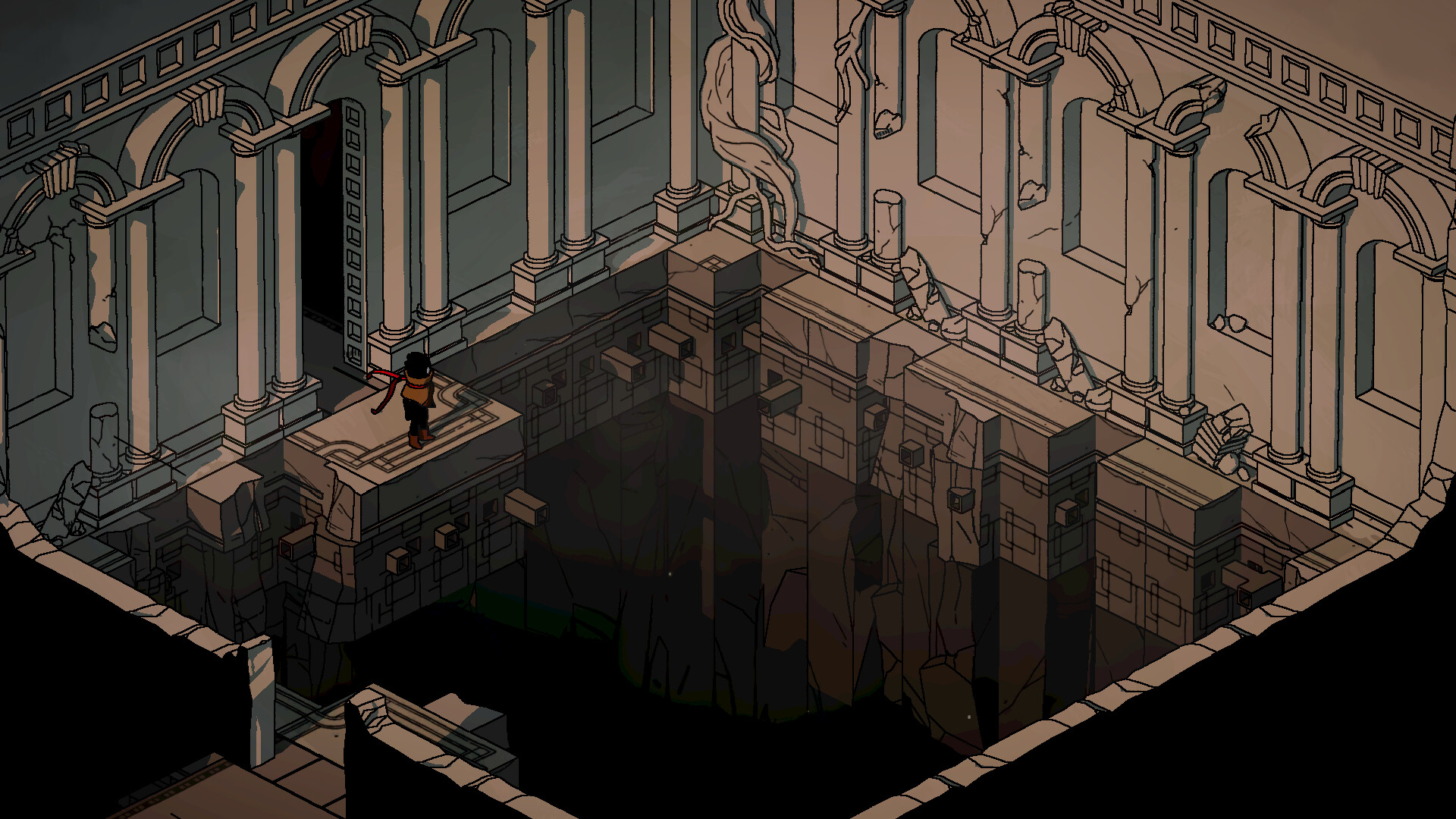
Rinthine is a survival-crafting adventure from Optillusion, the studio behind the award-winning puzzle game Moncage. You are the Wayfinder, dropped into the Machine, a labyrinth of winding halls, crumbling ruins, and buried secrets. Rooms never stay the same. Seasons cycle, enemies change, and the map you learned yesterday can be gone tomorrow.
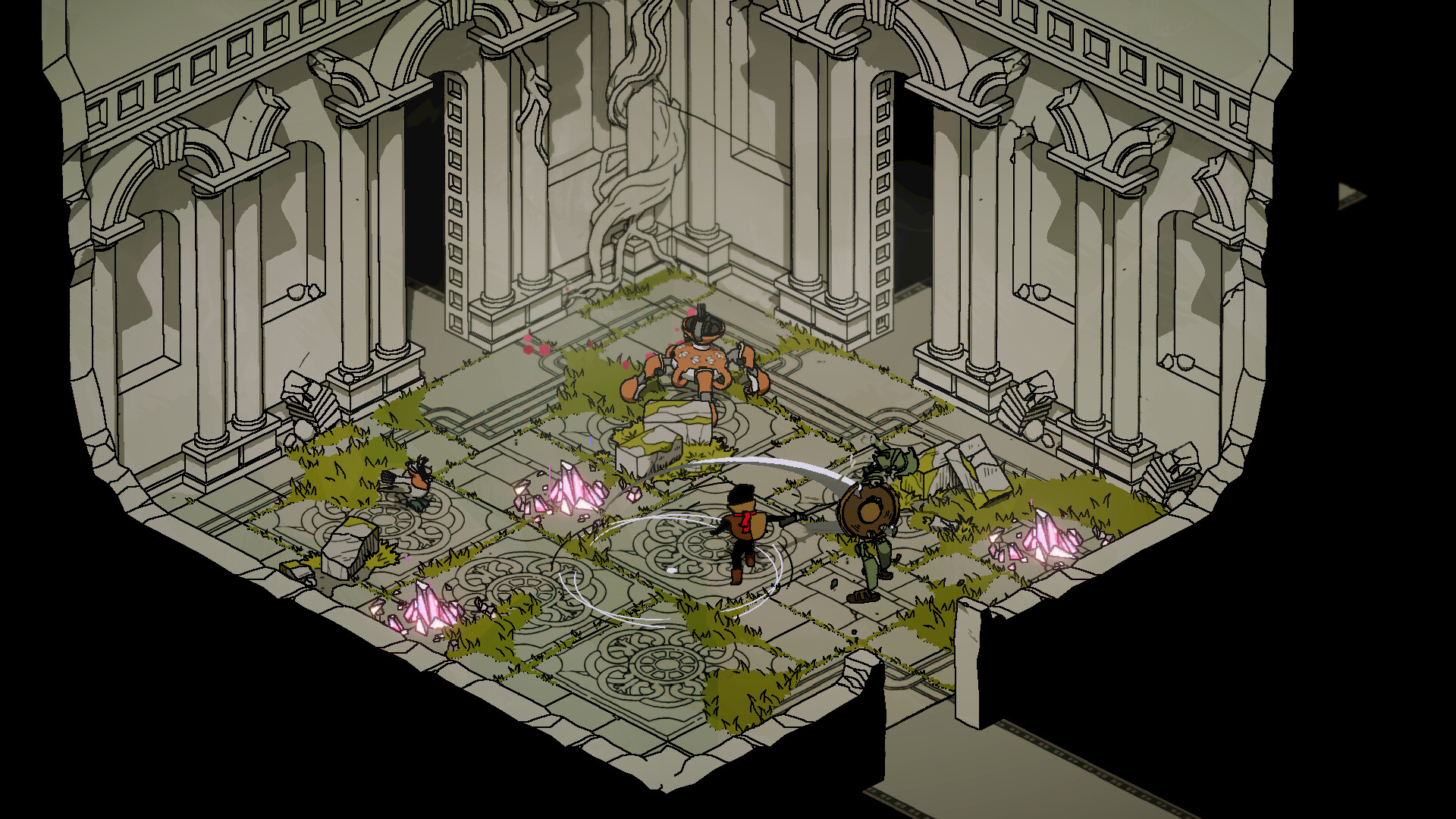
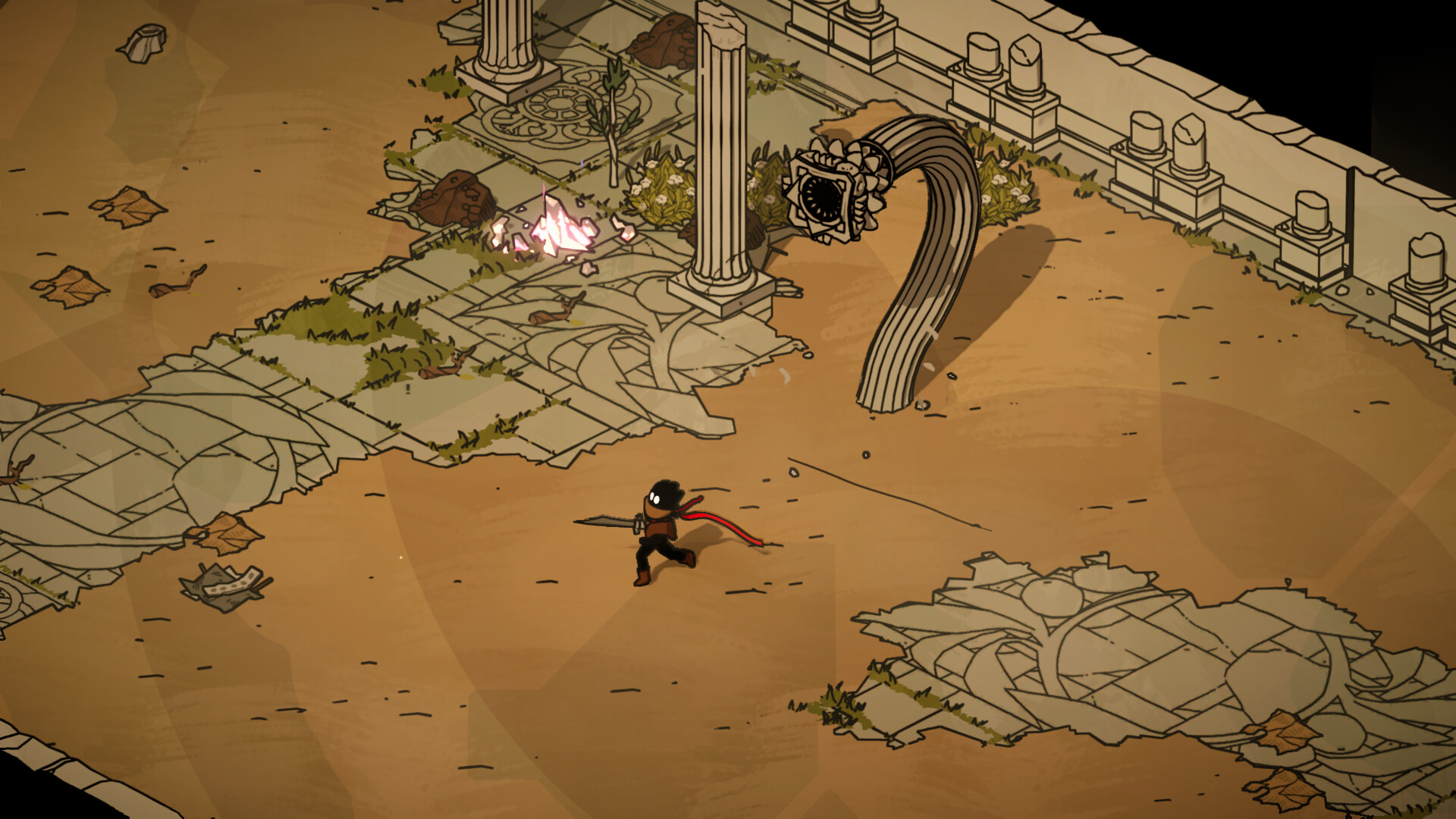
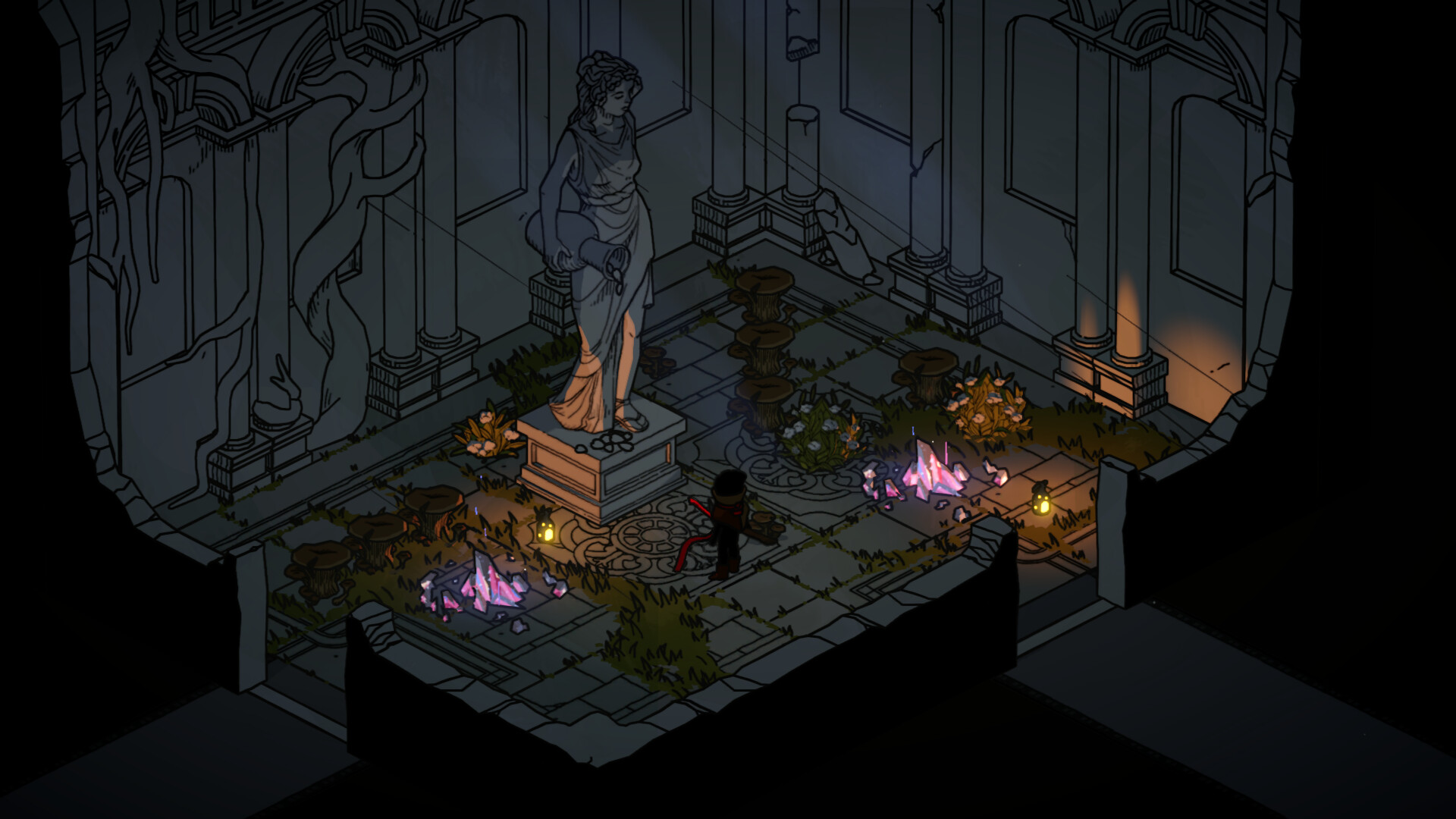
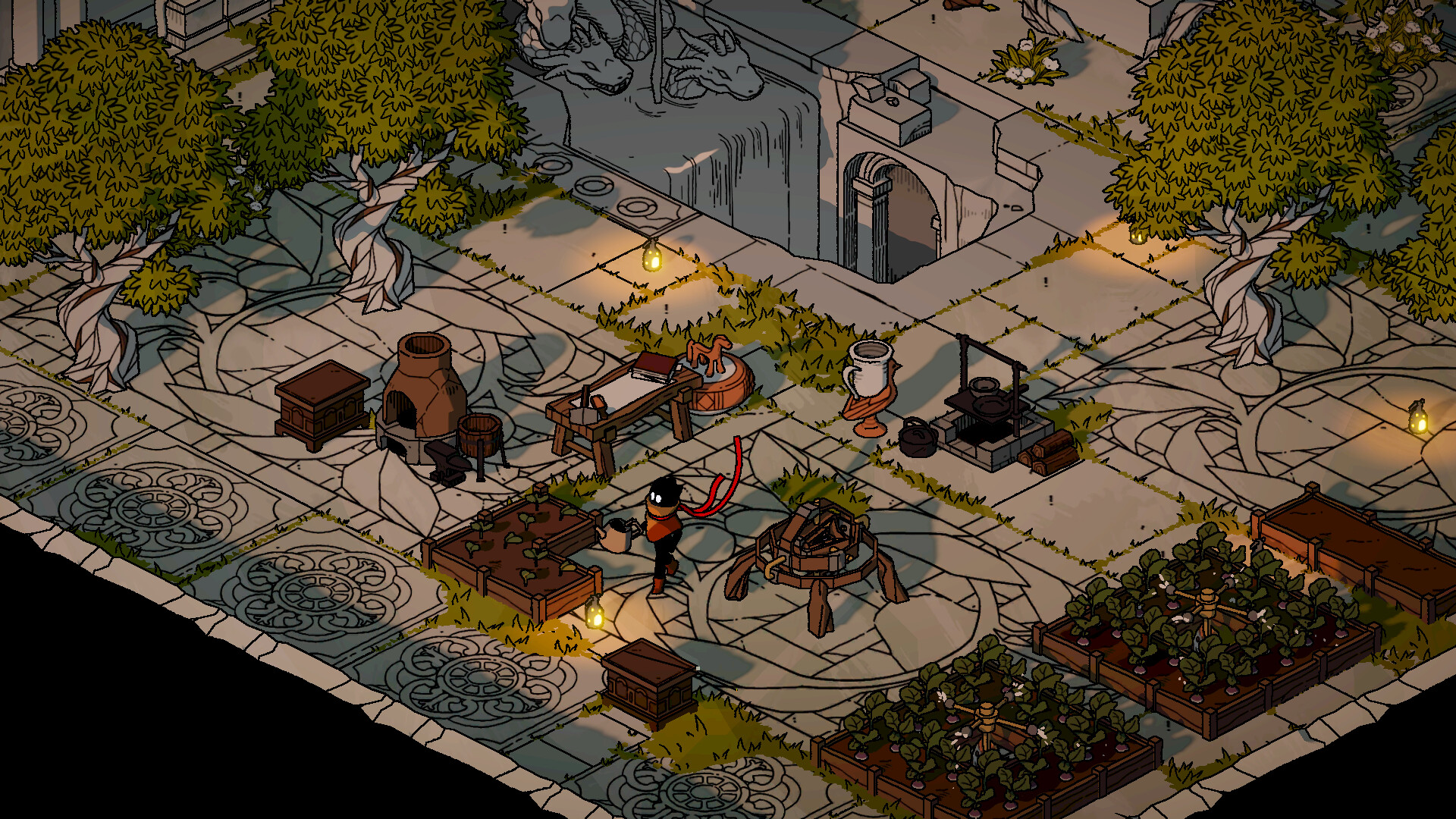
The game looks like a storybook painting come to life, which Optillusion calls a "living illustration": 2D hand-drawn art wrapped around fully traversable 3D space. Under that pretty surface runs a serious survival loop: scour rooms for resources, craft tools, cook and ration food, build a base, map your route, and survive the night. The official tagline frames the goal as secrets, treasures, or simply a place to call home.
Rinthine heads to Early Access. No date is set, but the development team has run multiple public playtests, and the game will appear at Gamescom (August 26 to 30) and Tokyo Game Show (September 17 to 21). The devlogs from the "From the Forge" series confirm far more mechanics than the store page alone: a Solitude mental state, a Shelter Detection System, equipment with passive effects, a physical Kiln crafting minigame, farming, fishing, pickling, mounted weapon racks, and a death system that lets you roll back a day.
Who it's for: survival-crafting veterans who want a shifting world instead of a static map, Moncage fans who want more of that dreamy, uneasy atmosphere, co-op groups planning a shared expedition, and anyone who likes watching an Early Access game grow through a public roadmap.
Who it's not for: players who want a handcrafted linear story today or a finished, feature-complete game on day one. Rinthine is in active development, systems change between playtests, and the story is explicitly incomplete at launch.
| Fact | Detail |
|---|---|
| Developer / Publisher | Optillusion |
| Genre | Survival-crafting adventure, Early Access |
| Platforms | Windows, macOS |
| Players | Single-player, online co-op in development |
| Release | Upcoming (Early Access) |
| Setting | The Machine, an ever-changing labyrinth |
| Role | The Wayfinder |
| Core systems | Survival, crafting, base building, Solitude, seasons |
| Confirmed extras | Kiln crafting, farming, fishing, pickling, weapon racks, Waygates |
| Death system | New world, roll back a day, or step away |
| Min spec (Windows) | i5-4460 / FX-6300, 8 GB RAM, GTX 960 / R9 280, 3 GB storage |
Getting Started: The First 30 Minutes
Rinthine's devlogs describe an Expedition Mode that starts you in a cozy nook pre-stocked with essential scrap, mining nodes, and fishing nodes. That is the developers' way of telling you what the first minutes should look like: grab the free stuff, learn the crafting book, and establish a base before the night arrives.
First 30 minutes, planned
- Raid the starting nook. Scrap, mining, and fishing nodes are seeded there on purpose. Gather everything before you wander. Early-game night events have been tuned to pressure you, so assume the first night is real.
- Open the crafting book and pin recipes. The devlogs confirm a recipe pinning system and a shopping list HUD that keeps required ingredients on screen. Pin a torch, a weapon, and a cooking tool first. The HUD will tell you exactly what to hunt.
- Place a bedroll and a campfire early. A bedroll answers a dozen design questions in the devlogs: sleeping skips or shifts the day, and the game cares about whether you can sleep safely. A campfire is a shelter anchor. The Shelter Detection System keys on spawn points, workbenches, lighting, and decorations.
- Test the toolwheel. The toolwheel got an expanded rework with fresh animations. Learn your tool order now, because when calamity walks the night you do not want to be fumbling through menus.
- Plan your return route before pushing deep. Rooms cycle and mobs can chase you from room to room. The way back is part of the expedition, not an afterthought.
Beginner mistakes to avoid
- Exploring without a fallback stash. Seasons change the map and mobs chase across rooms. A hidden cache of food and tools near a stable anchor protects you when an expedition goes sideways.
- Ignoring Solitude. The devlogs describe Solitude as a survival meter for the mind, kept at bay by a proper shelter with lighting and decorations. Neglect it and the labyrinth grinds you down even when your health is full.
- Fighting everything that moves. Ranged enemies now lead their shots, aiming where you will be, and nests seed fresh threats around them. Some fights are taxes you can skip by re-routing.
- Wasting food on trips without a plan. Fishing and cooking are in, but food is still rationed. Early on, cook only what the night demands and preserve the rest.
- Building your base in a rich room that might vanish. If rooms rotate with the seasons, a stable anchor room beats a resource-rich room that cycles away. Learn which room types persist before you commit the workbenches.
First Session Priorities
| Priority | Why it matters |
|---|---|
| Free starting resources | The Expedition nook exists to kickstart you; take it |
| Shelter and bedroll | Solitude and night safety both anchor on a recognized home |
| Recipe pinning | The shopping list HUD removes guesswork from gathering |
| Return route | Rooms cycle; a two-minute walk out can become a twenty-minute scramble back |
| Season awareness | Biomes tie to progression; the current season defines what you can gather |
Core Mechanics Explained
The Survival Loop and the Wayfinder
The loop is classic survival scaffolding with a labyrinth twist: scout, gather, craft, cook, build, rest, repeat. Each cycle funds the next expedition into deeper rooms. The twist is that the environment itself works against you: rooms cycle, seasons shift resources, and enemies now interact with each other and chase you across doorways.
Solitude and the Shelter Detection System
The devlogs confirm two connected systems. Solitude is a mental state that builds when the Wayfinder is alone, exposed, or unsettled. You counter it by building a home the game actually recognizes. The Shelter Detection System evaluates rooms as you build: place spawn points, workbenches, proper lighting, and cozy decorations, and a cold stone chamber becomes a recognized home that actively keeps Solitude at bay. Checkpoint statues generate into the world as proper safe harbor, and the UI has been rebalanced to make Solitude readable at a glance.
Practical reading: base building is not cosmetic. It is the anti-Solitude mechanic, and it interacts with the death system described below.
Death: New World, Roll Back a Day, or Step Away
Defeat opens a real choice: start a new world, roll back a day, or step away. That is a roguelite structure layered on the survival loop. A bad night is not necessarily run over; rolling back a day lets you correct the mistake that cost you. Expect permadeath-style tension but with a built-in undo for the day's worst decision.
Equipment with Passive Effects
The equipment system is more than stat sticks. Confirmed modifier categories include movement modifiers, crop freshness preservation, lighting, and defensive traits. Hotbar equipment can carry passive effects. That changes loadout thinking: what you carry is a build, not just gear. A lantern-style light item is a Solitude tool and a safety tool. A freshness item changes how much farming you can do between base trips.
Combat: Relic-Tech Nightmares
Enemies are entities born from mythology and unknown technologies. The devlogs confirm combat tuning across every playtest:
- Ranged enemies lead their shots. They fire where you are going to be, not where you are. Never strafe in a straight line at a constant speed.
- Interactive nests seed threats. Killing the nest matters as much as killing the spawns.
- Mobs chase from room to room. Doors are not safe. Check behind you before you loot.
- Mobs interact with each other. Aggro chains and creature interactions are real; a fight can snowball.
- Weapons feel distinct. Melee animation sets are wider, impact timings re-tuned. The bow has begun first pass, and ammo loading is in.
Combat is meaningful but the game rewards preparation over reflexes: gear that gives defensive traits, light to see threats early, and a route that keeps a door between you and a chase.
The Kiln, Crafting, and the Item Wiki
Crafting goes physical. The Kiln is not a menu button: you interact with physical mold tiles and arrange patterns inside key molds to fire custom items and materials. The crafting book supports recipe pinning and a shopping list HUD, and the game now has foundations for an in-game item wiki. Plan around it: crafting is a spatial minigame, so batch your kiln work at base instead of crafting one item between expeditions.
Farming, Cooking, and Fishing
Confirmed agriculture and food systems:
- Crops: persimmons, garlic, potatoes, carrots, wild mustard, and sprouting plants.
- Tree care: watered trees yield infinite harvests; dehydrated crops wither and leave only fibers or logs.
- Preservation: pickling jars preserve food, and crop freshness preservation is an equipment modifier.
- Fertilizer: soil fertilizers are in the resource catalog.
- Cooking minigame: cooking got a touch-up pass, separate from simple menu crafting.
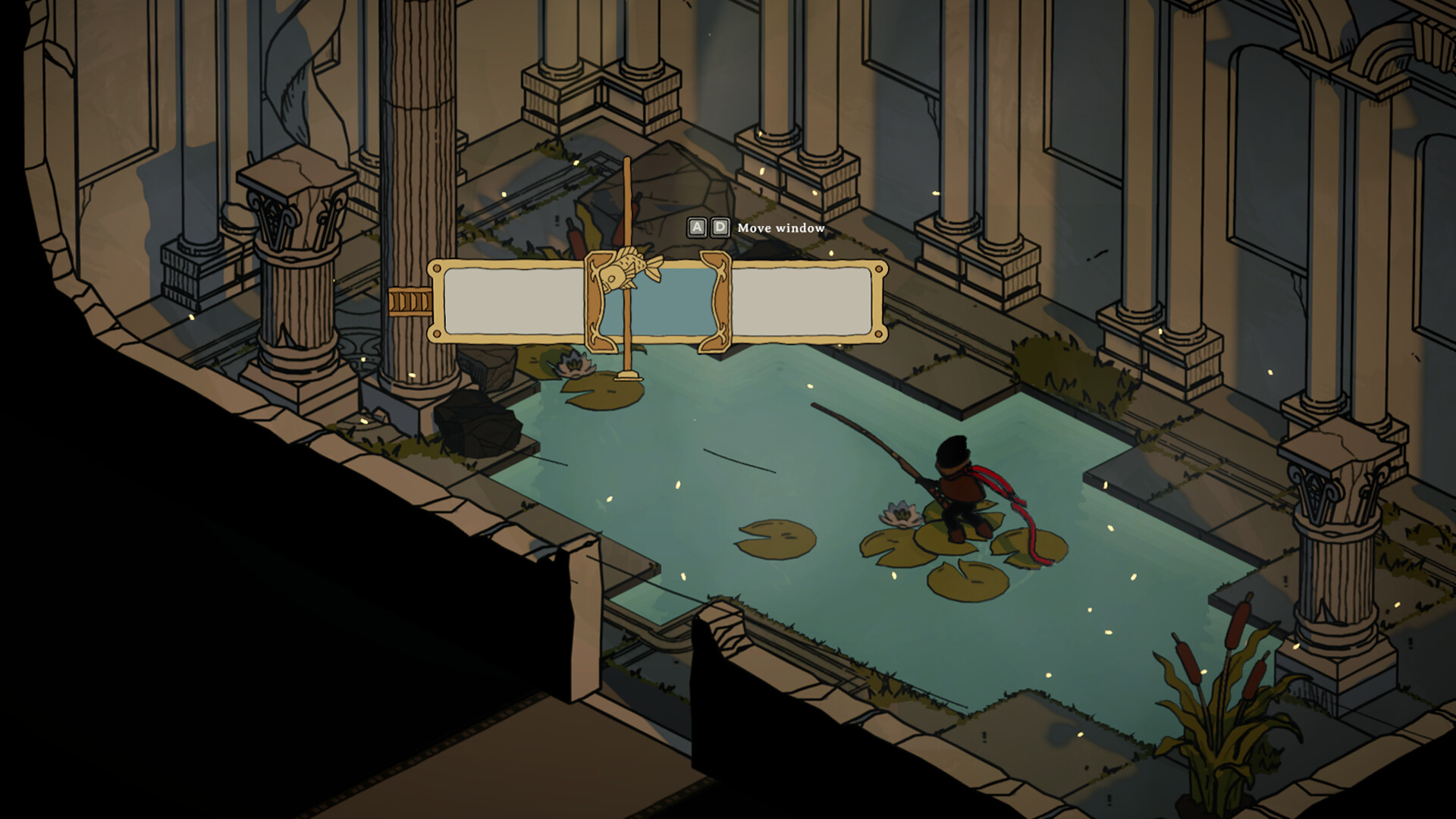
- Fishing: fish come in varying difficulties and rarities, fish dart away if you swing tools or approach aggressively, and there are dedicated baits.
The economy reads clearly: fresh food is a day-to-day resource, pickled food is your expedition reserve, and fishing is the fastest food source if you can be patient near water rooms.
Seasons and Room Cycling
Seasons change the environment, the enemies, and introduce new mechanics. Early Access launches with room cycling across the first two seasons, and the devlogs say biomes are tied to progression. The practical consequences:
- Landmarks are unreliable. Re-verify routes after each shift.
- Seasonal materials differ. What you can gather now may be gone next cycle.
- The first two seasons define the launch meta. Learn both before judging the game.
The Cartographer Table and Waygates
The devlogs tease a map-and-travel spine: the Cartographer Table and Waygates, plus a map saving system that was reworked to squash run-breaking glitches and map fog bugs. Expect fast travel between discovered anchors as a mid-game unlock, which makes forward base placement and waypoint discovery a real strategy.
Progression: The Mechanic Unlock System
The developer confirms "a central spine for progression items, locks and machine rooms, so capabilities arrive in an order we choose." Combined with the starter room tuned for pacing and machine rooms and doors marking the way forward, Rinthine's progression is gated: the world literally opens up as you unlock mechanics. Biomes tie to this progression, so the deep labyrinth is not just harder, it is a different ruleset.
Progression Strategy
What to unlock first
The order the game wants is not necessarily the order of your curiosities. Based on confirmed systems:
| Phase | Priority | Reasoning |
|---|---|---|
| 1 | Shelter (spawn point, workbench, light, bedroll) | Solitude defense + night safety; unlocks safe storage |
| 2 | Basic tools + a weapon | Gathering speed and fight competence, the two currencies of day one |
| 3 | Cooking + a food surplus | Night survival and expedition fuel |
| 4 | Kiln access | Better tools and custom items; batch your work |
| 5 | Cartographer Table / Waygates | Fast travel turns the map into a home network |
| 6 | Farming + pickling | Turns a food surplus into a passive income |
| 7 | Deeper machine rooms | Biome-tied progression, new mechanics, new materials |
Base placement theory
The machine rearranges rooms, so base placement is a real decision:
- Anchor rooms over rich rooms. A stable room that persists across seasons beats a lush room that cycles away.
- Proximity to a Waygate candidate. If the Cartographer Table system connects discovered points, a base near a hub point is worth the weaker local resources.
- Shelter score over size. The Shelter Detection System rewards lighting and decorations, not square footage. A small, lit, decorated room beats a huge dark hall.
- Second base logic. Once Waygates exist, consider a forward outpost near the biome you are progressing into, with the main base as your food and crafting heart.
The day and night economy
"Survive the night" is the core pressure. Structure your day:
- Morning: check shelter, cook breakfast, pin recipes for the day's objectives.
- Midday: gather and explore outward, always keeping the return route in mind.
- Late afternoon: return, deposit loot, repair or craft.
- Night: stay in or near shelter, keep light up, keep Solitude managed.
- Before sleep: verify the bedroll is placed and the area is aggro-free, because the devlogs show the game tracks whether you can sleep safely.
Builds and Tier Lists
Rinthine's equipment passives make loadouts real. Rank the confirmed modifier categories by how often they pay off:
| Tier | Equipment focus | Why |
|---|---|---|
| S | Movement modifiers | Rooms cycle and mobs chase; speed is survival and time is food |
| S | Defensive traits | Night events and relic-tech enemies punish glass cannon runs |
| A | Lighting | Early threat spotting, Solitude relief, shelter recognition |
| B | Crop freshness | Strong only once farming is your food engine |
| C | Pure damage early | A faster kill helps, but a missed swing costs the same |
Weapon preference is playstyle, not math: melee got wider animations and distinct feel, the bow trades risk for range, and ammo loading is in the game. If you cannot dodge, carry the defensive items and a fast tool.
Playstyle archetypes
| Archetype | Loadout bias | Night strategy |
|---|---|---|
| Scavenger | Movement + light, minimal weapons | Outrun and outsee; never hold a door |
| Builder | Shelter score items, storage | Fortify one anchor and defend it |
| Fisher-Farmer | Freshness item, baits, pickling jars | Stay near water and crops; let the base feed the run |
| Explorer | Movement + ranged (bow) | Push deep, use Waygates, keep a rollback day in reserve |
Step-by-Step Strategy
Sequence 1: Day one base establishment
- Clear the starting nook and collect the seeded scrap, mining, and fishing nodes.
- Pin recipes for a bedroll, a light source, and a basic weapon in the crafting book.
- Find a room with a defensible entrance and place the bedroll and campfire.
- Add lighting and a workbench so the Shelter Detection System recognizes the room.
- End day one inside shelter with food stored, not in your pack.
Sequence 2: The standard expedition
- Check the map and confirm the return route before leaving the base.
- Set a hard turnaround time based on daylight, not on how good the loot is.
- Gather with the pinned shopping list visible; skip materials you do not need.
- Watch for mob interaction chains: if two creatures are close, expect them to aggro together.
- Return before night, deposit everything, and cook down the perishables.
Sequence 3: Night survival
- Keep the light on and stay inside the recognized shelter.
- If a night event triggers, verify the bedroll placement permits sleep, else stand guard with a weapon out.
- Do not fight what you can outwait. Night threats in Early Access are tuned, not endless.
- If Solitude is climbing, interact with the shelter: adjust lighting, check decorations.
- Sleep only when the area is clear; a bad respawn at night is how runs bleed out.
Sequence 4: The farming pivot
- After the first food crisis, plant persimmons and garlic near the base.
- Keep trees watered; dehydrated crops leave only fibers and logs.
- Set up pickling jars to convert surplus into expedition rations.
- Equip a freshness preservation item so harvests last between trips.
- Use fertilizer on the plots that matter; soil is a resource too.
Sequence 5: Fishing the water rooms
- Find a water room or the bathhouse biome; entry may require swimming and wading.
- Approach slowly. Swinging tools or rushing sends fish darting away.
- Use the right bait for the difficulty and rarity you want.
- Fish in the morning; a full catch covers the day's food and leaves pickling surplus.
- Map the water room as a repeatable node before it cycles with the season.
Sequence 6: Pushing the deep machine
- Follow the machine rooms and doors that mark the way forward.
- Expect biome changes to gate progression, so gear up for the new rule set before crossing.
- Place a forward outpost when Waygates connect the map; the main base stays your crafting heart.
- Against ranged enemies that lead their shots, break line of sight and change speed and direction.
- If the night goes wrong, choose roll back a day over a new world; the mistake is cheaper than the reset.
Advanced Tips
- Learn the mob interaction rules. The devlogs confirm creatures interact with each other. A fight that pulls a second mob type changes behavior; learn which pairs chain and which ignore each other.
- Be unpredictable against ranged enemies. They aim where you will be. Stutter-step, change direction at the last moment, and use doorways to reset their aim.
- Batch your Kiln work. The Kiln is a physical mold minigame; one trip to the kiln for five items beats five trips for one.
- Treat Solitude as a timer, not a flavor stat. When shelter recognition is off, Solitude climbs; when it climbs, the night gets worse. Recheck your lighting after every season change.
- Keep a rollback day in reserve. The death choice is a strategic resource. Do not burn it on small mistakes; save it for the night that could end the run.
- Stay fishing-polite. Fish are skittish by design. The difference between a patient catch and a rushed one is rations for the whole next day.
- Re-map after every season. Map fog and saving were reworked for a reason; old maps lie. Re-verify anchors each cycle.
FAQ and Common Mistakes
Is Rinthine single-player? Yes, at its core, with online co-op confirmed on the Steam feature list and multiplayer explicitly in development. The team restructured the codebase around server and client separation to make co-op work properly, so expect it, but single-player is the baseline at launch.
What is Solitude? A mental survival state that builds when the Wayfinder is unsettled or alone. Proper shelter, lighting, and decorations actively keep it at bay.
What happens when I die? You choose: start a new world, roll back a day, or step away. Rollback is the forgiving option and the devlogs treat it as a deliberate design choice.
Do rooms really change? Yes. Rooms mix handcrafted and procedurally generated spaces, and seasons change the environment, enemies, and mechanics. Early Access launches with room cycling across the first two seasons.
What should I build first? A bedroll, a campfire, lighting, and a workbench, placed so the Shelter Detection System recognizes the room as a home. Everything else follows from having a safe anchor.
Is there fast travel? The Cartographer Table and Waygates are confirmed in development, along with a map saving system. Expect travel between discovered anchors as a mid-game unlock.
The biggest mistake new players make? Pushing deep without a return route. Rooms cycle and mobs chase across doorways, so the expedition that felt like a ten minute walk out becomes a death march back. The map is a survival tool, not a convenience.
The Creature Field Guide: Everything Confirmed About the Machine's Inhabitants
The devlogs have quietly built one of the more interesting bestiaries in the survival genre, and every confirmed behavior doubles as counterplay advice. Here is the complete roster the developers have shown or named, and what each entry means for how you move:
| Creature | Confirmed behavior | How you counter it |
|---|---|---|
| Ranged relic-tech horrors | Lead their shots at where you will be | Stutter-step, break line of sight, never move at constant speed |
| Nest-spawning threats | Interactive nests seed fresh spawns | Kill the nest first, always; spawns are infinite until you do |
| Chasing mobs | Pursue across doorways between rooms | Doors are not safe; check your back before looting |
| Aggro-chained pairs | Mobs interact with each other | Split encounters with geometry before engaging |
| Giant stone serpents | Named in the devlog roster | Unrevealed mechanics; expect room-scale encounters |
| Sentient armor sets | Named; "a non-zero amount of sets" | Likely melee enemies with equipment-tier loot |
| Lizard things and avian ladies | Named regional creatures | Wind-up animation passes confirmed for all regional fauna |
| Dancing turtles | Named, tone lighter | Likely friendly or neutral; the befriend angle of the roster |
| Unpettable canines | Named as a joke about petting | Befriending systems exist; boars are officially befriendable |
| Flying death rays | Named; aerial threat | Ranged coverage matters in open rooms |
| The eldritch thing | John Carpenter comparisons from the art team | Expect a horror-tier encounter, not a regular mob |
| Lily-clad water dwellers | "Deceivingly-placid" waters | Water rooms hide threats; approach like the fishing system taught you |
Two patterns matter more than any single entry. First, the wind-up animation overhaul means every enemy telegraphs: the studio deliberately invested in readable attack starts, so learning tells is a real skill path and fighting blind is a choice, not a requirement. Second, the ecosystem design (mobs interacting, nests feeding rooms, chases crossing thresholds) means a fight's difficulty is set by where it happens, not by the enemy alone. Pull a serpents-adjacent pack into a narrow hall with a nest behind you and the difficulty is your routing failure, not your gear.
And the friendliest entry is official: the store page's own line is "Always wanted to befriend a boar? Well now you can!" Befriending is a confirmed alternative to combat for at least part of the roster, which means food you carry is also diplomacy. A Wayfinder who travels with spare rations is a Wayfinder with options.
How the Labyrinth Actually Changes: Rooms, Grids, and Fractured Spaces
Room cycling is the game's headline, but the devlogs reveal three distinct layers to how the Machine reshapes itself, and they change at different speeds:
Layer one: the grid under your feet. Creatures in Rinthine do not use the engine's built-in navigation. Under every room sits a second, invisible map marking walkable floor, and everything that moves shares it. The developer's own point from the pathfinding devlog: this map now changes while things are standing on it. Translation for players: an escape route can close mid-chase, an enemy can be standing on floor that becomes impassable, and the game's pathfinding re-solves around it live. When a pursuer suddenly gives up at a threshold, that is not AI stupidity, that is the grid changing under it.
Layer two: room content cycling. Rooms mix handcrafted and procedurally generated spaces, and the seasons cycle room contents and connections. Early Access launches with cycling across the first two seasons (Laurel and Vermillion are the two named). Maps you draw last exactly one cycle; the map-saving rework exists because the old map fog lied to players after shifts.
Layer three: fractured spaces. The most recent architecture pass ("Fractured Spaces") unified two hundred-plus features into a server-client structure, and the visible result is that rooms now bleed into one another in continuous spaces instead of hard-loading between doorways, with deep water hidden beneath newly layered tilesets. Practically: sightlines can cross room boundaries, and what looks like a wall may be a load-bearing illusion. Verify escape routes on foot, not by eye.
For base placement this stacks into one rule: anchor to what changes slowest. A room's geometry (layer three) is the most stable thing in the world; its contents (layer two) cycle every season; its walkability (layer one) can shift mid-fight. Build your home against stable walls, store supplies for the season, and never trust a route you have not walked since the last change.
The Development Story: One Year of Forging, and What It Tells You About Launch
Rinthine has the most transparent development trail in its genre weight class, and reading it correctly predicts what Early Access will look like. The timeline from public devlogs and events:
2025 mid-year     Project passes its "not quite fun yet" phase; first closed
                  playtest group forms, hundreds of test hours logged
2025-2026 winter  From the Forge devlogs begin; systems built in the open
2026 June         One-year development anniversary; playtest 2 prep
2026 mid-year     Playtest 2 (GDC window), first public showings
2026 June-July    "Crossroads" devlog: the team admits core loop wasn't
                  clicking; wind-up animations, leading shots, hit feedback
2026 August       Playtest 3 on a reworked build; Gamescom booth with
                  long lines; condensed demo loop designed for the floor
2026 September    Tokyo Game Show; migration to server-client architecture
2026 October      Convergence Showcase acceptance; Fractured Spaces pass
The Crossroads entry deserves a close read. A studio admitting in public that the game "isn't quite meeting our expectations" after positive playtester feedback is rare, and what they did about it (rewriting combat feel rather than adding content) is the single best signal in the whole trail. The combat changes every playtest since, leading shots, wind-ups, hit feedback, tactile new mechanics, all descend from that pivot. Expect combat at Early Access to feel noticeably better than early footage suggests, because the feel pass is the newest layer on everything.
The server-client migration is the other load-bearing fact. The team rebuilt the game's architecture for co-op before launching Early Access, which means multiplayer is a design foundation, not a bolted-on feature promise. It also explains the pace: the "Coming Soon" page with no date sits on top of a codebase that was recently re-plumbed. When the date lands, the feature list will matter less than whether the new architecture survived contact with thousands of players; the three completed playtest waves are the reason for reasonable confidence.
For wishlisters, the practical read: this is a studio that ships devlogs every two weeks, shows its failures, and ran three public tests before announcing a date. The risk profile is the opposite of the usual silent Early Access project. Watch the Discord for playtest waves; the stated goal is that everyone in it eventually gets to test.
Co-op Expedition Prep: Getting a Group Ready
Online co-op is confirmed and architecturally committed, which makes group planning a legitimate way to prepare for launch. The confirmed facts shape how a party should divide labor in a shifting labyrinth:
| Role | Job | Why it works in Rinthine specifically |
|---|---|---|
| The Quartermaster | Farming, cooking, pickling at base | Food surplus is the party's rollback insurance; someone owns it |
| The Pathfinder | Cartographer Table, Waygate discovery | Maps expire every season; someone must re-survey each cycle |
| The Warden | Weapons, nest-clearing, night watch | Chases cross rooms and mobs chain; someone holds the door |
| The Tinkerer | Kiln batching, equipment passives | Mold minigame and loadout builds reward a dedicated crafter |
Three group-specific rules the single-player advice does not cover. First, share the season calendar: when the labyrinth cycles, every member's map dies at once, and a party that re-surveys together loses nobody to a changed room. Second, centralize preservation: pickled food is party-wide expedition fuel, so freshness equipment and jar production belong to one inventory, not four. Third, assign the rollback decision before someone dies: the death choice (new world, roll back a day, step away) is a party vote in co-op, and a pre-agreed policy, rollback for recoverable nights, rebuild on cascade failures, prevents both rage-quits and wasted days.
The architecture migration also hints at host behavior: a server-client split usually means dedicated or persistent hosts, so decide early whose rig hosts the expedition and build the main base on that save. Nothing is confirmed about save migration between hosts; treat the world file as single-owner until the developers say otherwise.
Updated Buyer's Assessment: Who Should Wishlist Now
With the Convergence Showcase acceptance and the architecture pass complete, Rinthine's pre-launch profile is set. The buyer profiles:
- Wishlist now if: you want a survival-crafting game with an actually mutating map, you trust public development, or you want to co-op a labyrinth with a fixed group from day one. The playtest cadence and devlog transparency are the strongest trust signals in this genre's Early Access class.
- Wait for reviews if: you need the story complete at purchase (explicitly not promised at Early Access launch), or you are sensitive to system churn; the Crossroads pivot proves this team will rebuild core loops mid-development.
- Skip if: shifting maps that invalidate learned routes sound like a flaw to you rather than the point. The whole game is built on that idea, and no patch will make the labyrinth sit still.
The one reliable prediction about launch: it will be dated only when the developers have already played it with the public three times. Everything in this guide's mechanics sections comes from systems shown in those tests, which means day-one strategy advice here is closer to day-three reality than most pre-launch guides get.
Extended FAQ
When does Rinthine release? No date is announced; the Steam page reads "Coming Soon" while the game completes its server-client architecture migration after three public playtest waves, Gamescom, Tokyo Game Show, and a Convergence Showcase appearance. The devlog cadence is every two weeks; a date announcement will land there first.
Can I playtest it? Yes, eventually. Testing opened with a small exclusive wave and the stated plan is to expand until everyone in the official Discord gets a turn. Waves have grown with each round: closed group, then public playtest sessions around GDC, Gamescom, and TGS builds.
What are the seasons named? Laurel and Vermillion are the two confirmed for Early Access, with more planned. Each season changes environment, enemies, and mechanics, and the launch supports room cycling across both.
Is the world handcrafted or procedural? Both. Rooms mix handcrafted and procedurally generated spaces, with the machine rooms and locks forming a designed progression spine through the shifting maze.
How does fishing work? Fish have difficulty and rarity tiers, dedicated baits, and real skittishness: swinging tools or approaching aggressively sends them darting away. Patience is the mechanic.
What happens to my map when the season changes? It lies. Room cycling invalidates routes, and the map system was reworked after fog and saving bugs. Re-verify anchors and redraw each cycle; the Cartographer Table exists to make that a system rather than a chore.
Is Moncage experience relevant? The atmosphere, yes; the gameplay, no. Optillusion's first game was a puzzle box; Rinthine is a systems survival game. What carries over is the dreamlike art direction and the music collaboration with Berlinist, the composer behind Gris and Neva tracks.
What is the goal, exactly? Survive, and the labyrinth reveals more the longer you last. The Archivist's in-game epigraph, "The more you know, the more you know you don't know," is the design pitch: depth scales with curiosity, not with a quest log.
Screenshots