Official game
Play RELOADIAN
This game is hosted by Steam. Continue to the official page to play or download it.
View on SteamOverview
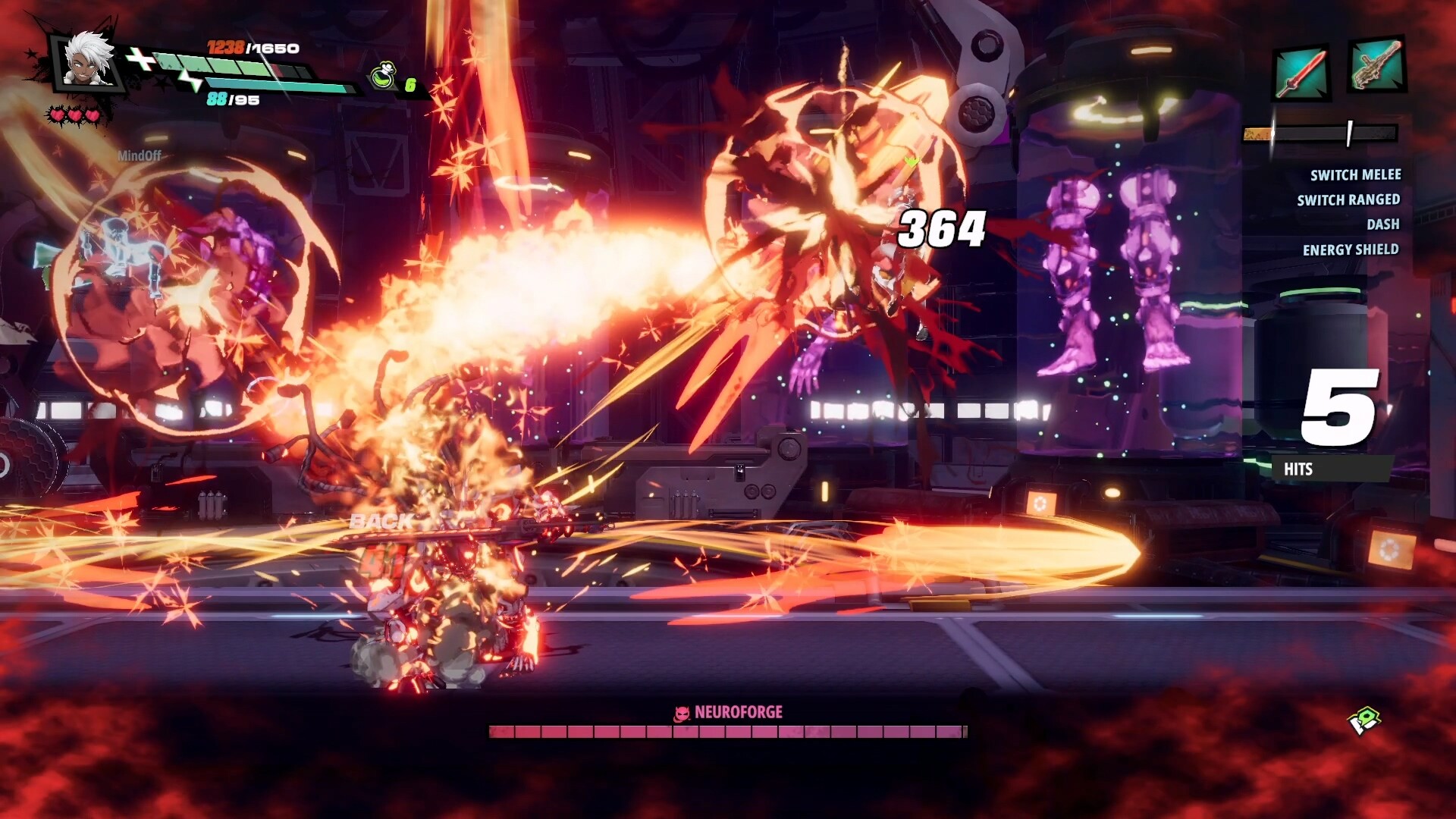
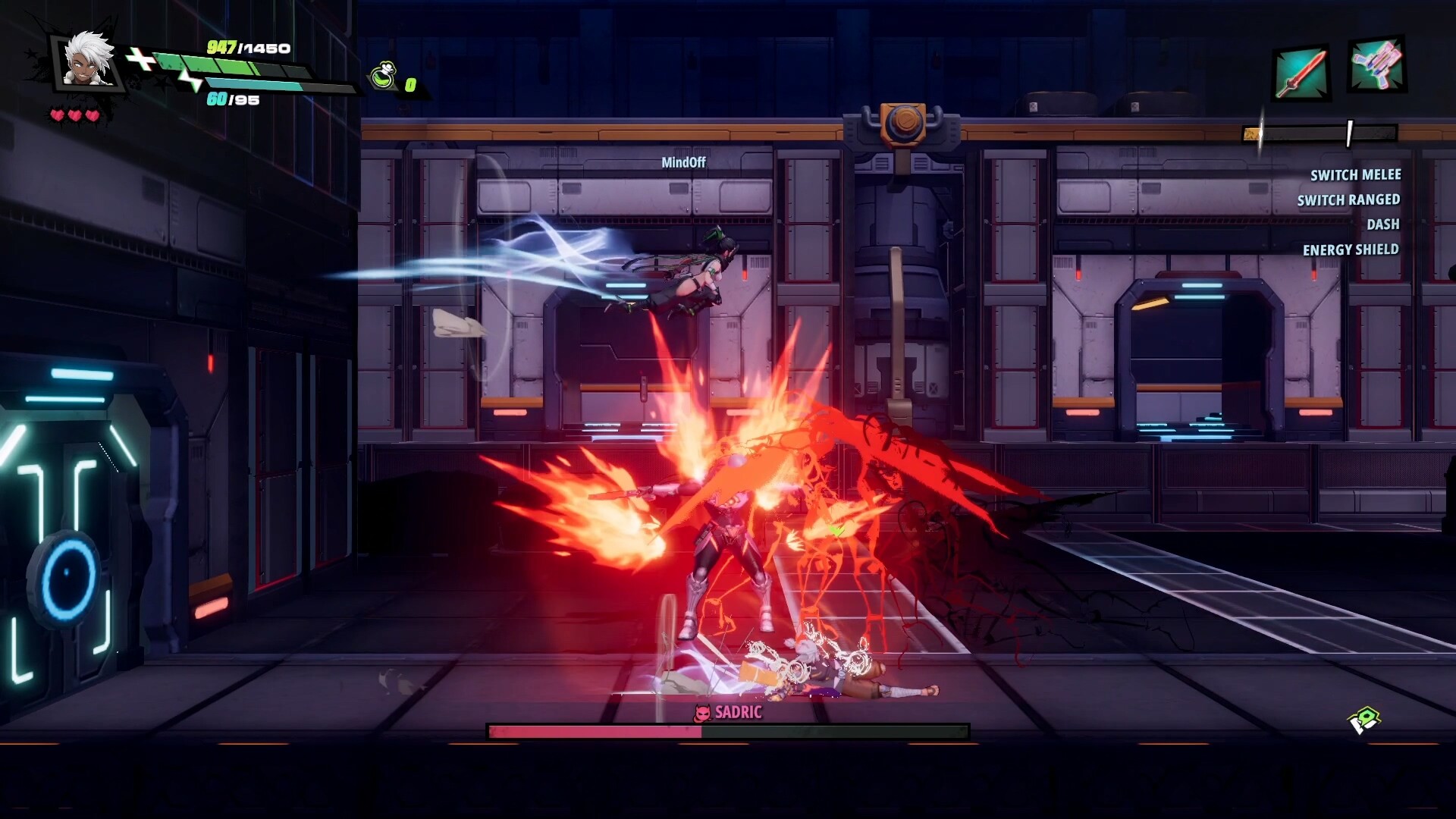
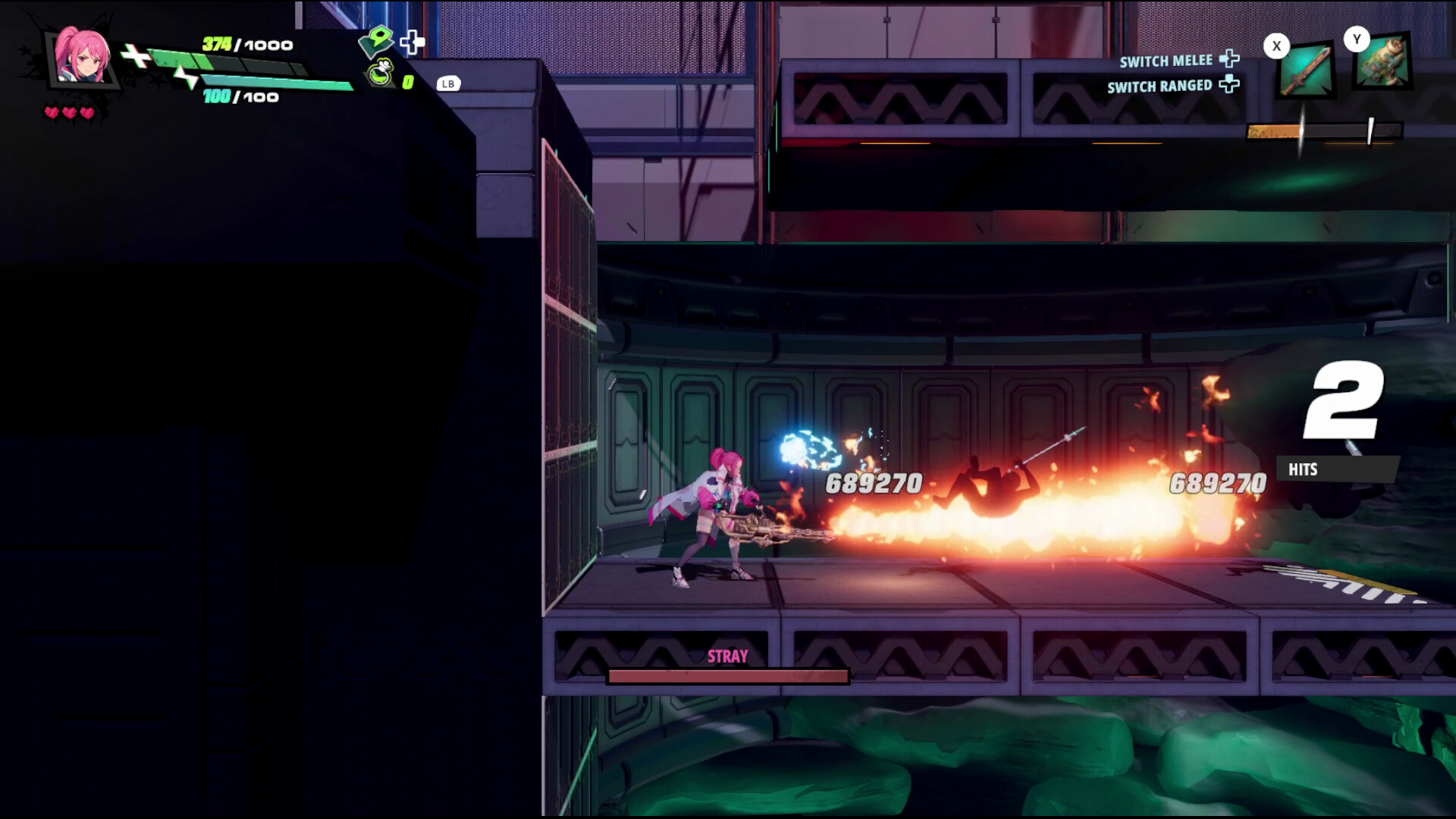
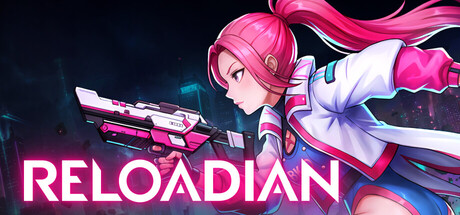
RELOADIAN is a 2.5D side-scrolling action roguelite from Bucketplay Inc., launched in Steam Early Access on June 18, 2026. It supports solo play and up to 3-player online co-op with full cross-platform play across PC and consoles. The core loop is familiar to roguelike veterans — procedural runs, escalating difficulty, boss gauntlets, and the thrill of stacking upgrades into an overpowered build — but the combat system has its own flavor built around three verbs: dash, strike, shoot.
The game is in active development. The Early Access "Foundation" phase includes the Starfall mission, three bosses, a subset of weapons and Cores, and the Codex meta-progression system. Bucketplay has committed to expanding playable characters, weapons, Cores, Codex upgrades, stages, and boss battles through Early Access.
| Detail | Value |
|---|---|
| Developer | Bucketplay Inc. |
| Price | $9.56 SGD (~$7.10 USD) |
| Platform | PC (Steam), PS5, Xbox (planned) |
| Genre | 2.5D Action Roguelite |
| Players | 1-3 (Online Co-op, PvP) |
| Input | Keyboard & Mouse, Controller |
| Languages | 12 (English, Korean, French, Italian, German + more) |
| Early Access | June 18, 2026 |
| Cross-Platform | Yes |
Getting Started
RELOADIAN drops you into a hub where you can select missions, customize your loadout, and spend currency on permanent upgrades. The first time you play, the game walks you through the Starfall mission — treat it as a tutorial.
Your first 30 minutes:
- Run the Starfall mission solo. Focus on surviving, not optimizing. Learn the dodge timing.
- Die or extract. Either way, you keep some currency.
- Spend currency on your first Codex upgrades. Prioritize health and ammo capacity.
- Try a second run. This time, experiment with different weapons you find.
- If you have friends, jump into co-op. Enemy scaling is manageable at low difficulty.
Beginner mistakes:
- Standing still to shoot. The number one killer. RELOADIAN's enemies rush you from both sides. If you stop moving, you're dead in seconds. Strafing is mandatory.
- Ignoring the melee button. The strike attack does not consume ammo, staggers enemies, and builds combo meter. Use it between shots. It is not a backup weapon — it is a core part of your rotation.
- Treating dash as an attack. The dash has invincibility frames. It is for dodging, not dealing damage. Using your dodge to close distance is fine; using it to try to hit things is how you eat a boss slam.
- Skipping optional rooms. Challenge rooms and side paths offer Cores, weapons, and Codex fragments. The risk is always worth the reward in Early Access balancing.
- Hoarding currency. Spend between runs. Permanent upgrades stack. Dying with unspent currency is a pure loss.
Core Mechanics
The Combat Triangle
Every weapon fits into one of three categories, and your build is only as strong as how you weave them together:
| Action | Input | Ammo? | Best Use |
|---|---|---|---|
| Strike | Left click / melee button | No | Close-range stagger, shield break, combo building |
| Shoot | Right click / E | Yes (reload) | Safe damage, aerial enemies, bosses |
| Dash | Shift / Right mouse | No (cooldown) | Invincibility frames, repositioning, gap closing |
The game rewards cycling through all three. A typical flow: dash past an enemy attack → strike twice to stagger → shoot three times while they're staggered → dash away. Repeat.
Cores
Cores are the heart of your build. Each run, you can find and equip Cores that modify your abilities. Think of them as the skeleton of your loadout — they determine your primary combat style.
Core types confirmed in Early Access:
- Offensive Cores — boost damage, add elemental effects, increase crit
- Defensive Cores — shields, health regen, damage reduction
- Utility Cores — faster reload, extra dashes, resource generation
- Synergy Cores — trigger bonus effects when conditions are met (e.g., "strike after dodge deals double damage")
You can hold up to 3 Cores in a run. Finding Cores that synergize is how you break the difficulty curve.
Codex (Meta-Progression)
The Codex tracks your persistent upgrades between runs. Currency earned in missions goes here. Key Codex upgrades:
| Upgrade | Effect | Priority |
|---|---|---|
| Health | Increase max HP | First upgrade |
| Ammo Capacity | More shots before reload | Second |
| Reload Speed | Faster reload animation | Third |
| Dash Cooldown | Dash more often | Fourth |
| Global Damage | Permanent damage increase | After survivability |
| Luck | Better loot drop rates | Mid-game |
| Starting Loadout Slots | Begin with more weapons/Cores | Late-game |
The Codex is account-wide. Progress carries across all characters and co-op sessions.
Weapons
Weapons are found during runs or unlocked permanently by defeating bosses. Each has a unique feel:
| Weapon Type | Damage | Fire Rate | Range | Special |
|---|---|---|---|---|
| Kinetic Shotgun | High | Slow | Short | Staggers on hit |
| Heavy Repeater | Medium | Medium | Long | Suppressive fire debuff |
| Burst Rifle | Medium | Burst-3 | Medium | Precise, ammo-efficient |
| Energy Pistol | Low | Fast | Medium | No reload, overheat mechanic |
| Arc Blade (melee) | High | N/A | Melee | Chain lightning on kill |
| Grenade Launcher | Very High | Very Slow | Arc | AoE, limited ammo |
Defeating bosses unlocks unique legendary variants with special effects.
Co-op
Up to 3 players. Enemy count and health scale with party size. Key co-op features:
- Revive system — downed teammates can be revived within a window
- Shared currency — all players earn the same mission rewards
- Combo synergies — certain Core/weapon combos between players trigger bonus effects
- No friendly fire — attacks pass through teammates
- Ping system — mark enemies, items, and positions
Progression Strategy
Early Game (Runs 1-10)
Goal: Learn enemy patterns, accumulate Codex currency.
- Always take the Starfall mission. It is the shortest and best for learning.
- Spend Codex currency on Health → Ammo → Reload Speed in that order.
- Try every weapon you find. You cannot theorycraft your way to understanding — you need to feel the timing.
- Focus on one weapon type per run. Switching between shotgun and rifle mid-run dilutes your upgrade picks.
- Do not bother with challenge rooms until you have Health upgrade at least twice.
Mid Game (Runs 10-50)
Goal: Unlock legendary weapons, experiment with Core synergies.
- You should have most Codex upgrades to at least level 3 by now.
- Start prioritizing Luck upgrades. Better loot = faster progression.
- Identify your favorite weapon type. Push hard into its legendary variant.
- Build around Core synergies. A good Core combo > high raw damage stats.
- Play co-op to learn boss patterns from teammates. Each boss has 2-3 telegraphed attacks.
Late Game (50+ runs, full Codex)
Goal: Push Abyss-equivalent difficulty, farm optimal gear.
- With a full Codex, the game shifts to build optimization.
- You should be able to identify a winning build by the first Core drop.
- Farm specific bosses for their legendary weapon drops.
- Challenge yourself with restrictions — melee only, pistol only, no Codex upgrades.
Builds / Tier Lists
Weapon Tier List (Early Access v1.0)
| Tier | Weapon | Why |
|---|---|---|
| S | Kinetic Shotgun | Highest burst damage, staggers everything, ammo-efficient |
| A | Arc Blade | Infinite ammo, chain lightning clears groups, good with melee Cores |
| A | Heavy Repeater | Safe at range, suppressive fire debuff helps team |
| B | Burst Rifle | Jack of all trades, master of none |
| B | Energy Pistol | No reload is nice, but damage is low |
| C | Grenade Launcher | High damage but slow, easy to miss, limited ammo |
Core Tier List
| Core | Class | Why |
|---|---|---|
| Kinetic Rebuke | Offensive/Defense | Stores incoming damage, releases as AoE blast. S-tier for aggro play |
| Temporal Accelerator | Utility | Reduces dash cooldown. More dashes = more survivability |
| Trench Barrel | Offensive | Melee hits increase weapon damage. Excellent for shotgun builds |
| Overwhelm | Defensive | Suppressive fire weakens enemy damage. Co-op MVP |
| Nanite Injector | Defensive | Triggers health regen on critical damage. Safety net |
| Melee Kickstart | Utility | Refunds melee energy on full expenditure. Sustains melee loops |
| Concussive Dampener | Defensive | Reduces AoE damage. Situational but strong against boss spam |
Best Builds
Shotgun Juggernaut
- Weapon: Kinetic Shotgun
- Cores: Trench Barrel + Kinetic Rebuke + Nanite Injector
- Playstyle: Dash in, melee to proc Trench Barrel, blast shotgun, tank hits to charge Kinetic Rebuke
Arc Nightmare
- Weapon: Arc Blade
- Cores: Melee Kickstart + Temporal Accelerator + Overwhelm
- Playstyle: Never stop moving. Chain lightning clears trash, Temporal Accelerator keeps you slippery
Safe Distance
- Weapon: Heavy Repeater
- Cores: Overwhelm + Concussive Dampener + Nanite Injector
- Playstyle: Hang back, apply Overwhelm debuff, let teammates clean up. Best in co-op
Step-by-Step Strategy
1. Surviving the First Boss
- The first boss has three telegraphed attacks: a ground slam (dodge backward), a charge (dash sideways), and a projectile spread (jump over).
- Do not attack during the windup. Attack during the recovery animation after each move.
- Use your strike attack to break the boss's shield segments. Shooting the shield does reduced damage.
- When the boss enters phase 2 (around 50% HP), it adds a new attack. Watch for the tell and adjust.
- If playing co-op, have one player draw aggro while the other two attack from behind.
2. Building a Synergy Core Setup
- Your first Core drop defines the run. Build around it.
- If you get Trench Barrel, commit to a melee-focused loadout. Pick up a shotgun as secondary.
- If you get Temporal Accelerator, play hit-and-run. Dash in, strike, dash out.
- If you get Overwhelm, play support. Stay at range, mark priority targets.
- Never take a Core that contradicts your existing setup. Two half-synergies are worse than one full synergy.
3. Maximizing Codex Currency Per Run
- Clear the main path first. This guarantees minimum currency.
- Then do optional rooms. Challenge rooms give bonus currency and higher-tier loot.
- Extract before you die. Extraction gives a percentage of your currency. Dying gives none.
- In co-op, share currency pickups. The total pool is the same regardless of who picks up.
- The extraction point appears after the second boss in most missions.
4. Co-op Role Assignment
- Assign roles at the mission select screen: Frontline (shotgun + defensive Cores), Support (repeater + debuff Cores), Flex (melee + mobility Cores).
- Ping enemies before engaging. A single "target" ping focuses the team's damage.
- Save revives for boss fights. If a teammate goes down in a regular room, it is often faster to finish the room and revive after.
- Do not scatter. The game spawns enemies based on player positions. If you split up, rooms take twice as long.
5. Legendary Weapon Unlock Route
- Defeat the first boss (Starfall Sector) to unlock the first legendary weapon pool.
- The second boss drops a different pool. Target the weapon you want by fighting that boss repeatedly.
- Legendary weapons have a random roll on stats. Farm until you get a roll that matches your Core setup.
- If playing co-op, coordinate which legendary each player targets so the party has diverse tools.
Advanced Tips
- Animation canceling exists. You can cancel the end of a strike animation with a dash. This lets you strike-dash-strike faster than strike-wait-strike. Practice the rhythm.
- The overheat mechanic on energy weapons is a feature, not a bug. Energy Pistol and similar weapons deal bonus damage when fired at 90%+ heat. Learn to ride the heat line.
- Co-op enemy scaling is non-linear. Three players do not face 3x enemies. They face about 2x enemies with 2.5x health. The third player is always a net positive.
- Boss health does not scale with co-op. It is fixed per boss. This means co-op is strictly easier for boss fights.
- Melee attacks can parry certain projectiles. The Arc Blade and similar melee weapons reflect small projectiles if you time the swing correctly.
- Codex Luck affects drop quality, not just quantity. Higher Luck increases the chance of Core drops with bonus effects. It is the best Codex stat once survivability is solved.
- The extraction point changes between runs. It is not always in the same place. Watch for the green beacon marker on the minimap.
- PvP mode (Chamber of Mirrors) unlocks after reaching a story milestone. It is a 1v1 best-of-five format with randomized upgrades between rounds. Bring your best movement.
FAQ / Common Mistakes
Q: What is the difference between a Core and a Codex upgrade? A: Cores are found during runs and define your build for that specific run. Codex upgrades are permanent meta-progression purchased with currency between runs.
Q: How many legendary weapons are there? A: Currently 6, one from each boss. More will be added during Early Access.
Q: Is there cross-play between Steam and console? A: Yes, cross-platform play is confirmed for the full release and is active in Early Access.
Q: How long is a typical successful run? A: 45-75 minutes for a full clear, depending on exploration and optional rooms.
Q: I keep dying to the second boss. What am I missing? A: The second boss has a phase 2 where the floor becomes hazardous. The trick is to watch the floor pattern, not the boss. Move to safe zones first, then attack.
Q: Can I refund Codex upgrades? A: No. Codex upgrades are permanent. Choose carefully, though Health and Ammo are safe early investments.
Q: Is there a story? A: Light narrative framing about restoring order to a chaotic universe. The Early Access build has the opening and ending sequences.
Q: Does the game run well on Steam Deck? A: Yes. Verified as playable. Text is readable at 1280x800, and performance targets 60 FPS at medium settings.
Screenshots