Daily Pick
One deeply researched guide worth reading today.
A practical route through the systems that matter most, written to help new players make confident decisions quickly.
Overview
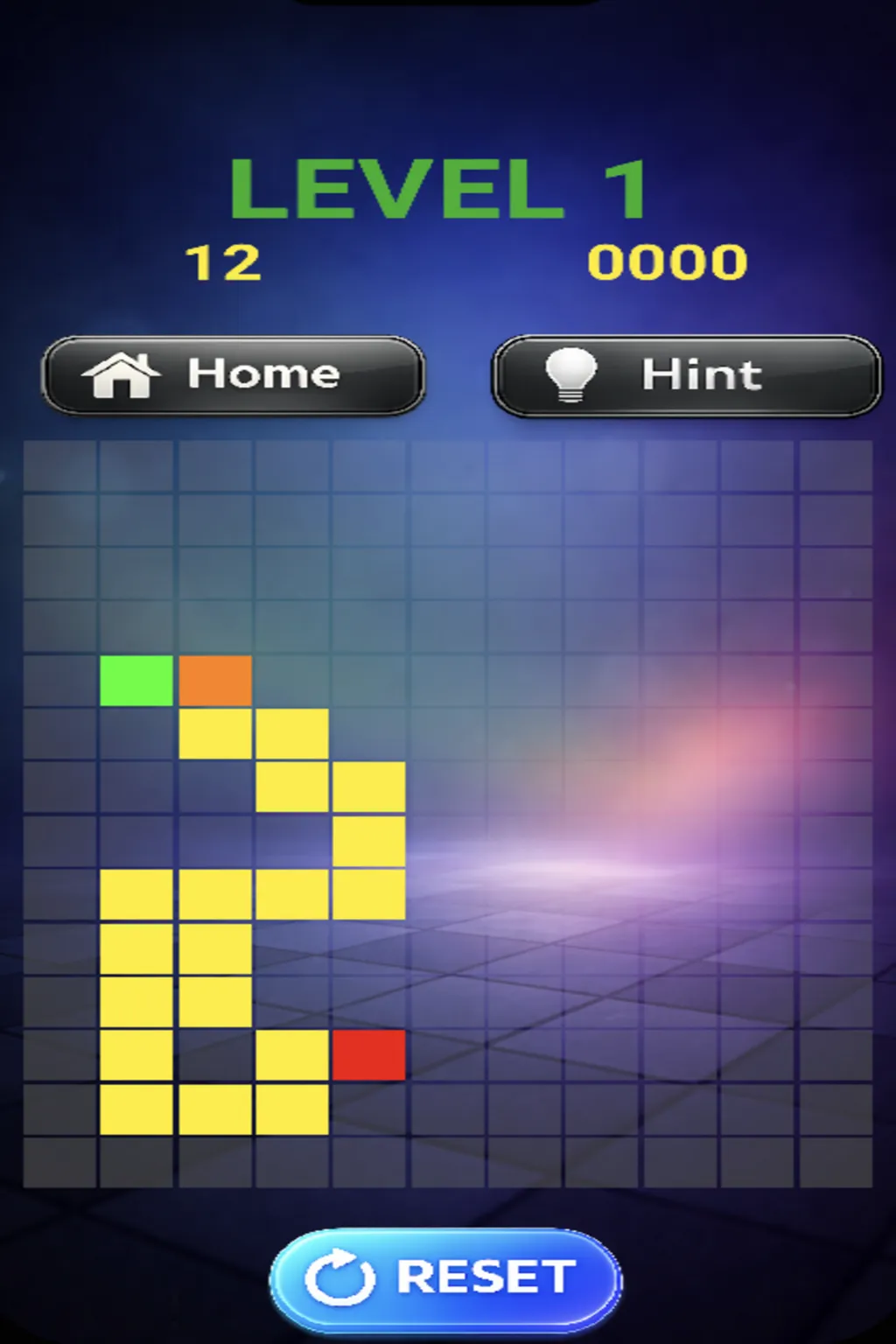
PathLock (titled PathLock Escape on iOS) is a fast-paced logic puzzle game developed by Amit Kandial under AnjaanGamesStudio. The premise is deceptively simple: draw a continuous path from a green start tile to a red end tile on a grid, obeying path rules, before the timer runs out. The tagline says it all: "One path. One timer. No mistakes."
The game uses procedural generation, so every puzzle is unique. Difficulty scales through larger grids, tighter timers, and more obstacles. What starts as a relaxing brain-teaser becomes a genuine speed-solving sport by level 20, where 8x8 grids, dense obstacle placement, and 10-15 second timers demand near-perfect spatial reasoning.
Available on: itch.io (browser, HTML5, free), iOS App Store (92.8 MB, iOS 15.0+, free) Developer: Amit Kandial / AnjaanGamesStudio Engine: Unity (WebGL build for browser, portrait 720x1080 canvas) Game Center: Yes (iOS, leaderboards for cumulative score) Privacy: No data collected, no account required
Who is this for: casual players who want a clean brain-training break, and competitive players chasing Game Center leaderboard spots. The game respects both audiences — the early levels are genuinely relaxing, the late levels are genuinely brutal.
Difficulty curve: gentle for the first five levels, then a steady climb. The timer is the real enemy, not the grid.
Getting Started
The First 30 Minutes
The game drops you into a grid with a green start tile and a red end tile. Click and drag to draw a path between them. That is the entire control scheme. The depth comes from the rules.
- Learn the path rules first. The path must be continuous — no gaps, no jumping tiles. It cannot intersect itself or retrace over a drawn segment. You can only move to orthogonally adjacent tiles (up, down, left, right), not diagonally.
- Play level 1 slowly. Do not speedrun it. Use it to feel the drag mechanics, the tile snapping, and the undo. Understanding the feel of the controls before the timer tightens is worth more than a fast first score.
- Test the hint system once. Press H (or tap the hint button). It reveals the next correct tile but costs score. Knowing what a hint costs changes how you play every level after.
- Test undo and reset. Right-click or Backspace undoes the last segment. R resets the level. These two actions are your safety net. Practice them until they are reflex.
- Notice the timer. It starts immediately and gets tighter every few levels. The early levels give you around 45 seconds — generous. Do not get comfortable; level 7 will feel different.
Beginner Mistakes to Avoid
Drawing before planning. The timer punishes hesitation, but it punishes wrong paths harder. A three-second scan before drawing saves ten seconds of backtracking.
Starting from the start tile every time. The best solvers often begin their mental trace from the end tile. The end usually has fewer exits, which makes the final approach easier to constrain.
Retracing over drawn segments. Once the path crosses itself or revisits a tile, you must undo. Watch the trail — a self-intersecting path is the most common silent failure.
Hoarding hints "for emergencies." Two hints on a level produces a negative score. One hint is tolerable. Two is a net loss on the leaderboard. The hint button is a rescue tool, not a strategy.
Panic drawing under 5 seconds. A blind scramble toward the end tile almost always fails. Failing fast and resetting is strictly better than a frantic wrong path that wastes the reset anyway.
Core Mechanics Explained
The Grid and the Path
Every level is a rectangular grid of tiles. Some tiles are blocked by obstacles. The path must connect the start tile to the end tile using only open, orthogonally adjacent tiles.
The path has three hard constraints:
- Continuity — every segment touches the previous one.
- No self-intersection — the path cannot cross itself or revisit a tile.
- No diagonal moves — movement is strictly orthogonal.
These constraints create the puzzle. A grid that looks wide open can have only one valid solution because the self-intersection rule eliminates most candidate routes.
The Timer
Every level has a countdown timer. It starts immediately when the level loads and gets tighter as difficulty rises:
| Level Range | Typical Timer | Grid Size |
|---|---|---|
| 1-3 | ~45 seconds | 4x4 to 5x5 |
| 4-6 | ~35 seconds | 5x5 to 6x6 |
| 7-10 | ~25 seconds | 6x6 |
| 11-15 | ~20 seconds | 6x6 to 7x7 |
| 16-20 | ~15 seconds | 7x7 to 8x8 |
| 21+ | 10-15 seconds | 8x8 dense obstacles |
The timer is the difficulty dial. The grid provides the puzzle; the timer provides the pressure.
Procedural Generation
Every puzzle is procedurally generated. No two playthroughs are identical. The generator:
- Guarantees at least one valid solution exists (you can never be dealt an impossible board).
- Uses seeded difficulty bands — level 5 always generates within the "easy" parameter set, level 25 within the "brutal" set.
- Reuses geometric archetypes (Corridor, L-Bend, Fork, Spiral, Island, Labyrinth, Deadfall) with different rotations and scales.
The practical consequence: pattern recognition is a real skill in this game. If you can name the archetype within two seconds of seeing the grid, you already know the general solution shape.
Scoring
Final Score = TimeBonus - HintPenalty

TimeBonus = 100 + (TimerRemaining × 2)
HintPenalty = 0 (0 hints), 50 (1 hint), 120 (2 hints), 250 (3+ hints)
The Game Center leaderboard tracks cumulative score across all levels. This single fact drives the entire competitive strategy: never use more than one hint per level, because two hints on any level produces a negative contribution to your total.
Progression Strategy
Level-Based Progression
PathLock is strictly level-based, but procedural generation means the "levels" are really difficulty bands. The same skills carry you through every band; only the execution speed changes.
Levels 1-5: The Foundation. These are your score foundation. They should be 100% perfect — sub-15 second clears, zero hints. A perfect level 1 is worth roughly 150-180 points. An imperfect one costs you twice: the lost points and the lost leaderboard position.
Levels 6-10: The Transition. Grids grow, timers tighten, and the first real obstacles appear. This is where the Three-Phase Method (below) becomes mandatory. Stop relying on instinct; start scanning before drawing.
Levels 11-15: The Wall. Most casual players hit their first wall here. Timers drop to ~20 seconds and the grids get genuinely complex. The choke point method becomes your primary tool.
Levels 16-20: The Grind. Survival first, speed second. If you need one hint, accept a 50-60 point score. Restart if you need two.
Level 21+: The Leaderboard Zone. Anything positive is a win. The top of the leaderboard is decided by who can sustain zero-hint runs the longest, not who is fastest on easy levels.
Resource Priority
1. Zero-hint discipline — a hint costs more than time
2. Pattern recognition — naming the archetype saves 5-10 seconds
3. Timer management — know when to switch from planning to executing
4. Undo speed — a fast undo beats a slow correction
5. Cumulative score — every level feeds one total
When to Use a Hint (and When Not To)
Use a hint when: you are below 8 seconds, the end tile is visible, and one revealed tile completes the path.
Do not use a hint when: you have time to undo and reroute, or when the level is early (1-10) where a restart costs less than a hint penalty.
Puzzle-Solving Frameworks
The Three-Phase Method
Every PathLock puzzle can be solved with a structured three-phase approach.
Phase 1: Reconnaissance (3-5 seconds)
Before drawing anything, scan the grid and answer three questions:
- Where are the choke points? (Narrow corridors of 1-2 tile width)
- Which side of the grid has the most open space? (That is your maneuvering room)
- Is there a direct line of sight between start and end? (If yes, trace it mentally first)
Phase 2: Perimeter Route Construction (the 80% solution)
In about 80% of puzzles, the optimal path hugs the grid perimeter:
- Exit the start tile heading toward the nearest grid edge.
- Follow the edge (top, bottom, left, or right perimeter row/column).
- Navigate around obstacles with right-angle turns along the perimeter.
- Enter the end tile from the nearest edge.
Phase 3: Interior Navigation (the 20% exception)
When the perimeter is blocked or both start and end are interior:
- Identify the corridor connecting the interior cluster to the perimeter.
- Clear the interior cluster first (draw the path inside the obstacle-bounded area).
- Extend to the perimeter, then navigate to the destination.
- If both start and end are interior, connect them through the shortest corridor chain.
The Reverse Mapping Heuristic
When stuck, switch to reverse thinking:
- Place a mental marker on the end tile.
- From the end, identify which adjacent tiles could be the second-to-last step.
- Eliminate tiles that would cause a dead end (trapped by obstacles).
- Trace backwards 3-5 tiles. The forced path reveals itself.
- Compare the backwards-forced path to your current forward position.
- The gap between them is exactly one path segment — find it.
This works because the generator tends to place the end tile in a position with constrained exits. The end has fewer options than the start, so reasoning backward narrows the search faster.
The Choke Point Theorem
Every PathLock puzzle has at least one choke point — a single tile that all valid paths must pass through. Finding it cuts the puzzle in half:
- Identify all tiles that, if blocked, would separate the start from the end.
- Small grids (4x4-5x5): usually 1 choke point.
- Medium grids (6x6-7x7): 1-2 choke points.
- Large grids (8x8+): 2-3 choke points, often forming a "gate" sequence.
Strategy: Find the first choke point, plan the path to reach it, then plan from the choke point to the end. This turns one complex puzzle into two simpler sub-puzzles.
Pattern Recognition — Generator Archetypes
The procedural generator reuses geometric archetypes. Recognizing them instantly saves 5-10 seconds per puzzle.
Archetype Tier List
| Archetype | Frequency | Difficulty | Recognition Cue |
|---|---|---|---|
| The Corridor | 35% | Easy | A single row of open tiles flanked by obstacles |
| The L-Bend | 25% | Easy-Medium | One central obstacle forcing a right-angle turn |
| The Fork | 15% | Medium | A branch where two routes look equally valid |
| The Spiral | 10% | Medium-Hard | Concentric rings of open tiles around a blocked center |
| The Island | 8% | Hard | A cluster of open tiles surrounded by obstacles, single entrance |
| The Labyrinth | 5% | Very Hard | Multiple interconnected chambers with narrow passages |
| The Deadfall | 2% | Extreme | False path that looks correct for 6+ tiles then dead-ends |
Solving Each Archetype
The Corridor: The optimal path is always a straight line. Do not overthink. Draw directly.
The L-Bend: Hug the inner corner tightly. A wide arc wastes space and risks hitting the timer.
The Fork: Rule of thumb — the fork that goes away from the center is correct about 70% of the time. The generator favors perimeter paths.
The Spiral: Always start from the outermost ring and work inward. Going from inside out is a trap — you will box yourself in.
The Island: Memorize the entrance tile. If you miss it, you must backtrack 3+ tiles. Look for the single open tile on the island's perimeter.
The Labyrinth: Do not plan the whole path. Plan 3 tiles ahead, execute, repeat. The Labyrinth chews up planning time if you try to see the whole solution.
The Deadfall: If a path has been smooth for 6+ tiles and suddenly narrows suspiciously, undo 2 tiles and try a branch. Deadfalls are designed to feel correct until the last second.
Step-by-Step Strategy Sequences
Sequence 1: The Perfect Early-Level Clear (Levels 1-5)
- On level load, scan the grid for 2 seconds. Identify the archetype and note the choke points.
- Trace the path mentally from the end tile backward to the start. Confirm it does not self-intersect.
- Draw the path in one continuous motion, starting from the start tile.
- If you make a mistake, undo immediately (right-click or Backspace) — within 0.5 seconds.
- Finish with 20+ seconds remaining for a 140+ score. Zero hints.
Sequence 2: Breaking Through the 6x6 Wall (Levels 7-10)
- The timer is now ~25 seconds. Your reconnaissance window drops to 3 seconds.
- Find the choke point first. Plan the route from start to choke point.
- Execute that first half immediately — do not wait to see the whole solution.
- When you reach the choke point, reassess. The second half is usually simpler than the first.
- Use the perimeter rule: if the end is near an edge, route along the edge.
Sequence 3: Surviving the 8x8 Dense Grid (Levels 16+)
- Grids are 7x7 to 8x8 with dense obstacles. The timer is ~15 seconds.
- Do not try to see the whole path. Plan 3 tiles ahead, execute, repeat.
- Let the self-intersection rule work for you: if a route feels like it is folding back on itself, it is wrong. Undo 2 tiles.
- When stuck for more than 3 seconds, undo 2 tiles immediately (the 3-Second Rule). Hesitation costs more than rerouting.
- Accept that some levels need a hint. One hint on a late level costs 50 points but keeps the run alive. Two hints is a net loss — restart instead.
Sequence 4: The Zero-Hint Leaderboard Run
- Start a fresh session from level 1. Treat every level as a qualifying exam.
- Levels 1-5 must be sub-15 seconds, zero hints. Restart the session if any early level uses a hint.
- From level 6 onward, prioritize zero hints over speed. A 40-second clear with zero hints beats a 20-second clear with one hint.
- If a level forces you to use a hint, finish it, then decide: if it is before level 15, restart the session; if after, accept the damage and keep going.
- Target 2,000+ cumulative points by the end of the session.
Sequence 5: Recovering from a Deadfall Trap
- You drew a path that felt smooth for 6+ tiles, then hit a dead end. Do not panic.
- Undo 2 tiles immediately. The trap is designed to feel correct — trust the undo, not your instinct.
- Look for the branch you skipped. Deadfalls always have a side exit that was visually unremarkable.
- Re-route through the side exit, then continue toward the end tile.
- If the timer is under 8 seconds after the trap, use one hint to lock the remaining path.
Sequence 6: Speed-Reading a New Grid
- Chunk the grid: group 2x2 or 3x3 tile blocks into single mental units. Remember "blocks," not tiles.
- Verbalize the plan quietly: "Up three, right four, down two, goal." Speaking locks the plan in working memory.
- Name the archetype within 2 seconds of seeing the grid.
- Decide perimeter vs interior route before drawing the first segment.
- Draw in straight lines, not curves. The grid snaps to orthogonal — smooth curves are wasted motion.
Speed-Solving Techniques
Motor Optimization (Physical)
- Mouse users: Use short, flicking wrist movements. Extend the path in straight lines, not curves. The grid snaps to orthogonal — there is no benefit to smooth curves.
- Touch users: Keep your finger light. Drag in straight segments. Heavy pressure or slow dragging triggers the undo gesture accidentally.
- Undo shortcut: Right-click (mouse) or double-tap (touch). Practice until it is reflex. Pro players undo within 0.5 seconds of spotting a mistake.
Planning Speed
The bottleneck in PathLock is not drawing speed — it is decision speed. Train yourself to:
- Chunk the grid — group 2x2 or 3x3 tile blocks into single mental units.
- Use spatial landmarks — "Corridor at top-right, L-bend at bottom-left, then straight to goal."
- Verbalize the plan — speak quietly: "Up three, right four, down two, goal."
Timer Pressure Management
| Time Remaining | Strategy |
|---|---|
| 30+ seconds | Full planning. 5-second scan, then execute. |
| 15-30 seconds | Perimeter-first heuristic. Follow edges. Do not explore branches. |
| 5-15 seconds | Draw toward the end by the shortest visible path. Accept one hint if needed. |
| Under 5 seconds | Panic draw toward the end. Better to fail fast and reset than hesitate. |
The 3-Second Rule: If you are stuck for longer than 3 seconds, undo 2 tiles immediately. Hesitation costs more time than rerouting.
Score Optimization — The Math
Score Formula
Final Score = TimeBonus - HintPenalty

TimeBonus = 100 + (TimerRemaining × 2)
HintPenalty = 0 (0 hints), 50 (1 hint), 120 (2 hints), 250 (3+ hints)
| Scenario | Timer Remaining | Time Bonus | Hints | Final Score |
|---|---|---|---|---|
| Perfect speed clear | 25s | 150 | 0 | 150 |
| Steady clear | 15s | 130 | 0 | 130 |
| Hint-assisted clear | 8s | 116 | 1 | 66 |
| Multiple hints | 5s | 110 | 2 | -10 (net loss!) |
| Panic clear with 3 hints | 2s | 104 | 3 | -146 |
Key insight: using 2+ hints on any level results in a negative score. The Game Center leaderboard tracks cumulative score, so negative levels drag your total down. Never use more than 1 hint per level.
Level-by-Level Score Targets
| Level Range | Target Score | Strategy |
|---|---|---|
| 1-3 | 140+ | Speed clear under 20s, no hints |
| 4-6 | 120+ | Steady clear under 30s, no hints |
| 7-10 | 100+ | Zero hints, accept 40s completion |
| 11-15 | 70+ | Zero hints. Survival first, speed second |
| 16-20 | 50+ | If you need 1 hint, accept 50-60 points |
| 21+ | 30+ | Anything positive is a win. Restart if hints needed |
Cumulative Score Strategy
The leaderboard ranks total cumulative score across all levels played. To maximize:
- Never play a level if you are tired. A bad run on level 8 costs more than skipping a session.
- Restart immediately on a hint. If you use even one hint, the level score drops below par. Restart is free.
- Perfect the early levels. Levels 1-5 should be 100% perfect (sub-15s, zero hints). These are your score foundation.
- Accept diminishing returns. After level 20, scores drop to 30-50 per level. The top 10 leaderboard spots are decided by who can sustain 0-hint runs the longest.
Advanced Tips
The end tile is the key. The generator constrains the end more than the start. When a puzzle feels impossible, stop looking at the start and trace backward from the end. The forced approach reveals itself.
Perimeter bias is real. About 80% of optimal solutions hug the grid edge. If you are stuck deciding between two routes, the one along the perimeter is usually correct.
The self-intersection rule is a filter. Any route that folds back on itself is invalid. Use this to eliminate candidate paths instantly. If a path would need to cross itself to reach the end, it is the wrong path.
One hint is a tool; two is a mistake. The math is unambiguous: two hints = negative score. Treat the hint button like an emergency brake, not a steering wheel.
Reset is free and fast. If a level goes wrong early, hit R. A fresh start with full time beats a salvage job with 8 seconds left. Never "see how it plays out" with a broken path.
Chunking beats tile-counting. Your working memory holds about 7 items. A 6x6 grid has 36 tiles. You cannot remember 36 tiles — but you can remember 9 "blocks." Train the chunking habit.
Voice is a planning tool. Quietly verbalizing the path ("up three, right four") engages a different memory channel and reduces mistakes under pressure. It sounds odd; it works.
Play on iPad if you can. The iOS version runs on iPad, and the larger screen makes complex grids noticeably easier to navigate. The touch precision tradeoff is worth it for the visibility.
Enable Guided Access on iOS. Settings → Accessibility → Guided Access prevents accidental home button presses during a clutch level. One accidental exit mid-puzzle loses the whole run.
The developer is one person. AnjaanGamesStudio is a solo indie studio (Amit Kandial) with a clean, ad-free, no-IAP philosophy across all its games. Updates come from one person, so the game evolves slowly but deliberately.
Practice Routine for Competitive Players
Week 1: Foundation
- Play levels 1-10 repeatedly until every level is cleared under 15 seconds with zero hints.
- Target: 10 consecutive perfect runs.
- Drill: practice undo-reflex — start a level, deliberately make a wrong turn, undo within 0.5 seconds.
Week 2: Pattern Library
- Play 30-50 levels and categorize each by archetype (Corridor, L-Bend, Fork, etc.).
- Create a mental index: "If the grid has [this pattern], the solution is [that strategy]."
- Target: identify the archetype within 2 seconds of seeing the grid.
Week 3: Timer Pressure
- Give yourself a self-imposed 15-second timer for levels 1-10.
- Give yourself a 25-second timer for levels 11-15.
- Target: clear 90% of levels within the self-imposed timer.
Week 4: Leaderboard Push
- Play a fresh session from level 1. Track cumulative score.
- Restart the entire session if any level before 15 uses a hint.
- Target: 2,000+ cumulative points.
iOS vs. Browser: Differences That Matter
| Aspect | Browser (itch.io) | iOS (PathLock Escape) |
|---|---|---|
| Timer | Countdown timer, starts immediately | Same mechanic |
| Hints | H key | On-screen hint button |
| Undo | Right-click / Backspace | On-screen undo or double-tap |
| Scoring | Visible per-level | Cumulative + Game Center leaderboard |
| Offline | No (requires internet) | Yes (after download) |
| Grid Size | Up to 8x8 | Same |
| Levels | Unlimited (procedural) | Same |
| Updates | Less frequent | App Store updates |
iOS-specific tips:
- The touch interface is slightly less precise than mouse. Use your index finger for the most control.
- Enable Guided Access (Settings → Accessibility → Guided Access) to prevent accidental home button presses during gameplay.
- The Game Center leaderboard updates only when you finish a level. Closing the app mid-puzzle loses progress.
FAQ — Advanced Questions
Q: Is the procedural generator truly random? A: Pseudo-random with seeded difficulty bands. Level 5 always generates puzzles within the "easy" parameter set. The seed changes each session.
Q: What is the highest possible score on level 1? A: About 180 points (sub-5 second clear, zero hints). The timer starts at ~45s on level 1, so clearing in 5s gives 100 + (40 × 2) = 180.
Q: Can you brute-force PathLock puzzles? A: With a grid up to 8x8, the state space is too large for human brute-force. The choke point method is the only viable strategy for complex grids.
Q: Does the iOS version have in-app purchases? A: No. It is completely free with no ads, no IAPs, and no subscriptions. The developer monetizes through the itch.io page (tips/donations optional).
Q: What happens at level 50+? A: Grids reach 8x8 with very dense obstacle placement. Timers drop to 10-15 seconds. Even finding the path is difficult — executing it in time requires near-perfect spatial reasoning.
Q: Is there an endless mode? A: No. The game is strictly level-based with increasing difficulty. But since generation is procedural, "endless" and "level-based" are functionally the same — you can keep playing indefinitely.
Q: Does the game support iPad? A: Yes. Designed for iPhone and iPad (iOS 15.0+). The larger screen on iPad makes complex grids noticeably easier to navigate.
Q: What else has the developer made? A: AnjaanGamesStudio has published several free games including Tic Tac Toe Glow Grid, Quick Match Arena, Tile Royale, Reflex Drop, Magnet Duel, and Anjaan Games Arcade. All follow the same clean, ad-free, no-IAP design philosophy.
Common Mistakes (The Gotchas)
Using two hints. The single most common leaderboard killer. Two hints on any level = negative score. If you have already used one hint and still cannot see the path, restart. It costs less.
Self-intersecting paths. The path silently fails when it crosses itself. Watch the trail while drawing. If the path folds back, undo immediately — the game will not warn you.
Planning the whole path on Labyrinth grids. Trying to see the entire solution on a complex grid wastes the whole timer. Plan 3 tiles ahead, execute, repeat.
Starting from the start when stuck. The start tile has the most exits, which makes forward reasoning the weakest approach when you are lost. Switch to reverse mapping from the end tile.
Panic drawing under 5 seconds. A blind scramble toward the end almost never works. Reset and take the level fresh. Failing fast is a strategy; panicking is not.
Ignoring the 3-Second Rule. Staring at a stuck position for 10+ seconds is the silent run-killer. Undo 2 tiles at 3 seconds. The reroute is almost always faster than the stare.
Quick Reference Card
One-Paragraph Strategy
Scan for the choke point (3 seconds), trace backward from the end tile, then draw the perimeter route in one continuous motion. Undo the moment the path self-intersects. Never use more than one hint per level — two hints is a negative score. If stuck for 3 seconds, undo two tiles and reroute.
Core Rules (Memorize)
| Rule | Detail |
|---|---|
| Movement | Orthogonal only (up/down/left/right), no diagonals |
| Path | Continuous, cannot self-intersect or revisit a tile |
| Timer | Starts immediately on level load |
| Hints | H key / on-screen button |
| Undo | Right-click / Backspace (mouse), double-tap (touch) |
| Reset | R key — free, fast, use it |
| Score | 100 + (TimerRemaining × 2) − HintPenalty |
Hint Penalty Table
| Hints Used | Score Penalty | Verdict |
|---|---|---|
| 0 | 0 | Target every level |
| 1 | 50 | Acceptable on late levels |
| 2 | 120 | Net loss — restart |
| 3+ | 250 | Always avoid |
Archetype Cheat Sheet
| Archetype | Cue | Action |
|---|---|---|
| Corridor | Open row flanked by obstacles | Straight line, draw directly |
| L-Bend | One central obstacle forcing a turn | Hug the inner corner |
| Fork | Two equally valid branches | Take the one away from center (70%) |
| Spiral | Concentric rings around blocked center | Start outer ring, work inward |
| Island | Open cluster, single entrance | Memorize the entrance tile |
| Labyrinth | Multiple narrow chambers | Plan 3 tiles ahead, execute, repeat |
| Deadfall | Smooth path that suddenly narrows | Undo 2 tiles, take the side exit |
Timer Decision Tree
| Time Left | Action |
|---|---|
| 30+ s | Full 5-second scan, then execute |
| 15-30 s | Perimeter-first, follow edges, no branches |
| 5-15 s | Shortest visible path, one hint if needed |
| <5 s | Panic draw, or fail fast and reset |
Sessions Cheat Sheet
- Perfect early clear (levels 1-5): sub-15s, zero hints, restart on any hint.
- 6x6 wall (levels 7-10): find the choke point, execute first half immediately.
- 8x8 dense (levels 16+): 3 tiles ahead, accept one hint, restart on two.
- Leaderboard run: zero hints to level 15 at minimum, target 2,000+ cumulative.
- The 3-Second Rule: stuck >3s, undo 2 tiles, always.
Quick Facts
- Where to play: free HTML5 browser build on itch.io (AnjaanGamesStudio), plus iOS as PathLock Escape (free, no ads, no IAP, iOS 15.0+).
- Engine: Unity (WebGL for browser, 720x1080 portrait canvas).
- Puzzle generation: procedural, seeded by difficulty band, always at least one valid solution.
- Community/score: Game Center leaderboard (iOS) tracks cumulative score across all levels.
- Developer: AnjaanGamesStudio, solo indie (Amit Kandial), clean ad-free no-IAP philosophy, itch page notes more updates coming.