Official game
Play Our Dreadling
This game is hosted by steam. Continue to the official page to play or download it.
Buy on SteamOverview
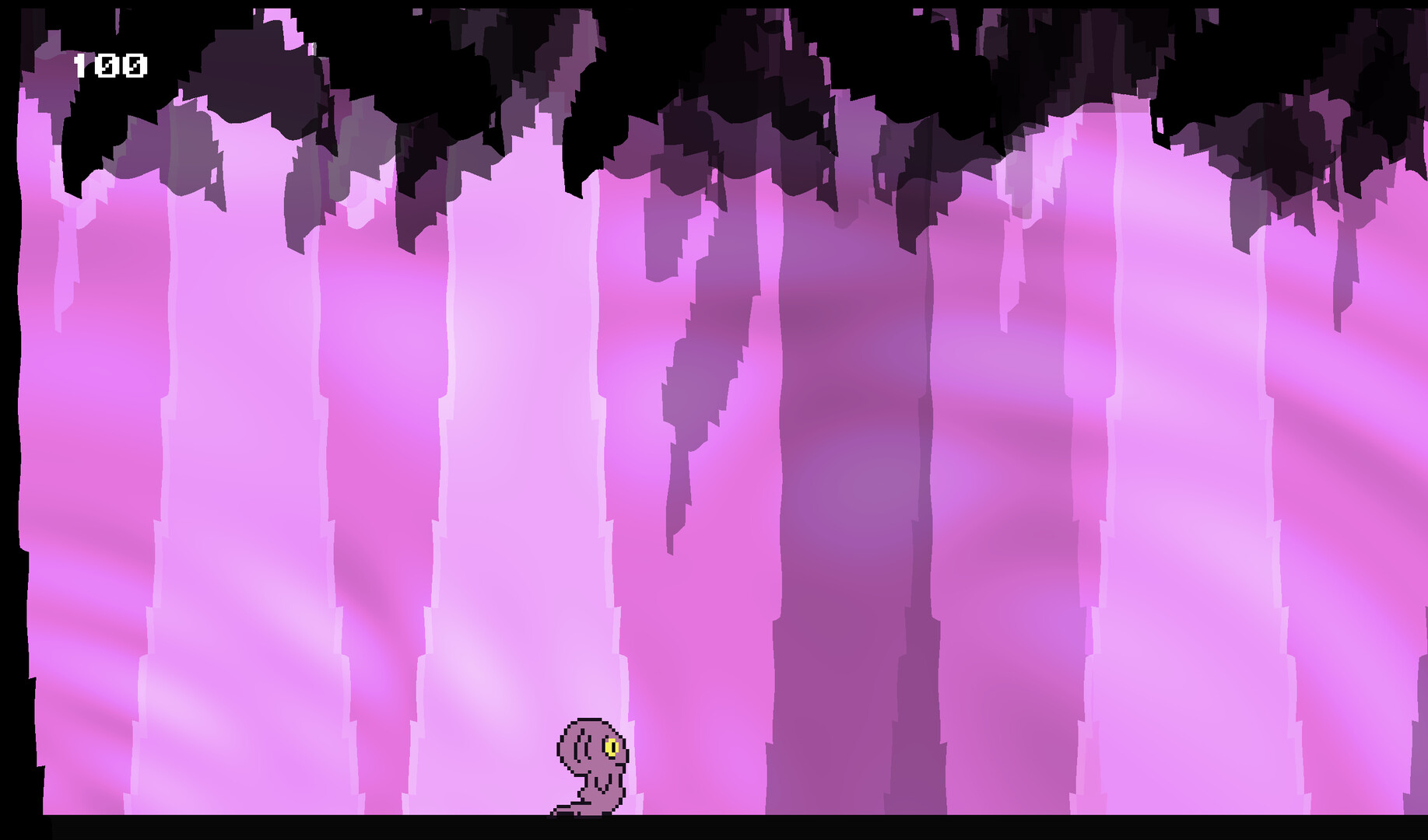
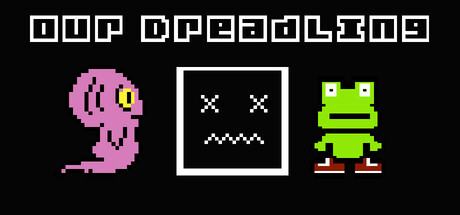
Our Dreadling is a minimalist Metroidvania platformer from solo developer Panopticorp (EW Athletics LLC), released on Steam on June 23, 2026. You guide a small pink creature — a "dreadling" — born from the mysterious force called Dread, through a surreal, interconnected world known as the Liminal. Your mission: find and confront the enigmatic entity called Monono.
The game wears its influences openly: quirky character writing and fourth-wall-leaning dialogue evoke Undertale, while the minimalist visual style and glitch-mechanics storytelling draw from Buddy Simulator 1984. But it carves its own identity through a focused 5–8 hour Metroidvania loop built on ability-gated exploration, a persistent worm companion, and dark humor. The Liminal is a place where you'll debate cake versus pie with strangers, compete in disco contests, and take naps alongside mysterious creatures — all while piecing together what Monono actually is.
At its core, Our Dreadling is about curiosity over combat. While boss fights exist, the primary obstacles are environmental: locked paths demanding new movement abilities, puzzles requiring clever worm deployment, and hidden passages rewarding thorough exploration. The tone oscillates between genuinely unsettling and absurdly funny, rarely letting you settle into one emotional register for long.
Game Details
| Detail | Info |
|---|---|
| Genre | Adventure / Indie / Metroidvania / Platformer |
| Developer | Panopticorp (EW Athletics LLC) |
| Publisher | Panopticorp |
| Platform | Windows (Steam) |
| Price | ~$5.99 USD (S$8.39 SGD — regional pricing varies) |
| Players | Single-player |
| Release Date | June 23, 2026 |
| Input | Keyboard & Mouse, Partial Controller Support |
| Difficulty | Moderate — forgiving checkpoints, precision-required platforming |
| Playtime | 5–8 hours (main story), 10–12 hours (100% completion) |
| Achievements | 11 (all hidden by default) |
| Languages | English (Interface, Full Audio, Subtitles) |
| Categories | Single-player, Steam Achievements, Partial Controller Support, Family Sharing |
| User Tags | Pixel Graphics, Platformer, Metroidvania, Action-Adventure |
Target Audience
Our Dreadling is built for players who value atmosphere, character writing, and exploration over reflex-heavy combat. If you enjoy games where the world itself is the main puzzle — where backtracking with a new ability reveals shortcuts you walked past two hours ago — this is your territory.
You'll love it if:
- You've played Hollow Knight or Ori but want something shorter and weirder
- Undertale's tonal whiplash (laughing one minute, existential dread the next) is your thing
- You like discovering secrets that aren't marked on the map
- The idea of a worm companion that's both a puzzle tool and a character appeals to you
- Buddy Simulator 1984's unconventional storytelling resonated with you
You might bounce off if:
- You need polished, high-budget visuals — the art style is deliberately minimalist pixel graphics
- You want deep combat systems — combat is sparse; most enemies can be avoided
- You dislike backtracking — retreading familiar ground with new abilities is core to progression
- You're looking for a 30+ hour epic — this is a compact, focused experience
Getting Started — Your First 30 Minutes
The opening of Our Dreadling is deliberately disorienting. You wake up as the dreadling with no explanation beyond a vague directive tied to Monono. Here's how to orient yourself:
1. Learn Your Basic Movement
Your starting kit: run (A/D or left stick) and jump (Spacebar or A button). Jump height varies by hold duration — tap for short hops, hold for full height. Short hops are safer in tight corridors; full jumps are for open rooms and crossing gaps. There's no coyote time (grace frames after walking off a ledge), so jump before the edge.
2. Find and Master the Worm
Shortly after the opening, you encounter your worm companion. The worm is your primary interaction tool: throw it at distant switches, park it on pressure plates, and stretch it across small gaps as a bridge. Aim with mouse (left click + hold), release to throw. Recall it instantly with R (keyboard) or B button (controller). The worm is not optional — treat it as an extension of your movement kit.
3. Use Save Crystals Religiously
Save points appear as glowing crystals throughout each biome. Interact with them (E or X button) to save progress and fully heal both yourself and the worm. There is no autosave. Crystals also serve as fast-travel points once you unlock that ability mid-game.
4. Check Your Map Frequently
Open the map with M (keyboard) or View button (controller). It reveals rooms as you enter them and marks save crystals, locked doors, and unexplored exits. Any exit marked with an ability-gate icon means you'll need to return later. Mentally bookmark these spots.
5. Investigate Everything
Dead-end corridors often hide health upgrades or lore fragments. Breakable walls are sometimes telegraphed by visual cracks, but many secrets have no tells — you find them by bumping into walls. The worm can squeeze into gaps you can't reach.
6. Don't Fight Everything
Early enemies — shadowy blobs, skittering creatures — can be avoided. Your dreadling has no direct attack in the first hour. The worm can stun small enemies by being thrown at them, creating a window to pass. Conserve health for platforming hazards.
7. Talk to Everyone — Then Talk Again
The Liminal is populated with strange characters: a frog with philosophical opinions, sentient square blocks, a scientist pining for an AI named Alice, and more. Every NPC has multiple dialogue states that change as you progress. Exhausting dialogue often rewards hints, item locations, or lore fragments. Some NPCs offer the mini-games that grant permanent upgrades.
Advanced Tips
| Mistake | Why It Hurts | Fix |
|---|---|---|
| Ignoring the worm companion | The worm is essential for puzzle-solving and progression. Players who treat it as cosmetic hit impassable barriers — ceiling switches, pressure plates across gaps, narrow passages. | Make "can the worm help?" your default question when stuck. Target checklist: throw at switch, park on plate, bridge a gap, distract enemy. |
| Rushing past save crystals | No autosave means death sends you back to the last activated crystal. Skipping one can cost 10–20 minutes of progress. | Save every time. Crystals also heal you fully — use them as health resets before difficult platforming sections. |
| Holding jump for maximum height every time | Full-height jumps make your trajectory predictable and can slam you into ceiling hazards (spikes, crushers). | Vary jump height. Short taps for tight corridors, full holds for open vertical rooms. Practice switching in safe zones. |
| Not backtracking after new abilities | The Metroidvania loop depends on returning to earlier areas with new movement tech. Pushing only forward misses upgrades, optional zones, and lore. | After every major ability unlock (double jump, dash, wall jump), consult your map for unexplored exits in previous biomes. Most locked paths are 1–2 rooms from a crystal. |
| Skipping mini-games | Mini-games reward permanent upgrades — health extensions, worm ability enhancements, and story-critical lore. Skipping makes boss fights harder and locks you out of certain endings. | Play each mini-game at least once. The rock-stacking game grants a health upgrade that's easy to miss. |
| Not managing the worm's health | The worm can be damaged by hazards. If it dies, you lose all worm-based abilities until reaching a save crystal. | Watch the worm's visual state — it flashes when damaged. If hurt, avoid hazard-heavy rooms and beeline for the nearest crystal. |
| Approaching new rooms at full speed | Rooms frequently contain spike traps, moving platforms on delays, and enemies positioned just off-screen. | Pause at room entrances for 3–5 seconds. Watch hazard patterns and plan your route before committing. |
Core Mechanics Deep Dive
The Metroidvania Loop
Our Dreadling follows the classic formula: explore, hit a locked path, find a new ability, backtrack, and unlock previously inaccessible areas. The world is organized as a hub-and-spoke layout with a central zone connecting to multiple biomes.
Key ability unlocks and their exploration impact:
| Ability | Function | Exploration Impact |
|---|---|---|
| Wall Jump | Push off vertical surfaces to climb | Opens tall vertical rooms; essential for Canopy biome |
| Double Jump | Second mid-air jump | Dramatically expands reach; most backtracking shortcuts require this |
| Dash | Horizontal burst with brief invincibility frames | Crosses wide gaps; i-frames let you pass through certain hazards; required for boss dodging |
| Worm Launch | Launch worm vertically to hit ceiling switches | Accesses high-altitude secrets; required in Observatory |
| Glide | Slow descent with horizontal drift | Combines with dash for long-distance traversal; essential for Reservoir's open chambers |
| Ground Pound (late-game) | Slam downward to break fragile floors | Opens hidden underground passages in earlier biomes |
The Worm Companion System
The worm is both a puzzle tool and a narrative presence:
- Follow Mode (default): Trails behind you with its own physics. Can fall off ledges and take damage independently.
- Throw Mode: Aim with mouse/right stick, release to launch. Arcs through the air and bounces off surfaces. Use for hitting switches, pressure plates, or stunning enemies. Throw distance increases with a late-game upgrade.
- Bridge Mode: In specific locations, the worm stretches across small gaps creating a temporary platform. These spots are telegraphed by anchor points on both sides.
- Recall: Instantly teleports the worm back to you, even if it's stuck on geometry.
The worm has its own mysterious backstory revealed through dialogue and hidden lore fragments — pay attention to conversations about "the First Worm" and "the Weaving."
Health & Damage
Your dreadling starts with 3 hearts. Damage sources: environmental hazards (spikes, crushers, toxic pools), enemy contact (½ heart), boss attacks (½–2 hearts). Heal by activating save crystals (full restore), collecting enemy drops (rare), completing mini-games (permanent heart upgrades), or finding hidden heart containers in each biome. There is no game over screen — death respawns you at the last save crystal with items, map data, and abilities intact.
Achievements
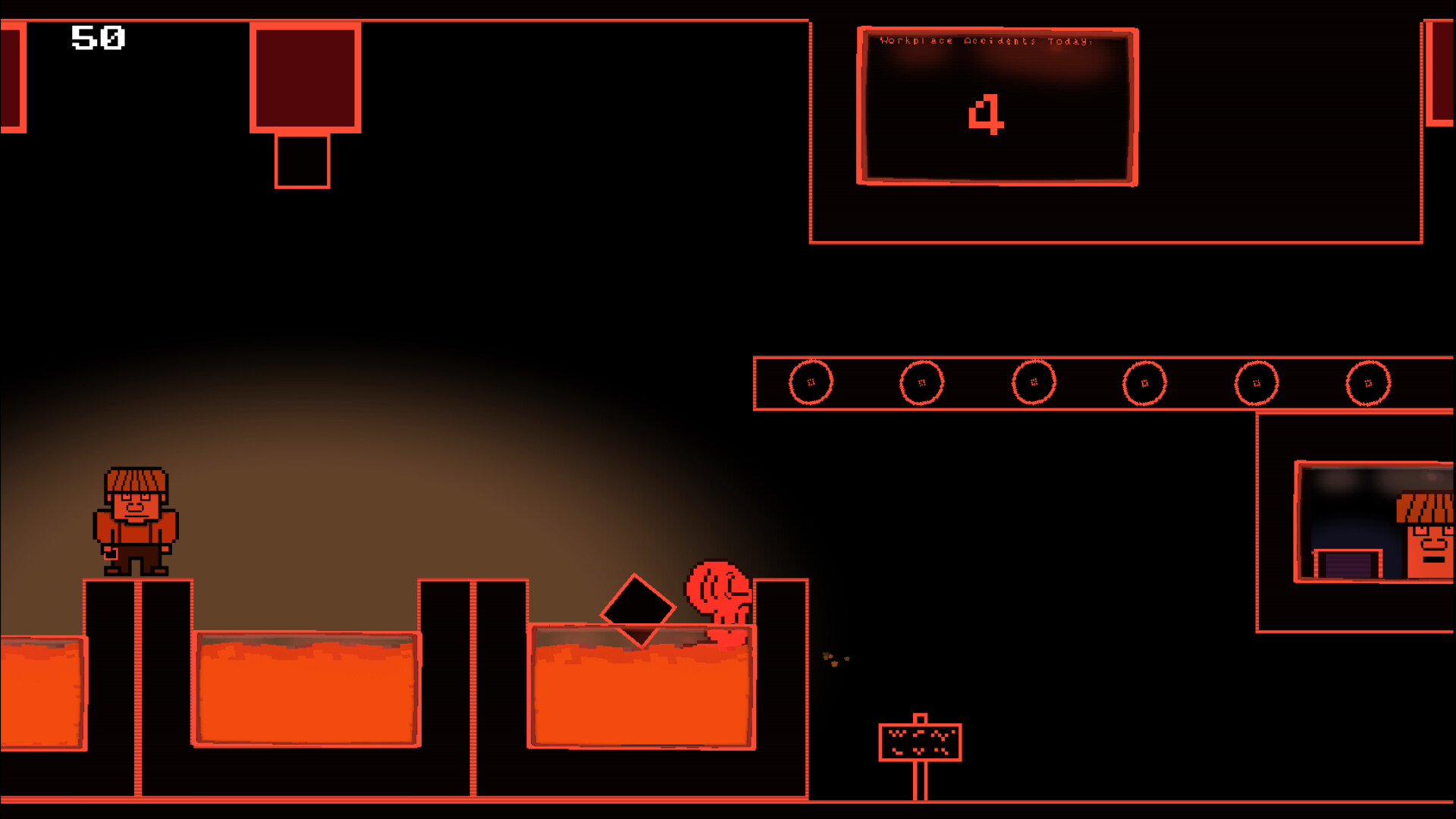
All 11 Steam achievements are hidden by default. Known achievement names serve as hints: Knocked his Block off! (boss encounter with a block-themed enemy), 0 Days Without a Workplace Accident (The Foundry), Tastes Disappointing... (likely the jellybean/cake running gag), Definition of Stupidity, Gone, 1.. 2... 3... GO!, and others. Many are tied to optional interactions rather than main-story progression — explore thoroughly.
World & Biomes
The Liminal is divided into distinct biomes accessible from a central hub:
| Biome | Theme | Key Challenge | Notable Features |
|---|---|---|---|
| The Burrow | Underground tunnels, packed earth | Basic platforming, mechanic tutorials | Tutorial zone. Teaches movement, worm throwing, save crystals. First NPCs and mini-games. |
| The Canopy | Forest above ground, vertical tree structures | Wall jumping, height management, wind gusts | Multiple hidden paths leading to early health upgrades. First ability gate (wall jump). |
| The Reservoir | Submerged caverns, water-filled chambers | Oxygen management, swimming mechanics | Introduces water physics. Worm cannot swim initially — requires an upgrade found here. |
| The Foundry | Industrial ruins, conveyor belts, crushers | Moving hazards, precision timing | Densest hazard concentration. "0 Days Without a Workplace Accident" achievement. Boss encounter. |
| The Observatory | High-altitude towers, floating platforms | Wind mechanics, worm launch puzzles | Verticality peaks here. Telescope puzzles reveal lore. Final ability unlock before endgame. |
| Monono | Endgame convergence zone | All abilities required; full mastery test | Final boss sequence. Multiple endings branch from decisions made across all biomes. |
Biome order is loosely guided. The Canopy and Reservoir can be tackled in either order after The Burrow. The Foundry gates behind at least three abilities. The Observatory requires worm launch. Monono requires all abilities. Each biome contains 1–2 mini-games, 1 hidden heart container, and 3–5 lore fragments.
Mini-Games & Side Activities
Mini-games are scattered throughout the Liminal and are the primary source of permanent upgrades. They're accessed through specific NPCs in each biome:
- Rock Stacking: Balance rocks without toppling. Higher stacks reward better prizes. Reward: +1 heart container at 10 stacks, lore fragment at 15+. Stack slowly and center each rock carefully — the physics are floaty.
- Worm Races: Guide your worm through obstacle courses against AI opponents using suggestion-based steering (not direct control). Reward: Worm speed upgrade (reduces throw cooldown) for first-place finishes. Three tracks total across different biomes.
- Shadow Matching: Identify which silhouette matches a briefly-shown creature. Silhouettes become increasingly abstract and distorted. Reward: Lore fragments and a key item for an Observatory puzzle.
- Memory Tiles: Classic flip-and-match with lore illustrations on the backs. Every pair reveals Liminal history. Reward: Extended dash distance and crucial backstory about Monono.
- Disco Contest: Rhythm-based mini-game matching button prompts to keep the dreadling dancing. Found in a hidden Canopy room. Reward: Cosmetic change and secret dialogue with a recurring NPC.
- Cake or Pie?: A recurring dialogue choice appearing with multiple characters. Your answer influences which ending path you're on and changes NPC reactions. No "correct" answer, but consistency (or inconsistency) has consequences.
Boss Encounters & Combat
Combat is sparse but meaningful. Boss encounters are gated behind story progression and require mastery of the ability unlocked in that biome.
Combat fundamentals:
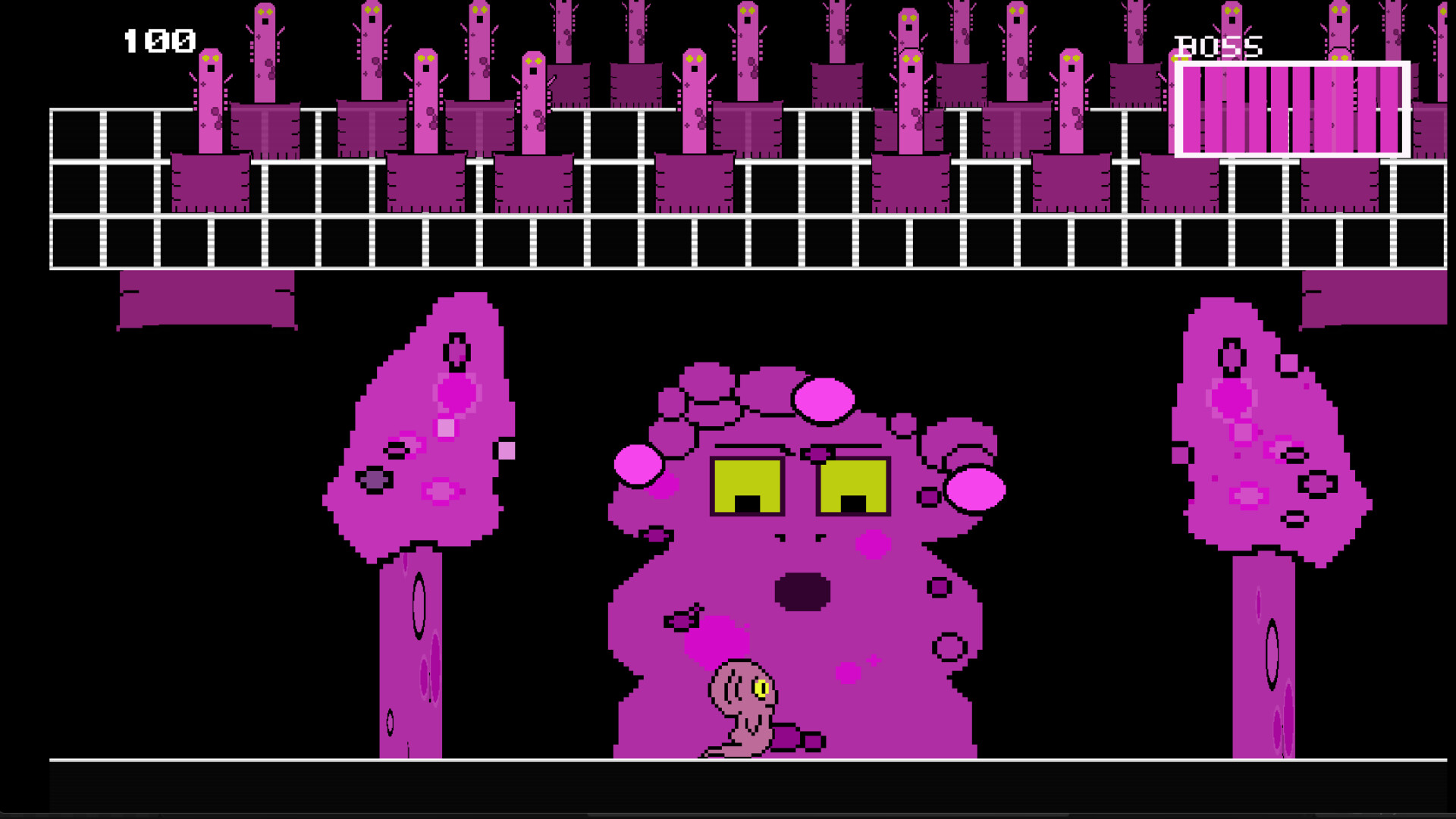
- No direct attack for most of the game. Damage comes through environmental interactions, worm stuns, and (in boss fights) contextual actions on vulnerable weak points.
- Bosses follow pattern recognition structures: observe the attack cycle, dodge with movement abilities, strike during vulnerable windows.
- The worm can stun bosses briefly when thrown at glowing weak points or exposed cores. This creates the damage window.
- Most bosses have 3 phases with accelerating attack patterns and new moves at each transition.
Boss strategy principles:
- First attempts are for observation — learn the pattern, count attacks per cycle.
- Dash i-frames are your best defensive tool. Time dashes through projectiles, not away from them.
- Keep the worm alive. If it dies mid-fight, you lose your damage option. Park it in a safe corner and deploy only during vulnerable windows.
- Prioritize dodging over greedy damage — boss fights have no enrage timer.
Advanced Strategies
The Two-Pass Exploration Method
On your first visit to any biome, focus exclusively on reaching the map room and boss gate. Don't stop for secrets. After defeating the boss and unlocking the biome's ability, do a second pass with your expanded toolkit. This saves hours of backtracking compared to attempting 100% on first pass.
Worm Bouncing
When throwing the worm at ceiling switches, aim slightly above and let it arc down. The worm bounces off walls — use this for corner switches not in direct line of sight. A worm hitting a sloped surface ricochets at a predictable angle.
Dash-Chaining Through Hazard Corridors
Long corridors of alternating spikes and moving platforms can be bypassed with dash-chaining: dash through the first set, land, immediately dash again. Chain 3–4 dashes through continuous hazards. Critical for The Foundry's conveyor gauntlet.
Save Crystal Scumming for Mini-Game High Scores
Save at the nearest crystal before attempting a mini-game high score (especially Worm Races and Rock Stacking). If you fail, quit to menu and reload. The developer placed crystals near every mini-game NPC — this is the intended pattern.
Dialogue Exhaustion for Hidden Clues
Talk to NPCs repeatedly until they repeat themselves. Then leave the room and return — many have new dialogue after map transitions. The scientist in love with Alice reveals critical lore after your third conversation and a revisit after The Reservoir.
FAQ
Q: How much does Our Dreadling cost? A: Approximately $5.99 USD on Steam (S$8.39 SGD — regional pricing varies). No microtransactions, DLC, or battle pass.
Q: How long is a full playthrough? A: 5–8 hours for the main story. 10–12 hours for 100% completion (all achievements, mini-game high scores, lore fragments).
Q: Is it a true Metroidvania? A: Yes — interconnected world map, ability-gated progression, required backtracking, non-linear biome ordering after the tutorial.
Q: How difficult is the game? A: Moderate. Platforming requires precision in later biomes, but save crystals are frequent and death only resets unsaved progress. Boss fights are pattern-based, not reaction-based.
Q: Does it support controllers? A: Partial support. Movement and menus work on controller, but worm aiming is significantly easier with keyboard and mouse. The developer recommends keyboard + mouse.
Q: Are there multiple endings? A: Yes. At least 3 endings based on Cake or Pie responses, mini-game completion, lore fragment collection, and a key Monono endgame choice.
Q: What is "Monono"? A: The central mystery — an enigmatic entity your dreadling is born to find and confront. Its nature is revealed through lore fragments, NPC dialogue, and environmental storytelling. Describing it further spoils the narrative.
Q: Is there combat? How does it work? A: Enemy encounters and boss fights exist, but combat is not the focus. Ambient enemies can be avoided or stunned with the worm. Bosses are pattern-recognition challenges — dodge attack cycles, strike vulnerable points with the worm. No traditional attack button.
Q: What are the system requirements? A: Minimum (Windows): Windows 7/8/10 (64-bit), Dual-Core 1.5 GHz, 2 GB RAM, DirectX 9/OpenGL 3.0 GPU with 512 MB VRAM, 2 GB storage. Runs on virtually any Windows PC from the last 15 years. Linux has minimal support (2 GB RAM, 1 GB storage). No Mac support.
Q: Does the game have fast travel? A: Yes — unlocked mid-game in The Foundry. Fast travel between any two activated save crystals.
Q: Can the worm permanently die? A: No. It respawns at the next save crystal activation if incapacitated.
Q: Is there New Game+? A: No. But you can reload a pre-Monono save to pursue different endings without replaying the full game.
Q: Are achievements missable? A: Some are tied to specific interactions that could be missed in a single playthrough, but none are permanently locked if you keep a save before the final sequence.
Q: Console or physical release? A: Digital-only on Steam (Windows). No console or physical release announced. Check panopticorp.com for future updates.
Final Verdict
The one tip that changes everything: Talk to every NPC until they repeat themselves, then leave and come back. The amount of hidden content gated behind dialogue exhaustion is staggering — health upgrades, ability enhancements, boss weaknesses, and entire lore chains are locked behind conversations most players skip after the first line.
Who should play: Fans of compact, atmosphere-first Metroidvanias who value discovery over spectacle. If 5–8 hours of tight platforming, clever worm puzzles, and genuinely funny writing sounds like your ideal weekend game, this is an easy recommendation at its price. The Undertale-meets-Metroidvania pitch is accurate but the game has enough personality to avoid feeling derivative.
Who should skip: Players looking for deep combat, 30+ hour epics, or high-budget visuals. The minimalist pixel art and sparse combat are deliberate design choices that won't appeal to everyone. If Buddy Simulator 1984's unconventional storytelling didn't click for you, Our Dreadling's similar DNA may not either.
Rating: 8/10 — A confident, compact Metroidvania with sharp writing, satisfying exploration, and a worm companion that's genuinely fun to use. Its restraint is a feature, not a bug.
Last reviewed by Game How To Editorial. We play each game, verify controls against official sources, and update guides when game mechanics change.
Screenshots