Official game
Play Kernel Hearts
This game is hosted by Steam. Continue to the official page to play or download it.
Play on SteamOverview
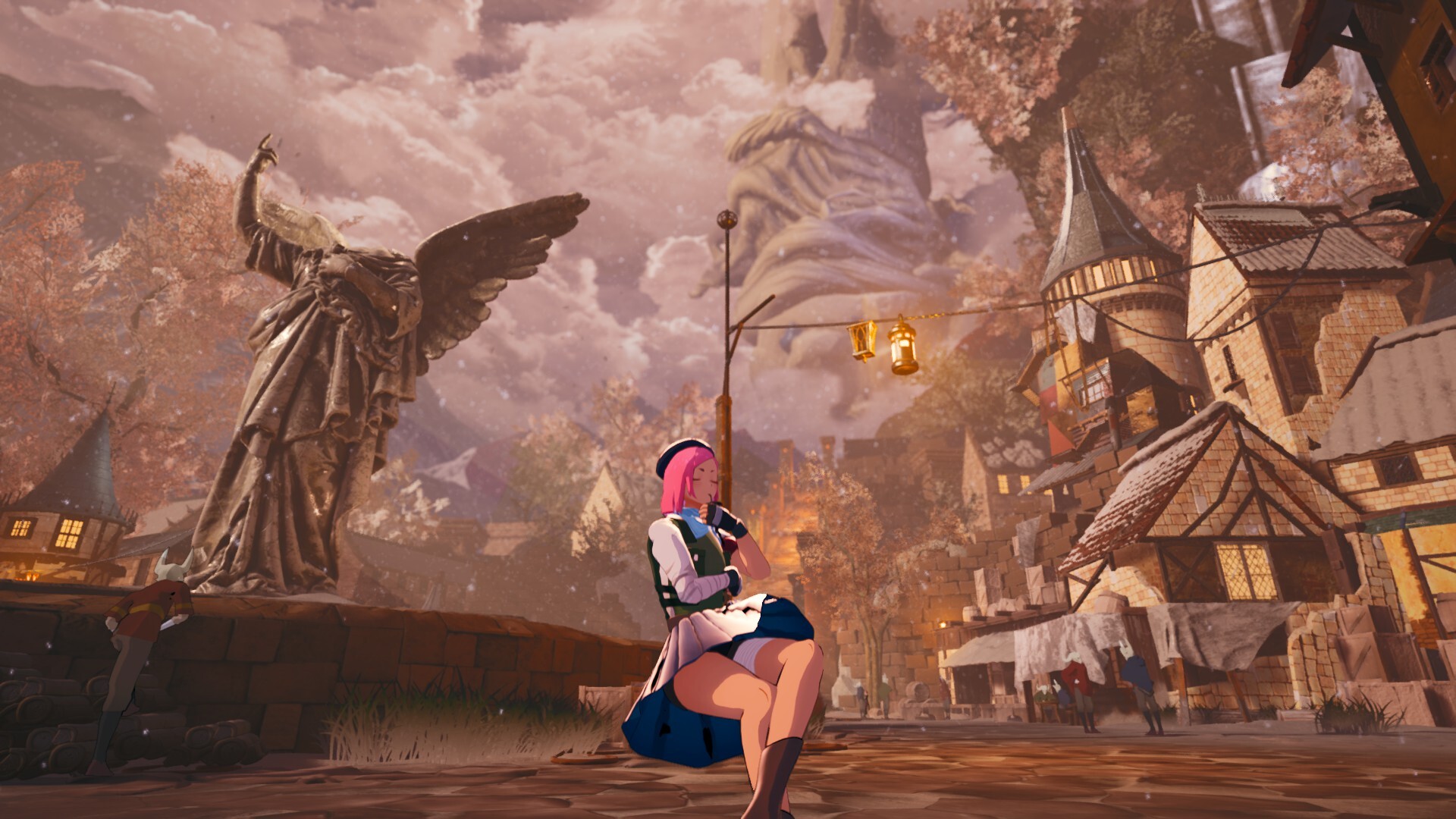
Kernel Hearts is a co-op roguelike action RPG from Ephemera Games, published by Whitethorn Games, launched September 17, 2026 on Steam at $17.99 (currently 10% off until October 1). You are the M.A.H.O.U Unit, a squad of magical girls climbing the Tower of Babel to exterminate angels and dethrone a God presiding over a world drowning in ashes. The pitch reads like a joke; the game plays it straight, and that is most of its charm.
The structure is Risk of Rain 2. The combat is NieR: Automata. The heart is a post-Madoka magical girl story about memory backups and bond meters. Each expedition sends you up one vertical slice of Babel, ends in a guardian fight, and returns you to a memory-backup laboratory where run rewards buy chips for your Unit MAHOU.OS. Death is not a failure state, it is a plot beat: you come back with your materials but lose the run's upgrades, and the story treats every death as canon. One 18-hour reviewer called it the first roguelite where they felt skill-capped before luck-capped, because most permanent power comes from narrative progression rather than god-run lottery tickets.
The Steam rating sits at Mostly Positive (roughly 77% of 234 reviews at the time of writing), and the reviews are unusually consistent about what works and what doesn't. The story, soundtrack, art direction, and character writing earn praise across nearly every review, positive and negative. The complaints cluster around animation locks on dodges, spongy enemies on higher difficulties, sparse tutorials, and co-op progression bugs, several of which the 1.0.11 and 1.0.13 hotfixes already patched. October brings rerolls, training mode, and English VO.
Target audience: Hades and Risk of Rain 2 players who want structure over item-gambling, NieR fans who want combat to feel elegant rather than optimal, friend groups that burned out on Deep Rock Galactic, and anyone who has ever wanted to punch a seraph as a magical girl.
Difficulty: adjustable across three tiers (Story, Normal, Sinner). Story mode is where you should unlock the roster and learn mechanics; Normal is the intended experience; Sinner is where the Sin Meter stops being a suggestion. Two reviewers independently recommended Story mode first, and the unlock data agrees: 25% of players have unlocked Laika, and most of them did it on Story.
| Fact | Detail |
|---|---|
| Developer | Ephemera Games (first game, four years in development) |
| Publisher | Whitethorn Games |
| Genre | Roguelike action RPG, hack and slash |
| Platforms | Windows (PC) |
| Release | September 17, 2026 |
| Price | $17.99 USD (10% launch discount to Oct 1) |
| Achievements | 44 |
| Modes | Single-player, 1-4 online co-op with crossplay between all PC versions |
| Session length | 30-45 minutes per expedition |
| Voice acting | Full Japanese VO; English VO arriving in the October update |
| System requirements | i7-9750H, 8 GB RAM, GTX 1060, 15 GB storage |
The minimum spec targets 1080p on Low/Medium settings, and the developer notes performance may dip during online co-op. A 1660 Ti or RTX 2060 handles the recommended tier.
Getting Started: Your First Three Runs
Run 1: Learn to Commit
The tutorial is thin and the October roadmap promises a better one, so treat your first expedition as a field lesson. The core combat truth is counterintuitive for action-game veterans: you cannot dodge-cancel out of attack animations. Every light attack string locks you in until it finishes. Two habits fix 80% of early deaths:
- Commit on your terms. Start attack strings only when you have already picked your exit space. Corners are death; open ground near a dodge lane is home.
- Walk more than you dash. Trash mobs in this game attack slowly and telegraph clearly. A reviewer who learned to simply stand in a mob and walk between swings found Normal mode dramatically calmer. Dashing through every crowd just parks you inside the next telegraph.
Run 2: Unlock Spika
After your second expedition you unlock Unit Spika, the sword-wielding rushdown character, tracked by "The Sword of the East" (58% of players). This is not an optional stop. Spika's aerial combo triggers combo finishers while moving, deals the highest sustainable DPS in the roster, and her Higanbana skill grants several seconds of untargetability inside a large AoE. One 8-hour player finished their first full run almost entirely on jump-attack strings and Higanbana invulnerability windows. She is the closest thing the game has to an easy mode, and the community consensus calls her exactly that.
Run 3: Die on Purpose
Two early achievements reward deliberate failure: "Be Afraid" (59%) wants you to get killed by the Sky Angel, and "Welcome to Sinner" (25%) wants a death in Sinner difficulty. More importantly, death is how the game teaches. You return to the laboratory with your materials, spend them on chips, and climb again. The reviewer insight that stuck: failure is not just part of the game, it is part of the story.
First-Week Priorities
| Priority | Why |
|---|---|
| Clear the tutorial and first domain on Story | Unlock Spika, learn dodge timing without pressure |
| Reach the Skybound Citadel | "Fly me to the Moon" (53%) is the mid-game gate where builds start mattering |
| Start bonds early, one gift per visit | Bond levels gate chip unlocks; gifts are once-per-visit per character |
| Try one 100% Sin survival | "Is he gone now?" (53%) pays an achievement for 30 seconds of gambling |
| Bank chips toward Laika | "The Crimson Demon" (31%) unlocks the Sin-scaling specialist |
Beginner Mistakes to Avoid
| Mistake | Why It Hurts | Fix |
|---|---|---|
| Dodging out of every attack string | The animation lock eats the dodge input; you eat the hit | Finish or commit; use Higanbana or the teleport-dash skill to escape long strings |
| Standing still in Sinner mode full-clearing rooms | The Sin pressure and scaling punish slow play | Hit objectives and move; the tower rewards routing, not mopping |
| Hoarding chips for the perfect build | Unspent chips do nothing; early runs need any spike | Equip generously, adjust later (per-character loadouts arrive in October) |
| Skipping hub conversations | Bonds gate chips, achievements, and a Relic | Gift every resident once per laboratory visit |
| Buying level-ups before exploring | Resources are scarce early and exploration pays more | Open the map's POIs and chests before spending |
| Ignoring patch notes | 1.0.11 and 1.0.13 fixed chip duplication, Judecca soft-locks, and dead achievements | Update before grinding anything |
Core Mechanics Explained
The Expedition Loop
Each run climbs one domain of the tower: Folktale Fields, the Garden of Eden, Vulcan's Forge, the Skybound Citadel, the Playroom, and Judecca's Golden Labyrinth, ending at the top of Babel. Domains are open arenas rather than corridors. You free-roam, pick fights, open chests, find Strongholds, and reach the guardian when ready or when the pressure says now. Every domain ends in a boss: Seraph guards the mid-tower, Lucifer falls later, and Gabriel waits at the peak with a no-damage variant that is the hardest combat achievement in the game.
Death sends you back to the memory-backup laboratory on humanity's last holdout. You keep materials and permanent unlocks; you lose the run's temporary upgrades. This is the Hades-adjacent structure, with one difference that changes everything: most of your real power arrives through story and bond progression rather than run luck.
The Sin Meter
Sin builds as you fight, and it is the game's risk-reward dial. Higher Sin means stronger drops and scarier angels. At 100% you take a survival check: 30 seconds of living at full Sin earns "Is he gone now?" (53%). The advanced pattern is Sin banking: push the meter toward full just before a guardian door, survive the entry burst, and cash enhanced drops during the fight. After the 1.0.11 hotfix removed the Executioner's Charge boss-execution exploit, Sin management is mandatory rather than optional, and Laika's kit makes the banked Sin directly convertible to damage.
Chips and MAHOU.OS
Chips are the build system. Each unit equips up to 256KB of chips onto MAHOU.OS, in combat, movement, and utility flavors. "Living in the Database" (16%) tracks maxing your chip capacity, a mid-game milestone rather than a first-week one. "Stocked" (4%) asks for every chip in the catalog and is a long-haul grind. Note the October roadmap's per-character chip loadouts: before that patch, swapping builds between units is manual bookkeeping, so write down your Sin-bank Laika layout before you experiment.
Mementos and Relics
Mementos are run modifiers: equippable memories that buff or curse each expedition. "Non omnis moriar" (9%) wants all of them, and "The Honored One" (9%) wants three level-5 Mementos in a single run, which makes Memento rush the current high-skill meta. Relics drop from exploration; "Hoarder" (3%) wants you to collect every Relic at least once. The community's fairest criticism is that Memento and Relic stat descriptions are thin; the October update's expanded keybindings and tutorial work should touch this, but for now the wiki-grade answer is to test each Memento in one run and record what it did.
Magical Girl Transformation
The Heavenly Curse chip triggers your true form: a timed transformation with a devastating AoE on activation and i-frames during the cast. "The power of the Moon" (32%) tracks the chip itself. Transformation uptime is the skill ceiling of this game. A four-player squad that staggers transformations can keep one magical girl state active through an entire boss fight, which trivializes phases that solo players run dry against. Note from 1.0.13: the curse was fixed for clients who could not access it, so update before planning your relay.
Bonds and Rescues
Tower residents are characters, not vending machines. Gifts deepen bonds, bonds unlock story scenes and chip prerequisites, and rescued characters (Mikolaj, TV-Head, Fang, Caius, Raiza) join the laboratory roster. The once-per-visit rule matters: each hub visit lets you progress each bond once, and safe rooms during expeditions have their own bond characters. "Together Forever" (5%) asks for both Annes and Airy at level 3 in a single expedition, which is bond micromanagement on a timer. The co-op caveat from reviewers: bonds only progress for the host, so if you join a friend's lobby, your bond story waits until your own game.
The Judecca Door Problem
Judecca's Golden Labyrinth is the pre-final gauntlet, and its doors are the game's most-asked-about mechanic. The doors run on timed countdowns that start when you interact with them, and the correct path is not marked. The working community solution:
- Sprint the room's edge and start every door's countdown simultaneously.
- Complete one loop of the room; most doors unlock around the same time.
- Peek through each: the door revealing a gigantic pair of hands leads to the second room.
- Repeat; the final door is the one with the stairs visible past it.
- Ignore side halls; they are loot, not progress, and the level timer does not wait.
Progression Strategy: What to Unlock and When
| Phase | Goal | Why |
|---|---|---|
| Runs 1-3 | Story mode through Folktale Fields, unlock Spika | Learn commit-and-dodge timing against forgiving enemies |
| Runs 4-8 | Reach the Skybound Citadel on Normal | Citadel is the mid-game gate (53%); chips start compounding |
| Runs 8-15 | Defeat Seraph, rescue Mikolaj, build bonds to 3 | Seraph is the mid-tower wall (37%); bonds gate Laika-relevant chips |
| Runs 15-25 | Unlock Laika and Dolce, attempt 100% Sin banked runs | Laika converts banked Sin to damage; Dolce completes "Kernel Night" (21%) |
| Runs 25+ | Lucifer, Gabriel, post-Babel return | "Auld Lang Syne" (17%) opens scaled-up refarming with better Memento drops |
Resource priority inside a run: chests and POIs first, guardian when the Sin bank is set. Resource priority between runs: chips that fix survivability (i-frames, HP), then damage, then cosmetics of convenience. The two benchmark grinds, 1,000 angel kills ("Hunting for your Dream", 38%) and 1,000 chests ("Amazing Chest Ahead", 27%), both arrive passively by the post-game if you route through Strongholds, which respawn chest clusters on revisit.
Builds and Character Tier Notes
The roster is four units: Spika, Laika, Dolce, and your starting character. The launch-meta consensus:
| Unit | Role | Strengths | Watch Out |
|---|---|---|---|
| Spika | Rushdown DPS | Aerial combo chains finishers while moving, highest sustainable damage, Higanbana = ~4 seconds untargetable in a big AoE, best platforming | Animation locks on her dash/sprint look stiff; you will notice, then stop caring |
| Laika | Sin-scaling specialist | Weight of Sin III and Red Threads III (added in 1.0.11) convert the Sin Meter into damage; the bank-Sin meta pick | Long animation locks in her light strings; dodge discipline required |
| Dolce | The performer | Unlock tracked at 22%; brings range and control the melee units lack | Later unlock means fewer practiced hands in pub lobbies |
| Starter | All-rounder | Three-kit basics (launcher, multi-hit combo, heavy slam) teach the fundamentals | Damage ceiling arrives early; transition to Spika after run 2 |
The Sin-Bank Laika Build (Current Co-op Meta)
- Chip priority: Sin gain, Sin retention, HP recovery on kill. Laika dies to the meter before she dies to angels.
- Memento priority: anything that multiplies drop quality at high Sin; the point of the build is converting risk into loot and damage simultaneously.
- Play pattern: push Sin to 90-100% during trash phases, hold it there with kill streaks, cross guardian doors at max Sin, and spend Weight of Sin III windows for burst.
- Co-op note: the Spika player carries aggro and mechanics; Laika carries damage. Do not both bank Sin in the same phase; the screen becomes unreadable and revive timers stack.
The Transformation Relay (Four-Player Boss Standard)
- Agree an activation order before the fight: 1-2-3-4, then repeat.
- Each Heavenly Curse activation grants i-frames during the cast and a burst window after.
- Stagger by roughly a boss phase each; the relay keeps one transformed player on the field at all times.
- Gabriel's second phase, where solo players run dry, is where the relay pays for itself. "The Legend Never Dies" (16%), the no-damage Gabriel kill, is realistically a relay fight.
The Koka Summon Wall (Solo Achievement Route)
"Do androids dream of electric...?" (16%) wants five simultaneous Koka summons. Stack summon-duration chips, cast on cooldown, and the summons double as a body-block wall for solo repositioning. It is both an achievement and a legitimate solo tank pattern for Judecca's hallway gauntlets.
Step-by-Step Strategy Playbooks
Playbook 1: Your First Seraph Kill
- Enter with full HP and a Sin bank at 70% or higher; do not enter at 100% cold.
- Phase 1: stay on the outer ring, punish the geometry-window after the camera-cursed "Angelical Geometry" attack (fixed in 1.0.13, but the outer ring still reads best).
- Save your transformation for phase 2 entry; the activation burst eats the phase transition.
- Hold Higanbana (if Spika) for the grab telegraph; the i-frames no-sell it.
- If you die, note the phase number. Seraph attempts are cheap, and pattern knowledge converts directly into the no-damage rematch later.
Playbook 2: The Judecca Door Sprint
- On room entry, sprint the perimeter and activate every door's countdown in one lap.
- Fight only what blocks the lap; the countdowns run on time, not kills.
- When doors open, peek for the giant hands marker; that is progress, everything else is loot.
- In the second room, repeat; the stairs door is final.
- Keep the map's catapult shortcuts in mind for chest cleanup runs later; Judecca is the worst place to full-clear greedily.
Playbook 3: Banking 30 Seconds at 100% Sin
- Attempt on a domain you already know; Folktale Fields is fine.
- Build Sin to 95%+ during the trash phase, keeping a few enemy clusters alive as refresh sources.
- Pop a defensive chip or transformation at the moment you hit 100%.
- Run, don't fight: orbit the arena edge, letting one or two mobs chase you.
- The achievement ticks at 30 seconds; then dump Sin through a kill spree or reset it at the guardian door.
Playbook 4: Chest Economy for "Amazing Chest Ahead"
- Unlock every Stronghold you find; they are one-time costs that spawn chest clusters on revisit.
- Route a run through three Strongholds in a loop; each pass re-farms the clusters.
- Pair the loop with "Hunting for your Dream" angel kills; the same trash packs feed both counters.
- Expect roughly 15 looped runs instead of 40 linear ones.
- Post-Babel, chest loot tables improve; if the grind is already underway, finish it there.
Playbook 5: The Co-op Session That Actually Progresses Everyone
- Host runs the story beats; clients collect materials and boss-kill credit.
- After each session, every client replays the same domain solo once; bonds and story flags are host-side only.
- Use the menu-relog trick between hub visits to double bond ticks (it is a known workaround, patched or not, keep expectations low).
- Agree transformation order before boss rooms; the relay is a squad agreement, not improvisation.
- Set lobby visibility early; Friends Only has known quirks with cross-platform Epic accounts, so test the invite before the run, not during it.
Playbook 6: The Gabriel No-Damage Setup
- Practice the fight solo to phase 2 without transformation, five times. Learn the tells.
- Bring the relay squad; solo no-damage is a speedrunner flex, not a strategy.
- Assign one player as designated dodge-checker: their only job is calling telegraphs.
- Use transformation windows defensively, not aggressively; every relay cast is a saved hit.
- If anyone takes a hit, reset immediately. The achievement has no partial credit, and attempts are free.
Advanced Tips
- Commitment is the combat grammar. You cannot dodge-cancel attack animations, so choose your strings like a chess move. The teleport-dash skill can be used out of attacks; it is the one true panic button, and worth a chip slot in every build.
- The screen is the real boss. Late-game arenas stack 30 enemies with effect spam. In co-op, ask the host to tone down flashy Mementos, and position at the arena edge where clutter thins out.
- Walk in crowds, dash in open ground. Trash mobs telegraph slowly; walking between swings keeps you out of the next hitbox without spending i-frames.
- Sin is a currency, not a threat. Every mechanic that reads as punishment (full-meter survival checks, stronger angels) pays better drops. The game wants brave stands.
- Bonds are once-per-visit; plan visits like errands. A gift tour of the hub before each run keeps four bond lines ticking with zero extra expeditions.
- Post-Babel is the real farm. "Auld Lang Syne" (17%) returns you to a scaled tower with improved Memento drops. Save level-5 Memento pushes and the Level-1 tower challenge ("Before my Blood is Dry", 3%) for this period.
- Head-bouncing is a movement tech. Jumping on angel heads ("Headache", 19%, 100 head-bounces) is not a gimmick; it is free repositioning across arenas and the safest way to cross dense packs.
- Pet every pet. "High priority" (5%) needed a retroactive fix in 1.0.13 to unlock; if you pet everything and it never popped, update and revisit.
FAQ
Is Kernel Hearts crossplay? Yes, crossplay works between all PC versions at launch. Console versions are not announced.
How many players is co-op? Up to four in online co-op. There is no local split-screen. Note that bonds and story progress are host-side only for now.
How long is Kernel Hearts? Fifteen to twenty hours to a first credits roll; the 44-achievement completion runs 40+ hours. Only 16% of early players have beaten Gabriel's no-damage variant, your best co-op buddies are around the Citadel.
What is the Sin Meter? A risk-reward gauge that builds during combat. Higher Sin means better drops and stronger angels, and surviving 30 seconds at 100% is an achievement. Bank it before boss doors.
Does Kernel Hearts have difficulty settings? Three tiers: Story, Normal, and Sinner. Story is the sensible unlock-and-learn tier; Sinner is where scaling and the Sin pressure bite hardest.
Who are the playable units? Spika (unlock tracked at 58%), Laika (31%), and Dolce (22%), plus your starter. "Kernel Night" (21%) is the full-roster achievement.
How do I transform into a magical girl? It is a story unlock behind a mid-tower boss, then a gameplay resource via the Heavenly Curse chip. Keep climbing; if the option seems missing in co-op, update to 1.0.13+, which fixed clients lacking access.
What did the v1.0.11 and v1.0.13 patches change? Chip duplication, the Judecca exit soft-lock, Higanbana's infinite i-frames, Divine Blade hit detection, Seraph camera geometry, transformation input locks, dead achievements (pet and bond ones fixed retroactively), and removed the Executioner's Charge boss-execution exploit.
What is coming in the October roadmap? Improved and replayable tutorial, expanded keybindings, per-character chip loadouts, multiple save slots, training mode, level-up reward rerolls, and English voice-over.
What are the system requirements? Minimum: Windows 10, i7-9750H, 8 GB RAM, GTX 1060, 15 GB storage, targeting 1080p Low/Medium. Recommended: i7-10700 or Ryzen 5 3600, 16 GB RAM, RTX 2060 or GTX 1660 Ti.
Does it run on Steam Deck? Players report it is very playable on Deck at reduced settings, with one caveat: controller inputs needed a custom mapping out of the box. Official verification is pending.
Is Kernel Hearts related to Madoka, Hades, or NieR? No official connection to any of them. The community shorthand, "Risk of Rain 2 structure with a NieR combat heart and a post-Madoka soul," is a compliment the developers seem happy to accept.
Verdict
Kernel Hearts is a first game, and it shows in both directions. The rough edges are real: dodge animation locks, thin stat text on Mementos, co-op progression that makes clients redo story beats solo, and difficulty spikes that the October roadmap is visibly repairing. What is already excellent is the part that patches cannot fake: a combat loop that rewards commitment over button spam, a Sin system that turns greed into a strategy, a transformation relay that makes four-player bosses feel choreographed, and a story that treats your deaths as part of the plot rather than a failure of it.
Buy it for a friend group at the launch discount, on Story mode first, and let Spika teach you the ropes. The single habit worth building from run one: bank your Sin instead of spending it. The whole tower pays better the braver you stand in front of it.
Last reviewed by Game How To Editorial. We play each game, verify facts against official sources, and update guides when game mechanics change.
Screenshots