Official game
Play Hellforged
This game is hosted by Steam. Continue to the official page to play or download it.
Wishlist on SteamOverview
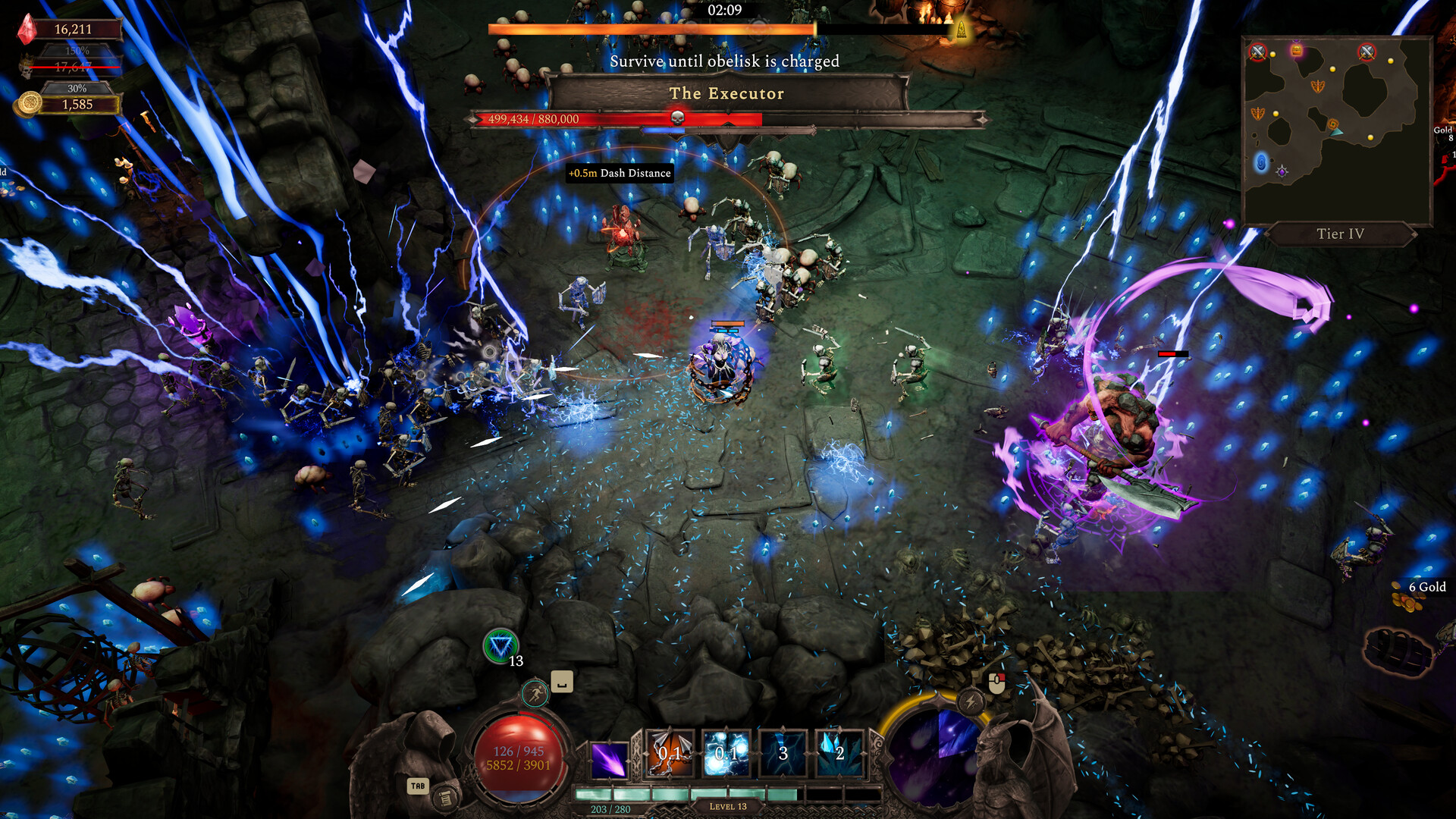
Hellforged is a loot-driven, extraction bullet-heaven game from developer Moonpyre, published by Grindstone, planned for release in 2026 on Windows. It fuses the screen-clearing horde combat of Vampire Survivors-style bullet heavens with the risk-reward tension of extraction shooters like Escape from Tarkov and Hunt: Showdown. You are one of the legendary survivors of a shattered expedition into the demon-infested Blackpyre. Every run is a tense loot heist: fight through bloodthirsty demon hordes, capture locations, unlock chests, take on quests, and decide whether to extract safely with your gear or risk it all for greater rewards.
The game was announced in April 2026 with an IGN trailer and a playable demo. The core promise is control: you pre-craft your build before each run using the Arsenal deck system, handpicking exactly which upgrades and abilities will drop during the expedition. This turns the usually chaotic bullet-heaven build process into a deliberate strategy. IGN lists an initial release window of Q4 2026.
The publisher Grindstone is known for Jotunnslayer: Hordes of Hel, another horde-survival title, which gives Hellforged a proven pedigree in the genre. The developer is Kosice, Slovakia-based Moonpyre. The game carries an AI Generated Content Disclosure: generative AI is used for some in-game icons.
Who it's for: Bullet-heaven fans who want build agency, extraction shooter fans who want a faster, more chaotic loop, and anyone who enjoyed the loot-driven progression of games like Diablo combined with the horde-clearing power fantasy of Vampire Survivors.
Who it's not for: Players who want a chill, low-stakes experience. Hellforged is built on tension: extraction decisions, risk assessment, and the threat of losing gear. If losing loot on a bad run ruins your day, this genre will stress you out.
| Fact | Detail |
|---|---|
| Developer | Moonpyre (Kosice, Slovakia) |
| Publisher | Grindstone (Jotunnslayer: Hordes of Hel) |
| Genre | Extraction bullet-heaven / roguelike action RPG |
| Platforms | Windows (Steam, Epic Games Store) |
| Release | Q4 2026 (per IGN), demo available now |
| Price | TBA |
| Players | Single-player with online leaderboards |
| Achievements | Hundreds, including secret ones |
| Controller | Full controller support |
| Languages | 12 including ZH-CN, PT-BR |
| AI Disclosure | Generative AI used for some in-game icons |
| Requirements | Win 10 64-bit, Ryzen 5 2600X, 8 GB RAM, GTX 960, 5 GB storage |
Getting Started: Your First Runs
Before You Launch
- Understand the extraction loop. You enter a demon-infested map, fight and loot, and choose when to leave. Extract safely to keep your gear, or push further for better loot at the risk of losing everything. This is the game's core tension.
- Pre-craft your build in the Arsenal. Before every run, you build a deck that determines which upgrades and abilities will drop for you during the expedition. This is your most important pre-run decision.
- Play the demo first. The demo is available now on Steam, giving you access to the core loop, several classes, and a feel for the extraction risk-reward before launch.
Your First 30 Minutes
- Pick your class. Choose from distinct character classes, each with wildly unique and devastating powers. Don't overthink it; every class is viable, and you'll unlock more as you progress.
- Run your first expedition. The tutorial map teaches the basics: move, attack, collect loot, manage your health, and find the extraction point.
- Learn the capture system. Locations on the map can be captured for rewards. Capturing a location holds a position for a moment but pays off in resources.
- Decide your first extraction. The first few runs, extract early. Getting gear home builds your camp and unlocks permanent upgrades. Dying with your first good weapon teaches you the wrong lesson.
- Spend resources in camp. Every run brings back resources to rebuild the ruins of your camp. Unlock new ways to improve your character between runs.
Beginner Mistakes
| Mistake | Why It Hurts | Fix |
|---|---|---|
| Never extracting | You lose everything on death, and gear loss compounds | Extract early and often until your camp is upgraded |
| Ignoring the Arsenal | Random drops give you a random build | Build a focused deck so upgrades you want actually drop |
| Overextending for rifts | Rifts give endgame resources but are the riskiest captures | Only push rifts when your build is online and you have an escape route |
| Wasting talent points | The Eternal Tree is the permanent progression spine | Specialize in paths that synergize with your class |
| Skipping achievements | They unlock abilities, relics, and powers, not just cosmetics | Check achievement requirements; they're progression |
| Ignoring the monthly Trial | Trials offer leaderboard titles and exclusive rewards | Try the Trial even if you're not competitive; rewards are real |
| Greed over discipline | The playtest's biggest killer was not knowing when to leave | Set a "walk-away point" before you enter the map |
Core Mechanics Explained
The Extraction Loop
Every run follows the same rhythm: enter, fight, loot, extract. The map is demon-infested and full of points of interest:
- Locations you can capture for resources.
- Chests that unlock with keys or puzzle solutions.
- Quests that offer objectives with specific rewards.
- Rifts, risky captures that grant endgame resources.
The decision to extract is always yours. You can leave with what you have, or push to capture another location, open another chest, or take on a quest. The tension is the point: greater rewards require greater risk, and death means losing the gear you carried in. Playtest coverage confirms the loop holds up: even when loot wasn't the goal, staying to fight demons was fun on its own, which makes the extraction decision harder, not easier.
The Arsenal Deck System
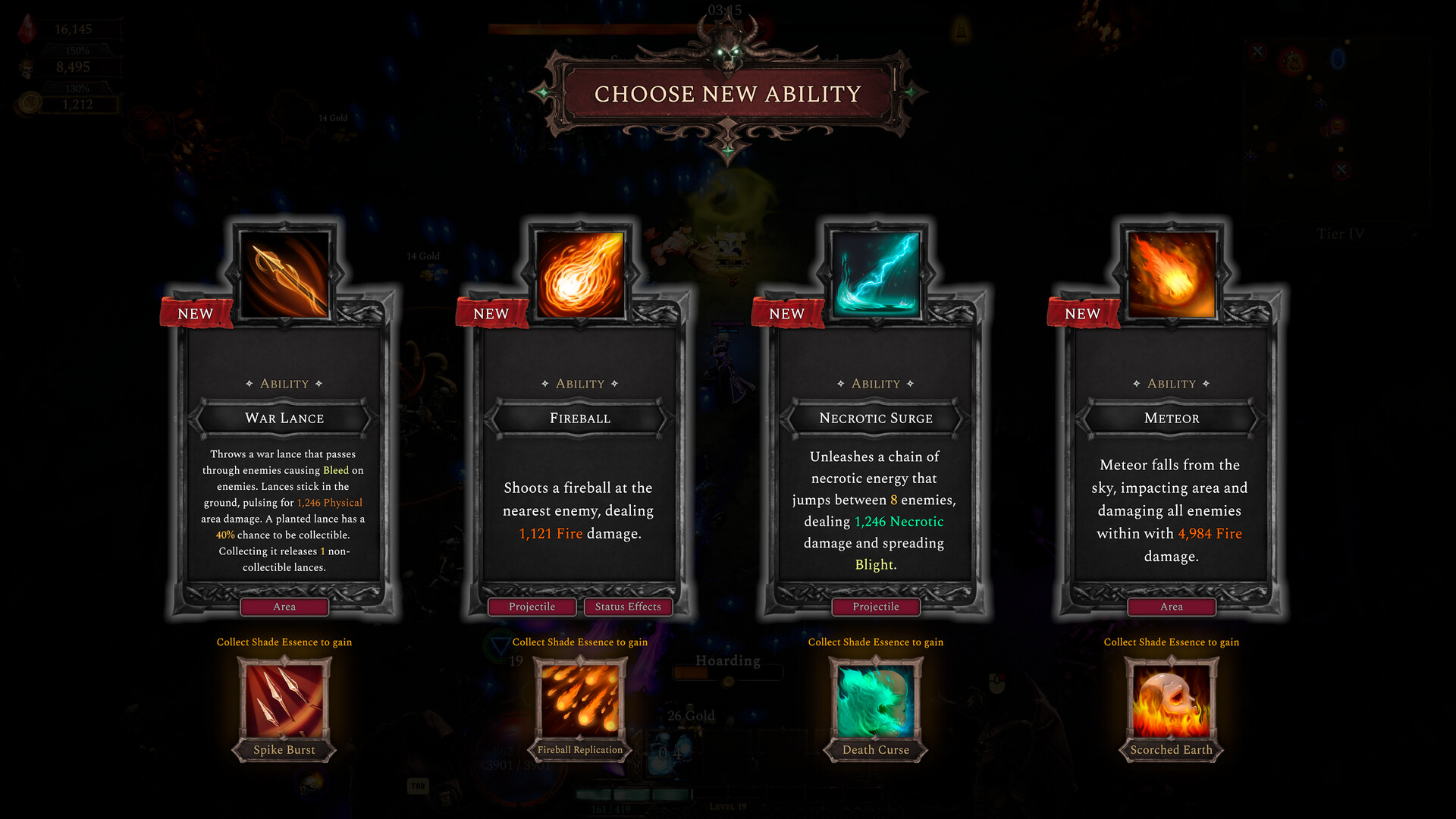
Before every run, you use the Arsenal to literally build your deck, handpicking which upgrades and abilities will drop for you during the expedition. This is the game's signature system. Instead of hoping for good random drops, you curate the drop pool:
- Include the upgrades that fit your class and playstyle.
- Exclude upgrades that don't fit your build.
- Build around a theme (fire, lightning, summons, etc.) so drops synergize.
The Arsenal exists specifically to "take some of the frustrating randomness out of putting together a good synergy." A well-built Arsenal turns every run into a build coming online, instead of a scramble for useful pieces.
The Eternal Tree
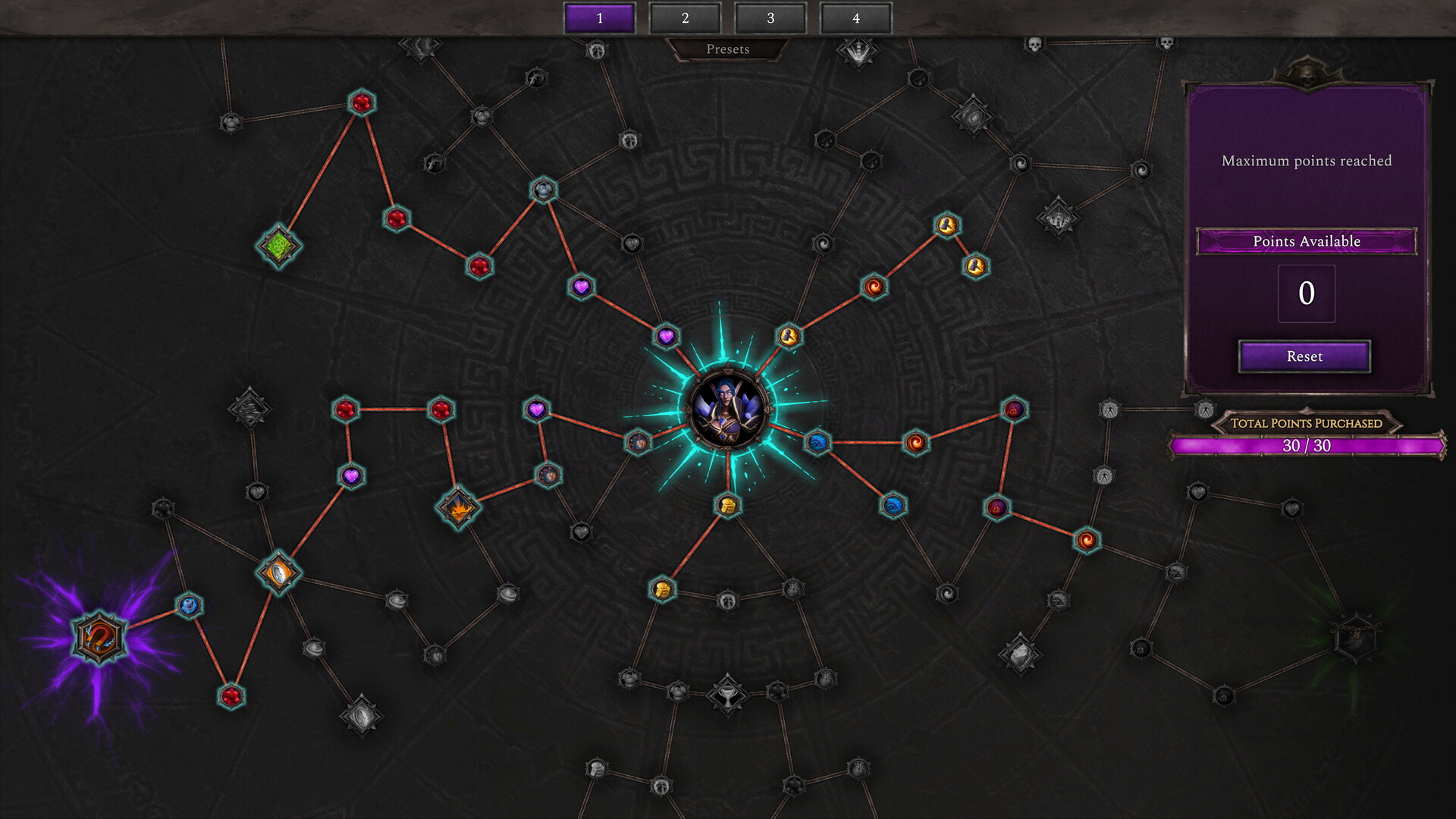
Talent points from runs are spent in the Eternal Tree, a permanent progression system. The tree is massive, and the developer emphasizes "spending points unlocks synergies that perfectly complement individual combat styles." Specialize in paths that perfectly synergize with your combat style. The tree rewards commitment to a build rather than spreading points thin.
Achievements as Progression
Hundreds of achievements are far more than cosmetics. They unlock new abilities, relics, and powers, alongside elusive secret achievements. Treat achievements as a progression system, not a checklist. Check their requirements before runs and build toward the ones that unlock power.
Camp Rebuilding
Every run brings back resources used to rebuild the ruins of your camp. The camp is your meta-progression hub: unlock new ways to improve your character, enhance equipment in various ways, and craft a combat style uniquely yours. A built-up camp makes every future run easier.
Synergies and Elements
The combat system rewards combining effects. Set an enemy ablaze, then strike with a lightning ability to trigger massive explosions that clear the screen, especially when combined with the correct talisman. Synergies are the difference between a decent run and a screen-clearing one. Learn which elements combo with which, and build your Arsenal to enable them.
Boss Summoning
Channel your gathered chaos to summon devastating bosses that test the absolute limits of your arsenal. These "Stygian threats" are the game's ultimate stress test: beat them and you earn the strongest gear available. Playtest coverage warns: "this will not be easy."
Monthly Trials
Every month, a new Trial puts your build through a different sin-soaked gauntlet, from greed to wrath and beyond. Climb the live leaderboard and claim exclusive in-game titles if you make it to the top.
Advanced Tips
The "Extract Early: Scale Later" Meta Strategy
In the first few hours, the best strategy is boring: extract as soon as you have a decent haul. Camp upgrades are permanent and make future runs better. Every early death sets you back a full run's worth of resources. Once your camp is upgraded and your class build is online, start pushing deeper maps and riskier captures.
Synergy-First Arsenal Building
Don't fill your Arsenal with individually strong upgrades. Build around a combo: fire + lightning + the talisman that boosts explosions. A focused deck with 10 synergistic upgrades beats a scattered deck with 20 good-but-unrelated ones. The game explicitly rewards this: "Discover overpowered combinations through impactful synergies that dynamically shift your strategy."
Rift Timing
Rifts give endgame resources but are the riskiest captures on the map. Push rifts only when: (1) your build is fully online, (2) you have a clear escape route to extraction, and (3) you're willing to lose what you've gathered. The best rift timing is right before you plan to extract anyway, so you're not carrying rift risk for the whole run.
The Boss Summon Gambit
Summon bosses deliberately: when your build is at peak power, when the arena is clear, and when you're ready for a long fight. The boosted loot is worth it, but only if you can win. Treat boss summons as an investment of your gathered chaos, the stronger your build, the better the return.
Monthly Trial Prep
Every month, a new Trial puts your build through a different sin-soaked gauntlet, from greed to wrath and beyond. Trials test specific build types. When a Trial is announced, build a character specifically for it: check the Trial theme, build your Arsenal around the required damage type, and climb the live leaderboard for exclusive in-game titles.
Achievement-Driven Progression
Before each run, check your achievement list. If an achievement requires a specific relic or power, build toward it in the Arsenal. Since achievements unlock new abilities, this creates a progression loop: chase achievements, unlock power, use power to chase harder achievements.
The Walk-Away Point
The single most important skill in Hellforged is knowing when to leave. Playtest coverage identifies this as the biggest challenge: "not knowing when to retreat and be satisfied with what we had." Before you enter a map, decide your exit condition, a specific piece of gear, a resource threshold, a time limit. When you hit it, extract. Discipline beats greed, every run.
Class Specialization
Diverse classes each have "wildly unique and devastating powers" and unique progression paths. Learn your class's signature mechanic first, then build the Eternal Tree and Arsenal around it. A class played to its identity outperforms a class played generically with a better loadout.
FAQ
What is Hellforged?
Hellforged is a loot-driven, extraction bullet-heaven game. Fight demon hordes, capture locations, collect gear, and decide whether to extract safely or risk everything for greater rewards.
When is the release date?
Q4 2026 per IGN. The demo is available now on Steam.
How much does it cost?
Price is TBA. The demo is free.
What platforms is it on?
Windows at launch, on Steam and the Epic Games Store.
Is it multiplayer?
It's single-player, but features online leaderboards where you compete against friends and players globally.
What are the classes?
The game features distinct character classes, each with wildly unique and devastating powers. Full class list is TBA; the demo showcases several.
Is there controller support?
Full controller support.
How does the extraction system work?
You enter a map, fight and loot, and choose when to extract. Extract safely to keep gear, or push for better loot at the risk of losing everything.
What is the Arsenal?
The Arsenal is the pre-run deck-building system. You handpick which upgrades and abilities will drop for you during the expedition.
What is the Eternal Tree?
A massive permanent talent tree. Spend points earned from runs to unlock synergies that complement your combat style.
What are boss summons?
You channel gathered chaos to summon devastating bosses. Defeat them for the most powerful loot in the game.
What are the Monthly Trials?
Every month a new sin-themed gauntlet (greed, wrath, etc.) tests your build. Climb the live leaderboard for exclusive in-game titles.
Does the game use AI?
Per the Steam disclosure, generative AI is used for some in-game icons.
Are there system requirements?
Minimum: Windows 10 64-bit, AMD Ryzen 5 2600X, 8 GB RAM, NVIDIA GeForce GTX 960, DirectX 11, 5 GB storage. Recommended: Ryzen 7 3700X, GTX 1060. Requirements may change as development continues.
Is there a demo?
Yes, a playable demo is available on Steam.
Final Verdict
Hellforged is the most interesting genre fusion in the bullet-heaven space right now. The extraction loop adds stakes that Vampire Survivors-style games lack, while the Arsenal deck system gives you build agency most roguelikes deny you. The synergy system rewards thoughtful deck construction, and the camp progression gives every run a purpose.
Playtest impressions confirm the core loop holds: the key mechanics are well done, the pacing works, and the fun of fighting hordes makes the extraction decision genuinely hard. The developer pedigree (Grindstone published Jotunnslayer: Hordes of Hel) adds confidence.
Buy it if you love bullet heavens but want more strategy and tension. Skip it if the idea of losing gear on a bad run makes you anxious. The demo is free, so there's no reason not to try the loop before launch.
Deep Dive: Extraction Math, Beacon Play, and Three Builds That Hold Up
The Release Window Changed
Steam now lists Hellforged for January 18, 2027. Early coverage said Q4 2026, so if you read an older guide promising a December launch, that date has slipped. The demo stays up through the gap and receives balance updates, which matters because demo runs are where you should be learning the extraction rhythm for free.
The Beacon: How a Safe Extraction Actually Works
Leaving a map is not a menu option. It is a skill check, and it plays out the same way every time.
- Find the beacon. Extraction points show on the minimap. In most maps more than one exists, so before you commit to a deep push, know which beacon is closest to where you are heading. Picking your exit before you need it is half the extraction game.
- Clear the landing zone. Step into the circle only after you have thinned the horde around it. Activation happens while you fight, and a beacon activated inside a wall of demons is a countdown you will not finish.
- Survive the channel. Activating starts a countdown while you hold the radius. Leave early and the timer resets, which in a worsening swarm usually means death. Treat the channel window as the fight of the run: dump cooldowns, hug the center, and save your ultimate for the last seconds when elites pile in.
- Bank everything. A finished channel keeps every weapon, material, and piece of gear you carried out. A death keeps nothing.
The extraction risk-reward formula has been patched to make early exits more viable than they were in the first playtest. Moonpyre's balance intent is explicit: early banking should be a real strategy, not a coward's tax. Take the gift.
The Mid-Run Spike: When To Fold
Community testing across many demo runs converges on the same shape. Demon density climbs steadily, then jumps hard in the later stage of a map. Elite spawns arrive on a rhythm roughly every few minutes, and past the spike their health and count outpace what an unoptimized build can chew through. Three numbers to internalize:
| Moment | What changes | Your move |
|---|---|---|
| Early minutes | Light swarm, chests and easy captures | Loot fast, capture cheap objectives |
| Mid-run elite waves | Minibosses interrupt looting | Fight them away from where you plan to extract |
| Late-stage spike | Density jumps, elites stack | Extraction window; push deeper only with a tuned build |
The greed math is simple. Banking a full inventory of epic gear now beats gambling on one more legendary-tier cache inside the spike, because the cache is not guaranteed and your current bag is. If you cannot state what specific item you are staying for, you are not staying for a reason. You are staying for dopamine.
Elite Waves: The Rhythm That Kills Runs
Elites are minibosses with health bars and dedicated attack patterns, and they spawn on a schedule. The mistake that ends most runs is meeting an elite mid-loot, mid-capture, or mid-beacon-channel with crowd control spent. Three rules:
- Pre-fight positioning. When a spawn timer is close, stop opening chests and stand in open ground. Fighting an elite in a corridor you chose beats fighting one wherever it spawned.
- Kite, do not tank. Bullet heavens let you drift while damage happens automatically. Circling an elite while your build works is free; standing in its attack pattern is not.
- Separate the escort. Elites arrive with trash. A build with any area-of-effect clears the escort and turns the elite into a duel. A single-target build fights both at once and loses. This is the strongest argument for at least one wide ability in every Arsenal.
Build 1: The Banker (Beginner Standard)
The first build you should pre-craft. Its job is not glory; it is returning home with a bag every run until your camp upgrades make risk affordable.
Arsenal focus:
  1 wide area-of-effect clear   (escorts, swarm pressure)
  1 sustained single-target     (elites, bosses)
  flat damage reduction plate   (survive spike windows)
  1 healing or leech source     (channel survivability)

Eternal Tree: defense and utility paths first, damage second
Exit rule: extract after two captures or one elite kill, whichever first
Flat mitigation is the stat new players underrate. The spike punishes glass cannons at exactly the moment their bag is fullest, and a build that cannot eat a hit cannot finish a beacon channel. Take the defensive blueprint tiers early even if the damage numbers look boring.
Build 2: Burn and Detonate (Synergy Standard)
The elemental interaction the game is built around: ignite enemies, then hit burning targets with lightning for chain explosions that clear the screen, amplified further by the talisman line that boosts detonations.
Arsenal focus:
  2 ignite sources              (reliable burn application)
  1 lightning trigger           (the detonator)
  explosion talisman line       (multiplier)
  1 mobility or slow            (keep enemies inside your fires)

Play pattern: burn a pack, detonate it, harvest the chain into the next pack.
The screen-clearing moments this build produces are the payoff for
skipping raw damage numbers in the Arsenal.
Weakness: single targets. Ignite detonation clears swarms, not the elite dueling you at minute six. Pair it with one honest single-target damage source or your extraction channels will run long.
Build 3: The Kite Engine (Control Standard)
Slow effects plus ticking damage. You never stop moving; the enemies die while chasing you.
Arsenal focus:
  movement slow or stagger      (the whole build rides on this)
  damage-over-time sources      (2+ stacking effects)
  1 panic button crowd control  (beacon channels)
  movement speed on the tree    (kiting scales with your legs)

Play pattern: drag the horde in a loop, let ticking damage stack,
use crowd control only when a channel or an elite forces it.
This is the build for players who die standing still. It converts movement skill into safety, and it is the most forgiving build for beacon play because kiting into the circle and holding it is exactly what it already does.
Pre-Craft Discipline and Blueprint Tiers
Crafting materials tier up with map depth, and the economy is tight by design. Two disciplines follow:
- Never spend high-tier materials on experimental builds. Test a weird synergy in the demo or in low maps with cheap gear. Save endgame materials for builds you have already proven.
- Permanent upgrades over consumables, always. Single-use buffs feel efficient and are not. Every resource spent on a passive reduction, a blueprint tier, or a camp node pays out on every future run.
The camp is the real character sheet. Two players with identical class builds and different camp investment are playing different difficulty levels.
Three Gotchas That Cost Bags
- Extracting "one more chest" after the spike. The spike is not a wall you fight through with skill. It is a signal. When density jumps, your bag is done growing; anything after that is trading kept gear for a chance at more.
- Activating a beacon while an elite is up. The channel locks your movement. Kill or fully kite the elite first, then channel, even if the wait feels wasteful.
- Building the Arsenal around one hero ability. If the deck needs a specific drop to function, the run where it does not drop is a dead run. Every Arsenal needs a functional baseline: wide clear, single target, survivability. Hero pieces come after the baseline exists.
Leaderboards and the Long Game
Monthly Trials give Hellforged its endgame loop: a sin-themed gauntlet that changes monthly, a live leaderboard, and titles for the top of it. The practical preparation is boring and effective. Keep one proven synergy build per damage type, keep its Eternal Tree path current, and bank enough camp upgrades that Trial runs start from strength. The leaderboard rewards consistency across a month, not one lucky run.
Last reviewed by Game How To Editorial. We play each game, verify controls against official sources, and update guides when game mechanics change.
Screenshots