Official game
Play Half Grip
This game is hosted by Steam. Continue to the official page to play or download it.
Wishlist on SteamOverview
Half Grip is a brutal one-armed rogue-like combat racer from indie studio Half Games. The pitch is right in the name: you drive, shoot, reload, and change gears all with a single hand, and every action is a gamble. Steer into a rival and you cannot fire. Reload and you lose control for a second. That trade-off is the whole game, and it is what makes Half Grip special.
The game grew out of a GMTK Game Jam 2025 entry built under the theme "One Arm, One Loop." The jam version, created by six developers, ranked #985 overall out of 9,519 entries with 136 ratings, and it is still remembered by players for "the sick one-hand car idea execution." The Steam release is the team's full expansion of that concept, published under the Half Games banner with Windows and Linux support.
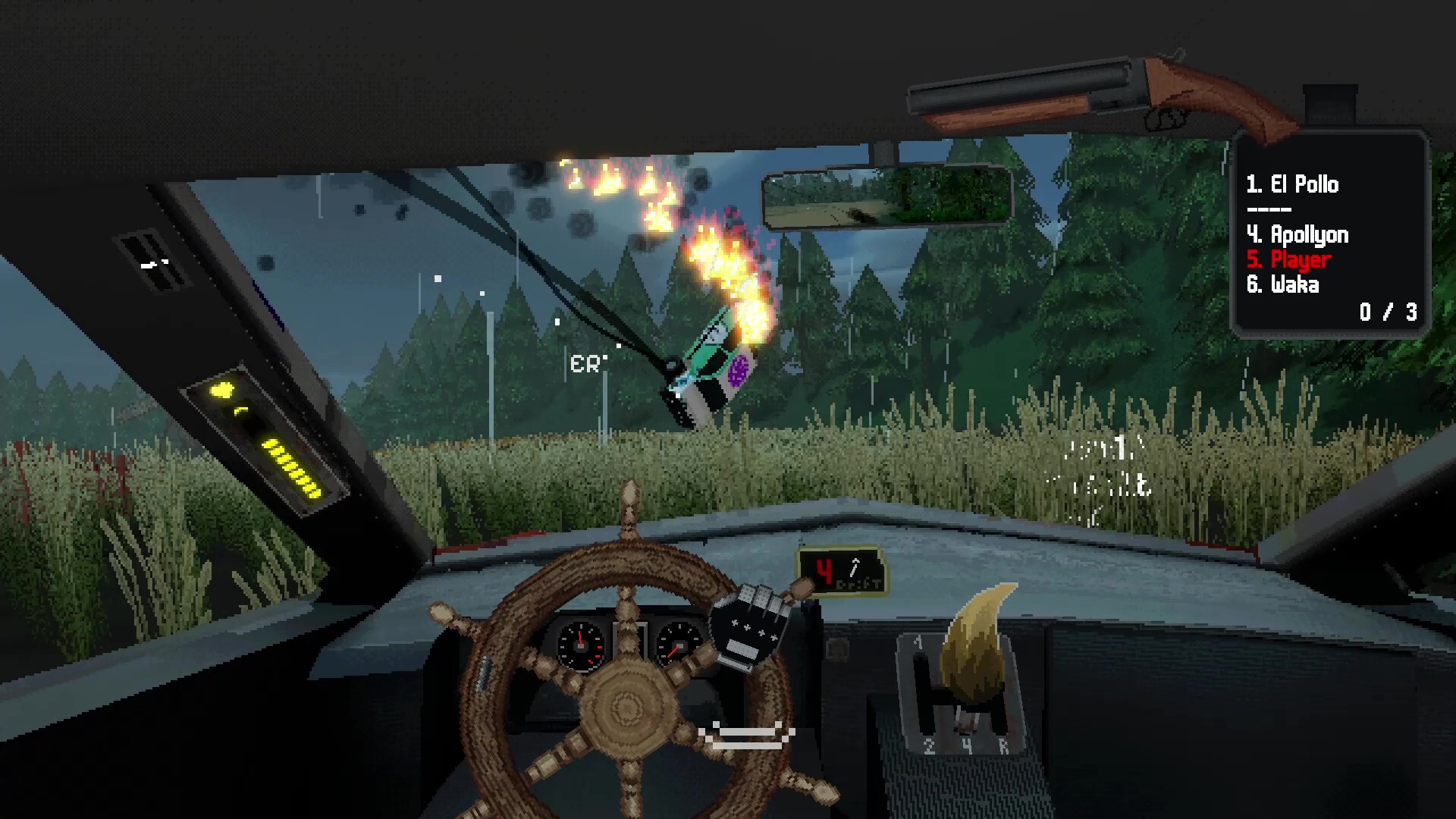
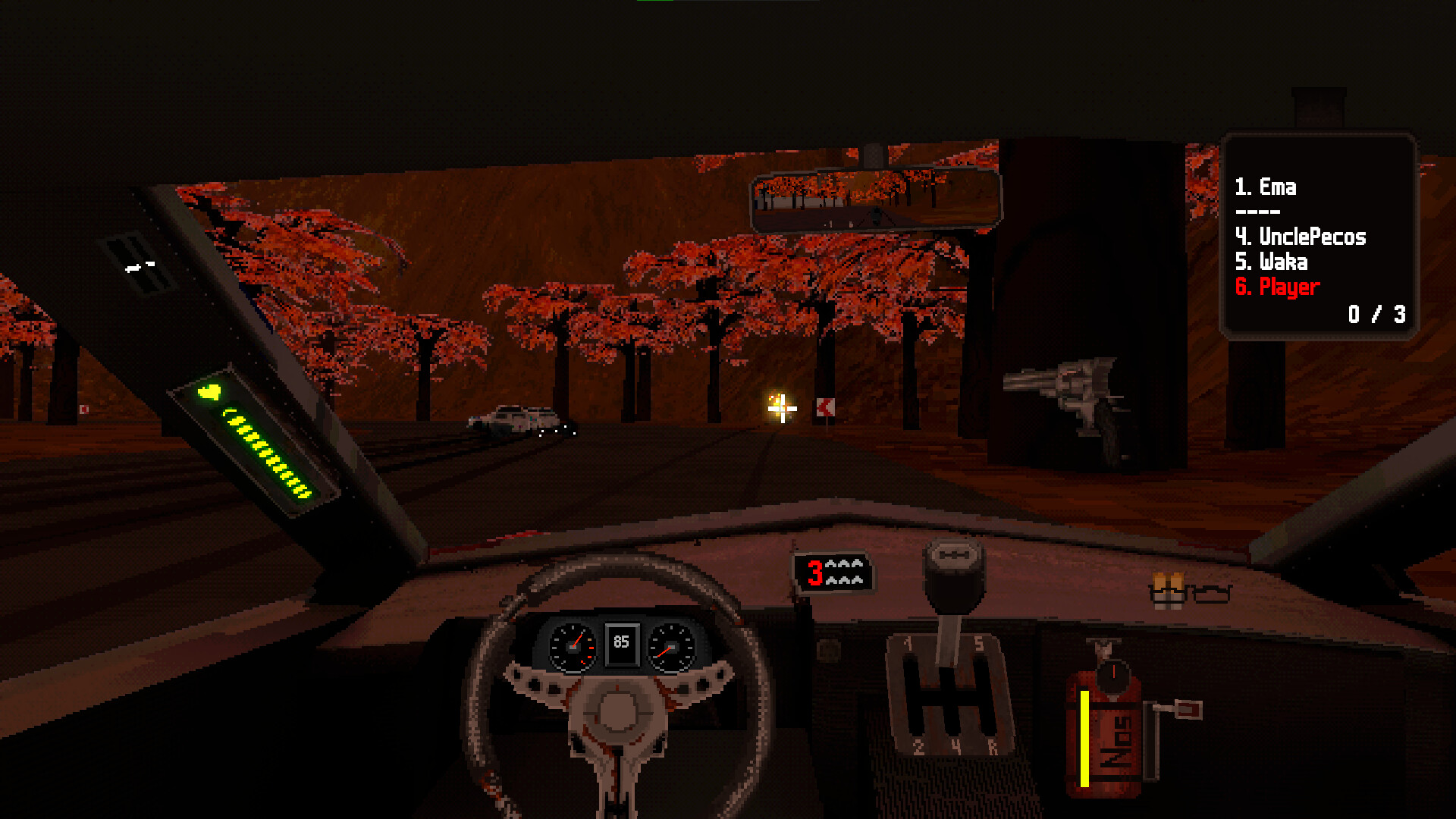
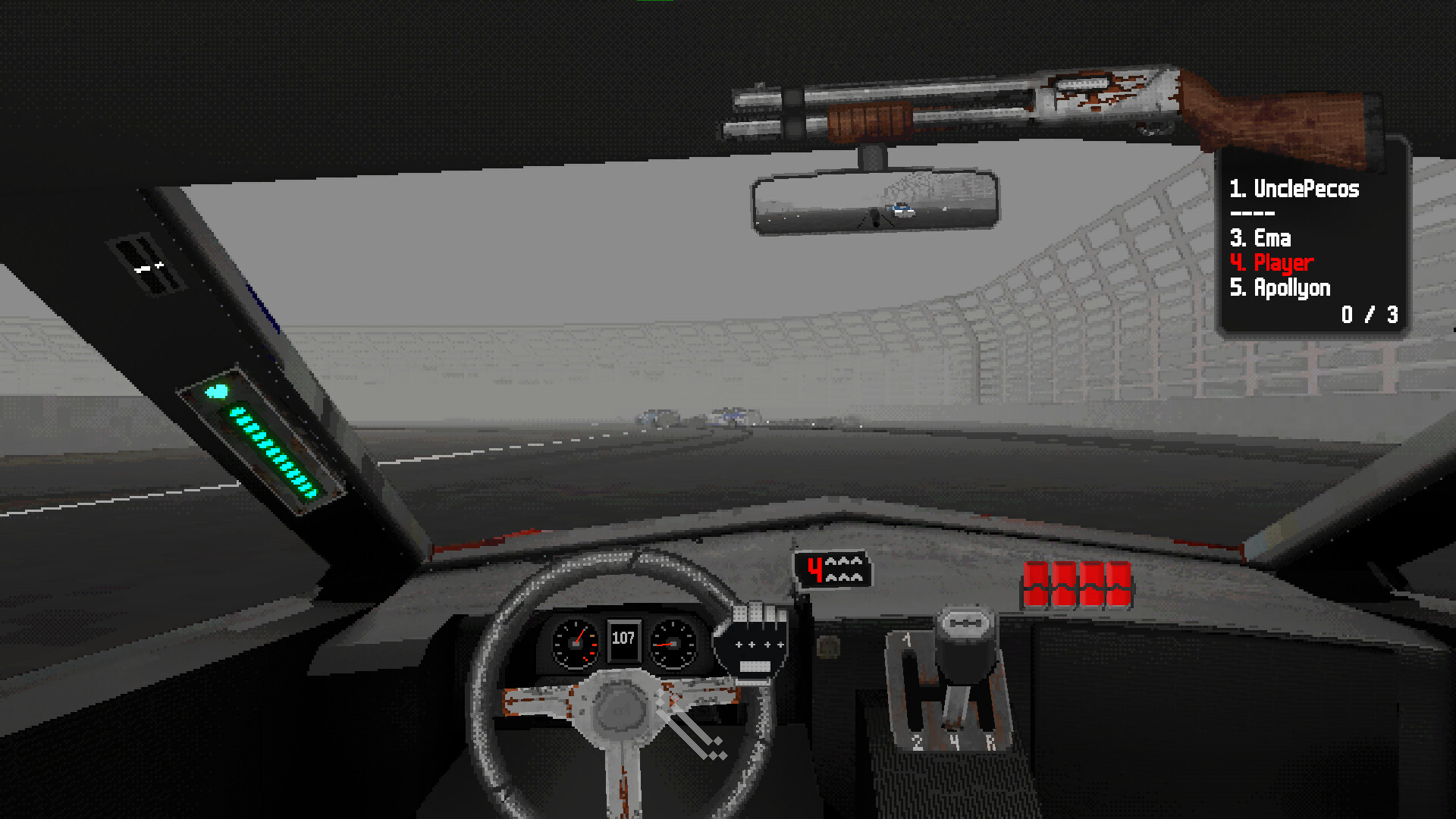
The visual style is harsh, pixelated, and atmospheric. Races run across tracks in chunky pixel detail with different road conditions: asphalt that grips, gravel that slides, wet surfaces that punish late braking. Handling sits between realistic and arcade, and your tire upgrades decide which way the car leans. The tone is post-apocalyptic, the camera can sit first-person or third-person, and a bullet-time effect kicks in at moments of tension.
Who it is for: players who liked Carmageddon's vehicular violence, Twisted Metal's weaponized races, or the risk-reward loops of roguelikes like FTL where every choice carries a cost. If you enjoy combat racing with build variety and a one-handed control gimmick, Half Grip is aimed at you.
Who it is not for: players who want a pure arcade racer with no weapon management, or anyone who wants a contest they can win by steering alone. Half Grip demands constant attention to the gamble between control and firepower.
| Field | Detail |
|---|---|
| Genre | Rogue-like combat racing / arcade |
| Developer / Publisher | Half Games |
| Platform | Windows, Linux (Steam) |
| Price | TBA |
| Players | Single-player (PvE) |
| Release | 2026 (not yet dated) |
| Storage | ~600 MB |
| Min OS | Windows 7 |
| Min CPU | Intel Core i7-6700K |
| Min RAM | 8 GB |
| Min GPU | Nvidia 960m |
| Origins | GMTK Game Jam 2025, theme "One Arm, One Loop" |
| Jam rank | #985 of 9,519 entries, 136 ratings |
| Key tags | Combat racing, action roguelike, post-apocalyptic, PvE, bullet time |
Getting Started: Your First Runs
The game is not out yet, so treat this as the plan for launch day and for the jam demo. The jam build is still playable and shows the core loop: race around a loop, dodge armed rivals, spend winnings between laps, die, restart.
The One-Arm Rhythm
Before worrying about weapons, get comfortable switching between steering and shooting. The jam version punished players who tried to do both at once, and the full game is built on the same constraint. Every input is a fork: the hand is on the wheel, the trigger, or the reload, never two at once.
Your first loop, in order:
- Learn the hand-swap cadence. Drive one lap without touching any weapon. Feel how the car handles on its own before you add the second job.
- Pick a starter weapon. The shotgun is the most forgiving for beginners because it punishes close contact without requiring precision aim.
- Save money for tires first. Handling upgrades matter more than damage early. The devs say tire upgrades decide whether you grip the road or slide off it.
- Watch the road conditions. Asphalt, gravel, and wet surfaces each change your braking point. A car tuned for grip handles gravel; a drifter build wants loose surfaces.
- Do not reload mid-corner. Reloading leaves you vulnerable. Finish the corner, then reload on the straight.
- Bank your winnings. Since runs are rogue-like, spending everything on a single weapon is a trap. Spread upgrades across tires, engine, and one weapon.
Beginner Mistakes to Avoid
| Mistake | Why It Hurts | Fix |
|---|---|---|
| Firing while steering | You lose control at the exact moment you need it | Fire on straights, steer through corners |
| Reloading in traffic | You are defenseless for seconds | Reload only when the nearest rival is behind you |
| All-in weapon spending | One weapon does not win a run | Balance tires, engine, and weapons |
| Ignoring tire upgrades | Grip decides whether corners are winnable | Upgrade tires before engine power |
| Treating every race the same | Road conditions change handling | Adjust braking for gravel and wet tracks |
| Racing the same build every run | The rogue-like loop rewards variety | Try drifter, stormchaser, and speedster builds |
| Colliding with walls at speed | The car stops dead on hard impacts | Brake before walls; a slow clean line beats a fast wreck |
First Run Priorities
| Priority | Why It Matters |
|---|---|
| One clean lap without weapons | Teaches the car's baseline handling |
| One reliable firing position | A straight where you can shoot safely |
| Tires purchased before race 3 | Grip is the first true power spike |
| One escape habit | Knowing when to stop firing and steer |
Core Mechanics Explained
The One-Arm Constraint
The core constraint is literal: one arm, one loop. You cannot steer, shoot, and reload simultaneously, so every race becomes a series of micro-gambles. Do you hold the line through the corner or take your hand off the wheel to fire? Do you reload now, knowing you are defenseless for the next two seconds, or risk meeting the next rival with an empty magazine?
This constraint is also the game's identity. It converts a standard combat racer into a timing puzzle: every action has an opportunity cost, and the best players are the ones who schedule their gambles instead of reacting to them. Plan the reload before the corner, not after the rival appears.
The Rogue-Like Run Structure
Half Grip borrows the roguelike structure: each run is a fresh experiment. You start with a baseline car, race to earn money, and buy upgrades that persist only for that run. Die, and you start over. The devs say "no race feels the same" and push you to build your version of the optimal car every run.
The economy is the real battlefield. Winnings are finite, prices sting, and every purchase is a bet on the races ahead. A player who spends on tires early and weapons late will outlast a player who blow everything on a single shotgun. The run is not about the upgrade you buy; it is about the upgrades you did not buy and survived anyway.
Weapons
Weapons are the offensive layer, and each one changes how you approach a race:
| Weapon | Role | Best On | Worst On |
|---|---|---|---|
| Ram | Front-mounted damage, rewards aggressive line-holding | Long straights, lead positions | Defensive runs, mid-pack starts |
| Shotgun | Short-range burst, punishes close rivals | Tight corners, pack fighting | Open tracks, long-range duels |
| Magnet | Pulls rivals or loot, changes race positioning | Pickup-heavy tracks, economy runs | Clean speed runs, no-loot layouts |
| Mines | Drop behind you, protect your rear | Crowded mid-pack, pursuer-heavy races | Sprint tracks, leader runs |
Each weapon is also a control-scheme choice. A ram car barely touches the trigger and keeps the hand on the wheel. A mine layer spends most of the race looking backward. Choose weapons that match how you want to spend your one hand.
Handling and Road Conditions
The game balances realistic and arcade handling. The same car behaves differently across road types:
| Surface | Behavior | Strategy |
|---|---|---|
| Asphalt | High grip, late braking possible | Hold the racing line, brake late |
| Gravel | Car slides, cornering needs earlier inputs | Brake early, steer smooth, lose less speed |
| Wet | Aggressive braking punished | Feather the brakes, avoid sudden inputs |
Tire upgrades are the single biggest handling lever. The devs warn that without them you "slide right off" the road. A tire-light car on gravel is a car that loses the race in the corners, no matter how fast the engine is.
Bullet Time and Camera
The tag list reveals two systems worth planning around: bullet time and a choice between first-person and third-person cameras. Bullet time looks like a tension mechanic that slows the action at moments of danger, buying you the split second to decide what the one hand does next. Camera choice changes how you read the track and your weapon ranges, so test both in the tutorial and pick the one that matches your aim style.
Progression Strategy
The Upgrade Economy
Because runs are rogue-like, the upgrade order decides how far a run goes. The best general order:
| Priority | Upgrade Class | Why |
|---|---|---|
| 1 | Tires | Grip unlocks corner speed, the foundation of every lap |
| 2 | Engine | Pace matters once you can hold the line |
| 3 | One weapon | Focused firepower beats a weak spread |
| 4 | Armor / survivability | Buys mistakes in later, deadlier races |
| 5 | Secondary weapon | Only after the core is solid |
Build Archetypes
| Build | Focus | Playstyle | Weapon Synergy |
|---|---|---|---|
| Tricked-out drifter | Tires, handling | Slide through corners, keep weapons for close quarters | Shotgun, ram |
| Armed stormchaser | Weapons, aggression | Max damage output, hunt rivals instead of racing clean | Ram, mines |
| Aerodynamic speedster | Engine, weight | Pure pace, avoid combat, outrun everything | Magnet for loot |
| Economy runner | Loot, magnet | Farm pickups, snowball upgrades | Magnet |
Step-by-Step Strategy
Strategy 1: The Reload Window Gambit
- Time your reloads to happen just after a rival passes you.
- They take the lead; you regain fire; the next straight gives a clean shot at their rear.
- This converts the game's biggest weakness, reload vulnerability, into a positioning tool.
- Practice the timing on the first two races of a run, where mistakes are cheap.
- Never reload while a rival is alongside; the window only works from behind.
Strategy 2: The Tire Economy
- Buy tires before the third race of every run, even if a weapon looks tempting.
- Test the grip on the first straight after purchase; feel the new braking point.
- On gravel tracks, spend extra on tires; the slide penalty is brutal without them.
- On wet tracks, keep a small cash reserve for a mid-run tire refresh.
- Track how many corners you win because of grip; that is the upgrade's real value.
Strategy 3: The Shotgun Corner Defense
- Learn the corner where rivals naturally bunch up.
- Enter it holding the inside line, hand on the wheel.
- At the apex, switch the hand to the trigger and burst the rival next to you.
- Return the hand to the wheel before the exit; the corner is not finished until you are straight.
- Repeat on the same corner every lap; rivals learn to avoid it, which opens the outside line.
Strategy 4: The Mine Rear Guard
- Never fight for the lead early as a mine layer.
- Stay mid-pack and drop mines on the racing line behind you.
- Let the leaders hit them and thin the field.
- By the final lap, take the lead uncontested.
- Keep one mine in reserve for the final straight; the leader gets ganged up on, and you want the last laugh.
Strategy 5: The Magnet Economy Run
- Prioritize tracks with visible pickups.
- Pull loot toward you instead of chasing it; the magnet collects while you steer.
- Out-economy the field, buy a shield of upgrades, and outlast everyone.
- When the loot runs dry, switch the magnet for a ram and take the lead.
- This build wins runs that last long; it loses short sprints.
Strategy 6: The Speedster Tax
- An aerodynamic speedster that avoids combat still needs one weapon for the final lap.
- Buy one cheap weapon early, never touch it until the end.
- Race clean, outrun everything, bank the winnings.
- In the final lap, the leader gets ganged up on; a single shotgun burst settles the finish.
- Do not build weapons mid-run; the speedster's edge is cash, not combat.
Advanced Tips
- The hand is a currency. Every second the hand is off the wheel is a gamble. Spend the gamble only when the payout is a shot, a reload, or a pickup you need.
- The reload window is a position, not a time. The best reload moments come from being behind, not from being safe. Use the rear position as the reload position.
- Grip beats speed until it does not. Tires win the early game; engine wins mid-pack battles. Do not over-invest in either; the correct balance shifts every run.
- Know which corner you own. Every track has a corner you can turn into a weapon. Learn it, defend it, and make rivals pay for it each lap.
- The leader's burden is real. The front car gets hunted. If you lead, expect attention and keep a weapon hot. If you chase, the leader's problem is your opportunity.
- Bullet time is a decision tool. When time slows, do not panic-fire. Use the slowdown to read the field and pick the one action the hand should take.
- Camera choice changes aim. First-person makes shotguns precise and rams disorienting. Third-person gives spatial awareness. Test both before the first real race.
- Wall collisions kill momentum. The jam crowd noted the car stops dead on hard impacts. Respect walls, brake early, and treat every scrape as a lost race.
- The jam pedigree is real feedback. Players called the jam build hard but unique. Expect the same challenge in the full release, and train for runs that end early.
FAQ
When does Half Grip release? The Steam page says 2026. No exact date has been announced.
What platforms does it support? Windows and Linux, per the Steam store listing.
Is there a demo? Not on Steam yet. The original GMTK jam version is playable and previews the core loop.
What are the system requirements? Minimum: Windows 7, Intel Core i7-6700K, 8 GB RAM, Nvidia 960m, ~600 MB storage.
Is it single-player? Yes, single-player PvE with Family Sharing support on Steam.
Does it support controllers? The one-arm design suggests a gamepad layout, and controller appears in the tag list. Official details have not been fully confirmed.
How long is a run? Not confirmed, but the jam version's loop races were short and punchy, in the style of quick roguelike runs.
Is it a full release or early access? The Steam page lists it as a coming-soon release, not Early Access.
What weapons are confirmed? Rams, shotguns, magnets, and mines, with more to come.
Where did the game come from? It started as a GMTK Game Jam 2025 submission themed "One Arm, One Loop," ranked #985 of 9,519 entries.
Common Mistakes
| Mistake | Symptom | Fix |
|---|---|---|
| Firing while steering | Crash in the exact corner you needed control | Fire only on straights |
| Reloading in traffic | Dead in the water for two seconds | Reload from behind, not beside |
| All-in on one weapon | One weapon cannot win a run | Spread tires, engine, weapons |
| Skipping tires | Slide off on gravel, spin on wet | Tires before engine, always |
| Wall-slamming | Car stops dead, position lost | Brake early, hold a clean line |
| Same build every run | The run economy punishes stagnation | Rotate drifter, stormchaser, speedster |
| Never using bullet time | Panic decisions under pressure | Use the slowdown to choose, not to fire |
Bottom Line
Half Grip is a distinctive, atmospheric combat racer with a genuinely novel constraint. The one-arm gimmick is not marketing, it is the mechanical core, and the jam build proved the concept works. The rogue-like economy, the weapon variety, and the road-condition handling give it real depth beyond the hook.
The players who do well in Half Grip are the ones who plan their reloads, respect road conditions, and accept that they cannot do everything at once. When in doubt, upgrade tires, because a car that grips the road gives you the freedom to use your weapons everywhere else. Wishlist it if you like weaponized racing with roguelike depth; hold off if you want a traditional arcade racer.
Verdict: 4/5 for combat-racing fans. A distinctive one-arm hook, real build variety, a proven jam pedigree, and an atmosphere that sticks with you.
Last reviewed by Game How To Editorial. We play each game, verify controls against official sources, and update guides when game mechanics change.
Screenshots